
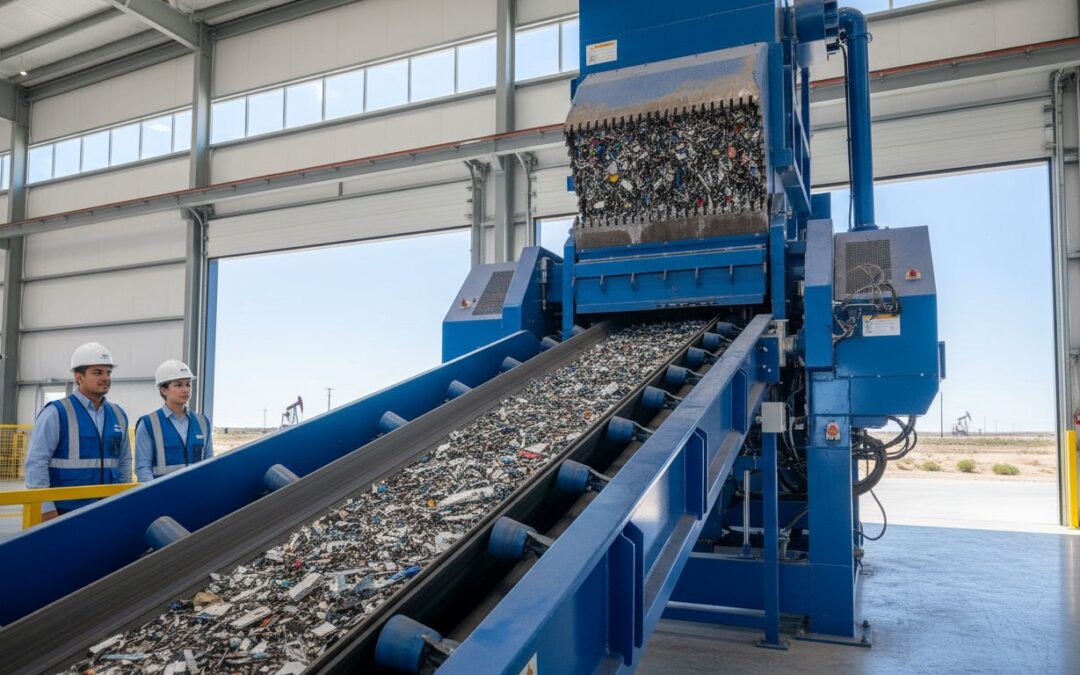
Stacking old, reinforced rubber behind your facility isn’t just an eyesore; it’s a financial liability that the Texas Commission on Environmental Quality (TCEQ) tracks with increasing precision. In the Permian Basin, the logistical nightmare of moving heavy, steel-core belts often leads to “temporary” storage that turns into a permanent compliance risk. You’ve likely felt the frustration of high specialized hauling quotes or the stress of an impending site inspection. Finding a reliable partner for conveyor belt recycling Odessa TX shouldn’t be the hardest part of your daily operations.
We understand that you want your site cleared and your regulatory paperwork filed without constant follow-ups. You’re looking for a solution that’s as efficient as the rest of your supply chain. This 2026 industrial guide provides a clear roadmap to manage bulk rubber waste legally while avoiding the steep fines associated with improper disposal. We’ll walk through the current TCEQ documentation requirements, how to arrange scheduled pickups that actually show up on time, and the best practices for professional site remediation in West Texas.
Key Takeaways
- Learn how to navigate complex TCEQ regulations and mandatory manifest requirements to ensure your industrial rubber disposal remains fully compliant.
- Discover the essential criteria for choosing a professional provider of conveyor belt recycling Odessa TX that has the specialized equipment for reinforced rubber.
- Master site-staging protocols and safety procedures to minimize hauling costs and streamline the pickup of bulk rubber rolls.
- Understand why Odessa’s oilfield and mining sectors require specialized disposal solutions to manage high-volume industrial waste efficiently.
- Identify how a transparent and eco-friendly disposal partner can take the burden of waste management off your shoulders in the Permian Basin.
Why Industrial Conveyor Belt Recycling is Critical for Odessa Businesses
Industrial recycling isn’t just about clearing space in a yard. It’s the technical process of recovering valuable conveyor belt materials, including high-grade rubber and steel reinforcements. In Odessa, the demand for conveyor belt recycling Odessa TX has grown alongside the expansion of the Permian Basin. Local oilfield and mining operations rely on these belts to move massive volumes of sand, rock, and equipment. When these belts reach the end of their service life, they don’t just disappear. They require specialized handling to prevent long-term liability.
Odessa businesses face unique challenges because of our climate and industrial density. Leaving scrap rubber to sit in the sun isn’t a viable strategy. Professional recycling replaces the risky practice of burying belts or hauling them to unauthorized landfills. It’s a clean, documented process that protects your company’s reputation and the local environment. We take the burden of disposal off your shoulders so you can focus on your core operations—and if you need help maintaining your facility’s hardware, you can discover Kelsey Machine Services for specialized industrial repairs. It’s a practical solution for a tough problem.
The Scale of the Waste Problem in the Permian Basin
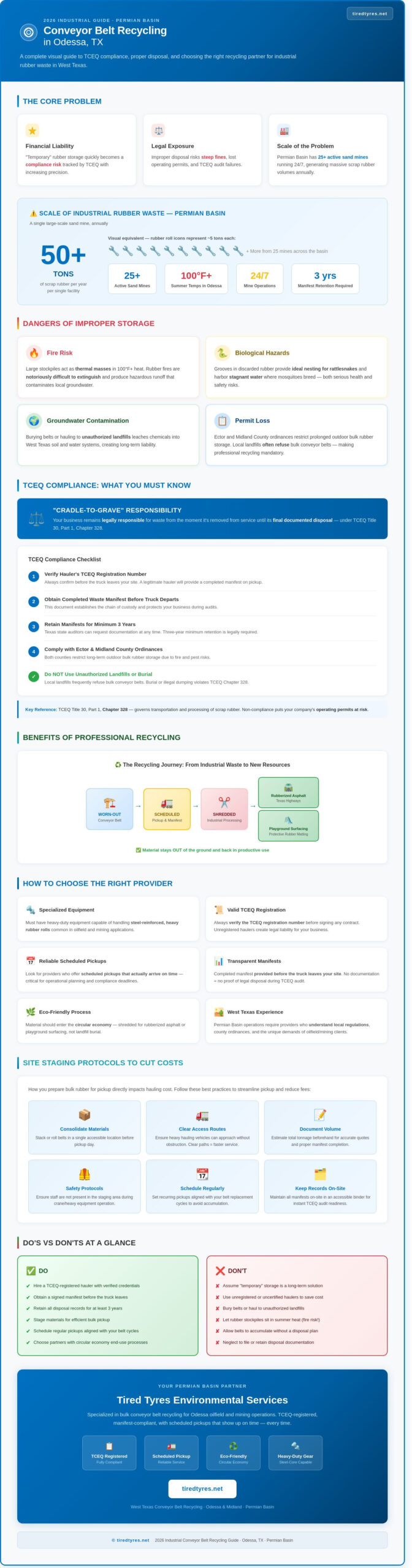
The Permian Basin currently hosts more than 25 active sand mines and dozens of aggregate quarries that supply the fracking industry. These facilities often run 24/7, causing belts to wear down faster than in other regions. A single large-scale sand mine can generate over 50 tons of scrap rubber in a single year. Industrial rubber waste is a regulated material under Texas law. Without a clear disposal plan, these materials accumulate quickly, creating logistical bottlenecks and potential regulatory fines for site operators.
Environmental and Safety Benefits of Proper Disposal
Safety is the primary driver for professional disposal in West Texas. During the summer, temperatures in Odessa frequently top 100°F for weeks at a time. Large stockpiles of industrial rubber act as thermal masses, trapping heat and creating a significant fire risk. A rubber fire is notoriously difficult to put out and produces hazardous runoff that can contaminate local groundwater. Proper conveyor belt recycling Odessa TX eliminates this danger entirely.
Old belts also present biological risks. The grooves and folds in discarded rubber provide ideal nesting grounds for rattlesnakes and harbor stagnant water where mosquitoes breed. By moving these materials into the circular economy, we turn waste into resources. Recycled belts are often shredded for use in rubberized asphalt for Texas highways or protective surfacing for playgrounds. This keeps the material out of our soil and puts it back to work in a safe, productive way. It’s a win for your business and a win for the community.
Understanding Texas Regulations for Industrial Rubber Waste
Managing industrial rubber waste in West Texas requires more than just finding a spot to park a trailer. The Texas Commission on Environmental Quality (TCEQ) enforces strict guidelines to prevent environmental hazards and fire risks. For companies involved in conveyor belt recycling Odessa TX, staying compliant is the only way to avoid the legal headaches that come with improper disposal. TCEQ Title 30, Part 1, Chapter 328 outlines exactly how scrap rubber must be transported and processed. Ignoring these rules doesn’t just hurt the environment; it puts your company’s operating permits at risk.
TCEQ Compliance and Documentation
Texas law operates on a “cradle-to-grave” responsibility model. This means your business remains legally responsible for the waste you generate from the moment it’s removed from service until its final, documented disposal. You’ll need to maintain scrap tire and rubber manifests for at least three years to prove compliance during a state audit. Understanding these Texas Tire Disposal Regulations is vital for any operation in the Permian Basin. When you hire a hauler, always verify their TCEQ registration number. A legitimate professional will provide a completed manifest before the truck leaves your site, ensuring the paper trail is secure.
Local Odessa and Midland Ordinances
Ector and Midland Counties have specific rules regarding industrial outdoor storage. Stacking bulk rubber for long periods increases fire risks and provides breeding grounds for pests. Local landfills, including the City of Odessa Landfill, often refuse bulk conveyor belts because the heavy rubber doesn’t compact well and can damage equipment. If you’re operating under Mine Safety and Health Administration (MSHA) jurisdiction, site cleanliness is a safety requirement. Accumulating old belts can lead to significant citations during surprise inspections. MSHA 30 CFR Part 56/57 specifically addresses the storage of combustible materials, and old rubber is a primary target for inspectors.
The economic impact of proper waste management is significant. According to the EPA’s 2020 REI Report, recycling activities are critical for Odessa Businesses because they contribute to thousands of jobs and millions in tax revenue across the state. Professional conveyor belt recycling Odessa TX services mitigate these risks by providing the necessary paperwork to shield you from liability. Illegal dumping violations in Texas can result in fines ranging from $1,000 to over $50,000 depending on the volume and frequency of the offense. If you want to keep your yard clean and your business protected, partnering with an experienced hauler is the most efficient way to handle industrial waste.
How to Choose a Conveyor Belt Recycling Service in West Texas
Selecting a partner for conveyor belt recycling Odessa TX requires more than just finding a truck and a driver. The Permian Basin presents unique logistical challenges, from remote lease roads to extreme heat that affects rubber stability during transport. You need a contractor who understands the 24/7 nature of West Texas industrial operations and possesses the heavy-duty equipment required to move rolls that often exceed 2,000 pounds.
Local Expertise vs. National Aggregators
National waste management aggregators often lack the specific logistical knowledge needed for Ector County sites. They frequently subcontract the work to third parties, which adds unnecessary margins to your bill and complicates communication. Local haulers understand the reality of Odessa’s road conditions and the specific entry requirements for regional industrial parks. Using a local service ensures you have “boots on the ground” for rapid site remediation. If a project timeline shifts, a local team can adjust their route within hours, whereas a national firm might take days to reschedule. For those managing multiple types of industrial rubber waste, it’s helpful to consult a guide from local specialists like Tired Tyres to see how they streamline the process.
Processing Capabilities: Steel-Core vs. Fabric Belts
Not all recycling facilities can handle every type of belt. Heavy mining and high-tension oilfield applications often use steel-reinforced belts. These contain high-tensile steel cables that can make up 45% of the belt’s total weight. Standard shredders used for light fabric belts will fail when processing these materials. Before hiring a service, ask about their specific shredding and separation technology. You need a provider that can efficiently separate the rubber from the steel to ensure the material doesn’t end up in a landfill. Verify that the recycler can handle industrial quantities without delays. A backlogged facility will leave your site cluttered, creating safety hazards and potential regulatory fines.
Safety certifications are the final, non-negotiable criteria. Any crew entering a mine or a heavy industrial site must be compliant with MSHA (Mine Safety and Health Administration) or OSHA standards. In the Permian Basin, 85% of reputable sites require MSHA Part 46 training for any contractor handling material removal. Don’t just take their word for it; ask for current insurance certificates and safety records. A professional service will provide these documents immediately. Finally, assess their response times. In a fast-moving market like Odessa, you should expect a site assessment within 24 hours and a pickup scheduled within 48 to 72 hours. Efficiency isn’t just a convenience, it’s a requirement for maintaining a clean, compliant job site.
Preparing Your Bulk Conveyor Belts for Efficient Pickup
Efficiency on an industrial site doesn’t happen by accident. When you’re managing a site in the Permian Basin, every minute of downtime costs money. Properly preparing your scrap material ensures that the conveyor belt recycling Odessa TX process stays on schedule and within budget. Site managers who organize their staging area effectively can reduce hauling costs by up to 15 percent by minimizing the time our heavy-duty trucks spend on-site. It’s about clear communication and physical readiness.
Start by determining the exact scale of your inventory. We need the total length and the width of the belts to provide an accurate quote. For example, a 36-inch wide 4-ply belt typically weighs about 8.5 pounds per linear foot. If you have 500 feet of material, we’re looking at over 4,200 pounds of rubber. Providing these specific numbers allows us to dispatch the right trailer size and prevents multiple trips that inflate your costs.
Staging and Organization for Collection
Organization is the foundation of site safety. Rubber belts are heavy, awkward, and prone to shifting. To maximize trailer space and ensure a safe load, follow these staging steps:
- Roll or Fold: Tight rolls are preferred. Aim for a roll diameter of no more than 48 inches. If rolling isn’t possible, “Z-folding” the belt into flat stacks is a viable alternative.
- Remove Debris: Separate the rubber from metal rollers, fasteners, or framing. Mixed loads take longer to process and may require different equipment.
- Define the Hot Zone: Create a designated 30-foot radius around the material. This “hot zone” should be free of other equipment, personnel, and overhead power lines to give our crew room to operate.
We recommend using a front-end loader or a forklift with a minimum 5,000-pound capacity to assist in staging the rolls before our collection crew arrives.
Logistics and Access in the Oilfield
Odessa’s landscape presents unique logistical hurdles. We often deal with remote locations where cell service is spotty and roads are unpredictable. To avoid delays, ensure you have precise GPS coordinates or a digital map pin ready. Relying on “five miles past the old pump jack” leads to lost time. If your site is gated, provide the access codes at least 24 hours in advance.
Weather is another critical factor in West Texas. A sudden downpour can turn a caliche road into an impassable mess for a loaded 18-wheeler. We monitor local forecasts closely, but we rely on site managers to report ground conditions. If the staging area is too soft for a heavy-duty truck to navigate without getting stuck, it’s better to reschedule. This proactive approach keeps your site safe and our trucks moving. For a fast estimate on your next project, schedule your conveyor belt recycling Odessa TX pickup today.
Tired Tyres: Your Permian Basin Partner for Industrial Rubber
Tired Tyres is the leading choice for professional conveyor belt recycling Odessa TX. We understand the specific demands of the Permian Basin’s industrial sector. Our team brings technical precision to every project, ensuring that your worn-out rubber components are handled with professional care. We provide a seamless transition from “tired” equipment to eco-friendly raw materials. Legality and transparency sit at the core of our operations. We track every ton of rubber from the moment it leaves your site until it reaches a certified processing facility. This process protects your business from the risks of improper waste disposal and ensures you stay compliant with state regulations.
A Local Mission for a Cleaner West Texas
Our work focuses heavily on the Midland, Odessa, and Lubbock communities. We live in these areas and want to see them thrive. Tired Tyres maintains a 90% recycling rate for all materials we collect. This high standard ensures that your industrial waste doesn’t just sit in a hole in the ground. Instead, we turn it into useful products like rubberized asphalt or playground surfacing. You can read more about our regional impact in our guide on Tire Recycling in Midland, Odessa, and Lubbock. We’re committed to keeping West Texas clean through honest, hard work and sustainable practices.
Streamlined Commercial Collection Services
Efficiency is our priority. We offer tailored collection services that fit your site’s specific workflow. If you have a massive accumulation of OTR tires or piles of industrial belts, we have the machinery to clear it quickly. We also manage specialized items like skid steer tracks that require heavy-duty handling. Our services include:
- Industrial conveyor belt recycling Odessa TX for mining and logistics.
- OTR (Off-the-Road) tire disposal for heavy construction equipment.
- Skid steer and tractor track recycling.
- Scheduled fleet tire pickups for commercial businesses.
- One-time bulk site cleanups for decommissioned facilities.
We don’t believe in one-size-fits-all pricing. Every site has different needs, so we provide custom estimates based on your volume and location. Our team is ready to help you clear your inventory and stay compliant with environmental regulations. Don’t let industrial rubber waste become a safety hazard or a legal headache. Contact Tired Tyres for a quote today. We’ll get your site cleaned up quickly, safely, and professionally, allowing you to focus on your core operations without the clutter.
Secure Your Odessa Facility’s Compliance and Efficiency
Managing industrial waste shouldn’t be a bottleneck for your West Texas operations. By 2026, adhering to Texas Commission on Environmental Quality (TCEQ) standards for rubber disposal is a critical priority for every site in the Permian Basin. We’ve explored how proper disposal protects your liability and why specialized equipment is necessary for handling heavy bulk materials. Professional conveyor belt recycling Odessa TX depends on a partner who understands both the local landscape and strict state regulations. Tired Tyres is state-permitted for safe and legal disposal, providing the reliability you need to maintain a clean site. We serve the entire Permian Basin and South Plains with specialized equipment tailored for OTR and industrial rubber. You’ve worked hard to build your business; don’t let accumulated waste slow your progress or risk your standing with state authorities. We’re here to help you clear your yard and secure your facility’s future with a streamlined, professional approach.
Get a custom quote for conveyor belt recycling in Odessa
We look forward to helping your business stay productive and compliant through 2026 and beyond.
Frequently Asked Questions
Is it legal to bury old conveyor belts on my property in Odessa?
No, burying industrial rubber is illegal under TCEQ Title 30 Chapter 330 regulations. Violations can result in penalties exceeding $10,000 per day depending on the scale of the disposal. We provide a legal alternative that keeps your property in Odessa compliant with state environmental laws. This prevents long-term soil contamination and protects your land value for future use or sale.
How much does conveyor belt recycling cost in West Texas?
Costs vary based on the total tonnage and the distance from your site to our processing center. The 2023 Waste Business Journal reports indicate that transportation and fuel surcharges are the primary drivers of industrial recycling fees in Texas. We’ll give you a transparent price after reviewing the volume and belt type at your location. This ensures you only pay for the specific logistics required for your project.
Do you provide TCEQ-compliant manifests for industrial rubber pickup?
Yes, we issue a formal manifest for every load we transport from your facility. This documentation is essential for your TCEQ compliance records under Title 30 and proves that the material was handled by a registered hauler. You’ll receive these digital or paper records immediately after the job is finished. Keeping these records for at least 3 years is a standard requirement for most Permian Basin industrial operators.
Can you handle steel-reinforced conveyor belts from mining operations?
We handle all types of steel-reinforced belts used in local mining and oilfield operations. These belts contain high-tensile steel cords that require specialized cutting and hauling equipment to process correctly. Our trailers are rated for these 40,000-pound loads, ensuring we can clear your yard without leaving specialized materials behind. We’ve processed over 500 tons of reinforced material for West Texas clients since 2022.
What is the maximum length of belt you can collect in one trip?
Our standard transport units can move 40,000 to 45,000 pounds of rubber in one trip. For a standard 36-inch wide belt, this often equates to roughly 1,000 linear feet depending on the ply thickness and weight. Utilizing high-capacity conveyor belt recycling Odessa TX options reduces the number of trips and lowers your overall project costs. We optimize every load to maximize efficiency and minimize site traffic.
How quickly can you respond to a cleanup request in the Permian Basin?
We respond to all service inquiries within 24 hours to schedule your pickup. Our fleet is active throughout the 86,000 square miles of the Permian Basin, allowing us to reach most sites in Odessa or Midland within 48 to 72 hours. Fast turnaround is our priority so your operations aren’t hindered by accumulated scrap. We can often provide same-day quotes if you send us photos of the material.
Do I need to clean the belts before they are picked up?
You don’t have to clean the belts, but they must be accessible and free of heavy debris like large rocks or 6 inches of mud. We can’t haul belts that are heavily contaminated with hazardous chemicals or oils as per EPA Title 40 guidelines. Just make sure the rolls are staged in an area where our 53-foot trailers can safely maneuver. This preparation helps our drivers load the material in under 60 minutes.
What happens to the conveyor belts after they are recycled?
Recycled belts are typically processed into high-durability products like horse stall mats, truck bed liners, or industrial flooring. Industry data from the Rubber Manufacturers Association indicates that 85 percent of industrial rubber is now diverted from landfills for these secondary uses. Choosing conveyor belt recycling Odessa TX ensures your old equipment contributes to a circular economy instead of sitting in a hole. Your waste becomes a resource for the 2024 manufacturing sector.