
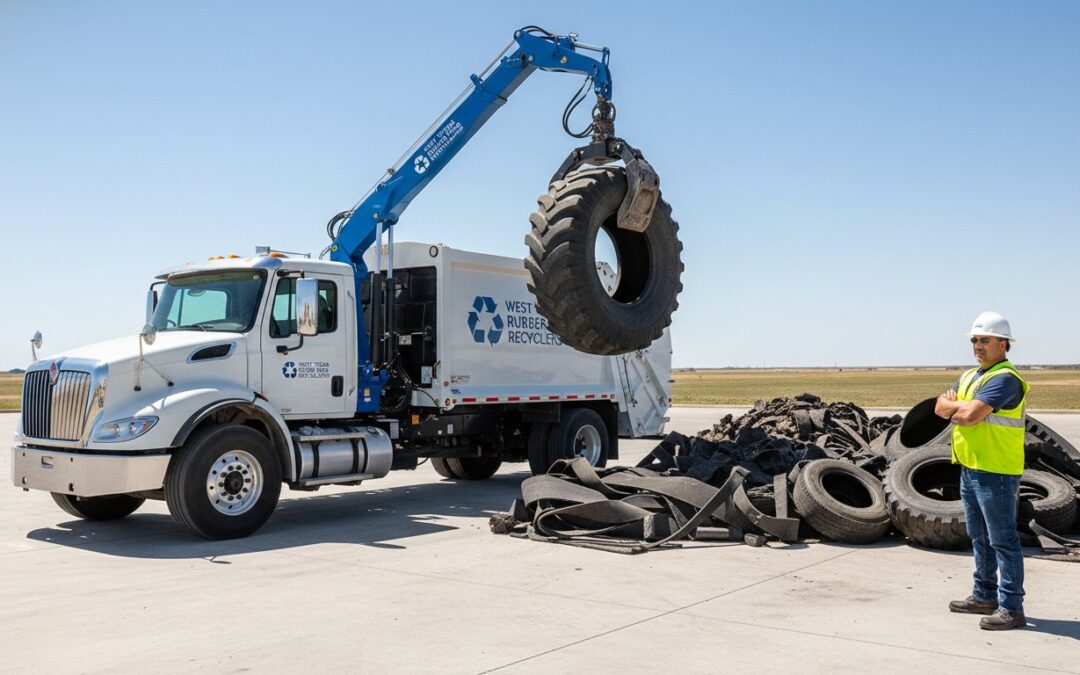
On a Tuesday in October 2025, a Lubbock facility manager watched as a standard waste hauler drove away, leaving behind 12 tons of scrap rubber because the load exceeded weight limits. It’s a common headache for local businesses. You shouldn’t have to worry about accumulating fire hazards or the legal risks of improper storage. We agree that waste management should be invisible, not a constant source of stress. This 2026 guide teaches you how to streamline your industrial rubber waste pickup Lubbock strategy to maintain a clean site and 100% TCEQ compliance.
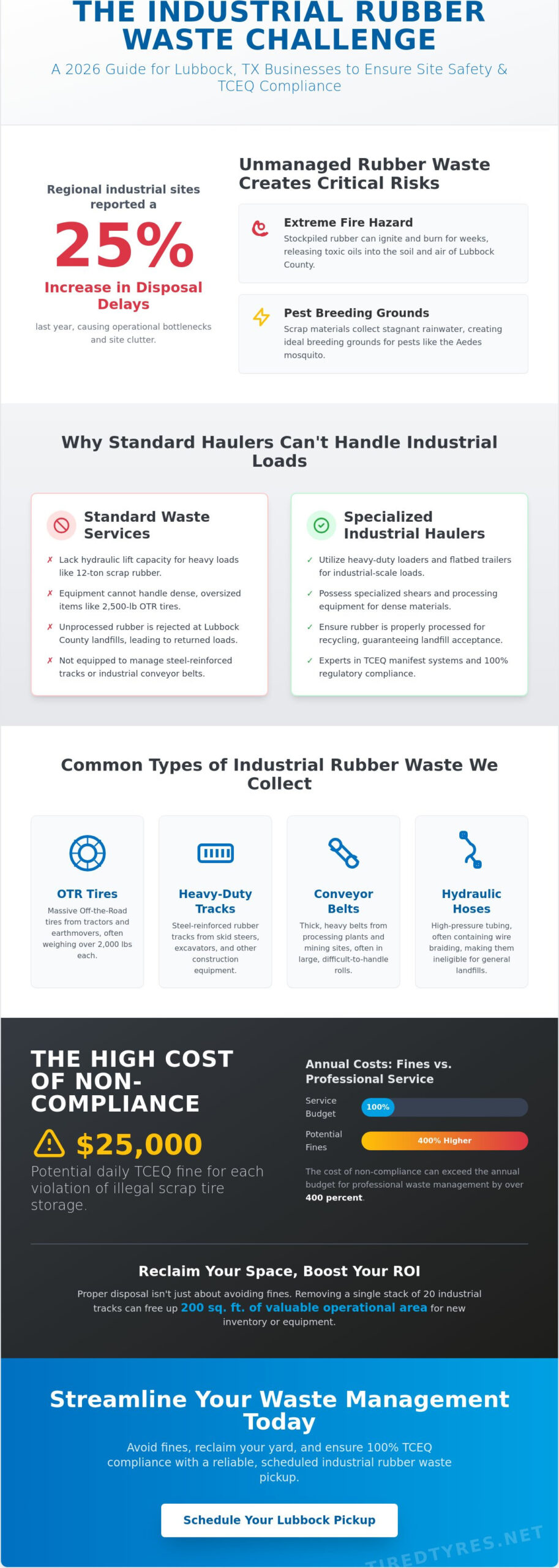
You’ll learn the exact steps to handle Texas scrap tire manifests and how to choose a hauler that understands industrial-scale loads. We’ve compiled the latest 2026 regulatory updates and logistics best practices to ensure your bulk rubber waste never becomes a bottleneck again. By following these steps, you can avoid the 25% increase in disposal delays reported by regional industrial sites last year while securing a reliable, scheduled pickup routine that keeps your operations moving forward without interruption.
Key Takeaways
- Identify the specific logistical challenges of disposing of OTR tires, heavy-duty tracks, and industrial conveyor belts in West Texas.
- Discover why specialized industrial rubber waste pickup Lubbock services are essential for managing the weight and density of Type 4 waste.
- Learn how to navigate the Texas scrap tire manifest system to ensure your business stays 100% TCEQ compliant.
- Understand the critical differences between standard construction roll-offs and the specialized fleets required for heavy rubber disposal.
- Find out how to verify a hauler’s permits and local credentials before scheduling your next bulk industrial pickup.
The Challenge of Industrial Rubber Waste in Lubbock, TX
Industrial rubber waste isn’t just a pile of old car tires. In Lubbock’s growing industrial corridor, this waste consists of massive Off-the-Road (OTR) tires from construction sites, reinforced conveyor belts from agricultural processing plants, and heavy-duty rubber tracks used on earthmoving equipment. Managing these materials requires more than a standard dumpster. Local businesses often find themselves stuck with thousands of pounds of non-biodegradable material that doesn’t fit into traditional waste streams. Unlike residential scrap, these items are dense, awkward to move, and require specialized handling to stay within state regulations.
Leaving these items to sit in the West Texas sun creates real dangers. Stockpiled rubber is a notorious fire hazard; once an OTR tire pile ignites, it can burn for weeks, releasing toxic oils into the Lubbock County soil. Additionally, the unique shape of industrial scrap collects stagnant rainwater, creating a breeding ground for West Texas pests like the Aedes mosquito. Specialized haulers are now essential for maintaining safety and compliance in the 806 area code, providing the heavy machinery needed to move these loads safely. Scheduling a professional industrial rubber waste pickup Lubbock is the first step in mitigating these site risks.
Why Standard Lubbock Garbage Services Say No
Standard municipal trucks in Lubbock are designed for domestic refuse, not 2,500-pound industrial components. Most local garbage services lack the hydraulic lift capacity to handle OTR tires or the heavy-duty shears needed to process industrial belts. Lubbock County landfills also enforce strict bans on unprocessed rubber. If a tire isn’t split or shredded through a professional rubber recycling process, it’s often rejected at the gate. This equipment gap leaves many site managers searching for a dedicated industrial rubber waste pickup Lubbock solution that can handle the sheer weight and density of their scrap.
The Economic Impact of Improper Disposal
Ignoring accumulated rubber waste leads to more than just an eyesore. The Texas Commission on Environmental Quality (TCEQ) actively monitors industrial sites for illegal scrap tire storage. Fines for non-compliance can reach $25,000 per day for each violation found on-site. For a Texas business, the cost of non-compliance often exceeds the annual budget for professional waste management by 400 percent.
Beyond legal fees, clearing out old rubber improves site ROI by reclaiming valuable yard space. Removing a single stack of 20 industrial tracks can free up 200 square feet of operational area for new inventory or equipment. Efficient waste management keeps your facility lean and prevents the hidden costs of site clutter from eating into your bottom line.
Common Types of Industrial Rubber Waste We Collect
Industrial operations in the Hub City generate varied rubber byproducts that don’t fit in standard waste streams. We specialize in industrial rubber waste pickup Lubbock services that handle heavy equipment tracks from skid steers and excavators. These steel-reinforced tracks are notoriously difficult to cut or transport without specialized machinery. We also manage high-pressure hydraulic hoses and reinforced industrial tubing that often contain wire braiding, making them ineligible for general landfills. Whether it’s a single set of tracks or a warehouse full of decommissioned hoses, we provide the logistics to clear your site.
Agricultural and OTR Tire Collection
West Texas farms and construction sites utilize some of the largest rubber components in the industry. We collect Off-the-Road (OTR) tires from tractors, combines, and massive earthmovers that can weigh over 2,000 pounds each. Implement dealers and fleet managers must follow strict TCEQ regulations for scrap tires to avoid heavy fines during audits. While passenger tires are common, OTR collection requires heavy-duty loaders and flatbed trailers to move the volume safely. If you’re managing a fleet, keeping these bulky items out of your workspace improves site safety immediately. We handle the heavy lifting so your team can focus on production.
Conveyor Belts and Industrial Scrap
Processing plants and mining sites often face the challenge of removing miles of scrap conveyor belts. These belts are thick, heavy, and often arrive in massive rolls or tangled piles. For efficient collection, we require on-site preparation such as rolling or cutting the belts into manageable sections. This helps speed up the loading process and reduces your service costs. Our team provides comprehensive support for Commercial Tire Disposal in Midland, Odessa & Lubbock, ensuring that every foot of rubber is accounted for and recycled properly. We work with site managers to coordinate pickup times that don’t interfere with daily operations.
Solid rubber waste is another major category we handle. This includes the following items commonly found in Lubbock warehouses:
- Solid forklift tires and press-on bands.
- High-density rubber vibration dampeners.
- Molded industrial components and dock bumpers.
- Polyurethane-filled tires from aerial lifts.
These high-density items take up significant space and don’t compress like standard pneumatic tires. We provide scheduled industrial rubber waste pickup Lubbock routes to ensure your loading docks stay clear of debris. If your warehouse has a pile of “dead” forklift tires gathering dust, it’s time to clear the floor. You can request a consultation for your facility to keep your operations running without the clutter of accumulated scrap.
Why Specialized Rubber Pickup Beats Standard Roll-Offs
Choosing a standard roll-off for your plant might seem easy, but industrial rubber isn’t standard debris. Most general waste bins are designed for Type 4 waste, which includes construction materials like shingles, wood, and scrap metal. Rubber behaves differently. It’s dense, doesn’t compress well in a traditional compactor, and creates uneven weight distribution. If a bin is loaded incorrectly, it becomes a safety hazard during transport on Lubbock highways.
Tired Tyres uses a specialized fleet designed for the unique physics of bulk rubber. Our trailers handle high-density loads without the risk of shifting that occurs in a generic 40-yard dumpster. This precision allows us to maximize the volume of every industrial rubber waste pickup Lubbock businesses schedule, reducing the total number of trips required. Fewer trips mean lower fuel surcharges and a smaller carbon footprint for your facility.
Environmental impact is another major differentiator. General haulers typically head straight to the landfill. We prioritize direct-to-processor routing. Instead of taking up space in a Lubbock landfill for the next century, your waste goes to facilities that convert it into crumb rubber or tire-derived fuel. This specialized routing isn’t just better for the planet; it’s more cost-effective because it avoids the rising gate fees at municipal disposal sites.
The Limitations of General Waste Haulers
Many general haulers don’t actually have the permits or equipment to process large-scale rubber loads. They often subcontract the work to specialists like us, then add a 15% to 20% markup to your bill. You’re paying extra for a middleman. There’s also the risk of rejected loads. If a general driver attempts to drop un-shredded industrial tires at a Lubbock landfill, they’ll likely be turned away, leaving you with the bill for the wasted trip. We ensure manifest accuracy from the start, meeting all TCEQ requirements so you stay compliant without the stress.
Tired Tyres: A Lubbock-Centric Approach
We’ve spent years learning the logistics of Lubbock industrial zones. We know the tight access points in the North Park area and the heavy traffic patterns along the I-27 corridor. This local expertise allows us to offer both scheduled and on-call pickups that don’t disrupt your production floor. We’re not a national franchise; we’re a regional partner that understands West Texas business needs. For a broader look at how we manage these logistics across the region, see our guide on Reliable Tire Disposal in Midland, Odessa & Lubbock.
TCEQ Compliance and Preparation for Your Pickup
Compliance isn’t optional for West Texas industrial operations. The Texas Commission on Environmental Quality (TCEQ) manages rubber waste through a rigorous tracking system designed to prevent illegal dumping. When you schedule an industrial rubber waste pickup Lubbock, you’re legally responsible for that waste until it reaches an authorized processing facility. You can’t just hand it off to anyone with a trailer; you must verify their credentials first.
Every load requires a five-part manifest. This document tracks the waste from your site to the final disposal point. Before the truck arrives, verify your hauler’s TCEQ registration number. You can find this 11-digit ID in the TCEQ Central Registry database. If they can’t provide a current permit, don’t let them load the material. In 2026, the state has increased its oversight, meaning a missing signature or an unregistered hauler can lead to heavy fines for your business during a routine audit.
Texas Tire Disposal Regulations for Businesses
State law dictates how you store scrap rubber before it’s hauled away. Businesses shouldn’t store more than 500 scrap tires on-site without a specific storage permit. In Lubbock County, vector control is a major focus for inspectors. You must ensure that stored rubber doesn’t collect rainwater, which attracts mosquitoes. For a deeper dive into these requirements, read our full guide on Texas Tire Disposal Regulations.
Checklist for a Successful Rubber Pickup
Preparation saves time and money. A fast pickup keeps your yard clear and reduces labor costs. Follow these steps to get your site ready for the collection crew:
- Clear the path: Ensure heavy collection vehicles have at least a 50-foot turning radius and clear overhead clearance from power lines or tree limbs.
- Streamline the pile: Group your rubber waste in a single, accessible location. Don’t mix it with wood pallets, scrap metal, or general trash.
- Remove contaminants: Dirt, gravel, and standing water inside tires can increase the weight and the cost of your pickup.
Separating rims from tires is essential because it allows the rubber and the metal to enter different recycling streams while preventing damage to industrial shredding equipment. Most facilities won’t accept tires with rims still attached at standard rates because of the extra labor required for removal.
Keep your signed manifests for at least 36 months. For 2026 audits, digital copies are acceptable if they’re clearly legible and instantly retrievable. This paper trail is your only defense if a regulator questions your disposal methods. Stay ahead of the paperwork and ensure your next industrial rubber waste pickup Lubbock is handled by professionals who understand the law.
Reliable Industrial Rubber Waste Solutions in Lubbock
Tired Tyres treats West Texas industry with the respect it deserves. We aren’t a national conglomerate with a call center in another time zone. We’re a local, privately-owned firm that understands the specific logistics of the South Plains. When you choose us for your industrial rubber waste pickup Lubbock needs, you’re partnering with experts who prioritize safety and legal compliance. We know that site managers face enough pressure without worrying about scrap piles. Our goal is simple. We take the “tired” rubber off your hands so your operations stay lean and efficient. This local ownership means we can make decisions quickly and adapt to your site’s specific challenges without corporate red tape.
Serving the Permian Basin and South Plains
Our operations span the heart of Texas industry, covering Midland, Odessa, and Lubbock. This regional focus allows us to respond faster than national competitors. In February 2025, our team successfully cleared a 45-ton industrial rubber stockpile from a Lubbock manufacturing site in under 48 hours. This prevented potential fire hazards and ensured the site remained compliant with local environmental codes. If your operations extend south, you can also learn about our specialized services for Tire Disposal in Midland, TX. We maintain a fleet ready to handle bulk loads across the entire Permian Basin, ensuring that no site is too remote for professional service.
Get Started with Tired Tyres
Requesting a custom quote for bulk or ongoing collection is straightforward. We don’t believe in wasting your time with endless paperwork or complex automated menus. To get an accurate estimate for your industrial rubber waste pickup Lubbock, please have the following details ready when you reach out:
- The specific type of rubber waste, such as OTR tires, conveyor belts, or manufacturing scraps.
- An estimated weight or total volume of the material currently on-site.
- Site access details for our heavy-duty collection vehicles and equipment.
- Your preferred frequency, whether you need a one-time cleanup or a recurring monthly schedule.
Our team will review your requirements and provide a transparent, professional quote that reflects the current 2026 market rates for recycling and disposal. We pride ourselves on being a partner you can rely on for the long term. Don’t let scrap rubber become a liability for your facility or a distraction for your crew. Contact us to Schedule your Lubbock rubber waste pickup today and experience the reliability of a local partner who values your business.
Streamline Your Lubbock Operations for 2026
Managing large-scale rubber debris doesn’t have to stall your productivity. As Texas updates its environmental standards for 2026, staying compliant with TCEQ regulations is the only way to avoid heavy fines. Standard waste services often lack the specialized OTR equipment required for heavy industrial tires, which leads to logistical bottlenecks at your facility. Our team bridges that gap with a fleet designed specifically for heavy-duty hauls and professional disposal.
We’re a TCEQ Permitted Hauler serving the entire local Lubbock service area, ensuring your site stays clean and your records stay audit-ready. By choosing a local specialist for your industrial rubber waste pickup Lubbock, you reduce transport times and support the regional economy. Our process is built on precision and reliability. We take the weight of waste management off your shoulders so you can focus on your core business. Don’t let scrap rubber pile up and create safety hazards on your property. We’ve got the specialized OTR and industrial equipment to handle the job right the first time.
Schedule Your Industrial Rubber Waste Pickup in Lubbock
We look forward to keeping your Lubbock facility clear, safe, and fully compliant.
Frequently Asked Questions
Does the City of Lubbock pick up industrial conveyor belts?
The City of Lubbock doesn’t pick up industrial conveyor belts through its standard municipal waste services. These heavy materials require specialized hauling equipment that municipal side-loader trucks can’t accommodate. You’ll need a private industrial waste partner to handle the removal and recycling of reinforced rubber belts.
How much does industrial rubber waste pickup cost in Lubbock?
Pickup costs depend on the total tonnage and your facility’s distance from the city center. We don’t use flat rates because every industrial project has different logistical needs. We calculate your specific price based on current fuel surcharges and the weight of the material being transported to the processing facility.
What is a TCEQ scrap tire manifest and do I need one?
A TCEQ scrap tire manifest is a mandatory state document used to track the movement of scrap tires from your site to a disposal facility. You’re required by Texas Administrative Code Chapter 328 to use Form 20097 if you’re transporting more than five tires. It’s your proof that the waste was handled legally and didn’t end up in an unauthorized dump.
Can I dispose of skid steer tracks in a standard dumpster?
You shouldn’t place skid steer tracks in a standard commercial dumpster. These tracks contain internal steel cables that can damage hydraulic compaction systems in garbage trucks. Most local waste contracts specifically exclude industrial rubber waste pickup Lubbock because these items require specialized shredding at the processing plant.
Does Tired Tyres handle OTR tire collection for mining equipment?
Tired Tyres provides full OTR tire collection for mining, construction, and earthmoving equipment. We use heavy-duty trailers and specialized loading gear to manage tires that exceed standard industrial sizes. Our team handles the heavy lifting so your crew can stay focused on their daily operations.
What happens to the industrial rubber after it is picked up?
Picked-up rubber is transported to authorized Texas processing plants for recycling or energy recovery. According to the 2023 EPA Scrap Tire Management report, about 76 percent of scrap tires are converted into tire-derived fuel or crumb rubber for asphalt. This ensures your industrial waste is repurposed instead of sitting in a landfill for decades.
Are there fines for storing old tires on my business property in Lubbock?
Businesses face strict penalties for improper tire storage under Lubbock City Ordinance Section 10.04. Code enforcement officers can issue fines up to 2,000 dollars per day if tires aren’t stored according to fire safety and vector control standards. Keeping piles of rubber on-site creates a significant liability for your company.
How quickly can Tired Tyres schedule a pickup in Lubbock County?
We typically schedule an industrial rubber waste pickup Lubbock within 24 to 48 hours of your initial request. Our dispatch team works quickly to help you clear space and maintain compliance with local fire codes. You can call us directly to get on the schedule for the next available window.