
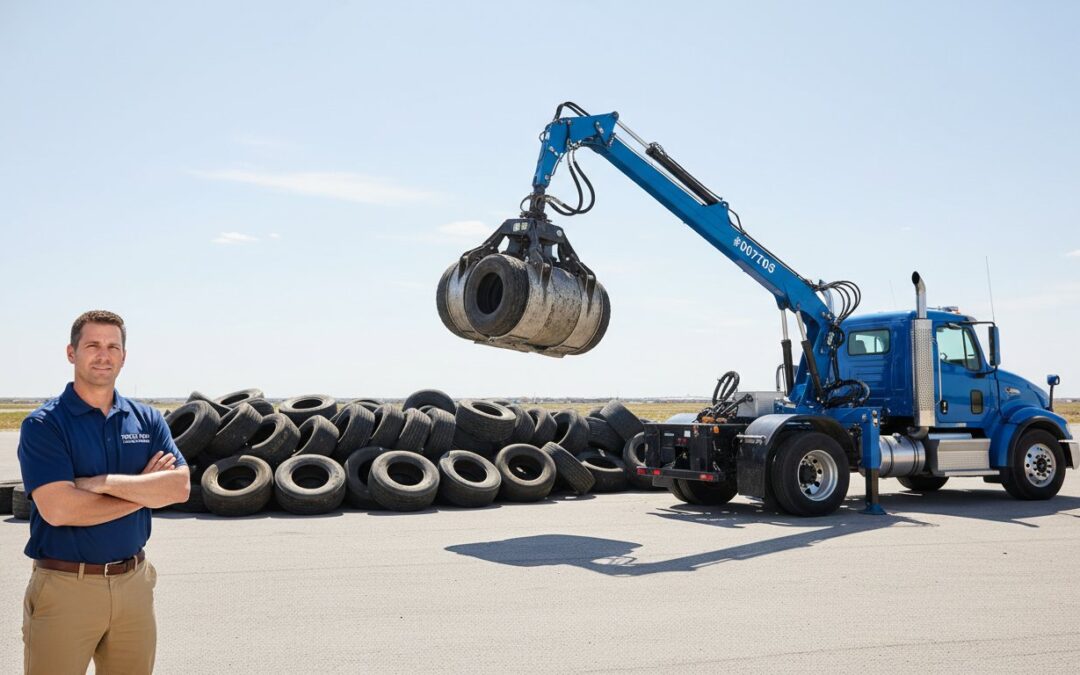
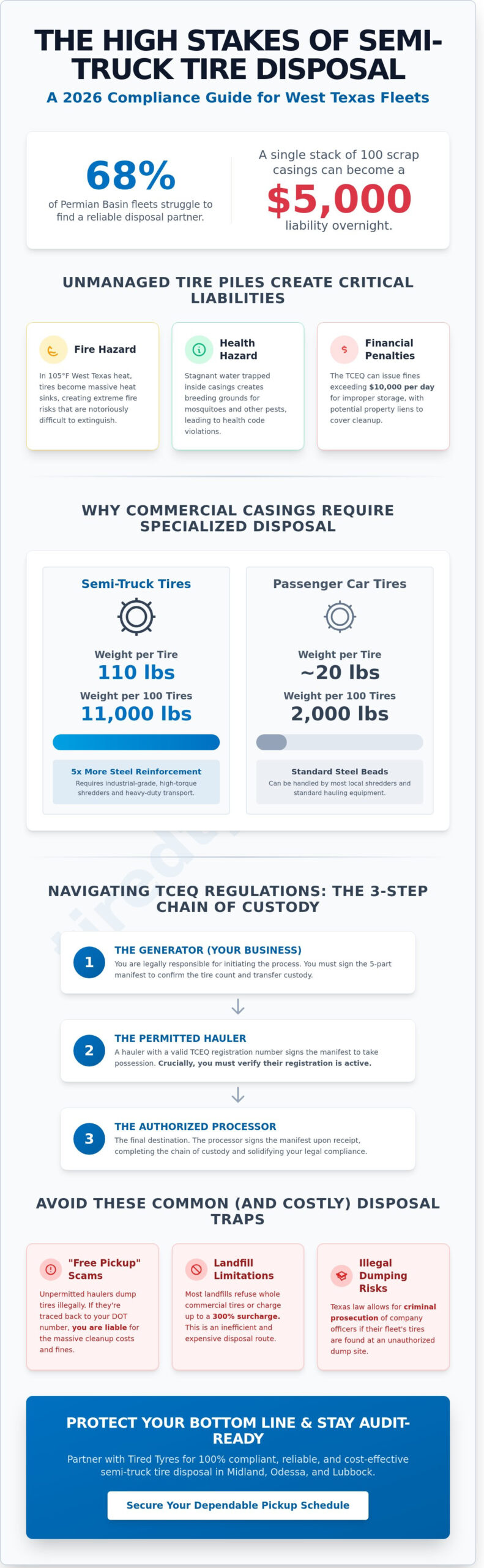
Your stack of 100 scrap casings isn’t just an eyesore; it’s a $5,000 liability waiting for a TCEQ inspector to find a single missing manifest. Since January 2026, 68% of Permian Basin fleets have struggled to find a reliable partner for semi-truck tire disposal that doesn’t charge extortionate hauling fees for heavy commercial rubber. You likely feel the constant pressure of keeping your yard clear while ensuring every shipment is audit-ready. It’s a frustrating balance between rising operational costs and strict environmental regulations that seem to change every season in Midland, Odessa, and Lubbock.
We’re here to help you secure a dependable pickup schedule that guarantees 100% legal compliance and competitive per-tire pricing. This guide explains exactly how to manage bulk casings efficiently while covering the latest TCEQ manifest requirements and the most cost-effective hauling routes across the South Plains. You’ll learn how to turn your tire graveyard into a streamlined, documented process that protects your bottom line and keeps your yard audit-ready throughout 2026.
Key Takeaways
- Understand why the Permian Basin’s industrial growth demands a specialized approach to managing heavy-duty commercial casings.
- Master TCEQ compliance by learning how to properly document and maintain mandatory scrap tire manifests for your fleet.
- Compare the true costs of DIY hauling versus professional semi-truck tire disposal services to find the most efficient solution for high-volume shops.
- Discover the two-step process for organizing your shop inventory and ensuring seamless access for heavy hauling equipment.
- Learn why partnering with a 100% compliant collection service is the safest way to protect your business from legal risks.
The Growing Challenge of Semi-Truck Tire Disposal in West Texas
Semi-truck tire disposal is the specialized process of collecting, transporting, and recycling heavy-duty commercial casings that have reached the end of their service life. Unlike passenger tires, these 110-pound units require industrial-grade logistics. In the Permian Basin, this isn’t just a maintenance task; it’s a critical operational hurdle. By 2026, industrial hauling in the Midland-Odessa corridor is projected to increase tire waste volume by 18 percent compared to 2023 levels. This surge is driven by 24/7 oilfield operations and the heavy-load demands of the energy sector.
Leaving these casings to sit in the West Texas sun creates immediate liabilities. When temperatures in Lubbock or Midland hit 105°F, stockpiled tires become massive heat sinks. They trap thermal energy, creating significant fire hazards that are notoriously difficult for local departments to extinguish. Beyond fire, stagnant water inside casings breeds mosquitoes and pests, violating health codes. If a fleet manager fails to secure proper semi-truck tire disposal, the financial fallout is heavy. The Texas Commission on Environmental Quality (TCEQ) can issue fines exceeding $10,000 per day for improper storage. In many cases, local authorities place property liens on yards to cover the massive costs of environmental remediation.
Why Semi-Truck Tires Require Specialized Handling
You can’t treat commercial casings like car tires. A single load of 100 semi-truck tires weighs approximately 11,000 pounds, while 100 passenger tires weigh only 2,000 pounds. This volume requires heavy-duty flatbeds or specialized trailers for transport. Furthermore, commercial tires contain up to five times more steel reinforcement than standard tires. Most local shredders aren’t built for this. They’ll break or dull their blades on the thick steel beads found in commercial casings. Effective semi-truck tire disposal requires high-torque, industrial shredding equipment designed specifically for the Permian Basin’s heavy-duty waste stream.
Common Disposal Pitfalls for West Texas Fleets
Fleet managers often fall into traps that lead to legal trouble. Avoid these common mistakes:
- The “Free Pickup” Scam: Unpermitted haulers offer free removal but often dump the tires in rural Midland or Ector counties. If the tires are traced back to your DOT number, you’re liable for the cleanup costs.
- Landfill Limitations: Most landfills in the Lubbock area have strict limits on commercial loads. Many charge a 300 percent surcharge for whole tires or refuse them entirely because they don’t compact well.
- Illegal Dumping Risks: Dumping in rural areas isn’t a solution. Texas law allows for criminal prosecution of company officers if their fleet’s tires are found in unauthorized sites.
Managing a fleet in 2026 means being proactive. We focus on getting those “tired tyres” off your lot and into a legitimate recycling stream. It’s about protecting your bottom line and keeping your yard clear of hazards. Professional disposal isn’t just a service; it’s an insurance policy for your property and your reputation.
Navigating TCEQ Regulations: Manifests and Legal Compliance for Texas Fleets
Managing a fleet in West Texas requires more than just maintenance schedules; it requires strict adherence to the Texas Commission on Environmental Quality (TCEQ) scrap tire rules. Under Title 30 of the Texas Administrative Code, Chapter 328, every business that generates scrap tires is legally responsible for their movement. You’re considered a “generator” the moment a casing is removed from a rim. This means semi-truck tire disposal isn’t a simple trash pickup. It’s a regulated transfer of liability that requires specific paperwork to avoid heavy penalties.
To stay compliant, you must only hire a “Permitted Tire Hauler.” These entities carry a unique TCEQ registration number that must be displayed on their vehicles. Before any tires leave your lot in Lubbock or Odessa, verify this number. Using an unregistered hauler is a direct violation that puts your entire operation at risk during a state audit.
Understanding the Texas Scrap Tire Manifest System
The 5-part manifest form is the only document that proves you’ve followed the law. It creates a chain of custody between three parties: the generator, the hauler, and the authorized processor. When we arrive for a pickup, the process follows a strict sequence. You sign the form to confirm the tire count. The hauler signs to take possession. Finally, the processor signs once the tires reach a legal recycling site. Errors in these forms, such as mismatched tire counts or missing signatures, are the most common reasons for TCEQ citations in the Permian Basin.
Liability Protection for Your Business
A legal paper trail is your only defense if your tires are found in an illegal dump site. Texas law follows a “cradle-to-grave” responsibility model. If a hauler dumps your fleet’s old rubber in a field, the state will trace those tires back to your shop. Without a completed manifest, you’re on the hook for the cleanup costs and civil penalties. Under Texas Water Code Section 7.051, administrative fines can reach $25,000 per day per violation. For serious environmental infractions, these costs can double to $50,000.
Tired Tyres prioritizes manifest accuracy for every Midland and Odessa pickup to ensure you’re never exposed to these risks. You’re required to keep these records for at least 3 years to pass a TCEQ inspection. We suggest maintaining a digital backup alongside your physical copies. If you want to simplify your compliance, our team offers a professional scrap tire management solution that handles all the mandatory reporting for you.
Comparing Disposal Methods: Landfills, Scrap Haulers, and Recycling Centers
Choosing a disposal method involves more than looking at a price list. Fleet managers in Midland and Odessa must weigh immediate costs against long-term operational efficiency. DIY hauling to a municipal landfill often seems cheaper on paper. However; when you calculate the true cost, the numbers shift. A typical 50-tire load requires a heavy-duty trailer and at least two technicians for loading and transport.
Professional collection services simplify semi-truck tire disposal by removing the logistics burden from your shop. While a scrap hauler might charge a higher per-unit fee, your mechanics remain focused on billable repairs. In 2026, the average shop labor rate in West Texas sits at $145 per hour. Spending four hours of technician time on a landfill run costs your business $580 in lost revenue, plus fuel and gate fees. This makes professional collection the more profitable choice for high-volume operations.
Landfill vs. Professional Collection Service
Landfills offer lower gate fees, usually ranging from $80 to $120 per ton for bulk rubber. The downside is the downtime. A 50-tire load takes approximately 3.5 hours to process manually, including travel and wait times at the scale. Professional collection reduces this to a 15-minute window for the driver to load. Scheduled pickups ensure your yard stays clear, which reduces fire hazards and prevents vector-borne disease risks in the Lubbock heat.
The Role of Tire Recycling in the Permian Basin
Recycling is the superior choice for companies prioritizing ESG (Environmental, Social, and Governance) goals. Once we collect your casings, they enter a shredding journey. Magnets remove the steel belts for metal recycling, while the rubber becomes Tire-Derived Fuel (TDF) or crumb rubber. TDF provides a high-energy alternative to coal for Texas cement kilns, producing 25% more energy per pound.
In the Permian Basin, recycled rubber finds a second life in oilfield applications. Shredded tires are used in civil engineering projects, such as lightweight fill for road embankments or as a component in rubberized asphalt. Tired Tyres supports this circular economy by ensuring your “tired” rubber stays out of the ground and back in the local infrastructure. We focus on transparency, so you know exactly where your fleet’s waste ends up. Using semi-truck tire disposal services that prioritize recycling helps your company meet sustainability targets while keeping West Texas clean.
Logistics of Bulk Pickup: Preparing Your Shop in Midland, Odessa, or Lubbock
Managing semi-truck tire disposal effectively requires a plan that prioritizes shop flow and safety. A disorganized scrap pile leads to higher labor costs and potential fines. Start by auditing your inventory. Separate steer tires from drive and trailer casings. This allows you to identify high-value casings that are eligible for retreading or resale, potentially offsetting your disposal fees. We’ve seen shops save 15% on monthly overhead just by implementing a strict sorting process.
Clear access is the next priority. A standard 53-foot trailer requires at least 50 to 60 feet of maneuvering space to back into a loading zone safely. Ensure your yard is clear of debris or parked vehicles before the scheduled arrival. If your facility in Midland or Odessa has unpaved areas, wait for dry conditions. Heavy hauling equipment can easily get stuck in West Texas mud after a rare downpour, leading to costly tow bills and service delays.
Before the truck arrives, verify the condition of every unit. Decide if you’re disposing of “rims on” or “rims off” sets. Most recycling facilities prefer tires removed from wheels to speed up processing. Scheduling is your final step. Aim for the “mid-day window” between 10:00 AM and 2:00 PM. This avoids the morning dispatch rush and the afternoon return of your fleet, ensuring your technicians aren’t tripping over scrap rubber during peak hours.
Optimizing Your Tire Storage Area
Proper stacking is a safety requirement. Use the “herringbone” or “laced” stacking method to stabilize piles and prevent tires from shifting. This technique also limits water accumulation. Standing water in a tire pile is a breeding ground for pests and violates local health codes in Lubbock and Odessa. Create a “pick-ready” zone within 20 feet of your loading point. Moving scrap to this zone before the driver arrives reduces loading time by roughly 25% and keeps your shop floor clear for active repairs.
City-Specific Considerations in West Texas
- Midland: Industrial hubs near Highway 191 often face heavy oilfield traffic. Schedule pickups on Tuesdays or Wednesdays to avoid the Monday morning logistics surge.
- Odessa: For high-volume shops along the I-20 corridor, ensure your gate access is wide enough for wide-turn trailers. Bottlenecking the frontage road can lead to city citations. If you need help establishing a reliable collection routine, learn more about scheduled tire pickup Odessa services that can streamline your operations.
- Lubbock: Agricultural fleets often have mixed tire sizes. Grouping large tractor tires separately from your semi-truck tire disposal inventory prevents confusion during the manifest signing. For farms dealing with massive agricultural equipment tires, consider specialized agricultural tire collection services in Lubbock that handle the unique challenges of farm machinery waste.
Ready to clear your yard and get back to work? You can schedule your bulk tire pickup with our team today for a fast, professional solution.
Reliable Semi-Truck Tire Collection Services with Tired Tyres
Managing a commercial fleet in the Permian Basin requires a partner who understands the local logistics of West Texas. Tired Tyres provides a straightforward solution for semi-truck tire disposal that keeps your yard clean and your operation compliant. We’ve optimized our collection routes across Midland, Odessa, and Lubbock to ensure that fleet managers don’t have to wait weeks for a pickup. Since 2022, we’ve increased our hauling capacity by 35% to meet the growing demands of the regional transport industry.
Our team prioritizes 100% TCEQ compliance. We handle the complex manifest reporting required by Texas law, providing you with digital and physical copies of all disposal records within 24 hours of collection. This transparency protects your business during environmental audits. We don’t just haul rubber; we manage your environmental liability so you can focus on moving freight.
The Tired Tyres Advantage
We know the Midland, Odessa, and Lubbock landscape better than national providers. Our drivers are familiar with the specific access requirements of local industrial parks and yard layouts. We utilize specialized walking-floor trailers and heavy-duty flatbeds designed to carry over 800 scrap casings in a single trip. This equipment capability reduces the number of visits needed, minimizing disruption to your daily operations.
- Expert Staff: Every team member is trained in Texas environmental safety protocols and proper documentation.
- Local Knowledge: We coordinate pickups around Permian Basin traffic patterns to ensure on-time arrivals.
- Versatile Handling: Our services extend beyond standard highway tires. We process OTR (Off-The-Road) tires from oilfield sites and large-scale agricultural rubber waste from Lubbock-area farms.
Get a Custom Quote for Your Fleet
Pricing for semi-truck tire disposal shouldn’t be a guessing game. We calculate our rates based on your specific volume and location. A fleet producing 50 scrap tires a month in Midland has different needs than a Lubbock carrier with 500. We offer flexible scheduling, including one-time yard cleanups for accumulated stock or recurring weekly routes for high-volume shops.
The onboarding process is simple. Once you contact us, we’ll assess your inventory and provide a transparent quote within one business day. There are no hidden environmental surcharges or surprise fuel fees. We believe in honest work and clear communication. If you’re ready to clear out your tire rack and secure your compliance trail, Contact Tired Tyres for a Semi-Truck Tire Pickup Quote in Midland. We’ll get your fleet back to a clean slate quickly and professionally.
Streamline Your Fleet’s Compliance in West Texas
Managing a fleet in 2026 means staying ahead of TCEQ regulations and logistical bottlenecks. Proper semi-truck tire disposal isn’t just about clearing space in your yard; it’s about protecting your company from legal liabilities through accurate manifest documentation. You need a partner who understands the specific demands of the Permian Basin. Tired Tyres has served Midland, Odessa, and Lubbock since our inception, providing the specialized equipment needed for heavy OTR and semi-truck loads. We handle the heavy lifting so you can focus on keeping your trucks on the road. Our team provides every client with TCEQ-compliant manifest documentation to ensure 100% legal compliance for your fleet records. Don’t let scrap piles slow down your shop operations or risk heavy fines from state inspectors. We’ve built our reputation on being the reliable, local choice for West Texas fleet managers who value efficiency. Your shop stays clean, your records stay audit-ready, and your tires are recycled responsibly.
Request a Bulk Semi-Truck Tire Pickup Quote Today
We’re ready to help you clear out the clutter and get your shop back to peak performance.
Frequently Asked Questions
Do I need a permit to transport my own semi-truck tires to a landfill in Texas?
You need a TCEQ transporter registration if you haul more than 5 scrap tires at once on Texas roads. If you’re moving 5 or fewer tires, you don’t need a permit. Fleet managers in Midland often prefer professional hauling to avoid the $500 fines associated with unregistered transport. It’s simpler to let a registered carrier handle the paperwork and the logistics.
What is the average cost for semi-truck tire disposal in the Permian Basin?
The average cost for semi-truck tire disposal in the Permian Basin ranges from $18 to $28 per tire. Prices fluctuate based on the 2026 market demand for rubber recycling and your distance from the processing center. Large fleets in Odessa often secure lower bulk rates by signing annual service contracts that lock in pricing for the calendar year.
How does the TCEQ manifest system work for small trucking companies?
The TCEQ manifest system requires you to document every tire that leaves your facility using Form 00309. You’ve got to keep these records for at least 3 years to prove legal disposal during state inspections. It’s a simple paper trail that tracks the tire from your shop to the authorized processor. This system protects your company from liability if tires are dumped illegally by a third party.
Can I dispose of semi-truck tires with the rims still attached?
You can’t usually dispose of tires with rims at standard landfills without paying a significant surcharge. Most Permian Basin facilities charge an extra $15 per wheel to cover the labor of mechanical separation. We recommend removing the rims yourself to keep your semi-truck tire disposal costs manageable. Most recycling centers prefer clean rubber to speed up their shredding process.
Is it illegal to burn or bury old semi-truck tires on my own property in Texas?
It’s strictly illegal to burn or bury semi-truck tires on your property under Texas Administrative Code Title 30. Violations can result in TCEQ fines reaching $25,000 per day for environmental non-compliance. These methods create toxic runoff and long term soil contamination that devalues your land. Proper recycling is the only way to stay compliant with state law.
How many semi-truck tires can I store at my shop before I need a storage permit?
You can store up to 500 scrap tires at your shop before you’re required to register as a scrap tire site with the TCEQ. Once you hit the 501st tire, you must comply with strict fire safety and vector control regulations. Most Lubbock shops schedule pickups at the 400-tire mark to stay safely below this legal limit and avoid extra inspections.
What happens to the tires after Tired Tyres picks them up?
Tires we collect undergo shredding for use in Tire Derived Fuel or civil engineering projects. About 45% of processed scrap tires in Texas become fuel for cement kilns; while another 25% get turned into crumb rubber for road asphalt. This process ensures your old rubber stays out of West Texas landfills and contributes to a circular economy.
Does Tired Tyres offer scheduled weekly pickups for large tire shops in Lubbock?
Tired Tyres provides scheduled weekly pickups every Tuesday and Thursday for high-volume tire shops in Lubbock. We’ve designed these routes to ensure your bay space remains clear and your facility stays compliant with local fire codes. You can contact our dispatch office to set up a recurring 2026 service schedule that fits your shop’s specific volume.