
Did you know that the TCEQ issued more than $2.4 million in penalties for improper scrap tire management in 2025 alone? For businesses in Midland, Odessa, and Lubbock, a growing pile of rubber isn’t just an eyesore or a pest magnet; it’s a financial liability that can lead to fines of up to $25,000 per day. Managing commercial tire disposal effectively is no longer just a chore. It’s a vital part of your operational compliance and risk management strategy.
It’s frustrating to watch valuable site space disappear under a mountain of OTR tires, agricultural rubber, or old semi-truck casings. You want a solution that doesn’t involve the headache of splitting tires for the landfill or navigating complex hauling permits on your own. This guide will help you master the complexities of industrial rubber waste with a clear path to legal and efficient disposal. We’ll walk you through the latest 2026 TCEQ manifest requirements, explain why DIY landfill trips are becoming less cost-effective, and show you how to find a reliable local partner for scheduled pickups that keep your facility clean and your records audit-ready.
Key Takeaways
- Understand why professional commercial tire disposal requires specialized logistics compared to standard residential drop-off programs in West Texas.
- Identify the full range of industrial rubber waste covered, from heavy-duty OTR and semi-truck tires to scrap skid steer tracks and conveyor belts.
- Learn how to maintain 100% TCEQ compliance and avoid heavy fines by using permitted haulers and proper manifest documentation.
- Explore flexible scheduling strategies for your site, including one-time industrial cleanups and recurring commercial collection programs.
- Discover the operational benefits of partnering with a local Midland-Odessa specialist who understands the unique needs of the Permian Basin.
What Defines Commercial Tire Disposal in West Texas?
The industrial landscape of West Texas is unique. Between the oilfields of the Permian Basin and the vast agricultural operations around Lubbock, businesses generate scrap rubber at an incredible rate. Commercial tire disposal is a specialized industrial waste service designed to handle the bulk removal of tires from businesses, fleets, and industrial sites while ensuring full regulatory compliance. This isn’t just about hauling; it’s about managing a regulated waste stream that has specific legal requirements in the state of Texas.
In Midland and Odessa, the scale of this issue is significant. A single drilling site or a regional logistics fleet can generate more scrap rubber in a month than a small town does in a year. While residents might drop off a few tires at a municipal site, commercial entities face strict legal requirements that govern how they store and transport their waste. The sheer volume of OTR and heavy-duty tires used in the energy sector means that standard waste management often falls short, leaving businesses with growing piles that attract pests and regulatory scrutiny.
Identifying Commercial vs. Residential Waste
The distinction between residential and commercial waste often comes down to volume and the nature of the business. In Texas, any entity that produces scrap tires is considered a “generator.” This role carries specific legal burdens. If you’re managing a fleet of semi-trucks or a large-scale farm, you’ve likely crossed the threshold where standard municipal drop-off programs are no longer an option. Most municipal landfills in the Permian Basin have strict limits on tire intake. For example, the City of Midland Landfill requires tires to be shredded or split before acceptance. This is a task that’s nearly impossible for a business with hundreds of OTR or semi-truck tires. Professional tire recycling process standards are necessary for these high-volume generators to avoid the 500-tire storage limit that triggers mandatory TCEQ registration and inspection.
Why Proper Disposal Matters for Your Business
Leaving scrap tires to pile up on your property is a gamble. In the West Texas heat, these piles become prime breeding grounds for mosquitos, increasing the risk of West Nile virus for your employees and the community. Even more dangerous is the risk of fire. Tire fires are notoriously difficult to extinguish and can lead to massive environmental cleanup costs that far exceed the price of professional removal. Beyond safety, there’s the matter of your business reputation. Proper commercial tire disposal ensures you aren’t the source of local blight or environmental hazards. A clean, rubber-free site improves operational efficiency by clearing valuable space for equipment and supplies. It also provides a clear paper trail, proving to regulators and partners that your business operates with integrity and follows every state law.
The Full Spectrum of Commercial and Industrial Rubber Collection
Effective commercial tire disposal in West Texas requires more than just a truck and a trailer. The industrial sectors in Midland, Odessa, and Lubbock produce a wide variety of rubber waste that standard municipal programs simply won’t touch. From the massive tires found on mining equipment to the specialized tracks used in construction, every item requires a specific handling approach. Managing this diverse waste stream is essential for keeping your facility compliant and operational.
Heavy-Duty and Off-the-Road (OTR) Specialist Services
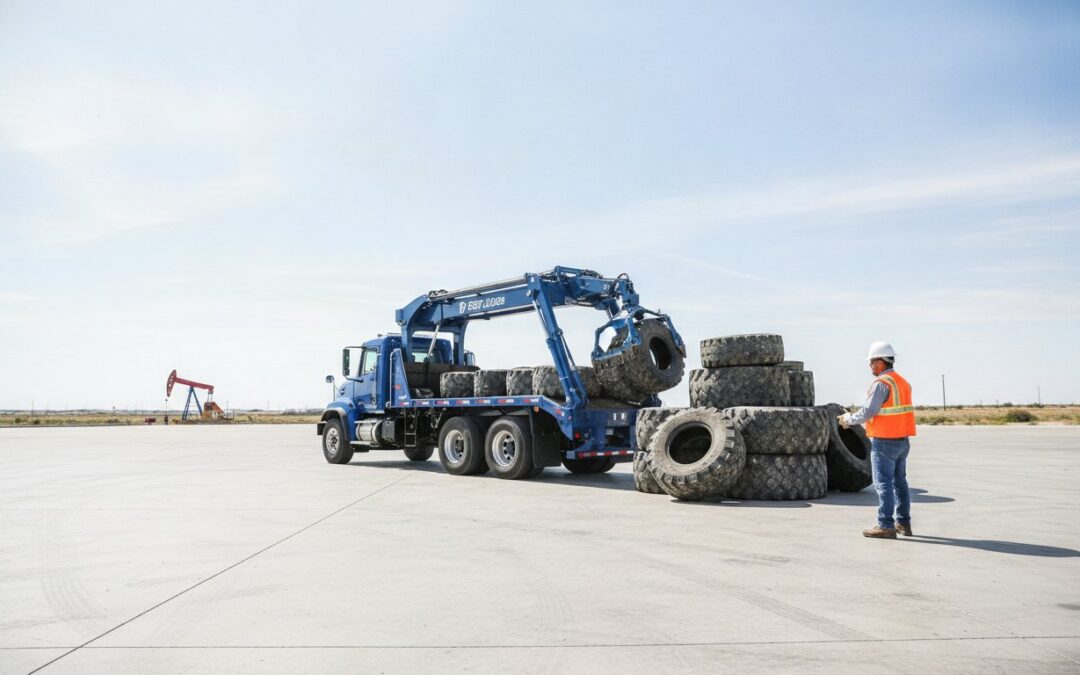
Handling large-scale tires for mining, earthmoving, and construction presents unique logistical hurdles. These OTR tires are often too heavy and bulky for traditional waste haulers to manage. In the Permian Basin, where heavy machinery is the backbone of the economy, these tires can quickly become permanent fixtures on a job site if not handled by a specialist. Proper collection requires heavy-duty winches and specialized trailers designed to transport these massive loads safely.
Agricultural operations around Lubbock and the South Plains face similar challenges. Farm and machinery tires come in non-standard sizes that don’t fit into typical recycling flows. Because these materials eventually feed into broader tire recycling and reclaiming markets, they must be collected and processed correctly. Whether it’s a stack of medium-duty truck tires or a single massive tractor tire, professional removal ensures the rubber is diverted from illegal stockpiles and moved into the proper recycling stream.
Non-Tire Industrial Rubber Removal
Rubber waste in the industrial sector isn’t limited to what rolls on a rim. Many West Texas businesses struggle with “difficult” rubber byproducts that national waste giants often refuse to collect. This includes items like:
- Scrap conveyor belts: Common in mining and industrial facilities, these long, heavy strips of reinforced rubber are notoriously difficult to cut and transport.
- Industrial scrap hoses: Oil field service companies often accumulate miles of high-pressure hoses that require specialized disposal.
- Scrap skid steer tracks: These steel-reinforced rubber tracks are a staple of construction sites but represent a significant disposal headache once they wear out.
- Solid tire waste: Forklifts and warehouse equipment often use solid rubber tires that require different processing than pneumatic versions.
Finding a partner who can manage this full spectrum of materials simplifies your vendor list and ensures that nothing is left behind to create a site hazard. If you’re dealing with a mix of OTR tires and industrial scrap, you might find that a specialized local collection service is the most efficient way to clear your site and maintain your regulatory manifests in one go. This comprehensive approach prevents the accumulation of non-standard rubber that can lead to unexpected TCEQ complications during an inspection.
TCEQ Compliance and Texas Tire Disposal Regulations
Texas law is clear about how businesses must manage scrap rubber. The Texas Commission on Environmental Quality (TCEQ) oversees every aspect of used tire management to prevent environmental hazards and public health risks. In 2025, the agency issued more than $2.4 million in penalties for improper scrap tire management. This underscores why following state rules isn’t just a matter of ethics; it’s a vital financial protection for your company. In the state of Texas, the business that generates scrap tires remains legally responsible for their proper disposal until they reach a registered processing facility, regardless of who hauls them away.
One of the most critical regulations to monitor is the 500-tire storage threshold. Any property storing more than 500 scrap or used tires must register with the TCEQ as a formal storage site. This registration triggers mandatory inspections and complex reporting requirements that most businesses prefer to avoid. For many West Texas industrial operations, hitting this 500-tire limit happens quickly. Scheduling regular commercial tire disposal pickups keeps your on-site inventory low and ensures your waste is handled by a permitted hauler who understands state law.
Navigating the Manifest Process
The scrap tire manifest is your primary defense against legal liability. It’s a specialized tracking document that records the movement of tires from your facility to a registered disposal or recycling site. You’re required to keep copies of these manifests for at least three years. For businesses in Midland and Lubbock, these records serve as the only official proof that your waste didn’t end up in an illegal stockpile. We prioritize this paperwork, ensuring every manifest is filled out correctly and provided to you immediately after collection. This level of detail ensures your record-keeping is always ready for a surprise state audit.
The Risks of Illegal Dumping and Non-Compliance
The “cradle-to-grave” responsibility model means that your liability doesn’t end when the truck leaves your yard. If an unpermitted hauler offers a suspiciously low price and later dumps your tires in a Lubbock County field, the TCEQ can trace those tires back to your business. Fines for unauthorized disposal or storage can reach $25,000 per day per violation. These penalties are designed to be severe enough to put a company’s future at risk. Beyond the financial impact, improper disposal creates fire hazards and mosquito breeding grounds that hurt our local West Texas communities. You can learn more about staying protected by reviewing our guide on Texas Tire Disposal Regulations to ensure your operation stays fully compliant.
Logistics: How Commercial Tire Pickup Works
Streamlining commercial tire disposal in West Texas requires a clear plan to avoid operational downtime. The process begins with a professional site assessment. For businesses in the Midland-Odessa area, this step is vital for estimating volume and determining the right equipment for the job. We look at the types of rubber you’ve accumulated, from standard semi-truck casings to heavy OTR tires and industrial hoses. This assessment ensures we arrive with the capacity to clear your site in a single visit whenever possible.
Scheduling is designed to be flexible. Some industrial sites require one-time remediation to clear years of accumulated scrap rubber. Other businesses, such as logistics fleets or equipment rental companies, benefit from recurring collection programs. These scheduled pickups prevent your inventory from ever reaching the 500-tire TCEQ storage limit. By maintaining a consistent removal cycle, you keep your facility organized and significantly reduce the risk of fire or pest infestations.
Pickup Options for Different Business Sizes
In contrast, bulk site remediation for large industrial stockpiles involves specialized loading equipment. When dealing with hundreds of OTR tires or stacks of scrap conveyor belts, we utilize heavy-duty winches and trailers built for extreme weight. This tailored approach ensures that no matter the size of your operation, the removal process is handled with professional precision. If you’re ready to clear your yard, you can schedule a site assessment to determine the most efficient pickup plan for your specific volume.
Site Preparation and Accessibility
Preparation is the key to a smooth pickup. Before our crew arrives, we ask that you ensure clear access for heavy collection vehicles. These trucks require significant room to maneuver, especially when loading oversized agricultural or mining tires. Removing obstacles and ensuring the scrap is consolidated in a central, accessible location speeds up the loading process and keeps your team safe.
Safety protocols are strictly followed during every loading and removal session. Our operators are trained to handle heavy industrial rubber safely, using the right tools for non-standard items like skid steer tracks or solid forklift tires. Following these simple preparation steps helps maintain a professional environment and ensures the entire operation is completed without incident. For more tips on managing your scrap rubber effectively, read our guide on Reliable Tire Disposal to see how we serve the unique needs of the West Texas business community.
Choosing a Local Partner for West Texas Industrial Waste
West Texas businesses need a partner who understands the local pace. National waste giants often lack the flexibility required by Permian Basin oil field operations or Lubbock agricultural sites. They might refuse “difficult” items like scrap conveyor belts or reinforced skid steer tracks. Choosing a local specialist for your commercial tire disposal ensures that you aren’t just a number in a corporate database. You get a partner who understands the logistics of West Texas lease roads and the urgency of clearing industrial site space.
Our service area is focused specifically on Midland, Odessa, and Lubbock. This local concentration allows us to provide reliable, scheduled pickups that national haulers simply can’t match. We’ve built our reputation on handling the heavy-duty rubber that others avoid. Whether you’re dealing with massive OTR tires from a mining site or a pile of scrap hoses from an oil field service company, we have the equipment and the expertise to manage the removal professionally and efficiently.
The Tired Tyres Advantage
Reliability in West Texas means showing up when promised. We specialize in the specialized. Our team is trained to handle the unique weight and dimensions of agricultural and off-the-road tires, ensuring they are loaded safely and documented correctly. We don’t just haul rubber; we provide a complete solution for compliance and site management. Our commitment to professional, compliant disposal means you can focus on your core operations while we handle the liability of scrap rubber. For a deeper look at how we manage these complex waste streams, you can review our Commercial Tire Disposal Guide.
Get Started with a Custom Quote
Every industrial site has different needs. To provide an accurate volume and cost estimate, we look at several factors specific to your operation. When you request a quote, it’s helpful to have a rough count of the tire types you have on-site. Are you clearing out heavy-duty semi-truck casings or oversized machinery tires? Knowing your location and the accessibility of the pile helps us plan the right equipment for the pickup. This transparency ensures there are no surprises when our crew arrives at your facility.
Requesting a quote is a straightforward process designed to save you time. We provide clear, direct information so you can make an informed decision for your business. Don’t let scrap rubber become a permanent liability on your property or risk the heavy fines associated with improper storage. You can Contact Tired Tyres for a Commercial Pickup Quote today to secure a reliable partner for your industrial waste needs in Midland, Odessa, or Lubbock.
Secure Your Compliance and Reclaim Your Facility Space
Managing rubber waste in West Texas doesn’t have to be a source of regulatory stress. By understanding the 2026 TCEQ manifest requirements and the 500-tire storage limit, you can protect your business from significant financial penalties. Effective commercial tire disposal is about more than just clearing space; it’s about ensuring your “cradle-to-grave” responsibility is handled with professional precision. We’ve covered how the right local partner simplifies this process through specialized equipment and flexible scheduling.
We’re committed to being the local alternative to national waste giants, offering specialized OTR and industrial rubber handling across the entire Permian Basin and South Plains. From scrap conveyor belts to massive agricultural tires, we handle the difficult materials that others often skip. Our team provides full TCEQ compliant manifesting, giving you the peace of mind that your records are always audit-ready. Reclaiming your site is a phone call away. Schedule Your Commercial Tire Pickup with Tired Tyres and let us take the burden of industrial rubber management off your shoulders today.
Frequently Asked Questions
What qualifies as commercial tire disposal versus residential?
Commercial tire disposal involves the bulk removal of rubber waste from businesses, industrial sites, or vehicle fleets. Unlike residential drop-offs, which usually involve a few tires from a personal vehicle, commercial services handle large volumes and specialized sizes. In Texas, any entity that generates scrap tires is legally classified as a “generator” and must follow specific TCEQ rules once they reach certain volume thresholds.
Do I need a special permit to have tires picked up from my business?
You don’t need a specific permit to have tires removed, but you are legally required to use a hauler registered with the TCEQ. The responsibility for ensuring the hauler is permitted falls on you as the waste generator. Using an unpermitted carrier can lead to heavy fines if the tires are later disposed of illegally, as the liability stays with your business until the tires reach a registered processing site.
Can you dispose of large OTR or agricultural tires in Midland?
Yes, we specialize in the collection of oversized Off-the-Road (OTR) and agricultural tires that standard municipal services often refuse. These large scale tires from mining, construction, and farming operations require heavy duty winches and specialized trailers for safe transport. We provide these services across the Midland and Odessa area to help industrial sites stay clear and compliant.
How much does commercial tire disposal cost for an auto shop in Lubbock?
Pricing for commercial tire disposal is not a flat rate; it depends on several factors like tire size, total volume, and your specific location in Lubbock. Passenger tires are handled differently than heavy truck or industrial tires. Because every shop has different needs, we provide custom quotes based on a site assessment to ensure you receive an accurate estimate for your specific scrap volume.
Does your service include non-tire rubber like conveyor belts?
We collect a wide range of industrial rubber products that go beyond standard tires. This includes scrap conveyor belts, industrial hoses, and reinforced skid steer tracks. Many West Texas businesses struggle to find haulers for these “difficult” materials. We include these in our collection services to provide a comprehensive cleanup solution for industrial facilities and oil field service companies.
What documentation do I need to keep for TCEQ compliance?
You must keep copies of every scrap tire manifest for at least three years. This document is the official record showing that your tires were picked up by a registered hauler and delivered to an authorized facility. These manifests are your primary defense during a TCEQ audit and prove that you have met your “cradle-to-grave” legal responsibilities for waste management.
How quickly can you clear a large scrap tire stockpile in Odessa?
The timeline for clearing a large stockpile depends on the total volume and how accessible the site is for our heavy collection vehicles. After an initial site assessment in Odessa, we can typically schedule a cleanup that fits your operational timeline. Our goal is to clear the site efficiently to help you avoid reaching the 500-tire storage limit that triggers mandatory state registration.
Do you offer recurring pickup schedules for commercial fleets?
Yes, we provide recurring collection programs tailored to the needs of commercial fleets and logistics companies. Regular pickups prevent scrap rubber from accumulating and becoming a fire or health hazard. This proactive approach to commercial tire disposal ensures your facility stays organized and remains in full compliance with state storage regulations throughout the year. If you would like to read more about how mobile tyre services can support fleet operations and roadside safety, explore these professional resource options.