
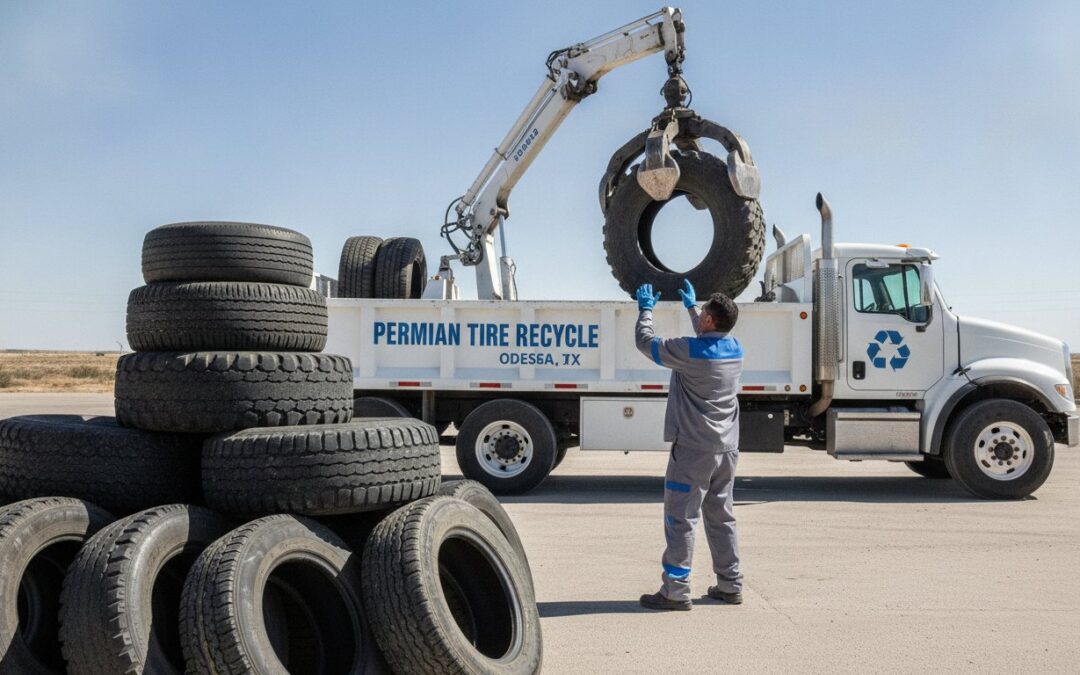
Storing as few as five unregistered off-the-road tires can trigger TCEQ fines exceeding $25,000. For businesses across the Permian Basin, managing rubber waste isn’t just a logistics chore; it’s a high-stakes legal requirement. You’re likely aware that the City of Odessa strictly prohibits placing tires in standard waste containers, leaving many companies stuck with heavy piles of semi-truck or OTR tires they can’t easily move. Securing a professional tire collection service in Odessa is the most effective way to eliminate these risks while maintaining your operational flow.
It’s understandable to feel frustrated by landfill restrictions and the complex paperwork required for bulk disposal. This guide provides a clear path through the 2026 compliance landscape, covering the latest TCEQ 30 TAC Chapter 328 updates and mandatory annual reporting. You’ll learn how to obtain valid disposal manifests and ensure your scrap rubber, from skid steer tracks to conveyor belts, is recycled into powder rather than buried. We’ll show you how to find a permitted partner that helps you stay on the right side of the law while supporting the mission to keep Texas beautiful.
Key Takeaways
- Understand the 2026 TCEQ regulations and why a disposal manifest is your only protection against massive fines for illegal dumping.
- Learn why Odessa landfills reject bulk tires and how a permitted hauler solves the logistics for heavy OTR or semi-truck tires.
- See how a professional tire collection service Odessa manages everything from passenger tires to industrial rubber like skid steer tracks and conveyor belts.
- Discover the efficient process for scheduling one-time cleanups or recurring pickups tailored to your shop’s volume.
- Find out how 90% of your scrap rubber is processed into usable powder, supporting the mission to keep Texas beautiful.
Navigating Tire Disposal Challenges in Odessa, TX
Scrap tire collection is a specialized, state-regulated service designed to remove waste tires and industrial rubber from commercial and industrial properties. In West Texas, this isn’t just about cleaning up a shop yard; it’s about meeting strict environmental standards. For businesses operating in the Permian Basin, managing rubber waste requires more than a simple haul to the dump. It’s a logistical process that ensures every tire is tracked from the moment it leaves your site until it’s properly processed.
Odessa businesses face a tough reality when it comes to bulk waste. You can’t simply load a trailer with old tires and head to the local municipal facility. The City of Odessa municipal code makes it illegal to place tires in standard garbage containers or any other receptacle used for routine waste collection. This leaves many fleet managers and shop owners with growing piles of rubber that quickly become a legal and physical liability.
Ector County Landfill Restrictions
Most municipal landfills in Ector County and the surrounding Permian Basin have strict prohibitions against whole tires. Whole tires are notorious for “floating” to the surface of landfill cells. This movement can rupture expensive landfill liners and disrupt the entire waste management system. To dispose of them legally at a landfill, tires often must be split, quartered, or shredded first. Most local businesses don’t have the industrial equipment to shred a semi-truck tire or an OTR tire on-site. Utilizing a professional tire collection service Odessa allows you to bypass these massive logistical headaches. Instead of dealing with landfill surcharges or specialized shredding requirements, you can rely on a permitted hauler to transport the waste to a dedicated processing facility.
Risks of Improper Tire Storage
Stockpiling tires in the intense West Texas sun creates two major dangers: fire and disease. Rubber absorbs heat rapidly. Once a tire pile ignites, it’s nearly impossible to extinguish. These fires release toxic smoke and oil into the Permian Basin soil, leading to long-term environmental damage. Beyond fire risks, tires are perfect vessels for stagnant water. Even a small amount of rainfall can turn a tire pile into a breeding ground for mosquitoes that carry the West Nile virus, which remains a significant public health concern in Ector County.
The “scrap tire problem” in the Permian Basin is the dangerous accumulation of non-biodegradable rubber waste that threatens environmental safety through soil contamination and the spread of vector-borne illnesses. To mitigate these risks, the Tire recycling process has become the preferred alternative to long-term storage. Modern recycling turns these hazards into useful products, ensuring your waste doesn’t end up as a permanent blight on the Texas landscape. Under current TCEQ rules, commercial properties must follow specific storage limits to avoid being classified as an unauthorized dump site. Hiring a tire collection service Odessa ensures your property stays clear and compliant.
Comprehensive Collection for Commercial and Industrial Rubber
Commercial operations in Ector County generate a diverse range of rubber waste that standard junk removal services simply aren’t equipped to handle. Most general haulers lack the state permits or heavy-duty trailers required for industrial-scale removal. A specialized tire collection service Odessa fills this gap by offering tailored solutions for auto shops, dealerships, and industrial sites. Whether you have a stack of light truck tires from a morning of service or a fleet of semi-truck tires from a logistics hub, professional haulers ensure every piece is moved efficiently and legally.
Oilfield and Heavy Equipment Rubber
The Permian Basin runs on heavy machinery. Off-the-Road (OTR) tires used in oilfield operations can weigh thousands of pounds and stand over six feet tall. Moving these massive units requires specialized hauling equipment and a deep understanding of heavy load distribution. Construction sites also face hurdles with scrap skid steer tracks and solid tires, which are notoriously difficult to dispose of through traditional channels. Securing reliable tire disposal is essential for maintaining a safe, organized industrial site. These heavy components are often refused by municipal services, but they are a core part of a professional industrial rubber collection offering.
Industrial Waste: Hoses and Conveyor Belts
Rubber waste isn’t always round. Manufacturing and processing facilities in Odessa frequently need to dispose of scrap hoses and worn-out conveyor belts. These materials are awkward to transport and can’t be tossed into a standard dumpster. Because industrial rubber waste is generated at different rates than standard tires, custom pickup scheduling is usually the best approach. Proper disposal prevents these materials from ending up in illegal dump sites, protecting your business from liability. The industry’s focus on sustainable tire recycling markets has created new paths for these materials to be repurposed rather than abandoned. By choosing a dedicated hauler, you ensure that even non-tire rubber is handled with environmental care. If you’re ready to clear your yard of awkward rubber waste, scheduling a professional pickup is the most direct solution.
TCEQ Compliance: Why Permitted Haulers Matter
Odessa business owners often assume that once tires leave their property, their legal responsibility ends. This is a dangerous misconception under Texas law. The state operates on a “cradle-to-grave” liability model. This means you’re legally responsible for those tires until they reach a permitted processing facility and are properly recycled or disposed of. If you hire a tire collection service Odessa that isn’t properly registered with the Texas Commission on Environmental Quality (TCEQ), you’re taking a massive financial risk. Verifying a hauler’s status is your first line of defense. A simple insurance certificate doesn’t prove they’re authorized to transport scrap rubber. You should always ask for their TCEQ registration number to ensure they follow the procedures updated on June 25, 2026, which govern the safe storage and utilization of scrap tires across the state.
Understanding the Scrap Tire Manifest
The scrap tire manifest is the most critical document in your compliance folder. It’s a tracking form that requires three distinct signatures: the generator (you), the hauler, and the final processor. Without all three, the paper trail is broken. According to the Texas tire disposal regulations, businesses must retain these records for a minimum of three years. These documents are your only protection during an environmental audit. If a TCEQ inspector visits your Odessa site and you can’t produce these manifests, you could face significant penalties. Additionally, remember that as of September 1, 2024, scrap tire generators must submit an annual operational status report to the TCEQ by December 31st each year. Your manifests provide the data you need to complete this report accurately.
Avoiding Illegal Dumping Liability
Illegal dumping is a major issue in the Permian Basin. The state has significantly tightened enforcement to combat it. Be extremely wary of “free pickup” offers or individuals who claim they’ll “take the tires off your hands” for a suspiciously low price. These operators often dump tires in remote desert areas or abandoned lots to avoid processing fees. The generator remains liable for environmental remediation costs and legal penalties if tires are dumped illegally by an unpermitted hauler, regardless of any verbal agreements or payments made for the service. By choosing a reputable tire collection service Odessa, you aren’t just paying for hauling. You’re buying the peace of mind that comes with a verified, legal paper trail. This protects your business’s reputation and your bottom line from the TCEQ’s aggressive fine structure, which can target even small-scale storage violations.
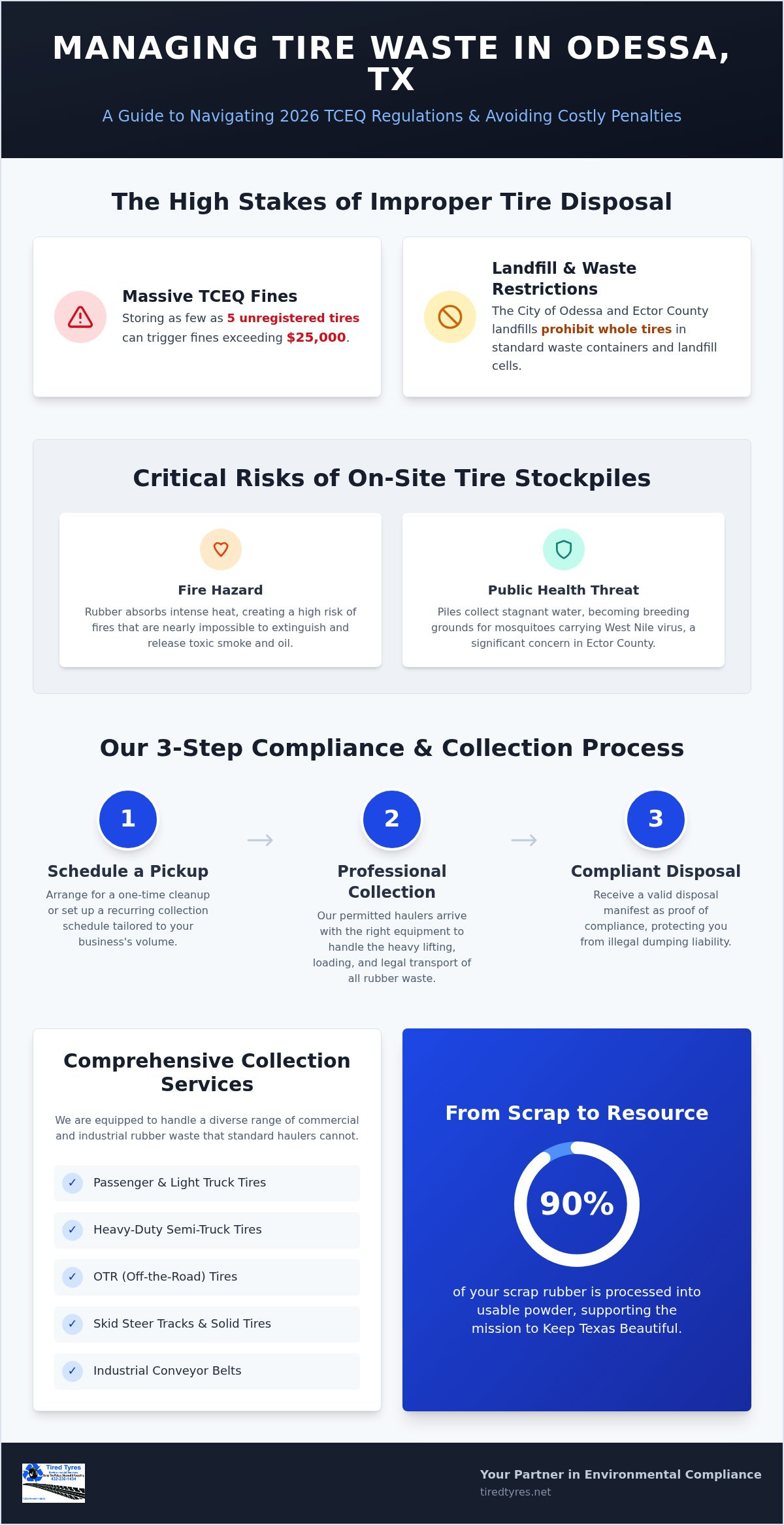
How Our Odessa Tire Collection Process Works
Getting rid of bulk rubber waste shouldn’t be a logistical ordeal for your business. The process starts with a direct quote based on the specific types of tires you have, the total quantity, and your exact location. Unlike generic junk removal apps that offer flat rates for single items, a professional tire collection service Odessa provides pricing tailored to industrial and commercial volumes. This ensures you aren’t overpaying for light truck tires or under-preparing for the specialized equipment needed to move heavy OTR units. Once the scope is defined, we move quickly to clear your site and restore your operational space.
Scheduling Your Pickup
Flexibility is essential for businesses in Ector County. High-volume auto shops and dealerships often benefit from recurring pickup schedules, ensuring that scrap rubber never reaches hazardous stockpile levels. Industrial sites or fleet yards might prefer a one-time cleanup to clear out years of accumulated waste. To make the process as efficient as possible, we recommend stacking tires in an accessible area where a heavy trailer can easily maneuver. Keeping tires separate from other debris like scrap metal or wood prevents delays during the loading phase. For operators at remote oilfield locations outside the Odessa city limits, we coordinate logistics that account for the unique challenges of Permian Basin terrain and caliche roads.
Processing and Documentation
The moment the Tired Tyres team arrives on-site, the focus shifts to legal protection. We handle all the heavy lifting and loading, but the most important step is the documentation hand-off. As discussed in our compliance section, every load requires a signed TCEQ manifest. We ensure that the generator, the hauler, and the eventual processor are all properly documented before the truck leaves your property. This paper trail is your shield against future audits or liability claims. If your operations extend across the region, you can also learn more about our tire disposal in Midland, TX to maintain consistent compliance across multiple yards.
After the tires leave your site, they are transported to a permitted processing center. Here, the rubber is shredded and prepared for its next life. By choosing a professional tire collection service Odessa, you ensure that your waste is handled by a team that prioritizes environmental safety and strict state standards. We take the burden of rubber waste management off your shoulders so you can focus on your core business. If you’re ready to clear your yard and secure your disposal manifests, contact us today for a professional pickup quote.
Environmental Impact: From Scrap to Recycled Rubber
Choosing a professional tire collection service Odessa isn’t just a compliance box to check; it’s an investment in the local environment. Every year, millions of tires are generated across Texas. Without a clear recycling path, these units often clog local landfills or, worse, end up abandoned in the desert. Our mission is to divert this waste from West Texas landfills by feeding it back into the circular economy. This process turns a potential fire hazard into a valuable raw material that supports manufacturing and infrastructure projects across the Permian Basin.
The transformation is significant. We ensure that 90% of the collected rubber is processed into a fine, usable powder. This includes not just standard passenger tires, but also the industrial rubber waste discussed in previous sections, such as scrap skid steer tracks, solid tires, and conveyor belts. By processing these materials, we reduce the carbon footprint associated with long-distance waste hauling and support regional sustainability. Instead of becoming a permanent blight, your scrap rubber becomes a resource for new products.
The Shredding and Crumb Rubber Process
Most waste tires undergo mechanical shredding. This involves industrial-scale machines that tear the rubber into small chips while carefully removing the internal steel wire and fiber. Unlike chemical processing, mechanical shredding is highly efficient and preserves the rubber’s physical properties for secondary uses. This “crumb rubber” serves as the foundation for safer playground surfaces, durable horse stall mats, and even rubberized asphalt for Texas highways. You can read our guide to tire recycling for a deeper look at the technology used to process these materials in our region.
Helping Keep Texas Beautiful
Professional collection plays a vital role in preventing “tire graveyards” from scarring the Permian Basin landscape. When businesses choose a permitted hauler, they effectively cut off the supply of rubber to illegal dump sites in the desert. Your decision to use a tire collection service Odessa directly contributes to a cleaner, safer Ector County. It protects our shared groundwater and reduces the risk of uncontrollable tire fires that release toxic oils into the soil. Processing 90% of scrap rubber waste into powder significantly reduces the volume of non-biodegradable material entering our local ecosystems, ensuring a more sustainable future for the West Texas landscape. By partnering with a state-permitted hauler, you’re doing your part to keep Texas beautiful while protecting your business from the liabilities of improper disposal.
Secure Your Business with Compliant Tire Disposal
Staying ahead of TCEQ regulations requires more than just moving rubber off your property; it demands a verified paper trail and a commitment to environmental safety. We’ve explored how a professional tire collection service Odessa protects your business from the massive fines associated with improper storage and illegal dumping. By securing a signed manifest for every load, you ensure your operations remain audit-ready while contributing to a cleaner Permian Basin.
As a TCEQ Permitted Hauler, Tired Tyres provides reliable solutions for auto shops, industrial sites, and oilfield operators throughout Midland, Odessa, and Lubbock. We take pride in our 90% recycling rate, turning scrap rubber into usable powder rather than letting it sit in local landfills. Whether you have a few dozen passenger tires or a fleet of heavy OTR units, our team is ready to handle the logistics for you.
Don’t let scrap rubber become a liability for your yard. Get a Professional Tire Pickup Quote in Odessa and clear your site with confidence. We’re here to help you keep your business moving and keep Texas beautiful.
Frequently Asked Questions
Is it illegal to throw tires in a dumpster in Odessa?
Yes, it’s unlawful to place any tire in a city container or any other receptacle used for the collection of garbage, rubbish, or solid waste in Odessa. Tires are classified as special waste and aren’t accepted in routine trash pickups. Businesses must use a state-permitted hauler to remove these items. Improper disposal can lead to municipal citations and environmental penalties from the city.
What is a TCEQ scrap tire manifest and do I need one?
A scrap tire manifest is a state-required tracking document that records the movement of waste rubber from the generator to a permitted processor. You absolutely need one for every load that leaves your property. This document requires signatures from the generator, the hauler, and the processor. It serves as your primary legal defense during environmental audits and proves you followed Texas waste laws.
Do you pick up OTR or tractor tires in Ector County?
We collect oversized Off-the-Road (OTR) and agricultural tires throughout Ector County. These massive units require specialized trailers and loading equipment that standard junk removal companies don’t possess. Our team manages the entire loading process for heavy machinery tires. We ensure they’re transported safely to a permitted recycling center, relieving your staff of the physical burden of moving heavy rubber.
How much does tire collection service in Odessa cost?
The cost for a tire collection service Odessa depends on the specific tire types, the total quantity, and the accessibility of your location. Passenger tires, semi-truck tires, and industrial tracks each have different handling and processing requirements. We provide custom quotes based on your specific volume. This ensures you receive a fair, transparent rate for professional, permitted removal without any hidden fees.
Can I dispose of scrap conveyor belts and skid steer tracks?
Yes, we specialize in removing industrial rubber waste that many other haulers refuse to touch. This includes scrap skid steer tracks, solid tires, industrial hoses, and worn-out conveyor belts from processing facilities. These items are often bulky and difficult to transport. Our specialized equipment handles them efficiently while ensuring full compliance with the latest state waste regulations for non-tire rubber materials.
How often can I schedule a tire pickup for my auto shop?
Pickups can be scheduled as a one-time cleanup or on a recurring basis depending on your shop’s specific volume. High-volume dealerships and tire centers often prefer monthly or bi-weekly visits to prevent rubber from accumulating on the property. We work with you to find a frequency that keeps your yard clear and ensures you stay within legal storage limits at all times.
What happens to the tires after they are collected?
We transport collected rubber to permitted facilities where it’s mechanically shredded into smaller pieces. Approximately 90% of the waste we collect is recycled into a fine powder used for rubberized asphalt, playground surfaces, and molded goods. This process supports a circular economy in West Texas. It prevents waste from being landfilled or dumped illegally in remote areas of the Permian Basin.
Are there fines for storing too many tires on my property in Texas?
Yes, storing as few as five unregistered off-the-road tires can trigger TCEQ fines exceeding $25,000. Texas law has strict limits on how many tires a commercial property can store without a specific permit. Regular pickups from a professional tire collection service Odessa help you avoid these heavy financial penalties. It also maintains a safe, fire-resistant workspace for your employees.