
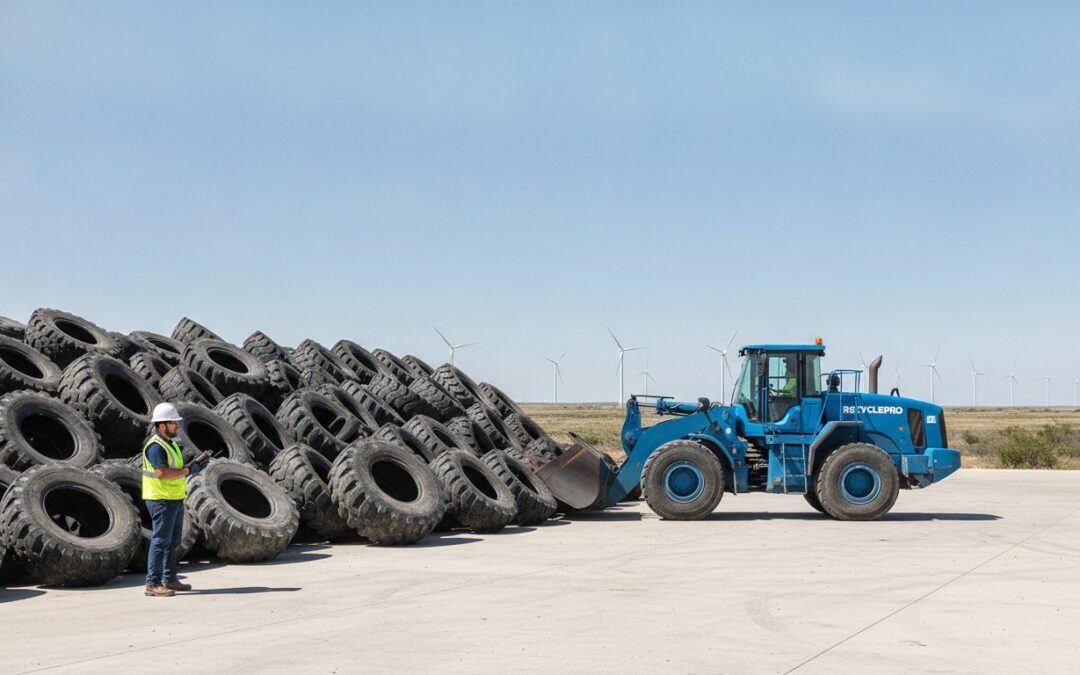
In 2025, the TCEQ issued over $2.4 million in penalties for improper scrap tire management. For a West Texas operation, a single oversight in how you store or transport rubber waste can lead to fines as high as $25,000 per day. It’s a significant risk that many businesses struggle to manage, especially when dealing with the sheer scale of industrial waste.
You likely know the frustration of staring at a growing pile of OTR or agricultural tires and wondering how to move them without a logistical nightmare. Finding reliable bulk tire disposal solutions that handle heavy-duty rubber while keeping your paperwork in order shouldn’t be your hardest task of the week. You need your property cleared and your business protected from legal liability.
This 2026 guide explains how to manage large-scale rubber waste efficiently while staying compliant with updated Texas environmental regulations. We’ll cover the latest storage limits for generators, the importance of the manifest system, and how to secure a reliable pickup service for everything from semi-truck tires to scrap conveyor belts.
Key Takeaways
- Learn how the 2026 TCEQ manifest system protects your West Texas business from liability and significant daily fines.
- Discover specialized strategies for managing oversized OTR and agricultural tires that standard disposal services often cannot handle.
- Identify the most efficient bulk tire disposal solutions for industrial rubber waste, including scrap conveyor belts and skid steer tracks.
- Compare the logistical benefits of scheduled on-site collection against the high costs and strict restrictions of self-hauling to local landfills.
- Understand how professional processing ensures your scrap rubber is managed according to the latest 2026 environmental sustainability standards.
The Challenges of Managing Bulk Tire and Rubber Waste
Bulk tire disposal involves the systematic removal of large quantities of scrap rubber to prevent environmental hazards. For West Texas businesses, a stockpile isn’t just an eyesore; it’s a legal and financial liability. In 2026, regulatory agencies like the TCEQ are more active than ever. During 2025 alone, the TCEQ issued over $2.4 million in penalties for improper scrap tire management. If your property is found in violation, fines can reach $25,000 per day. This makes proactive waste management a necessity for any commercial operation.
Beyond the legal risks, accumulated rubber waste presents a direct threat to local health. Stagnant water trapped inside tires provides the perfect breeding ground for mosquitoes. This increases the risk of mosquito-borne illnesses across the Permian Basin and South Plains. From an economic standpoint, large waste piles decrease property value and signal to inspectors that your site may have other compliance issues. Implementing professional bulk tire disposal solutions is the only way to mitigate these risks effectively and maintain a clean, professional site.
Environmental Risks in the Permian Basin
The dry climate of West Texas makes large tire piles a severe fire hazard. Once a tire fire starts, it’s notoriously difficult to extinguish. These fires release toxic smoke and oily residue that can seep into the ground. The Challenges of Tire Recycling include managing these residues to prevent soil and groundwater contamination. Professional disposal ensures that industrial rubber waste, such as scrap conveyor belts or skid steer tracks, doesn’t end up as a permanent pollutant in our regional soil and water resources.
Identifying Your Waste Volume and Type
Effective waste management starts with knowing exactly what you have. Bulk disposal is any volume requiring specialized hauling equipment. Passenger tires are simple to count, but commercial semi-truck tires or heavy industrial waste like OTR (Off-the-Road) tires require different logistical planning. Volume directly impacts your logistics and cost-efficiency. Using bulk tire disposal solutions tailored to your specific waste type prevents property clutter and ensures you stay within the TCEQ storage limit of 500 tires on the ground.
- Passenger and Light Truck: These accumulate quickly and are high-volume items for many shops.
- Agricultural and OTR: These tires require heavy machinery to move and specialized trailers for safe transport.
- Industrial Rubber: Scrap conveyor belts, hoses, and skid steer tracks don’t fit standard disposal models and need expert handling.
Understanding these categories helps you plan for scheduled pickups that keep your operations running smoothly. Whether you’re in Midland, Odessa, or Lubbock, knowing your volume is the first step toward full regulatory compliance.
Comprehensive Solutions for Industrial Rubber and Large-Scale Tires
Many businesses discover that standard waste haulers aren’t equipped for industrial-grade rubber. Most municipal services and general haulers refuse OTR tires or conveyor belts because they exceed weight limits or require specialized processing at the landfill. For a farm in Lubbock or an oilfield site near Midland, this leaves a massive logistical gap. Finding specialized bulk tire disposal solutions is the only way to clear these heavy items from your property without incurring extra fees or rejection at the gate.
Specialized OTR and Agricultural Tire Collection
Moving massive tractor and earthmover tires is a high-stakes task. These units are too large for standard trailers and often require specialized loaders just to get them off the ground. Safe transport for oversized rubber loads is critical to avoid road hazards and potential legal issues. Tired Tyres serves the specific needs of Midland and Lubbock farmers by providing the heavy-duty machinery required for OTR and agricultural tire collection. We ensure every load is secured and transported according to state safety standards, taking the logistical burden off your team.
Industrial Rubber: Belts, Tracks, and Hoses
Conveyor belts require specialized cutting and hauling techniques before they can be processed. These belts are often reinforced with steel cables, making them incredibly difficult to handle without the right tools. Disposal solutions for solid tires and skid steer tracks are also essential, as their density makes them a challenge for traditional waste models. Oilfield scrap, including heavy-duty hoses and rubber components, often accumulates in remote areas and requires a hauler who understands the terrain. If you have a backlog of industrial waste, you can schedule a specialized collection to restore your workspace and stay compliant.
Managing multiple vendors for different types of rubber waste is a logistical headache. When you combine OTR tires, semi-truck tires, and scrap hoses into one pickup, you save on transportation costs and reduce site traffic. This efficiency is vital for high-traffic industrial sites where every hour of operational downtime matters. By choosing a partner that handles the full spectrum of industrial rubber, you simplify your compliance paperwork. You ensure that every item, from the smallest hose to the largest tractor tire, is tracked through a single, reliable manifest system.
- Agricultural Tires: High-capacity hauling for tractors and harvesters.
- OTR Tires: Specialized equipment for earthmovers and mining machinery.
- Industrial Components: Systematic removal of reinforced conveyor belts and skid steer tracks.
- Oilfield Rubber: Professional collection of scrap hoses and solid rubber waste.
The goal isn’t just to move the waste; it’s to provide bulk tire disposal solutions that fit the rhythm of your business. Whether you’re clearing a single site or managing multiple locations across the Permian Basin, having a dedicated partner for industrial rubber ensures your property stays clean and your operations remain uninterrupted.
Evaluating Bulk Disposal Methods: Efficiency and Sustainability
Self-hauling a massive stockpile of tires to a local landfill is rarely the best move for a business. As of 2026, the City of Midland landfill charges a $25 access fee for vehicles without a Garbage Hauler’s Permit. That’s before you even pay for the disposal itself. Most Texas landfills also require tires to be split, quartered, or shredded before they’ll accept them. This adds significant labor costs and equipment wear to your already busy schedule. Choosing professional bulk tire disposal solutions eliminates these hurdles. We bring the equipment to you, handle the loading, and transport the waste directly to a processing facility.
The Logistics of Bulk Collection
Managing a large property in the Midland-Odessa-Lubbock triangle requires a smart logistical plan. For many industrial sites, a one-time cleanup is enough to clear years of neglect. However, active shops and oilfield sites often benefit from scheduled pickups. This prevents waste from reaching the 500-tire storage limit set by the TCEQ. Optimizing pickup routes across West Texas reduces fuel consumption and lowers your operational carbon footprint. When you invest in reliable tire disposal, you’re choosing a partner that understands the geography and the unique needs of local industries.
Processing and Recycling Outcomes
What happens after the truck leaves your site? Professional processing is the key to a circular economy. In 2023, the U.S. tire recycling rate reached 79%. This is a massive improvement from previous decades. At a dedicated processing facility, tires are shredded into smaller pieces. These materials are then used for tire-derived fuel (TDF) or rubberized asphalt for Texas roads. Professional processing is far superior to landfilling. It keeps rubber out of the ground and turns it into a resource.
A new pyrolysis facility in Midland, commissioned in May 2026, can process up to 24,000 tires per day. This advanced technology breaks rubber down into oil and carbon black. By using bulk tire disposal solutions that prioritize recycling, your business supports these local sustainability efforts. It’s a cleaner, more efficient way to handle industrial waste than simply burying it. This approach ensures your company isn’t just following the law but actively contributing to the regional conservation of West Texas soil and water.
- Efficiency: Avoid landfill access fees and the labor of pre-shredding tires.
- Sustainability: Support the local circular economy through advanced recycling.
- Reliability: Ensure your waste is tracked from pickup to final processing.
- Logistics: Save on fuel and transportation by using optimized local routes.
Choosing the right method depends on your volume and how quickly you need the property cleared. For large-scale operations, the combination of on-site collection and professional recycling offers the best balance of speed and environmental responsibility.
TCEQ Regulations and Compliance for West Texas Businesses
The Texas Scrap Tire Manifest system is the backbone of environmental compliance in 2026. For any West Texas business generating waste, compliance starts with this paper trail. This document tracks tires from the moment they leave your site to their final destination at a permitted processing facility. Without a signed manifest, you have no legal proof of disposal. By choosing professional bulk tire disposal solutions, you ensure that every load is documented correctly, protecting your business from the start.
Always verify that your hauler is TCEQ-permitted before they load a single tire. TCEQ registration is free for transporters, so there is no excuse for a provider to lack proper credentials. Avoiding the “Solar Cowboy” trap is essential for risk management. These unpermitted haulers often offer lower rates but dump tires in remote areas of the Permian Basin or South Plains. If those tires are traced back to your business, the initial savings disappear instantly under the weight of massive fines and cleanup costs.
Staying Compliant in Midland, Odessa, and Lubbock
Local enforcement trends for illegal tire dumping in Texas have become more aggressive. Authorities in Midland and Lubbock are actively monitoring remote sites to protect regional groundwater and soil quality. To stay ahead of inspectors, you must keep all manifests on file for at least three years. This documentation is your primary evidence of following the law. You can find more details on Texas tire disposal regulations to ensure your specific storage and transport methods meet the latest 2026 standards.
Liability and Risk Management
Your responsibility for scrap rubber doesn’t end when the truck leaves your property. Texas law follows a strict “chain of custody” model. If a hauler dumps your waste illegally, your business is still liable for the resulting litigation and environmental remediation. In 2025, the TCEQ issued over $2.4 million in penalties for improper management. Fines for these violations can reach $25,000 per day. A valid TCEQ manifest is your best defense against dumping citations. It proves you fulfilled your duty by handing the waste to a registered professional. If you need a partner who prioritizes full regulatory compliance, contact Tired Tyres for a permitted pickup today.
- Manifests: Never release a load without a completed and signed TCEQ manifest form.
- Permit Verification: Ask for a hauler’s TCEQ registration number and verify it on the state database.
- Record Keeping: Maintain a clean, organized file of all disposal records for three years.
- Storage Limits: Remember that businesses can only store up to 500 scrap tires on the ground without a specific registration.
Staying compliant is about more than avoiding fines; it’s about protecting the reputation of your business. In the tight-knit West Texas industrial community, being associated with illegal dumping can cause long-term damage to your professional relationships. Using bulk tire disposal solutions that emphasize transparency and legal adherence is the smartest way to manage your waste in 2026.
Tired Tyres: Your Partner for Professional Bulk Removal
Managing large-scale rubber waste shouldn’t be a logistical headache for your operation. Tired Tyres provides a direct, professional approach to clearing your property while ensuring every load meets 2026 regulatory standards. We serve the Permian Basin and South Plains, focusing on the specific needs of the Texas oil and agriculture sectors. Our expertise covers the full spectrum of scrap rubber, including OTR and agricultural tires that standard haulers often refuse. We aren’t just transporters; we’re specialists in the industrial waste landscape of West Texas.
Our bulk tire disposal solutions are designed for maximum efficiency. We understand that industrial sites in Midland, Odessa, and Lubbock have high-traffic needs. We provide specialized equipment to handle heavy-duty loads, including scrap conveyor belts, skid steer tracks, and solid tires. By consolidating your rubber waste into a single, professional pickup, you reduce site congestion and simplify your compliance paperwork. This one-stop-shop approach is vital for businesses that generate multiple types of rubber waste, from scrap hoses to semi-truck tires.
Customized Solutions for Ag and Oilfield Clients
Every business has a different rhythm. We offer flexible scheduling to minimize disruption to your daily operations. Whether you’re clearing a farm in Lubbock or a remote oilfield site near Odessa, our team provides tailored equipment for even the heaviest rubber pickups. We maintain a fleet capable of moving oversized OTR and agricultural tires safely and legally. You can learn more about our specific commercial tire disposal services to see how we manage high-volume industrial accounts with professional reliability.
Start Your Bulk Cleanup Today
Getting started with a cleanup is a straightforward process. We provide streamlined quotes based on your specific volume and waste type. This transparency allows you to budget accurately without worrying about hidden disposal fees or landfill rejections. Local expertise matters because we know the West Texas terrain and the specific local landfill restrictions for 2026. We handle the heavy lifting so your team can focus on their core tasks. Our professional collection includes:
- OTR and Agricultural Tire Collection
- Semi-Truck and Commercial Tire Collection
- Scrap Conveyor Belt and Industrial Hose Collection
- Skid Steer Track and Solid Tire Collection
Don’t let a growing stockpile become a legal liability or a safety hazard. Our team is ready to restore your property and provide the peace of mind that comes with professional, permitted hauling. Contact Tired Tyres for a bulk disposal quote today and clear your site with confidence.
Secure Your Compliance and Clear Your Property Today
Managing large-scale rubber waste in West Texas doesn’t have to be a source of stress for your business. By prioritizing TCEQ-compliant hauling and maintaining proper manifest documentation, you protect your operation from the severe penalties issued for illegal storage. Professional bulk tire disposal solutions provide the equipment and expertise needed to handle oversized OTR tires, agricultural rubber, and industrial waste that standard haulers simply won’t touch.
We provide specialized collection services across Midland, Odessa, and Lubbock, ensuring your property remains clean and your business stays within the law. Our team handles the logistics and documentation so you can focus on your daily operations. Whether you’re clearing a farm site or a high-volume industrial yard, reliable waste management is a direct investment in your property’s value and safety.
Get a Professional Bulk Tire Disposal Quote for Your West Texas Business and experience the difference of working with a local expert. It’s time to turn your waste piles into a clean, compliant workspace. We look forward to helping you streamline your rubber disposal process.
Frequently Asked Questions
What qualifies as ‘bulk’ tire disposal for a business?
Bulk disposal refers to any volume of scrap rubber that requires specialized hauling equipment rather than a standard commercial dumpster. For many West Texas businesses, this includes stockpiles that approach or exceed the TCEQ storage limit of 500 tires on the ground. Professional bulk tire disposal solutions are necessary when the weight or size of the rubber makes self-hauling to a landfill inefficient or impossible.
Does Tired Tyres handle large OTR and tractor tires in Midland?
Yes, we specialize in OTR and Agricultural Tire Collection for the Permian Basin. Massive earthmover and tractor tires require specific heavy-duty machinery for loading and transport. We maintain the equipment necessary to move these oversized units safely from your job site or farm, ensuring they are handled with the same precision as smaller commercial loads.
What industrial rubber products can be disposed of besides tires?
We collect various industrial rubber components including scrap conveyor belts, skid steer tracks, and heavy-duty hoses. Many general waste haulers refuse these items because of their density or reinforced steel cables. We provide a comprehensive service that covers both tires and these specialized industrial materials, helping you clear your site in one visit.
How do I ensure my business is compliant with TCEQ tire regulations?
Compliance requires using a hauler registered with the TCEQ and documenting every transaction with a signed scrap tire manifest. You must keep these records on file for three years to prove the chain of custody. This documentation verifies your waste reached a permitted facility and protects you from liability if illegal dumping is discovered elsewhere.
Is there a limit to how many tires you can pick up at once?
There’s no specific limit to the volume we can handle at one time. We adjust our equipment and scheduling to match the scale of your cleanup. Whether you need a one-time removal of a massive stockpile or a recurring service for a high-volume shop, we scale our bulk tire disposal solutions to fit the specific needs of your property.
Do you provide scrap tire manifests for every bulk collection?
Yes, we provide a completed TCEQ manifest for every load we transport from your site. This document is a critical legal requirement for your business records in 2026. It serves as your primary defense against citations and proves that you’ve fulfilled your duty under Texas environmental law by using a permitted professional.
How should I prepare my bulk tire pile for pickup in Odessa?
Place your tires in a clear, accessible area that heavy machinery can reach without obstruction. The pile should be free of rims, dirt, and general trash. Stacking tires neatly can speed up the loading process, but the most important factor is ensuring our trailers have enough space to maneuver safely near the waste.
Can you remove scrap conveyor belts from industrial sites in Lubbock?
Yes, we offer specialized scrap conveyor belt collection for industrial sites across Lubbock and the South Plains. These belts are often too heavy for standard disposal methods and require specialized cutting or hauling. We handle the entire logistics process for moving reinforced rubber belts and ensure they are processed according to current recycling standards.