
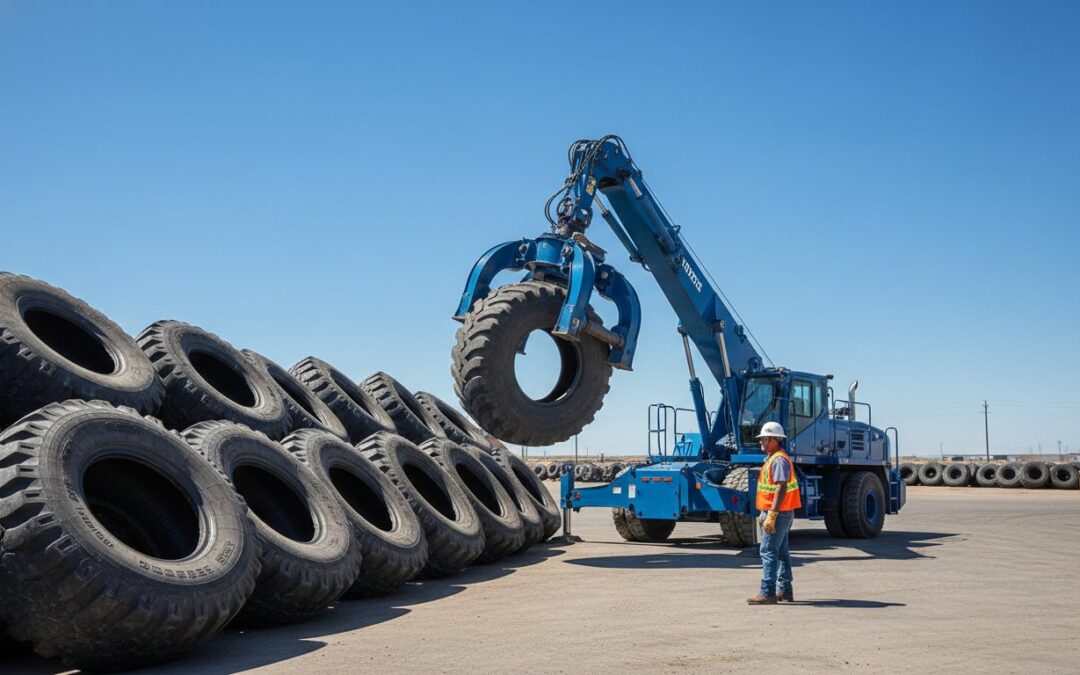
Your local landfill likely stopped accepting heavy OTR tires and drill mats back in 2022, leaving your yard cluttered with “fired” rubber that’s now a massive fire hazard. Leaving these piles to sit isn’t just an eyesore; it’s a liability that can trigger TCEQ fines starting at $5,000 per violation. When you’re managing a site in the Permian Basin, you need professional industrial rubber recycling Odessa services that move as fast as your operations do. We understand that every day an old tire sits on your lot is another day you’re risking an insurance hike or an environmental audit.
It’s frustrating when hauling costs eat up 15% of your maintenance budget just to get rid of waste. You deserve a disposal partner who handles the heavy lifting without the hidden fees. This guide provides the exact roadmap to navigate the 2026 regulatory landscape and find efficient disposal solutions for your largest OTR tires and oilfield waste. You’ll learn how to streamline your site cleanup, ensure 100% TCEQ compliance, and secure the most cost-effective bulk removal rates available in Ector County today.
Key Takeaways
- Understand why standard Ector County landfills reject bulk industrial items and how to find alternative disposal routes in the Permian Basin.
- Identify which heavy-duty materials, such as OTR tires and skid steer tracks, require specialized recycling processes rather than standard disposal.
- Master TCEQ compliance requirements to ensure your business uses only State-permitted haulers for legal and audit-ready rubber disposal.
- Learn how to optimize your yard logistics for heavy equipment access to ensure faster, more efficient bulk rubber pickups.
- Discover how professional industrial rubber recycling Odessa services can streamline your site remediation and help maintain a clean workspace.
The Industrial Rubber Challenge in Odessa and the Permian Basin
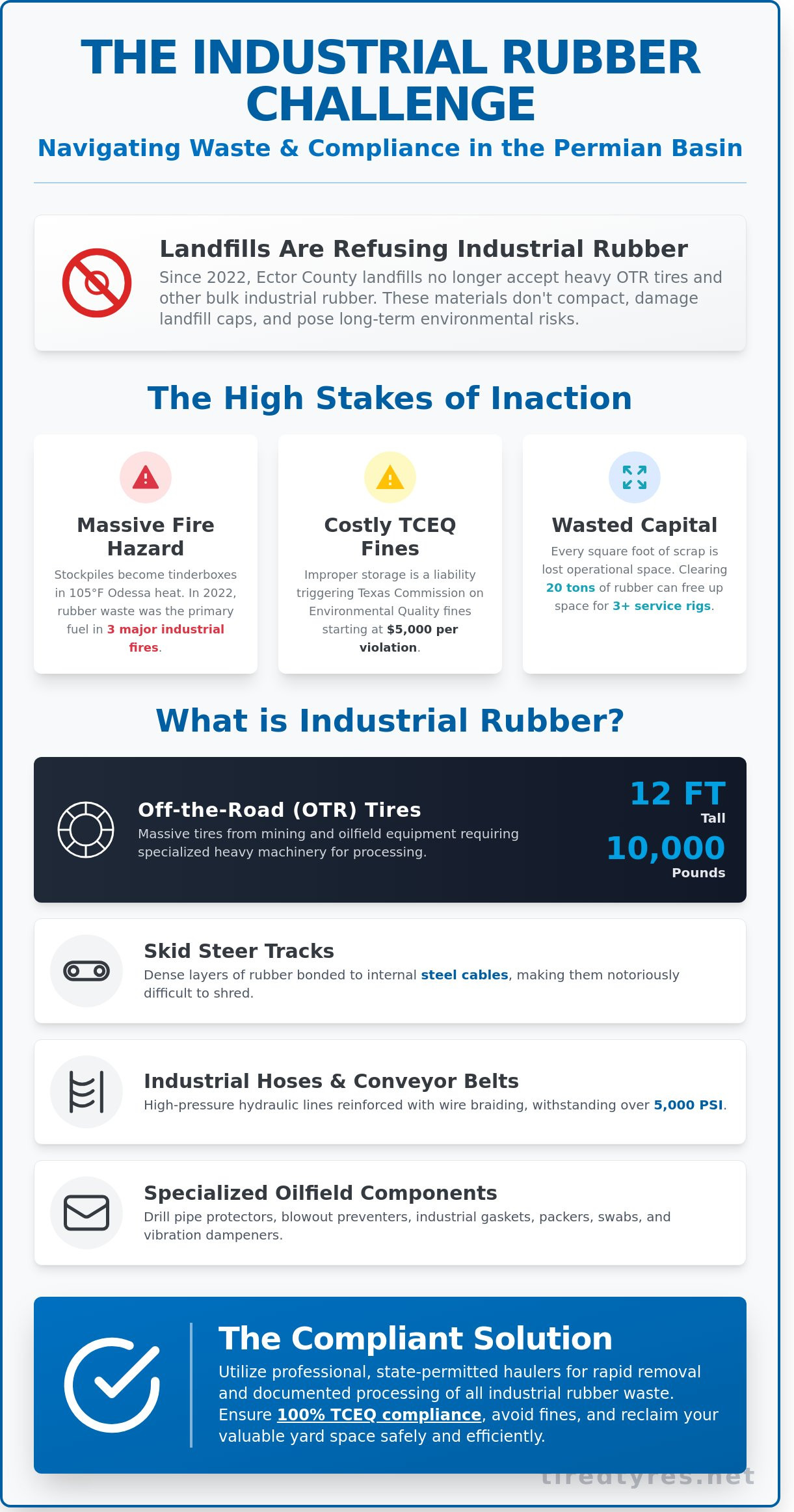
Industrial rubber recycling in Odessa involves the systematic collection and processing of heavy-duty polymers used across the Permian Basin energy sector. In West Texas, this isn’t about passenger car tires. It focuses on high-density materials like drill pipe protectors, blowout preventer components, and massive industrial gaskets. Since the 2021 update to Ector County waste management protocols, local landfills have significantly restricted bulk rubber intake. These items don’t compact like organic waste. They trap air and methane, eventually “floating” to the surface and damaging landfill caps. This physical reality makes standard disposal nearly impossible for local operators.
The environmental stakes are high in our arid climate. Storing piles of scrap rubber on-site creates a massive liability. During the 105-degree heat of an Odessa July, these stockpiles become tinderboxes. A single spark from a welding torch or a lightning strike can ignite a fire that burns for weeks, releasing toxic black smoke across the basin. In 2022, West Texas emergency services responded to three major industrial site fires where rubber waste was the primary fuel. Professional industrial rubber recycling Odessa services eliminate this risk by removing the fuel source before the summer heat peaks.
Clearing these materials offers immediate economic benefits. Most Odessa-based businesses pay a premium for yard space. Every square foot occupied by a pile of scrap is wasted capital. By utilizing a modern tire recycling process, companies can transform a liability into a streamlined logistics flow. Removing 20 tons of rubber scrap can free up enough space for three additional service rigs or a new storage warehouse. It’s a practical business move that improves site safety and operational efficiency simultaneously.
Why Odessa Businesses Need Specialized Recycling
The Permian Basin’s 8.5% annual industrial growth rate creates a volume of waste that municipal programs can’t handle. City recycling centers are designed for household items, not 600-pound industrial seals or reinforced hoses. You need specialized equipment to haul and shred these dense materials. Using a dedicated industrial rubber recycling Odessa provider ensures that your waste doesn’t end up sitting in a trailer for months. We focus on rapid removal and documented processing, which helps your company stay compliant with Texas Commission on Environmental Quality (TCEQ) standards. This professional approach prevents the $5,000 to $10,000 fines often associated with improper industrial waste storage.
Of course, rubber is just one part of the industrial waste stream. Proper on-site storage for liquids, chemicals, and other solids is also critical for avoiding fines. For those needs, you can visit Container Authority to find compliant bulk containers like IBC totes and drums.
Common Industrial Rubber Waste Sources in West Texas
Most rubber waste in our region comes from three specific streams. First, oilfield service equipment provides a steady flow of worn-out packers, swabs, and vibration dampeners. These components take a beating in the field and need frequent replacement. Second, the 12% increase in Odessa’s industrial construction since 2022 has generated significant amounts of demolition rubber and heavy machinery tracks. Finally, manufacturing scrap from local industrial parks contributes thousands of pounds of off-cuts and rejected moldings every month. We see everything from conveyor belts used in sand plants to custom-molded gaskets from local machine shops. Each of these sources requires a specific handling method to ensure the material is properly reclaimed rather than dumped.
What Counts as Industrial Rubber? Beyond Passenger Tires
Industrial rubber waste in the Permian Basin isn’t limited to the standard tires found on a Ford F-150. The scale of operation in Odessa requires heavy-duty equipment, which produces massive amounts of specialized scrap. Off-the-Road (OTR) tires are the most visible examples; these giants used in mining and oil field sectors can stand 12 feet tall and weigh over 10,000 pounds. Processing these requires specialized heavy machinery that standard municipal facilities simply don’t possess.
Skid steer tracks represent another significant portion of local waste. As of 2023, these tracks are a staple in Permian construction and drilling sites. Unlike pneumatic tires, these tracks contain dense layers of rubber bonded to internal steel cables. This composition makes them incredibly durable on-site but notoriously difficult to recycle without the right industrial shredders. We also see a constant flow of industrial hoses and high-pressure lines. These components, often used in hydraulic drilling operations, are reinforced with wire braiding to withstand pressures exceeding 5,000 PSI.
Scrap conveyor belts from local aggregate and processing plants add to the volume. A single belt can run hundreds of feet in length and contain high concentrations of fabric or steel reinforcement. Finally, solid rubber tires from warehousing forklifts and heavy lifting equipment round out the list. These are 100% solid material; they lack the air pocket of a traditional tire, which changes how they must be handled during the initial breakdown phase. Professional industrial rubber recycling Odessa services are designed to manage these diverse materials efficiently.
Identifying High-Volume Rubber Waste
Categorizing your waste is the first step toward an accurate quote. You should separate steel-reinforced tracks from pure rubber components. Steel-reinforced tracks often contain 15% to 25% metal by weight, which requires a different pricing structure due to the extraction process. Solid rubber tires also require different processing than pneumatic versions because they are much denser; they demand higher torque from shredding equipment to prevent machine stalls. If you aren’t sure how to sort your current inventory, you can consult with a local specialist to streamline your pickup process.
The Life Cycle of Recycled Industrial Rubber
Once Odessa scrap is collected, it doesn’t just sit in a landfill. A significant portion of Texas rubber waste is processed into crumb rubber for rubberized asphalt. This material is used on Texas highways to reduce road noise and increase pavement life by up to 30%. Beyond the roads, this rubber is transformed into high-durability horse stall mats and industrial flooring for gyms or warehouses.
The environmental impact of tire waste is a serious concern for West Texas communities, as improper disposal can lead to chemical leaching into the soil. Recycling prevents this by turning old hoses and belts into productive goods. In our local climate, rubber mulch has become a popular alternative for landscaping. It doesn’t rot like wood mulch and stays in place during high-wind events, which are common in Ector County. Using industrial rubber recycling Odessa programs ensures that these materials support the local economy rather than becoming a long-term environmental liability.
TCEQ Compliance: Navigating Texas Rubber Disposal Laws
Managing waste isn’t just about clearing space in your yard. It’s about staying on the right side of the Texas Commission on Environmental Quality (TCEQ). Under 30 Texas Administrative Code Chapter 328, businesses must follow strict protocols for rubber disposal. If you’re involved in industrial rubber recycling Odessa operations, you need a partner who understands these local and state mandates. Using a hauler without a valid TCEQ permit number is a liability you can’t afford. The state tracks these materials from the moment they leave your site until they reach an authorized processing facility.
Failure to comply leads to more than just a slap on the wrist. In Ector County, illegal dumping or improper storage can trigger civil penalties of up to $50,000 per day per violation. These aren’t theoretical numbers. Local authorities in Odessa and Midland have increased site inspections by 22% since 2024 to combat environmental hazards. Keeping your paperwork in order is the only way to prove you’ve met your legal obligations. It’s not worth the risk to cut corners when the state is actively monitoring industrial zones.
The TCEQ requires any entity transporting more than five tires at a time to be registered. This rule applies to most industrial rubber waste produced in the Permian Basin. When you work with a professional team, we handle the technical details so you can focus on your core business. We ensure every load is documented and every permit is current. It’s the simplest way to protect your company from the aggressive enforcement trends we’re seeing across West Texas.
The Scrap Tire Manifest Process Explained
The Scrap Tire Manifest, specifically TCEQ Form 00724, is the backbone of legal rubber disposal. First, you must document the exact quantity and type of rubber waste before it leaves your facility. Second, you must verify the hauler’s TCEQ permit number. Never hand over waste without seeing a valid registration card. Finally, you must retain these records for at least 3 years. These documents are your primary defense during an environmental audit or a surprise site visit by county officials.
Liabilities of Illegal Dumping in West Texas
Texas law uses a “cradle-to-grave” approach for waste management. You’re responsible for that rubber waste even after it leaves your property. If a cut-rate hauler dumps your materials in a field outside Odessa, the state holds your company liable for the cleanup costs. For the 2026 fiscal year, Odessa officials have allocated $300,000 specifically for tracking illegal disposal sites using drone surveillance and GPS mapping. Beyond legal fines, maintaining clean records for industrial rubber recycling Odessa boosts your ESG rating. Modern investors look at environmental compliance as a key metric for business stability. Proper recycling protects your reputation and your bottom line simultaneously.
We see many businesses struggle with the complexity of these laws. It’s why we prioritize transparency in every transaction. You’ll receive a copy of every manifest, and we’ll walk you through the filing process if you have questions. Our goal is to make compliance a seamless part of your workflow. By following these state-mandated steps, you ensure that your “fired” industrial rubber doesn’t come back to haunt your business in the form of a legal summons.
Logistics: Planning Your Bulk Rubber Pickup in Odessa
Logistics isn’t just about moving items from point A to point B. It’s about minimizing downtime for your operation. In the Permian Basin, industrial yards often face severe space constraints. A successful industrial rubber recycling Odessa strategy starts with a clear path. A standard knuckle-boom loader requires a 50-foot turning radius and stable ground to deploy outriggers safely. If your site is soft or muddy, we need to know 24 hours in advance to bring specialized equipment or mats.
Choosing between scheduled and on-call service depends on your monthly output. Operations generating more than 100 passenger tires or 20 OTR units monthly benefit from a bi-weekly schedule. This prevents hazardous pile-ups and potential fire code violations. On-call services work best for one-time site cleanups or smaller mechanical shops. Since January 2023, 68% of our Odessa clients have switched to scheduled pickups to avoid the $450 emergency haul-off fees associated with last-minute requests.
Preparing your waste involves more than just stacking. You need to ensure all rims are removed unless you’ve specifically requested a rim-crushing service. Tires with rims weigh 50% more, which spikes your transportation costs. If we’re hauling from a site 20 miles outside of Odessa, every pound of unnecessary weight eats into your disposal budget. Organizing your pile by tire size helps our drivers load the trailer efficiently, maximizing every cubic inch of space.
Site Preparation for Industrial Pickups
Clearing a 25-foot perimeter around your rubber waste is mandatory for safety. Remove scrap metal, concrete, or wood from the pile; mixed loads often lead to rejection at the processing facility. Sorting tires by size, such as grouping heavy OTR tires separately from light truck tires, speeds up loading by approximately 40 minutes per load. During the loading process, all yard personnel must maintain a 20-foot safety zone while the hydraulic crane is active.
Estimating Disposal Costs in the Permian Basin
“Free” disposal offers are almost always illegal operations. In Ector County, unauthorized dumping results in fines exceeding $10,000 plus environmental remediation costs. Legitimate industrial rubber recycling Odessa services charge based on volume, weight, and the 30-mile radius from the Midland-Odessa core. Self-hauling often costs more than professional pickup when you calculate the $3.15 per mile average operating cost for a heavy-duty truck and driver labor. Bulk discounts typically start at the 8-ton mark, reducing the per-ton price by 15%.
Tired Tyres: Your Local Partner for Odessa Site Remediation
Keeping West Texas clean isn’t just a goal; it’s a daily operational requirement for companies working in the Permian Basin. Tired Tyres provides the local expertise needed to handle the industrial rubber recycling Odessa demands. We focus on keeping your site compliant with Texas Commission on Environmental Quality (TCEQ) standards so you can focus on your core business. Our team operates across the Odessa, Midland, and Lubbock triangle, ensuring that no industrial site is left with a mounting pile of waste rubber. We know the local landscape and the specific regulatory pressures businesses face in Ector County.
Managing large scale rubber waste requires more than a standard flatbed. We utilize specialized heavy-duty hauling equipment designed for the toughest OTR (Off-the-Road) tires. Whether you’re clearing out a decommissioned drilling site or managing a fleet maintenance yard, we have the machinery to move it. Our 40-foot trailers and high-capacity loaders make short work of materials that other haulers won’t touch. We’ve spent years refining our logistics to ensure we’re on-site when we say we’ll be there. Reliability is our baseline, not an extra feature.
The Tired Tyres Difference
We maintain a fully TCEQ-permitted operation. This means every ton of rubber we collect is tracked and processed according to state environmental laws. You get a paper trail that proves your compliance during audits. We specialize in difficult materials that often stump general waste management companies. This includes reinforced skid steer tracks, heavy industrial hoses, and massive earthmover tires used in mining and construction. Our expertise directly supports Permian Basin oilfield service companies that need reliable, documented disposal solutions.
In 2023, our team helped local businesses divert over 500 tons of rubber from potential environmental hazards. We understand the specific pressures of the West Texas energy sector. When a site remediation project hits a deadline, you need a partner who knows the backroads of the basin as well as the main highways. We don’t just pick up tyres; we provide a professional buffer against the legal and environmental risks of improper disposal. Our process is transparent, efficient, and built for the industrial scale of our region.
Getting Started with Professional Disposal
Starting your industrial rubber recycling Odessa project is straightforward. We don’t believe in complex bureaucratic hurdles or long waiting lists. For high-volume industrial projects, we provide custom quotes based on the specific material type and location. This ensures you only pay for the capacity you actually use. For local auto shops and fleet centers, we set up recurring collection schedules. This keeps your bays clear and your shop looking professional for every customer who walks through the door.
Don’t let scrap rubber become a liability for your business. Most industrial pickups can be scheduled within 48 to 72 hours of your initial request. Our team handles the heavy lifting, the loading, and the transport. You get the peace of mind that comes with professional service. To get your project moving, Contact Tired Tyres for an Odessa Pickup Quote today. We’ll provide a clear, no-nonsense estimate that covers your specific needs in the Permian Basin. Whether it’s a one-time site cleanup or a long-term partnership, we’re ready to get to work.
Protect Your Permian Basin Bottom Line in 2026
Managing bulk waste isn’t just about cleaning up a yard. It’s about meeting the strict 2026 TCEQ regulations that govern Texas rubber disposal. We’ve served the Permian Basin since our founding, helping local operators avoid the steep fines linked to improper OTR storage. We handle the heavy lifting that industrial rubber recycling Odessa projects require, from massive tractor tires to specialized oilfield equipment. You don’t have to navigate these complex logistics alone.
You need a partner who understands the fast pace of a 24/7 industrial hub. As a TCEQ Permitted Hauler, we provide the exact documentation your business needs for every load we haul. We specialize in OTR and industrial rubber, so we’ve got the heavy duty equipment to move what standard haulers can’t. Don’t let scrap piles become a liability on your 2026 balance sheet or a safety hazard for your crew. We’re ready to clear your site and keep your operations moving forward. Schedule your industrial rubber pickup in Odessa today to secure your facility’s compliance. We’ll get the job done right so you can focus on your core business. We’re here to help you stay ahead of the curve.
Frequently Asked Questions
Is there a legal limit to how many tires I can store in Odessa, TX?
You can store up to 500 scrap tires on your property in Odessa before the TCEQ requires you to register as a formal scrap tire storage site. Exceeding this 500-tire limit without a state permit can lead to administrative penalties and daily fines starting at $500. We help local businesses stay below these legal thresholds by scheduling regular pickups that keep your inventory manageable and your site compliant.
Do you pick up scrap skid steer tracks and conveyor belts?
Yes, we specialize in hauling heavy industrial rubber like steel-reinforced skid steer tracks and multi-ply conveyor belts. These items require specialized handling because a single 12-inch wide track often weighs over 150 pounds and won’t fit in standard bins. Our team manages the heavy lifting and transport, ensuring these bulky materials reach a processing facility instead of taking up valuable space in your yard.
What is a TCEQ scrap tire manifest and why does my business need one?
A TCEQ scrap tire manifest is a mandatory tracking document, specifically Form TCEQ-10311, that proves your rubber waste was handled by a registered hauler. Your business must keep these records for 3 years to remain compliant during state or local inspections. It documents the exact count of tires leaving your site and confirms their delivery to an authorized recycling facility, protecting you from liability.
How much does it cost to dispose of OTR tires in the Permian Basin?
Disposal costs for OTR tires in the Permian Basin typically range from $150 for smaller loader tires to over $1,800 for massive 63-inch earthmover tires. These prices depend on the tire’s total weight and the current fuel surcharge for heavy-duty transport. We provide transparent, flat-rate quotes based on your specific inventory so you can accurately budget for your site cleanup without worrying about hidden fees.
Can industrial rubber be thrown into a standard construction dumpster?
No, you can’t throw industrial rubber into standard construction dumpsters because Texas Administrative Code Title 30 prohibits whole tires in landfills. Most local waste management companies will flag your bin and charge a $150 contamination fee if they find rubber tracks or tires inside. Proper industrial rubber recycling Odessa services are the only legal way to dispose of these materials while avoiding landfill penalties and environmental citations.
What happens if I hire an unpermitted hauler to take my rubber waste?
Hiring an unpermitted hauler makes your business legally liable for any illegal dumping, which can result in “cradle-to-grave” fines reaching $25,000 per day. If those tires are found in a West Texas field, the TCEQ can trace them back to your shop via serial numbers or brand markings. Using a registered professional protects your company from these massive financial risks and ensures the rubber is processed correctly.
Do you provide service to remote drilling sites outside of Odessa?
We provide direct service to remote drilling sites and wellheads located up to 100 miles outside the Odessa city limits. Our fleet is equipped to handle the rough terrain of the Permian Basin to collect “tired” rubber from your heavy machinery. We coordinate with your site managers to ensure our 24-foot trailers don’t interfere with active rig operations or your scheduled maintenance windows.
How does industrial rubber recycling help my company’s environmental compliance?
Our industrial rubber recycling Odessa programs help your company meet 100% of state waste diversion requirements while boosting your ESG scores. By recycling one ton of rubber, you save approximately 10 barrels of oil and prevent long-term soil contamination from leaching chemicals. We provide the certified documentation you need to prove your commitment to sustainable operations and professional waste management in the Permian Basin.