
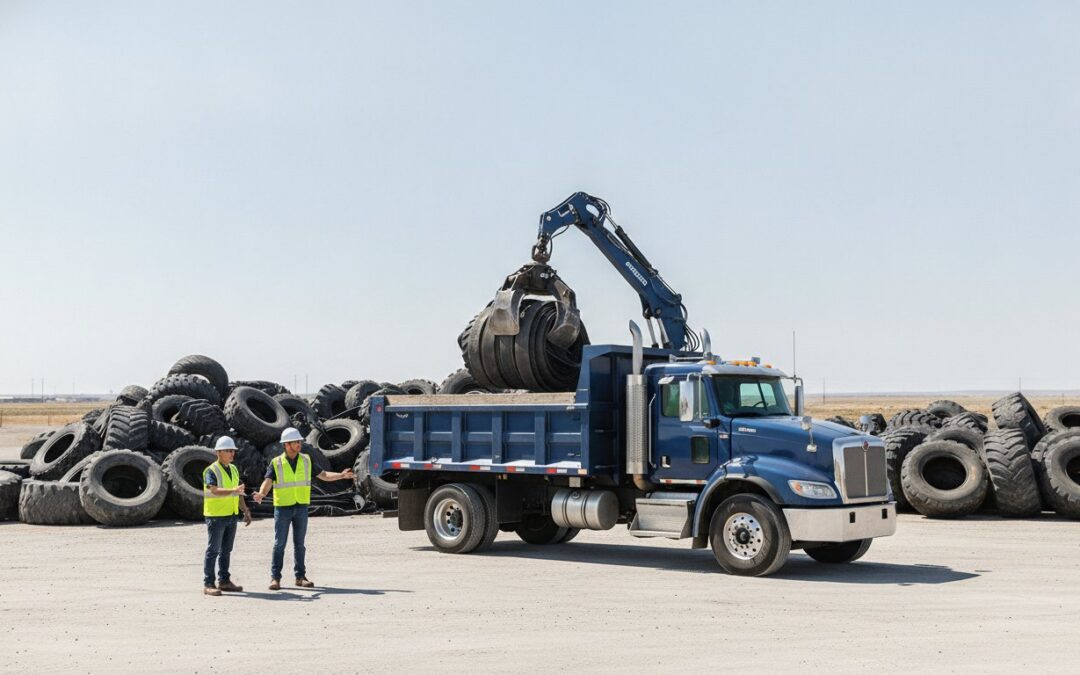
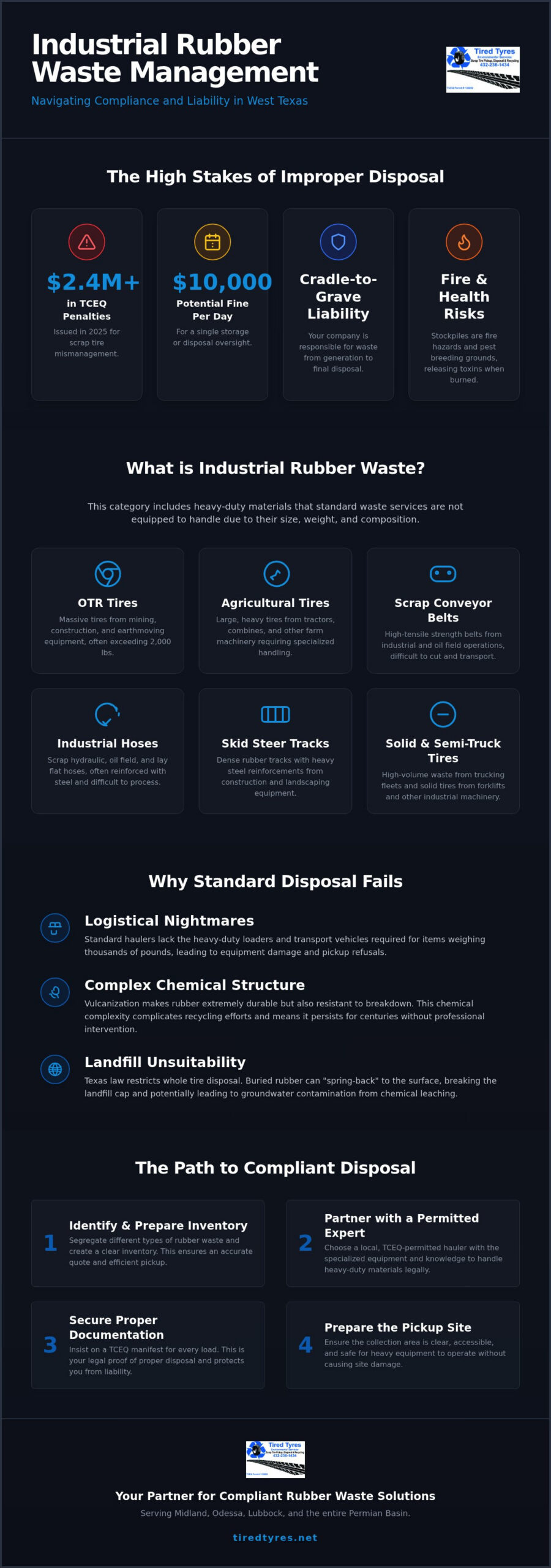
In 2025, the TCEQ issued over $2.4 million in penalties for improper scrap tire management. For any operation in Midland, Odessa, or Lubbock, a single oversight in how you store OTR tires or industrial hoses can lead to fines of $10,000 per day. You’re likely aware that bulk industrial rubber waste removal isn’t just about clearing space; it’s about protecting your company from “cradle-to-grave” liability. Storing oversized agricultural tires or scrap conveyor belts creates serious fire risks and health hazards, making a professional solution essential for your site’s safety and reputation.
This guide provides everything you need to know about managing these materials legally and efficiently in 2026. You’ll learn how to navigate the latest TCEQ manifest requirements and handle the logistical challenges of transporting heavy equipment tracks or lay flat hoses. We’ll walk through the exact steps to ensure your industrial site remains clean and compliant, providing the documented proof of disposal required to stay ahead of state inspectors and avoid costly environmental penalties.
Key Takeaways
- Learn why standard waste management services reject heavy-duty rubber and how to identify materials that require specialized handling.
- Understand the latest TCEQ manifest requirements for industrial rubber waste removal to protect your business from heavy fines and legal liability.
- Discover efficient ways to manage bulk loads of OTR tires, agricultural equipment rubber, and scrap conveyor belts on your site.
- Get practical tips for preparing your inventory and site to ensure a fast, hassle-free pickup by professional heavy-duty equipment.
- Find out how partnering with a permitted local expert in West Texas simplifies the logistics of complex rubber disposal.
Understanding the Challenges of Industrial Rubber Waste Removal
Industrial rubber waste is a broad category that goes far beyond standard passenger tires. It includes heavy-duty materials like scrap conveyor belts, industrial hoses, skid steer tracks, and massive OTR tires used in mining and construction. Most municipal trash services and standard haulers simply aren’t equipped to handle these items. They lack the specialized loaders and heavy-duty transport vehicles required to move a single OTR tire that might weigh over 2,000 pounds. This mismatch often leaves West Texas businesses with growing stockpiles that attract pests and create significant fire hazards in the arid Permian Basin climate.
Effective industrial rubber waste removal is about more than just clearing clutter. It’s a critical part of risk management. Leaving these materials to sit on your property increases your liability every day. In Texas, improper storage can lead to massive TCEQ fines, especially if a pile becomes a breeding ground for mosquitoes or catches fire. These fires are notoriously difficult to extinguish and can burn for weeks, releasing toxic chemicals into the soil and air. Proactive removal is the only way to protect your site and your bottom line.
The Scale of the Rubber Waste Problem
Global rubber production continues to outpace recycling efforts in 2026. A primary hurdle is the chemical structure of the material itself. Vulcanization is the chemical process of heating rubber with sulfur to create cross-links between polymer chains, making the material durable but extremely difficult to break down. This complexity complicates the rubber recycling process, as the very properties that make industrial rubber useful also make it resistant to natural degradation. Without professional intervention, these products remain in the environment for centuries, taking up valuable space on industrial sites in Midland and Odessa.
Why Landfills Aren’t the Solution
You can’t just throw bulk rubber in a dumpster and hope for the best. Texas law strictly regulates the disposal of whole tires and large industrial rubber components in landfills. Even when shredded, rubber poses a unique physical challenge known as the “spring-back” effect. Because of their trapped air and elastomeric properties, buried tires tend to float or migrate back to the surface over time, eventually breaching the landfill cap. This movement compromises the integrity of the site and can lead to chemical leaching into local groundwater. Using a permitted hauler ensures these materials are handled through legal channels rather than ending up in a landfill where they don’t belong.
Comprehensive Removal for Heavy-Duty Rubber Materials
Industrial operations in West Texas generate a diverse range of rubber waste that standard collection services often ignore. From the massive mining sites in the Permian Basin to the sprawling cotton farms of the South Plains, each sector has unique disposal needs. Managing these materials requires specialized logistics and a deep understanding of Texas waste generator requirements to ensure full legal compliance. Professional industrial rubber waste removal involves more than just picking up tires; it’s about handling the high-density, steel-reinforced materials that define modern industry.
Specialized Tire Collection: From Semis to Ag
Logistics for fleet managers often center on semi-truck tire collection. High turnover in regional trucking means constant waste generation that can quickly clutter a yard. However, the real challenge lies in oversized agricultural tires and OTR (Off-the-Road) units. These massive tires require heavy-duty loaders to prevent site damage or soil compaction during pickup. We also provide solid tire collection for forklifts and industrial machinery, ensuring that every wheel in your operation has a documented path to disposal.
Non-Tire Industrial Rubber Scraps
Not all rubber waste is round. Scrap skid steer track collection is a frequently overlooked necessity for construction and landscaping firms. These tracks contain heavy steel reinforcements, making them nearly impossible to process with standard equipment. Similarly, oil field operations in Midland and Odessa produce significant quantities of scrap conveyor belts and industrial hoses. High-tensile strength conveyor belts are particularly difficult to manage due to their weight and rigidity. If you’re managing a site in the Permian Basin, our scrap rubber collection services provide a direct solution to these logistical headaches.
Clearing out oil field and hydraulic lines through specialized scrap hose collection is vital for maintaining a clean, compliant workspace. General scrap rubber collection for manufacturing facilities ensures that production off-cuts and damaged parts don’t become a long-term liability. By addressing the full spectrum of industrial rubber waste removal, businesses can maintain high safety standards while staying aligned with state environmental goals. This comprehensive approach ensures that no material is left behind to create environmental or regulatory risks.
Compliance and Liability: Navigating Texas Regulations
The Texas Commission on Environmental Quality (TCEQ) maintains strict oversight of how businesses manage their scrap. In 2025 alone, the TCEQ issued over $2.4 million in penalties for improper scrap tire management. These aren’t just administrative warnings; they’re heavy financial blows that can cripple a local operation. While EPA data on rubber waste provides a national perspective on recycling rates, Texas operates under its own rigorous set of rules found in Title 30 of the Texas Administrative Code. For businesses in Midland and Lubbock, industrial rubber waste removal must be handled by state-permitted haulers to avoid “cradle-to-grave” liability.
If you hire an unpermitted individual to clear your site and they dump those materials in a West Texas canyon, the state holds you responsible. The original generator of the waste is legally liable for its final destination. Improperly storing as few as 50 unregistered scrap tires can trigger fines of $10,000 per day. If a site is deemed an unauthorized storage facility, those penalties can jump to $25,000 per day. Staying compliant isn’t just about being a good neighbor; it’s a necessary step to protect your company’s financial future.
The Importance of the Scrap Tire Manifest
A scrap tire manifest is your primary defense during an audit. This multi-part document tracks the waste from your facility to a permitted processing or disposal site. It serves as documented proof that you’ve fulfilled your legal obligations. Before any hauler touches your inventory, you should verify their TCEQ permit status. For a deeper dive into these requirements, consult our guide on Texas Tire Disposal Regulations. Keeping these records on file for at least three years is standard practice for maintaining a clean regulatory standing.
Avoiding Illegal Dumping Pitfalls
It’s common to see “tire cowboys” offering free or ultra-low-cost removal services across the South Plains. These offers are a massive red flag. Professional industrial rubber waste removal costs money because legal disposal and transport are resource-heavy processes. “Free” services often result in illegal dumping, which the TCEQ is increasingly aggressive about prosecuting. Using a professional service ensures your environmental record stays spotless. You get the peace of mind that comes with knowing your conveyor belts, OTR tires, and industrial hoses are being handled according to the highest state standards.
How to Optimize Your Bulk Rubber Collection Process
Streamlining your workflow before the collection truck arrives saves time and reduces on-site disruption. Efficient industrial rubber waste removal depends on clear communication and physical organization. When you categorize your inventory by material type and size, you allow the collection team to deploy the right equipment for the job. This is especially important for sites in Midland and Odessa where heavy equipment access can be tight. Organizing your waste isn’t just about tidiness; it’s about ensuring the logistics of the pickup are as cost-effective as possible.
Site preparation is the next critical step. Most industrial cleanups require heavy-duty trailers and loaders that need significant room to maneuver. You should ensure that the path to your rubber stockpile is clear of debris, vehicles, or soft soil that might trap heavy machinery. Depending on the scale of your operation, you might choose between a one-time cleanup to clear years of accumulated waste or a recurring schedule to prevent future stockpiling. Regular collection is often the preferred choice for high-volume facilities to maintain constant TCEQ compliance.
Preparing for Your Collection Day
Sorting your tires by size is one of the most effective ways to speed up the loading process. You should keep passenger and light truck tires separate from massive OTR units. For non-tire materials, coiling industrial hoses and tightly rolling scrap conveyor belts makes them much easier to stack and transport. Safety remains a top priority during the removal process. You’ll need to establish clear safety protocols for your personnel to stay well away from the loading zone while heavy equipment is in operation.
Budgeting for Removal Services
Several factors influence the final cost of your cleanup, primarily the total volume and the specific types of materials being hauled. Heavy, steel-reinforced items like skid steer tracks or large-diameter hoses require more intensive handling than standard rubber scraps. While some businesses consider a DIY approach, the value of professional commercial tire disposal lies in the provided manifest and the elimination of transport risks. Volume discounts often apply to bulk industrial cleanups, making large-scale removals more economical per pound than small, frequent pickups.
If you’re ready to clear your site and secure your regulatory standing, schedule your industrial rubber waste removal with our experienced team today.
Reliable Rubber Waste Solutions in Midland, Odessa, and Lubbock
West Texas businesses face unique logistical hurdles that national haulers often fail to grasp. Tired Tyres serves as your local authority for industrial rubber waste removal across the Midland-Odessa-Lubbock corridor, providing a direct link between your site and a permitted disposal facility. We focus on removing the guesswork from waste management by offering a service that’s as rugged as the industries we support. Our team understands that a clean site is a safe site, and we’re committed to helping you maintain both through professional, transparent collection.
Serving the Permian Basin and Beyond
Our team is deeply rooted in the Permian Basin, where we support the energy sector with the efficient collection of scrap conveyor belts and heavy-duty industrial hoses. In the South Plains, we work alongside the Lubbock agricultural community to clear out oversized tractor and machinery tires that standard services won’t touch. For a more detailed look at our regional approach, consult our Reliable Tire Disposal Guide. We know that a cotton farm in Lubbock has different logistical needs than a drilling site in Odessa, and we tailor our equipment to match those specific environments.
Why Choose Tired Tyres for Industrial Removal?
Choosing a local expert for industrial rubber waste removal means you aren’t waiting on a national dispatcher who doesn’t understand West Texas geography. We maintain a specialized fleet designed to lift and transport the heaviest OTR tires and reinforced skid steer tracks without damaging your facility’s ground or infrastructure. Our expertise extends to non-standard rubber items that other companies reject, ensuring you don’t have to hire multiple haulers for one cleanup project.
Our commitment to transparency is reflected in our manifest process. You’ll receive documented proof for every load we haul, giving you total peace of mind that your business is protected from TCEQ scrutiny. We don’t just move rubber; we provide a sustainable path for materials that are notoriously difficult to manage. By partnering with a team that prioritizes legal compliance and professional service, you can focus on your core operations while we handle the heavy lifting. Whether you’re managing a fleet of semi-trucks or a large-scale construction site, our local presence ensures a fast, reliable response every time.
Secure Your Compliance and Clear Your Site
Managing bulk rubber doesn’t have to be a logistical burden for your operation. By prioritizing industrial rubber waste removal through a permitted hauler, you effectively eliminate the “cradle-to-grave” liability risks that lead to heavy TCEQ fines. You’ve learned that standard disposal methods often fail when faced with high-tensile conveyor belts or massive OTR tires; specialized equipment and documented manifests are the only way to ensure a clean environmental record in West Texas.
Tired Tyres is your dedicated partner for heavy-duty cleanups in Midland, Odessa, and Lubbock. As a TCEQ Permitted Hauler equipped with specialized OTR equipment, we take the heavy lifting off your hands while providing the legal proof of disposal your business requires. Whether you’re clearing a mining site or an agricultural equipment yard, we provide the expertise needed to keep your facility safe and compliant. Don’t let scrap rubber become a long-term liability. Get a Professional Quote for Industrial Rubber Removal today and restore the efficiency of your workspace. We’re ready to help you get the job done right.
Frequently Asked Questions
What qualifies as industrial rubber waste?
Industrial rubber waste encompasses a wide range of heavy-duty materials beyond standard passenger tires. This includes massive OTR tires used in mining, oversized agricultural tires, and semi-truck tires. It also covers non-tire items like scrap conveyor belts, skid steer tracks, and industrial hoses used in oil field operations. These products are typically steel-reinforced and extremely heavy, requiring specialized handling and transport equipment that conventional waste management services don’t provide.
How much does industrial rubber removal cost in Midland-Odessa?
The cost for collection services depends on the total volume of material and the specific types of rubber being removed. Factors like the weight of reinforced conveyor belts or the logistical complexity of moving oversized OTR tires influence the final estimate. Because every industrial site has different needs, we provide custom quotes based on your specific inventory. You should contact a local expert to get an accurate price for your project in the Permian Basin.
Can you pick up large OTR tires from oil field sites?
Yes, our specialized fleet is designed to handle OTR tire collection directly from oil field and construction sites. These massive tires are often too heavy for standard trailers and require heavy-duty loaders for safe transport. We serve the entire Midland and Odessa region, ensuring that even the largest earthmoving tires are removed efficiently. This professional approach prevents damage to your facility’s ground and helps you maintain a clean, safe workspace.
Do I need to provide a manifest for rubber hose disposal?
While the TCEQ specifically mandates scrap tire manifests for tires, maintaining documented proof of disposal for all industrial rubber is a best practice for liability management. Documenting the removal of industrial hoses and conveyor belts protects your company during environmental audits. We provide transparent documentation for all materials we haul from your site. This ensures your environmental record remains spotless and fully compliant with the latest state standards for waste management.
How do I schedule a bulk pickup for my farm in Lubbock?
Scheduling a bulk pickup for your agricultural operation in Lubbock is a simple process. You can contact us directly to discuss the types of rubber you need removed, such as oversized tractor tires or equipment tracks. We’ll coordinate a pickup time that minimizes disruption to your daily farming activities. Providing clear access for our heavy equipment ensures a fast and efficient removal, helping you clear your land while staying aligned with Texas regulations.
Is it legal to store scrap tires on my commercial property in Texas?
Texas law allows for limited storage, but keeping more than 50 unregistered scrap tires can lead to fines of $10,000 per day. The TCEQ regulates storage to prevent fire hazards and public health risks like mosquito breeding. To avoid being classified as an unauthorized storage site, you should schedule regular industrial rubber waste removal. This proactive approach keeps your property clean and protects your business from massive regulatory penalties and environmental liabilities.
What happens to the industrial rubber after it is collected?
Collected rubber is transported to permitted processing or recycling facilities where it is handled according to state law. Some materials are shredded for use in civil engineering projects, while others are processed for tire-derived fuel or new rubber products. Our focus is on ensuring a legal and environmentally responsible path for every item we haul. This process diverts bulk waste from landfills and supports a more sustainable recycling infrastructure in West Texas.
Do you remove scrap skid steer tracks and conveyor belts?
Yes, we specialize in scrap skid steer track collection and the removal of high-tensile conveyor belts. These items contain heavy steel reinforcements that make them difficult for standard waste services to process or transport. We have the specialized equipment necessary to load and move these dense materials from your site. Including these items in your industrial rubber waste removal plan ensures that all your non-standard rubber scraps are disposed of legally and efficiently.