
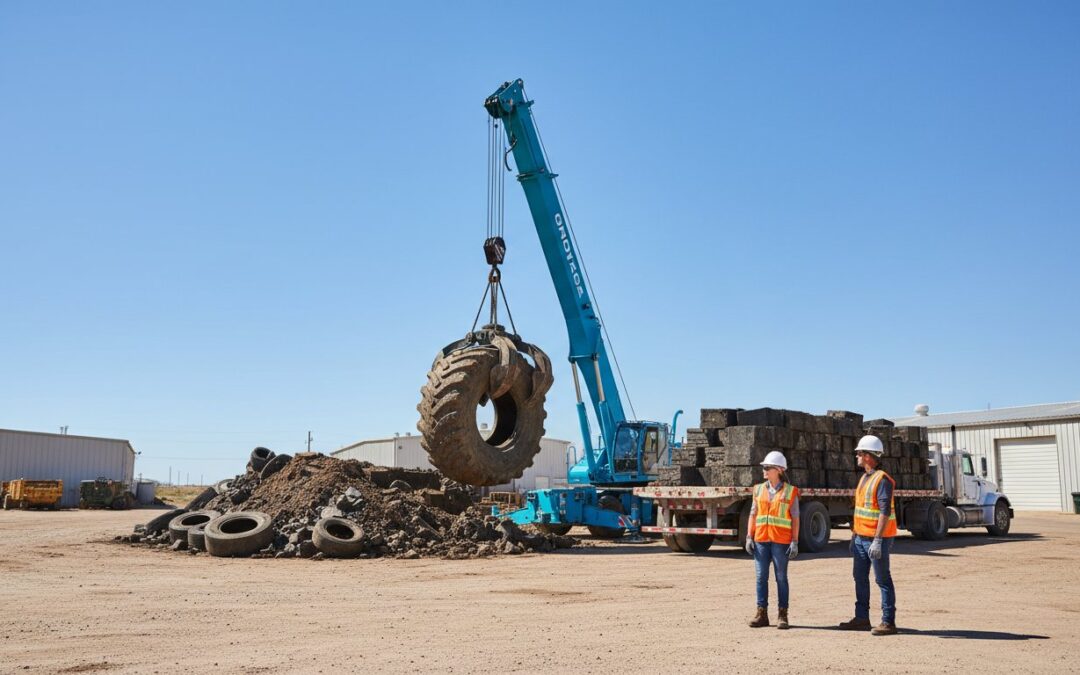
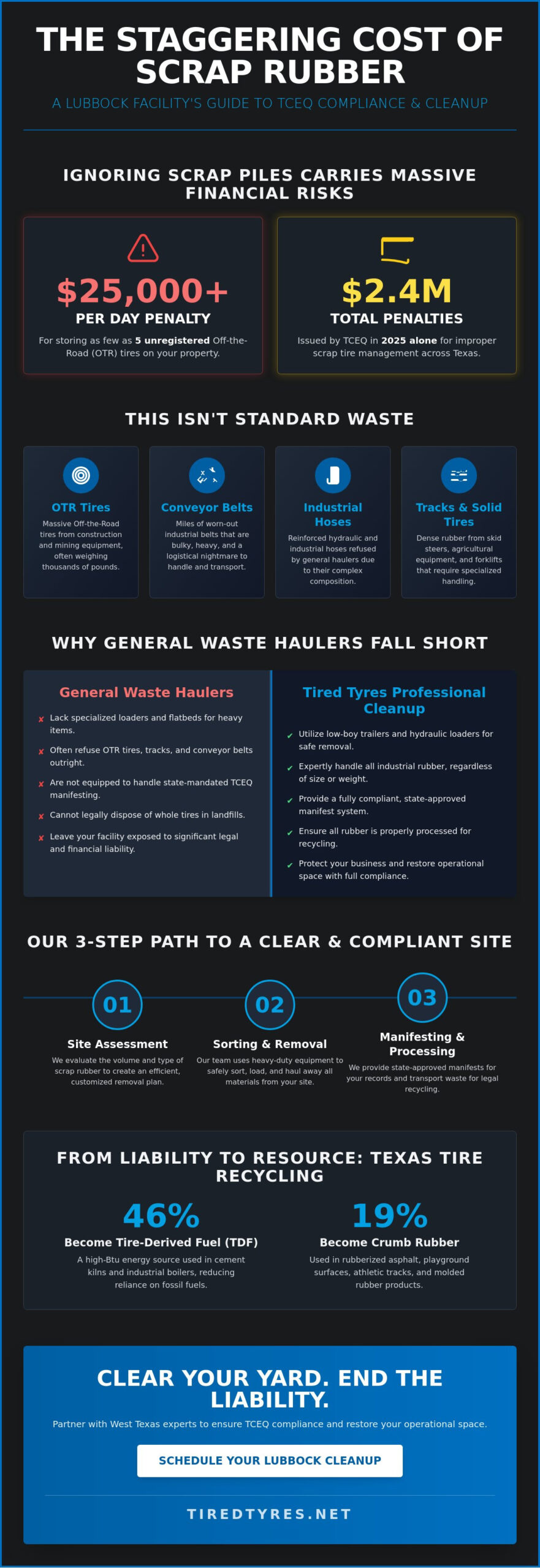
Storing just five unregistered OTR tires on your property can trigger TCEQ civil penalties exceeding $25,000 per day. It’s a harsh reality for local facilities, especially since the TCEQ issued over $2.4 million in penalties for improper scrap tire management in 2025 alone. If you’re managing a facility in the Hub City, securing a professional partner for industrial site rubber cleanup Lubbock is no longer just about tidying up; it’s about protecting your bottom line from staggering liability. General waste haulers often refuse heavy OTR tires or scrap conveyor belts, leaving you with a mounting problem that eats up operational space and attracts pests.
You’ve likely felt the frustration of watching bulk rubber accumulate while wondering if your storage methods meet the April 2026 registration thresholds. We understand that you need a solution that’s as efficient as it is legally sound. This guide will show you how to clear your site, ensure you’re ready for the December 31st annual reporting deadline, and utilize specialized recovery services that handle everything from skid steer tracks to agricultural rubber. We’ll break down the latest 2026 compliance rules and show you how a state-approved manifest system keeps your business safe and your yard clear.
Key Takeaways
- Restore your yard’s efficiency by systematically removing bulk scrap rubber, conveyor belts, and heavy-duty industrial hoses.
- Master the specialized logistics needed to handle the extreme weight of Off-the-Road (OTR) tires and industrial tracks safely.
- Ensure full TCEQ compliance and avoid Lubbock County fines by utilizing professional industrial site rubber cleanup Lubbock services.
- Streamline your cleanup through a professional process that includes site assessment, sorting, and state-approved manifesting.
- Leverage local West Texas expertise to secure a reliable pickup schedule that clears space and protects your business from liability.
What is Industrial Site Rubber Cleanup in Lubbock?
Industrial site rubber cleanup Lubbock is a specialized hauling and logistics service designed to remove non-standard waste that traditional janitorial teams and general trash collectors simply cannot handle. This process involves the systematic removal of bulk scrap rubber materials that accumulate at high-volume facilities. In the Hub City, this service is essential for distribution centers, agricultural hubs, and manufacturing plants that generate large volumes of specialized waste. Unlike standard municipal waste, industrial rubber requires heavy-duty equipment and specific state permits for legal transport and processing.
The materials involved in a professional cleanup go far beyond standard passenger tires. A typical project might include massive Off-the-Road (OTR) tires from construction equipment, miles of worn-out industrial conveyor belts, and reinforced rubber hoses used in hydraulic systems. Understanding the rubber recycling process is crucial because these materials don’t belong in a standard bin. In Texas, 46% of scrap tires are processed into Tire-Derived Fuel (TDF), while another 19% become crumb rubber. Professional cleanup ensures your waste enters these productive recycling streams rather than sitting as a liability on your property.
Why General Cleaners Fall Short
Standard warehouse cleaners and general waste haulers lack the specialized equipment needed for OTR tire hauling or heavy track removal. A single OTR tire can weigh several thousand pounds, requiring loaders and flatbeds rather than a simple garbage truck. Furthermore, Texas Commission on Environmental Quality (TCEQ) regulations as of April 2026 strictly prohibit whole tires from being disposed of in landfills. Tires must be split, quartered, or shredded first. Most general cleaners aren’t equipped to navigate these legal hurdles or provide the state-mandated manifests required for bulk rubber transport.
The Scope of Site Remediation in West Texas
Site remediation in the Lubbock, Midland, and Odessa corridors often addresses years of accumulated waste. We see warehouse corners filled with scrap skid steer tracks and old processing facilities draped in heavy-duty conveyor belts that no longer serve a purpose. Abandoned tire stockpiles are a primary focus because they pose significant fire risks and become breeding grounds for mosquitoes and rodents. Clearing these areas restores operational space and eliminates the risk of TCEQ civil penalties, which can range from $50 to $25,000 per day for storage violations. Whether it’s a stack of 50 scrap tires or a pile of solid industrial tires, professional remediation restores the safety and utility of your industrial property.
Specialized Removal: Conveyor Belts, OTR Tires, and Tracks
Standard facility maintenance often stops at the floor level. When you’re dealing with bulk rubber waste, a mop and bucket won’t help. Specialized industrial site rubber cleanup Lubbock demands heavy-duty logistics to handle the extreme weight of Off-the-Road (OTR) tires and miles of scrap conveyor belts. These items are too heavy for manual labor and too bulky for standard garbage trucks. We utilize specialized low-boy trailers and hydraulic loaders to manage the sheer density that industrial sites generate. This equipment allows us to move solid rubber tires and heavy tracks without damaging your facility’s asphalt or concrete surfaces. Proper equipment isn’t just about speed; it’s about maintaining site safety during the entire removal process.
Managing Scrap Conveyor Belts and Hoses
Scrap conveyor belts are a logistics nightmare for many West Texas facilities. They don’t fold easily and they won’t fit in standard dumpsters. Leaving them to rot behind a warehouse creates long-term headaches. Over time, degrading rubber can lead to health and environmental concerns of scrap tires and other industrial rubber products, including toxic runoff and pest infestations. Our team handles the heavy lifting by cutting these belts into manageable sections and hauling them away for proper processing. We also collect scrap industrial hoses, solid rubber tires, and scrap skid steer tracks that general haulers often refuse because of their weight and non-standard dimensions.
OTR and Agricultural Tire Collection
Lubbock’s agricultural sector relies on massive machinery that produces equally massive waste. When a tractor tire or a piece of heavy equipment reaches the end of its life, disposal becomes a major operational hurdle. There is a massive difference between picking up a few passenger tires and managing heavy equipment tire disposal. OTR tires can weigh several thousand pounds and require specific loading techniques to transport safely. For fleet managers overseeing large operations, finding a reliable partner for commercial tire disposal is the most efficient way to keep a yard organized and compliant. If your site is currently cluttered with old machinery rubber, our team can help you clear your operational space with a reliable pickup schedule that works around your business hours.
Regulatory Risks: TCEQ Compliance and Lubbock County Fines
Managing industrial waste in Texas isn’t just about hauling; it’s about meticulous documentation. The Texas Commission on Environmental Quality (TCEQ) enforces strict rules that every Lubbock business must follow to avoid massive financial hits. As of April 2026, you can store up to 500 tires on-site without registration, but exceeding that limit without a permit triggers immediate legal risk. You’re also required to submit an annual operational report by December 31st each year. The most critical part of the process is the scrap tire manifest. This document proves that your waste was handled by a permitted transporter and delivered to a legitimate processing facility. Property owners remain legally liable for all rubber waste until a state-approved manifest is signed by a registered hauler.
If you don’t have this paperwork, you’re essentially gambling with your business’s future. The TCEQ can assess civil penalties ranging from $50 to $25,000 per day for violations of the solid waste disposal act. These aren’t empty threats. In 2025, the state issued over $2.4 million in penalties for improper scrap tire management. Using a professional industrial site rubber cleanup Lubbock service ensures that every pound of rubber, from scrap skid steer tracks to agricultural tires, is accounted for and legally processed.
Avoiding Illegal Dumping Penalties
Lubbock County enforcement officers frequently inspect industrial properties for illegal stockpiling. They’re looking for abandoned tire piles, old conveyor belts, and scrap rubber that hasn’t been moved in months. While the cost of professional remediation is a fixed operational expense, a single fine can easily exceed $25,000. Some local businesses have even faced liabilities of $10,000 per day for small, unregistered stacks. For a complete breakdown of what’s required at the state level, you can reference our guide on Texas tire disposal regulations. Staying ahead of these inspections is the only way to maintain a clean record.
The Importance of Permitted Haulers
Never hand your industrial waste to an unregistered “guy with a truck.” If an unlicensed hauler illegally dumps your tires in a West Texas field, the TCEQ can trace those materials back to your facility. You’ll be held responsible for the cleanup costs and the resulting fines. Verifying your hauler’s TCEQ registration status is a mandatory step in protecting your reputation. At Tired Tyres, we ensure every load is tracked from your site to a permitted processing facility. This ethical approach to rubber recycling protects your business from third-party negligence and keeps your yard compliant with all 2026 standards.
How a Professional Rubber Site Cleanup Works
A successful industrial site rubber cleanup Lubbock doesn’t happen by accident. It requires a disciplined five-step protocol to ensure every pound of material is handled safely and efficiently. The process starts with an initial site assessment where we estimate the total volume and identify the specific rubber types on your property. We look at everything from abandoned OTR tires to piles of scrap conveyor belts. This step allows us to bring the right trailers and loaders for your specific needs, preventing multiple trips and wasted time on your busy industrial lot.
Once the assessment is complete, we move to sorting and staging. We separate different rubber types, such as OTR tires from standard passenger tires, because they often go to different processing lines. Loading is the most labor-intensive phase. We use specialized heavy-lift equipment to handle scrap skid steer tracks and solid tires. These items are often reinforced with steel, making them incredibly heavy and difficult to move without hydraulic assistance. After loading, the material is transported to a permitted recycling facility. The final step is the provision of a state-approved manifest. This document proves your compliance with TCEQ rules and is essential for your December 31st annual operational reports.
Scheduling and Logistics for Lubbock Sites
We understand that Lubbock distribution centers and manufacturing plants operate on tight schedules. Our logistics team coordinates with your site managers to establish clear access and loading zones. This prevents our trailers from blocking your docks or interfering with daily warehouse operations. You can choose a one-time remediation project to clear out years of accumulated waste or set up recurring scheduled pickups to keep your yard clean year-round. Maintaining a clear workspace improves site safety and allows your team to move more efficiently. If you’re ready to reclaim your yard, you can schedule a professional site assessment to get a clear picture of your removal needs.
Environmental Impact and Recycling
Clearing industrial rubber isn’t just about aesthetics; it’s about environmental responsibility. When you remove bulk rubber, you’re actively reducing the carbon footprint of your industrial operations. Most scrap rubber from Lubbock sites is repurposed into new products like tire-derived fuel or rubber-modified asphalt for infrastructure projects. Professional removal also helps you avoid significant waste tire problems such as toxic fires and pest breeding grounds. By choosing a permitted hauler, you ensure that your waste contributes to a sustainable circular economy rather than becoming a long-term environmental liability for your business.
Partnering with Tired Tyres for Lubbock Site Remediation
Tired Tyres stands as the leading specialist for industrial site rubber cleanup Lubbock, providing a reliable bridge between operational waste and legal disposal. Our team understands the unique pressures of the West Texas industrial landscape, specifically within the Lubbock, Midland, and Odessa corridors. We don’t just pick up tires; we manage the entire lifecycle of industrial rubber scrap. This includes everything from passenger and light truck tires to massive agricultural and OTR collections. We also specialize in the removal of scrap skid steer tracks, industrial hoses, and solid tires that often stall site remediation projects because of their weight and bulk.
Reliability is the core of our business. We operate with full transparency, ensuring that every load is tracked and documented according to state law. This commitment to TCEQ-compliant operations means you never have to worry about the legal status of your waste once it leaves your property. We provide the state-approved manifests you need for your December 31st annual reports, giving you peace of mind and a clear audit trail. Our goal is to take the burden of rubber management off your shoulders so you can focus on your primary business operations without fear of surprise inspections or fines.
Why Choose a Specialized Rubber Hauler?
Choosing a specialized hauler like Tired Tyres is about more than just clearing space. We provide a complete disposal and recycling chain that general waste companies can’t match. Standard haulers often leave behind the heaviest items, such as reinforced conveyor belts or oversized machinery tires, because they lack the proper loading equipment. We have the specific trailers and hydraulic tools required to move these items safely without damaging your site’s infrastructure. Our expertise in industrial site rubber cleanup Lubbock ensures that your property remains compliant with the 2026 storage regulations while keeping West Texas clean and professional.
Get Your Industrial Site Cleanup Quote
Every industrial property has different needs, which is why we offer customized estimates tailored to your specific volume and rubber types. Whether you’re dealing with a one-time warehouse clear-out or require a recurring pickup schedule for a high-volume distribution center, we offer the flexibility to meet your project deadlines. Our team works around your operational hours to minimize downtime and site disruption. Contact us today for a professional rubber cleanup quote in Lubbock! We’ll help you restore your operational space with a service that’s as efficient as it is compliant.
Secure Your Site and Compliance Status
Managing a high-volume facility in West Texas requires more than just efficient production; it requires a proactive approach to non-standard waste. By prioritizing professional industrial site rubber cleanup Lubbock, you protect your business from the $25,000 daily civil penalties that the TCEQ can assess for storage violations. You’ve seen how specialized equipment and a state-approved manifest system turn a major liability into a manageable operational task. Whether you’re clearing out miles of old conveyor belts or massive OTR tires, having a permitted partner ensures your site stays clean and your records stay legally sound.
Tired Tyres is a TCEQ Permitted Hauler specialized in OTR and industrial rubber disposal. We proudly serve the Lubbock, Midland, and Odessa corridors with transparent, reliable service that keeps your yard operational and pest-free. Don’t let bulk rubber accumulation compromise your safety or your professional reputation. Reclaim your property and ensure your facility is ready for the next regulatory inspection with a team that knows the West Texas landscape. We’re here to help you navigate the 2026 standards with confidence and precision.
Get a Quote for Industrial Rubber Cleanup in Lubbock and let us handle the heavy lifting for your business today.
Frequently Asked Questions
Is it illegal to store scrap tires on my industrial site in Lubbock?
Storage becomes illegal once you exceed the specific limits set by the TCEQ without a formal registration. As of April 2026, you can store up to 500 scrap tires on the ground without a permit. If your inventory exceeds 500 tires on the ground or 2,000 in lockable containers, you must register with the state. Violating these storage thresholds can lead to civil penalties ranging from $50 to $25,000 per day.
How do I dispose of old conveyor belts in West Texas?
You must use a specialized hauler because traditional landfills often refuse bulk rubber and whole tires. We cut industrial-grade conveyor belts into manageable sections and transport them to permitted recycling facilities. This systematic removal is a key part of our industrial site rubber cleanup Lubbock, ensuring that heavy, steel-reinforced rubber doesn’t become a permanent fire hazard or a liability on your industrial property.
What is a TCEQ scrap tire manifest and why do I need one?
A scrap tire manifest is a state-mandated tracking document that records the movement of rubber waste from your site to a processor. You need this document to prove that your waste was handled by a permitted transporter. It protects your business from liability if a hauler illegally dumps the material. These manifests are also essential for completing your mandatory annual operational report due every December 31st.
Can Tired Tyres handle large OTR tires from construction equipment?
Yes, we utilize specialized low-boy trailers and hydraulic loaders specifically designed for Off-the-Road (OTR) tires. These tires often weigh several thousand pounds and require heavy-lift equipment that standard waste companies don’t possess. We manage the entire logistics chain for construction and earthmoving equipment tires, ensuring they’re loaded safely without damaging your facility’s asphalt or concrete surfaces.
Does your Lubbock cleanup service include scrap skid steer tracks?
Yes, our cleanup service includes the collection of scrap skid steer tracks and solid rubber tires. Because these tracks contain heavy internal steel cables, they’re difficult to process and are frequently rejected by general trash collectors. We handle the heavy lifting and transport these items to facilities equipped to manage steel-reinforced rubber, keeping your warehouse corners and loading docks clear of bulky waste.
How much does industrial rubber cleanup cost in Lubbock?
Costs depend on the volume and specific type of rubber, with 2026 market rates for machinery rubber often starting at $0.20 per pound. For example, heavy-duty truck tires typically cost $11.00 each, while larger 300/400 series tires may be $25.00. We provide customized estimates after an initial site assessment to ensure your remediation project stays within budget while maintaining full regulatory compliance.
What happens to the rubber after it is collected from my site?
Collected rubber is transported to permitted facilities to be repurposed into secondary materials or fuel. According to the 2024 TCEQ Scrap Tire Annual Report, 46% of these materials are converted into tire-derived fuel, while 19% become crumb rubber for asphalt and infrastructure projects. This process ensures your industrial scrap contributes to a circular economy rather than sitting in a pile attracting pests and rodents.
Do you provide recurring pickup services for Lubbock warehouses?
Yes, we offer recurring pickup schedules for high-volume warehouses and distribution centers that generate scrap rubber continuously. Regular pickups prevent you from hitting the 500-tire storage limit that triggers mandatory TCEQ registration. This proactive approach keeps your operational space clear and ensures you’re always ready for a surprise environmental inspection, as we provide the necessary manifests for every single haul.