
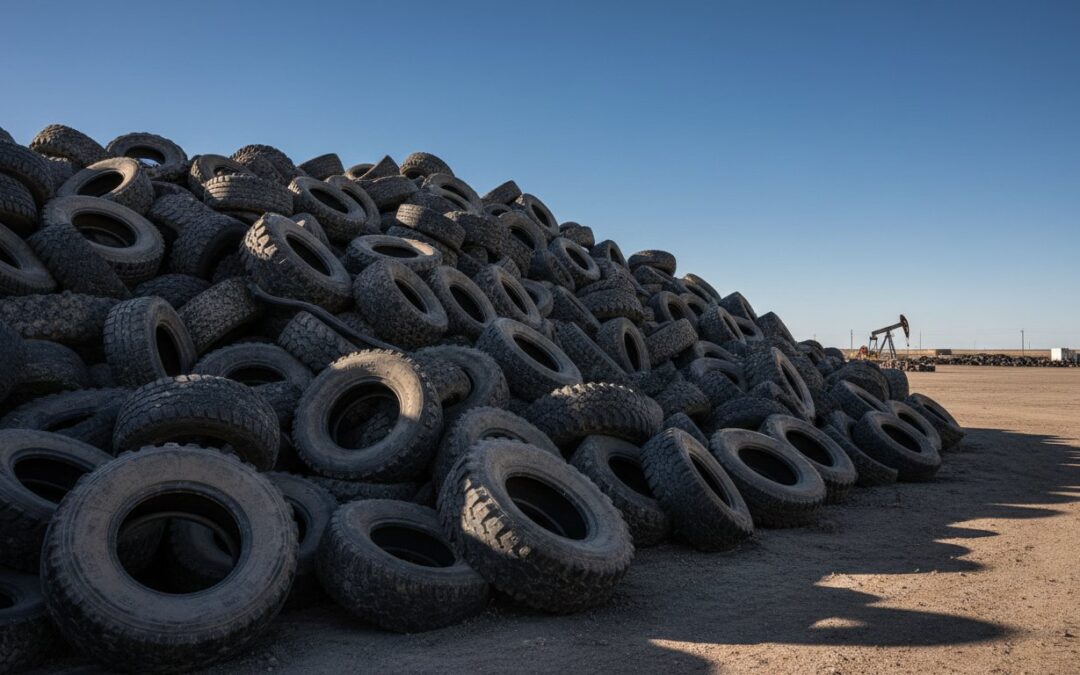
On July 15, 2025, a shop owner in Odessa discovered that a small stack of just 20 tires had become a breeding ground for over 5,000 mosquito larvae in less than a week of West Texas heat. It’s a common story that highlights how quickly waste tire problems can spiral from a minor eyesore into a serious liability. You likely already feel the pressure of keeping your property clear while worrying about the 2026 TCEQ regulations that could lead to heavy fines for improper storage.
We understand that managing scrap rubber shouldn’t be your full-time job. This guide helps you discover the hidden health, legal, and environmental risks of scrap tires in Midland, Odessa, and Lubbock. You’ll learn exactly how to remain compliant with Texas environmental laws and avoid the fire hazards that peak during our 100-degree summers. We also provide a clear path to finding a reliable local partner for removal, ensuring your business stays protected and your backyard stays safe.
Key Takeaways
- Understand why industrial and agricultural growth in the Permian Basin creates a higher-than-average volume of scrap tires compared to the rest of Texas.
- Learn how stagnant water in discarded rubber fuels West Nile Virus risks and identify the specific heavy metals currently threatening West Texas aquifers.
- Navigate strict TCEQ regulations to avoid the steep fines and potential criminal charges associated with illegal “midnight dumping” in Lubbock County.
- Discover how professional collection services effectively solve local waste tire problems while protecting your business from significant legal liability.
- Find out how Tired Tyres provides a hassle-free, compliant disposal route for residents and industrial partners across Midland, Odessa, and the South Plains.
The Growing Crisis of Waste Tires in Midland, Odessa, and Lubbock
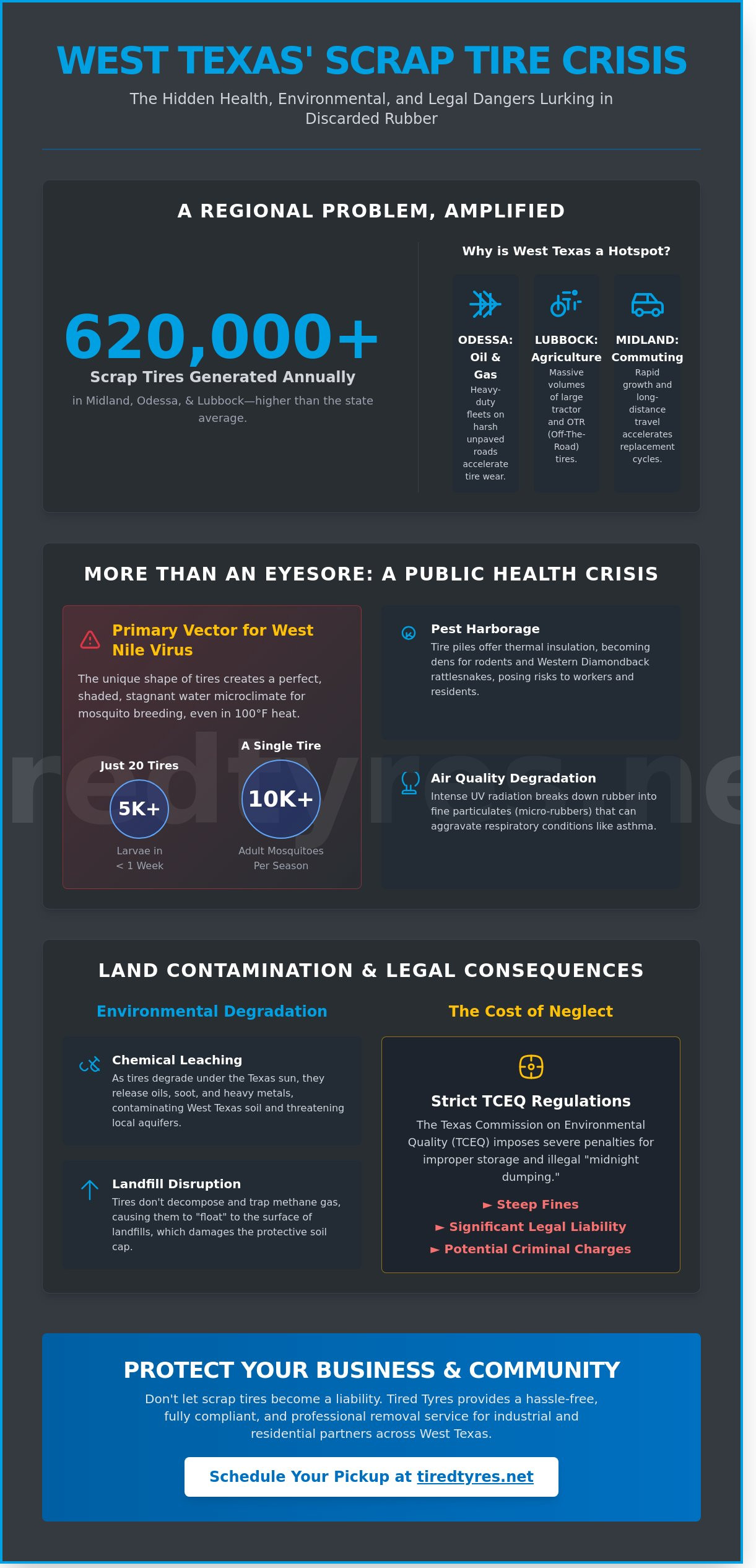
The Permian Basin and South Plains are currently facing a logistical and environmental bottleneck. While the national average for scrap tire generation follows a predictable pattern, the waste tire problems in Midland, Odessa, and Lubbock are amplified by the region’s specific economic drivers. In 2026, projections indicate that the combined population of these hubs generates over 620,000 scrap tires annually. This follows the general “one tire per person” rule, but the heavy industrial nature of our local economy often pushes this number higher than the state average.
For Midland County residents, simple dumping is no longer a viable or legal option. The Texas Commission on Environmental Quality (TCEQ) strictly regulates how these materials are stored and transported. Because tires don’t decompose and can trap methane gas, they often “float” to the surface of landfills, which disrupts the soil cap. Managing waste tire problems requires professional intervention to ensure the rubber is diverted from illegal stockpiles and moved into legitimate recycling streams.
Why West Texas is a Hotspot for Scrap Rubber
The oil and gas industry in Odessa relies on heavy-duty fleets that traverse unpaved lease roads daily. These harsh conditions shred tread faster than standard highway driving. In Lubbock, the agricultural sector adds another layer of complexity. Large-scale machinery and Off-The-Road (OTR) tires create massive volumes of rubber waste that standard municipal systems aren’t equipped to handle. The vast distances of the South Plains mean residents frequently drive 100 miles or more for basic services, which accelerates tire replacement cycles significantly compared to urban centers.
The Lifecycle of a Tire in the Permian Basin
Tires don’t just wear out from mileage in West Texas; they succumb to the environment. The intense sun delivers high doses of UV radiation that trigger “dry rot” or oxidation, making the rubber brittle. When temperatures swing from 105°F in the afternoon to 65°F at night, the rubber expands and contracts, leading to structural fatigue. Understanding the Tire recycling process is essential because these degraded materials eventually become a fire hazard and a breeding ground for pests. A scrap tire is officially defined as a tire that can no longer be used for its original intended purpose due to wear, damage, or defect under Texas state law.
- Odessa: High volume of industrial truck tires from Permian Basin service companies.
- Lubbock: Significant influx of agricultural and tractor tires from surrounding cotton farms.
- Midland: Increased passenger vehicle waste due to rapid population growth and commuting.
Proper disposal isn’t just about following the law; it’s about protecting the local landscape from long-term contamination. When tires are left in the sun, the chemical breakdown releases oils and soot into the West Texas soil. Our team focuses on moving these “tired” tires from the scrap pile back into a functional lifecycle through professional handling and transport.
Health Hazards: Why Scrap Tires are Dangerous Neighbors in Texas
Scrap tires aren’t just an eyesore on the West Texas horizon. Their unique, hollow shape makes them a perfect trap for rainwater and organic debris. This creates a stagnant, shaded environment that doesn’t dry out, even in the 100-degree heat of a Midland summer. These conditions are the root of many waste tire problems in our region, turning discarded rubber into a biological hazard zone.
Beyond the water they hold, tire piles offer thermal insulation for larger pests. In rural Odessa and surrounding ranch lands, these piles frequently become dens for Western Diamondback rattlesnakes and various rodents. These animals find safety from the wind and predators within the stacks. This makes any unmanaged pile a high-risk zone for local workers. Additionally, as tires sit in the intense Texas sun, the rubber breaks down into fine particulates. Long-term exposure to these micro-rubbers can aggravate respiratory conditions like asthma, which is already a concern in the Permian Basin due to dust and industrial activity.
Mosquito-Borne Illnesses in the South Plains
The Culex mosquito, the primary carrier of West Nile Virus, thrives in the specific microclimate of a tire casing. Research shows that a single discarded tire can produce over 10,000 adult mosquitoes in a single season. In Lubbock, where West Nile cases often peak between July and September, these stockpiles represent a direct threat to public health. You can learn more about the specific Scrap Tire Health Hazards in Midland & Odessa: A 2026 Safety Guide to understand how to protect your property.
Fire Risks in the Arid West Texas Climate
The “Tire Fire” phenomenon is a nightmare for local fire departments. Because tires are composed of high-energy oil products, they’re nearly impossible to extinguish once they ignite. A large pile can burn for weeks, even underground. These fires release thick, toxic smoke containing cyanide and carbon monoxide, which can force neighborhood evacuations for miles. In our arid climate, the risk of lightning strikes or spontaneous combustion in large, unmanaged piles is a constant reality. This is why following Texas regulations on scrap tires is vital for community safety. Managing these waste tire problems correctly prevents these high-intensity fires before they start.
If you’re worried about the condition of your current set, it’s better to be safe than sorry. You can always check your tire health with a professional to ensure your old rubber doesn’t end up as a hazard in a local field.
Environmental Impact: How Tires Degrade the West Texas Landscape
Waste tire problems in the Permian Basin aren’t just an eyesore for residents in Midland or Odessa. They represent a slow-motion environmental crisis that persists for generations. A standard passenger tire is a complex mix of synthetic rubber, steel, and fabric. Because the rubber is vulcanized, it resists natural breakdown. If you leave a tire in an Odessa field today, it will still be there in the year 2126. This durability is great for road safety, but it’s a disaster for the local landscape once the tire is discarded.
The primary concern for Texas environmentalists involves the “chemical cocktail” within the rubber. Tires contain heavy metals like zinc and lead, which serve as stabilizers and curing agents. Over time, these metals migrate from the rubber into the surrounding soil. A significant threat involves 6PPD-quinone, a chemical created when tire antioxidants react with ozone. This substance is highly toxic to wildlife and can severely impact soil health by killing beneficial microorganisms. When these toxins reach local aquifers near Lubbock, they jeopardize the primary water sources for both agriculture and human consumption.
Chemical Leaching in Arid Soils
In the humid parts of East Texas, rainfall can wash away surface toxins. In the arid climate of West Texas, the lack of frequent rain causes a different problem. Toxins concentrate in the soil directly beneath tire piles. When a rare heavy rain occurs, it creates a concentrated pulse of petroleum-based additives that can stunt native vegetation. You can learn more about these specific dangers in our guide on Tire Pile Environmental Risk: Why Scrap Rubber is a Hidden Hazard in West Texas.
The Problem with Microplastics and Tire Wear
Environmental damage begins long before a tire becomes waste. As you drive between Midland and Lubbock, your tires shed tiny particulates known as tire wear particles. These particles are small enough to be carried by the wind or washed into drainage systems during a storm. Tire wear particles are now considered a major source of microplastic pollution globally. In the West Texas ecosystem, this dust settles on crops and enters the food chain, carrying a mix of heavy metals and synthetic polymers into the local biology. Addressing waste tire problems requires looking at both these microscopic fragments and the massive stockpiles that dot our landscape.
The Cost of Neglect: Legal Penalties and Texas Regulations
Ignoring waste tire problems doesn’t just hurt the environment; it drains your bank account. The State of Texas maintains strict oversight through the Texas Commission on Environmental Quality (TCEQ). They treat scrap tires as a significant public health threat because they harbor pests and fuel uncontrollable fires. If you’re a business owner in West Texas, ignorance isn’t a legal defense. You’re responsible for every tire that enters your shop until it reaches a permitted recycling facility.
TCEQ Scrap Tire Manifest Requirements
Texas law requires a paper trail for every scrap tire moved in the state. This is known as the manifest system. If you generate tires, you must ensure your hauler is TCEQ-registered. You’re required to keep copies of these manifests for three years. During a random inspection in 2026, failing to produce these records can result in immediate administrative penalties. It’s your only proof that you didn’t contribute to illegal stockpiles. For a deeper look at these requirements, read our Texas Tire Disposal Regulations: A 2026 Guide for West Texas Businesses.
Property owners face a unique risk. Under the Texas Health and Safety Code, you’re liable for waste on your land, even if you didn’t put it there. If a “midnight dumper” leaves 50 tires on your Lubbock County property, the cleanup cost and potential fines fall on you. In 2026, Lubbock authorities have increased patrols in rural areas to catch illegal dumpers, but the landowner often remains the primary point of contact for remediation orders. For property owners dealing with existing tire accumulations, understanding the proper tire dump cleanup Texas procedures is essential to avoid TCEQ penalties and protect your investment.
Local Enforcement in Midland and Odessa
Midland and Odessa code enforcement officers are aggressive about tire storage. In the Permian Basin, residential properties are typically limited to five tires. Anything beyond that requires a specific storage permit or proof of upcoming disposal. For commercial entities, tires must be stored in a way that prevents water accumulation. This usually means keeping them under a roof or treated with larvicide to prevent mosquito breeding.
- Fines: Illegal dumping is a Class C misdemeanor for small amounts, but it quickly escalates. Dumping over 5 pounds (about one tire) can lead to fines starting at $500.
- Criminal Charges: If the weight exceeds 200 pounds, it becomes a state jail felony.
- Commercial Impact: Businesses found with unregistered haulers can lose their operating permits.
Compliance is simple when you work with professionals who understand the law. We help you solve your waste tire problems before they become legal nightmares. Don’t let a stack of rubber turn into a court date.
Solving the Waste Tire Problem with Tired Tyres
Managing large volumes of rubber waste is a logistical headache that carries significant legal weight. Many business owners in West Texas attempt DIY disposal to save on costs, but this often backfires. Transporting more than five scrap tires without a permit in Texas can lead to heavy fines from the TCEQ. Beyond the legal risks, the time spent hauling heavy loads to landfills takes your team away from profitable work. Tired Tyres solves these waste tire problems by providing a professional, permitted alternative that protects your business from liability.
Our service area covers the heart of the Permian Basin and the South Plains. Whether you are operating in Midland, Odessa, or Lubbock, we bring the equipment and expertise to your site. We don’t just pick up the tires; we ensure they enter a legitimate recycling stream. This process prevents the environmental hazards associated with tire piles, such as pest infestations and fire risks, which are common concerns in our dry climate.
Specialized Collection for West Texas Industries
The industrial landscape of West Texas requires more than just passenger tire disposal. Our fleet is equipped to handle the heavy-duty rubber waste generated by the oilfield and agricultural sectors. We provide specialized removal for:
- OTR and Semi-Truck Tires: We manage large-scale removals for trucking fleets and heavy equipment operators.
- Agricultural Rubber: Lubbock area farms can rely on us for tractor tire disposal and irrigation equipment components.
- Industrial Waste: We haul away scrap conveyor belts, skid steer tracks, and industrial hoses that standard waste management companies often refuse.
For tire retailers and auto shops in Odessa, we offer customized pickup schedules. You can choose weekly, bi-weekly, or monthly visits based on your inventory turnover. This keeps your shop floor clear and ensures you stay compliant with local fire codes and environmental regulations.
Why Midland and Lubbock Businesses Trust Tired Tyres
Reliability is the foundation of our reputation. When you schedule a pickup, we show up on time with the right equipment. We prioritize transparent documentation, providing every client with a manifest that tracks the disposal process. This paperwork is essential for internal audits and demonstrating environmental compliance to state regulators. It’s the simplest way to ensure your waste tire problems are handled correctly the first time.
The Tired Tyres difference is our direct approach. We are local experts who understand the specific needs of the Permian Basin. Our team handles the heavy lifting so you can focus on running your business. Getting started is straightforward. You can request a bulk tire pickup quote by contacting our office with your approximate tire count and location. We provide a clear, professional estimate without hidden fees or complex contracts. Let us take the burden of scrap rubber off your shoulders with our efficient, West Texas-focused service.
Protecting West Texas Through Responsible Disposal
Managing waste tire problems effectively is a priority for every property owner in the Permian Basin and South Plains. By 2026, the risks associated with improper storage, such as West Nile virus outbreaks and toxic tire fires, will only increase if left unaddressed. Texas state regulations require specific handling procedures to avoid heavy legal penalties. You don’t need to struggle with these complexities alone. Proper disposal keeps your land clean and ensures your operations stay within the law.
Tired Tyres serves as a Permitted Texas Waste Tire Hauler, offering comprehensive industrial rubber disposal solutions across Midland, Odessa, and Lubbock. We focus on providing a seamless experience that removes the burden of scrap management from your shoulders. Our team handles the logistics with the precision and reliability you expect from a local expert. It’s time to clear the clutter and secure your site’s safety. We’re ready to help you maintain a cleaner, safer environment for the entire community.
Schedule your scrap tire pickup in Midland or Odessa today!
Frequently Asked Questions
Is it illegal to keep old tires on my property in Texas?
Texas law prohibits storing more than 500 scrap tires without a formal TCEQ registration under Texas Administrative Code Title 30. Local ordinances in Midland and Odessa are even stricter, often limiting residential storage to fewer than 5 tires to prevent public health nuisances. If you exceed these limits, you face citations from municipal code enforcement officers who monitor neighborhood safety and vector control.
What are the biggest health risks associated with scrap tires?
Disease transmission from mosquitoes and rodents is the most immediate health threat. A single discarded tire can serve as a breeding ground for over 10,000 mosquitoes in a single West Texas summer, increasing the local risk of West Nile Virus. These waste tire problems also include the potential leaching of heavy metals like cadmium and lead into the groundwater as the rubber slowly degrades.
How do I legally dispose of tires in Midland or Odessa?
Residents can legally drop off tires at the Midland Citizen Collection Station or the Odessa Time Machine recycling center. Most municipal sites limit drop-offs to 4 tires per visit for residential accounts. For businesses or larger cleanups, Tired Tyres offers professional hauling to ensure your scrap rubber reaches a state-authorized processing facility instead of a landfill or an illegal dump site.
Can scrap tires cause fires in hot West Texas weather?
Scrap tires are a severe fire hazard when Permian Basin temperatures climb above 100 degrees Fahrenheit. Because tires are made of petroleum-based polymers, they burn at extremely high temperatures and are nearly impossible to extinguish once ignited. A 2023 industrial report noted that tire fires release toxic pyrolytic oil that can contaminate soil and local aquifers for decades after the flames are out.
Does Tired Tyres pick up industrial rubber like conveyor belts and hoses?
Our team handles a wide range of industrial rubber products including heavy-duty conveyor belts, hydraulic hoses, and large OTR equipment tires. We provide specialized loading equipment to help Permian Basin businesses solve their waste tire problems quickly and efficiently. We focus on clearing site debris so your operations can continue without the safety risks associated with piled industrial rubber waste.
What happens to the tires after they are collected for recycling?
Collected tires are processed into Tire Derived Fuel or shredded into crumb rubber for various industrial applications. According to the EPA, approximately 43 percent of all scrap tires are used as a cleaner-burning alternative to coal in cement kilns. The remaining material is often repurposed into rubberized asphalt for Texas highways, playground mulch, or durable floor mats for commercial gyms.
How much are the fines for illegal tire dumping in Lubbock County?
Illegal dumping in Lubbock County is a serious crime with fines reaching up to $10,000 according to the Texas Health and Safety Code. If the weight of the discarded tires exceeds 200 pounds, the offense is elevated to a state jail felony. Local law enforcement and environmental investigators actively use trail cameras and community reports to identify and prosecute individuals who dump rubber in rural areas.
Do I need a permit to transport my own scrap tires to a facility?
You don’t need a TCEQ transporter registration if you’re hauling 50 or fewer scrap tires for personal disposal in your own vehicle. If you’re a commercial entity or hauling more than 50 tires, Texas law requires you to use a registered transporter. It’s vital to keep your disposal manifests for at least 3 years to prove you’ve complied with state environmental regulations during any official audit.