
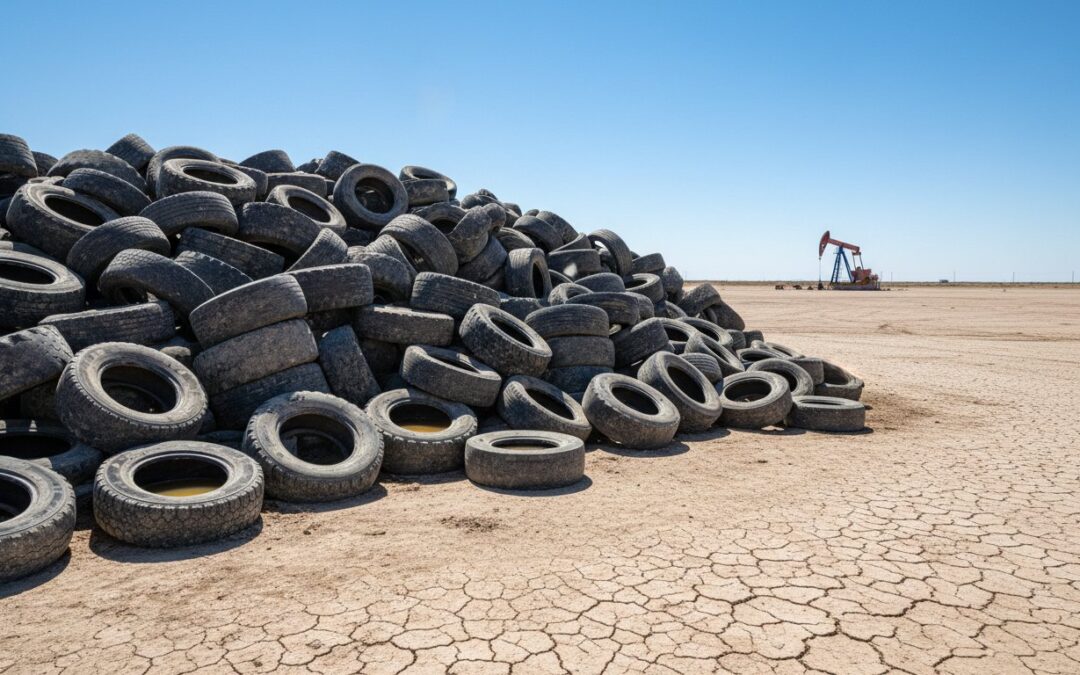
On June 14, a landowner near Odessa realized that a stack of 450 abandoned tires had become a breeding ground for thousands of West Nile-carrying mosquitoes and at least three western diamondback rattlesnakes. It’s a frustrating reality for many property owners in the Permian Basin. You likely already know that these stockpiles are an eyesore, but the tire pile environmental risk goes far beyond aesthetics. Most people realize that scrap rubber shouldn’t sit around, yet the complexity of Texas Commission on Environmental Quality (TCEQ) regulations often makes disposal feel like a daunting task.
We’re here to take that weight off your shoulders. In this article, you’ll discover the specific chemical, fire, and health risks that scrap tire piles pose to Midland, Odessa, and Lubbock properties. We will also break down how to mitigate these hazards legally so you don’t end up facing a $10,000 administrative penalty. From understanding your environmental liability to finding a reliable local hauler who can clear your site safely, this guide provides the roadmap you need to protect your land and your wallet.
Key Takeaways
- Learn how TCEQ regulations define scrap stockpiles and why properties in Midland, Odessa, and Lubbock are uniquely vulnerable to tire accumulation.
- Understand the “chemical cocktail” inside old rubber and how West Texas heat accelerates the tire pile environmental risk by leaching toxins into your soil and groundwater.
- Discover why scrap tires act as “solid petroleum” and how triple-digit Permian Basin temperatures can turn a simple pile into a volatile fire liability.
- Identify the link between abandoned tires and public health threats like West Nile Virus, as these piles serve as perfect breeding grounds for pests and disease vectors.
- Find out the legal requirements for tire disposal and why professional collection is the only safe way to protect your property from long-term liability.
Understanding the Scope of Tire Pile Environmental Risk in West Texas
West Texas landscapes are changing. Between the oil rigs of the Permian Basin and the cotton fields of Lubbock, a quiet hazard is growing. The tire pile environmental risk in this region stems from more than just unsightly trash. It’s a complex issue involving regulatory compliance, public safety, and long-term land health. According to the Texas Commission on Environmental Quality (TCEQ), a scrap tire stockpile is any location where 500 or more tires are stored without a specific permit. For landowners in Midland and Odessa, understanding the line between temporary storage and an illegal dump site is critical for avoiding massive financial penalties.
The Scale of the Scrap Tire Problem
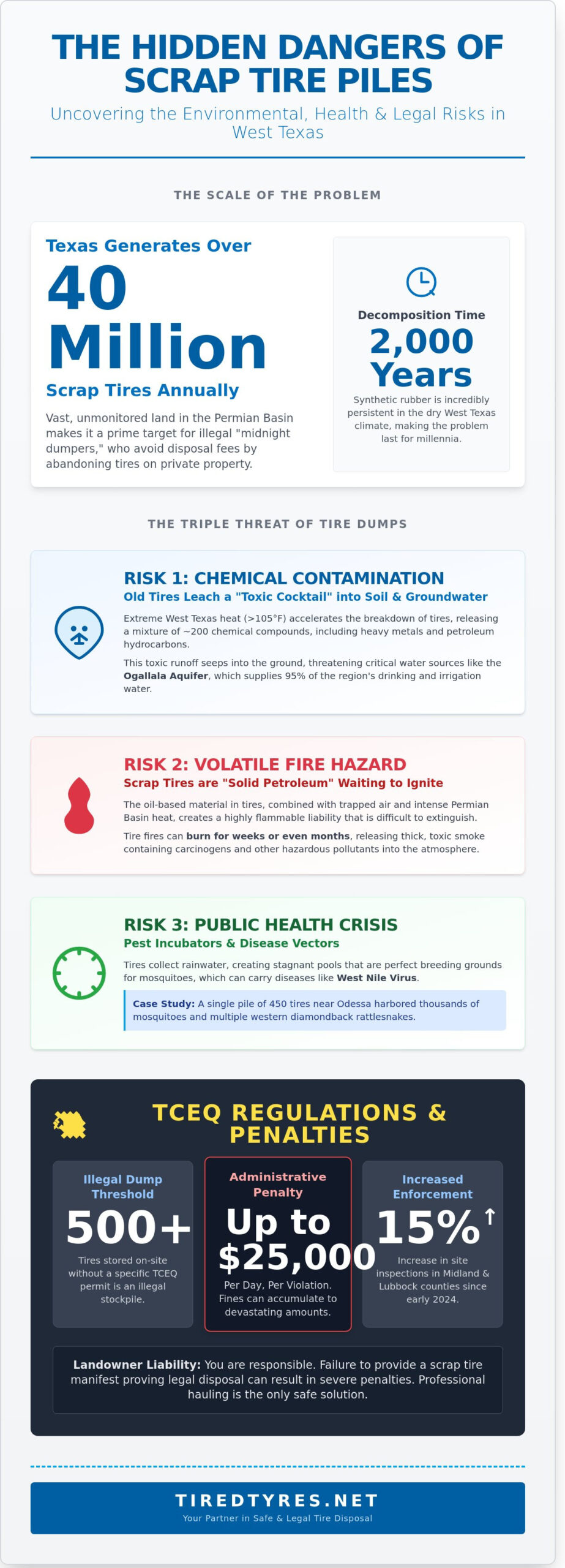
Texas generates more scrap tires than almost any other state. Projections for 2025 and 2026 suggest that Texans will discard over 40 million tires annually. In rural areas like the Permian Basin, illegal dumping has become a frequent occurrence. Vast, unmonitored acreage makes these spots easy targets for “midnight dumpers” who want to avoid disposal fees. Unlike organic waste, rubber is incredibly persistent in arid environments. The dry West Texas heat doesn’t degrade the tires; it makes them more volatile. Large piles create significant tire fire risks because the trapped air and oil-based material can burn for months, releasing toxic smoke into the local atmosphere.
Regulatory Oversight: The Role of the TCEQ
The TCEQ classifies unauthorized tire piles as a public nuisance. This isn’t just a label; it’s a legal trigger for enforcement. Businesses in Lubbock and Midland counties must maintain scrap tire manifests. These documents prove that tires were handed off to a registered transporter and taken to a legal processing facility. If you can’t produce a manifest, you’re liable. The 2026 regulatory landscape is tightening, with increased satellite monitoring and stricter reporting requirements for landowners. Fines for non-compliance are steep. A single violation can result in civil penalties of up to $25,000 per day. Local authorities are no longer just issuing warnings. They’re focused on total removal to prevent groundwater contamination and pest breeding grounds.
- Legal Limit: 500 tires (the threshold for requiring specific TCEQ registration).
- 2026 Focus: Enhanced digital tracking for all tire transporters to eliminate “paper-only” manifest fraud.
- Local Impact: Midland and Lubbock counties have increased site inspections by 15 percent since early 2024.
- Persistence: Synthetic rubber can take up to 2,000 years to decompose in the dry West Texas soil.
Managing the tire pile environmental risk requires more than just moving the problem elsewhere. It’s about following a chain of custody that keeps your business or property out of legal trouble. Proper disposal isn’t just a suggestion; it’s a requirement that protects the community and your bottom line.
Chemical Leaching: How Old Tires Threaten West Texas Groundwater
Scrap tires aren’t inert objects. They are complex chemical products containing roughly 200 different compounds, including synthetic rubber, carbon black, and petroleum-based oils. When left in the sun, a standard passenger tire acts as a slow-release capsule for toxins. In West Texas, where summer temperatures frequently exceed 105 degrees Fahrenheit, this degradation happens faster. The heat softens the rubber, allowing seasonal rains to wash a “chemical cocktail” directly into the earth. This tire pile environmental risk is particularly dangerous because the South Plains relies almost exclusively on underground water sources.
The leaching process doesn’t stop at the surface. Once chemicals enter the soil, they move toward the Ogallala and Edwards-Trinity Aquifers. These water systems provide 95% of the water used for irrigation and drinking in our region. Since the Ogallala Aquifer supports nearly 25% of all United States agricultural production, any localized contamination can have ripple effects on food security and land value. A single large tire dump can ruin the purity of an underlying water table for decades.
Heavy Metals and 6PPD-Quinone
Chemicals found in scrap rubber are difficult to remove once they reach our water. 6PPD-quinone is an antioxidant that turns toxic when exposed to ozone. This specific compound has been linked to massive fish die-offs and ecosystem collapse in other regions. In West Texas, we also face high levels of Zinc, Lead, and Cadmium. These heavy metals are essential for tire durability but are devastating for soil health. The EPA continues to study the environmental and health impacts of tires to better understand these risks. Because our South Plains soil is sandy and highly permeable, these metals migrate downward quickly instead of being filtered out by clay layers.
Impact on Local Livestock and Agriculture
The tire pile environmental risk extends to the very heart of the West Texas economy: ranching and farming. Livestock grazing near unmanaged tire piles often ingest contaminated runoff. High concentrations of zinc can lead to copper deficiencies in cattle, affecting growth rates and reproductive health. For crop farmers, chemical leaching reduces soil fertility. Research indicates that heavy metal accumulation can lower cotton and grain sorghum yields by as much as 15% in affected zones. Remediating a chemically contaminated site is an expensive nightmare. Costs for professional soil cleaning can exceed $120,000 for a single acre. It’s much simpler to manage the problem before it starts. Choosing a professional service like Tired Tyres ensures that old rubber is handled responsibly, keeping these toxins out of our pastures and fields.
The Fire Risk: Why Tires are a Volatile Liability in the Permian Basin
A scrap tire isn’t just a piece of waste; it’s a dense bundle of energy. Roughly 75% of a tire’s composition consists of petroleum-based products, including synthetic rubber and carbon black. This effectively makes every tire pile a stack of solid oil. In the Permian Basin, where summer temperatures regularly exceed 105°F, these stockpiles become extreme hazards. High ambient heat lowers the energy threshold required for ignition, meaning a small spark or even sustained internal heat can trigger a disaster. This tire pile environmental risk is a constant concern for local authorities in Ector and Midland counties.
When rubber burns, it doesn’t just produce flames. It undergoes a process called pyrolysis, which creates a thick, oily liquid known as pyrolytic oil. A single passenger tire can produce approximately two gallons of this toxic runoff. Local fire departments in Odessa and Midland often find themselves outmatched by tire blazes. Water is largely ineffective because rubber is hydrophobic; it sheds water, allowing the fire to rage deep within the pile while the surface remains wet. Firefighters frequently have to use specialized foam or heavy machinery to bury the pile under tons of dirt to starve the fire of oxygen.
Spontaneous Combustion and External Ignition
Internal heat buildup is a silent threat in large stockpiles. When tires are stacked over 15 feet high, the pressure and lack of airflow allow oxidation to generate heat at the core. This temperature can climb until the rubber spontaneously ignites without an external flame. External threats are just as common in West Texas. Lightning strikes during dry July thunderstorms or fast-moving brush fires can turn a dormant pile into an inferno in minutes. The “chimney effect” exacerbates this, as the hollow centers of stacked tires act like vents, pulling oxygen through the pile and feeding the core of the fire.
Environmental Fallout of a Tire Fire
The smoke from a tire fire is a cocktail of poisons. It contains high concentrations of particulate matter, carbon monoxide, and carcinogens like benzene. These clouds can travel for miles, forcing residents in nearby neighborhoods to shelter in place. Beyond the air, the liquid runoff is a major threat. This Pennsylvania Department of Environmental Protection on Waste Tire Hazards resource explains how melting rubber and firefighting foam can seep into the soil. In the Permian Basin, this puts the local groundwater and fragile ecosystems at risk. Landowners face immense financial pressure after such an event. Cleanup costs for a mid-sized fire can easily exceed $500,000, and the property owner is legally responsible for the long-term remediation of contaminated soil.
Public Health Hazards: Mosquitoes, Rodents, and Disease
A tire’s shape is designed for the road, but once it’s discarded, that same geometry becomes a dangerous trap. The curved interior of a casing is the perfect incubator for disease vectors. It catches rain and holds it, protected from the wind and sun. Even in the arid climate of the Permian Basin, a single tire can retain enough moisture to support a massive colony of pests. This specific structural trap is a primary driver of the tire pile environmental risk in West Texas, turning a stack of rubber into a biological hazard zone.
The “Tire-Mosquito” connection is more than a theory; it’s a documented public health crisis. A single cup of stagnant water trapped inside a tire can hatch up to 10,000 mosquito larvae. These containers are superior to natural puddles because the rubber walls insulate the water against temperature swings, allowing larvae to develop faster. In 2023, Texas recorded 157 cases of West Nile Virus, and health officials in Ector and Midland counties frequently trace local outbreaks back to areas with high concentrations of scrap rubber.
It’s not just about insects. In Midland and Odessa, tire piles provide a dark, cool sanctuary for Western Diamondback rattlesnakes and various rodent species. These animals use the hollow spaces to escape the intense midday sun. For property owners, this creates a double threat: the risk of disease from rodent droppings and the immediate physical danger of a snake bite for anyone walking near the pile.
Mosquito-Borne Illnesses in Lubbock and Midland
The Asian Tiger mosquito (Aedes albopictus) is a common resident in West Texas tire piles. This species is an aggressive daytime biter and a known carrier of several viruses. What makes them particularly dangerous in our region is the persistence of their eggs. These eggs can survive for over a year in dry conditions, clinging to the inside of a tire casing and waiting for the next rainfall to hatch. You can learn more about these specific local threats in our Scrap Tire Health Hazards in Midland & Odessa safety guide.
Physical Safety and Structural Risks
Large stockpiles create structural dangers that go beyond biology. A stack of 500 or more tires is inherently unstable. These piles can collapse without warning, creating a significant crush risk for workers or trespassers. Furthermore, these sites often attract other forms of illegal dumping. It’s common to find lead-acid batteries or industrial chemicals hidden within a pile, which triples the tire pile environmental risk. For local businesses, the liability is steep; environmental cleanup costs and health-related lawsuits can easily exceed $50,000 for a single unmanaged site.
Don’t let your property become a breeding ground for West Texas pests. See how we provide professional tire disposal and recycling to keep your business safe and compliant.
Safe Remediation: Legal Tire Disposal in West Texas
Safe remediation isn’t just about cleaning up; it’s about protecting your bottom line and the West Texas environment. You should never burn or bury tires on your property. Burning scrap rubber releases thick, toxic smoke and a hazardous oily residue that penetrates the water table. Burying them is just as bad. Tires trap methane gas and eventually rise to the surface, which ruins land for future construction or agricultural use. In Texas, illegal dumping fines can exceed $10,000 per day, making professional disposal the only logical choice.
If you find an illegal dump on your land, take these steps immediately:
- Document the site with clear photos and GPS coordinates.
- Contact the local sheriff’s office or the TCEQ Region 7 office in Midland to report the incident.
- Call a permitted hauler to discuss a professional remediation plan.
Professional collection keeps your business compliant and safe. Tired Tyres manages bulk removal for industrial sites, farms, and retail shops across Midland, Odessa, and Lubbock. We ensure every tire is accounted for through proper manifest tracking, removing the liability from your shoulders. It’s a straightforward solution for a complex problem.
The Disposal Process: From Pile to Processing
The journey begins with permitted haulers who use specialized trailers to move bulk loads safely. Once collected, tires usually go to a processing facility for shredding. Shredding is the most effective way to mitigate a tire pile environmental risk because it destroys the structure that holds stagnant water and attracts disease-carrying pests. You can learn more about the logistics in our pillar post, Tire Disposal in Midland, TX: The Complete Guide. This process turns a liability into a resource, as shredded rubber is often repurposed for road projects or tire-derived fuel.
Choosing a Local Partner in the Permian Basin
Local expertise is vital in West Texas, especially when dealing with massive OTR and agricultural tires. These aren’t standard passenger tires; they require heavy-duty equipment for safe transport. Tired Tyres understands the unique demands of the Permian Basin oil fields and farming communities. We ensure 100% TCEQ compliance for every pickup, providing you with the necessary paperwork to prove legal disposal during inspections. By choosing a local specialist, you ensure the tire pile environmental risk on your property is handled with precision and care. For comprehensive information about waste tire problems in Midland, Odessa, and Lubbock, including the latest 2026 environmental regulations and compliance requirements, property owners can access detailed guidance on managing scrap rubber safely. When facing extensive contamination or large-scale illegal dumping sites, professional tire dump cleanup in Texas ensures complete TCEQ compliance and protects your property from costly administrative penalties. Contact Tired Tyres for a bulk tire removal quote today and let us handle the heavy lifting.
Protect Your West Texas Property from Scrap Rubber Hazards
Leaving scrap rubber to sit on your land creates a significant tire pile environmental risk that grows with every passing season. These piles aren’t just eyesores. They’re active breeding grounds for disease-carrying mosquitoes and serve as volatile fuel for deep-seated fires across the Permian Basin. Since our inception, Tired Tyres has helped property owners in Midland, Odessa, and Lubbock eliminate these liabilities before they lead to state fines or environmental damage. We utilize specialized heavy equipment designed specifically for the removal of massive OTR and agricultural tires that standard haulers can’t touch.
Professional remediation is the only way to ensure your site meets Texas Commission on Environmental Quality standards. We handle the heavy lifting and provide 100% TCEQ-compliant hauling and manifest tracking so you have a permanent paper trail for every load removed. Don’t let a legacy of old rubber threaten your local groundwater or invite rodents to your doorstep. Our team is ready to clear your site quickly and efficiently. Get a Professional Tire Removal Quote in West Texas and restore your land to a safe, clean state today.
Frequently Asked Questions
What are the main environmental risks of a tire pile?
The primary environmental risks include toxic fires, pest infestations, and soil contamination. Scrap tires trap heat and moisture, creating a perfect breeding ground for mosquitoes and rodents. If they catch fire, they release 2 gallons of oil per tire into the ground. This creates a severe tire pile environmental risk that can persist in the local ecosystem for decades.
Is it illegal to have a tire pile on my property in Texas?
It’s illegal to store more than 500 scrap tires on your property without a permit from the Texas Commission on Environmental Quality (TCEQ). Property owners face administrative penalties up to $10,000 per day for unauthorized tire dumps. Texas Health and Safety Code Chapter 361 mandates that all tires must be disposed of at registered facilities to prevent public health hazards.
How do tire piles affect groundwater in West Texas?
Tire piles affect groundwater by leaching heavy metals like zinc, lead, and cadmium into the soil as the rubber slowly decomposes. In West Texas, these toxins can migrate through the soil and reach the Ogallala Aquifer, which supplies 90 percent of the region’s water. A single pile of 1,000 tires can contaminate millions of gallons of water if a fire occurs or if the tires sit for 50 years.
Why are tire fires so much harder to put out than normal fires?
Tire fires are difficult to extinguish because the hollow shape of a tire traps oxygen, fueling the combustion from the inside. Rubber is a high-energy fuel that burns at temperatures exceeding 2,000 degrees Fahrenheit. Water often fails to cool the core; it simply runs off and carries pyrolytic oil into the soil, which often creates a secondary chemical fire that spreads rapidly.
Do old tires attract mosquitoes even in the desert climate of Odessa?
Old tires attract mosquitoes in Odessa because their shape retains small pockets of water even in 100 degree heat. A single tire can produce 1,000 larvae after a short rainstorm or from residential irrigation. Species like Aedes aegypti thrive in these micro-climates. This increases the local risk of West Nile Virus by 15 percent in neighborhoods located near scrap rubber deposits.
Can I take my old tires to a local Midland landfill?
You can take up to 4 passenger tires per visit to the City of Midland Landfill located at 7901 Garden City Highway. Residents must pay a fee of $2.50 per tire for standard sizes, while larger tractor tires cost significantly more. The city requires tires to be split or quartered before permanent disposal to prevent them from floating back to the surface of the landfill over time.
What happens to tires after they are collected for recycling?
Collected tires are usually shredded into Tire-Derived Fuel (TDF) or processed into crumb rubber for asphalt. Approximately 45 percent of scrap tires in the U.S. are burned for energy in cement kilns or paper mills. The remaining 25 percent are used in civil engineering projects, such as road sub-layers, or turned into playground mulch and athletic turf to mitigate the tire pile environmental risk.
How much does it cost to have a tire pile removed in Lubbock?
Removing a tire pile in Lubbock typically costs between $3 and $5 per passenger tire for hauling and disposal fees. A standard 15 yard roll-off container for a larger cleanup costs roughly $450 plus additional tonnage fees. Professional remediation services provide a manifest to prove the waste was handled according to state law, ensuring you aren’t held liable for future environmental damage.