
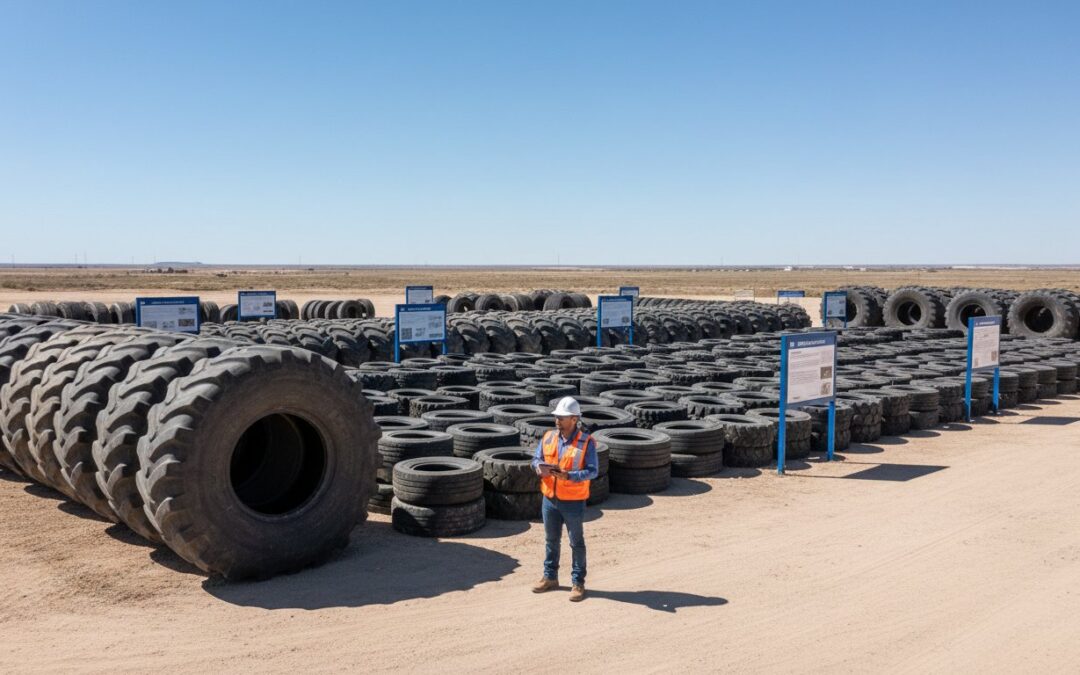
In 2025, the TCEQ issued over $2.4 million in penalties for improper scrap tire management, a figure that should make any West Texas contractor take a hard look at their staging area. You likely already feel the pressure of managing scrap tires at construction sites, especially when oversized OTR rubber and skid steer tracks start eating up valuable workspace. It’s not just about the clutter; it’s about avoiding the heavy fines that can hit for even small storage violations or missing manifests.
This guide provides a clear path to handling industrial rubber legally and efficiently on your job site. You’ll learn how to navigate the 2026 TCEQ storage limits, manage your records, and organize cost-effective bulk removal for your project. We’ll walk through the specific requirements for everything from semi-truck tires to scrap conveyor belts and hoses so your site stays clean and your business stays compliant with Texas law.
Key Takeaways
- Identify your legal obligations as a “Generator” under TCEQ regulations to ensure your project remains compliant and avoids costly penalties.
- Learn why managing scrap tires at construction sites involves more than just tires, covering specialized items like skid steer tracks and industrial hoses.
- Implement best practices for on-site storage by establishing dedicated Waste Zones and vector control measures to maintain a safe, professional job site.
- Evaluate disposal partners based on their TCEQ registration and their specific capacity to haul heavy OTR and agricultural rubber loads.
The Construction Industry Challenge: More Than Just Passenger Tires
Managing scrap tires at construction sites often feels like a secondary task until the pile becomes a logistical bottleneck. For Texas contractors, the term “scrap tire” goes far beyond the standard light truck or semi tires found in a typical fleet. In the context of heavy machinery and earthmoving, you’re dealing with massive rubber units that require specialized handling. Active job sites are high-risk areas for rubber accumulation. When a loader or scraper goes down, the priority is getting the machine back into service. The old rubber often gets pushed to the side, where it quickly becomes a safety hazard. These unmanaged piles create tripping risks, harbor pests, and present a significant fire danger that can compromise your entire project site.
Managing scrap tires at construction sites effectively requires a clear understanding of the specific waste your project generates. It isn’t just about the sheer volume; it’s about the variety of industrial rubber that standard waste management services aren’t equipped to handle. From the massive OTR tires used in excavation to the smaller but equally difficult-to-dispose-of skid steer tracks, every piece of rubber on your site needs a compliant disposal path.
Identifying OTR and Heavy Equipment Tires
Standard truck tires are relatively easy to move, but Off-the-Road (OTR) models used in excavation are a different breed. These tires can weigh thousands of pounds and have massive diameters. You can’t simply toss them into a standard dumpster. Oversized rubber units require heavy-duty equipment just to load and transport them safely. The complexity of the Tire recycling process for these industrial-grade materials means you need a partner who understands the logistics. Securing reliable commercial tire disposal is essential for keeping your project timelines on track. Without a plan, these tires become permanent fixtures that hinder site movement and worker safety.
Industrial Rubber Waste: Tracks, Belts, and Hoses
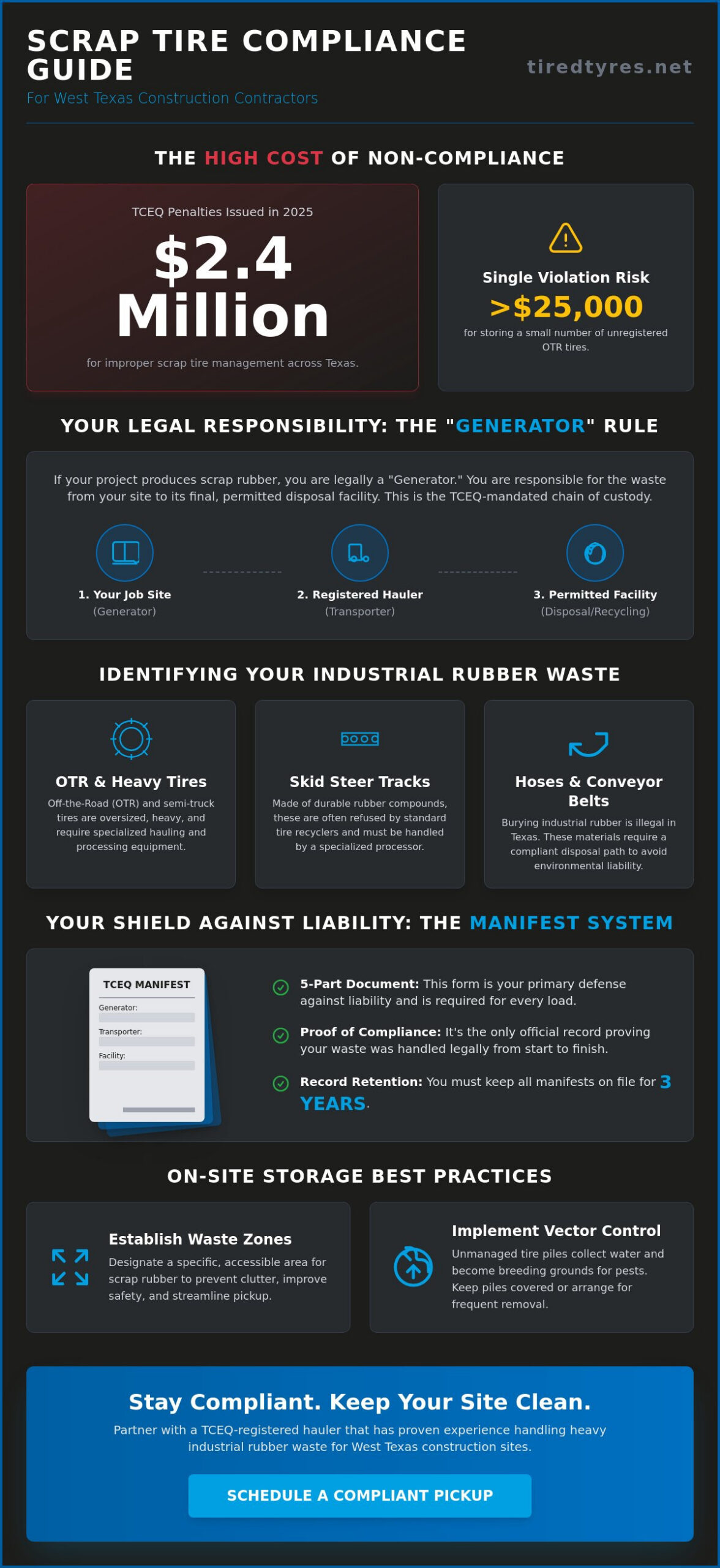
One of the biggest frustrations for contractors is finding a way to get rid of non-tire rubber waste. Many standard tire haulers will refuse to take scrap skid steer tracks, conveyor belts, or industrial hoses because they don’t fit their processing equipment. This often leads to the temptation to bury the material on-site. Burying industrial rubber is illegal in Texas and carries severe environmental risks. Rubber doesn’t biodegrade; it can trap gases and eventually resurface, creating future liability for the property owner and the contractor. Instead of taking that risk, start by keeping a precise inventory. Count your scrap skid steer tracks, measure your pile of scrap hoses, and note the length of any conveyor belts. Having these details ready allows for an accurate pickup quote and ensures your site stays compliant with TCEQ standards.
Navigating Texas Tire Disposal Regulations for Contractors
Texas law is clear about who carries the burden of responsibility for rubber waste. If your project generates discarded rubber, you are legally classified as a “Generator.” This designation applies to any construction company that produces scrap tires through equipment maintenance or site clearing. Managing scrap tires at construction sites means you are the first link in a strict chain of custody regulated by the Texas Commission on Environmental Quality (TCEQ). This responsibility doesn’t end when the tires leave your gate; it ends only when they are logged into a permitted processing or disposal facility.
The stakes for compliance are high. In 2025, the TCEQ issued over $2.4 million in penalties for improper scrap tire management. For a contractor, a single violation can be devastating. Storing a small number of unregistered off-the-road (OTR) tires can lead to penalties exceeding $25,000. While some firms explore construction uses for scrap tires, such as using shredded rubber for embankments, these projects must still follow rigid engineering and state guidelines. For most job sites, the goal is simply getting the material off the property without triggering an audit.
TCEQ Manifests: Your Paper Trail for Compliance
The manifest system is your primary defense against legal liability. Every load of rubber waste leaving your West Texas job site requires a 5-part manifest. This document records the generator’s information, the transporter’s registration, and the destination facility’s credentials. TCEQ rules require you to keep these records for three years. If an inspector visits your site, these manifests are the only proof that your waste was handled legally. You can find a detailed breakdown of these documents in our guide on Texas tire disposal regulations. Keeping an organized file of these papers ensures that a routine inspection doesn’t turn into a legal nightmare.
The Risks of Unpermitted Hauling
It’s tempting to hire a local contact with a trailer to clear out a pile of scrap rubber for a low cash price. In Texas, this is a massive risk. If an unpermitted hauler dumps your OTR tires or skid steer tracks in a field, the state will trace those tires back to your company. The liability chain is unbroken until the final disposal site signs off on the manifest. You should always verify a hauler’s TCEQ registration before they load a single tire. Legitimate partners will provide their registration number and sign the manifest on-site. Choosing professional tire collection services protects your company from the “guy with a trailer” who might leave you with a six-figure environmental fine.
Best Practices for On-Site Scrap Tire Storage
Establishing a dedicated “Waste Zone” is the first step toward maintaining a professional and safe project area. This zone should be located well away from heavy machinery traffic and active excavation paths. When managing scrap tires at construction sites, it’s easy for rubber piles to grow in random corners, but this leads to accidents and logistical delays. A single designated area allows for easier inventory tracking and ensures that your crew isn’t constantly moving old OTR tires or skid steer tracks to make room for daily operations. Keep this area accessible for transport vehicles so that collection is fast and doesn’t disrupt your workflow.
Timing is just as important as location. TCEQ regulations require registration for any site storing more than 500 scrap tires on the ground. For large-scale West Texas projects, you can hit this limit faster than you’d expect. If you exceed 500 tires without registration, you risk the heavy penalties mentioned earlier. Scheduling regular pickups keeps your inventory below these legal thresholds and maintains a tidy footprint. It’s much simpler to manage a monthly collection than to deal with the paperwork and inspections required for a registered storage facility.
Vector Control and Public Health
Stagnant water trapped inside tires is a significant health risk in the West Texas heat. A single discarded tire can become a breeding ground for thousands of mosquitoes in just a few days. This isn’t just an annoyance; it’s a liability for employee health and productivity. You can manage this by keeping tires covered with heavy-duty tarps or by drilling drainage holes in larger units. Addressing these waste tire problems proactively prevents your site from becoming a local health hazard. Keeping the rubber dry also makes it lighter and easier for haulers to handle when it’s time for removal.
Fire Prevention and Buffer Zones
Tire fires are notoriously difficult to extinguish. Once a pile of rubber ignites, it burns at extremely high temperatures and produces thick, toxic smoke that can shut down your job site for weeks. To prevent this, maintain a 50-foot buffer zone between your tire pile and any buildings, fuel storage, or flammable materials. TCEQ rules specifically require at least 40 feet of space between individual outdoor piles to prevent fire spread. Organize your piles so that emergency vehicles have a clear path of access. Keeping your scrap rubber in small, separated groups rather than one massive mound is a simple way to mitigate risk and ensure site safety.
Choosing a Commercial Tire Disposal Partner
Selecting a disposal partner is a critical business decision that impacts both your project budget and your legal standing. When managing scrap tires at construction sites, you can’t rely on general waste haulers who lack specialized equipment. You need a partner who understands the industrial scale of West Texas projects. The right choice ensures your site remains clear for heavy machinery movement while keeping your TCEQ paperwork in perfect order. Look for these four specific criteria before signing a service agreement.
- TCEQ Registration: Never hire a hauler who cannot provide an active registration number. This is your only protection against illegal dumping liability.
- Industrial Capacity: Verify that the partner has the trailers and winches necessary to load oversized OTR tires and heavy scrap solid tires.
- Schedule Alignment: Construction timelines are tight. Your partner must be responsive enough to clear waste zones before they hinder your next phase of work.
- Documentation Standards: Every pickup must conclude with a signed, accurate manifest that matches the inventory leaving your site.
Managing scrap tires at construction sites effectively means finding a team that treats your rubber waste with the same professional rigor you apply to your build. If a hauler seems vague about where the tires are going or how they calculate fees, they aren’t the right fit for a commercial contractor.
The Importance of Local Expertise
West Texas logistics present unique challenges that out-of-town providers often underestimate. A partner based in Midland or Odessa understands the distances and the specific demands of Permian Basin job sites. They know how to navigate active sites without disrupting your crew’s workflow. Securing reliable tire disposal from a local expert means you get a partner who is already familiar with regional disposal facilities and TCEQ field office expectations. Before hiring, ask about their fleet. You need to know they have the right equipment for bulk OTR removal rather than just a standard light-duty trailer.
Transparency in Disposal Costs
Budgeting for site cleanup requires clear, upfront numbers. Disposal fees are typically calculated by the unit or by weight, depending on the material type. A professional partner will provide a quote that includes the manifest paperwork and legal processing fees. This transparency helps you avoid unexpected costs for difficult items like scrap skid steer tracks or conveyor belts. Always request a written breakdown that covers the specific rubber waste on your inventory list. If you’re ready to clear your site with a partner who values transparency, reach out to Tired Tyres for a professional collection quote that meets all TCEQ standards.
Tired Tyres: Specialized Solutions for West Texas Job Sites
Managing scrap tires at construction sites is a specialized logistics task that requires more than just a truck and a trailer. Tired Tyres provides a professional solution designed specifically for the West Texas construction industry. We understand that your job site is a dynamic environment where space is at a premium. Our team focuses on removing the logistical burden of rubber waste so you can focus on your project’s milestones. We don’t just haul tires; we provide a full-service compliance partner for your business.
Our service area covers the entire Permian Basin and South Plains, including Midland, Odessa, and Lubbock. Whether you’re working on a highway expansion or a large-scale commercial development, our collection services are built to scale with your needs. We handle every detail of the process, from loading the material to managing the required TCEQ manifests. This ensures that your company’s liability is protected from the moment our trucks leave your site. Managing scrap tires at construction sites becomes a seamless part of your site maintenance routine when you have the right partner on your side.
Our OTR and Industrial Waste Capabilities
We handle the heavy lifting that standard haulers avoid. Our fleet is equipped to manage massive OTR tires and heavy scrap solid tires from your earthmoving equipment. We also specialize in the removal of scrap skid steer tracks, excavator tracks, and industrial hoses. These items are often the most difficult to dispose of legally, but they are a core part of our service. Our ability to process diverse rubber waste, including scrap conveyor belts and agricultural tires, is why Tired Tyres is the preferred partner for tire recycling in West Texas. We ensure that even the most awkward industrial rubber finds a compliant path off your property.
Get Your Site Cleared Today
Scheduling a pickup is a straightforward process designed to save you time. Whether you need a one-time clearing of a legacy pile or recurring service for a multi-year project, we provide fast and accurate quotes based on your specific inventory. Simply let us know the types of rubber waste you have on-site. We collect everything from passenger and light truck tires to semi-truck tires and specialized industrial rubber. Once we verify your needs, we’ll coordinate a pickup that fits your project schedule. Contact Tired Tyres for a professional site cleanup quote to ensure your project stays on schedule and in full compliance with Texas state law.
Secure Your Job Site and Ensure TCEQ Compliance
Managing scrap tires at construction sites is a critical part of maintaining a safe, legal, and efficient job site in Texas. By following the storage and documentation standards outlined in this guide, you ensure your company stays ahead of TCEQ inspections and avoids unnecessary environmental liabilities. Whether you’re dealing with standard truck tires or oversized industrial rubber, a proactive approach keeps your workspace clear and your team productive.
Tired Tyres is here to take the logistics off your plate. As a TCEQ Registered Hauler, we specialize in the collection of OTR tires and industrial rubber waste that standard services won’t touch. We proudly serve contractors across Midland, Odessa, and Lubbock, providing the manifests and professional handling your project requires. Our team understands the Permian Basin and the specific demands of active construction environments.
Get a Professional Tire Removal Quote for Your Site and let us help you maintain a clean, compliant project footprint. We’re ready to help you clear your site today.
Frequently Asked Questions
Is it illegal to bury tires on a construction site in Texas?
Yes, burying scrap tires on any job site is illegal under Texas law. Rubber doesn’t biodegrade and can trap methane gases, which often causes buried tires to eventually “float” back to the surface. This practice creates significant environmental liabilities and can result in TCEQ penalties exceeding $25,000 for non-compliance.
How do I dispose of rubber skid steer tracks in Midland or Odessa?
You should hire a specialized hauler like Tired Tyres that accepts industrial rubber waste. Most municipal trash services and standard tire haulers refuse skid steer tracks because their internal steel cables make them difficult to process. We provide dedicated collection for these tracks and other industrial rubber items throughout the Permian Basin.
What is a TCEQ scrap tire manifest and do I need one?
A TCEQ manifest is a mandatory five-part document that tracks the chain of custody for scrap rubber from your site to a permitted facility. You need a signed manifest for every load that leaves your project. Managing scrap tires at construction sites requires you to keep these records on file for at least three years to prove legal disposal during state audits.
Can I take construction tires to a local landfill?
Some landfills accept tires, but they typically require them to be split, quartered, or shredded before arrival. As of January 1, 2025, the state also mandates a TCEQ fee of $0.94 per ton for any loads delivered for landfilling. Using a registered collection service is often more cost-effective as it avoids the labor costs of processing the tires yourself.
How many scrap tires can I store on my job site before needing a permit?
You can store up to 500 scrap tires on the ground at your job site before you are required to register as a storage facility with the TCEQ. If you use enclosed, lockable containers, this limit increases to 2,000 tires. It’s best to schedule regular pickups to stay well below these limits and avoid the complex reporting requirements of a registered storage site.
Does Tired Tyres handle OTR (Off-the-Road) tires for heavy equipment?
Yes, we specialize in the collection of OTR tires used on loaders, scrapers, and other heavy earthmoving equipment. Our team has the specialized trailers and loading equipment necessary to handle these oversized units safely. We also provide collection for scrap solid tires, agricultural rubber, and industrial hoses commonly found on West Texas projects.
What happens to the tires after they are picked up from the site?
Most tires are transported to specialized facilities where they are repurposed or recycled. In 2024, approximately 46% of Texas scrap tires were used as tire-derived fuel for industrial kilns, while 19% were processed into crumb rubber. This ensures that the rubber from your site is handled in an environmentally responsible way that meets state end-use goals.
How much does commercial tire disposal cost in West Texas?
Disposal costs are determined by the size of the tires and the total volume of rubber waste on your inventory list. While Texas doesn’t have a state-mandated disposal fee, managing scrap tires at construction sites involves private hauling and processing costs. We provide direct, transparent quotes that cover everything from loading to the final manifest documentation.