
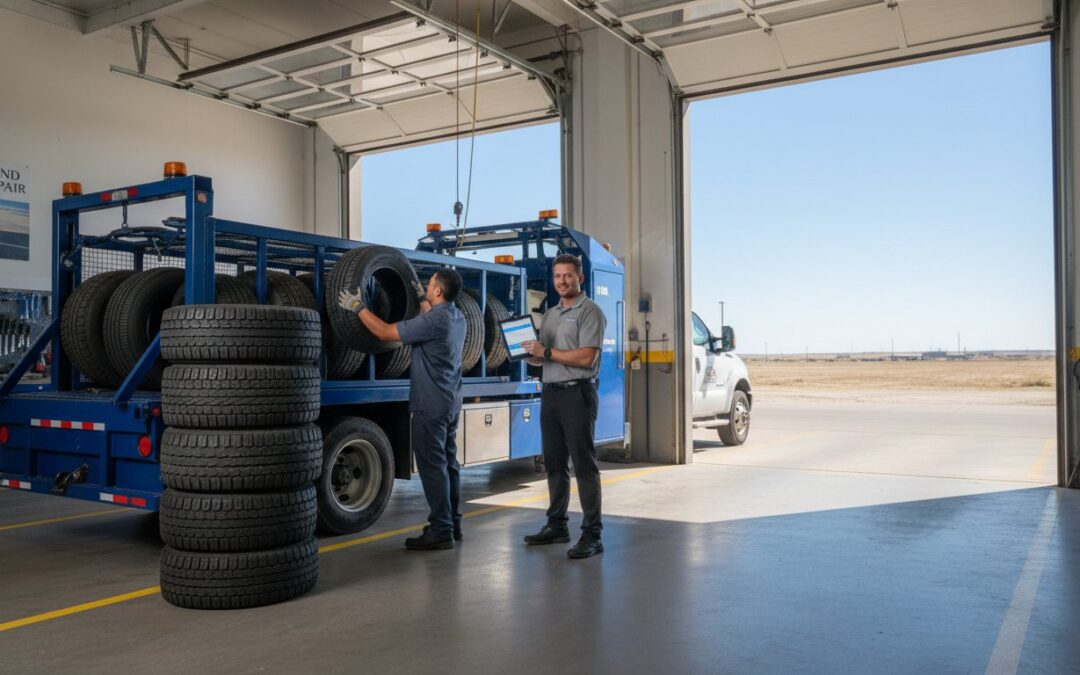
Is your shop one TCEQ audit away from a major fine? That stack of rubber behind your building is more than just an eyesore; it is a legal liability that grows with every West Texas sunset. For many owners, managing tire disposal for auto repair shops Midland feels like a losing battle against space and paperwork. You probably already know that keeping more than 500 scrap tires on the ground triggers mandatory TCEQ registration, but the logistics of moving them shouldn’t eat your profits.
We understand that your focus should be under the hood, not worrying about vector control or manifest deadlines. This guide will show you how to maintain a clean shop floor while staying fully compliant with the latest 2026 regulations. You will learn about the December 31st annual reporting deadline, the 60-day manifest window, and how to partner with a registered transporter to handle the heavy lifting. We will break down everything from storage limits to the specific costs of disposing of passenger and heavy duty tires so your business stays efficient and audit-ready.
Key Takeaways
- Understand how to properly use scrap tire manifests to meet TCEQ requirements and avoid costly environmental fines.
- Streamline tire disposal for auto repair shops Midland by selecting a pickup frequency that prevents hazardous overflow and keeps your bays clear.
- Reclaim valuable shop square footage to increase your revenue-generating capacity and improve overall employee safety.
- Learn why specialized collection equipment is necessary for handling heavy agricultural, semi-truck, and OTR tires compared to general hauling services.
- Manage your long-term liability by implementing storage practices that eliminate fire risks and pest infestations in the West Texas heat.
The Scrap Tire Challenge for Midland Auto Repair Shops
Midland auto shops face a volume problem that most cities never experience. The Permian Basin’s heavy industrial activity means tires wear out fast. Between oil field service trucks, agricultural equipment, and standard passenger vehicles, the sheer amount of rubber moving through your shop is massive. In 2026, efficient tire disposal for auto repair shops Midland is a core business requirement. If you don’t have a plan, that rubber becomes a physical wall between you and your customers.
A cluttered back lot does more than just take up space. It changes how customers perceive your brand. A clean, organized shop suggests precision and care. Conversely, a growing pile of scrap tires suggests a business that is falling behind. Understanding The Scrap Tire Challenge is the first step toward reclaiming your shop’s efficiency. You need every square foot of your property to generate revenue, not to house mounting liability.
Storage Risks: Fire and Pests in the Permian Basin
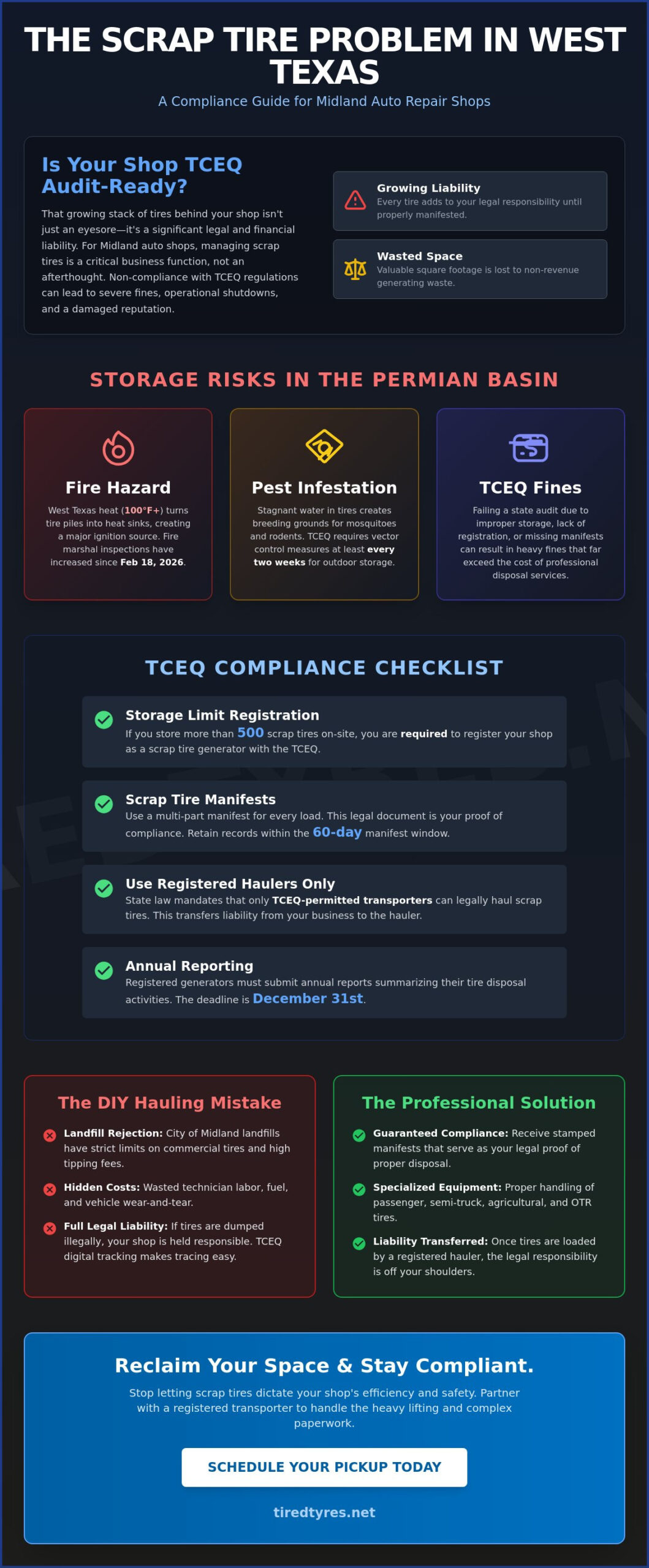
West Texas summers are brutal. When temperatures regularly exceed 100 degrees, those black rubber piles act like giant heat sinks. Tires trap heat and oil-based compounds. This makes them a significant ignition source during our dry, windy seasons. Local fire marshals have increased inspections as of February 18, 2026; they’re looking for improper stacking that could lead to uncontrollable blazes.
Pests are another major concern. Stagnant water inside tires is a breeding ground for mosquitoes and rodents. TCEQ regulations now require shops to utilize vector control measures at least every two weeks for any tires stored outside. If you aren’t actively managing the pile, you’re inviting an infestation and a potential fine. A professional collection service removes these risks before they become a crisis for your neighbors or your bottom line.
Why Midland Landfills Aren’t a Viable Commercial Solution
Many shop owners think they can save money by hauling tires to the landfill themselves. This is often a mistake. The City of Midland landfills have strict restrictions on commercial tire quantities. They aren’t designed to handle the steady stream of semi-truck, OTR, and passenger tires that a busy shop generates. You’ll often find yourself turned away or hit with high commercial tipping fees that erase any perceived savings.
The hidden costs of self-hauling add up quickly. You have to factor in the labor hours of your best technicians, the fuel for your trucks, and the wear and tear on your equipment. More importantly, “dumping” tires at unauthorized sites is a high-risk gamble. As of early 2026, the TCEQ has streamlined its digital reporting, making it easier for authorities to track where tires go. Using a registered transporter is the only way to protect your business license and ensure your shop stays compliant with state law.
Texas TCEQ Regulations and Manifest Requirements
Running a shop in Midland means you’re legally responsible for every tire that leaves your property. You can’t just hand them off to anyone and hope for the best. A scrap tire manifest is a multi-part legal document that tracks tires from your shop floor to an authorized processing facility. It serves as your primary defense during an audit. Without it, you have no proof that you complied with state law. This documentation is the backbone of professional tire disposal for auto repair shops Midland, ensuring that your business isn’t held liable for illegal dumping miles away.
The state has intensified its oversight of tire generators. As of February 18, 2026, the Texas TCEQ Regulations require strict adherence to tracking protocols. If you store more than 500 scrap tires on-site, you must register with the state. Failing a TCEQ audit can lead to heavy fines that far outweigh the cost of professional disposal. We simplify this for Midland business owners by managing the paperwork and providing the clear, stamped manifests you need to stay in the clear.
The Role of a Permitted Tire Hauler
State law is clear; only TCEQ-registered transporters are authorized to move used or scrap tires. Hiring an unpermitted “guy with a truck” is a gamble that rarely pays off for a legitimate business. If those tires are found in a field or a ditch, the state traces them back to the last registered generator. Understanding texas tire disposal regulations ensures your shop stays secure and your reputation remains intact. Registered haulers carry the necessary permits and insurance to take the liability off your shoulders the moment the tires are loaded.
Managing Your Records to Avoid Fines
Record keeping is where many busy Midland shops fall behind. You must obtain a completed manifest from your transporter within 60 days of the tires leaving your site. If you don’t receive this completed copy, the law requires you to notify the TCEQ in writing. Keep these records on file for at least three years to satisfy state inspectors. They often visit facilities without warning to check for vector control logs and your annual operational status report.
The deadline for your 2025 operational status report is December 31st. The TCEQ now encourages digital submissions via email to speed up reviews; they even provide a file transfer protocol server for files larger than 25 MB. We help you stay organized so an audit is just another routine day at the shop. If you want to stop worrying about paperwork and start focusing on your customers, consider our reliable tire collection services.
Specialized Tire Collection vs. General Junk Hauling
General junk haulers often struggle with the specific needs of a high-volume garage. They might pick up an old sofa and a few car tires, but they aren’t equipped for the industrial realities of the Permian Basin. For effective tire disposal for auto repair shops Midland, you need more than just a truck; you need a logistics partner. Specialized collection services use heavy-duty equipment designed to handle bulk volume and significant weight without damaging your property or delaying your workflow. We don’t just move tires. We manage a critical part of your waste stream.
Scheduled pickups offer a level of predictability that “on-call” junk services simply cannot match. When you rely on a generalist, you’re often left waiting for days while your tire pile grows and attracts pests. A dedicated commercial route ensures your shop remains clear and organized. This consistency also translates to cost-efficiency. As of May 2026, professional providers in Midland offer transparent, tiered pricing, such as $5.00 for passenger tires and $11.00 for heavy duty truck tires. This allows you to budget accurately, unlike general haulers who often use fluctuating “guesstimate” pricing based on trailer space.
Beyond Passenger Tires: Handling Heavy-Duty Scrap
Industrial shops in Midland don’t just deal with passenger cars. You likely have a mix of light truck, agricultural, and commercial casings taking up space. Finding individual solutions for semi-truck tire disposal and OTR (Off-the-Road) tires can be a logistical nightmare. OTR tires, in particular, require specialized loading equipment due to their massive size and weight. A single provider that can handle everything from passenger tires to scrap skid steer tracks and conveyor belts simplifies your operations. This “one-stop” approach reduces the number of vendors you have to manage and ensures all your rubber waste is handled under a single manifest system.
The Tired Tyres Advantage for Midland Businesses
Our direct-to-processor hauling model cuts out the middleman. This helps keep your costs manageable and your shop compliant with all state and local laws. We understand the unique demands of the Midland, Odessa, and Lubbock regions because we live and work here. When our professional team arrives at your facility, it reflects well on your brand. A clean crew and well-maintained equipment tell your customers that you value quality in every aspect of your business. This professionalism is a key component of effective tire disposal for auto repair shops Midland, turning a messy chore into a streamlined business process. If you want to reclaim your shop space, our team is ready to help.
Operational Benefits of a Clean Shop Floor
A shop floor is your most valuable asset. When scrap tires pile up, they act as a tax on your daily productivity. Professional tire disposal for auto repair shops Midland is an investment in your operational output rather than just a waste management cost. By removing the clutter, you’re clearing the path for more billable hours. Every square foot occupied by a stack of old rubber is space that isn’t being used for a lift, a diagnostic station, or a customer’s vehicle.
Technicians work more effectively in an organized environment. Tripping hazards from loose tires are a common cause of workplace injuries in busy garages. Removing these obstacles keeps your team safe and focused on the job at hand. There is also the “Visual Trust” factor to consider. Your customers notice the state of your facility the moment they pull into the lot. A pile of scrap tires suggests a lack of attention to detail. A clean, streamlined shop builds immediate confidence and shows that you value precision in every aspect of your business.
Effective waste management can also influence your business overhead. By reducing the physical fire load on your property, you create a safer profile for your facility. This proactive approach to risk management is something liability insurance providers look for when assessing premiums. Keeping a clean floor isn’t just about aesthetics; it’s about protecting your bottom line and your reputation in the Midland community.
Maximizing Floor Space and Efficiency
Think about the opportunity cost of tire storage. If you currently have 200 square feet dedicated to scrap tires, you are losing the potential revenue that space could generate if it held a revenue-producing repair bay. Regular pickups eliminate the “end-of-week” scramble where your technicians spend valuable time moving old inventory instead of finishing jobs. Utilizing reliable tire disposal directly impacts shop throughput by ensuring every bay remains accessible and ready for the next vehicle. This consistency allows you to maintain a tighter schedule and improve your overall turnaround times.
Mitigating Environmental Hazards
Tires stored outside often collect oil and chemical runoff from the shop, which can lead to soil contamination and fines. There is also the severe risk of toxic smoke. A tire fire is notoriously difficult to extinguish and can lead to a total loss of your building and equipment. Aligning your shop with tire recycling goals also appeals to a growing number of eco-conscious Midland drivers who want to know their old tires aren’t ending up in a ditch. It’s a simple way to modernize your brand while staying compliant.
Ready to reclaim your workspace? Schedule your first tire collection today and see the difference a clean shop floor makes for your team.
Setting Up Your Midland Tire Disposal Service
Creating a reliable system for your shop shouldn’t be a complicated process. Once you understand the regulations, the final step is establishing a routine that keeps your bays clear without constant micromanagement. A well-organized plan for tire disposal for auto repair shops Midland ensures that your technicians stay focused on billable repairs rather than moving old rubber out of the way. It starts with a simple assessment of your shop’s specific needs and physical layout.
Follow these four steps to secure your shop’s efficiency:
- Step 1: Assess Volume. Count your weekly scrap output. If you generate more than 50 tires a week, you’ll need a more frequent schedule to stay below the 500-tire TCEQ registration threshold.
- Step 2: Determine Frequency. Choose a pickup schedule that prevents your storage area from reaching 80% capacity. This provides a buffer for unexpected busy weeks.
- Step 3: Designate a Loading Zone. Identify a flat, accessible area for our trucks. A clear path reduces the time our team spends on your property and prevents interference with your customers’ vehicles.
- Step 4: Formalize the Workflow. Assign a specific staff member to handle manifest signing. This ensures every pickup is documented correctly and the paperwork is filed immediately for your next audit.
Customizing Your Collection Schedule
Every Midland shop has a different rhythm. A small boutique garage might only require monthly service, while a high-volume commercial center often needs bi-weekly pickups to maintain a safe environment. We also account for seasonal surges. If you’re running a major tire sale or promotion, it’s easy to adjust your frequency to handle the temporary spike in volume. For businesses that have recently acquired a new location or have an existing pile, we offer flexible options for bulk cleanouts to get your shop floor back to a baseline of zero scrap.
Requesting a Commercial Quote for 2026
When you’re ready to professionalize your waste management, have your average monthly tire count and the mix of tire types ready. Whether you deal primarily with passenger cars or heavy-duty agricultural equipment, we provide transparent pricing tailored to your volume. As of May 2026, local rates in Midland typically range from $5.00 for standard passenger tires to $11.00 for heavy-duty truck tires. We pride ourselves on offering competitive, direct-to-processor rates that eliminate middleman markups. Our goal is to provide a service that is so reliable you forget it’s even there. Contact us today for a professional tire disposal quote and let us handle the liability while you handle the repairs.
Secure Your Shop’s Future and Compliance
Managing your shop space and regulatory obligations shouldn’t be a source of daily stress. You’ve seen how reclaiming your floor space directly impacts your revenue and how strict TCEQ manifest tracking protects your business license from high-risk liabilities. By shifting from reactive junk hauling to a proactive waste management strategy, you’re investing in the long-term safety and professional reputation of your facility. Professional tire disposal for auto repair shops Midland is about more than just moving rubber; it’s about maintaining a clean, profitable environment for your team and your customers.
We specialize in commercial bulk tire removal for businesses that need a reliable partner. Our team provides comprehensive, TCEQ-compliant manifest management to ensure your records are always audit-ready for the next state inspector. Serving the Midland, Odessa, and Lubbock regions, we handle the complex logistics of industrial rubber waste so you don’t have to. It’s time to stop letting scrap piles dictate your workflow and start focusing on your next repair job. Get a Reliable Tire Disposal Quote for Your Midland Shop today. We’re ready to help you keep your shop floor clean and compliant.
Frequently Asked Questions
How often should a Midland auto shop schedule tire pickups?
You should schedule pickups based on your weekly volume to ensure you never exceed the 500-tire storage limit set by the TCEQ. Most high-volume Midland shops find that bi-weekly or monthly collections prevent hazardous overflow and keep their bays clear for revenue-generating work. Regular schedules also help you avoid the mosquito and fire risks associated with long-term outdoor storage in the West Texas heat.
What is a scrap tire manifest and why does my shop need one?
A scrap tire manifest is a multi-part legal document that tracks your tires from the moment they leave your shop until they reach an authorized processor. Texas law requires these records to prove you are using a registered transporter and disposing of waste legally. You must keep these manifests on file for at least three years to satisfy state inspectors during a routine facility audit.
Can I legally take commercial tires to the Midland city landfill?
Commercial quantities of scrap tires are generally restricted at the City of Midland landfill and often require specialized processing like shredding or splitting before acceptance. Self-hauling also introduces hidden costs such as technician labor hours and fuel that often exceed the price of professional collection. Relying on a registered transporter ensures you meet all local ordinances without wasting your team’s valuable shop time.
Does Tired Tyres handle semi-truck and OTR tires for repair shops?
We specialize in the collection of semi-truck, agricultural, and OTR (Off-the-Road) tires for industrial clients throughout the Permian Basin. Our team uses heavy-duty loading equipment designed to manage the weight and size of these massive casings safely. Beyond standard tires, we also collect scrap skid steer tracks, conveyor belts, and solid tires to provide a complete waste management solution for your facility.
What are the TCEQ fines for improper tire disposal in Texas?
TCEQ fines for improper tire disposal can reach several thousand dollars per day depending on the severity of the violation. Common triggers for these penalties include storing more than 500 tires without registration or failing to produce completed manifests during an inspection. These costs far outweigh the investment in tire disposal for auto repair shops Midland, making compliance a critical financial protection for your business.
Do I need to stack or prep tires in a specific way for pickup?
Tires should be stacked in an accessible, flat loading zone to ensure a fast and efficient pickup process. While we handle the heavy lifting, keeping your scrap tires organized in laced rows helps maximize trailer space and reduces the time our trucks spend on your property. This preparation ensures your daily shop operations continue without interruption while we clear your inventory.
Is tire recycling included in your disposal service?
Every tire we collect is hauled directly to an authorized processing facility for recycling or energy recovery. We ensure your scrap rubber is repurposed into tire-derived fuel or rubberized mulch rather than ending up in a West Texas landfill. This commitment to sustainable disposal helps your shop attract eco-conscious customers while meeting the state’s environmental standards for waste management.
How does bulk tire disposal pricing work for commercial clients?
Commercial pricing is typically tiered based on the size and type of tire being collected. As of May 2026, standard passenger tires in the Midland area are often priced at $5.00 each, while heavy-duty truck tires can cost $11.00 each. We provide transparent estimates based on your specific volume and frequency needs so you can accurately budget for your shop’s waste management costs.