
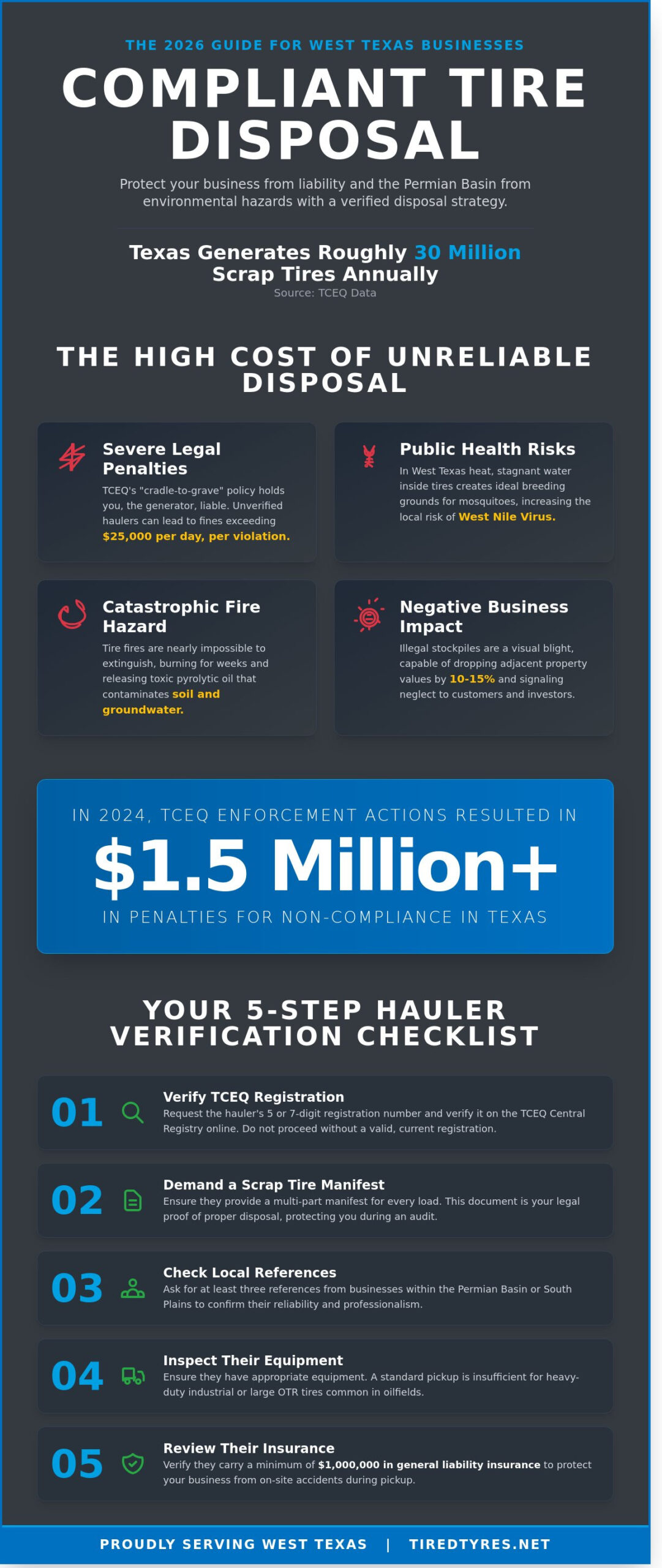
In 2024, TCEQ enforcement actions resulted in over $1.5 million in penalties across Texas, often targeting businesses that failed to maintain a proper paper trail for scrap tires. If you’re managing a fleet or a shop in Midland or Odessa, those old casings aren’t just clutter; they’re a significant legal liability. Finding reliable tire disposal shouldn’t feel like a gamble with your business license. You need a partner who shows up on the scheduled day, not three weeks late when the pile has become a fire hazard or a breeding ground for West Nile mosquitoes.
We understand the frustration of hidden surcharges that suddenly appear on your waste management invoice. You’re right to worry about the legal fallout if your discarded rubber ends up in a West Texas ditch instead of a licensed processing facility. This 2026 guide teaches you how to verify a hauler’s credentials and ensure every load leaves with a signed manifest for your protection. We’ll examine current Lubbock area pricing models and the three specific red flags that signal an unreliable contractor, giving you the tools to keep your site clean and your records audit-ready.
Key Takeaways
- Understand your legal liability as a tire generator and why proper disposal is critical for preventing fire hazards and health risks in the Permian Basin.
- Learn the two-step verification process to ensure you are hiring a reliable tire disposal service by checking TCEQ registration and manifest protocols.
- Discover how the multi-part Scrap Tire Manifest system protects your business by documenting the journey of every tire from pickup to processing.
- Identify the specific logistical differences between disposing of standard passenger tires and handling the unique challenges of heavy-duty industrial rubber.
- Find out how partnering with a locally-owned West Texas expert ensures full compliance with state environmental standards while simplifying your operations.
Why Finding Reliable Tire Disposal Matters in West Texas
In the Permian Basin, scrap tires aren’t just waste. They’re a significant legal and environmental liability. If you operate a fleet in Midland or a tire shop in Lubbock, your choice in waste management defines your professional reputation. Choosing reliable tire disposal ensures your business stays compliant while protecting the local landscape. Texas generates roughly 30 million scrap tires every year according to TCEQ data. Without a clear plan, these tires often end up in illegal stockpiles that drain property values and invite heavy legal scrutiny.
Many businesses try to save a few dollars by hiring unverified haulers. This is a costly mistake. If a “midnight dumper” takes your tires and tosses them in a canyon near Odessa, the paper trail leads back to you. As the waste generator, you own that rubber until it reaches a permitted processing facility. A single illegal pile of 500 tires can drop adjacent property values by 10% to 15% almost immediately. It creates a visual eyesore that signals neglect to potential investors and neighbors alike.
The Health and Safety Risks of Tire Piles
Scrap tires are perfect breeding grounds for disease. In the 100 degree West Texas summer, stagnant water trapped inside a tire casing reaches the ideal temperature for mosquito larvae. This directly increases the local risk of West Nile virus. The intense heat also causes rubber to off-gas volatile organic compounds, which degrades air quality. If these piles ignite, they are nearly impossible to quench. In rural areas outside Lubbock, local fire departments often lack the specialized foam needed to suppress rubber fires. A single blaze can burn for weeks, leaching toxic pyrolytic oil into the soil and groundwater. Understanding the full scope of waste tire problems in Midland, Odessa, and Lubbock helps business owners recognize why proper disposal is critical for protecting both their operations and the local environment.
TCEQ Compliance and Your Business
The Texas Commission on Environmental Quality (TCEQ) enforces a strict “cradle-to-grave” policy for waste management. This means you are responsible for the tire from the moment it’s removed from the rim until its final recycling or disposal. If your hauler isn’t registered with the state, you are the one held liable for their actions. TCEQ can issue administrative penalties reaching $25,000 per day for each violation found during an inspection. For a small business in Midland, one audit of your manifest records can result in a devastating five-figure fine. Utilizing reliable tire disposal isn’t just an environmental choice; it’s a necessary strategy to protect your bottom line from state enforcement actions.
- Generator Responsibility: You are legally tied to your scrap tires until they are documented at a licensed facility.
- Fire Hazards: Tire fires produce thick, black smoke and toxic runoff that is difficult to contain in rural West Texas.
- Financial Risk: Fines for illegal dumping or improper record-keeping can exceed $10,000 per incident.
How to Verify a Reliable Tire Disposal Service
Finding reliable tire disposal in West Texas isn’t just about clearing space in your shop or yard. It’s about legal protection. In Texas, the chain of responsibility starts the moment a tire leaves your property. If those tires end up in a West Texas ravine or an illegal dump site, the TCEQ tracks the manifest back to the generator. You need a partner who follows the 2026 state protocols to ensure your business stays compliant.
Follow these five steps to vet any hauler before they load a single casing:
- Step 1: Request their current TCEQ Hauler Registration Number and verify it online.
- Step 2: Confirm they provide a multi-part Scrap Tire Manifest for every pickup.
- Step 3: Ask for at least three local references within the Permian Basin or South Plains.
- Step 4: Check their equipment. A standard pickup isn’t enough for 400-pound OTR tires common in the oilfields.
- Step 5: Review their insurance. They should carry a minimum of $1,000,000 in general liability to cover on-site accidents.
Checking TCEQ Registration Status
A valid registration is your primary shield against state fines. You can verify any hauler through the TCEQ Central Registry database using their company name or Registration Number. Since the 2024 compliance updates, the state has increased oversight on “cash-only” haulers. These individuals often lack the required documentation and pose a significant liability. Reliable tire disposal requires a transparent paper trail. If a hauler refuses to provide a 5-digit or 7-digit registration code, do not let them take your tires.
The Importance of Local West Texas Presence
Local haulers understand the specific logistics of the I-20 corridor and the unique demands of the South Plains. Out-of-town companies often struggle with the vast distances between Lubbock and Odessa, leading to missed pickups and overflowing inventory. Local teams maintain active accounts with local tire recyclers, which ensures your waste is processed quickly rather than sitting on a trailer for weeks.
Local knowledge also extends to regional regulations. Midland County and Ector County landfills have different tipping fees and daily volume limits. A hauler based in the region knows these rules and adjusts their routes to maintain efficiency. If you want to keep your operations running smoothly, it’s best to work with a professional tire service that understands the West Texas landscape. This prevents unexpected surcharges and ensures your scrap tires are handled according to municipal codes.
Understanding the Scrap Tire Manifest System
A scrap tire manifest acts as a legal chain of custody. It tracks every tire from the moment it leaves your shop in Midland or Odessa until it reaches a licensed processing facility. In Texas, this document isn’t just a suggestion; it’s a multi-part form required by the Texas Commission on Environmental Quality (TCEQ). Without it, your business remains legally liable for where those tires eventually land. It’s the only way to prove you’ve secured reliable tire disposal that follows state environmental protocols.
The system relies on a three-party signature process to ensure accountability. First, you sign as the generator when the hauler arrives. Second, the transporter signs to acknowledge they’ve taken possession of the load. Finally, the authorized processing site signs once the tires are delivered and weighed. This “cradle-to-grave” tracking prevents tires from being dumped in West Texas canyons or abandoned lots. If a hauler can’t provide this document, they aren’t operating legally.
Record-keeping is the most critical part of this process for your protection. TCEQ regulations require Texas businesses to keep all completed manifests for at least three years. During an environmental audit, these documents serve as your primary evidence of compliance. They show that you’ve managed your waste responsibly and haven’t contributed to illegal stockpiles that pose fire risks or breeding grounds for pests.
What Should Be on a Legal Manifest?
A valid manifest must include the collection date, the exact tire count, the hauler’s TCEQ registration number, and the destination facility’s name. You must receive a “return copy” from the processing facility within 60 days of the initial pickup. If this copy doesn’t arrive, it’s a red flag that the tires may not have reached their destination. Watch out for haulers using generic invoices instead of official manifest forms; this is a common sign of fraudulent documentation that won’t hold up in an audit.
Digital vs. Paper Manifests in 2026
By 2026, approximately 82% of waste management providers in the Permian Basin have transitioned to digital tracking systems. Digital manifests are far superior for multi-site businesses in Lubbock because they centralize compliance data into a single cloud-based dashboard. This shift eliminates the risk of lost or damaged paper forms. Tired Tyres prioritizes transparent documentation by utilizing streamlined digital reporting. This ensures your reliable tire disposal records are always accessible and accurate. Digital systems also provide automated alerts if a return copy is missing, allowing you to address potential compliance gaps before they become legal liabilities.
Comparing Disposal Options: From Passenger to Industrial Rubber
Not all rubber waste is created equal. Auto shops in Midland and Lubbock typically deal with Passenger and Light Truck (PLT) tires. These are high-volume but low-weight items that fit standard collection routes. However, the West Texas economy runs on much heavier equipment. When you move into the territory of semi-trucks and agricultural machinery, the logistics change. A single rear tractor tire can weigh over 400 pounds. This scale requires specialized loading equipment and transport permits that standard trash haulers simply don’t possess. Reliable tire disposal for these sectors is about more than just a pickup; it’s about having the right heavy-duty machinery to move the load safely.
Specialized Commercial Tire Disposal
Fleet managers in the Permian Basin face unique pressure to maintain clean, compliant yards. If you’re overseeing a logistics hub, using a tire collection service Odessa experts recommend ensures your operations don’t grind to a halt due to accumulated scrap. The oil and gas industry presents the toughest challenge: Off-the-Road (OTR) tires. These massive components, used on drilling rigs and earthmovers, can exceed 12 feet in height. Most haulers won’t touch them because they require specialized cutting or crane lifts. We provide OTR tire collection specifically designed for these industrial giants, preventing them from becoming permanent liabilities on your lease site.
Beyond Tires: Industrial Rubber Waste
Rubber waste often extends beyond what rolls on a rim. Industrial sites and mining operations frequently need to dispose of scrap conveyor belts. These belts are often reinforced with internal steel cables, making them impossible to cut without industrial-grade shears. Skid steer tracks also present a significant disposal hurdle. A standard 12-inch wide track can weigh 150 pounds and takes up massive space in a traditional dumpster. Specialized equipment is necessary for handling these dense materials, including:
- Scrap conveyor belts: Often found in mining or aggregate processing facilities.
- Solid tires: Used for forklifts and warehouse equipment that can’t afford flats.
- Reinforced hoses: High-pressure hydraulic lines from oilfield equipment.
- Skid steer tracks: Rubber tracks from construction and landscaping machinery.
Managing these diverse materials requires a partner who understands the specific weight and volume considerations of industrial rubber. You shouldn’t have to worry about rejected loads or hidden fees because a tire was “too big” for the truck. Every reliable tire disposal plan must account for the specific equipment used on your job site. If you have a yard full of industrial rubber, schedule a professional fleet and industrial rubber removal to clear your space today.
Tired Tyres: Your Reliable Partner in West Texas
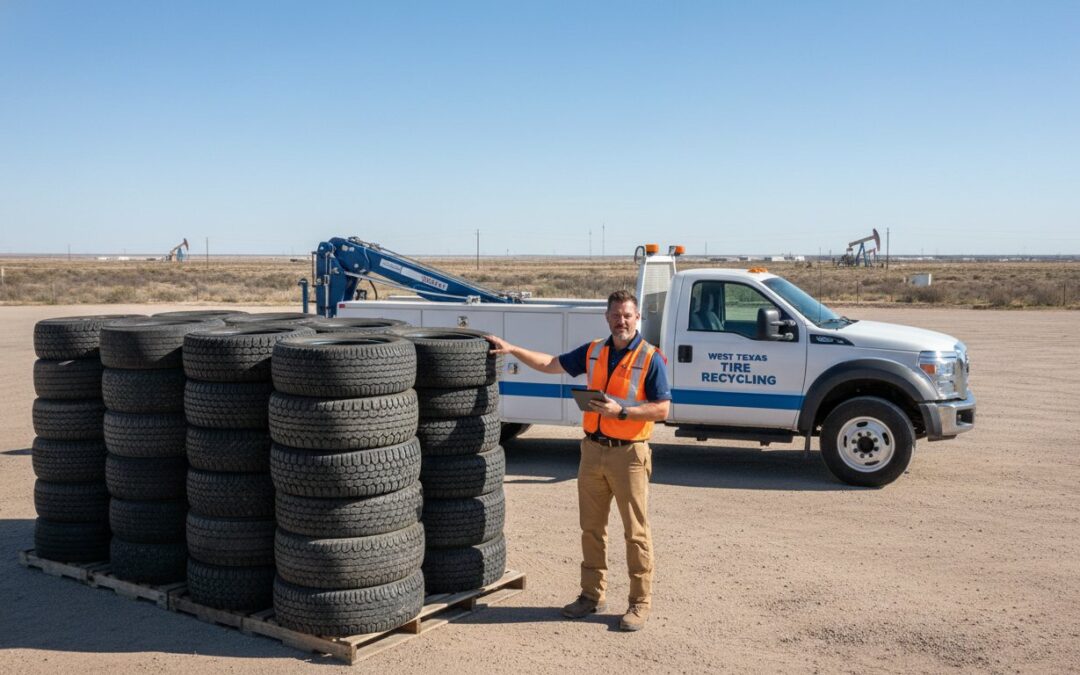
Tired Tyres is a locally owned operation based right here in Midland. We’ve built our reputation on providing reliable tire disposal for the entire South Plains region. Since our founding, we’ve focused on one goal: making rubber waste management simple for West Texas businesses. We don’t just pick up tires. We ensure every single casing is handled according to the strict 2026 TCEQ standards. Our team maintains 100% compliance with all Texas environmental regulations. This gives you peace of mind that your liability ends the moment we load our trucks.
We specialize in what others leave behind. Many national haulers won’t touch oversized industrial tires or shredded rubber debris. We take it all. Our customized pickup schedules cater to the specific rhythms of auto shops and industrial sites across the Permian Basin. If you’re tired of waiting weeks for a pickup, our 48-hour response time for existing clients sets a new standard for the industry. We understand that stacked tires are more than an eyesore; they’re a fire hazard and a breeding ground for pests.
Our Commitment to Midland, Odessa, and Lubbock
Our physical headquarters at 1210 S Midkiff Rd, Midland, TX, puts us at the center of the action. We understand the unique challenges of tire disposal in West Texas. This includes everything from heat-damaged casings on oil field trailers to high-volume needs in Midland’s retail districts. We’ve simplified the logistics for local owners. Our “no-hassle” quote process takes less than 5 minutes. You get a clear, flat rate without hidden environmental surcharges or surprise fuel fees. It’s about being a good neighbor and a professional partner to the businesses that keep Texas moving.
Get Started with Professional Removal
We’ve streamlined our workflow into three clear steps to save you time. First, you get a transparent quote based on your specific volume. Second, we set a pickup window that fits your shop’s busiest hours. Third, we provide a formal manifest for your records. This documentation is vital for your 2026 state compliance audits. Whether you have 45 tires from a one-time lot cleanup or need a recurring bi-weekly service for a fleet yard, we have the equipment to handle it. Contact Tired Tyres for a reliable disposal quote today and get those old tires off your property for good.
- Locally Owned: Serving Midland, Odessa, and Lubbock with local expertise.
- TCEQ Compliant: Full adherence to all 2026 environmental standards.
- Industrial Capacity: We handle OTR tires and industrial rubber waste that others refuse.
- Fast Turnaround: 48-hour response times for our regular service partners.
Streamline Your West Texas Tire Management
Managing scrap tires in the Permian Basin doesn’t have to be a logistical headache. You need a partner who follows the 2026 TCEQ regulations to the letter. We handle everything from standard passenger tires to massive 63 inch OTR industrial rubber. Being local to Midland, Odessa, and Lubbock means we respond faster than out-of-state haulers who don’t know the local terrain. Our team ensures every scrap tire manifest is documented correctly. This keeps your business compliant and protected from the thousands of dollars in potential fines associated with illegal dumping. Finding reliable tire disposal is about more than just clearing space; it’s about professional peace of mind for your specific operation. We bring the specialized equipment and 100 percent TCEQ-permitted hauler status needed for the toughest industrial jobs in West Texas. Understanding the complete tire recycling in Midland, Odessa, and Lubbock process helps you make informed decisions about your waste management strategy. Let’s get those “tired” tires off your site and into the right hands today. Our crew is ready to help your business stay clean and efficient.
Get a Reliable Tire Disposal Quote for Your West Texas Business
Frequently Asked Questions
Is it legal to put tires in a dumpster in Texas?
It’s illegal to place whole tires in a dumpster or landfill anywhere in Texas. According to Texas Health and Safety Code Chapter 361, scrap tires must be transported to authorized processing facilities. Most municipal waste services in Midland and Odessa will refuse your bin if they spot rubber inside. Violating these rules can lead to fines starting at $500 per tire for commercial entities.
How much does reliable tire disposal cost in Midland?
Reliable tire disposal in Midland typically costs between $5 and $10 for a standard passenger car tire. Commercial semi-truck tires usually range from $25 to $45 depending on the current volume of the pickup. We provide transparent pricing based on the 2026 market rates in the Permian Basin. Large scale cleanups often qualify for bulk discounts of 15% or more for local businesses. For a detailed breakdown of current rates and service options, check our comprehensive tire disposal cost Midland guide.
What is a TCEQ hauler number and why does it matter?
A TCEQ hauler number is a unique registration ID issued by the Texas Commission on Environmental Quality. This number proves the transporter is legally authorized to move scrap tires across West Texas roads. Hiring a hauler without this registration puts your business at risk of “cradle to grave” liability. We maintain active registration to ensure your disposal process remains 100% compliant with state law.
Do you provide manifests for every tire pickup?
Yes, we provide a completed TCEQ Form 00724 manifest for every single pickup we perform. This document is your proof that the tires were handled correctly and delivered to a licensed facility. You should keep these records for at least 3 years to satisfy state inspectors during routine audits. It’s the most important piece of paper in the scrap tire industry for staying legal.
Can you handle large OTR tires from oil field equipment?
We specialize in removing large Off-the-Road (OTR) tires from oil field machinery and earthmovers. Our fleet can handle tires with rim diameters up to 63 inches using specialized hydraulic loaders. Since 2024, we’ve cleared over 400 tons of OTR scrap from sites across the Permian Basin. These massive tires require specific equipment that standard waste haulers simply don’t have available. For businesses looking to clear large accumulations of industrial rubber, getting a tire pickup quote Midland professionals provide ensures transparent pricing and proper handling of your heavy-duty waste.
What happens to the tires after they are collected?
Approximately 85% of the tires we collect are processed into Tire Derived Fuel (TDF) or recycled into rubber mulch. The remaining 15% are often used in civil engineering projects like road sub-base or landfill liners. We prioritize sustainable outlets to keep West Texas clean. This ensures your old rubber doesn’t end up sitting in a desert pile for the next 50 years.
Do you offer scrap conveyor belt removal in the Permian Basin?
Yes, we offer full removal services for scrap conveyor belts used in mining and industrial operations. Our team handles everything from 2-ply belts to heavy duty 5-ply reinforced steel cables. We’ve removed over 12,000 linear feet of belt material for clients in Odessa and Midland since last January. Reliable tire disposal companies often handle these products because they require similar recycling pathways.
How quickly can you schedule a pickup in Lubbock?
We typically schedule pickups in Lubbock within 48 hours of your initial request. Our trucks run the I-27 corridor three times per week to ensure prompt service for local tire shops and fleets. If you call our office before 10:00 AM, we can often arrange a next day arrival. We value your time and keep our schedule tight to prevent tire piles from growing on your property.