
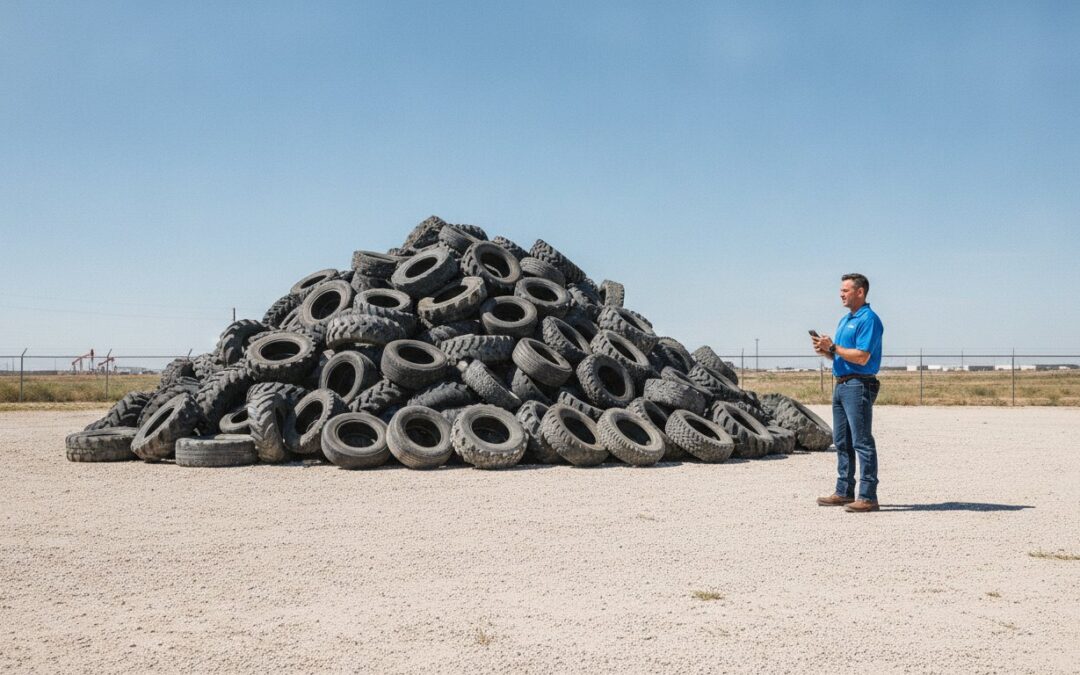
A stack of 50 scrap tires on your property can trigger a $10,000 per day liability under Texas Commission on Environmental Quality (TCEQ) regulations. For West Texas business owners, an abandoned pile or a sudden delivery isn’t just an eyesore; it’s a ticking clock for fines, fire hazards, and pest infestations. If you’re currently figuring out how to handle a sudden influx of scrap tires, you must act before the next rain brings mosquitoes or an inspector arrives at your gate. Managing this volume requires more than a trailer, especially since whole tires are strictly prohibited from Texas landfills.
We know that the logistical burden of moving hundreds of tires while trying to keep your commercial site clean is frustrating. You deserve a solution that doesn’t involve multiple expensive trips to the dump or the fear of state penalties. This guide provides the immediate safety, legal, and logistical steps to manage large tire volumes while staying compliant with Texas manifest laws. You’ll learn how to secure your site, navigate the mandatory paperwork, and arrange for the quick removal of everything from light truck tires to heavy OTR rubber.
Key Takeaways
- Secure your site immediately by establishing fire safety buffers and identifying the specific mix of passenger, agricultural, or OTR tires.
- Avoid heavy TCEQ penalties by strictly following the Texas scrap tire manifest system to track your waste from the site to the final disposal point.
- Learn how to handle a sudden influx of scrap tires by comparing the hidden costs of multiple landfill trips against a single, professional bulk collection.
- Speed up the removal process by consolidating tires into one accessible location on solid ground with a clear path for heavy collection trailers.
- Maintain a clean and safe commercial property by choosing a disposal partner that can manage diverse rubber waste, including skid steer tracks and conveyor belts.
Immediate Steps to Secure a Large Scrap Tire Influx
When a massive volume of waste rubber arrives at your yard, your first priority is containment. Knowing how to handle a sudden influx of scrap tires starts with a quick, accurate inventory. You need to identify if you are looking at a Passenger & Light Truck Tire Collection or something much heavier, like OTR (Off-the-Road) tires. This distinction is vital. The equipment required to move a 2,000-pound earthmover tire is vastly different from what is needed for a standard pickup tire. Getting the count and type right allows you to request the correct hauling capacity later.
Safety is the next immediate concern. Tire fires are notoriously difficult to suppress; once they start, they can burn for weeks. Documentation is also key. Record the source of the tires and take photos of the pile as it sits. This creates a paper trail for your environmental records. It proves you are taking active steps toward proper disposal and helps protect you from liability if the tires were dumped illegally. Understanding the tire recycling process can help you see why these initial steps are so important for long-term sustainability and compliance.
Safety and Containment Protocols
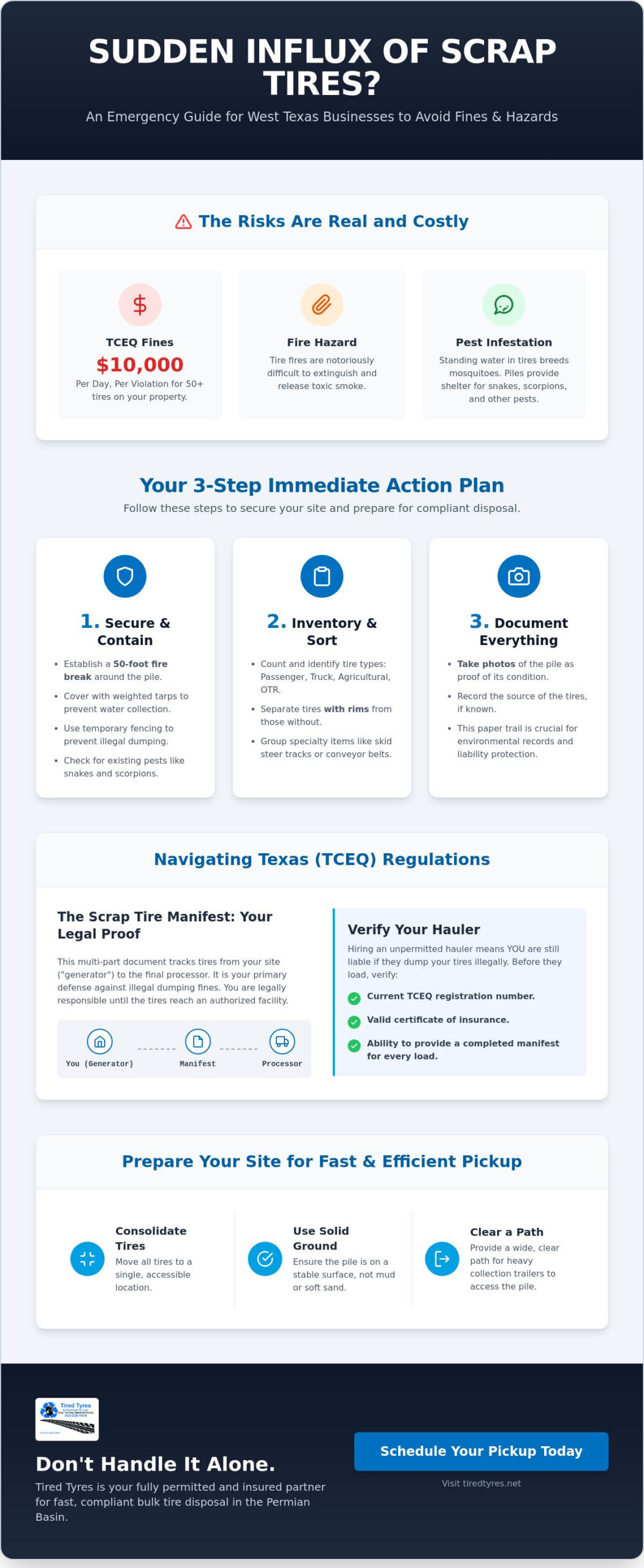
Establish a 50-foot fire break around the entire perimeter of the stockpile. Clear away dry brush, tall grass, or wooden pallets that could lead a fire to the rubber. If the tires were moved from another site, check for existing pests immediately. In West Texas, rattlesnakes, scorpions, and black widows frequently seek shelter in dark, cool tire interiors. Use temporary fencing or jersey barriers to prevent “pile creep” and to discourage others from adding their own trash to your stack. Finally, cover the pile with weighted tarps. This prevents standing water from collecting inside the casings, which is the primary breeding ground for mosquitoes.
Initial Sorting for Efficient Disposal
Efficient removal depends on how well you organize the pile today. Separate tires with rims from those without. Processing tires with rims often incurs higher fees because they require specialized machinery to strip the rubber from the steel. You should also group specialized items like scrap conveyor belt collection pieces or scrap skid steer track collection units together. Don’t mix these with your Agricultural Tire Collection or Semi-Truck Tire Collection. Keeping these categories distinct ensures that when the haulers arrive, they can load the most difficult items first. This organization reduces the time trucks spend on your site and helps you avoid mixed-load surcharges.
Navigating Texas Scrap Tire Regulations (TCEQ Compliance)
In Texas, the law is clear about who is responsible for a tire until it is officially processed. If you are wondering how to handle a sudden influx of scrap tires, you must first recognize your legal status as a “generator.” The Texas Commission on Environmental Quality (TCEQ) monitors anyone who produces or stores scrap tires. If your business accumulates more than 500 tires on the ground, you are required to register as a storage site. Failing to do so can lead to fines of up to $10,000 per violation per day. It isn’t just about the number of tires; it’s about the environmental risks of scrap tires, including fire hazards and disease-carrying pests, that the state aims to mitigate.
You must also verify the credentials of anyone you hire to haul the pile away. If an unpermitted hauler dumps your tires in a West Texas ravine, the TCEQ will trace those tires back to you. You remain liable for the cleanup costs and legal penalties because the tires never reached an authorized processor. Before signing any contract, verify these three things:
- The hauler’s current TCEQ registration number.
- A valid certificate of insurance for the transport of waste.
- Their ability to provide a completed manifest for every load.
Checking a hauler’s registration is the only way to ensure your liability ends when the truck leaves your property.
What is a Scrap Tire Manifest?
A scrap tire manifest is a multi-part tracking document that records the movement of tires from the generator to the final disposal site. This document serves as your primary legal defense against illegal dumping fines and proves you followed state law. To stay compliant, you must ensure the hauler signs the manifest upon pickup and provides you with a copy. While the state requires you to retain these records for three years, many West Texas businesses keep them for five years to ensure they are covered during any long-term environmental audits.
Local Enforcement in Midland, Odessa, and Lubbock
In the Permian Basin, local authorities are particularly aggressive about monitoring large rubber stockpiles. City ordinances in Midland and Odessa often have stricter storage requirements than the state baseline to prevent “nuisance” piles. Local vector control departments frequently inspect commercial sites for standing water in tires, as these are primary breeding grounds for mosquitoes. If you fall out of compliance, you face significant Texas tire disposal regulations penalties. In 2025 alone, the TCEQ issued over $2.4 million in penalties across the state for improper management. If your pile is growing, consulting with a permitted professional can help you avoid these costly enforcement actions and keep your site clean.
Evaluating Disposal Options: Landfills vs. Professional Collection
Many West Texas business owners initially think self-hauling is the cheapest way to clear a site. However, when you’re figuring out how to handle a sudden influx of scrap tires, the math often changes once you account for labor and equipment. A standard utility trailer isn’t built for the sheer weight of a Semi-Truck Tire Collection or an OTR (Off-the-Road) Tire Collection. Overloading a light-duty trailer can lead to blown axles or frame damage, turning a simple disposal task into an expensive repair bill. You also have to consider the fuel costs of making five or six trips to a regional facility versus a single professional pickup.
The environmental impact of your choice also carries weight. Texas law prohibits burying whole tires in landfills. They must be split, quartered, or shredded before they’re accepted. This adds another layer of labor or a processing fee at the gate. Choosing a professional collection service ensures the rubber is routed toward recycling streams rather than taking up space in a local cell. This method supports a circular economy where old rubber becomes tire-derived fuel or road base. It’s a cleaner, more sustainable way to manage your commercial waste footprint.
The Challenges of DIY Landfill Disposal
Wait times at the Midland or Odessa landfills can stretch into hours during peak morning shifts. This is time your crew isn’t spent on their actual jobs. Most municipal sites also enforce strict quantity limits, often capping the number of tires an individual can drop off per day. The physical toll is another factor. Hand-loading and unloading hundreds of passenger tires is exhausting; doing the same for an Agricultural Tire Collection is nearly impossible without specialized skid steers or tire hands. If your staff isn’t trained for this, you’re risking a workplace injury claim over a pile of scrap rubber.
Benefits of Professional Bulk Collection
Professional services bring the heavy equipment to you. On-site loading saves your staff hours of manual labor and keeps them focused on your core business operations. These teams are equipped to manage complex commercial tire disposal needs, including oversized industrial and farm tires that most city dumps won’t touch. Most importantly, a professional partner provides a guaranteed legal disposal path. You receive all the necessary TCEQ paperwork and manifests on the spot. This eliminates the risk of future fines and ensures your business remains in full compliance with state environmental laws.
Preparing Your Site for a High-Volume Tire Pickup
Efficiency on pickup day depends entirely on what you do 24 hours before the truck arrives. If you are learning how to handle a sudden influx of scrap tires, you must treat your yard like a loading dock. Heavy collection trailers require significant room to maneuver. A standard tractor-trailer needs a wide turning radius and clear overhead clearance. If your pile is tucked behind a warehouse or under low-hanging power lines, the driver might not be able to reach it. This leads to delays and potential “dry run” fees that eat into your budget.
Consolidate all tires into a single, accessible location on solid ground. In West Texas, a sudden rain can turn a dirt lot into a mud pit. A 50,000-pound load will sink quickly, making it impossible for the hauler to leave. If possible, move the pile to a caliche pad or a concrete slab. You should also take a moment to remove any non-rubber contaminants. Haulers generally won’t accept piles mixed with dirt, wooden pallets, or general construction debris. Cleaning the pile now ensures a smooth loading process and prevents your load from being rejected at the processing facility.
Logistical Checklist for Business Owners
Before the truck pulls in, walk the path from the main road to the stockpile. Look for low branches or sagging lines that could snag a trailer. You should also designate a specific staff member to oversee the loading. This person must be authorized to sign the TCEQ manifest once the load is secured. Having your paperwork ready saves time for everyone involved. Finally, make sure there is no standing water in the tires. If the pile is wet, it adds unnecessary weight and creates a messy, hazardous working environment for the loading crew.
Handling Specialty Rubber Waste
Specialty items require specific stacking techniques to maximize trailer space. When preparing an OTR tire collection for transport, stack them flat or “barrel-style” depending on the hauler’s equipment. For scrap skid steer tracks and conveyor belts, roll them tightly and secure them with heavy-duty banding if possible. This prevents them from uncoiling during transit. Identifying solid tires early is also vital, as they are significantly heavier than pneumatic tires and may require a different processing route. If you have a complex mix of rubber waste, contacting a professional disposal team early ensures the right equipment is sent to your site.
Tired Tyres: Your Permian Basin Partner for Bulk Disposal
Managing a commercial site in West Texas means dealing with unique challenges, from oilfield debris to agricultural waste. When you’re stuck figuring out how to handle a sudden influx of scrap tires, you need a partner who understands the local landscape. We serve the entire Permian Basin and South Plains, providing a direct path from your cluttered yard to a certified processing facility. Whether you have an abandoned pile or a scheduled cleanout, we offer the heavy-duty equipment and regulatory expertise to clear your site quickly, utilizing a level of precision similar to how Portland Tree Service manages complex debris extractions with professional cranes.
Our team handles the full spectrum of rubber waste. This includes everything from a standard Passenger & Light Truck Tire Collection to massive OTR (Off-the-Road) Tire Collection units. We don’t just pick up tires; we manage specialized industrial materials like scrap conveyor belt collection pieces and scrap skid steer track collection units. By choosing a partner dedicated to reliable tire disposal, you ensure that your business avoids the $10,000 per day liability of improper storage.
Why West Texas Businesses Trust Us
We built our reputation on professional, straightforward service that respects your time and your bottom line. We maintain full compliance with all Texas state and local disposal regulations. This ensures every manifest is filled out correctly and every load is tracked. Our team has a long history of serving the Lubbock and South Plains regions with consistent, professional rubber waste management. We understand the specific needs of oil and gas operators in the Permian Basin and the seasonal demands of agricultural businesses. Whether you’re moving a Semi-Truck Tire Collection or an Agricultural Tire Collection, we have the capacity. You don’t have to worry about the logistics. We take that burden off your shoulders.
Get Your Bulk Tire Quote Today
Starting the process is simple and transparent. We provide quotes based on the specific volume and type of tires in your influx. This ensures you never pay for more capacity than you need. Our scheduling is flexible to minimize disruption to your daily operations. We can coordinate pickups during your off-hours or align with your site’s specific safety protocols. Contact our Midland and Odessa service teams today to discuss your inventory. We’ll help you move from a high-risk stockpile to a clean, compliant commercial property in a single visit.
Secure Your Commercial Site and Protect Your Bottom Line
Managing a large pile of rubber is a race against regulatory deadlines and environmental hazards. You’ve learned that the first steps involve securing the perimeter and organizing the pile by type, from passenger casings to heavy agricultural rubber. Staying compliant with the TCEQ manifest system isn’t just a suggestion; it’s your primary defense against significant state fines. By choosing a professional collection service instead of multiple, exhausting trips to the landfill, you save your staff from manual labor and protect your own equipment from damage.
Understanding how to handle a sudden influx of scrap tires means acting quickly to keep your commercial property safe and clean. We are specialists in OTR and industrial rubber removal, ensuring that even the largest pieces are handled with precision. We provide TCEQ compliant manifests for every load, giving you total peace of mind and proof of legal disposal. If you’re ready to clear your yard and return to business as usual, Get a Professional Quote for Your Bulk Tire Pickup in West Texas. We serve Midland, Odessa, and Lubbock with efficient, reliable service. Your site can be clean and compliant by the end of the week.
Frequently Asked Questions
How many scrap tires can I legally store on my property in Texas?
You can store up to 500 scrap tires on the ground before you are required to register as a storage site with the TCEQ. If you use enclosed and lockable containers, this limit increases to 2,000 tires. Exceeding these numbers without registration can lead to state penalties of up to $10,000 per violation.
Does the City of Midland landfill accept large OTR or tractor tires?
No, the City of Midland landfill does not accept whole OTR or large agricultural tires because Texas law prohibits burying whole tires. All tires must be split, quartered, or shredded before they are legally landfilled. Most municipal sites lack the heavy machinery needed to process massive industrial rubber, making professional collection the only viable option for these sizes.
What is the penalty for illegal tire dumping in Lubbock County?
Dumping more than 200 pounds of waste, which is roughly 10 standard passenger tires, is a state jail felony under the Texas Health and Safety Code. In Lubbock County, fines for illegal dumping often exceed $4,000 per occurrence. Business owners also remain liable for the full cost of cleaning up any tires traced back to their property through the manifest system.
Can I recycle tires that have been sitting in water or dirt for years?
Yes, tires that have been exposed to the elements for years are still recyclable as long as they are cleared of heavy debris. You should drain standing water and remove packed mud or rocks before the hauler arrives. This preparation prevents extra processing fees and ensures the rubber can be used for tire-derived fuel or other recycled products.
Do I need a special permit to transport my own scrap tires to a facility?
You don’t need a transporter permit to move your own waste, but you must use a scrap tire manifest if you are hauling more than five tires at once. This document is required by the state to track the tires from your business to the final disposal point. Failing to have a completed manifest during a transport inspection can result in immediate fines.
How does Tired Tyres handle industrial rubber like conveyor belts and skid steer tracks?
We use specialized equipment to load and transport heavy industrial rubber that standard garbage services won’t touch. Our scrap skid steer track collection and scrap conveyor belt collection services include rolling and securing these materials for safe transit. We ensure these heavy items are loaded efficiently to maximize trailer space and reduce your total disposal costs.
What happens to the tires after Tired Tyres picks them up?
Every tire we collect is taken to a registered Texas processing facility where it is shredded for recycling or energy recovery. Most scrap rubber is converted into tire-derived fuel for cement kilns or ground into crumb rubber for road construction. This process ensures your waste is managed responsibly and stays out of West Texas ravines and illegal stockpiles.
How much does it typically cost to have a bulk tire pile removed?
The cost of bulk removal is determined by the total volume of rubber, your specific location, and the mix of tire types in the pile. Factors like whether tires are on rims or if the pile includes oversized OTR units will affect the final quote. When you are determining how to handle a sudden influx of scrap tires, getting a custom quote is the only way to get an accurate price for your specific site needs.