
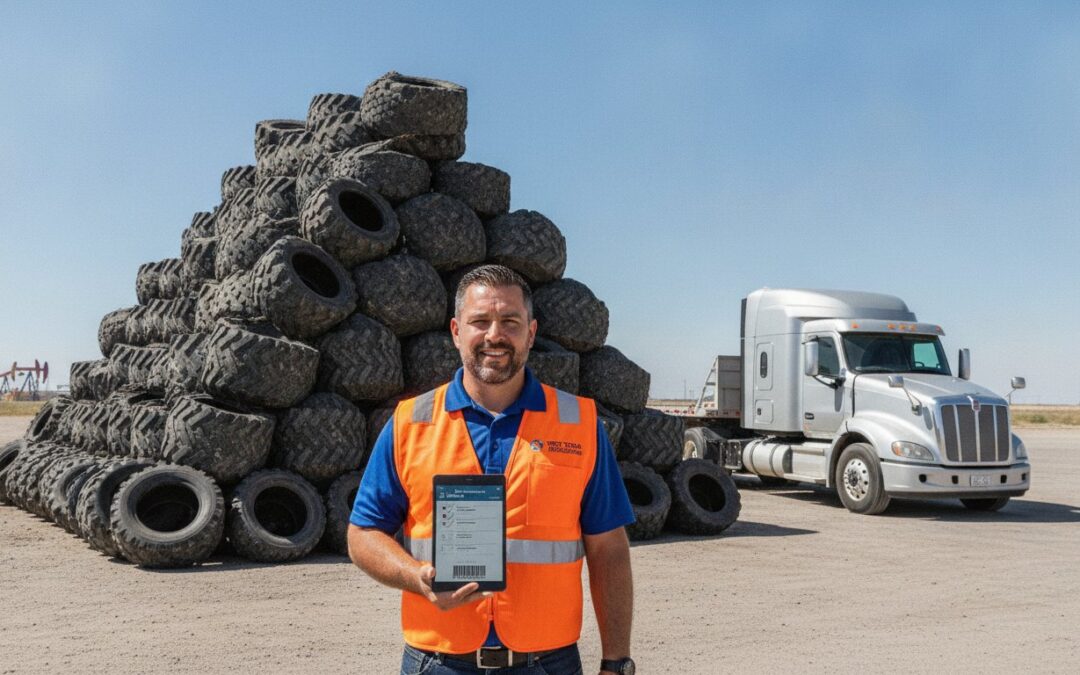
Saving a few dollars on an unverified hauler could cost your Odessa business up to $2,000 in local fines and even steeper state penalties. It’s frustrating to manage bulk rubber waste like scrap skid steer tracks or old conveyor belts when you’re just trying to keep your operations running smoothly. You want the waste gone, but you also need a licensed rubber waste transporter in Odessa to ensure it doesn’t end up in a ditch with your name attached to the liability. We know that finding a reliable partner is about more than just a pickup; it’s about protecting your professional reputation.
This article shows why hiring a TCEQ-registered professional is your best insurance policy against legal risks. You’ll learn how to navigate strict Texas disposal laws and manage bulk rubber without the fear of an unexpected environmental audit. We’ll walk through the specific registration requirements for local businesses, the importance of the manifest system, and how to verify that your waste is being handled by a professional who follows the rules.
Key Takeaways
- Understand the legal distinction between standard junk haulers and TCEQ-registered professionals to ensure your waste is tracked correctly.
- Learn about the “Cradle-to-Grave” liability principle and how hiring a licensed rubber waste transporter Odessa protects you from heavy environmental fines.
- Discover why local landfills often reject bulk rubber waste like OTR tires and how to bypass these disposal challenges.
- Get actionable tips on stacking and organizing your scrap rubber to save time and maximize efficiency during your next scheduled pickup.
- Identify a reliable partner for managing diverse waste streams, including scrap conveyor belts, skid steer tracks, and agricultural tires.
What Defines a Licensed Rubber Waste Transporter in Odessa?
A licensed rubber waste transporter Odessa isn’t just a person with a flatbed truck and a winch. In Texas, the law is very specific about how scrap tires and industrial rubber move from your site to a processing plant. A licensed transporter is a professional entity registered with the Texas Commission on Environmental Quality (TCEQ). This registration is more than a formality; it’s a commitment to follow environmental standards that protect the Permian Basin’s land and water. While a general junk removal service might toss your waste into a standard trailer, a licensed hauler uses specialized equipment designed to handle the weight and volume of industrial rubber.
Odessa has unique needs because of our heavy industrial and oilfield presence. We aren’t just dealing with a few passenger tires from a local shop. Our local businesses generate massive amounts of scrap rubber, including OTR (Off-the-Road) tires, scrap conveyor belts, and industrial hoses. Managing these materials requires a transporter who understands local ordinances. For instance, it’s unlawful to place any tire in a City of Odessa garbage container. A licensed professional ensures your waste enters the proper tire recycling process, where it can be converted into tire-derived fuel or rubberized asphalt instead of sitting in a landfill.
The Legal Requirement for Scrap Tire Hauling
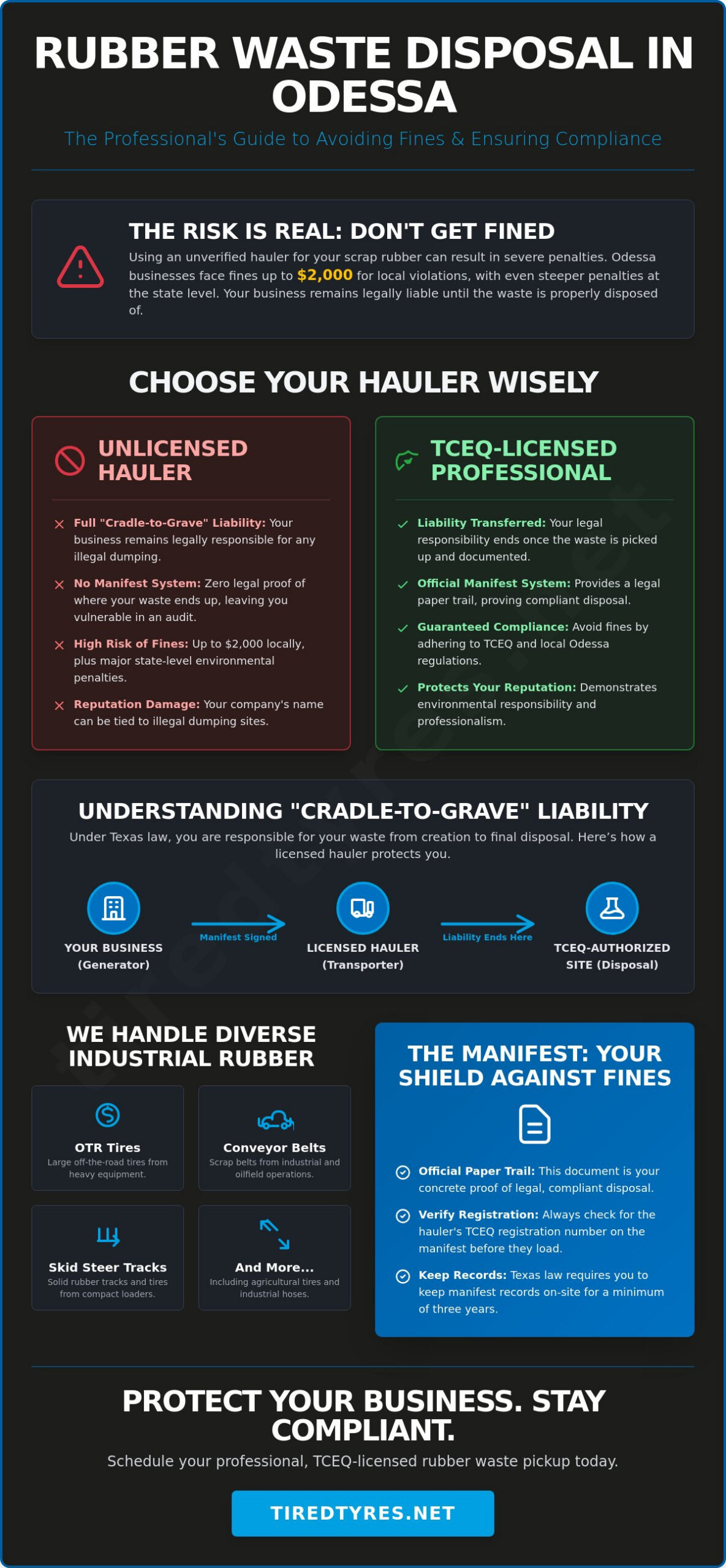
Texas law operates on a “cradle-to-grave” liability principle. This means your business is legally responsible for scrap rubber until it reaches an authorized disposal or recycling site. If you hire an unlicensed hauler who dumps your tires in a field, the TCEQ can trace that waste back to you. Commercial transporters must be registered and are required to use a manifest system. This paperwork tracks the waste from the moment it leaves your property in Odessa until it’s safely processed. With illegal dumping fines in Odessa reaching up to $2,000, the risk of using an unverified “cowboy” hauler simply isn’t worth it.
Beyond Tires: Industrial Rubber Waste
A licensed rubber waste transporter Odessa handles much more than just standard vehicle tires. In the oilfield, scrap hoses and conveyor belts are common byproducts that require specialized disposal. These materials are bulky and difficult to transport without the right trailers. Licensed professionals have the logistics in place to manage scrap skid steer tracks and solid tires that standard waste services won’t touch. They provide the documentation you need for environmental audits, proving that every piece of industrial rubber was handled according to state regulations. This professional approach keeps your site clean and your business compliant with West Texas environmental standards.
TCEQ Compliance: Why Licensing Matters for Your West Texas Business
In West Texas, environmental compliance isn’t just about paperwork. It’s about protecting your bottom line from long-term liability. Under Texas environmental law, the “Cradle-to-Grave” principle dictates that you’re responsible for every scrap tire or industrial hose from the moment it’s discarded until its final destruction. If an unlicensed hauler dumps your waste, the state doesn’t just look for the driver. They look for the generator. This is why partnering with a licensed rubber waste transporter Odessa is the only way to ensure your legal liability ends when the truck leaves your lot.
Improperly managed rubber creates significant risks for the Permian Basin. Research by the EPA highlights the environmental and health impacts of tires, ranging from toxic fire hazards to breeding grounds for disease-carrying pests. Licensed transporters eliminate these risks by moving waste to secure, authorized facilities where it can be properly recycled or repurposed. Choosing a professional partner means you aren’t just getting rid of junk; you’re fulfilling your duty as a responsible business owner.
The Scrap Tire Manifest: Your Shield Against Fines
A scrap tire manifest is the official paper trail of legal disposal. This document provides concrete proof that your waste reached a TCEQ-authorized facility. When a hauler arrives at your shop or industrial site, you must verify their TCEQ registration number on the manifest before any rubber is loaded. In Texas, you’re legally required to keep these records on-site for a minimum of three years. Proper documentation is your best defense during a surprise waste audit or state inspection. If you’re ready to secure your documentation, you can schedule a professional pickup to keep your records clean.
Avoiding Illegal Dumping Penalties in Lubbock and Odessa
Illegal dumping in Odessa can lead to immediate fines of up to $2,000 per violation. Unlicensed “tire jockeys” often promise low rates but lack the credentials to dispose of waste legally. They often dump rubber in back alleys or the outskirts of town, leaving you exposed to state-level prosecution and massive cleanup costs. For a deeper look at your responsibilities, review the Texas Tire Disposal Regulations. Using a licensed rubber waste transporter Odessa guarantees that your business stays on the right side of the law while keeping West Texas clean and safe for everyone.
Comparing Licensed Professional Pickup vs. DIY Disposal
Choosing to handle your own rubber waste disposal might seem like a cost-cutting measure at first. However, many business owners in the Permian Basin soon realize that the true cost of DIY hauling far outweighs the price of a professional service. Between the rising cost of fuel, the labor hours lost, and the high tipping fees at local facilities, you often end up spending more to do the work yourself. A licensed rubber waste transporter Odessa simplifies this process by providing the specialized equipment and logistical expertise needed to clear your site quickly and safely.
Reliability is another major factor. When you rely on “on-call” junk removal or your own staff, waste tends to pile up, creating safety hazards and attracting pests. Scheduled professional pickups ensure that your scrap rubber is managed consistently. This proactive approach keeps your facility organized and prevents the logistical bottleneck that happens when you try to transport bulk loads of semi-truck or OTR tires in standard trailers that weren’t built for the task.
Logistics of Bulk Rubber Removal
Moving industrial rubber is a heavy, dangerous job. Scrap skid steer tracks and solid tires are notoriously difficult to handle because of their weight and lack of flexibility. You can’t just toss them into the back of a pickup truck. Loading these items without professional winches or lift equipment puts your employees at risk for back injuries and accidents. Furthermore, large agricultural tires require specialized wide-load trailers to transport safely on West Texas highways. Professional haulers come prepared with the right fleet to manage these specific challenges, allowing your team to focus on their actual jobs.
Landfill vs. Professional Recycling
Odessa landfills have strict limitations on what they will accept. Most municipal sites reject bulk rubber waste entirely or charge significant premiums to accept tires. Often, they require tires to be quartered or shredded before they even consider taking them. This adds another layer of labor and equipment costs to your DIY project. Choosing a professional path is more than just a convenience; it’s a commitment to Tire Recycling. Tired Tyres ensures that your waste is processed at authorized facilities where it can be repurposed. This keeps bulk rubber out of our local landfills and ensures it’s handled in the most environmentally responsible way possible.
Preparing for Your Bulk Rubber or Tire Pickup in Odessa
Organization is the key to a fast and compliant waste removal process. When you work with a licensed rubber waste transporter Odessa, the efficiency of the pickup starts long before the truck arrives at your gate. A well-organized site reduces the time the collection crew spends on-site and ensures that the manifest paperwork is completed accurately. By taking a few simple steps to prepare your scrap rubber, you help maintain a safer work environment for your employees and the collection team.
Stacking tires correctly is the most effective way to maximize space. For standard passenger and semi-truck tires, we recommend lacing the tires or stacking them in clean, vertical columns. This prevents the pile from becoming a tangled mess that is difficult to load. It’s also vital to separate different categories of rubber. Keep your scrap skid steer tracks in one area and your scrap conveyor belt collection in another. Mixing these materials can slow down the loading process and complicate the final weight measurements used for your records.
Site Preparation Checklist
Before the truck arrives, run through this quick checklist to avoid delays:
- Conduct an inventory: Know the approximate count of your passenger, semi-truck, and OTR tires.
- Ensure clear access: Collection trucks are heavy and require a wide turning radius. Clear a path that is at least 15 feet wide and free of low-hanging wires or debris.
- Designate a manifest signer: Have a point of contact ready to verify the load and sign the TCEQ manifest immediately upon completion.
Handling Specialty Rubber Waste
Industrial sites in the Permian Basin often have unique rubber waste that requires extra care. If you have a scrap conveyor belt collection, ensure the belts are rolled tightly and secured with heavy-duty banding or rope. This makes them much easier to winch onto a trailer. For oilfield service sites managing a scrap hose collection, drain any residual fluids and coil the hoses to prevent tripping hazards. Warehouse managers should group scrap solid tires from forklifts separately. These are significantly heavier than pneumatic tires and require different handling techniques.
If your site is ready for a professional cleanup, book your bulk rubber pickup today to clear your space safely.
Tired Tyres: Your Licensed Partner for Permian Basin Waste Management
Managing bulk rubber shouldn’t be a source of stress for your business. Tired Tyres stands out as the premier licensed rubber waste transporter Odessa by combining local expertise with a strict adherence to state environmental laws. We understand that your priority is running your shop or job site, not worrying about the nuances of waste tracking. That’s why we take the entire burden off your shoulders. From heavy OTR tire collections to scrap skid steer tracks and industrial hoses, we provide a professional solution that keeps you compliant and your site clean.
Our team isn’t just about moving rubber; we’re about providing peace of mind through 100% TCEQ-compliant documentation. Every load we haul is backed by a completed manifest. This ensures you have the paper trail required for any state audit. We serve a wide range of clients, including independent auto shops, large-scale agricultural operations, and oilfield service companies. Whether you need a one-time clearing of a scrap conveyor belt collection or a recurring service for semi-truck tires, we adapt our schedule to fit your operational needs.
Our Permian Basin Service Area
We’ve built our reputation on being reliable and accessible across West Texas. Our roots are deep in the local community, and we’ve expanded our reach to ensure that every business in the region has access to professional disposal. We provide comprehensive Tire Disposal in Midland and have extended our specialized hauling services to Lubbock and the surrounding South Plains. This regional focus allows us to respond quickly to your needs while maintaining the high standards that West Texas industrial sites demand.
Get a Quote for Your Odessa Rubber Waste
Transparency is a core value of our communication. We offer fair, volume-based pricing that accounts for the specific types of rubber you need removed. Our rates reflect the size and weight of the load, whether it’s a stack of passenger tires or a massive OTR tire collection. You don’t have to guess about costs or worry about hidden fees. We provide clear estimates for one-time cleanups or a Scheduled Tire Pickup program designed for high-volume facilities. Professional waste management is an investment in your company’s safety and legal security. Request your scrap tire pickup quote today and let our experts handle the heavy lifting.
Secure Your Business with Professional Rubber Disposal
Managing bulk rubber waste shouldn’t be a legal or logistical headache for your operation. By choosing a licensed rubber waste transporter Odessa, you effectively eliminate the risk of expensive illegal dumping fines and ensure every scrap tire or industrial hose is documented through the TCEQ manifest system. We’ve explored how professional hauling removes the hidden costs of DIY disposal while providing the specialized trailers needed for OTR and agricultural tires.
Tired Tyres is your dedicated partner for keeping the Permian Basin clean and compliant. As a TCEQ Registered Transporter serving Midland, Odessa, and Lubbock, we bring the equipment and expertise required for heavy industrial rubber removal. We take pride in helping local businesses maintain safe, organized sites without the stress of environmental audits. Our team is ready to provide the reliable, professional service your West Texas facility deserves.
Get a Quote for Licensed Tire Disposal in Odessa and clear your site with confidence today. We look forward to helping you manage your rubber waste safely and efficiently.
Frequently Asked Questions
Is a license required to transport scrap tires in Odessa, Texas?
Yes, all commercial transporters of scrap tires in Texas must be registered with the Texas Commission on Environmental Quality (TCEQ). In most cases, hauling more than five tires for commercial purposes without this registration is a violation of state law. Using a licensed rubber waste transporter Odessa ensures that your business follows the specific ordinances set by both the state and the City of Odessa regarding solid waste management.
How do I verify if a tire hauler is TCEQ-registered?
Verify a hauler’s credentials by requesting their TCEQ registration number and ensuring it appears on the scrap tire manifest. You can also check the TCEQ’s online database of registered transporters to confirm their status is active. A professional company will always be transparent about their licensing and insurance coverage before they begin any work on your site, providing you with the necessary documentation for your records.
What happens if I hire an unlicensed person to haul my tires?
Hiring an unlicensed hauler places the legal risk directly on your business. If the waste is dumped illegally in a local alley or field, the City of Odessa can issue fines of up to $2,000. Under state law, you’re responsible for the cleanup costs and any environmental damage because the waste is still legally tied to your business through the cradle-to-grave liability principle.
Can I dispose of industrial rubber like conveyor belts at the local landfill?
Landfills in Odessa typically reject bulk industrial rubber or charge very high premiums to accept it. Items like scrap conveyor belts and industrial hoses are bulky and don’t compact well in standard landfill cells. A professional transporter moves these materials to specialized recycling facilities where they can be processed into tire-derived fuel or other sustainable products, keeping them out of the local waste stream.
What is a scrap tire manifest and why do I need one?
A scrap tire manifest is a mandatory tracking document that records the journey of your waste from pickup to final disposal. It serves as your primary evidence of legal compliance during inspections or environmental audits. Texas law requires businesses to maintain these records for at least three years to prove that all scrap tires were delivered to an authorized facility and handled according to state regulations.
Does Tired Tyres provide services for large OTR or agricultural tires?
Yes, Tired Tyres provides specialized collection services for agricultural and OTR (Off-the-Road) tires. We have the heavy-duty equipment needed to load and transport these oversized items safely. Our team is experienced in managing the unique logistical challenges that come with the large-scale rubber waste found at West Texas industrial and farming sites, ensuring even the largest tires are handled professionally.
How much does it cost to have scrap tires picked up in Odessa?
Pickup costs are determined by the volume and type of tires being removed from your location. Texas law doesn’t set mandated fees for tire collection, so prices are negotiated between the generator and the licensed rubber waste transporter Odessa. Factors like the size of the tires and the total weight of the load will influence the final service quote, which is why we provide custom estimates for every site.
What is the “cradle-to-grave” rule for tire disposal?
The “cradle-to-grave” rule is a principle in Texas environmental law that makes the waste generator responsible for the material throughout its entire lifecycle. Your liability doesn’t stop just because a truck hauled the tires away. If the tires aren’t handled correctly by the transporter, the state holds your business accountable for the environmental impact and cleanup costs until the waste is processed at an authorized facility.