
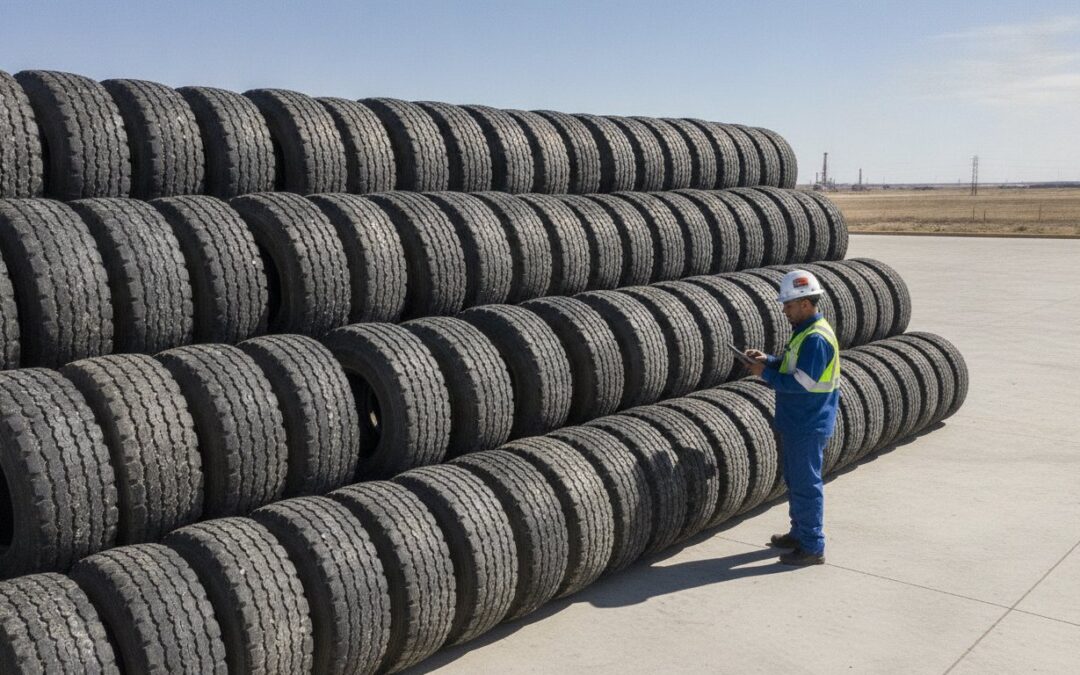
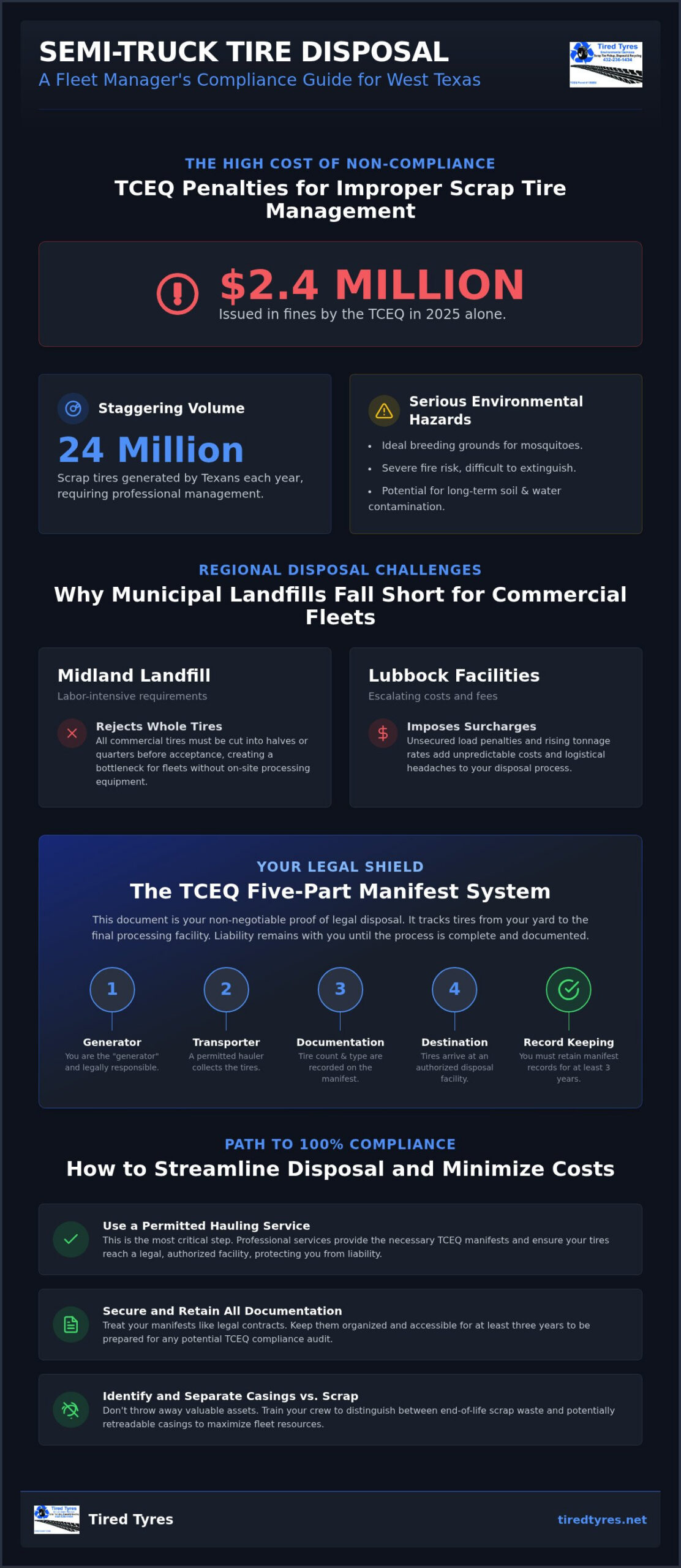
Did you know the TCEQ issued over $2.4 million in penalties for improper scrap tire management in 2025 alone? For fleet managers in the Permian Basin, professional semi-truck tire disposal often feels like a choice between steep landfill fees and the constant risk of compliance audits. It’s frustrating to deal with local facilities like the Midland landfill, which requires commercial tires to be cut in half and charges additional access fees. In Lubbock, unsecured load surcharges and rising tonnage rates only add to the logistical headache of clearing out your old inventory.
We understand that keeping your yard clear while staying 100% legal is a difficult balancing act. This article will show you how to manage bulk tire waste efficiently and affordably across West Texas. We’ll preview the 2026 storage limits, explain the latest five part manifest requirements, and provide a clear path to minimizing your disposal costs. By the end of this guide, you’ll know exactly how to handle your scrap tires without wasting your crew’s time or risking expensive state fines.
Key Takeaways
- Understand the 2026 TCEQ regulations, including the mandatory five-part manifest system and storage limits that protect your business from legal liability.
- Learn why municipal landfills in Midland and Lubbock often reject whole commercial casings or impose high surcharges for heavy-duty rubber waste.
- Discover how to streamline your semi-truck tire disposal by properly preparing tires to minimize hauling labor and collection costs.
- Identify the difference between scrap waste and retreadable casings to ensure you aren’t throwing away potential fleet resources.
- Find out how professional hauling services provide the necessary documentation to prove 100% compliance with Texas environmental laws.
The Challenge of Semi-Truck Tire Disposal in West Texas
Semi-truck tire disposal is the specialized process of collecting, transporting, and processing heavy-duty commercial casings. It’s a far cry from taking a few old passenger tires to the local dump. In the Permian Basin, where logistics hubs and trucking fleets operate 24/7, the sheer volume of rubber waste is staggering. Texans generate approximately 24 million scrap tires every year. Managing this volume requires a professional approach to avoid the massive liability that comes with improper storage or disposal.
Many businesses consider cutting corners to save on hauling costs, but the cost of illegal dumping far outweighs the investment in professional services. In 2025, the TCEQ issued over $2.4 million in penalties for improper scrap tire management. Using a permitted hauler ensures you don’t become a statistic in next year’s enforcement reports. It’s about protecting your company’s reputation and bottom line from avoidable state fines.
Why Commercial Tires Require Special Handling
Commercial casings are massive, steel-belted obstacles that don’t fit in standard waste bins or residential collection vehicles. Their heavy construction makes the Tire recycling process significantly more complex than processing light vehicle rubber. Beyond the logistics, stockpiled tires pose serious environmental hazards. They serve as ideal breeding grounds for mosquitoes and represent a severe fire risk. Once a large tire pile catches fire, it’s notoriously difficult to extinguish and can lead to long-term soil and water contamination.
Regional Disposal Pressures in the Permian Basin
The intensity of trucking activity in Midland and Odessa places unique pressures on local infrastructure. Landfill capacity for bulk rubber waste is increasingly limited across West Texas. For example, the City of Midland Landfill won’t even accept whole tires; they must be cut into halves or quarters first. This creates a labor-intensive bottleneck for fleet managers who don’t have the equipment to process tires on-site.
The harsh West Texas climate also plays a role. Intense heat and UV exposure cause rubber to degrade quickly, increasing the risk of chemical runoff if scrap inventories aren’t moved promptly. Reliable semi-truck tire disposal isn’t just about cleaning up a yard; it’s about managing a high-stakes environmental responsibility in a region where the rules are strictly enforced. Professional collection services help bridge the gap between heavy operational waste and strict environmental standards.
TCEQ Regulations: Staying Legal with Scrap Tire Manifests
Managing a fleet in West Texas means staying ahead of the Texas Commission on Environmental Quality (TCEQ). The state monitors scrap rubber closely because of the environmental and health impacts of tires. If you’re responsible for semi-truck tire disposal, you’re legally classified as a “generator.” This title carries a significant burden of proof. If your tires are discovered in an unauthorized site near Lubbock or a vacant lot in Odessa, the TCEQ will track the manifest back to your business. The liability doesn’t end just because the tires left your property.
Compliance is the only way to protect your business from the aggressive enforcement seen in recent years. In April 2026 alone, the TCEQ approved more than $1.4 million in fines against dozens of regulated entities. These aren’t just warnings; they’re business-altering penalties for failing to follow the paper trail. Staying compliant requires a thorough understanding of the manifest system and strict adherence to storage limits.
Understanding the Manifest System
The five-part manifest form is the backbone of legal tire disposal in Texas. This document tracks the transfer of tires from the generator to the transporter, and finally to the authorized disposal or recycling facility. Each manifest must include the registration numbers of the hauler and the destination site, along with the exact count and type of tires being moved. You’re required to retain these records for at least three years. If an auditor visits your Midland office, these forms are the only way to prove you’ve followed the law. A permitted tire hauler should provide these documents automatically at the time of pickup.
Avoiding Illegal Dumping Fines in Lubbock and Midland
Local ordinances often mirror state law but add another layer of scrutiny for Permian Basin businesses. Under Texas law, commercial illegal dumping is defined as the unauthorized disposal of waste for economic gain or in volumes exceeding 200 pounds. For a trucking hub, just a few heavy-duty casings can push you into this category. To stay safe, you must also watch your accumulation. As of 2026, scrap tire generators can store up to 500 tires on the ground or 2,000 in enclosed, lockable trailers without needing a separate registration.
Before signing a contract, always verify a hauler’s TCEQ permit. Using an unpermitted “junk hauler” might save a few dollars today, but it leaves you 100% liable for where those tires eventually land. For a deeper dive into these requirements, read our Texas Tire Disposal Regulations: A 2026 Guide for West Texas Businesses. Taking the time to verify your partners ensures that your semi-truck tire disposal process remains a routine business task rather than a legal nightmare.
Disposal Options for Fleet Managers and Auto Shops
Choosing the right method for semi-truck tire disposal depends on your fleet size and available labor. It isn’t just about getting the rubber off your lot; it’s about the most efficient use of your company’s resources. Before you treat every casing as waste, consider the retreading option. High-quality casings are valuable assets that can be reused, extending the life of your tire investment. However, once a casing fails inspection or the sidewall is compromised, it officially becomes scrap. At that point, you have two main paths: self-hauling to a municipal landfill or hiring a professional collection service.
Many fleet managers initially think self-hauling is the most cost-effective route. They already have the trucks and the drivers, so it seems like a logical choice. But the math often changes when you look at the total cost of labor, fuel, and municipal tipping fees. When you factor in the wear and tear on your equipment and the lost productivity of a driver who could be on a billable haul, the turnkey convenience of a pickup service often becomes the more affordable choice. It’s a matter of comparing a predictable flat-rate fee against the variable and often hidden costs of doing it yourself.
Municipal Landfills in Midland and Odessa
Landfills in the Permian Basin have strict acceptance policies that create a significant labor burden for your crew. For example, the City of Midland Landfill won’t accept whole tires; they must be cut in half or quartered before they’re allowed on the face. If you’ve ever tried to cut through a steel-belted commercial casing, you know it’s a dangerous, time-consuming job that ruins expensive saw blades.
The financial costs add up quickly. If you don’t have a Garbage Hauler’s Permit, Midland charges a $25 Landfill Access Fee on top of the $30 per commercial tire disposal charge. In Lubbock, you’ll face tonnage rates of $41 per ton and a $30 surcharge if your load isn’t perfectly secured. These facilities also have daily limits on how many tires they’ll take from a single commercial source, which can leave you with a half-full yard even after multiple trips. The time your employees spend waiting in landfill lines is time they aren’t spent maintaining your fleet.
Professional Scrap Tire Pickup Services
Professional collection services provide a much faster alternative for high-volume shops and trucking hubs. Instead of processing rubber yourself, you can arrange for on-site collection of bulk volumes, typically 50 tires or more. This model removes the logistical nightmare of hauling heavy casings and eliminates the risk of unsecured load fines. Whether you prefer a scheduled monthly pickup or an on-call model to clear out a sudden surge of inventory, professional haulers adapt to your workflow.
A major benefit of this approach is the immediate handling of the TCEQ manifest paperwork we discussed earlier. You get a completed chain-of-custody document the moment the tires leave your site, which is essential for your next environmental audit. For a full breakdown of how to choose a partner in the region, see our Commercial Tire Disposal in Midland, Odessa & Lubbock: The 2026 Guide. Moving to a professional service allows you to clear your scrap inventory quickly while ensuring your business remains 100% compliant with Texas law.
How to Prepare for a Semi-Truck Tire Collection
Preparation turns a logistical hurdle into a routine business task. Efficient staging reduces the time a collection crew spends on your lot, which helps keep your service costs predictable. When semi-truck tire disposal is handled professionally, the process depends on clear communication and physical organization. Taking a few minutes to organize your inventory before the truck arrives prevents labor surcharges and ensures a safer environment for everyone involved.
The physical condition of your scrap rubber directly impacts your final invoice. Tires with rims still attached are significantly heavier and require specialized loading equipment. You should also ensure tires are free of excessive mud, concrete, or internal debris. Clean casings are easier to handle and move through the recycling chain more efficiently. If your tires are filled with dirt or water, they become a health hazard and add unnecessary weight that can lead to unexpected fees.
Staging and Organization
Logistics for heavy-duty rubber waste require ample space. You must ensure your staging area is accessible to a 26-foot box truck or a large trailer. If a hauler has to maneuver through a tight, cluttered yard, it slows down the entire operation. Group your tires by size whenever possible. Keeping your semi-truck tires separate from smaller passenger or light truck units allows the crew to load the vehicle strategically, maximizing the space and speed of the pickup.
Safety is the priority when building your stacks. Large commercial tires are incredibly heavy and can cause serious injury if a pile collapses. We recommend lacing the tires or using stable barrel stacks on level ground. Avoid stacking them too high; a manageable height ensures stability during the West Texas wind storms common in Midland and Odessa. Finally, make sure the tires are dry. Standing water attracts mosquitoes and increases the risk of West Texas viruses, which is a major concern for both your employees and the collection crew.
Documentation Readiness
Administrative preparation is just as vital as the physical work. You need an authorized signer on-site to verify the load and sign the TCEQ manifest. This document is your legal proof of compliance, so it must be handled with care. Providing an accurate tire count before the hauler arrives is the single most important factor for billing transparency, as it allows for precise scheduling and eliminates disputes over the final invoice. Having your estimated count ready allows the driver to cross-reference the load quickly and get back on the road. If you are ready to clear your yard and secure your manifest, schedule your semi-truck tire collection today.
Reliable Semi-Truck Tire Disposal with Tired Tyres
Tired Tyres serves as the Permian Basin’s dedicated specialist for heavy-duty rubber waste management. We provide professional semi-truck tire disposal for fleets in Midland, Odessa, Lubbock, and across the South Plains. Our team understands that West Texas logistics companies don’t have time to wrestle with landfill logistics or complex environmental paperwork. We’ve built our service around a “Hassle-Free” promise, which means we handle both the physical heavy lifting and the mandatory TCEQ manifest documentation for every pickup.
Choosing a local partner ensures your yard remains clear and your business stays compliant without the delays often associated with out-of-state haulers. We’re part of the West Texas community. We know the local roads and the specific regional pressures facing trucking hubs in the Permian Basin. Our goal isn’t just to haul away waste; it’s to provide a sustainable, legal solution that lets you focus on keeping your fleet moving. When you work with us, you’re gaining a compliance partner that takes the liability of scrap rubber off your shoulders.
Our Specialized Commercial Equipment
Our fleet is specifically optimized for the extreme weight and bulk of commercial rubber. Standard junk removal services often struggle with the sheer mass of steel-belted semi-truck and agricultural tires, but our equipment is built for these heavy-duty casings. This specialization allows us to load and transport large volumes quickly, minimizing the time we spend on your lot. Being a local West Texas company also means we offer faster response times for urgent cleanouts compared to national providers.
Our capabilities extend beyond standard tires. We’re equipped to handle a variety of industrial rubber waste that many municipal landfills won’t touch. This includes scrap conveyor belts, skid steer tracks, and solid tires. If your operation generates a mix of industrial rubber waste, we provide a single point of contact for all your collection needs. This streamlined approach saves you from managing multiple vendors and simplifies your environmental record-keeping.
Get Your Custom Disposal Quote Today
Requesting a solution for your scrap inventory is a straightforward process. We provide custom quotes based on the specific needs of your fleet or shop. To get started, we simply need your location, an estimated tire count, and the type of tires you need collected. Whether you have a stack of 50 heavy-duty casings or a larger inventory of OTR and agricultural tires, we’ll build a pickup plan that fits your schedule and budget.
We remain committed to 100% TCEQ compliance and environmental stewardship. Every pickup includes the comprehensive manifest documentation required to protect you during state audits. Don’t let scrap rubber become a legal or safety liability for your business. Take the first step toward a cleaner, safer yard by reaching out to our team. Contact Tired Tyres for a Semi-Truck Tire Pickup Quote and experience a professional, West Texas approach to waste management.
Secure Your Fleet’s Compliance and Yard Space
Professional semi-truck tire disposal is about more than just clearing space; it’s about protecting your business from the TCEQ’s strict enforcement and potential fines. We’ve seen how municipal landfill restrictions and mandatory manifest systems turn simple waste management into a complex legal liability. By choosing a partner who provides the right equipment and the necessary paper trail, you eliminate the risks of illegal dumping penalties and unsecured load surcharges.
Tired Tyres is a TCEQ Permitted Hauler dedicated to serving the Permian Basin and South Plains. We are specialists in heavy OTR and semi tires, ensuring that every load is handled according to current Texas environmental standards. Whether you’re operating out of Midland, Odessa, or Lubbock, we’re ready to take the logistical burden off your hands.
Don’t let scrap rubber pile up and attract state scrutiny. Schedule your bulk semi-truck tire pickup in West Texas today to ensure your operations stay lean and 100% legal. We’re here to help you get back to what matters most: keeping your trucks on the road.
Frequently Asked Questions
How much does it cost to dispose of a semi-truck tire in Texas?
Disposal costs depend on whether you use a municipal landfill or a private hauler. For example, the City of Midland Landfill charges $30.00 per commercial tire, but they require the rubber to be cut in half first. In Lubbock, the regional disposal facility charges $41.00 per ton. Private collection services usually offer flat-rate pricing that includes the labor of loading and the cost of mandatory state paperwork.
Do I need to remove the rims before the tires are collected?
Yes, removing the rims is the standard requirement for the most affordable collection rates. Rims add significant weight and require different processing at recycling centers. While some specialized services can handle tires with rims attached, it typically involves a higher fee to cover the additional labor and equipment needed for separation later in the recycling chain.
What is a TCEQ scrap tire manifest and why do I need one?
A TCEQ scrap tire manifest is a mandatory five-part document that tracks tires from your site to their final disposal point. You need this form to prove you’ve followed Texas environmental laws during your semi-truck tire disposal process. If an inspector audits your business, these manifests are your only legal proof that you aren’t liable for any illegal dumping that might occur after the tires leave your lot.
Can I take my commercial truck tires to the Midland or Odessa landfill?
You can take commercial tires to these landfills, but you must follow strict processing rules. The City of Midland Landfill won’t accept whole tires; they must be quartered or cut in half before arrival. Additionally, if you don’t have a Garbage Hauler’s Permit, you’ll be charged a $25.00 access fee in addition to the per-tire disposal costs. Many fleets find that the labor of cutting tires makes this option more expensive than professional pickup.
How many scrap tires can I store on my property legally?
As of 2026, Texas law allows you to store up to 500 scrap tires on the ground or up to 2,000 tires in enclosed, lockable trailers without needing a special TCEQ registration. If you exceed these limits, you must register as a storage site and follow more rigorous reporting requirements. Staying below these thresholds is the easiest way for trucking companies to avoid extra regulatory scrutiny.
Does Tired Tyres provide regular scheduled pickups for trucking companies?
Yes, we offer both scheduled and on-call collection models for trucking fleets and high-volume repair shops. Many of our clients in Midland, Odessa, and Lubbock prefer a monthly or quarterly schedule to prevent their scrap inventory from exceeding legal storage limits. This proactive approach ensures your yard stays clean and your manifest records stay up to date without you having to remember to call for every load.
What happens to the semi-truck tires after they are collected?
Collected tires are transported to authorized processing facilities where they’re recycled into various materials. In Texas, nearly half of all scrap tires are used for tire-derived fuel, while others go toward land reclamation or civil engineering projects. A smaller percentage is processed into crumb rubber for use in asphalt and athletic surfaces. This ensures your waste is handled as a resource rather than just sitting in a landfill.
Are there fines for improper tire disposal in Lubbock County?
Yes, the penalties for improper disposal are severe and strictly enforced. In 2025, the TCEQ issued over $2.4 million in penalties for various scrap tire violations across the state. In Lubbock, you can also face local surcharges for unsecured loads or unauthorized dumping. Using a permitted hauler is the only way to guarantee you won’t be held financially responsible for environmental violations.