
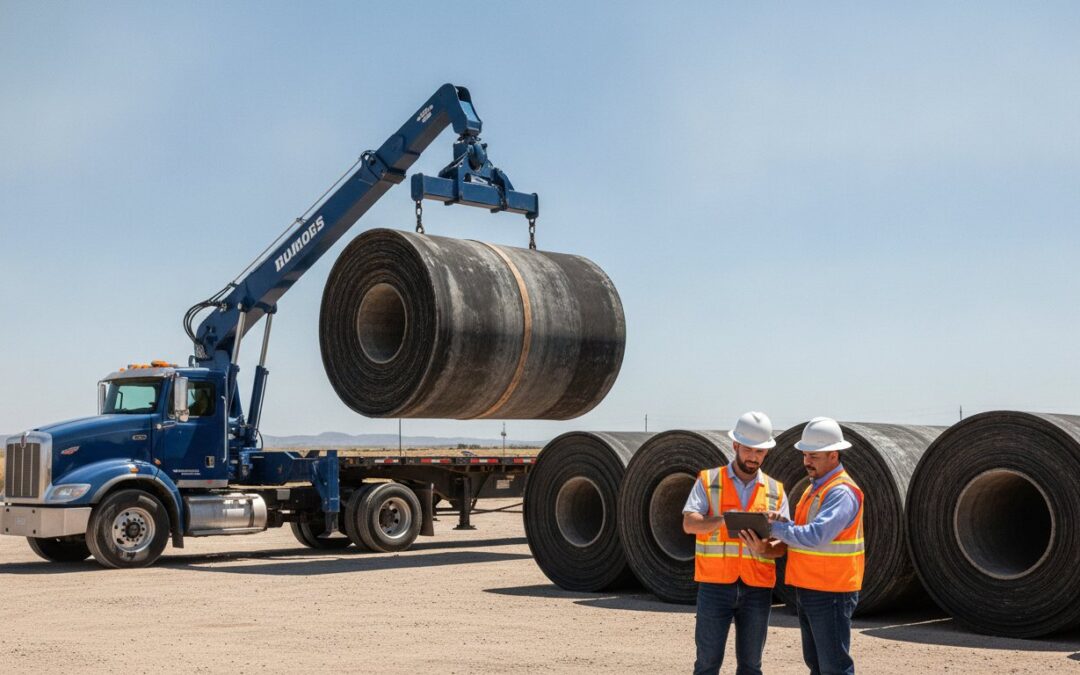
In 2025, the TCEQ issued over $2.4 million in penalties for improper scrap rubber management, with fines reaching as high as $25,000 per violation per day. If you operate an industrial site in Midland, Odessa, or Lubbock, those massive rubber piles in your yard aren’t just taking up space. They represent a significant regulatory liability. You already know how difficult it is to transport these heavy, bulky rolls. The “cradle to grave” liability rule means your legal responsibility doesn’t end when the waste leaves your property.
This guide provides everything you need to manage conveyor belt disposal Texas requirements in 2026. You’ll learn how to stay compliant with TCEQ Class 3 industrial waste rules and protect your business from expensive environmental fines. We’ll walk through the current manifest requirements, explain how to document the chain of custody, and show you how to organize an efficient bulk pickup. By the end of this article, you’ll have a clear path to clearing your site of hazards while ensuring 100% legal compliance for your West Texas operations.
Key Takeaways
- Understand why unused rubber is a liability and how TCEQ Class 3 classifications impact your facility’s environmental standing.
- Learn the essential steps for legal conveyor belt disposal Texas in 2026, including manifest documentation requirements.
- Master the logistics of preparing heavy industrial rolls for collection to ensure a fast, hassle-free removal process.
- Discover why DIY repurposing often fails at scale and when to call a professional partner in Midland, Odessa, or Lubbock.
- Protect your business from “cradle to grave” liability by using a permitted hauler specialized in industrial rubber waste.
Why Scrap Conveyor Belts are an Industrial Liability in Texas
Industrial sites across West Texas often treat old rubber as a low-priority concern. They stack it in a remote corner of the yard and forget about it. This approach is a mistake. Under state law, there’s a thin line between “temporary storage” and “illegal dumping.” If your facility doesn’t have a documented plan for conveyor belt disposal Texas, those piles quickly become a financial and legal liability. Texas regulations are strict about how industrial solid waste is handled. Burying these materials on-site is a high-risk gamble that can lead to massive remediation costs and TCEQ penalties. The “cradle to grave” liability rule means you’re responsible for that rubber forever, even if you sell the land.
A conveyor belt is designed for extreme durability, but that same strength makes it a permanent fixture in the environment. It won’t break down or compress over time. Instead, it sits as a permanent obstacle that complicates every aspect of your facility management.
Operational Impact of Rubber Waste
Scrap piles immediately interfere with site logistics. In industrial hubs like Midland and Odessa, yard space is a valuable asset. Bulky rubber rolls block access for service vehicles and create dangerous blind spots for heavy equipment operators. This waste also negatively impacts property values. Potential buyers or investors see a rubber pile as a future cleanup expense, not just a mess. Insurance companies take a similar view. Many providers now audit yards for waste accumulation. If they find unmanaged rubber, they may hike premiums or refuse coverage entirely until the site is cleared. Proactive removal is always cheaper than an emergency cleanup triggered by an insurance mandate.
Environmental and Safety Hazards
Fire risks are a primary concern in the dry Permian Basin climate. While vulcanized rubber is hard to ignite, a rubber fire is nearly impossible to extinguish once it takes hold. These fires release toxic black smoke and oily residue that leaches into the ground. Beyond fire, there’s the issue of vector control. Old belts are magnets for West Texas pests. The crevices in rolled rubber trap rainwater, creating perfect breeding grounds for mosquitoes. They also provide ideal shelter for rattlesnakes and rodents. In Lubbock and the surrounding South Plains, local authorities prioritize vector control to prevent disease. Leaving these piles untouched isn’t just a logistics problem; it’s a public health hazard that invites unwanted regulatory scrutiny.
Texas TCEQ Regulations for Industrial Rubber Disposal
Managing industrial waste in the Lone Star State requires a firm grasp of Texas Commission on Environmental Quality (TCEQ) rules. Under current state law, uncontaminated conveyor belts are generally classified as Class 3 industrial solid waste. This classification means the materials are inert and insoluble. While they don’t pose the same chemical risks as hazardous waste, their bulk and volume trigger specific oversight. The TCEQ monitors conveyor belt disposal Texas to ensure these materials don’t end up in unauthorized “monofills” or illegal dump sites across the Permian Basin.
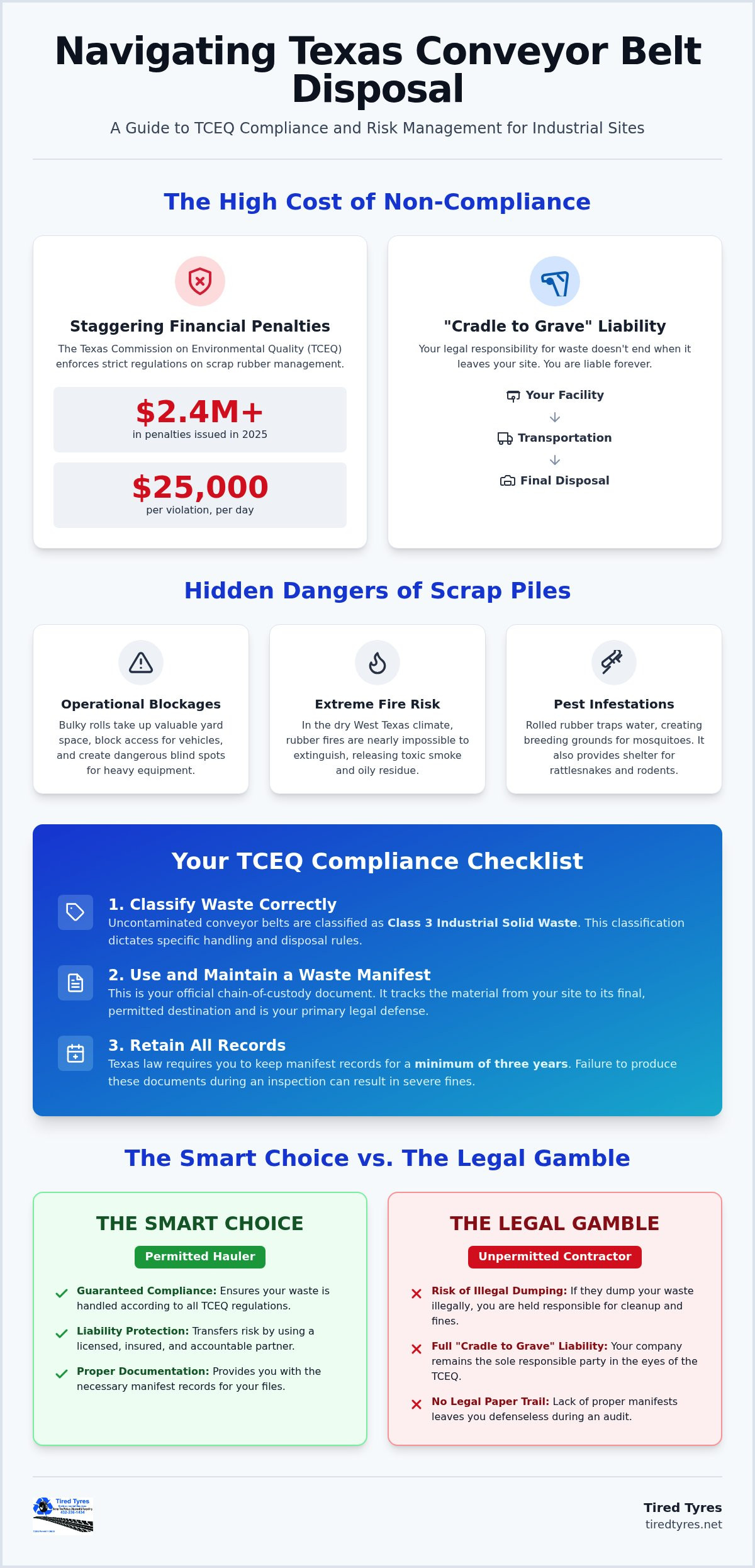
You must maintain a waste manifest for all industrial rubber removals. This document serves as the official chain of custody. It tracks the material from the moment it leaves your facility in Midland or Odessa until it reaches a permitted landfill or processing center. Texas law requires you to keep these manifest records for a minimum of three years. If an inspector visits your site and you can’t produce these documents, your business could face significant penalties. In 2025, the TCEQ issued over $2.4 million in fines for rubber management violations, proving that documentation isn’t just paperwork; it’s your primary legal defense.
Permitted Haulers vs. Independent Contractors
It’s tempting to hire an independent contractor with a flatbed trailer to clear your yard. This is a dangerous legal gamble. In Texas, a waste generator is responsible for their material from “cradle to grave.” If an unpermitted hauler dumps your belts in a ravine or on an unauthorized property, the TCEQ will hold you liable for the cleanup costs and fines. You should always verify a hauler’s status before they load a single roll. A professional partner like Tired Tyres operates as a permitted hauler, ensuring your waste is handled by experts who understand state compliance. This protects your company from the $25,000 per day penalties that can stem from improper disposal practices.
Legal Disposal Sites and Processing
Not every landfill in West Texas accepts industrial rubber. Facilities in Lubbock and Midland have specific permit requirements for Class 3 waste. Some sites require you to call ahead for a quote, as only about 31% of Texas landfills publish their rates publicly. Using a permitted processing facility is often a better alternative to landfilling. These sites can shred or repurpose the rubber, which may reduce your long-term liability. For a deeper look at how these rules compare to tire waste, see our guide on Texas Tire Disposal Regulations. Choosing the right endpoint for your material is the final step in closing the loop on your legal obligations.
Repurposing vs. Professional Disposal: Making the Right Choice
When you’re faced with miles of retired rubber, the idea of “free” repurposing sounds attractive. Many industrial managers in West Texas look for ways to give old materials a second life on-site. While this works for small quantities, the logistics of conveyor belt disposal Texas change drastically when you’re dealing with bulk piles. You have to weigh the immediate savings of reuse against the long-term labor and safety costs of managing that material yourself.
From an environmental perspective, professional collection often has a lower total carbon footprint than DIY efforts. When a facility self-hauls, they typically use multiple trips with light-duty trucks. A professional hauler optimizes the process by using heavy-duty equipment and direct routes to permitted facilities. This efficiency reduces fuel consumption and ensures that the material is handled according to the latest environmental standards.
Common Repurposing Ideas and Their Limits
Using old belts for livestock mats, dock bumpers, or floor liners in high-traffic areas are common small-scale wins. These applications take advantage of the material’s durability. However, industrial belts aren’t easy to work with. They’re often reinforced with steel cables or heavy fabrics that require specialized cutting tools. The labor cost of prepping, cutting, and moving these belts often exceeds the price of buying purpose-built mats. Most facilities find that they can only repurpose a tiny fraction of their total scrap. The remaining pile continues to sit in the yard, growing into a regulatory headache that eventually requires professional intervention.
The Benefits of Professional Bulk Collection
Choosing professional collection is about speed and risk management. A specialized partner can clear a site in days, whereas a DIY repurposing project might drag on for months. Moving bulk rolls requires heavy-duty loaders and trailers designed for high-density rubber. If you try to self-haul, you’re tying up your own equipment and personnel that should be focused on your core operations. This is why most large-scale operations in Lubbock, Midland, and Odessa choose a reliable partner. It keeps the site clean and the team focused on productive work. For more information on managing other large-scale rubber waste, learn about Commercial Tire Disposal to keep your entire site compliant and hazard-free.
How to Prepare Your Facility for Conveyor Belt Pickup
Efficiency starts long before the collection truck arrives at your gate. Proper preparation ensures a fast removal and keeps your site operations running without interruption. The first step is assessing the total volume and weight of your rubber waste. Industrial belts are deceptively heavy. A single large roll can weigh several tons depending on its width and thickness. You need an accurate count of these rolls so your hauler can dispatch the appropriate trailers and loading equipment for conveyor belt disposal Texas requirements.
Once you’ve gauged the load, focus on organization. Loose, tangled belts are difficult to handle and dangerous to transport. You should roll each belt section as tightly as possible and secure it with heavy-duty banding or chains. This step is vital for safety. Properly rolled belts won’t shift during loading or transit, which reduces the risk of accidents on the road between Midland and Odessa. It also allows the hauler to maximize trailer space, often reducing the number of trips needed to clear your yard.
Logistics and Site Access
Collection trucks and semi-trailers require significant room to maneuver. You must ensure that the path to your rubber pile is clear of smaller equipment, vehicles, and debris. Staging your belts on firm, level ground is the best practice. In the Permian Basin, avoid staging materials in soft sand or low-lying areas that could become muddy after rain. If a heavy-duty truck gets stuck, it delays your cleanup and creates additional site hazards. If your belts still have embedded steel fasteners or hardware, keep those rolls separate from “clean” rubber if possible. This helps the processing facility and ensures your manifest documentation remains accurate.
Documentation and Compliance Check
Facility managers should use a pre-pickup checklist to verify that everything is in order. This includes a final count of the rolls and a check of the staging area to ensure no residual scrap is left behind. Leaving small pieces of rubber scattered in the dirt can still trigger “illegal accumulation” warnings during a TCEQ inspection. You should have your manifest paperwork ready for the driver to sign the moment they arrive. This keeps your “cradle to grave” records up to date and proves your commitment to legal disposal. If you’re ready to clear your site and eliminate these hazards, contact a permitted hauler to arrange a bulk pickup in Lubbock or the surrounding areas. A clean yard is a safer, more productive workplace.
Reliable Conveyor Belt Collection in Midland, Odessa & Lubbock
Finding a reliable partner for industrial rubber waste in West Texas can be a challenge. Many national waste management companies don’t have the specialized equipment required for heavy bulk rolls, or they simply don’t prioritize the Permian Basin. Tired Tyres fills this gap as a local specialist dedicated to conveyor belt disposal Texas services. We understand the unique needs of the energy, mining, and agricultural sectors that drive our regional economy. Whether you’re decommissioning a quarry line or clearing out old belts from a cotton gin, we provide a streamlined, professional solution that keeps your facility moving.
Our team uses specialized loaders and high-capacity trailers designed specifically for OTR tires and scrap conveyor belts. We don’t just pick up the material; we ensure the entire process is TCEQ-compliant. This commitment protects your business from the “cradle to grave” liabilities we’ve discussed throughout this guide. By choosing a permitted hauler, you ensure that your waste reaches a legal endpoint, whether that’s a permitted landfill or a processing facility.
Why West Texas Businesses Trust Tired Tyres
Reliability is the foundation of our service. In an industry where service providers often fail to show up, we pride ourselves on direct communication and punctual scheduling. We know that a neglected rubber pile is a safety hazard and a logistical bottleneck in Midland, Odessa, and Lubbock. Our local expertise means we understand the specific road conditions and facility layouts common in the South Plains and Permian Basin. We offer more than just rubber removal; we provide peace of mind through documented compliance. For businesses managing diverse waste streams, you can also discover our Reliable Tire Disposal services to keep your entire site clean and legal.
Get Started with a Custom Pickup Quote
Every industrial site has different requirements based on the volume and condition of their scrap. To provide an accurate estimate, we need a few key details about your project. When you reach out, please have information ready regarding the approximate linear footage of the belts, the width and thickness of the material, and your specific location in West Texas. Photos of the staging area are also incredibly helpful for our logistics team. We’ll work with you to create a pickup schedule that minimizes disruption to your daily operations. Don’t let rubber waste remain a liability on your property. Contact Tired Tyres for a Conveyor Belt Pickup Quote today and let a permitted professional handle the heavy lifting.
Securing Your Facility’s Future with Compliant Disposal
Managing industrial rubber waste is more than just a housekeeping task; it’s a vital part of your facility’s legal and operational strategy. By choosing professional conveyor belt disposal Texas services, you eliminate the safety hazards of stockpiling while protecting your company from significant TCEQ penalties. Your responsibility for industrial waste is permanent. This makes the choice of a permitted hauler the most important decision you’ll make in the disposal process. A clean, organized site in Midland, Odessa, or Lubbock isn’t just about aesthetics; it’s about reducing fire risks and maximizing your functional yard space.
Tired Tyres is a local, Permian Basin family-owned business ready to handle your most challenging heavy-duty rubber removal projects. We provide the specialized loading equipment and TCEQ-compliant manifest documentation you need for total peace of mind. Don’t let old rubber rolls become a permanent liability on your property. Schedule a Bulk Conveyor Belt Pickup in West Texas today and let us take the burden of industrial waste off your hands. We’re here to help you stay compliant and efficient.
Frequently Asked Questions
Is it legal to bury old conveyor belts on my property in Texas?
No, burying industrial rubber on your property is illegal under Texas law. The TCEQ classifies these materials as industrial solid waste, and unauthorized burial is considered illegal dumping. This practice creates a permanent environmental liability that remains with the property owner from “cradle to grave.” If discovered during a site inspection or property sale, you could face massive remediation costs and civil penalties reaching $25,000 per violation per day.
What is the difference between scrap tire and industrial rubber disposal?
The primary difference lies in the TCEQ waste classification and the specific manifest requirements. While scrap tires are managed under a dedicated state program, uncontaminated conveyor belts are typically classified as Class 3 industrial solid waste. This means they are considered inert and essentially insoluble in water. However, both materials require a documented chain of custody and disposal at a permitted facility to ensure your business remains compliant with state environmental regulations.
Do I need a special permit to transport my own scrap conveyor belts?
Texas law requires a registered hauler for the commercial transportation of industrial solid waste. While some small-scale exemptions exist for generators hauling their own waste, you must still comply with strict manifest and record-keeping rules. Hiring a permitted hauler is the most effective way to manage conveyor belt disposal Texas requirements. It transfers the physical risk of transport to professionals who possess the specialized trailers and insurance coverage needed for heavy-duty rubber loads.
How much does it cost to dispose of a conveyor belt in Midland?
Disposal costs vary based on the volume of the material and the specific tipping fees at your local landfill. For permit holders, the City of Midland Landfill reported a rate of $31.00 per ton in June 2026. You should also factor in the costs of labor, specialized loading equipment, and transportation. Since only about 31% of Texas landfills publish their rates publicly, it’s best to call facilities directly for a current quote.
Can conveyor belts with steel reinforcement be recycled?
Yes, steel-reinforced belts can be recycled, but the process is more complex than recycling fabric-core belts. Specialized processing facilities use heavy-duty shredders and magnetic separators to pull the steel cables from the vulcanized rubber. This allows both the metal and the rubber to be repurposed into new industrial products. If your belts contain significant amounts of steel, you should notify your collection partner in advance to ensure they use the correct handling equipment.
What happens to the rubber after it is collected by Tired Tyres?
After collection, we transport the rubber waste to a permitted Texas facility for processing or disposal. Depending on the condition and type of the material, it may be shredded for use in civil engineering projects or sent to an approved landfill that accepts Class 3 industrial waste. Our focus is on ensuring that every roll follows a legal path, providing you with a clear paper trail that satisfies all TCEQ compliance and record-keeping requirements.
Does Tired Tyres provide the required TCEQ manifests for disposal?
Yes, providing documented proof of legal disposal is a standard part of our service. We supply the required manifests that track your waste from your site in Midland, Odessa, or Lubbock to the final disposal point. These records are essential for your three-year record-keeping requirement under state law. Having these signed documents on file protects your business during environmental audits and proves that you have fulfilled your “cradle to grave” legal responsibilities.
How do I prepare heavy OTR belts for a pickup service?
To prepare for a pickup, you should roll the belts as tightly as possible and secure them with steel banding or heavy-duty chains. This makes the rolls stable for loading onto trailers. Ensure that the staging area is on firm ground and provides enough clearance for semi-trucks to maneuver. Clearing any debris or smaller equipment from the path helps our team complete the collection quickly and safely, minimizing any disruption to your daily operations.