
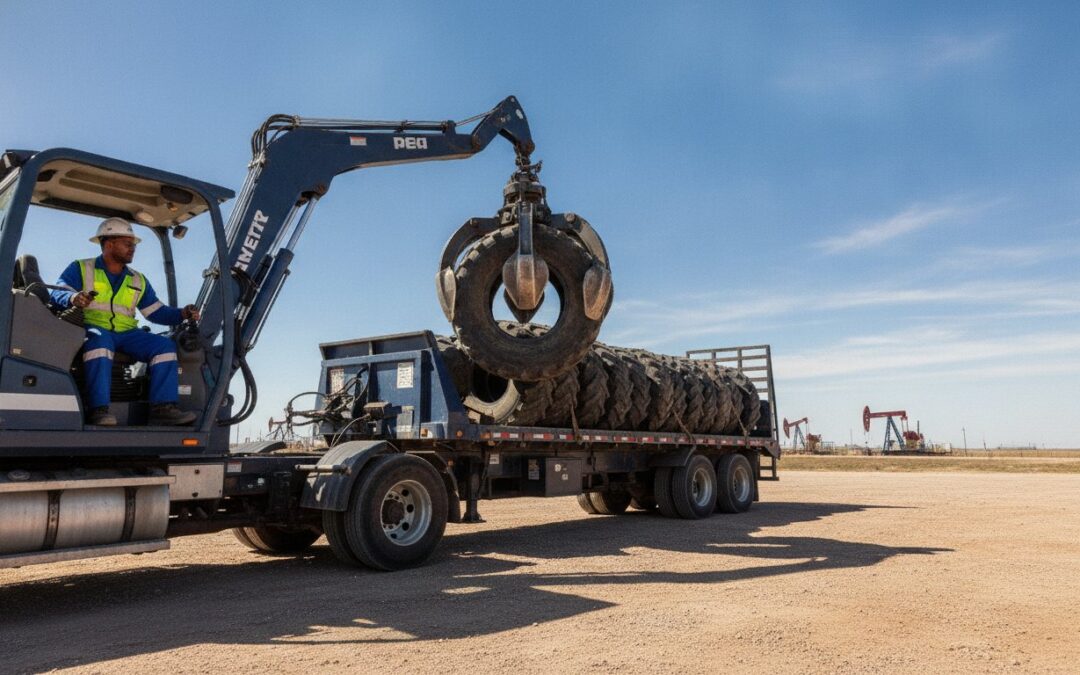
Did you know that storing as few as five unregistered off-the-road tires in Texas can trigger fines exceeding $25,000? In the Permian Basin, where heavy-duty equipment is the backbone of the economy, a stack of old rubber isn’t just an eyesore; it’s a massive legal liability. You’ve likely realized that learning how to dispose of tractor tires isn’t as simple as hauling them to the local dump. Most landfills in West Texas refuse oversized agricultural rubber, and trying to move a 600-pound tire yourself is a recipe for a back injury. Between the mosquito risks and the threat of high-intensity fires, leaving them to rot on your land isn’t a viable option.
We understand the frustration of managing bulky waste that nobody seems to want. This guide provides a clear roadmap for 2026 to help you handle heavy-duty agricultural tire disposal in Midland, Odessa, and Lubbock safely and legally. You’ll discover the current TCEQ manifest requirements, the environmental benefits of professional recycling, and how to find a reliable service to clear your land without the heavy lifting. By the end of this article, you’ll have a concrete plan to stay compliant and reclaim your workspace.
Key Takeaways
- Identify why liquid ballast like calcium chloride makes tractor tire disposal a unique environmental and weight challenge for West Texas producers.
- Master how to dispose of tractor tires according to 2026 TCEQ standards to avoid legal penalties and ensure environmental compliance.
- Compare the true costs of DIY hauling against the efficiency of specialized on-site collection for oversized agricultural rubber.
- Discover the industrial recycling processes that turn old tires into sustainable resources like tire-derived fuel and civil engineering materials.
- Access reliable disposal solutions tailored for farming operations across Midland, Odessa, and the surrounding Permian Basin regions.
The Unique Challenges of Agricultural Tire Disposal
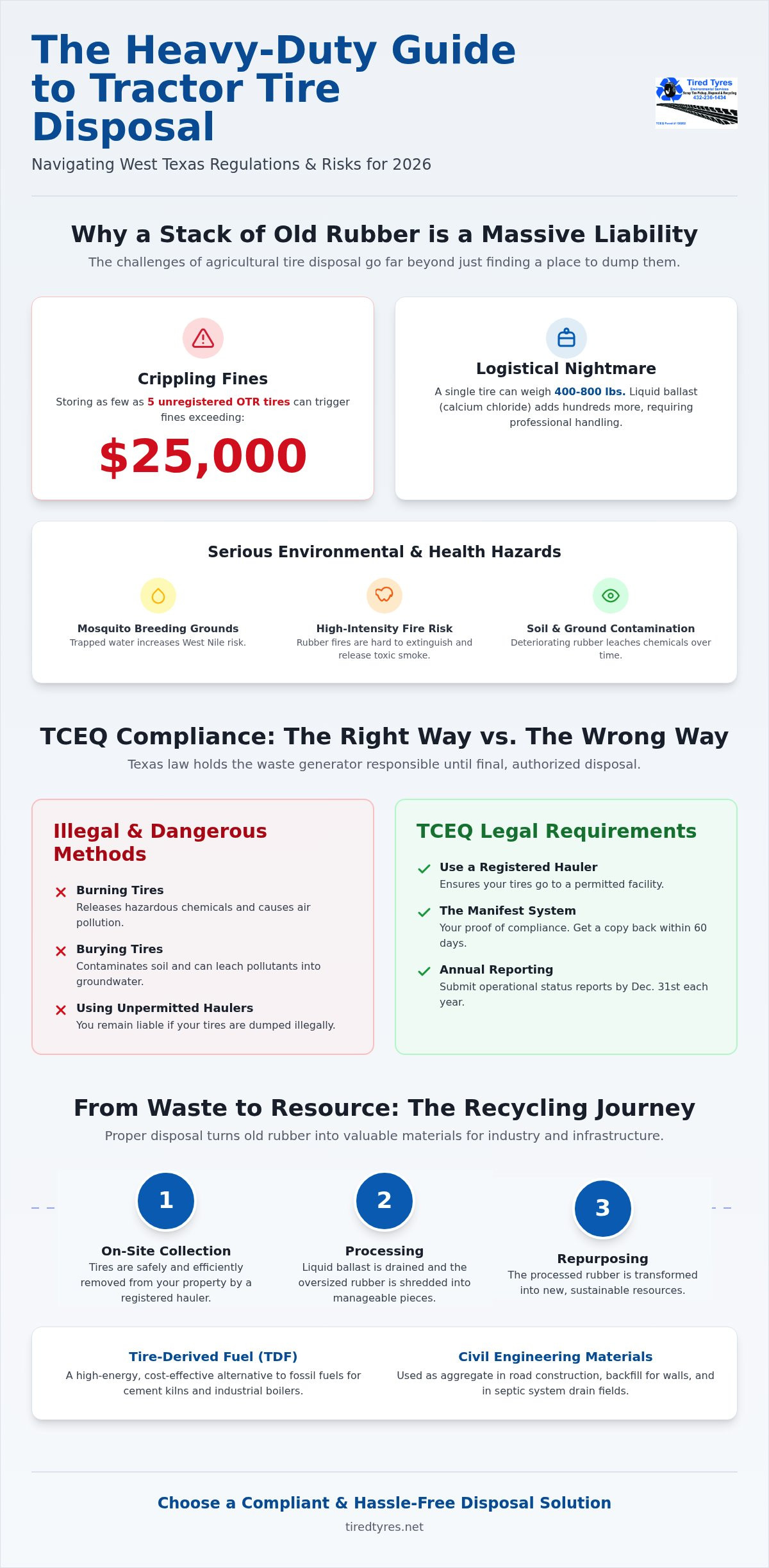
Disposing of heavy-duty agricultural rubber isn’t like dropping off a set of old truck tires at the local shop. The physical scale of these components creates a logistics gap that most residential waste systems simply can’t bridge. While a standard car tire is manageable for one person, tractor tires often require specialized heavy machinery just to move them from the field to a staging area. Approximately 25% of landfills in Texas refuse to accept tires at all, and those that do often have strict limits on size and quantity. This makes finding a professional solution for how to dispose of tractor tires a necessity for any large-scale operation.
A major hurdle in the disposal process is the presence of liquid ballast. Many operators fill tires with calcium chloride or other heavy fluids to improve traction and lower the center of gravity. This liquid adds hundreds of pounds of weight and must be professionally drained and managed before any secondary processing can occur. Most municipal landfills lack the specialized facilities to process these fluids or the oversized rubber casings, leading them to reject the tires outright. Without a clear plan, these massive items often end up sitting in a corner of the property, creating a growing list of liabilities.
Size and Weight Logistics
Standard farm equipment tires are massive. A single rear tire for a modern tractor can weigh between 400 and 800 pounds, making manual loading impossible. OTR tires, or Off-the-Road tires, are specialized heavy-duty rubber products designed for high-traction agricultural and industrial machinery operating on unpaved surfaces. Because of this extreme weight, standard utility trailers often fail under the load of a bulk cleanup. Attempting to transport these without industrial-grade haulers often results in damaged equipment or safety hazards on the road. You need equipment that can handle the sheer volume and weight of agricultural rubber safely.
The Environmental Impact of Farm Tire Piles
Leaving old rubber to sit on your property creates more than just a visual mess. In the South Plains, large tires quickly become breeding grounds for mosquitoes as they trap stagnant water in their deep treads. This increases the risk of West Nile and other local health concerns for your family and crew. In the arid climate of the Permian Basin, these piles also represent a severe fire hazard. Rubber fires are notoriously difficult to extinguish and can burn for weeks, releasing toxic smoke into the air. Over time, deteriorating industrial rubber can also lead to soil contamination as chemicals leach into the ground. Proper disposal through a verified Tire recycling process ensures that these materials are repurposed rather than left to degrade in the West Texas environment.
Legal Methods for Tractor Tire Disposal in Texas
The Texas Commission on Environmental Quality (TCEQ) oversees strict regulations for scrap tire management. As of the March 16, 2026 update, agricultural producers must adhere to specific handling and storage protocols to stay compliant. Burning or burying tires on your ranch is illegal. These methods release hazardous chemicals into the air and groundwater, leading to environmental damage and severe legal consequences. If you’re looking at how to dispose of tractor tires, you must use a permitted facility or a registered scrap tire hauler to avoid secondary liability.
The generator of the waste remains legally responsible for the tires until they reach a final, authorized destination. If an unpermitted hauler dumps your tires illegally, the state can hold you accountable for the cleanup costs and fines. This is why the manifest system is vital. It tracks the tires from your gate to the recycling center. You must keep these manifests on file and ensure a copy is returned to you within 60 days of the pickup. This documentation is your only proof that you’ve followed the law.
TCEQ Compliance for Farmers
Farmers and ranchers often believe they’re exempt from industrial waste rules, but that’s a dangerous assumption. Storing more than five unregistered off-the-road (OTR) tires on your property can result in fines exceeding $25,000. For larger operations, these penalties can reach $10,000 per day. To maintain compliance, you must submit annual operational status reports by December 31st each year. For a deeper look at these requirements, see our guide on Texas tire disposal regulations. Proper documentation protects your business and supports the growth of sustainable tire recycling markets.
Landfill Restrictions in West Texas
Regional landfills in Midland and Odessa have very specific acceptance criteria for agricultural rubber. You cannot simply roll a massive tractor tire into a standard dump. Most facilities require tires to be split, quartered, or shredded before they’re accepted. This processing requires heavy-duty equipment that most farms don’t own. Even if processed, tipping fees for oversized tires at regional facilities vary significantly. Some Texas landfills charge $100 per ton or more for special-size tires, making DIY disposal an expensive and labor-intensive prospect.
Instead of dealing with the logistics of cutting and hauling, many local producers find that a professional tire collection service is the most cost-effective way to clear their land. This ensures you meet all state mandates without investing in specialized cutting tools or risking a fine.
Landfill vs. Professional Collection: Which is Right for You?
Deciding between a DIY haul and a professional pickup often comes down to a simple question of logistics. While many West Texas producers believe that hauling their own waste is the most cost-effective route, the true expense of how to dispose of tractor tires involves more than just a tipping fee. You must account for the fuel consumed by heavy-duty trucks, the wear on trailers not designed for concentrated 800-pound loads, and the hours of labor diverted from your primary operations. When you factor in the high probability of a landfill rejecting an oversized tire that hasn’t been properly processed, the DIY approach often becomes a false economy.
Professional collection services specialize in the heavy lifting that standard farm equipment isn’t always rated for. These haulers use industrial-scale trailers and specialized loading equipment to manage OTR tires without damaging your property or risking worker injury. By choosing a professional service, you also transfer the risk of transport compliance to the provider. They handle the loading, the securement, and the delivery to a permitted recycling facility, ensuring your operation stays focused on production rather than waste management.
The DIY Disposal Checklist
If you choose to manage the transport yourself, you’ll need a rigorous setup to ensure safety and legality. Standard utility trailers often lack the structural integrity for bulk agricultural rubber transport. Before you head out, ensure you have the following:
- A heavy-duty trailer with a weight rating that exceeds your total load.
- Industrial winches or a skid steer for loading massive rear tractor tires.
- High-tension tie-downs and chains to prevent shifting during transit.
- Verification that your destination accepts unprocessed agricultural tires.
Loading and securing these items takes significant time, and a single mistake can lead to a roadside inspection or a fine. For a detailed breakdown of local options, read our guide on tire disposal in Midland, TX to see if your local facility can actually handle your specific load.
The Professional Collection Advantage
The primary benefit of a professional service is the elimination of specialized equipment costs. You don’t need to own a tire-cutter or a heavy-duty hauler to clear your land. Service providers bring the necessary tools to your site, loading your Agricultural Tire Collection or OTR Tire Collection directly from where they sit. This is especially valuable during farm sales or equipment upgrades when you need to clear large volumes of rubber quickly.
Beyond the physical labor, professional services streamline the administrative side of disposal. They provide the TCEQ-required manifests on the spot, giving you immediate proof of legal compliance. This turnkey solution removes the guesswork from the process, providing a predictable, efficient way to manage your scrap rubber without the logistical headaches of a DIY haul.
Industrial Recycling and Repurposing Options
Industrial recycling converts bulky agricultural waste into valuable secondary materials. While a single tire might seem like a permanent fixture on your land, modern processing facilities can break down heavy-duty rubber for high-value applications. One of the primary uses for scrap tractor tires is the production of tire-derived fuel (TDF). Because rubber has a higher heating value than coal, it’s an efficient energy source for cement kilns and paper mills. Beyond energy, recycled agricultural rubber is a key component in rubberized asphalt, which creates quieter, more durable roads across the South Plains.
When you evaluate how to dispose of tractor tires, industrial-scale shredding is the most sustainable end-of-life path. This process doesn’t just reduce the volume of the waste; it recovers materials that would otherwise be lost. Large-scale civil engineering projects often use shredded rubber as a lightweight backfill for embankments or as a vibration dampener for rail lines. These industrial markets ensure that your old equipment contributes to regional infrastructure rather than sitting in a landfill.
Repurposing on the Ranch
Many producers attempt to solve their disposal problems by finding secondary uses for tires on-site. Using sidewalls as silage bunker weights is a common practice that effectively holds covers in place without trapping water. You can also convert large OTR tires into livestock feeders or water troughs, but this requires careful preparation. You must ensure the steel beads aren’t exposed, as they can injure livestock. While these methods handle a few tires, they don’t solve the problem of a growing fleet of scrap rubber. For a broader look at regional options, check our guide on tire recycling in West Texas.
The Industrial Shredding Process
Massive Ag tires require powerful industrial shredders to break down their dense structure. The first step involves removing the heavy steel bead wire, which is recycled separately as high-quality scrap metal. The remaining rubber is then processed into specific chip sizes or ground into crumb rubber. Tire-derived aggregate provides a lightweight, porous alternative to traditional gravel, reducing the environmental footprint of drainage and backfill projects. This mechanical breakdown is the only way to effectively manage the sheer volume of rubber found in OTR equipment.
If you have a large volume of Agricultural or OTR tires, schedule a professional pickup to ensure they enter the proper industrial recycling stream.
Hassle-Free Agricultural Tire Pickup in West Texas
Tired Tyres provides a direct solution for agricultural operations across the Permian Basin. We specialize in the collection of bulky rubber waste that standard municipal services often refuse. If you’ve been struggling with how to dispose of tractor tires that have accumulated over years of operation, our team removes the logistical burden entirely. We don’t just pick up the tires; we ensure every step of the removal meets the latest Texas environmental standards, protecting you from the liability of improper disposal.
Our process is built for the specific needs of farmers and commercial tire shops. We arrive on-site with the necessary industrial equipment to load your Agricultural Tire Collection or OTR Tire Collection safely. This eliminates the risk of property damage or personal injury that often accompanies DIY attempts. By managing the loading and transport ourselves, we provide a turnkey service that lets you stay focused on your daily ranch or business activities while we handle the heavy lifting.
Serving Midland, Odessa, and Lubbock
We understand that West Texas farm operations run on tight schedules. Our team serves the Midland, Odessa, and Lubbock regions with flexible pickup times designed to minimize disruption to your workflow. Whether you have a single stack of rear tractor tires or a massive stockpile from a commercial fleet, we provide the local expertise required for industrial-scale removal. For businesses with recurring needs, we offer comprehensive commercial tire disposal services tailored to high-volume generators.
Requesting Your Scrap Tire Quote
Getting a clear estimate for your cleanup is a straightforward process. We use a transparent pricing model for industrial rubber collection based on the specific details of your load. When you contact us for a quote, please have the following information ready:
- Approximate tire sizes (e.g., standard tractor, OTR, or semi-truck).
- Total quantity of tires ready for collection.
- Physical location and accessibility for our heavy-duty trailers.
This information allows us to provide an accurate quote and ensure we bring the right equipment for the job. We serve the heart of West Texas, providing the TCEQ-compliant documentation you need to prove legal disposal. If you’re ready to clear your land and solve the problem of how to dispose of tractor tires once and for all, reaching out for a professional quote is the first step toward a compliant, rubber-free property.
Protect Your West Texas Operation with Compliant Disposal
Managing a farm or ranch in the Permian Basin requires constant attention to detail, especially when it comes to industrial waste. The 2026 TCEQ regulations make it clear that stockpiling or improperly burying rubber is no longer a viable option. Understanding how to dispose of tractor tires correctly is essential for protecting your operation from legal risks and environmental hazards like fire or pests. By shifting from DIY transport to professional collection, you save time and ensure that your scrap rubber enters a sustainable industrial recycling stream.
Tired Tyres is ready to take the heavy lifting off your hands. We provide TCEQ compliant hauling using specialized OTR and Ag tire equipment designed specifically for the West Texas landscape. We serve the entire Permian Basin and South Plains, helping you clear your land without the logistical headaches of local landfill restrictions. Don’t let old rubber become a liability on your property.
Take the first step toward a cleaner and safer workspace today. You can Get a Professional Quote for Agricultural Tire Pickup and see how easily our team can manage your bulk rubber removal. We look forward to helping you keep your operation productive and compliant.
Frequently Asked Questions
Can I legally bury old tractor tires on my own land in Texas?
No, it’s illegal in Texas to bury scrap tires on private property. TCEQ regulations require all tires to be sent to a permitted facility for processing or disposal. Burying them creates long-term environmental liabilities and can lead to significant state fines. If you’re looking at how to dispose of tractor tires, you must follow the manifest system. This ensures the tires are tracked and handled by a registered professional service.
Do West Texas landfills accept whole tractor tires?
Most municipal landfills in Midland and Odessa won’t accept whole agricultural tires. These facilities usually require tires to be split, quartered, or shredded before they can be dumped. Even then, many regional sites have strict daily limits or refuse oversized OTR rubber entirely. You should call your local facility first to confirm their current 2026 acceptance criteria and processing requirements for heavy-duty agricultural waste.
How much does it cost to dispose of a large agricultural tire?
Disposal costs vary based on the tire’s weight and your distance from a processing center. Some regional landfills charge fees per ton for special-size tires, while recycling facilities might charge per unit. Professional collection services provide custom quotes based on the volume of your Agricultural Tire Collection. This approach often saves money by avoiding the need for specialized cutting equipment or the fuel costs of multiple DIY trips.
What is the best way to transport oversized OTR tires to a recycling center?
Professional collection is the safest and most efficient method for moving oversized OTR tires. These items often weigh over 600 pounds, making them dangerous to load onto standard utility trailers. Specialized haulers use industrial winches and heavy-duty trailers designed specifically for concentrated rubber loads. This ensures the tires reach a permitted recycling center without damaging your equipment or creating safety hazards on West Texas highways.
Are there any free tire disposal events for farmers in Lubbock or Midland?
Cities like Lubbock and Midland occasionally host community cleanup events, but these are rarely designed for heavy agricultural equipment. Most free disposal days are limited to passenger car tires and have a cap on the number of items you can bring. For bulk removal of tractor or OTR tires, you’ll likely need a professional service that can handle the volume and weight of industrial-scale rubber waste.
What happens to my tractor tires after they are picked up for recycling?
Once collected, your tires are typically transported to a processing facility for shredding. The rubber is broken down into small chips and the steel wire is removed for separate recycling. These materials are often used as tire-derived fuel for industrial kilns or repurposed into rubberized asphalt for road construction. This process turns your bulky waste into a sustainable resource that benefits the local infrastructure and economy.
Do I need a special permit to transport my own scrap tires to the dump?
You don’t usually need a permit to transport a few of your own tires to a landfill, but there are strict limits. If you’re transporting more than 50 tires at once, Texas law requires you to be a registered hauler. For commercial operations, using a professional collection service ensures all TCEQ manifest requirements are met. This protects your business from the legal risks associated with unauthorized transport or illegal dumping.
Can I use old tractor tires as livestock feeders safely?
You can repurpose a few tires as livestock feeders, but this isn’t a solution for bulk disposal. If you choose this route, you must carefully inspect the rubber for exposed steel beads or wires that could injure your animals. It’s also important to ensure the tires don’t collect stagnant water, which attracts mosquitoes. For large stockpiles, professional recycling remains the most effective way to clear your land and stay compliant.