
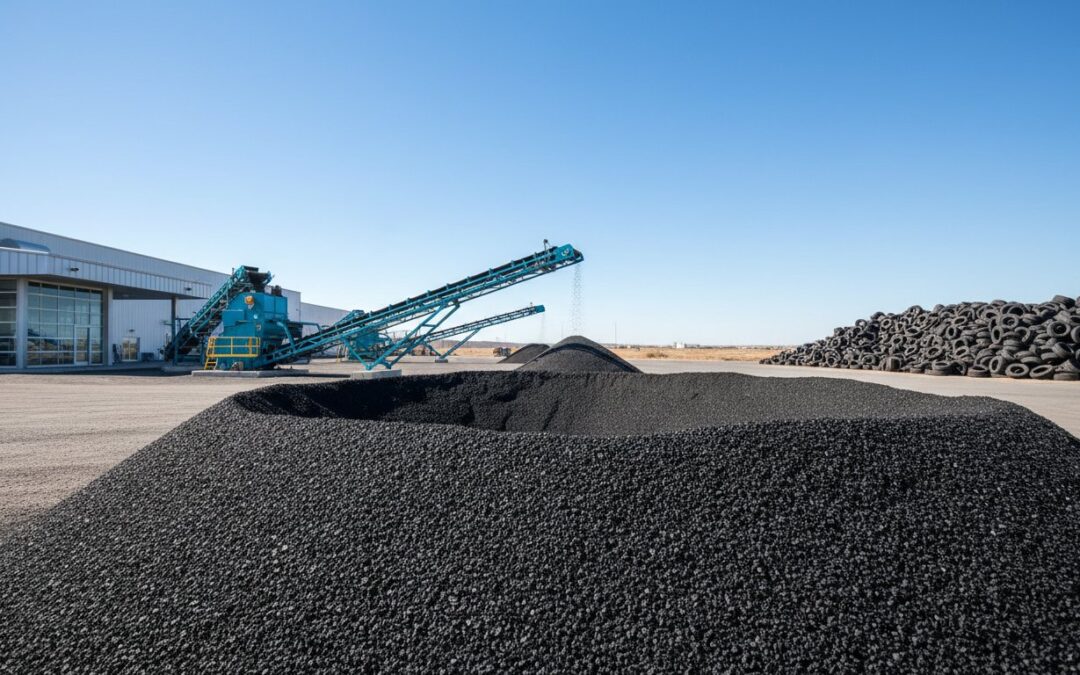
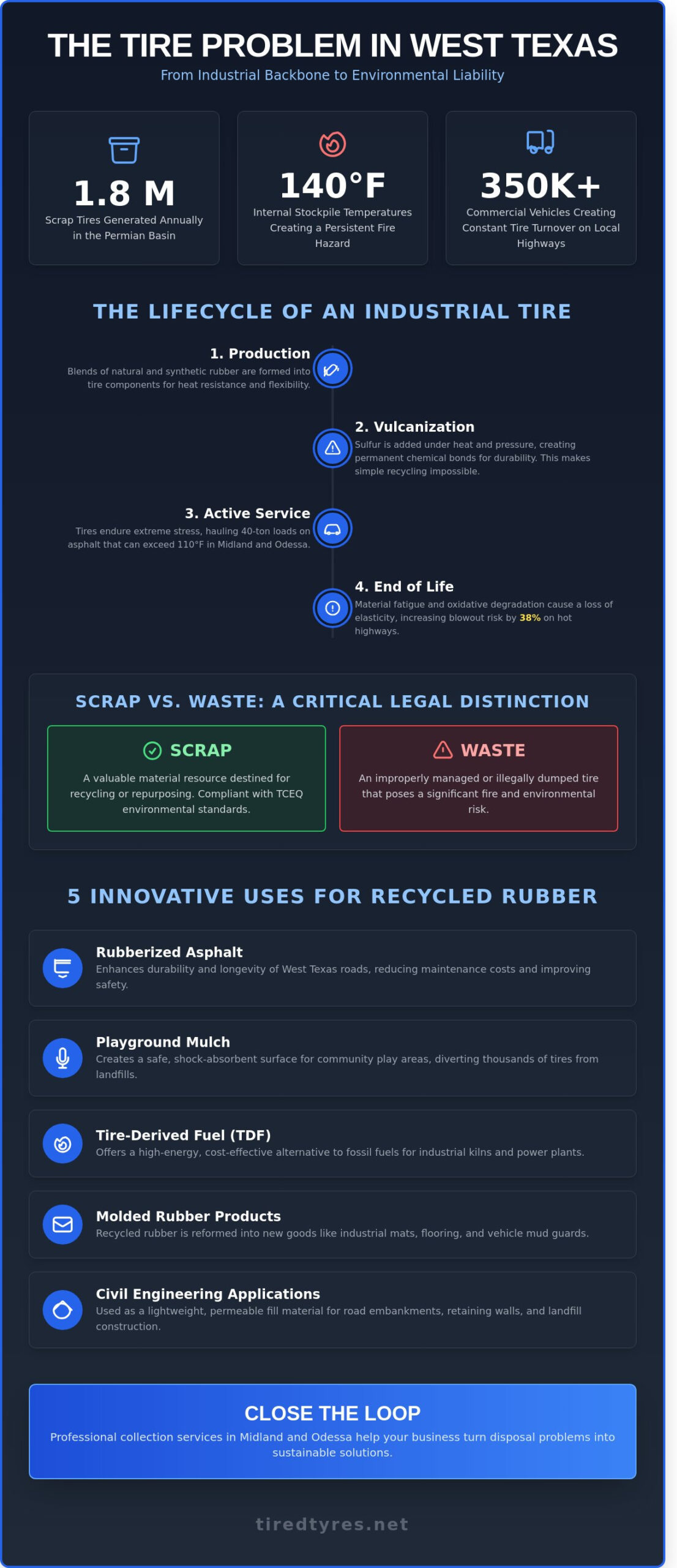
In West Texas, abandoned stockpiles of rubber can reach internal temperatures of 140 degrees during a typical July afternoon, creating a persistent fire hazard for local communities. You likely recognize that old tires are more than just an eyesore; they represent a significant environmental challenge when left to bake in the Permian Basin heat. It’s common to feel frustrated by the lack of clear information regarding natural versus synthetic disposal or where to find a legitimate recycling center in Ector or Midland County.
We’re here to simplify the process. This guide explores the lifecycle of rubber from its industrial chemical origins to its transformation into a valuable regional resource. You’ll discover five specific ways local businesses are repurposing scrap into products like rubberized asphalt and durable playground mulch. We also provide the exact locations for legal disposal in Midland and Odessa, helping you clear out your shop or garage responsibly. You’ll gain a professional’s perspective on how to turn a disposal problem into a sustainable solution for our region.
Key Takeaways
- Understand why rubber is the essential polymer driving the Permian Basin’s oil and gas industry and how its chemical structure ensures durability.
- Learn the vital legal differences between “scrap” and “waste” to ensure your business remains compliant with strict TCEQ environmental standards.
- Discover innovative recycling applications like high-durability asphalt and tire-derived fuel that are currently strengthening West Texas infrastructure.
- Explore the full lifecycle of industrial tires, from the initial vulcanization process to their final transformation into sustainable regional resources.
- Find out how professional collection services in Midland and Odessa help your business close the loop on industrial tire disposal efficiently.
What is Rubber? Understanding the Backbone of West Texas Industry
Rubber is a versatile polymer defined by its unique elastic properties. It’s the mechanical glue holding West Texas together. At its core, rubber can stretch under stress and return to its original shape without permanent deformation. In the Permian Basin, this characteristic is essential for survival. The oil and gas sector utilizes thousands of miles of high-pressure hoses and custom gaskets to maintain seal integrity on drilling rigs. Without these components, the 5.9 million barrels of oil produced daily in the region would be impossible to manage safely. We rely on these materials to handle the immense pressure and friction inherent in energy production.
The scale of usage in Midland and Odessa is staggering. The transportation networks here support over 350,000 commercial vehicles that traverse Interstate 20 and Highway 191. Each heavy-duty truck typically runs on 18 individual tires. This creates a massive, constant demand for durable tread. When these tires reach the end of their life, the chemical makeup of the material determines how we handle the waste. Distinguishing between natural and synthetic types isn’t just a technicality; it’s a requirement for effective disposal and environmental management in our local communities. Knowing what goes into an abroncs helps us decide how to keep it out of a landfill.
Natural vs. Synthetic: A Chemical Breakdown
Natural rubber starts as a milky latex harvested from the Hevea brasiliensis tree. To understand the origins and molecular structure of this organic material, it helps to look at What is Natural Rubber? and how it differs from lab-grown alternatives. Synthetic rubbers, such as Styrene-Butadiene Rubber (SBR) and Ethylene Propylene Diene Monomer (EPDM), have petroleum-based roots. These are engineered to withstand the harsh oil-field environments where natural latex might fail. Vulcanization is the chemical process that makes rubber durable but difficult to recycle.
Physical Properties: Why We Rely on Rubber
Rubber maintains its tensile strength and elasticity even when West Texas asphalt temperatures exceed 110°F in July. This thermal stability prevents equipment failure during peak production hours. Beyond flexibility, rubber serves as a critical electrical insulator for industrial safety; it protects technicians from high-voltage hazards in the field. In the agricultural hubs around Lubbock, rubber components are prized for their chemical resistance. Farmers rely on specialized seals in spraying equipment to withstand the corrosive effects of liquid fertilizers and pesticides used across millions of acres of cotton and grain. It’s a material that performs under pressure, whether it’s in a tractor tire or a blowout preventer.
The Lifecycle of Rubber: From Production to Scrap
The journey of rubber begins either in the sap of Hevea brasiliensis trees or within complex petrochemical refineries. For West Texas industrial applications, most heavy-duty tires rely on a blend of these sources to balance flexibility with intense heat resistance. The critical transformation occurs during vulcanization. In this process, manufacturers add sulfur and apply intense heat, which creates permanent chemical cross-links between polymer chains. This structural change gives Off-The-Road (OTR) tires the rugged durability required for Permian Basin oilfields.
However, this same chemical bond makes recycling a significant technical hurdle. You can’t simply melt a vulcanized tire back into its original state. Over time, the constant stress of hauling 40-ton loads causes the material to lose its elastic memory. When a tire reaches this state of fatigue, it stops being a tool and becomes a liability. Data shows that once the internal structure weakens, the risk of a blowout increases by 38% on hot Texas highways during the summer months.
Manufacturing Methods and Vulcanization
Sulfur cross-linking is what allows a tire to survive the 105°F temperatures common in Midland and Odessa. It locks the molecules into a grid, preventing the material from becoming brittle in the winter or too soft in the summer. The downside is that reversing this process requires specialized devulcanization technology. Without it, the material remains in its permanent form. As tires age, they undergo oxidative degradation. This process destroys the elasticity that keeps the tread bonded to the casing. When the rubber loses its ability to snap back, it’s time for a replacement to ensure driver safety.
The Accumulation Challenge in West Texas
The Permian Basin generates an estimated 1.8 million scrap tires every year. In our arid climate, these stockpiles represent a severe fire hazard. A single lightning strike or a discarded cigarette can ignite a pile that burns for weeks, releasing toxic oils into the South Plains soil. Proper management isn’t just about cleaning up; it’s about finding innovative applications for recycled rubber to keep these materials out of illegal dumps.
At Tired Tyres, we focus on identifying end-of-life indicators before a tire fails on the road. We help local fleets monitor wear patterns to determine when a tire should be pulled from service. If you’re unsure about the state of your current set, you can consult with our experts to evaluate your fleet’s safety profile. Proactive removal prevents environmental hazards and keeps West Texas roads safer for everyone. Identifying these risks early ensures that “tired” materials are handled responsibly before they become a regional problem.
Why Rubber Disposal is Regulated in Texas
Texas law doesn’t treat all materials the same. The Texas Commission on Environmental Quality (TCEQ) enforces strict rules under Title 30 of the Texas Administrative Code to manage how we handle discarded materials. There’s a clear legal line between scrap and waste rubber. Scrap refers to material that still has a path toward recycling or energy recovery. Waste is material destined for permanent disposal. Understanding this distinction is vital for any business owner in the Permian Basin.
Landfills in Midland and Odessa have strict limitations on intake for a practical reason. Whole tires are buoyant. Over time, they trap methane gas and “float” to the surface of a landfill cell, which can puncture expensive protective liners. Because of this, local facilities often require tires to be split, quartered, or shredded before they’ll even consider accepting them. Illegal dumping isn’t a shortcut; it’s a liability. Property owners in West Texas can face fines ranging from $500 to $10,000 per day for unauthorized scrap piles on their land.
TCEQ Compliance and Manifests
Compliance starts with paperwork. Every business hauling more than five tires at once must use a TCEQ-registered scrap tire manifest. This document tracks the material from your shop to the final permitted processor. It’s your proof that you’ve followed the law. You should always verify your disposal partner’s registration number through the TCEQ Central Registry. If a hauler can’t show you their permit, don’t let them take your scrap. It’s your reputation and your wallet on the line if that material ends up in a ditch.
Environmental Hazards of Improper Disposal
Improperly stored rubber creates immediate local dangers. Discarded tires are the perfect breeding ground for mosquitoes. The shape of a tire traps stagnant water and insulates it, which accelerates the breeding cycle for species that carry the West Nile virus. In the South Plains, this is a genuine public health concern.
Fire is the other major risk. Once a tire pile ignites, it’s nearly impossible to extinguish. These fires produce pyrolytic oil, a toxic sludge that can seep into the soil and contaminate groundwater. Managing these risks requires professional handling and a clear understanding of local statutes. For a deeper look at how to handle these requirements locally, see our Tire Disposal in Midland, TX: The Complete Guide to Legal Scrap Removal.
5 Innovative Uses for Recycled Rubber in West Texas
Recycling tires in West Texas has evolved far beyond simple waste management. Local industries now view scrap tires as a raw material that solves specific regional challenges. From the intense heat of the Permian Basin to the heavy demands of South Plains agriculture, rubber is being repurposed to improve infrastructure and safety. These applications don’t just clear out landfills; they provide high-performance solutions that often outperform traditional materials.
Rubberized Asphalt and Infrastructure
Midland summers regularly see temperatures climb above 100 degrees. This extreme heat causes standard asphalt to soften and rut under the weight of heavy oilfield traffic. Engineers now use rubber-modified binders to create more resilient road surfaces. This material stays flexible in the heat and resists cracking during the occasional winter freeze. One mile of rubberized highway can use up to 2,000 scrap tires, effectively turning a waste problem into a durable transport solution. Additionally, drivers in urban areas like Odessa benefit from a 50% reduction in road noise compared to traditional pavement.
Industrial and Agricultural Products
The transition of scrap materials into new products is visible across the South Plains. Large-scale operations often repurpose old conveyor belts into heavy-duty shop flooring. These mats withstand the weight of heavy machinery and provide a slip-resistant surface for workers. In the oilfield, molded products made from recycled tires are integrated into new equipment to dampen vibration and prevent metal-on-metal wear. If you need to clear out old inventory to make room for these upgrades, you can learn How to Use Tire Recycling Services in Midland, Odessa, and Lubbock through our detailed 2026 guide.
- Tire-Derived Fuel (TDF): Texas cement kilns use shredded tires as a supplemental fuel. Tires produce 25% more energy than coal and help plants reduce their overall carbon footprint.
- Crumb Rubber: School districts in Lubbock use this material for playground surfaces. It provides a soft, impact-absorbing layer that significantly reduces injury rates compared to gravel or wood chips.
- Civil Engineering: Shredded tires serve as a lightweight fill for highway embankments. They provide excellent drainage and reduce the pressure on retaining walls.
- Agricultural Mats: Livestock producers in the South Plains use recycled mats to increase animal comfort. These durable surfaces protect cattle joints and are much easier to clean than dirt or concrete floors.
Innovative recycling keeps West Texas moving forward. By choosing products made from recycled materials, businesses reduce costs and help maintain the local environment. It’s a practical approach that fits the hardworking spirit of our region. If you have “fáradt” or worn-out tires that need professional attention, contact Tired Tyres for expert service and sustainable solutions.
Closing the Loop with Tired Tyres in Midland and Odessa
Industrial operations in the Permian Basin generate thousands of tons of scrap rubber annually. Leaving these materials to pile up in yards or illegal dumps creates fire hazards and environmental liabilities for local operators. Tired Tyres provides a direct solution by bridging the gap between industrial waste and high-value recycling. We don’t just haul junk; we manage a critical resource stream that supports the West Texas economy. Our team ensures that materials once destined for a landfill find a second life in civil engineering or energy recovery projects.
Our Local Collection Process
Logistics shouldn’t be a headache for your operations manager. We’ve streamlined our collection to fit the fast-paced demands of Odessa and Midland businesses. Our team handles the heavy lifting through a proven three-step workflow:
- On-site Assessment: We evaluate your specific waste volume, whether it’s a stack of 50 semi-truck tires or a 20-ton pile of industrial scrap.
- Specialized Loading: Our equipment is rated for OTR (Off-The-Road) tires, heavy conveyor belts, and solid industrial tires that standard haulers often refuse.
- Direct Transport: We move the material to our regional processing partners where it’s shredded for tire-derived fuel (TDF) or rubberized asphalt.
High-volume industrial clients often require more than a one-time fix. We offer customized pickup rotations, including weekly or bi-monthly schedules, to ensure your site stays compliant with local safety codes. Whether you’re clearing a single warehouse or managing a fleet of 500 vehicles, we show up on time with the right gear for the job.
Your Partner in Sustainability
Compliance is non-negotiable in the energy sector. Tired Tyres operates in full accordance with TCEQ (Texas Commission on Environmental Quality) standards. This means every load we take is documented and disposed of legally, protecting your business from potential fines. Choosing a Midland-based firm keeps your transit costs low and ensures your disposal fees stay within the local economy. We understand the specific soil and safety challenges of the Permian Basin because we work in these conditions every day. By removing old rubber from the field, we reduce pest breeding grounds and eliminate significant fire risks for your facility.
Ready to clear your yard and improve your environmental footprint? You can Request a Quote for Rubber Disposal in West Texas today. We provide transparent pricing and reliable service that lets you focus on your core business while we handle the waste. Our goal is a cleaner, safer Basin for every worker and resident.
Modernize Your Waste Strategy in the Permian Basin
Managing industrial waste requires more than just a disposal plan; it demands a sustainable strategy that meets strict Texas standards. Since the Texas Commission on Environmental Quality (TCEQ) enforces 30 TAC §330, businesses must prioritize legal hauling to avoid significant penalties. Proper rubber recycling doesn’t just clear your yard. It fuels local innovation by turning scrap into durable materials for West Texas infrastructure projects.
Tired Tyres provides the specialized OTR and industrial equipment needed to handle your heaviest loads safely. We’ve built our reputation on being a reliable partner for companies across Midland, Odessa, and Lubbock. Our team ensures 100% TCEQ compliant hauling, so you can focus on your daily operations while we handle the complex logistics. Whether you’re dealing with a single set of tires or a massive industrial stockpile, we have the tools to move it fast. For comprehensive guidance on managing your scrap responsibly, our tire recycling in Midland, Odessa, and Lubbock: The 2026 Essential Guide provides detailed information on staying compliant with updated regulations. We’re ready to help you close the loop on your waste cycle today.
Get a Professional Quote for Your Rubber Waste Disposal
Let’s work together to keep West Texas industry moving forward responsibly and efficiently.
Frequently Asked Questions
Is natural rubber better for the environment than synthetic rubber?
Natural rubber is more sustainable because it’s biodegradable and harvested from Hevea brasiliensis trees. Synthetic options rely on petroleum, and their production emits 3 times more CO2 than natural processing. Since natural rubber accounts for 40% of global production, it’s a vital renewable resource for West Texas industries looking to lower their carbon footprint.
Can I legally throw away rubber hoses or tires in my Midland trash bin?
No, you can’t put tires in residential bins according to Texas Commission on Environmental Quality (TCEQ) rules. While small garden hoses are usually accepted, the City of Midland Citizens Collection Station requires a separate drop-off for tires. They charge a $3 fee for each passenger tire to ensure they’re processed at a registered facility rather than a landfill.
What is crumb rubber and how is it used in West Texas?
Crumb rubber consists of scrap tires ground into small, uniform granules with steel and fiber removed. In West Texas, it’s a primary ingredient in Rubberized Asphalt Concrete (RAC) used for highway projects like I-20. This material reduces road noise by 50% and can extend the lifespan of the pavement by 10 years compared to traditional asphalt.
How does the Texas heat affect scrap rubber stockpiles?
High temperatures in West Texas significantly increase fire risks and pest problems in tire piles. When Midland temperatures hit 100°F in July, trapped heat inside large stacks can lead to internal combustion. These stockpiles also hold rainwater, creating breeding grounds where mosquitoes multiply 10 times faster than they do in open ponds or puddles.
Why is vulcanized rubber so difficult to recycle?
Vulcanization creates irreversible chemical cross-links between polymer chains using sulfur. This process, which has been the industry standard since 1844, makes the rubber unmeltable and durable. You can’t simply melt it down like plastic; it requires mechanical shredding or high-heat pyrolysis to break the material back into its original components for reuse.
How do I find a permitted rubber hauler in Odessa or Lubbock?
You should consult the TCEQ’s Registered Scrap Tire Transporters database to find a verified professional. There are currently over 500 registered haulers in Texas that follow strict disposal protocols. Always ask for a TCEQ manifest form during pickup. This document proves your waste didn’t end up in an illegal dump, which protects you from potential fines.
What happens to tires that cannot be turned into crumb rubber?
Tires that aren’t suitable for shredding are typically converted into Tire-Derived Fuel (TDF). This fuel source produces 25% more energy than coal and is used in cement kilns and paper mills across the state. According to EPA data from 2021, TDF is one of the most efficient ways to divert scrap tires from landfills while recovering energy.
Does Tired Tyres collect industrial rubber waste other than tires?
No, Tired Tyres focuses exclusively on automotive and light truck tire services and disposal. We manage 100% of the tire lifecycle for our local customers, from selling new sets to recycling old casings. If you have industrial belts or heavy-duty hoses, you’ll need to contact a specialized industrial waste contractor in the Permian Basin for those specific materials.