
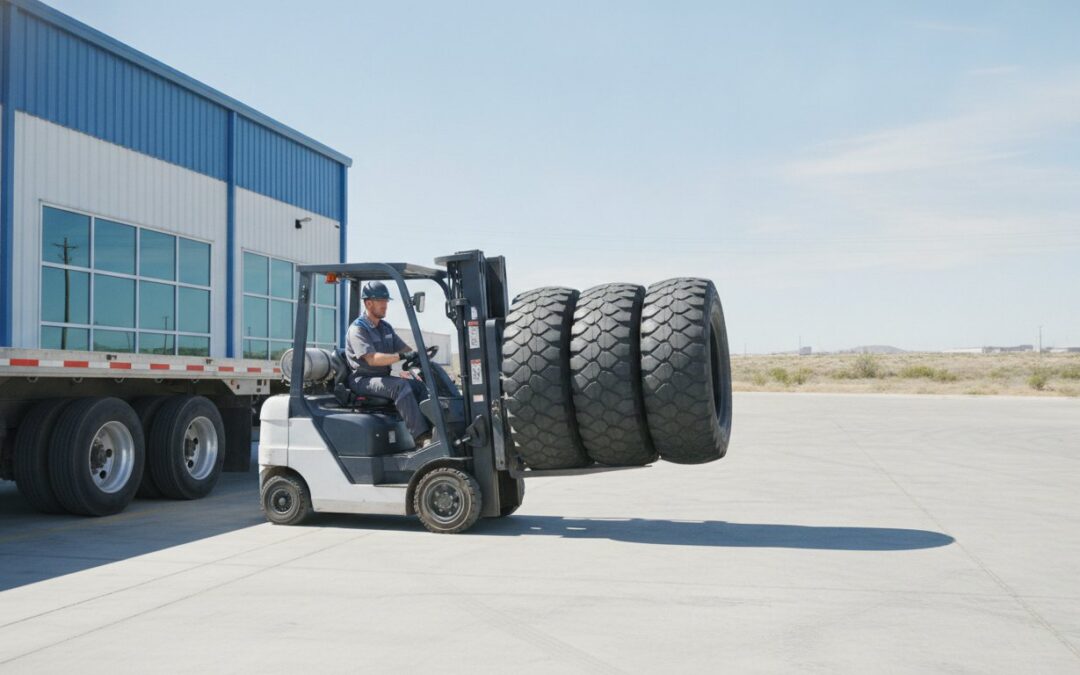
Most West Texas warehouse managers realize too late that a stack of solid rubber tires isn’t just clutter. It’s a looming TCEQ compliance violation that local landfills won’t help you solve. You’ve likely felt the frustration of trying to move these massive, dense objects only to find that standard waste haulers won’t touch them. It’s a common headache across Midland and Odessa. Dealing with forklift tire disposal shouldn’t feel like a legal gamble or a logistical nightmare.
We understand that your primary goals are to reclaim valuable floor space and stay on the right side of Texas environmental law. This 2026 guide provides a clear roadmap for industrial rubber recycling. You’ll learn how to navigate the upcoming December 31, 2026, TCEQ annual reporting deadline and manage the strict 500-tire on-ground storage threshold. We’ll also explore cost-effective bulk removal options specifically designed for the heavy-duty OTR and solid tires used in the Permian Basin and South Plains. By the end of this article, you’ll have a professional plan to clear your warehouse and secure the documentation needed for your next environmental audit.
Key Takeaways
- Understand the 2026 TCEQ storage limits and why using a registered transporter is critical for avoiding environmental fines.
- Learn the logistical differences between pneumatic and solid tires, including how to handle the “press-on” steel band dilemma.
- Streamline your forklift tire disposal by properly inventorying your scrap and segregating tires from metal rims before pickup.
- Reclaim valuable warehouse floor space in West Texas by utilizing specialized industrial rubber collection for heavy-duty OTR and solid tires.
- Ensure your business is ready for environmental audits with documented legal disposal records from a professional West Texas hauler.
Understanding Forklift Tire Disposal Challenges in 2026
Professional forklift tire disposal involves more than just hauling away old rubber. It’s the technical process of reclaiming high-density industrial materials that standard waste systems simply can’t process. Unlike passenger tires, forklift tires are often solid or heavily reinforced with thick steel wire. This rugged construction makes them incredibly heavy and difficult to cut or shred without specialized industrial equipment.
Municipal services in cities like Midland and Lubbock generally reject these items at the curb. Most local landfills lack the machinery to handle the density of industrial rubber, leading to immediate rejection at the gate. Leaving these tires to sit in your warehouse creates a chain reaction of operational problems that grow more complex the longer they’re ignored.
The Problem with Industrial Rubber Stockpiles
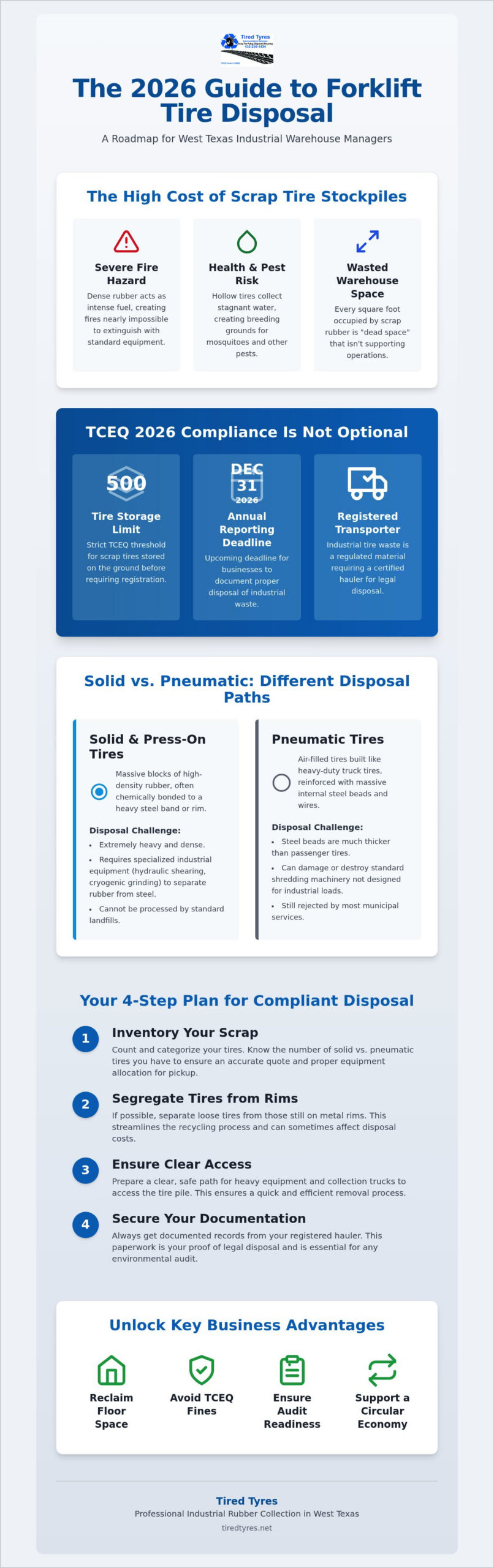
Large piles of scrap rubber aren’t just an eyesore; they’re a significant liability for any West Texas business. High-density rubber acts as fuel for intense, long-lasting fires that are nearly impossible to extinguish with standard warehouse equipment. In pneumatic tires, the hollow structures collect stagnant water, creating breeding grounds for mosquitoes and other pests that threaten worker health.
Beyond safety, there’s a clear economic impact. Every square foot of your West Texas industrial yard occupied by scrap rubber is “dead space” that isn’t generating revenue or supporting operations. Clearing these piles is essential for maintaining an efficient workflow and a professional environment for your team.
Why 2026 Regulations are Stricter
The Tire recycling process has become a focal point for environmental agencies across the Permian Basin. As of 2026, there’s a clear push toward circular economy mandates, requiring businesses to prove that industrial waste is being repurposed rather than abandoned in illegal heaps. Industrial tire waste is a regulated material requiring certified haulers.
State inspectors are now more focused on industrial sites that exceed specific storage limits. If your facility holds more than 500 scrap tires on the ground, you’re under a much brighter regulatory spotlight than in previous years. Managing your forklift tire disposal through legal, documented channels isn’t just about being environmentally conscious; it’s about protecting your company from heavy fines and potential operational shutdowns.
Solid vs. Pneumatic: Different Disposal Paths for Industrial Tires
Industrial tires aren’t a one-size-fits-all category. Most West Texas warehouses run a mix of solid cushion tires and air-filled pneumatics. Each requires a distinct recycling strategy because their physical structures are fundamentally different. Solid tires are essentially massive blocks of high-density rubber, while pneumatics are built more like heavy-duty truck tires with internal air chambers. These differences dictate how forklift tire disposal is handled at the processing plant.
The “press-on” tire represents the biggest logistical challenge for warehouse managers. These tires consist of a thick rubber layer chemically bonded to a heavy steel band. You can’t simply pull them apart with standard tools. The metal rims and bands have significant scrap value, but that value is only unlocked once the rubber is removed. Industrial rubber is engineered for extreme durability, packed with carbon black and sulfur to withstand 24/7 shifts. This chemical resilience makes the rubber a high-quality source for secondary products, provided the recycler can handle the density.
Processing Solid and Press-On Tires
Separating rubber from metal requires specialized industrial power. Mechanical shearing is the most common method, using giant hydraulic blades to strip the rubber from the steel core. Some advanced facilities use cryogenic grinding, where liquid nitrogen freezes the rubber until it’s brittle. Once frozen, the rubber can be pulverized into a fine powder, leaving the metal band clean and ready for smelting. Tired Tyres provides specialized scrap solid tire collection throughout Midland and Odessa. We handle the heavy lifting and transport, ensuring these dense materials reach facilities equipped for high-pressure separation.
Recycling Pneumatic Forklift Tires
Pneumatic forklift tires are reinforced with massive steel beads at the base to keep them seated on the rim under immense loads. These wires are much thicker than those found in passenger tires and can damage standard shredders. Once these tires are successfully processed, they often serve as Tire-Derived Fuel (TDF). Because of their high rubber-to-fiber ratio, they have a high BTU value, often burning hotter and cleaner than coal in industrial kilns. They’re also used in civil engineering projects as lightweight fill for embankments. You can explore the broader tire recycling landscape to see how these materials support infrastructure across the South Plains.
Navigating Texas Scrap Tire Regulations (TCEQ) for Industrial Sites
The Texas Commission on Environmental Quality (TCEQ) maintains strict oversight of how businesses manage industrial waste. For warehouse operators in Midland and Lubbock, forklift tire disposal isn’t just a maintenance task; it’s a regulated activity. Under Texas law, any business that creates scrap tires is classified as a “generator.” This classification carries specific legal duties, especially regarding how those tires are stored and who is hired to haul them away.
TCEQ rules are designed to prevent environmental hazards like fire risks and pest breeding. If your facility stores more than 500 scrap tires on the ground, you must register as a generator. Registered generators must also submit an operational status report to the TCEQ annually. The report for the 2025 calendar year is due by December 31, 2026. Failing to follow these storage limits or hiring an unregistered hauler leads to significant administrative penalties. In Midland and Lubbock counties, authorities are increasingly vigilant about illegal “tire piles” that bypass these safety standards.
The Scrap Tire Manifest: Your Legal Shield
A scrap tire manifest is the most important document in your compliance folder. This multi-part form tracks the movement of tires from your facility to a permitted processing site. It must include your business information, the registered hauler’s details, the number or weight of the tires, and the signature of the receiving facility. This paper trail proves that you’ve fulfilled your legal obligations. It’s your primary defense during an inspection.
Texas law requires businesses to keep these records for at least three years. During an environmental audit, these manifests are the first thing an inspector will ask to see. Without them, you have no way to prove your tires didn’t end up in a ditch or an illegal stockpile. For a deeper look at these requirements, see our guide on Texas tire disposal regulations.
Avoiding Illegal Dumping Liability
Texas operates under a “cradle-to-grave” liability model. This means your responsibility for the tires doesn’t end when the truck leaves your yard. If you hire an unregistered “junk hauler” who offers a suspiciously low price and they dump your tires illegally, the TCEQ can hold your business financially responsible for the cleanup. The original generator is often the one stuck with the bill.
Avoid the trap of “free” or unverified pickup offers. Always verify a hauler’s TCEQ registration status before allowing them to load your scrap. A professional service will always provide a completed manifest and transport your waste to an authorized recycling center. Protecting your company’s reputation requires working with partners who understand the local regulatory landscape in West Texas.
Logistics & Preparation: How to Manage Bulk Forklift Tire Removal
Organizing your yard before the collection truck arrives saves time and reduces operational friction. Effective forklift tire disposal starts with a clear inventory of what you actually have on the ground. Recyclers process different materials through different streams, so a disorganized pile slows down the entire removal process. Follow these four steps to prepare your facility for a professional pickup:
- Step 1: Inventory your scrap. Separate your inventory into three categories: solid cushion tires, air-filled pneumatics, and any oversized OTR (Off-the-Road) tires from larger equipment.
- Step 2: Segregate rims. If you have tires still mounted on metal rims, keep them in a separate stack. The steel has independent scrap value and requires different handling equipment than loose rubber.
- Step 3: Establish a staging area. Choose a location on your site that is easily accessible to heavy collection trucks. Ensure there’s enough turning radius for a semi-truck and trailer to maneuver without disrupting your daily warehouse flow.
- Step 4: Schedule your pickup. Once your piles are organized, contact a specialized collector to arrange the logistics. Providing an accurate count of each tire type ensures the hauler brings the right equipment for the job.
Equipment Needed for On-Site Handling
You’ll likely need to use your own forklifts to load the scrap piles onto the collection vehicle. Moving solid tires and OTR rubber requires strict safety protocols because of their extreme weight and awkward shapes. Never attempt to manually lift or roll large industrial tires. Ensure your operators are trained to handle high-density loads and that your staging area is clear of debris. Efficient staging minimizes the hauler’s time on your site, which keeps the process cost-effective and fast.
Estimating Your Disposal Needs
Understanding the weight of your scrap is vital for transport planning. Solid tires are significantly heavier than pneumatic ones of the same size, often weighing hundreds of pounds more due to their dense rubber core. If you generate scrap rubber consistently, a scheduled recurring pickup might be more efficient than waiting for a massive bulk pile to accumulate. You can learn more about managing high-volume waste in our guide to commercial tire disposal. If you’re ready to clear your yard today, you can request a bulk industrial tire pickup from our team in Midland, Odessa, or Lubbock.
Tired Tyres: Professional Industrial Rubber Collection in West Texas
Tired Tyres serves as the primary resource for industrial waste management in Midland, Odessa, and Lubbock. We’ve built our reputation on providing a direct, professional solution for businesses that find themselves stuck with difficult-to-manage rubber waste. Dealing with forklift tire disposal shouldn’t take hours of your time or leave you questioning your legal standing. We simplify the entire process by focusing on the specific needs of West Texas industrial sites and warehouse operations.
Our team brings deep regional expertise to every pickup. Unlike national haulers who might take weeks to coordinate a route through the Permian Basin, we’re already here. This local presence means faster response times and a better understanding of the logistical challenges unique to our area. We’ve seen how West Texas conditions impact staging areas, and we plan our routes to ensure we don’t disrupt your daily workflow. We handle the heavy lifting and the regulatory paperwork, ensuring your facility remains compliant with all TCEQ standards. You get a clean yard and a completed manifest without the stress of managing the logistics yourself.
Beyond Forklift Tires: Comprehensive Rubber Removal
Our expertise extends well beyond the warehouse floor. Many of our clients in the construction and oilfield sectors face a variety of rubber waste challenges that standard trash services won’t address. We provide a one-stop solution for all industrial rubber waste, helping you maintain a safe and organized job site. Our specialized collection services include:
- Scrap skid steer track collection for construction and earthmoving fleets.
- Scrap conveyor belt collection for mining and material handling operations.
- Scrap hose collection and scrap rubber collection for industrial maintenance.
By consolidating your rubber waste removal with a single provider, you reduce the number of vendors on your site and streamline your environmental reporting. We ensure every piece of industrial rubber is transported to a permitted facility for proper processing. This comprehensive approach helps you clear “dead space” across your entire facility, not just the tire rack.
Get Started with Your Permian Basin Pickup
Requesting a quote for bulk industrial removal is a straightforward process. We serve Midland, Odessa, Lubbock, and the surrounding counties, providing flexible scheduling to match your operational pace. We don’t believe in one-size-fits-all solutions; we look at your specific inventory to provide an accurate assessment of your forklift tire disposal needs. Whether you have a small stack of solid tires or a massive pile of OTR rubber and skid steer tracks, we have the equipment to handle the job safely.
Our focus is on providing a correct, sustainable solution that removes the burden of waste management from your shoulders. We’re committed to keeping the South Plains clean and compliant while helping local businesses thrive. Don’t let scrap rubber piles become a liability for your facility. Reclaim your space and secure your compliance with a partner who knows West Texas. Contact Tired Tyres for professional industrial tire collection and experience a hassle-free approach to industrial waste management.
Take Control of Your Industrial Rubber Waste
Efficient forklift tire disposal is a pillar of a well-run West Texas warehouse. By understanding the distinction between solid and pneumatic processing and maintaining strict manifest records, you protect your business from TCEQ fines. You’ve seen how stockpiles create fire hazards and wasted space. Now it’s time to turn that liability into a clean, compliant yard.
Tired Tyres is here to help you manage the heavy lifting. We’re a local, family-owned business in the Permian Basin that specializes in high-density solid industrial rubber and OTR removal. We ensure every load is backed by TCEQ-compliant hauling documentation, so you’re always ready for your next environmental audit. Don’t let scrap rubber slow down your operations or clutter your Lubbock or Midland facility. It’s a risk your bottom line shouldn’t have to carry.
Request a Bulk Industrial Tire Pickup Quote and get your facility back to peak efficiency today. We look forward to being your local partner in sustainable industrial recycling.
Frequently Asked Questions
Can I take solid forklift tires to a local landfill in Midland?
Most municipal landfills in Midland won’t accept solid forklift tires because their density makes them impossible to compact with standard equipment. Landfills prioritize household and light commercial waste. These heavy-duty items require specialized processing to strip the rubber from the steel bands. Attempting to drop them off at a local facility often results in rejection at the gate. Professional collection ensures these tires reach a permitted industrial recycler instead.
How much do forklift tires weigh, and does it affect disposal cost?
Solid forklift tires can weigh anywhere from 50 to over 500 pounds depending on their size and core structure. This extreme weight significantly impacts forklift tire disposal logistics. Because transport vehicles have strict weight limits, heavier tires require more specialized equipment and planning. While we don’t list specific prices here, the weight is a primary factor in calculating the resources needed for a safe and efficient pickup at your facility.
Does Tired Tyres separate the rubber from the metal rims for me?
We take the logistical burden off your hands by collecting tires whether they’re on or off the rim. Our team handles the transport to processing facilities where the rubber is mechanically separated from the metal bands or rims. You don’t need to worry about stripping the rubber yourself. This comprehensive approach saves your team time and ensures that both the high-density rubber and the scrap metal are recycled correctly.
Is a TCEQ manifest required for industrial tire disposal in Texas?
Yes, a TCEQ scrap tire manifest is a mandatory legal document for any Texas business disposing of industrial tires. This form tracks the tires from your site to the final disposal point, serving as your proof of compliance during environmental audits. Generators are responsible for ensuring every load is documented. We provide the necessary paperwork during our collection process to ensure your business stays on the right side of state regulations.
What happens to forklift tires after they are collected for recycling?
Once collected, forklift tires typically undergo a shredding or cryogenic grinding process. The reclaimed rubber is often converted into Tire-Derived Fuel (TDF) for industrial kilns or used as lightweight fill in civil engineering projects. High-quality solid rubber can also be turned into crumb rubber for athletic tracks and playground surfaces. This circular approach ensures that your old equipment contributes to new infrastructure rather than sitting in a West Texas stockpile.
Do you collect scrap skid steer tracks along with forklift tires?
Yes, Tired Tyres provides a one-stop solution for all industrial rubber waste, including scrap skid steer tracks. We also collect industrial hoses and scrap conveyor belts from construction and oilfield sites. Managing all your rubber waste through a single partner simplifies your logistics and ensures all materials are handled according to TCEQ standards. This is an efficient way to clear “dead space” in your yard while maintaining professional disposal records.
How do I schedule a bulk tire pickup for my warehouse in Odessa?
Scheduling a pickup for your Odessa facility is a simple, direct process through our website. You can request a quote by providing an inventory of your scrap tires and other rubber waste. We’ll coordinate a time that fits your warehouse schedule to ensure minimal disruption to your daily operations. Our local team understands the Permian Basin’s logistical needs, allowing us to offer faster response times than national waste management firms.
Are there fines for storing too many scrap tires on my property in Lubbock?
Storing more than 500 scrap tires on the ground in Lubbock can lead to significant administrative fines from the TCEQ. These regulations are designed to prevent fire hazards and pest infestations. If you exceed these limits, you must register as a generator and follow strict reporting guidelines. Professional forklift tire disposal helps you stay below these thresholds, keeping your property safe and avoiding the legal risks associated with illegal stockpiling.