
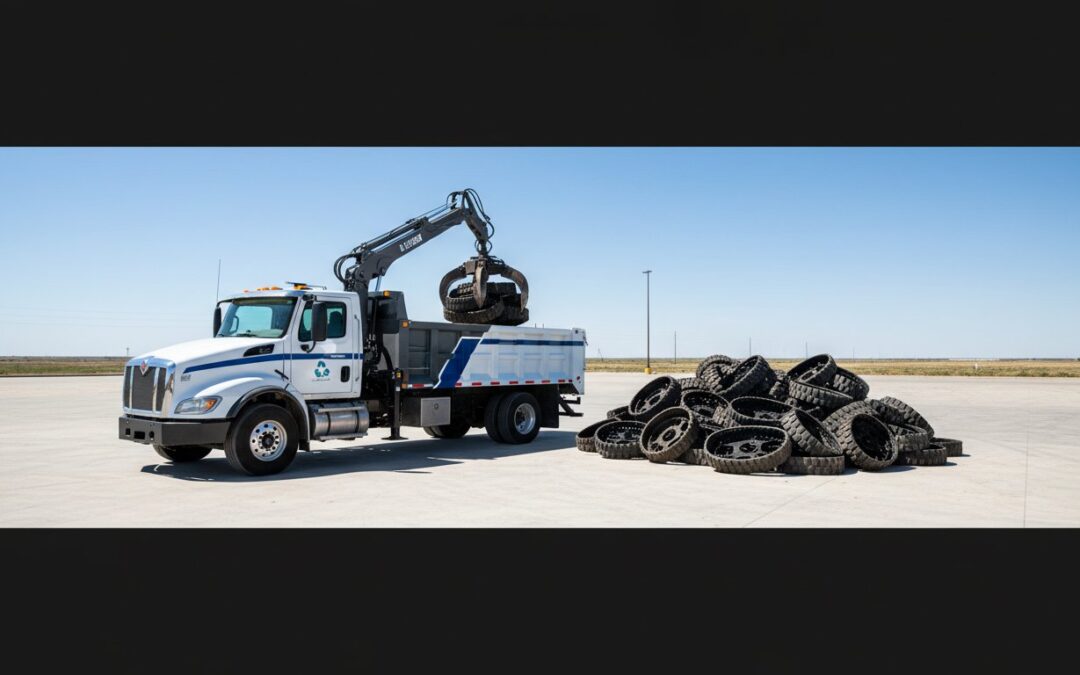
What if those heavy, worn-out tracks sitting behind your shop aren’t the “pure metal” payday you were counting on? Most operators in West Texas expect a quick payout for heavy equipment parts, but the reality of trying to scrap skid steer tracks for cash Lubbock is often a cycle of rejection at the scale house. You’ve likely felt the frustration of watching valuable yard space disappear under a pile of rubber and steel that local scrap yards refuse to touch. It’s a common headache, especially when you’re trying to stay compliant with TCEQ Title 30 regulations and avoid the steep fines associated with improper disposal in Lubbock County.
We understand that you want your site cleared and your time respected. This 2026 guide reveals the truth about current metal-to-rubber ratios and how they dictate your actual scrap value. You’ll discover the most efficient way to turn that waste into a legal disposal solution that keeps your business in the green. We’ll walk through the specific steps to identify high-value tracks, the local facilities equipped to process them, and how to ensure your disposal is 100% documented and legal.
Key Takeaways
- Learn why local scrap yards often reject tracks due to the complex rubber-to-steel ratio and high industrial processing costs.
- Discover the honest truth about searching for scrap skid steer tracks for cash Lubbock and how industrial rubber disposal differs from standard metal recycling.
- Compare the hidden costs of hauling tracks yourself to New Deal or Abernathy versus utilizing specialized professional collection services.
- Master the step-by-step preparation process to organize your inventory and ensure your site stays legally compliant.
- Explore the “one-call” pickup solution designed to save busy West Texas businesses time and logistical headaches.
Understanding the Market for Scrap Skid Steer Tracks in Lubbock
Lubbock serves as the industrial and agricultural hub of the South Plains. Here, heavy machinery is the backbone of the economy. A Skid-steer loader is a common sight across Lubbock County, used heavily in cotton ginning, dairy farm maintenance, and the 12% expansion in local residential construction seen since 2021. Eventually, the rubber tracks on these machines reach the end of their service life. In our local context, “scrap” refers to tracks that have suffered significant lug tearing, internal cord snapping, or dry rot that prevents safe operation.
Many operators search for scrap skid steer tracks for cash Lubbock expecting a payout similar to high-grade copper or aluminum. It’s vital to manage these expectations. Unlike pure metal scrap, industrial tracks are composite materials. The value often lies in professional removal and specialized recycling rather than a high per-pound cash return. Local industries, including the 300 plus landscaping firms and dozens of earthmoving contractors in the Hub City, generate thousands of tons of this waste annually. This volume creates a logistical challenge for the City of Lubbock Landfill, which often restricts bulk rubber disposal due to how these items occupy space and resist compaction.
The Anatomy of a Skid Steer Track
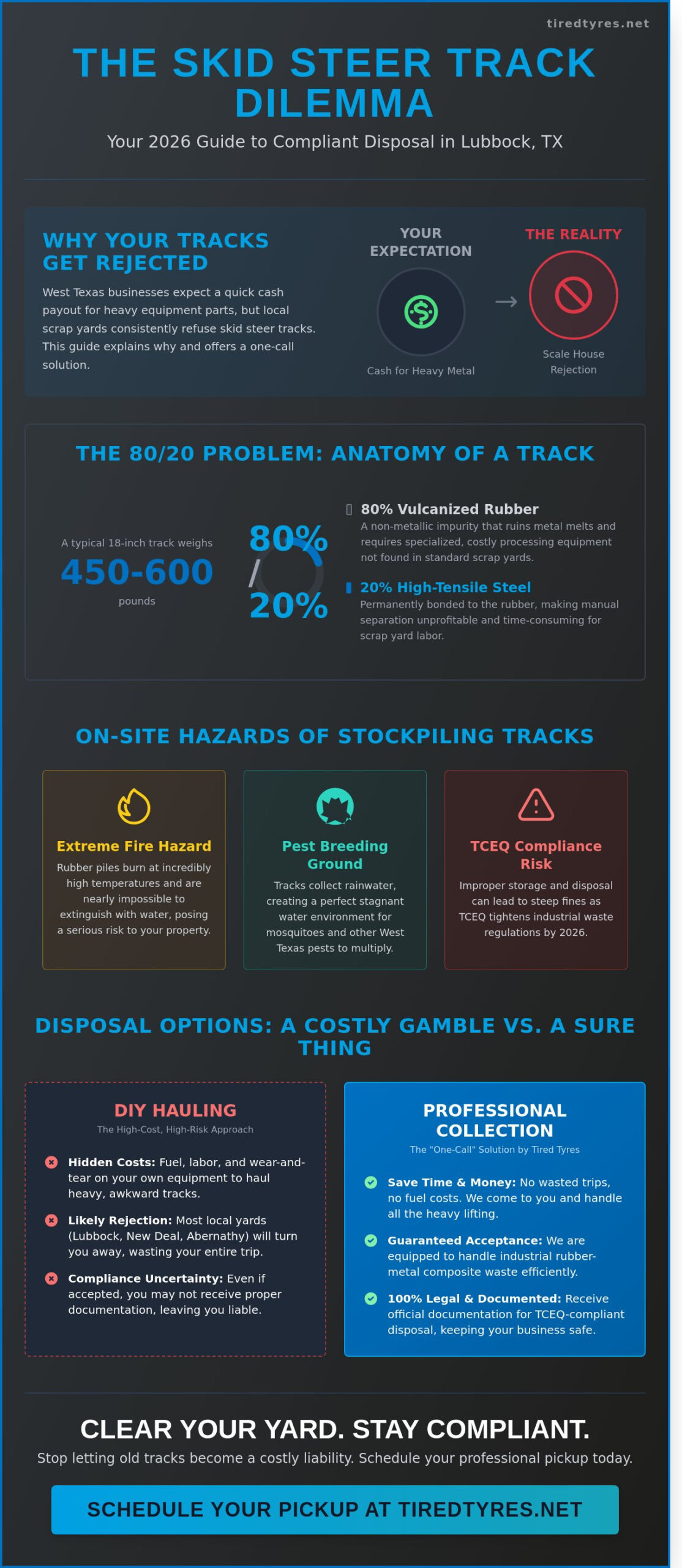
Understanding why these tracks are difficult to process starts with their construction. They aren’t just thick rubber. Manufacturers use a complex vulcanization process to bond high-density rubber compounds directly to internal steel cables and forged metal drive links. This permanent bond makes it nearly impossible for standard local recyclers to separate the metal from the rubber. A standard 18-inch wide track weighs approximately 450 to 600 pounds and consists of 80% vulcanized rubber and 20% high-tensile steel cord. Because they can’t be easily shredded, they require specialized heavy-duty equipment that most general scrap yards don’t maintain.
Why Lubbock Businesses Struggle with Track Disposal
Lubbock businesses face unique hurdles when their tracks wear out. Local municipal facilities aren’t equipped to handle hybrid rubber-metal waste in high volumes. Stockpiling these tracks on your property is a significant risk. Rubber piles are notorious fire hazards; they burn at extremely high temperatures and are nearly impossible to douse with water. They also collect rainwater, creating a breeding ground for mosquitoes and West Texas pests.
The regulatory environment is also changing. The Texas Commission on Environmental Quality (TCEQ) has signaled a shift toward stricter industrial waste management. By January 1, 2026, new recycling standards for industrial rubber will likely increase the cost of traditional disposal. Finding a reliable way to handle scrap skid steer tracks for cash Lubbock now helps businesses stay ahead of these mandates. We provide a direct, professional solution that clears your yard and ensures these materials are handled according to current environmental codes.
The Steel vs. Rubber Dilemma: Why Most Lubbock Scrap Yards Decline Tracks
Lubbock scrap yards operate on a simple math equation. They want high-purity metal that they can process and sell to mills quickly. When you show up with a loader track, you aren’t bringing them a metal asset. You’re bringing them a contamination problem. In the recycling industry, rubber is a non-metallic impurity. It produces toxic smoke and ruins the chemical composition of a melt during the smelting process.
Stripping rubber from a steel core is a grueling, manual task. Most yards in the South Plains don’t have the specialized shearing equipment to do this profitably. If it takes a worker two hours to peel back the rubber for a small amount of steel, the yard loses money on labor alone. This is why most local facilities won’t offer scrap skid steer tracks for cash Lubbock unless the metal is already bare and separated. You’re effectively asking the yard to pay you for the privilege of taking on a disposal headache.
Many operators assume they’ll get a windfall based on the heavy weight of their equipment. This is a common mistake. A typical rubber track is roughly 80% rubber and only 20% steel cord or drive lugs. If steel prices are low, the value of that small metal percentage doesn’t even cover the fuel cost to haul the tracks to the yard. You aren’t being paid by the pound for the rubber; you’re being penalized for it.
When is a Track Considered “Clean” Scrap?
Clean scrap refers to metal that is 100% free from attachments like wood, plastic, or vulcanized rubber. All-steel tracks, common on older dozers or heavy excavators, are easy for Lubbock yards to process because they can be melted down immediately. However, for scrap skid steer tracks for cash Lubbock offers are usually non-existent for rubber-coated versions. You can check your tracks by looking at the drive lugs. If the metal is bolted on and can be removed with a wrench, you have a better chance. If the steel is embedded deep inside the rubber casing, it’s considered “dirty” and will likely be rejected at the scale.
The Hidden Costs of “Free” Disposal
It’s tempting to hand off old tracks to an unpermitted hauler promising free removal. This is a major liability trap for your business. Lubbock County environmental officers monitor illegal dumping sites closely. If your tracks end up in a West Texas ditch or an unauthorized field, the serial numbers or business records can lead back to your shop. Since 2021, Texas has tightened rules on scrap tire and rubber disposal manifests. Proper documentation is essential for your business tax records and environmental compliance. Working with a professional service like Tired Tyres ensures your equipment waste is handled legally and efficiently, protecting you from heavy fines.
Comparing Disposal Options: Cash for Metal vs. Professional Removal
Lubbock contractors face a clear choice when equipment tracks reach the end of their service life. You can attempt to extract the steel for a payout or hire a service to handle the bulk. Both paths have distinct impacts on your bottom line and project schedule. Understanding the trade-offs between labor costs and scrap value is essential for maintaining a profitable job site.
Lubbock Scrap Metal Yards: The “Best Case” Scenario
Selling to local recyclers like Jarvis Metals requires specific preparation. You’ll need a valid state ID and often a manifest for industrial waste to comply with Texas scrap laws. Hauling tracks to the New Deal or Abernathy areas makes sense if you have an empty trailer and a crew member with two hours to spare. However, these yards primarily pay for the steel core. Since a standard 18-inch skid steer track might only be 25% steel by weight, the payout fluctuates based on daily market rates for heavy melt steel. Expect to spend 45 to 90 minutes waiting at the scale during peak morning hours. This method works for those seeking scrap skid steer tracks for cash Lubbock who don’t mind the heavy lifting and logistical hurdles.
Specialized Collection Services: The Efficient Alternative
For most Lubbock businesses, the value of time outweighs a small scrap check. A contractor managing 4 separate job sites can’t afford to lose a foreman for half a day to navigate a scrap yard. Specialized collection services bridge this gap by coming directly to your location. Tired Tyres handles the logistics of bulk rubber track removal, eliminating the need for you to secure heavy loads or wash mud off your own trailers. We provide on-site pickup for these awkward, 500-pound items, ensuring your site stays clean without diverting your labor force.
Using a professional service ensures proper and compliant tire disposal that meets all local environmental regulations. This approach is often the most cost-effective way to manage scrap skid steer tracks for cash Lubbock because it saves on fuel, trailer maintenance, and hourly wages. We focus on the heavy lifting so your team can stay focused on billable work. Our process is designed to be transparent and fast, removing the “tired” components of your fleet so you can get back to the dirt work.
- On-site Pickup: No need to load or transport heavy tracks yourself.
- Regulatory Compliance: We handle the paperwork required for proper rubber disposal.
- Site Safety: Removing old tracks immediately prevents tripping hazards and keeps your yard organized.
Step-by-Step: Preparing Your Skid Steer Tracks for Legal Disposal
Getting scrap skid steer tracks for cash Lubbock depends on more than just having a pile of rubber. You need a systematic approach to ensure you get the best value while staying compliant with Texas law. Efficiency starts with a clear inventory. Count every track, measure the widths, and note the condition. A standard 12 inch track weighs significantly less than an 18 inch wide heavy duty version. Knowing these details allows us to provide an accurate quote before we even arrive at your site.
Separation is your next priority. Don’t mix your rubber tracks with clean structural steel or copper scrap. Mixing materials complicates the weighing process and can lead to lower payouts because of “contamination” deductions. Keep your tracks in a dedicated area. This speeds up the loading process and ensures your site remains organized. If you’re managing a large demolition project in North Lubbock, keeping a clean staging area prevents accidents and keeps your crew focused on the build.
- Verify Credentials: Always ask your hauler for their TCEQ registration number. Unlicensed haulers often dump tracks illegally, which leaves you liable for cleanup costs.
- Schedule Smart: Coordinate your pickup for the day your project ends. This prevents rubber from sitting out and becoming a local compliance issue.
- Document Everything: Request a signed manifest for every load that leaves your property. This is your proof of legal disposal for future audits.
Navigating Lubbock and TCEQ Regulations
Texas law is strict regarding “scrap tires,” a category that includes rubber tracks. You must use a Texas tire disposal manifest for every transaction. This document tracks the waste from your site to the final processing facility. Lubbock local ordinances, specifically those enforced by Code Enforcement, classify abandoned rubber as a public nuisance. Stagnant water inside tracks can breed mosquitoes within 48 hours. To stay compliant, review the latest Texas tire disposal regulations to protect your business from heavy fines.
Optimizing Your Site for Collection
Stack your tracks on a flat, firm surface. Use a flat-stacking method rather than “lacing” them together. This allows a grapple truck or forklift to grab them easily, reducing labor time by up to 30 percent. Ensure there’s at least a 20 foot clearance for heavy equipment to maneuver. Safety is paramount during handling. Worn tracks often have exposed steel wires that can cause deep puncture wounds. Your team should always wear Level 4 cut-resistant gloves when moving these materials. If you’re ready to clear your yard, contact us for a pickup quote today.
Tired Tyres: Efficient Skid Steer Track Collection in Lubbock
Tired Tyres serves as the premier solution for West Texas industrial rubber management. We recognize that managing heavy, reinforced rubber tracks is a major logistical hurdle for most construction and landscaping companies. Our one-call pickup service removes this burden from your daily operations entirely. You won’t have to worry about renting specialized trailers or diverting staff from revenue-generating work to haul waste. We arrive with the right equipment to load and transport your materials safely and quickly.
The recycling process for these tracks is complex due to the internal steel cables and heavy-duty compounds used in their construction. We take care of every detail, ensuring your business remains compliant with Texas Commission on Environmental Quality (TCEQ) guidelines. This commitment helps maintain the integrity of the South Plains, preventing industrial waste from becoming a long-term environmental issue in our local communities. If you are searching for scrap skid steer tracks for cash Lubbock, our streamlined approach ensures you get the best value with the least amount of effort.
Our Bulk Collection Capabilities
Our fleet is equipped to handle varying volumes of industrial waste. We don’t just pick up single sets for owner-operators; we specialize in large-scale fleet replacements that generate significant amounts of scrap rubber. Our service area extends across the Permian Basin and the South Plains, providing reliable coverage to Lubbock, Midland, and Odessa. This regional presence allows us to maintain a consistent schedule for our regular clients who rotate equipment frequently. For those managing diverse equipment types, we also offer comprehensive commercial tire disposal to keep your entire yard clear of debris. In the past 12 months, we’ve successfully cleared thousands of pounds of rubber from local industrial sites, helping businesses reclaim valuable square footage.
Get a Professional Quote Today
Getting started is a straightforward process that respects your busy schedule. We ask for basic information, such as the total quantity of tracks and a few photos of the pile, to provide a fast and accurate estimate. This data-driven approach allows us to give you a clear picture of the removal process before we ever leave our shop. The Tired Tyres promise is built on professional, transparent service that puts the customer’s needs first. We don’t use hidden fees or complex contracts. You can schedule your skid steer track pickup in Lubbock through our website or by phone to experience a more efficient way to handle your scrap rubber. Let us take the “tired” out of your old tracks today.
Optimize Your Job Site Disposal Strategy
Managing heavy equipment in the South Plains requires more than just mechanical skill; it demands a smart disposal strategy. While finding a yard that pays scrap skid steer tracks for cash Lubbock might seem ideal, the reality of 2026 recycling standards means most facilities reject rubber-heavy components. Local scrap yards often prioritize clean steel over the complex bonded materials found in tracks. This leaves many operators with piles of old rubber taking up valuable workspace. You’re better off choosing a solution that guarantees removal rather than hunting for elusive metal buyers who often turn away mixed loads.
Partnering with a specialized logistics provider ensures you stay compliant with TCEQ regulations. We handle the heavy lifting across the South Plains and Permian Basin, moving industrial rubber efficiently and legally. As a TCEQ Permitted Hauler, we provide specialized industrial rubber logistics so you can focus on your next project. It’s the most reliable way to clear your inventory without the headache of rejected loads at the scrapyard. Start cleaning up your yard today.
Get a Fast Quote for Skid Steer Track Removal in Lubbock
Your operation stays cleaner and more efficient when you choose professional removal over the uncertainty of local scrap markets. We’re ready to help you clear the way for your next big job.
Frequently Asked Questions
Do Lubbock scrap yards pay cash for rubber skid steer tracks?
Most traditional Lubbock scrap yards don’t pay cash for rubber tracks because the internal steel cables are too difficult to separate profitably. Tired Tyres offers a specialized program to get scrap skid steer tracks for cash Lubbock owners can actually use. We evaluate the condition and quantity of your rubber waste to provide a fair market price on the spot.
Can I throw old skid steer tracks in a standard roll-off dumpster in Lubbock?
You can’t dispose of rubber tracks in a standard roll-off dumpster because they’re classified as bulky waste that damages compactors. Local providers like Republic Services will fine you if these items are found in a 20-yard or 30-yard bin. These contamination fees often start at $150 and can go up based on the total weight of the tracks.
How much does it cost to dispose of skid steer tracks in West Texas?
Disposal costs at authorized West Texas facilities typically range from $200 to $500 per ton according to regional waste management data. This price fluctuates based on the current market for recycled rubber and the distance from the processing plant. Choosing a recycler who pays you avoids these heavy tipping fees and simplifies your project budget significantly.
Is a TCEQ manifest required for disposing of rubber tracks?
A TCEQ manifest is mandatory for any commercial transport of scrap tires or rubber tracks in Texas. This five-part document ensures the waste is tracked from your shop to a permitted recycling center. We provide all the necessary paperwork and keep digital records for your files, so you’re always ready for a state environmental audit or inspection.
What happens to my old tracks after Tired Tyres picks them up?
Your old tracks undergo a specialized shredding process to separate the high-tensile steel from the durable rubber compound. Roughly 70% of the recycled material is transformed into rubberized asphalt or playground surfaces. This lifecycle management prevents thousands of pounds of rubber from sitting in West Texas landfills for decades while supporting the local circular economy and manufacturing.
Does Tired Tyres offer discounts for bulk track collection in Lubbock?
We provide specialized pricing and logistical support for bulk collections of 10 or more tracks. Fleet operators who bundle their scrap skid steer tracks for cash Lubbock pickups see a significant increase in their total payout. We bring the right equipment to load your inventory quickly, which saves your crew hours of heavy lifting and yard organization.
Can I take my tracks to the Lubbock City Landfill?
The Lubbock City Landfill located at 17304 N. FM 1260 accepts some rubber waste but charges significant fees for heavy equipment components. Their staff often requires tracks to be cut into smaller sections before they’ll accept them for burial. It’s much faster and more profitable to have our team haul them away intact for recycling instead of paying landfill fees.
How do I know if my hauler is legally permitted to take rubber waste?
You can verify a hauler’s legitimacy by checking their TCEQ Scrap Tire Transporter registration number in the state’s public database. Every legal hauler must display this number on their vehicle and provide a signed manifest at the time of pickup. Working with unpermitted haulers exposes your business to fines exceeding $5,000 if the tracks are dumped illegally.