
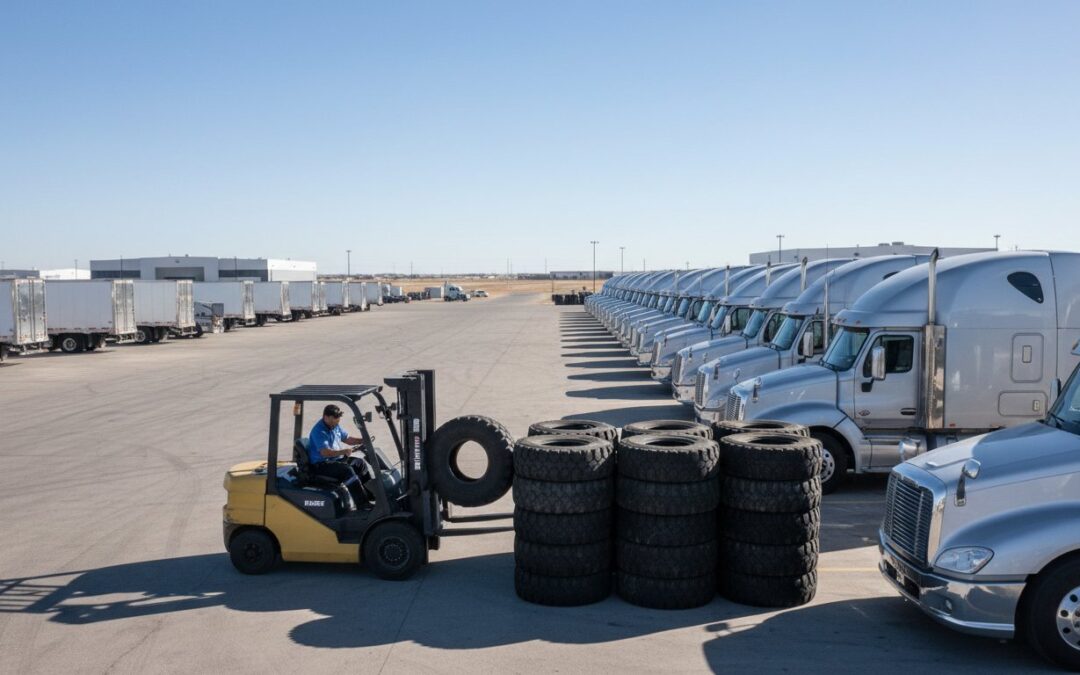
The TCEQ issued over $2.4 million in penalties for improper scrap tire management in 2025 alone. For fleet owners, this means a single oversight in your trucking company tire disposal Odessa process can lead to fines of up to $25,000 per day. You likely already know the struggle of watching bulk rubber pile up in your yard while landfill fees climb and reliable haulers for heavy OTR or semi tires become harder to find. It’s a logistical burden that takes focus away from your primary haul and clutters your workspace.
This guide simplifies your bulk removal strategy by showing you how to manage scrap rubber legally and cost-effectively. We’ll walk through the 2026 regulatory landscape, including the critical December 31 reporting deadlines and the impact of the new Waste Energy Corp facility opening in Midland this May. You’ll also find a breakdown of current market rates, such as $11.00 for heavy-duty truck tires, so you can plan your budget with precision. Let’s get your shop space cleared and your manifests in order so you can get back to the road.
Key Takeaways
- Learn why DIY landfill hauling wastes fuel and labor, and how specialized collection streamlines your shop operations.
- Understand your legal obligations as a Scrap Tire Generator to avoid heavy TCEQ fines and ensure full manifest compliance.
- Discover how segregating your inventory by type, such as Semi or OTR, secures the most cost-effective trucking company tire disposal Odessa rates.
- Implement a simple two-step tire waste audit to clear your yard and maintain a professional, hazard-free workspace.
- Identify the benefits of partnering with a Permian Basin expert who handles everything from scrap hoses to heavy agricultural tires.
The Challenge of Bulk Tire Disposal for Odessa Trucking Fleets
Odessa serves as the logistical heartbeat of the Permian Basin. Because of this, local fleets burn through rubber at an incredible rate. A single long-haul semi can require a full set of 18 tires every year, or even sooner depending on road conditions and load weights. When you multiply that by a fleet of 50 or 100 trucks, the volume of scrap becomes staggering. This is exactly why trucking company tire disposal Odessa services have become a critical part of fleet management. Most owners initially try the “DIY” route, but they quickly discover the hidden drains on their bottom line.
The actual cost of hauling tires yourself includes much more than just the gate fee at the landfill. You’re losing hours of billable labor while a technician or driver sits in line. You’re burning expensive diesel in a truck that should be making a delivery. Perhaps most importantly, many municipal landfills in Ector County now limit or outright refuse bulk commercial loads to preserve air space. These facilities aren’t designed to handle the sheer volume of a professional fleet, often leading to frustrating turn-aways at the scale house after you’ve already spent the time and fuel to get there.
Semi-Truck vs. Passenger Tire Disposal
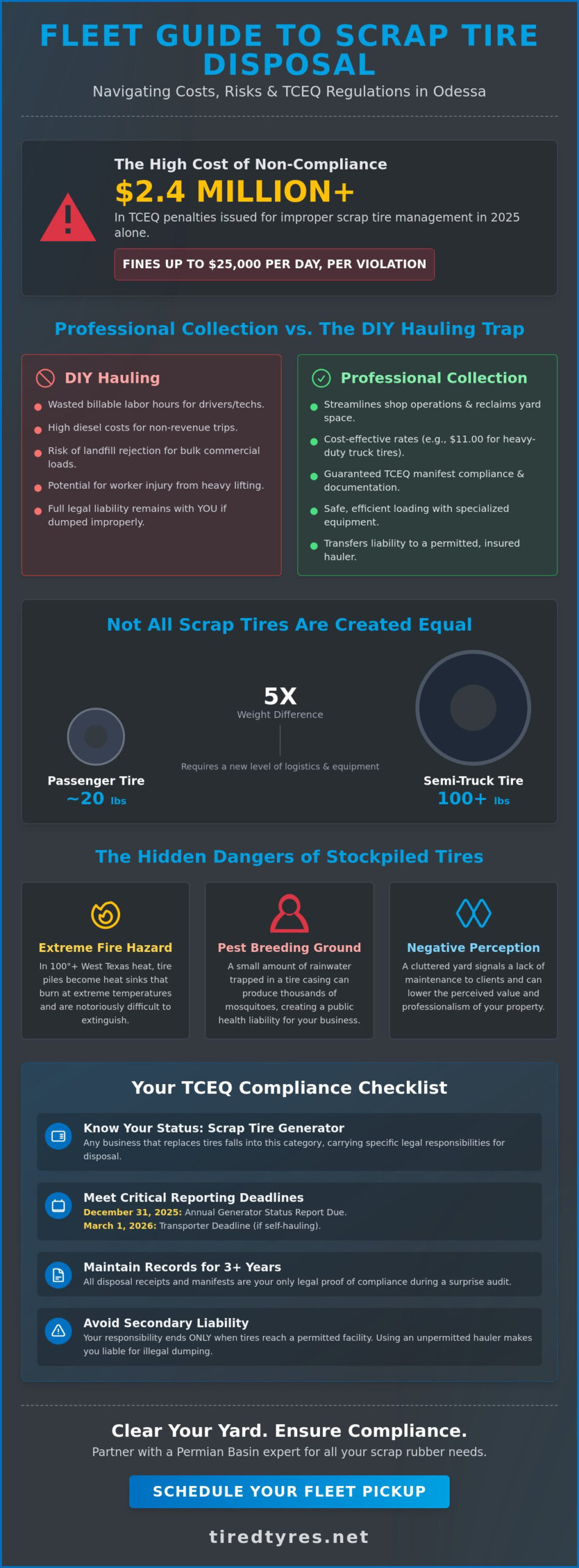
Disposing of a semi-truck tire isn’t just a larger version of car tire removal. A standard passenger tire weighs about 20 pounds, while a heavy-duty semi tire can easily exceed 100 pounds. This weight difference changes the entire logistics chain. You can’t safely hand-load 100 scrap tires into a standard trailer without risking worker injury or significant downtime. Specialized equipment like lift gates or skid steers are often required for efficient loading. The Tire recycling process for these larger units is also more complex due to the high concentration of steel belting, which directly influences the processing fees you’ll encounter at professional facilities compared to smaller light truck tires.
Why Odessa Businesses Can’t Ignore Scrap Tire Piles
Leaving a stockpile in the West Texas sun is a gamble with your property’s safety. In the 100-degree heat of an Odessa summer, tire piles become massive heat sinks. If a fire starts, these piles burn at extremely high temperatures and are notoriously difficult for local fire departments to extinguish. Beyond the fire risk, tires are perfect breeding grounds for pests. Even a small amount of rainwater trapped inside a casing can produce thousands of mosquitoes, creating a public health liability for your shop. Finally, a yard cluttered with scrap rubber creates a “broken window” effect. It signals a lack of maintenance to clients and can lower the perceived value of your commercial property. Keeping a clean, compliant yard is the simplest way to maintain professional standards and operational safety.
Navigating Texas Scrap Tire Regulations and TCEQ Compliance
Compliance isn’t just about following rules; it’s about protecting your business from massive financial hits. The Texas Commission on Environmental Quality (TCEQ) classifies any business that replaces tires as a Scrap Tire Generator. If you manage a fleet in West Texas, you fall squarely into this category. This designation carries specific responsibilities that many owners overlook until an inspector arrives at their yard. Understanding these rules is the only way to ensure your trucking company tire disposal Odessa process doesn’t become a legal nightmare.
Starting with the 2025 calendar year, the state introduced stricter reporting. Registered generators must submit an annual operational status report by December 31, 2025. This applies to all permits that don’t have a set expiration date. If you’re also transporting your own tires, remember that the transporter deadline is March 1, 2026. You must keep all disposal receipts and manifests for at least three years. These documents are your only proof that you’ve followed the law during a surprise audit.
One of the biggest risks for Odessa fleets is secondary liability. Many managers think their responsibility ends when the tires leave their property. It doesn’t. If you hire an unpermitted “guy with a trailer” and they dump those tires in a desert wash, the TCEQ can hold you legally and financially responsible. You are liable for the scrap until it reaches a permitted processing facility.
What is a TCEQ Scrap Tire Manifest?
A manifest is a multi-part legal form that tracks a tire from the point of generation to the final processor. This document serves as your primary protection against illegal dumping fines by providing a verified paper trail. At Tired Tyres, we manage the manifest process for your fleet, ensuring every load is documented correctly so you don’t have to worry about the paperwork.
Avoiding Illegal Dumping Penalties in Ector County
The stakes in West Texas are higher than ever. In 2025, the TCEQ issued over $2.4 million in penalties for improper tire management. Storing as few as five unregistered off-the-road tires can trigger fines of up to $25,000 per day. To stay safe, always verify a hauler’s registration status before signing a contract. If you want to avoid these risks entirely, we offer professional tire collection services that prioritize full regulatory compliance and clean record-keeping.
Professional Tire Collection vs. Generic Junk Removal
General junk removal companies often treat scrap rubber like any other piece of old furniture or construction debris. They see a pile of semi tires as just another “bulky item,” similar to a couch or a refrigerator. This lack of specialization usually results in higher prices for your fleet. Because generalists don’t have volume-based relationships with industrial processors, they pass their higher gate fees directly to you. A partner focusing specifically on trucking company tire disposal Odessa operations understands the logistical value of bulk rubber. This expertise allows for more competitive rates and a streamlined tire recycling process that directly supports the Permian Basin’s environmental goals.
Logistics and safety also separate the professionals from the amateurs. Loading 50 heavy-duty truck tires into a standard box truck is a slow, manual task that risks worker injury and takes hours of your team’s time. We use specialized equipment designed to handle the weight and volume of industrial rubber. Reliability is the final piece of the puzzle. Instead of waiting for an on-call hauler who might show up three days late, professional services offer scheduled removals. This keeps your yard clear and prevents the “broken window” effect mentioned earlier, ensuring your shop remains a safe, productive workspace.
Handling Industrial Rubber: Beyond Just Tires
Trucking yards in West Texas rarely just accumulate standard tires. Between oilfield service trucks and yard maintenance equipment, you likely have scrap skid steer tracks, solid rubber tires, and worn-out conveyor belts taking up valuable space. Most generic haulers won’t touch these items because they’re incredibly difficult to process. We specialize in these mixed waste streams. Whether you have a pile of scrap hoses from a hydraulic overhaul or a stack of solid tires from a warehouse forklift, we provide a single point of contact for all your industrial rubber waste.
The Logistics of OTR and Agricultural Tire Removal
In Odessa, the oilfield and construction sectors rely on massive Off-the-Road (OTR) and agricultural tires. These units can weigh several hundred pounds and require flatbeds or specialized loaders for safe transport. A partner who understands commercial tire disposal logistics knows how to secure these loads and transport them without violating TCEQ weight or safety standards. We serve the heavy equipment sector with the same precision we apply to semi-fleets, ensuring that even the largest tires in your inventory are managed legally and efficiently.
Developing a Tire Disposal Strategy for Your Odessa Fleet
Managing waste shouldn’t be an afterthought. For a busy fleet, an unorganized yard is both a safety hazard and a financial drain. Implementing a structured trucking company tire disposal Odessa strategy helps you avoid the $25,000 per day fines mentioned earlier while keeping your shop running smoothly. Start with a comprehensive audit. Count exactly how many semi-truck, OTR, and light truck tires you generate per month. This data allows you to negotiate better rates and choose a service frequency that matches your actual output.
Follow these five steps to build a compliant disposal program:
- Conduct a tire waste audit: Review your records from the last 12 months to identify peak disposal seasons.
- Segregate tire types: Keep Passenger, Semi, and OTR tires in separate stacks. Mixed piles often result in higher “worst-case” pricing from haulers.
- Establish a designated Scrap Zone: Choose a specific area, preferably on a concrete pad, away from flammable materials and property lines.
- Determine pickup frequency: Decide if your volume justifies a scheduled monthly pickup or if an on-call service is more efficient.
- Verify manifest procedures: Ensure your hauler provides a TCEQ-compliant manifest at the time of collection.
Cost-Benefit Analysis of Scheduled Pickups
Waiting until your yard is overflowing to call for a pickup is a reactive strategy that often costs more. Scheduled removals allow for predictable budgeting and prevent the accumulation of pests and fire hazards. When you have reliable tire disposal on the calendar, your technicians don’t waste time moving old rubber out of the way to reach equipment. This organization improves shop safety by keeping walkways clear and reducing the risk of trip-and-fall accidents, which can be far more expensive than the disposal fees themselves.
Preparing Your Load for Faster Pickup
Efficiency on collection day starts with how you stack your scrap. Use the “lacing” or “herringbone” stacking method to maximize space. This allows our trucks to carry more units per load, which can lower your overall transport costs. If you have rims, decide whether to strip them for scrap metal value or pay the additional fee for disposal with the rubber. Finally, ensure the Scrap Zone is easily accessible for heavy collection trucks. A clear path prevents delays and ensures our team can get in and out of your yard without disrupting your daily operations. If you’re ready to clear your yard today, schedule your fleet tire collection with our Permian Basin team.
Tired Tyres: The Permian Basin’s Trusted Fleet Partner
Choosing a partner for your trucking company tire disposal Odessa needs shouldn’t be a guessing game. We’ve built our reputation across Midland, Odessa, and Lubbock by providing a straightforward, reliable service that keeps your yard clean and your business compliant. Since our founding, we’ve understood that West Texas fleet managers don’t have time for complicated contracts or unreliable haulers. We focus on the heavy lifting and the logistics so you can focus on keeping your trucks on the road.
Our team is deeply familiar with the nuances of Texas tire disposal regulations. We don’t just pick up your scrap; we provide the exact documentation you need to survive a surprise TCEQ audit. This commitment to transparency is why so many local businesses trust us with their bulk rubber removal. We handle everything from standard semi-truck tires to massive OTR units and even scrap conveyor belts, ensuring no industrial waste is left behind to clutter your workspace.
A Permitted, Professional Approach
As a TCEQ-permitted hauler, we follow a strict manifest process for every load we collect. This protects your business by ensuring your legal liability ends the moment our truck leaves your property. Our operations maintain a 90% recycling rate, converting your elhasznált tires into useful materials like rubber mulch and asphalt powder. By choosing a local partner, you’re supporting the Odessa economy and participating in a sustainable waste management cycle that keeps the Permian Basin clean.
Get a Bulk Tire Disposal Quote Today
Clear your yard and simplify your operations with a single call to our local team in the 432 area code. We offer flexible scheduling for one-time shop cleanouts or ongoing monthly service tailored to your fleet’s volume. Whether you have a small pile of semi tires or a massive inventory of agricultural and industrial rubber, we provide a custom quote that fits your budget. Request a site visit today to see how we can take the burden of scrap management off your shoulders.
- Direct Service: No middlemen or national call centers.
- Full Compliance: TCEQ-permitted hauling with complete manifests.
- Industrial Range: We collect semi, OTR, agricultural tires, and scrap rubber tracks.
- Local Expertise: Serving the specific needs of Odessa trucking yards since day one.
Don’t let scrap rubber become a liability for your shop. Reach out to our team today to schedule a pickup and experience the professional, “no-nonsense” service that Tired Tyres is known for across West Texas.
Secure Your Fleet’s Compliance and Yard Space
Managing a commercial fleet in the Permian Basin requires focus on the road, not the scrap pile in the back of your yard. You’ve seen how staying ahead of TCEQ regulations and maintaining a strict manifest system protects your business from daily fines of up to $25,000. By choosing a specialized partner for trucking company tire disposal Odessa, you ensure that even heavy OTR and agricultural tires are handled with the right industrial equipment. This doesn’t just clear space; it supports a sustainable cycle where 90% of your waste is recycled into asphalt and mulch.
Don’t let old rubber become a fire hazard or a legal liability. As a TCEQ-permitted hauler, we provide the professional documentation and reliable scheduling needed to keep your shop organized and safe. Whether you have a one-time cleanout or need a recurring collection plan, our team is ready to help. Get a Bulk Tire Pickup Quote for Your Odessa Fleet and take the first step toward a cleaner, more efficient workspace today. Your yard deserves the same precision you bring to your logistics operations.
Frequently Asked Questions
How much does it cost for a trucking company to dispose of tires in Odessa?
Disposal rates in Odessa depend on the specific tire size and volume. Heavy duty truck tires typically cost $11.00 each, while medium duty versions are priced at $8.00. For larger 300/400 series HD tires, the rate is $25.00 each. If you require a pickup service, some local providers charge an additional $2 per tire with a $150 minimum fee for Ector and Midland Counties.
Do I need a special permit to store scrap tires on my commercial property?
Yes, any business that generates scrap tires is legally defined by the TCEQ as a Scrap Tire Generator. You must register with the state and follow specific record keeping rules. Failing to maintain this status while storing scrap rubber can result in penalties of up to $25,000 per day. This registration ensures you’re part of the official manifest tracking system used across Texas.
What is the maximum number of tires a trucking company can store legally?
Most commercial yards are limited to storing 500 scrap tires before they require a formal storage site permit. However, regulations for Off-the-Road tires are much stricter. Storing as few as five unregistered OTR tires can trigger major TCEQ enforcement actions and significant fines. It’s best to maintain a clean yard by scheduling regular removals before you reach these legal thresholds.
Does Tired Tyres provide the TCEQ manifest for every pickup?
We provide a fully documented TCEQ manifest for every collection we perform. This document is your primary protection against illegal dumping liability. It serves as verified proof that your trucking company tire disposal Odessa process followed all state laws from the moment the rubber left your yard. We manage the paperwork so your fleet remains compliant during any surprise environmental audit.
Can you pick up scrap skid steer tracks and industrial hoses too?
Yes, our collection services cover a wide range of industrial rubber waste. We handle scrap skid steer tracks, solid tires, industrial hoses, and even worn out conveyor belts. Many trucking fleets accumulate mixed waste streams during vehicle maintenance. We provide a single point of contact for all these materials, allowing you to clear your entire shop floor with one professional pickup service.
How often should a trucking fleet schedule tire pickups?
Most Odessa fleets find that a monthly or quarterly removal schedule works best for their operations. This frequency prevents the accumulation of fire hazards and stops pests like mosquitoes from breeding in stagnant water inside the tires. Regular removals also help you stay well below the 500 tire storage limit, ensuring you don’t accidentally violate state property management regulations.
What happens to the tires after they are picked up from my Odessa yard?
Approximately 90% of the scrap rubber we collect is diverted from landfills and sent to recycling processors. These tires are often ground into asphalt powder for road construction or crumb rubber for industrial mats and mulch. This process turns your waste into a sustainable resource, supporting the local Odessa economy and reducing the environmental footprint of your trucking operations.
Is it illegal to put tires in a commercial dumpster in Texas?
Yes, it’s illegal to place whole scrap tires into a commercial dumpster or a municipal landfill in Texas. State law requires that tires be processed or split before landfilling, which most dumpster services cannot handle. If a landfill discovers tires in your waste stream, they can reject the entire load and report the violation to the TCEQ, leading to heavy fines for your business.