
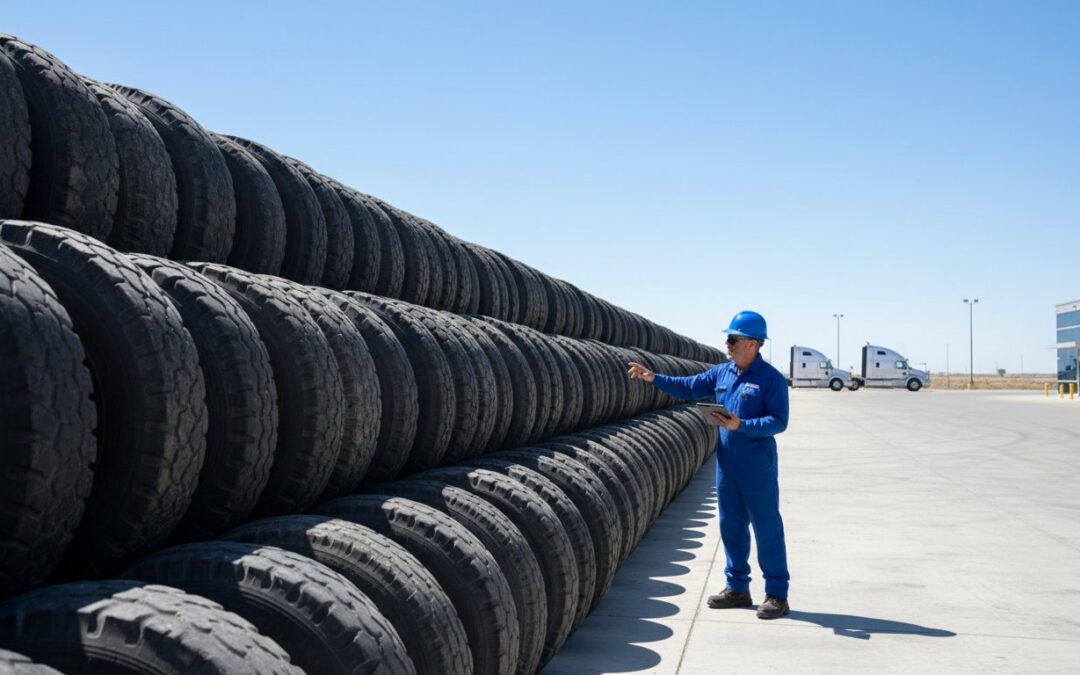
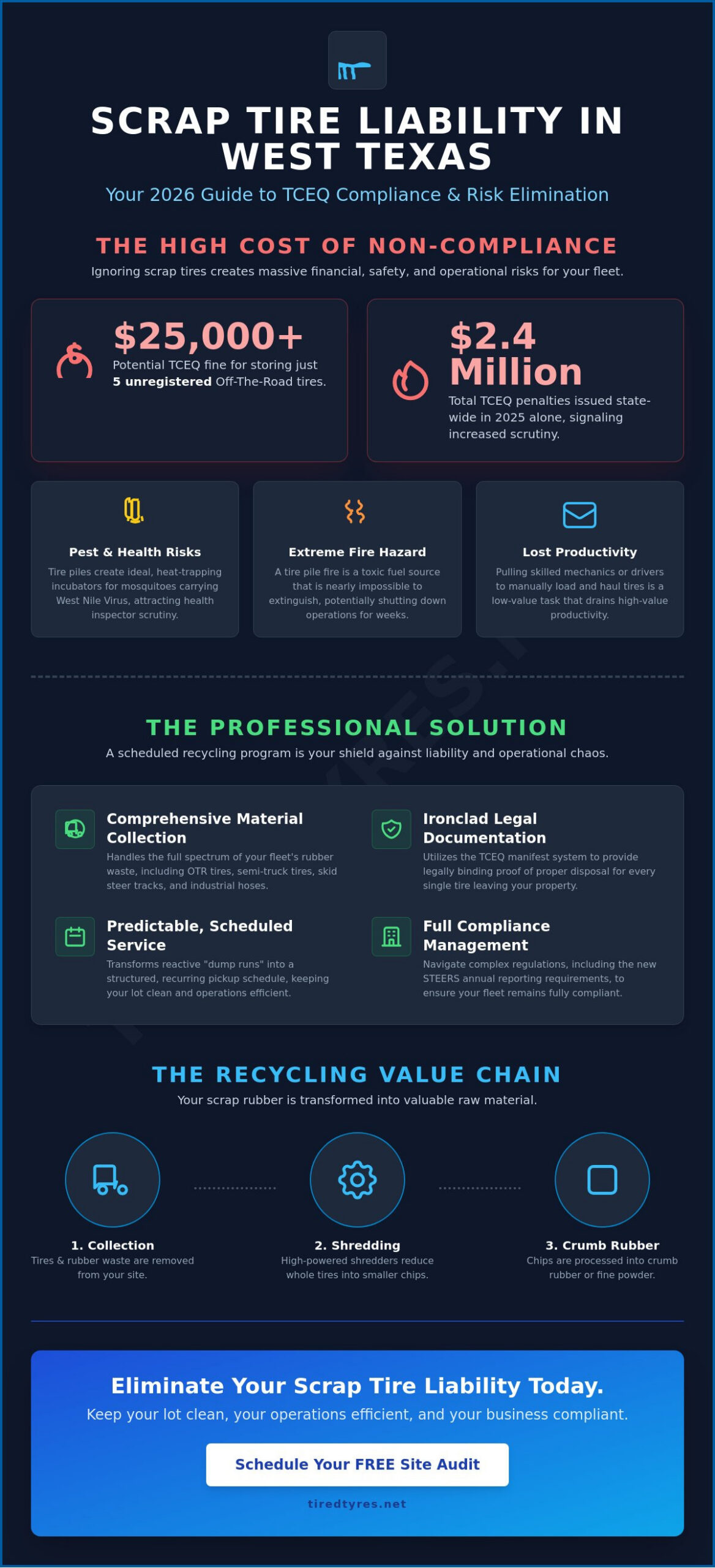
Storing just five unregistered off-the-road tires on your property can trigger TCEQ fines exceeding $25,000 during a 2026 site inspection. For fleet managers in West Texas, a pile of scrap rubber isn’t just a messy space-taker. It’s a massive financial liability that attracts pests and regulatory scrutiny. Implementing a professional fleet tire recycling program Odessa provides the legal shield and operational efficiency you need to keep your lot clear. With the TCEQ issuing over $2.4 million in penalties in 2025, the stakes for compliance have never been higher.
To further minimize downtime, many fleet managers also utilize on-site repair and replacement services to keep their vehicles moving. For more information on how these convenient options work, click here.
Managing a yard full of semi-truck and OTR tires is a constant headache. You’re likely tired of dealing with mosquito risks and the anxiety of complex manifest paperwork. You deserve a clean lot and the peace of mind that comes with legally binding documentation for every tire removed. This 2026 guide shows you how to eliminate scrap tire liability while streamlining your disposal process. We’ll cover the latest storage limits, new annual reporting requirements through the STEERS system, and how to secure a reliable hauler for everything from light truck tires to heavy machinery tracks.
Key Takeaways
- Learn how to use the TCEQ manifest system to maintain legally binding documentation for every scrap tire that leaves your property.
- Discover how a professional fleet tire recycling program Odessa manages diverse rubber waste, including semi-truck tires, skid steer tracks, and industrial hoses.
- Understand why DIY disposal is a liability and why most Odessa landfills will no longer accept bulk commercial tire loads in 2026.
- Identify the steps for conducting a site audit to determine your volume needs and prevent your lot from becoming a breeding ground for pests.
- Find out how to navigate the new STEERS annual reporting requirements to ensure your fleet remains fully compliant with state regulations.
The Growing Burden of Scrap Tire Management for Odessa Fleets
In the Permian Basin, the environment doesn’t play favorites. The intense West Texas heat combined with occasional flash rain creates a specific set of challenges for local fleet yards. If you’re managing a fleet in Odessa, an overflowing tire pile isn’t just an eyesore. It’s a logistical bottleneck. Every square foot taken up by scrap rubber is space that isn’t being used for active maintenance or vehicle storage. Moving from reactive “dump runs” to a structured fleet tire recycling program Odessa helps you reclaim your yard and eliminate the constant cycle of emergency disposal.
Health and Safety Risks in the Permian Basin
Tire piles in Ector County are more than just clutter. They are perfect incubators for mosquitoes that carry the West Nile virus. Because tires hold stagnant water and trap heat, they provide an ideal breeding ground that local health inspectors watch closely. Beyond pests, there’s the extreme fire risk. Once a tire pile ignites, it’s nearly impossible to extinguish with standard equipment; it becomes a toxic fuel source that can shut down your operations for weeks. There’s also the hidden cost of labor. When you pull your skilled mechanics or drivers off their primary jobs to manually load and haul tires to a landfill, you’re losing high-value productivity for a low-value task.
Odessa’s Local Regulatory Landscape in 2026
By 2026, Ector County has tightened its grip on commercial rubber stockpiles. Local code enforcement officers are proactive about monitoring industrial zones for tire accumulation. The old “out of sight” method of shoving tires behind a fence is no longer a viable option. Modern satellite imaging and frequent site inspections make it easy for regulators to spot non-compliance. Understanding the tire recycling process and its environmental benefits is the first step toward building a compliant operation.
A professional fleet tire recycling program Odessa ensures that every casing is tracked and processed correctly. This proactive approach protects your business from the “midnight hauler” trap. Using an unpermitted contractor can lead to your company being held liable for illegal dumping miles away, even if you didn’t know it was happening. Professional collection means your liability ends the moment the tires leave your lot with a signed manifest. It’s a simple way to keep your business safe, clean, and fully compliant with local expectations.
Components of a Professional Fleet Tire Recycling Program
A professional fleet tire recycling program Odessa is more than just a disposal service. It’s a structured agreement for the recurring collection and certified recycling of rubber waste. Instead of letting casings pile up until they become a hazard, this program creates a predictable schedule. It covers the full lifecycle of your fleet’s rubber, from the initial site audit to the final manifest. This consistency ensures your yard remains clean and your operations stay compliant with state standards. It transforms a messy, reactive chore into a streamlined business process.
Comprehensive Material Collection
Most haulers only want the easy stuff. A true professional program handles the full spectrum of fleet waste. This includes massive OTR tires from oilfield equipment and heavy agricultural tires that require specialized lifting gear. Warehouse managers also benefit from dedicated solid tire collection for forklift fleets. These items are notoriously difficult to dispose of through standard channels due to their weight and density.
Beyond tires, your program should address industrial rubber waste. Many Odessa operations generate scrap conveyor belts, industrial hoses, and skid steer tracks. These materials often sit in corners of the yard because traditional waste companies won’t touch them. Integrating these items into your regular pickup schedule eliminates clutter and reduces the environmental risks of scrap tires and associated rubber debris. If you’re dealing with a mix of industrial waste, it’s worth looking into a partner that offers specialized collection for all scrap rubber types.
The Recycling Value Chain
Once collected, your fleet’s waste begins a mechanical journey. The tires are processed through high-powered shredders that reduce them into crumb rubber or fine powder. This isn’t just about getting rid of trash. It’s about creating raw materials for Texas infrastructure. The process is efficient and ensures that nearly every pound of rubber is diverted from a landfill.
Your scrap rubber often finds a second life in several high-value markets:
- Rubber Mulch: Used in landscaping and playgrounds for safety and durability.
- Asphalt Additives: Improving the longevity of Texas highways and roads.
- Industrial Mats: Creating durable horse stall mats and gym flooring.
This process provides a clear environmental ROI. By choosing a certified fleet tire recycling program Odessa, you’re directly reducing your company’s carbon footprint. You’re turning a liability into a resource that supports local industry. This keeps West Texas cleaner and ensures your business is recognized as a responsible operator in the Permian Basin.
TCEQ Compliance: Why DIY Disposal Risks Your Odessa Business
Many fleet managers assume they can handle their own waste. They believe a quick trip to the local landfill solves the problem. However, in 2026, most Odessa landfills reject bulk commercial tire loads. They aren’t equipped to process the volume or the specialized sizes like OTR casings. Attempting to “DIY” your disposal often leads to rejected loads and wasted labor. Even worse, if you give your tires to an unpermitted hauler to save a few dollars, you remain legally responsible for those tires. If they end up in a West Texas ditch, the TCEQ will trace them back to your business. Investing in a formal fleet tire recycling program Odessa is the most cost-effective way to manage this risk.
The financial stakes are too high to ignore. In 2025, the TCEQ issued over $2.4 million in penalties for improper scrap tire management. If an inspector finds a stack of 50 scrap tires on your property without the proper storage registration, your business could face liabilities of $10,000 per day. Professional haulers provide a complete transfer of liability. Once the tires are loaded and the paperwork is signed, the legal burden moves from your shoulders to the permitted recycling partner.
The Manifest Process Simplified
The Scrap Tire Manifest is a mandatory legal shield for Texas businesses. This multi-part form tracks the tires from your yard to the final processing facility. During an audit, an inspector will ask to see these documents to prove you haven’t contributed to illegal dumping. You must ensure the manifest includes the hauler’s TCEQ registration number and the total count of tires removed. Odessa businesses should maintain a clean, organized file of these records to ensure they’re ready for any unannounced site inspection. Avoid the temptation to “repurpose” tires as makeshift barriers or equipment stays; these are often flagged as illegal stockpiles by Ector County inspectors.
The Hidden Costs of DIY Hauling
Using your own crew for tire disposal is rarely cheaper than a professional service. You have to account for fuel, vehicle wear, and the opportunity cost of pulling technicians away from billable work. There’s also the risk of rejection. Imagine sending a driver to a landfill only to have them turned away because the tires aren’t “quarter-cut” or because the facility reached its daily limit for commercial rubber. You’ve paid for hours of labor and fuel for zero result. A professional fleet tire recycling program Odessa eliminates this uncertainty. You get predictable costs and guaranteed removal without risking your own equipment or staff safety.
Setting Up and Optimizing Your Odessa Fleet Program
Setting up a fleet tire recycling program Odessa begins with a clear assessment of your current waste stream. You can’t optimize a system you haven’t measured. An initial site audit identifies the exact volume and types of rubber you’re generating, from semi-truck casings to skid steer tracks. This data allows you to right-size your service. It helps you avoid paying for pickups you don’t need or, conversely, letting tires pile up past legal limits. Knowing your numbers is the first step toward a predictable, professional operation.
Designating a “Clean Zone” is a critical next step for any Odessa industrial yard. This is a specific, accessible area where all scrap rubber is staged. A well-organized zone prevents site contamination and makes the collection process faster for the hauler. It also shows TCEQ or local health inspectors that you have a proactive management system in place. Training your staff on manifest signing is the final piece of the puzzle. Every employee who interacts with the collection crew must understand that the manifest is a legal document that protects the company’s interests.
Scheduling for Operational Efficiency
Matching your pickup cycles with your fleet’s maintenance schedule is the best way to maintain a clear lot. For high-volume Odessa auto shops and trucking hubs, a recurring monthly or bi-weekly schedule is usually more efficient than on-call service. Scheduled pickups prevent the “emergency pile” that happens when a sudden surge in repairs exceeds your storage capacity. It ensures your yard stays organized without your team having to constantly monitor tire counts. If your volume fluctuates significantly, a hybrid approach with a baseline schedule and on-call backups might be the best fit for your workflow.
Maximizing Your Recycling Rebates and Benefits
You can often lower your overall program costs by preparing the material correctly. Ensuring rubber is “clean” and having rims removed before the collection crew arrives speeds up the process. This efficiency can lead to better long-term rates. Beyond the direct savings, there’s a significant marketing advantage. Using your recycling statistics in your corporate social responsibility reporting helps position you as a “Green Fleet.” This is an increasingly important factor for winning contracts with larger organizations that prioritize sustainable partners. For a deeper look at how these programs benefit different types of businesses, see our commercial tire disposal guide.
If you’re ready to clear your lot and secure your compliance, you can schedule your initial Odessa site audit today to get started.
Partnering with Tired Tyres for Odessa Fleet Success
Choosing a local partner for your fleet tire recycling program Odessa makes a measurable difference in your operational speed. We understand the Permian Basin because we’re based here. This proximity allows for faster response times and a deeper understanding of the logistical hurdles West Texas businesses face daily. Whether you’re managing a small delivery fleet or massive oilfield logistics, our solutions scale to match your specific volume. We handle the materials that many other haulers reject, such as large OTR tires, agricultural casings, and scrap skid steer tracks.
Reliability is our baseline. Every collection is backed by a state-permitted manifest process that ensures your liability is legally transferred the moment our trucks leave your lot. You don’t have to worry about where your scrap rubber ends up or if your documentation will hold up during an audit. We provide the professional oversight needed to keep your yard clean and your business focused on its core operations. Our team is equipped to manage diverse waste streams, including scrap conveyor belts and industrial hoses, providing a single point of contact for all your rubber recycling needs.
The Tired Tyres Difference in West Texas
Our commitment goes beyond simple collection. We’re dedicated to keeping Odessa clean by providing an accessible, legal alternative to illegal dumping. This helps protect the local environment and the reputation of the businesses we serve. To make management easier, our clients get direct access to a customer portal for manifest tracking and billing. This transparency ensures you always have your compliance records at your fingertips. Understanding Texas tire disposal regulations is easier when you have a partner that follows them to the letter every single day.
Get Started Today
Starting your program is a straightforward process. You can request a custom quote tailored to your fleet’s specific tire types and expected volume. During your first scheduled pickup, our team will help you establish your “Clean Zone” and walk your staff through the manifest signing protocol. We aim for a seamless integration that doesn’t disrupt your daily maintenance workflow. Once the schedule is set, you can stop worrying about tire accumulation and start enjoying a safer, more organized yard.
Ready to eliminate your scrap tire liability? Set up your fleet tire recycling program with Tired Tyres and secure your Odessa operations for 2026.
Secure Your Fleet’s Compliance and Operational Efficiency
Managing a high-volume yard in West Texas requires more than just reactive disposal. By shifting to a professional fleet tire recycling program Odessa, you protect your business from the millions in penalties recently issued by the TCEQ for improper storage. A structured program provides a legal shield through state-permitted manifests while handling the heavy lifting of OTR and semi-truck tires. This proactive approach keeps your lot organized, eliminates pest breeding grounds, and ensures your rubber waste contributes to a 90% recycling rate. You’ve seen how a designated “Clean Zone” and a scheduled pickup cycle can transform your yard logistics.
Don’t let scrap rubber become a bottleneck for your team or a target for local inspectors. As a state-permitted hauler with specialized equipment for industrial rubber and oversized OTR casings, we’re ready to help you streamline your operations. You can reclaim your space and focus on your core maintenance goals with total peace of mind. Schedule your Odessa fleet tire audit and get a custom recycling quote to secure your facility’s compliance today. We’re here to help your Odessa fleet run cleaner and more efficiently.
Frequently Asked Questions
Does Tired Tyres provide the required TCEQ manifests for our Odessa fleet?
Yes, we provide a state-approved manifest for every collection. As a permitted hauler, we ensure that your fleet tire recycling program Odessa meets all Texas Commission on Environmental Quality (TCEQ) record-keeping requirements. This document is your primary legal shield during a site inspection or audit.
What types of industrial rubber can be included in a fleet recycling program?
Our program covers a broad range of industrial rubber waste beyond standard tires. We collect scrap conveyor belts, industrial hoses, and solid rubber pieces from various fleet operations. Including these items in your regular pickup cycle prevents hazardous clutter from accumulating in your yard.
How much does a recurring fleet tire recycling program in Odessa cost?
Pricing for a recurring fleet tire recycling program Odessa depends on several factors. We evaluate your total monthly volume, the specific sizes of tires generated, and how often you need a pickup. We provide custom quotes after an initial site audit to ensure your service is both cost-effective and compliant.
Can you pick up large OTR and agricultural tires from our job site?
Yes, we have the specialized heavy-duty equipment required to handle oversized Off-the-Road (OTR) and agricultural tires. Our team can collect these massive units directly from your Odessa lot or a specific job site. You don’t need to worry about the logistics of moving these heavy items yourself.
What happens to the tires after they are collected from our Odessa lot?
Every tire we collect is transported to a state-permitted processing facility. The rubber is mechanically shredded and processed into crumb rubber or fine powder. These materials are then repurposed for high-value end markets like Texas road asphalt, rubber mulch, and industrial mats.
Is there a minimum number of tires required for a scheduled pickup?
We provide flexible solutions for fleets of all sizes. While we don’t have a rigid minimum, we typically optimize your pickup schedule based on your yard’s volume and storage capacity. This approach ensures our visits are efficient and your lot stays clear of regulatory storage limits.
How do we handle scrap conveyor belts or skid steer tracks in our program?
You can include scrap conveyor belts and skid steer tracks in your regular collection schedule. Simply stage these items in your designated “Clean Zone” along with your scrap tires. Our crew uses specialized loaders to handle these heavy, non-standard rubber materials safely and quickly.
How long does it take to set up a new fleet recycling account in Odessa?
New accounts are typically active within 24 to 48 hours. The process begins with a brief site audit to understand your volume and tire types. Once we’ve established your needs and schedule, we can often perform your first collection within just a few business days.