
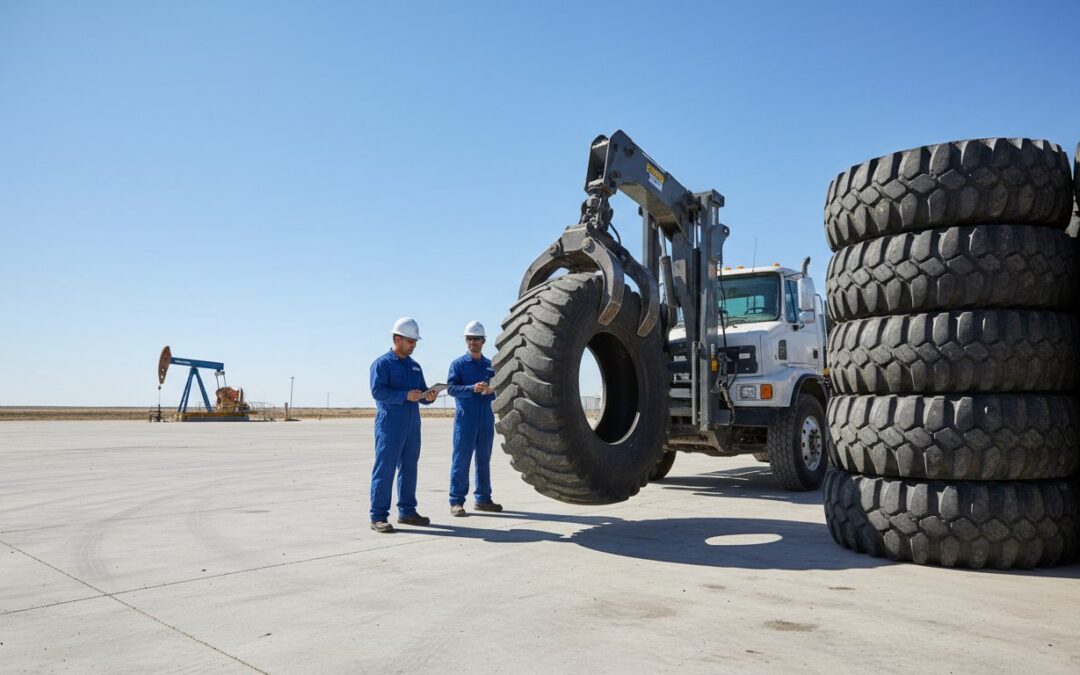
The TCEQ issued over $2.4 million in penalties for improper scrap tire management in 2025, with fines reaching as high as $25,000 per day for non-compliance. If you manage a fleet in the Permian Basin, you’ve likely realized that rental equipment tire disposal Midland has become a complex regulatory hurdle rather than a simple chore. It’s frustrating to watch specialized solid tires and rubber tracks take up valuable yard space simply because local landfills require them to be shredded or split before they’ll even consider accepting them.
We’re here to help you simplify this process and ensure your operations remain fully compliant with the latest Texas environmental laws. This 2026 guide explains how to efficiently manage specialized rubber waste while maintaining the strict manifest records required to protect your business from long-term liability. You’ll discover how to clear your yard of everything from OTR tires to scrap conveyor belts through a reliable collection schedule that meets all TCEQ registration and reporting standards.
Key Takeaways
- Learn why standard Midland landfills often reject OTR and solid-fill tires and how specialized processing solves this issue.
- Understand the critical role of TCEQ manifests in protecting your fleet from legal liability and significant environmental fines.
- Discover the most efficient way to organize your yard for rental equipment tire disposal Midland to ensure a fast, hassle-free pickup.
- Compare industrial rubber processing with general junk removal to see why specialized equipment is necessary for heavy rental fleet waste.
- Find out how to properly prepare scrap skid steer tracks and industrial hoses for collection to maintain a clear and safe workspace.
What is Rental Equipment Tire Disposal and Why is it Unique?
Rental equipment tire disposal Midland isn’t just about hauling away old rubber. It’s a specialized logistics process for handling heavy duty materials that standard waste services won’t touch. Unlike household trash, industrial rubber requires specific processing to meet Texas environmental standards. This service involves the professional collection and legal management of end of life rubber components specifically found in rental fleets, ensuring that every piece of material is tracked from your yard to its final destination.
Most landfills in the Permian Basin won’t accept whole OTR or solid fill tires. These items are problematic for traditional disposal sites because they take up massive amounts of space and have a tendency to “float” to the surface of a landfill over time. To be accepted at a municipal site, these tires usually need to be quartered or shredded first. This is where the process of recycling waste tires becomes essential. It transforms a bulky liability into a manageable material that complies with local disposal rules.
Stockpiling these tires in the West Texas sun is also a significant risk. The intense heat of the Permian Basin can lead to tire fires that are nearly impossible to extinguish once they start. Additionally, stagnant water trapped inside large OTR tires creates an ideal breeding ground for pests. This quickly draws the attention of local health inspectors and the TCEQ. Keeping your yard clear through regular rental equipment tire disposal Midland isn’t just about aesthetics; it’s a vital safety and compliance measure for your business.
Common Rental Tire Types We Handle
Rental yards deal with a variety of specialized rubber that requires expert handling. We focus on the collection of solid rubber tires from forklifts and scissor lifts, which are incredibly heavy and difficult to move without specialized trailers. We also manage massive OTR tires from earthmovers and pneumatic tires from telehandlers. Foam filled tires from boom lifts are another common item we collect. These are particularly heavy due to their internal density, making them a challenge for standard hauling equipment.
Beyond Tires: Skid Steer Tracks and Industrial Rubber
Modern rental fleets rely heavily on tracked machines, but disposing of the tracks is a major hurdle. Scrap skid steer tracks are reinforced with internal steel cables. This makes them a nightmare for standard junk haulers because they can’t be compressed or easily cut. We provide a dedicated solution for these tracks, along with scrap conveyor belts and industrial hoses. Managing all these materials through a single industrial rubber collection service keeps your yard clear and ensures your waste follows a compliant path.
Navigating Texas Regulations for Scrap Tire Disposal
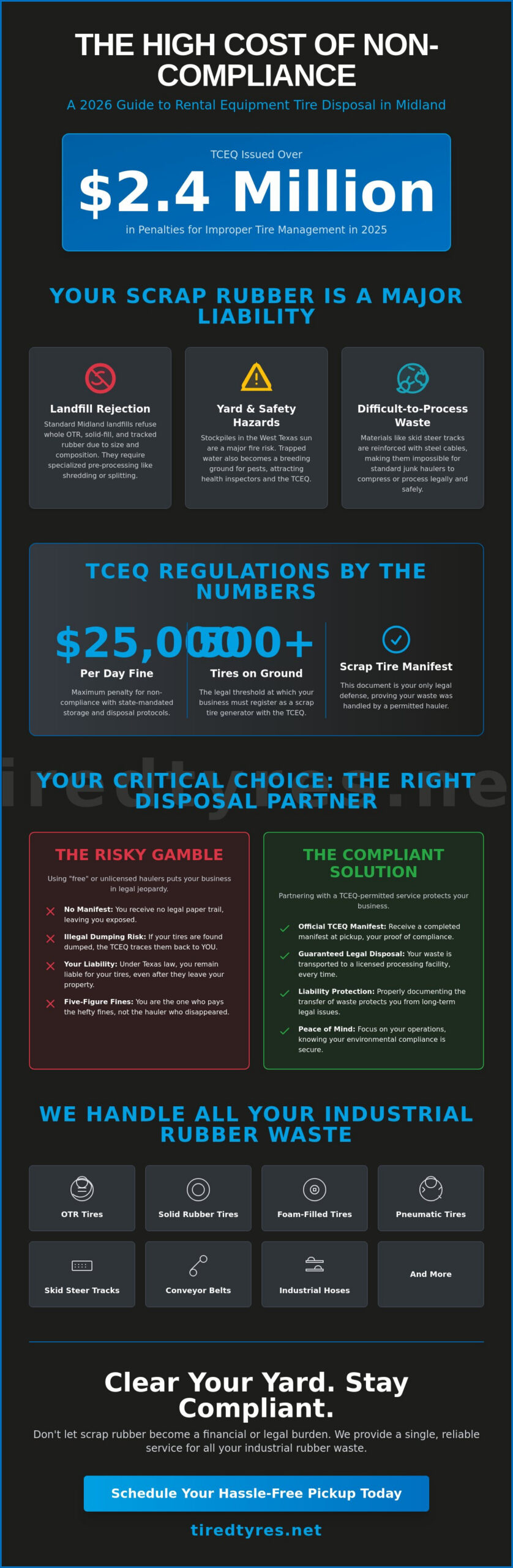
Managing rental equipment tire disposal Midland requires more than just a truck and a trailer. You’re dealing with the Texas Commission on Environmental Quality (TCEQ), an agency that’s actively increasing its oversight of industrial waste. In 2025 alone, the TCEQ issued over $2.4 million in penalties for improper scrap tire management. These aren’t just slap-on-the-wrist warnings. Fines can reach as high as $25,000 per day for businesses that fail to follow state-mandated storage and disposal protocols. If your yard accumulates more than 500 scrap tires on the ground or 2,000 in locked containers, you’re legally required to register as a generator.
The core of Texas compliance is the scrap tire manifest. This document acts as a legal paper trail, proving that your industrial rubber was handed off to a permitted hauler and delivered to a licensed processing facility. Many fleet managers are tempted by “free” disposal offers from independent haulers. This is a dangerous gamble. Under Texas law, you remain liable for those tires even after they leave your property. If an unlicensed hauler dumps your skid steer tracks or OTR tires in a West Texas ravine, the TCEQ will trace them back to your business. You’ll be the one paying the five-figure fine, not the hauler who disappeared. Working with a professional scrap tire collection service ensures your paperwork is in order before an inspector ever sets foot in your yard.
The Legal Risk of Improper Disposal
Illegal stockpiling is a major target for enforcement in the Midland and Odessa area. Even a small stack of five unregistered OTR tires can trigger significant enforcement actions. To protect your business, you must verify that your hauler is properly permitted. Ask to see their TCEQ registration before they load a single tire. Don’t take their word for it. A legitimate partner will provide a completed manifest at the time of pickup, which is your only defense if a disposal site is later investigated for non-compliance.
TCEQ Compliance and Documentation
As of 2026, the TCEQ has updated its reporting requirements to streamline the oversight process. Registered scrap tire generators must now submit an annual operational status report by December 31st for the previous calendar year. This is a mandatory requirement for permits that don’t have a set expiration date. Your manifests must clearly state the number and type of tires collected, and you should keep these records on file for at least three years. For new registrations or permit updates, the agency now prefers applications to be submitted via email to tires@tceq.texas.gov to ensure faster review times. Staying ahead of these deadlines keeps your rental yard running smoothly and avoids the stress of last-minute filings.
Specialized Disposal vs. General Junk Removal
Many rental fleet managers initially turn to general junk removal services for a quick cleanup. It’s a common mistake that often leads to logistical headaches. Generalists are equipped for old furniture and household debris, not the high-density weight of industrial rubber. Relying on them for rental equipment tire disposal Midland usually results in overloaded trucks and safety risks that your business shouldn’t have to carry. When a truck’s suspension is pushed to its limit by a heavy load, the chance of an accident on your property increases significantly.
The fundamental difference lies in weight limits and processing requirements. A standard junk truck’s lift gate isn’t built for a 2,000 pound OTR tire. If their equipment fails while loading, you’re looking at a major liability issue. Specialized haulers use reinforced trailers specifically designed for bulk collection of solid tires and heavy tracks. There’s also the matter of where the waste goes. While household trash is simply dumped, industrial rubber must be shredded or split to meet Texas landfill regulations. A generalist who doesn’t understand these rules might get rejected at the facility, leaving you with a pile of rubber that was supposed to be gone hours ago.
Reliability is another critical factor for your operations. General junk haulers often prioritize small residential jobs because they’re easier and require less specialized labor. In contrast, an industrial partner understands the urgency of a rental yard turnaround. You need that yard space cleared before the next fleet of machines arrives from a jobsite. Choosing a specialist ensures that your schedule is respected and the job is finished correctly the first time without multiple trips or unexpected delays.
Equipment Requirements for Heavy Loads
Moving heavy industrial rubber requires more than just muscle. It takes specialized trailers and loaders that can handle bulk OTR and agricultural tire collection safely. Untrained laborers often face injury when trying to manhandle solid rubber tires or reinforced tracks. These items are awkward, heavy, and can have sharp steel wires protruding from the casing. Using a team that understands Midland logistics ensures your pickup happens without disrupting your yard’s workflow or endangering your staff.
The Value of an Industrial Partnership
Setting up a scheduled tire pickup in Odessa or Midland allows you to focus on your core business. This proactive partnership helps maintain a clean, professional appearance for your rental yard while significantly reducing on-site hazards. Stagnant water in large tires is a notorious breeding ground for mosquitoes, and large stockpiles are a major fire risk in the Permian Basin heat. By choosing professional disposal, you’re not just throwing things away; you’re protecting your business’s reputation and its environmental footprint.
How to Prepare Your Rental Fleet Tires for Pickup
Efficiency in a rental yard depends on clear workflows and organized inventory. When it’s time for rental equipment tire disposal Midland, proper preparation ensures our hauling teams can load and depart quickly without disrupting your daily operations. A disorganized pile of mixed rubber waste creates safety hazards and slows down the manifest process. By taking a few proactive steps, you can streamline the collection and ensure your documentation is accurate from the start.
Start by verifying your total count and the specific types of rubber waste ready for collection. Midland jobsites are notorious for heavy mud and caliche buildup. We ask that you clear excessive debris from the tires and tracks before the hauler arrives. This isn’t just about cleanliness; excessive mud adds significant weight and can interfere with the shredding equipment at the processing facility. Once your inventory is clean and counted, designate a single point of contact on-site to review and sign the scrap tire manifest. This finalizes the legal transfer of responsibility and keeps your business compliant with 2026 TCEQ standards.
Sorting and Stacking Best Practices
Organizing your waste by category is the most effective way to speed up the loading process. We recommend separating rims from the rubber. Most disposal facilities only accept the tire itself, and leaving rims attached can lead to rejected loads or additional processing delays. Stack your large OTR tires on their sides or under a cover to prevent water from pooling inside the casings. This is a critical step to avoid mosquito breeding and stay ahead of local health inspections. Keep your scrap solid tires and foam filled tires in a separate pile from pneumatic ones. Because these items are significantly heavier, they require different handling techniques and placement on our trailers.
Site Access for Large Hauling Vehicles
Heavy duty hauling equipment requires ample room to maneuver safely. Ensure there’s a clear, unobstructed path for a semi-trailer to reach your collection point. In tight rental yard spaces, this might mean moving a few machines or clearing out a corner of the lot. Safety is our priority, especially when loading reinforced scrap skid steer tracks that can have sharp internal steel wires exposed. We often suggest coordinating pickups during low traffic hours in Midland or Lubbock to minimize interference with your customers. If your yard has specific entry protocols or safety requirements, please let our team know in advance. To get your yard cleared and your manifest filed, you can schedule your industrial rubber pickup with our experienced team today.
The Tired Tyres Advantage for Midland Rental Yards
Choosing a partner for rental equipment tire disposal Midland comes down to local accountability and specialized capability. National junk removal franchises often rely on sub-contracted labor and standard box trucks that aren’t equipped for the high-density weight of industrial rubber. We’ve built our service specifically for the Permian Basin, focusing on the heavy-duty needs of rental yards and oilfield service companies. We’re a locally owned and operated team that understands the logistical challenges of West Texas, from the intense summer heat to the specific requirements of local disposal facilities.
Our team brings deep expertise in tire disposal in Midland, TX for industrial clients who can’t afford compliance gaps. We don’t just take the easy loads. We provide comprehensive collection for all your scrap rubber waste, including massive OTR tires, reinforced skid steer tracks, and scrap conveyor belts. Whether you’re clearing out a single row of forklift tires or an entire yard of agricultural rubber, we provide the specialized trailers and experienced loaders needed to get the job done safely. Every pickup is backed by our commitment to ethical, TCEQ-compliant recycling practices that protect your business from future liability.
Serving the Permian Basin and Beyond
We’ve designed our routes to provide rapid response times for clients in Midland, Odessa, and Lubbock. We understand the unique pressure of the West Texas oil and construction industries. When a jobsite wraps up and equipment returns to the yard, you need that space cleared immediately to maintain your operational flow. Our role in keeping the South Plains clean and compliant goes beyond simple hauling. We act as a professional extension of your fleet management team, ensuring that your scrap rubber waste is documented and processed according to the latest 2026 state standards. This local focus allows us to navigate Midland’s industrial zones and Lubbock’s logistics hubs with a level of precision that national generalists simply can’t match.
Ready to Clear Your Yard?
Getting your rental equipment tire disposal Midland back on track is a straightforward process. It starts with a simple call or message to our team. We’ll provide a fast, transparent quote based on your specific inventory of OTR tires, tracks, or industrial hoses. Once you’re on our schedule, we handle the heavy lifting and ensure all manifest documentation is finalized on-site before we leave your property. You’ll walk away with a cleared yard and the peace of mind that your waste was handled by a permitted professional. If you’re ready to clear out your scrap rubber and secure your compliance records, you can contact Tired Tyres for a specialized pickup quote today.
Streamline Your Fleet Compliance Today
Managing a rental yard in the Permian Basin is demanding enough without the added stress of waste compliance. By choosing a specialized partner, you ensure that heavy OTR tires and solid rubber tracks are handled with the right equipment. We’ve served Midland, Odessa, and Lubbock since our inception, providing the reliable service industrial fleets need to stay operational. Proper rental equipment tire disposal Midland is ultimately about protecting your business from significant daily fines and long term liability.
We provide the TCEQ-compliant manifest documentation you need for your records, proving that every scrap hose and skid steer track was disposed of legally. Don’t let old rubber clutter your workspace or create unnecessary risks for your team. Our specialized trailers are ready to handle your heaviest loads, from foam-filled tires to massive earthmover casings. You can focus on serving your customers while we take care of the heavy lifting and the paperwork. We look forward to helping you maintain a clean and compliant yard.
Request a Bulk Tire Pickup Quote for Your Rental Fleet
Frequently Asked Questions
Do you dispose of solid-fill tires from rental equipment in Midland?
Yes, we provide collection services for scrap solid tires and foam-filled tires commonly found on forklifts and scissor lifts. These heavy items require specialized handling due to their high density and weight. We manage the entire loading and transportation process, ensuring these materials are removed from your yard and sent for proper industrial processing. This service helps rental managers maintain a safe environment while adhering to 2026 Texas waste management protocols.
Can you pick up scrap skid steer tracks from my construction site?
We pick up scrap skid steer tracks directly from your yard or jobsite. These reinforced rubber tracks are difficult for standard junk haulers to move because of their internal steel cables and sheer weight. Our team uses the right equipment to load these tracks safely and efficiently. By choosing our specialized collection, you avoid the safety risks and logistical delays associated with using general waste services that lack industrial experience.
How much does it cost to dispose of OTR tires in West Texas?
Disposal costs for OTR tires depend on the tire’s weight and the total volume of your pickup. Because industrial tires vary significantly in size, we offer custom quotes rather than flat rates. This ensures your business pays a fair price based on the actual rubber being removed from your fleet. Contact us with your specific tire counts and sizes to receive an accurate estimate for your West Texas operations.
Are you a TCEQ-permitted tire hauler for the Permian Basin?
We are a professional collection service that ensures every pickup is handled by state-permitted haulers in full compliance with Texas law. Staying compliant with the Texas Commission on Environmental Quality (TCEQ) is our top priority. We manage the logistics to ensure your rental equipment tire disposal Midland meets all current registration and transportation requirements. This focus on compliance protects your rental yard from the high fines associated with improper scrap tire management.
Do you provide the required scrap tire manifests for my business records?
Yes, we provide the necessary scrap tire manifests for your permanent business records at the time of collection. Texas law requires generators to keep these documents for at least three years to prove legal disposal. We finalize this paperwork on-site during the pickup, giving you immediate proof of compliance. These manifests are your primary defense during a TCEQ inspection and are vital for your mandatory annual operational status reporting.
What happens to the tires once they are picked up from my Midland yard?
Collected tires are transported to licensed processing facilities where they are typically shredded or split. This is a legal requirement in Texas for any tires destined for a permitted landfill. Processing the rubber also allows it to be repurposed for new industrial products or civil engineering projects. By ensuring your tires are processed correctly, we help reduce the environmental footprint of your rental fleet while following all state disposal mandates.
Can I drop off my rental equipment tires at your facility?
We do not offer a public drop-off location for scrap tires. Our business model is built around on-site collection to provide maximum convenience for rental yards and construction sites. We bring the trailers and loading equipment to you, which eliminates the need for you to tie up your own staff or equipment for hauling waste. This approach keeps your team focused on their primary rental tasks while we handle the logistics.
How quickly can you schedule a bulk pickup in Odessa or Lubbock?
We coordinate bulk pickups in Odessa and Lubbock based on our current regional routes and equipment availability. Our goal is to provide a reliable schedule that fits your yard’s turnaround needs. When you call for a quote, we will discuss the next available window for your specific area. Providing an accurate count of your OTR tires and tracks helps us plan the most efficient pickup possible for your fleet.