
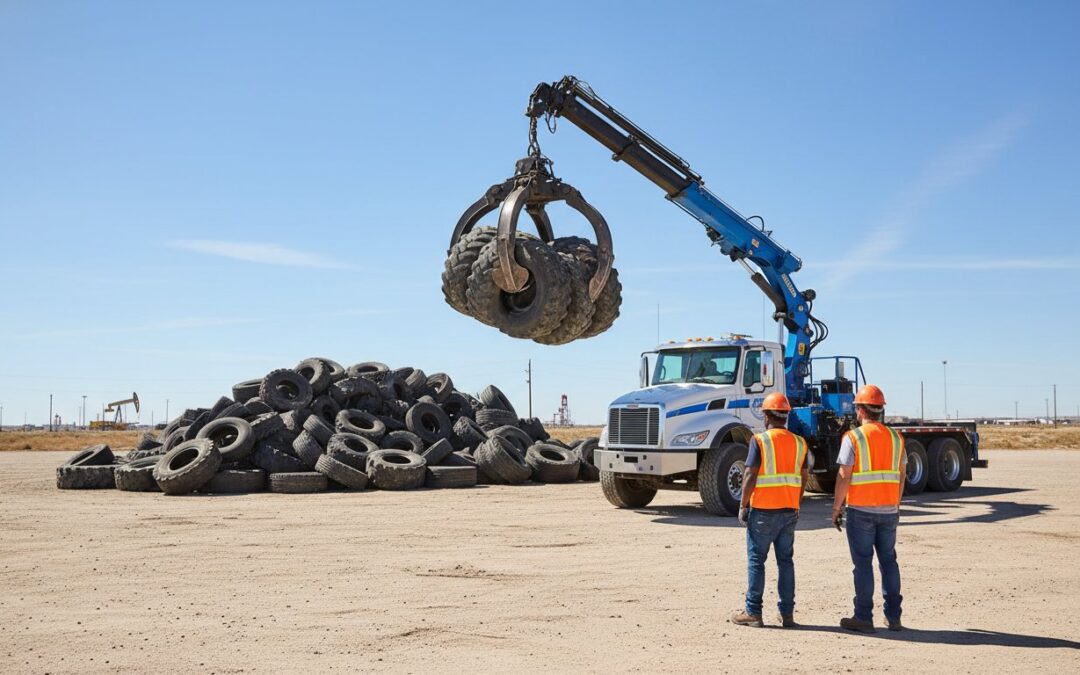
Storing just five unregistered off-the-road tires on your property can trigger TCEQ fines exceeding $25,000. In 2025 alone, the state issued over $2.4 million in penalties for improper scrap tire management, and Ector County is now using satellite imaging to spot non-compliant sites. It’s frustrating to watch a waste pile turn into a massive legal liability, especially when local landfills no longer accept bulk commercial loads. If you’re looking for reliable tire pile cleanup for businesses Odessa, you need a solution that prioritizes both physical clearing and legal protection.
You shouldn’t have to worry about surprise inspections or the health risks of mosquito-borne illnesses on your site. This 2026 guide explains how to efficiently clear your property while maintaining strict TCEQ compliance. We’ll walk through the mandatory manifest system, the latest digital reporting requirements, and the specific steps to ensure your business is fully protected from $10,000-per-day penalties. You’ll learn how to transform a hazardous stockpile into a clean, safe, and fully documented commercial property.
In This Guide:
Avoid TCEQ fines exceeding $25,000 by understanding the 2026 storage thresholds for unregistered scrap tires on your property. This guide simplifies the process of tire pile cleanup for businesses Odessa, ensuring your commercial operations remain compliant with state and local environmental regulations. You’ll learn how to use the mandatory manifest system to track every load from your site to a permitted facility, which is essential for your annual reporting and legal protection. We also detail the logistics of clearing heavy industrial rubber, including OTR tires, semi-truck tires, and scrap conveyor belts. By following this professional roadmap, you’ll eliminate the extreme fire risks and health hazards associated with unmanaged stockpiles while securing the legal documentation needed to protect your business from $10,000-per-day liabilities.
The Growing Challenge of Tire Piles for Odessa Businesses
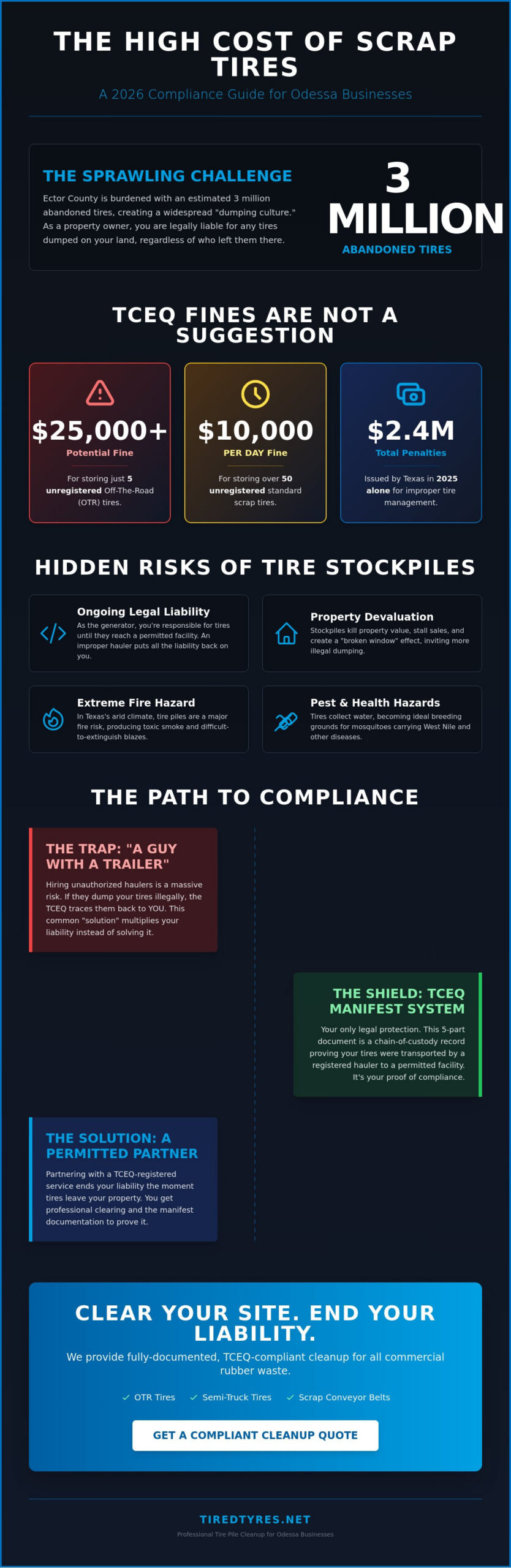
In a commercial context, a tire pile is any accumulation of scrap rubber that exceeds the storage limits set by the state. In Odessa, these piles often consist of heavy-duty OTR tires, semi-truck casings, and agricultural rubber used in Permian Basin operations. This isn’t just a clutter issue; it’s a significant environmental hurdle. Ector County currently struggles with an estimated 3 million abandoned tires scattered across the landscape. This massive volume creates a “dumping culture” where remote business properties are viewed as easy targets for those looking to avoid disposal fees.
If a pile appears on your lot, the law doesn’t care who put it there. As the property owner, you’re the one liable for the cleanup costs and the potential fines. Professional tire pile cleanup for businesses Odessa is the only way to clear these sites while staying on the right side of local enforcement. These stockpiles are more than just eyesores. They are breeding grounds for pests and represent a severe fire hazard in our arid climate. When you let tires sit, you aren’t just storing waste; you’re hosting a liability that threatens your property value and your standing with the community.
Why Odessa Businesses Face Unique Disposal Challenges
The scale of industrial activity in West Texas creates a unique waste stream. Commercial oilfield traffic generates a constant flow of scrap semi-truck tires and massive OTR tires that require specialized equipment to haul. Because many Odessa businesses operate on large, often unfenced acreage, they attract illegal dumpers who want to avoid disposal fees under the cover of night. It’s important to understand that municipal residential services aren’t equipped to handle these loads. Businesses must seek out commercial solutions that can manage heavy industrial rubber, including scrap conveyor belts and solid tires, to ensure proper Tire recycling processes are followed.
The True Cost of Ignoring a Tire Stockpile
Leaving a stockpile untouched is a gamble with your property’s value. In the West Texas real estate market, commercial lease attractiveness depends on a clean environmental record. A tire pile can stall a sale or lead to lower property appraisals during a refinance. There’s also a psychological element known as the “broken window” theory. If a passerby sees a few tires left on your property, they assume the site is unmanaged, which quickly invites more dumping. Local government agencies in Odessa treat these sites as public nuisances, and they will issue citations to the property owner regardless of who originally discarded the tires.
Texas Regulations and Legal Compliance for Commercial Tire Disposal
Compliance in Texas isn’t just a suggestion; it’s a financial necessity. The Texas Commission on Environmental Quality (TCEQ) governs scrap tire management under Title 30, Chapter 328 of the Administrative Code. For Odessa businesses, the threshold for mandatory registration is surprisingly low. If you store more than 500 used or scrap tires on the ground, or more than 2,000 in enclosed containers, you must register as a storage site. Failing to do so opens your business to massive liabilities. Storing even 50 unregistered scrap tires can result in fines of $10,000 per day. For larger industrial rubber like OTR tires, penalties can exceed $25,000 for just five units.
Hiring a “guy with a trailer” might seem like a cost-saving move, but it’s a trap for business owners. In Texas, the original generator of the waste remains legally responsible for those tires until they reach a permitted processing facility. If an unauthorized hauler dumps your tires in a West Texas arroyo, the TCEQ can trace them back to your property. You’ll face the cleanup costs and the legal fallout. A professional service provides the manifest documentation that proves you’ve followed the law. If you need to clear a site quickly, choosing a permitted tire collection partner is the only way to guarantee your liability ends when the truck leaves your lot.
Understanding the TCEQ Manifest System
The five-part manifest is your ultimate defense during a state audit. This document tracks every tire from the point of generation to the final disposal site. When a hauler arrives, they must provide a manifest that includes their TCEQ registration number and an accurate count of the tires being removed. Both the business owner and the hauler sign the document. Once the tires reach a permitted facility, the processor signs off, and a completed copy is returned to you. Odessa businesses must keep these records on-site for at least three years to satisfy TCEQ inspectors.
Avoiding Illegal Dumping Fines in Ector County
Local enforcement in Ector County has become much more aggressive. In 2025, the state issued over $2.4 million in penalties for improper scrap tire management. These aren’t just empty threats; satellite imaging and frequent site inspections are now standard practice. Understanding the latest Texas tire disposal regulations helps you navigate these risks. By maintaining a clean manifest trail and only using registered transporters, you insulate your business from the “chain of custody” lawsuits that follow illegal dumping incidents. Proper tire pile cleanup for businesses Odessa ensures that your operational history remains spotless, protecting your commercial reputation and your bottom line.
The Logistics of Large-Scale Tire Pile Remediation in Ector County
Remediation is more than just loading a truck; it’s a logistical operation that depends on the composition of the waste. In Ector County, business properties rarely host simple piles of car tires. Instead, they are often filled with semi-truck tires, agricultural rubber, and massive OTR units. A successful tire pile cleanup for businesses Odessa starts with an accurate assessment of these types. Knowing the ratio of passenger tires to industrial rubber allows for better planning of equipment and labor. If the pile includes OTR tires, standard trailers won’t suffice. You’ll need heavy-duty loaders and specialized transport to move these massive items safely.
Businesses with high-volume operations often benefit from a scheduled collection cycle. Rather than waiting for a pile to become a regulatory hazard, regular pickups keep the property clear and the manifest trail current. This proactive approach prevents the “broken window” effect where a small stack of rubber invites illegal dumping from third parties. For many West Texas companies, managing scrap rubber is a routine part of facility maintenance. Using a structured schedule ensures that you never cross the TCEQ storage thresholds that trigger mandatory registration.
Handling OTR and Industrial Rubber Waste
Standard waste management companies typically lack the permits or equipment to handle industrial scrap. This includes scrap skid steer tracks, heavy-duty hoses, and solid rubber tires. These items are dense and difficult to process. Scrap conveyor belt collection, for instance, requires specialized loading techniques because of the material’s weight and rigidity. If your site contains these industrial materials, you must ensure your collection partner is equipped to haul them. Attempting to mix industrial rubber with standard waste often leads to rejected loads at the facility and increased costs for the property owner.
Site Access and Preparation for Cleanup
Preparing your site before the trucks arrive can streamline the remediation process. Clear any debris or scrap metal that might obstruct heavy equipment. In the unpaved lots common across Odessa, ensuring a stable path for trailers is essential. If a truck gets stuck, the delay adds to the project timeline. Sorting your inventory into categories, such as passenger tires, semi-truck tires, and OTR units, helps optimize the loading sequence. During the summer months, plan for early morning loading to protect workers from the intense West Texas heat. For businesses dealing with complex piles, partnering with an experienced collection service ensures the logistics are handled professionally from start to finish.
Mitigating Liability: Fire Risks and Health Hazards of Unmanaged Stockpiles
Unmanaged stockpiles aren’t just a legal risk; they’re a physical threat to your facility. In the arid West Texas climate, the danger of a tire fire is a constant concern for property owners. These fires are notoriously difficult to extinguish because the shape of a tire creates air pockets that fuel the flames from within. Once a pile ignites, it doesn’t just burn. It melts. This creates a chemical reaction that releases toxic pyrolytic oil, which can seep into the soil and contaminate groundwater. Proactive tire pile cleanup for businesses Odessa is the most effective way to eliminate this risk before a disaster occurs.
The environmental fallout from a fire often leads to massive remediation costs that far exceed the price of a standard cleanup. Local authorities and the TCEQ take air quality violations seriously. If a fire starts on your property, you’re the one held responsible for the cleanup of the hazardous residue. By removing these piles now, you’re essentially buying an insurance policy for your business’s future. It’s much simpler to manage a controlled collection of semi-truck or OTR tires than it is to deal with the aftermath of an industrial fire.
Tire Fires: A Business Nightmare
A burning tire pile is a logistical and financial catastrophe. The intense heat can damage nearby structures and equipment, while the thick, black smoke attracts immediate attention from regulators. Beyond the visible fire, the toxic oil produced can lead to long-term soil contamination. This often triggers mandatory environmental assessments and expensive soil removal. If you’re dealing with significant waste tire problems, the time to act is before the temperature spikes. For immediate assistance with site remediation, you can schedule a professional collection today to secure your property.
Public Health and Pest Control
Tires are the perfect incubator for mosquitoes. Their curved shape traps rainwater and provides a shaded, temperature-stable environment for larvae to thrive. In Odessa, this creates a year-round breeding habitat for species that carry the West Nile virus. Because the water inside a tire is protected from the wind and sun, it doesn’t evaporate quickly, even in our dry climate. Health department inspections often follow reports of high mosquito activity, and an unmanaged tire pile is the first place they’ll look. Removing these piles directly improves the health and safety of the entire Odessa community by eliminating these biological hazards.
Partnering with Tired Tyres for Efficient Business Cleanup Solutions
Our team is dedicated to keeping the Permian Basin clean and compliant. We understand that a tire pile isn’t just waste; it’s a hurdle for your business operations. Our mission is to provide a straightforward, professional solution that removes the burden of scrap rubber from your shoulders. We don’t just haul tires away. We ensure that every step of the process meets the high standards required by West Texas regulators. By choosing a partner that knows the local landscape, you’re investing in the long-term safety and value of your commercial property.
We provide specialized collection for a wide variety of industrial rubber. Our services include the removal of passenger and light truck tires, semi-truck tires, and agricultural casings. For heavier oilfield needs, we handle OTR tire collection and scrap skid steer tracks. We also clear scrap hoses, solid tires, and scrap conveyor belts that standard waste haulers often refuse. This comprehensive approach ensures that your entire site is cleared in one coordinated effort. You won’t have to coordinate with multiple vendors to handle different types of rubber waste.
Why Choose a Local Permitted Hauler?
Choosing a local partner means working with people who understand the specific challenges of Odessa. We have deep expertise in reliable tire disposal across Ector County. This local focus allows us to provide transparent pricing and efficient logistics tailored to our unique climate and terrain. Most importantly, we provide the full manifest documentation for every pickup. This paperwork is your legal proof of compliance. It ensures your business is protected during any future TCEQ audits or property inspections. Supporting a local permitted hauler also keeps your disposal dollars within the West Texas economy.
Sustainability is a core part of our operation. Once we collect your scrap tires and rubber, they enter a specialized recycling stream. Over 90% of the material we collect is diverted from landfills and repurposed. Your old semi-truck tires and conveyor belts are processed into useful products like rubberized asphalt for Texas roads or durable mulch for various industrial applications. This process turns a significant liability into a resource, helping to reduce the overall environmental footprint of the Permian Basin’s industrial sector.
Getting Started: Your Tire Cleanup Plan
Getting your property cleared starts with a direct assessment. We’ll help you estimate your tire count and identify the specific rubber types on your site. This ensures we bring the right loaders and trailers for the job. We offer flexible scheduling to ensure the cleanup happens at a time that doesn’t disrupt your daily business flow. Once the loading is complete, we perform a final site walkthrough with you. We’ll sign the mandatory manifests on-site, providing you with immediate records for your compliance files. It’s a clean, professional process designed for busy commercial owners.
Ready to clear your property and eliminate your liability? Contact Tired Tyres for an Odessa tire pile cleanup quote today. We’ll help you schedule a pickup and get your commercial site back to its best condition.
Secure Your Property and Ensure Compliance Today
Proper waste management is essential for protecting your commercial interests in West Texas. Unmanaged stockpiles attract illegal dumping and create severe fire risks in our arid climate. Maintaining a clear manifest trail is your only defense against significant TCEQ penalties. Using a TCEQ permitted hauler ensures that your liability ends the moment the tires leave your site. It’s the most reliable way to maintain a safe and professional business environment.
Professional tire pile cleanup for businesses Odessa provides a comprehensive solution for even the toughest industrial waste. We use specialized OTR and industrial rubber equipment while maintaining a recycling rate of over 90%. This approach keeps the Permian Basin clean and protects your business from $10,000-per-day fines. You can transform your property back into a safe, compliant, and productive commercial space with a single coordinated effort.
Request a Commercial Tire Pile Cleanup Quote in Odessa
Your property’s safety and your business’s reputation are worth the investment. It’s time to get your site cleared and your liability permanently resolved.
Frequently Asked Questions
Is it illegal to have a tire pile on my business property in Odessa?
It’s illegal to exceed state storage thresholds without a TCEQ registration. In Odessa, businesses can’t store more than 500 tires on the ground or 2,000 in lockable containers without registering as a storage site. Storing even 50 unregistered scrap tires can trigger fines of $10,000 per day. Local Ector County ordinances also prohibit these stockpiles because they create fire hazards and pest breeding grounds.
What is a tire manifest and why does my business need one?
A tire manifest is a mandatory five-part legal document that tracks scrap tires from your property to a permitted processing facility. This document includes the hauler’s TCEQ registration number and the exact tire count. It’s your only proof of legal disposal. Without a signed manifest, your business remains legally liable for those tires even if an unauthorized hauler dumps them elsewhere in West Texas.
Can you pick up large OTR tires from oilfield sites?
Yes, we provide specialized OTR (Off-the-Road) tire collection specifically for oilfield and industrial operations. These massive units require heavy-duty loaders and specialized transport equipment that standard waste haulers don’t possess. We manage the entire logistics process for heavy industrial rubber, ensuring your remote site remains clear and compliant with state environmental regulations without requiring you to provide the loading equipment.
How much does tire pile cleanup cost for businesses in Ector County?
Costs vary based on the total volume, tire types, and site accessibility. While we don’t provide flat rates, the ratio of passenger tires to heavy OTR units and the presence of industrial rubber like conveyor belts affect the final quote. We provide transparent pricing based on your specific load. For a precise estimate, we recommend a consultation to assess the stockpile and determine the necessary equipment.
Do I need to sort the tires before you arrive for pickup?
Sorting isn’t required, but it can significantly speed up the loading process. Grouping passenger tires, semi-truck tires, and OTR units helps us optimize trailer space and logistics. If you’re managing a complex tire pile cleanup for businesses Odessa, clearing away metal debris and ensuring a stable, unpaved path for our trucks is the most helpful preparation you can provide for a fast removal.
What happens to the tires after they are removed from my property?
Most tires are transported to permitted facilities where they enter the recycling stream. We maintain a recycling rate of over 90%, turning scrap rubber into useful products like rubberized asphalt and industrial mulch. This process diverts waste from Odessa landfills, which no longer accept bulk commercial loads. Your waste becomes a resource while your property is restored to a safe, clean, and compliant condition.
Can you remove industrial rubber like conveyor belts and skid steer tracks?
Yes, our collection services include scrap skid steer tracks, solid tires, and conveyor belts. These items are often rejected by municipal waste services because of their weight and density. We also collect scrap hoses and other industrial rubber waste common in Permian Basin operations. Our specialized equipment is designed to handle these heavy materials safely, providing a single professional solution for all your rubber disposal needs.
How quickly can you clear a large stockpile of tires?
The timeline depends on the total count and the types of equipment needed for the load. While small stockpiles might be cleared in a single visit, larger remediations often require multiple loads. we coordinate our scheduling to minimize disruption to your daily business operations. Our goal is to complete the removal as efficiently as possible while ensuring all mandatory manifest documentation is correctly signed for your records.