
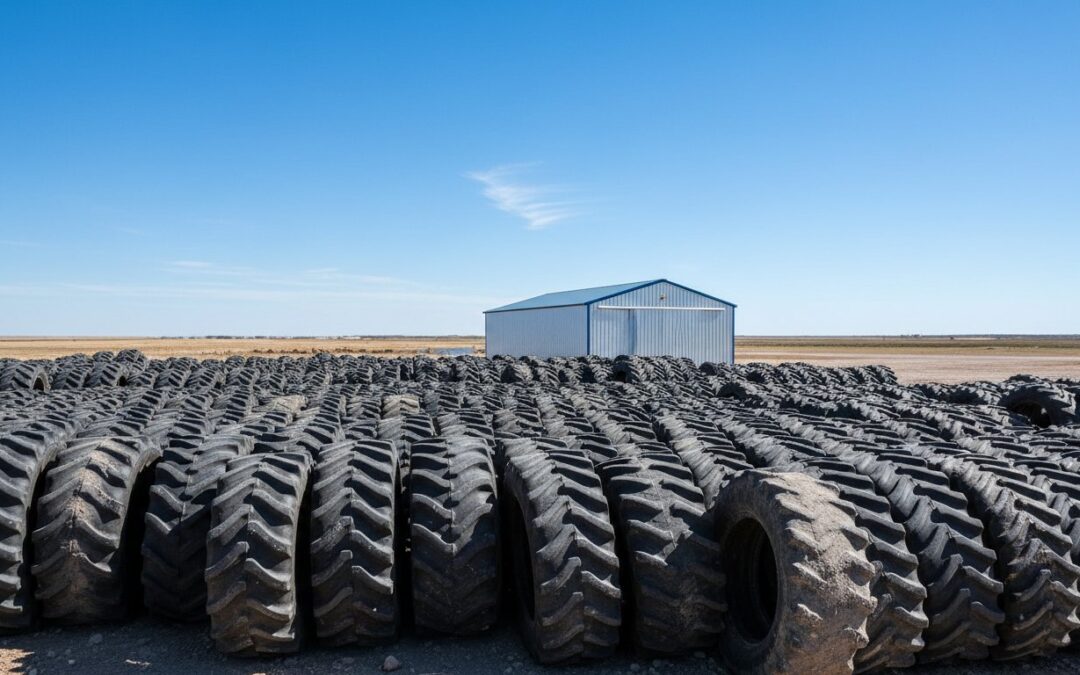
What if that 3,000-pound rubber track sitting behind your barn isn’t just an eyesore, but a liability waiting for a TCEQ inspector to notice? You’ve likely realized that managing agricultural equipment track recycling Lubbock is nearly impossible with standard trailers or local waste services. It’s frustrating to watch valuable acreage disappear under a pile of worn-out rubber that standard landfills won’t even accept. We understand that your priority is running a productive farm, not managing a growing junkyard that risks heavy state fines.
This 2026 guide simplifies the entire disposal process to keep your operation running smoothly. You’ll learn how to legally dispose of heavy-duty tracks and tires while staying 100% compliant with Texas environmental regulations. We’ll show you how to obtain the necessary disposal manifests and schedule a hassle-free pickup that clears your job site in a single afternoon. From understanding the latest state requirements to securing proof of legal recycling, we’ve got the logistics covered so you can focus on the next harvest.
Key Takeaways
- Understand why standard Lubbock landfills reject high-density rubber and how to maintain full TCEQ compliance during disposal.
- Streamline your farm management by mastering the logistics of agricultural equipment track recycling Lubbock services, from on-site collection to final processing.
- Identify the critical pricing differences between weight-based rubber track disposal and unit-based OTR tire handling to accurately estimate your costs.
- Learn how to properly audit your inventory and verify hauler permits before scheduling a bulk pickup in Lubbock County.
- Discover how to avoid hidden “oversize” fees by partnering with transparent disposal experts who specialize in West Texas agricultural waste.
The Challenge of Disposing of Agricultural Rubber Tracks in Lubbock
Agricultural equipment track recycling Lubbock is a specialized waste management process. It deals with high-density rubber compounds that standard disposal methods can’t handle. These tracks aren’t simple waste. They’re engineered components built to withstand the abrasive soils of the South Plains. Since the updated 2026 Texas waste regulations took effect, disposing of these items has become more complex. The Texas Commission on Environmental Quality (TCEQ) now mandates documented disposal paths for heavy industrial rubber to prevent illegal dumping in rural areas.
Lubbock municipal landfills often reject heavy-duty rubber tracks. They don’t compact like household waste. They tend to “float” to the surface of landfill cells over time. This ruins the integrity of the landfill’s cap. Because of their size and weight, these tracks require processing at specialized facilities. Understanding the tire recycling process is vital for understanding why these tracks need high-torque shredders and magnetic separators to remove internal steel reinforcements.
Why Rubber Tracks Aren’t Just “Large Tires”
The structural makeup of an agricultural track is far more complex than a standard tractor tire. These tracks use internal steel cables and metal drive lugs to handle high torque. This adds massive weight. A typical skid steer track weighs between 300 and 600 pounds. Combine harvester tracks can exceed 2,000 pounds. You can’t move these without heavy machinery. Specialized hauling is a requirement for Lubbock farms. Common equipment requiring this specialized recycling includes:
- Compact track loader (CTL) and skid steer treads
- High-clearance sprayer tracks
- Quad-track tractor treads
- Harvester and combine track systems
The Problem with Stockpiling Rubber on the Farm
Stockpiling old tracks behind the barn creates serious hazards. Fire is the biggest risk. Industrial rubber fires are notoriously hard to extinguish and release toxic smoke into the atmosphere. In 2025, Lubbock County reported three major field fires linked to discarded rubber. These tracks also collect stagnant water. This creates a perfect environment for mosquito breeding. With West Nile virus concerns in Texas, this is a public health issue. Abandoned tracks also hurt land health. They leach chemicals into the soil, which can negatively impact property values for Lubbock County landowners during future sales or appraisals.
Proper agricultural equipment track recycling Lubbock ensures these materials stay out of the dirt and get back into the supply chain. It’s about keeping the farm safe and staying compliant with the law. Professional recycling services take the burden off the producer and ensure the rubber is repurposed for things like playground mulch or rubberized asphalt.
How Heavy-Duty Ag Track Recycling Works in West Texas
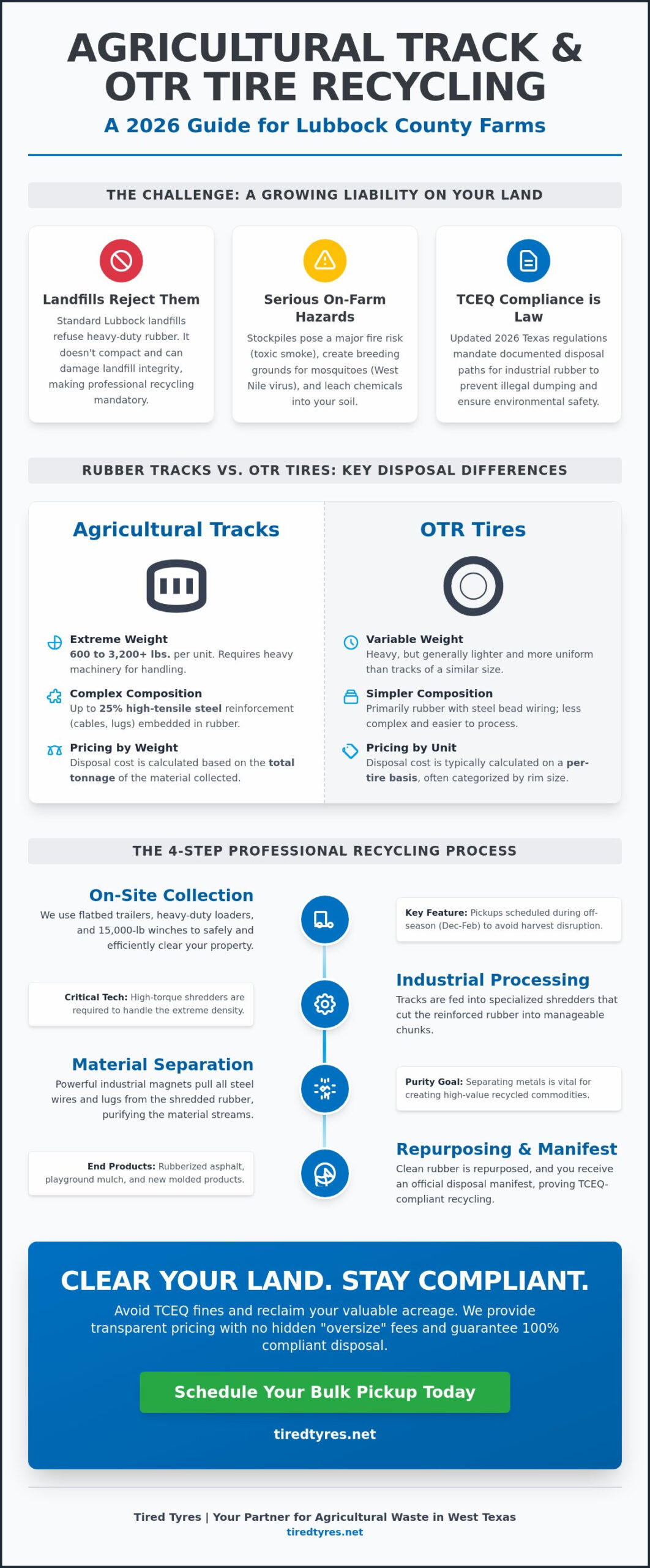
Agricultural equipment track recycling Lubbock relies on a streamlined logistical chain that begins directly at your farm or ranch. These heavy-duty tracks aren’t standard waste. A single combine or tractor track can weigh between 600 and 3,200 pounds. You can’t move these units with basic equipment. The process involves heavy lifting, specialized transport, and industrial-grade shredding to separate high-value materials from the reinforced rubber core.
Collection and Transportation Logistics
Tired Tyres manages the heavy lifting for bulk pickups across Lubbock and the surrounding South Plains counties. We utilize flatbed trailers and 15,000-pound capacity winches to secure spent OTR (Off-the-Road) rubber. Our team often uses heavy-duty loaders to stack tracks efficiently, maximizing every load to reduce the number of trips. We typically coordinate these pickups during the regional off-season, specifically between December and February. This timing ensures our transport trucks don’t interfere with your active planting or harvest windows. If you have a growing pile of rubber near your shop, you can schedule a bulk pickup to clear the space before the next season starts.
Processing and Material Recovery
Once the tracks arrive at a permitted processing facility, they enter a mechanical breakdown phase. Standard tire shredders can’t handle agricultural tracks because these components contain up to 25 percent high-tensile steel reinforcement by weight. Specialized high-torque shredders must first bite through the thick rubber exterior. After the initial pass, powerful industrial magnets pull the steel wire away from the rubber. This separation is a critical step in managing the environmental impacts of tires and tracks that would otherwise sit in a landfill for centuries.
The remaining rubber is processed into different grades of “crumb rubber.” Crumb rubber is the granular material produced by grinding scrap tracks into small, uniform particles that are cleaned and sized for secondary use.
The final stage of agricultural equipment track recycling Lubbock supports a local circular economy. The recovered steel goes to regional foundries for smelting. The rubber crumb returns to West Texas in the form of asphalt additives for highway projects, livestock mats, or porous pavement for local parks. It’s a practical system. Your old equipment parts become the foundation for new infrastructure. We take the burden of disposal off your hands and turn it into a resource for the community.
Rubber Tracks vs. OTR Tires: Disposal Differences You Need to Know
Lubbock producers often manage a diverse fleet of equipment, from articulated loaders to high-horsepower tracked tractors. Understanding the logistical gap between OTR (Off-the-Road) tires and rubber tracks is vital for your annual maintenance budget. While both materials are made of rubber, the disposal process for each follows a completely different set of rules and pricing models.
Most standard commercial tire disposal services operate on a unit-based fee. You pay a set amount per tire based on its size class. Agricultural tracks don’t fit this mold. Because of their massive size and irregular shapes, agricultural equipment track recycling Lubbock typically utilizes a weight-based pricing model. This ensures you pay for the actual volume of material being processed rather than a flat, often inflated, estimate.
OTR Tire Specifics for Lubbock Ranches
West Texas operations commonly run OTR tires in sizes like 23.5R25 or 26.5R25 on loaders and scrapers. These tires present a unique physical challenge. They often arrive mounted on heavy steel rims that require specialized hydraulic bead breakers for removal. You shouldn’t try to manage this with standard farm tools. It’s a safety risk that requires professional equipment.
Choosing a recycling center over a local landfill is a strategic business move. Texas Commission on Environmental Quality (TCEQ) regulations are strict regarding bulk waste. Recycling centers provide the necessary documentation to prove your ranch is compliant with state environmental laws. This paper trail is your best defense during an audit.
The Unique Complexity of Track Disposal
The primary reason tracks cost more to recycle than tires is their internal architecture. Unlike a standard tire that relies on fabric or light wire plies, an agricultural track contains a heavy, continuous steel cable core. Processing this requires high-torque industrial shredders. These machines must work significantly harder to tear the rubber away from the metal reinforcement.
The volume of waste is also staggering. Consider these points when comparing tracks to tires:
- A single high-clearance sprayer track can weigh 1,200 pounds.
- One large tractor track has the same rubber volume as approximately 22 semi-truck tires.
- Tracks require specialized transport; you can’t easily stack them like passenger tires.
To get an accurate quote for agricultural equipment track recycling Lubbock, you need a weight estimate. Don’t guess. Check the manufacturer’s specifications for your specific machine model. Most recyclers in the 806 area code will ask for the width and total length of the track to calculate the tonnage. Having this data ready ensures you get a fair, transparent price without any last-minute surprises at the scale.
Scheduling Your Bulk Agricultural Rubber Pickup in Lubbock County
Effective logistics are the backbone of a successful cleanup operation. Scheduling your pickup starts with a precise audit of your current inventory. Don’t just guess the numbers. Count every individual tire and identify the specific models of your rubber tracks. Heavy-duty tracks from machines like the Case IH Steiger or John Deere 9RX series can weigh between 600 and 3,000 pounds each. Providing these specific weights allows us to dispatch the correct trailer and loading equipment for your agricultural equipment track recycling Lubbock needs.
Before you finalize any booking, verify that the hauler holds a current Texas Commission on Environmental Quality (TCEQ) permit. This registration is mandatory for anyone transporting more than five scrap tires at once. Working with uncertified haulers puts your farm at risk of significant liability. We recommend confirming their registration number directly through the TCEQ database before they arrive on your property.
Site Preparation for Heavy Pickups
Rural Lubbock properties often present unique challenges for large logistics vehicles. A standard 53-foot trailer requires a wide turning radius and firm ground to avoid getting stuck in West Texas silt. You should clear a path at least 15 feet wide to ensure the truck reaches the pile without damaging fences or irrigation equipment. Follow these steps to streamline the process:
- Consolidate your inventory: Group all tracks and tires in a single, dry location. This can reduce loading time by up to 45%.
- Clear the staging area: Remove any auxiliary farm machinery or debris within a 60-foot radius of the rubber pile.
- Enforce safety zones: Keep all farm staff and livestock at least 50 feet away from the loading zone while hydraulic grapples are in use.
The Manifest System: Your Legal Shield
The TCEQ manifest isn’t just paperwork; it’s your primary defense against illegal dumping allegations. This state-approved document tracks the movement of scrap rubber from your Lubbock County farm to the final processing facility. It includes the hauler’s registration number, the total weight of the load, and the destination’s credentials. Without this paper, you have no proof that your waste was handled responsibly.
State law requires you to keep these records on file for at least three years. If a state inspector visits your operation, these manifests prove your compliance with Texas tire disposal regulations. Fines for improper disposal or lack of documentation can exceed $10,000 per violation. At Tired Tyres, we provide a completed, signed manifest for every single agricultural equipment track recycling Lubbock pickup we perform. This ensures your records are always audit-ready and your business is protected from legal complications.
Why Tired Tyres is Lubbock’s Preferred Partner for Ag Track Disposal
Tired Tyres has built a reputation across the South Plains and Permian Basin by delivering straightforward solutions for heavy-duty waste. We’ve seen how abandoned tracks can clutter a property and create long-term environmental liabilities. Our team focuses on efficiency and reliability. We’ve handled thousands of tons of rubber, ensuring that agricultural equipment track recycling Lubbock remains a simple, professional process for every producer. We understand the geography of West Texas, from the cotton fields of Lubbock County to the ranch lands near the Permian Basin.
We don’t believe in surprise costs. Many disposal companies add hidden “oversize” surcharges the moment they see a heavy ag track. We provide transparent pricing from the start. This honesty helps farmers manage their overhead without worrying about unexpected line items on a final bill. It’s about respect for the local economy and the people who keep it running. You get a clear price, a firm schedule, and a professional crew every time.
Keeping West Texas land clean is a priority for our team. Improperly dumped tracks can trap stagnant water, harbor pests, and eventually lead to fines for non-compliance. We ensure every piece of rubber we collect is processed according to state environmental standards. This protects your soil and keeps your operation compliant with Texas Commission on Environmental Quality (TCEQ) guidelines. We take the burden of disposal off your shoulders so you can focus on your harvest.
Local Expertise in West Texas Agriculture
Lubbock’s agricultural landscape is unique. From the high-capacity cotton strippers used across the South Plains to the heavy machinery required for cattle operations, we understand the specific equipment you use. We know that during the 2026 harvest season, you don’t have time to wait around for a pickup. We coordinate our logistics to match your workflow, not the other way around. You can learn more about our broader reliable tire disposal services to see how we support the entire region.
Get a Quote for Your Lubbock Track Recycling
Getting your site cleared shouldn’t be a headache. To get the most accurate estimate for your agricultural equipment track recycling Lubbock, we recommend having basic dimensions and the approximate number of tracks ready. High-resolution photos of the tracks help our team determine the right equipment for the haul. Our estimates are fast, accurate, and reflect the actual work required to clear your yard. Ready to clear out your old inventory and reclaim your space? Contact Tired Tyres for Lubbock Ag Track Pickup and get a professional team on the job today.
Streamline Your West Texas Farm Operations with Professional Track Disposal
Managing worn-out rubber tracks shouldn’t slow down your operations in 2026. These heavy-duty components require specialized processing because of their internal steel cables; this makes them far more complex to handle than standard OTR tires. Stay compliant with Texas Commission on Environmental Quality (TCEQ) standards by using a verified partner. Tired Tyres is a TCEQ State Permitted Hauler. We provide the professional documentation you need to stay organized and secure. By serving Midland, Odessa, and Lubbock, we ensure no farm in West Texas is left without a reliable disposal route. You’ll receive a manifest for every pickup. This simplifies your record-keeping for state inspections and environmental audits. Our team handles the heavy lifting and logistical planning so you can focus on your harvest and equipment maintenance. Choosing the right partner for agricultural equipment track recycling Lubbock means choosing local expertise and reliability. We’re ready to clear out your old inventory and keep your workspace safe. Let us handle the rubber while you handle the crops.
Get a Quote for Agricultural Track Recycling in Lubbock
Frequently Asked Questions
Can I legally bury old rubber tracks on my farm in Lubbock?
No, you cannot legally bury rubber tracks on your property under Texas Administrative Code Title 30, Chapter 330. The Texas Commission on Environmental Quality (TCEQ) classifies these materials as scrap tires, which must be processed at a registered facility. It’s safer to use a professional service than to risk state fines that often exceed $10,000 per day for illegal disposal sites.
How much does it cost to recycle agricultural tracks in West Texas?
Recycling costs depend on the total weight of your tracks and the distance our transport team must travel. While we provide custom quotes, 2024 market data for Texas shows average processing fees for heavy rubber range from $150 to $400 per ton at municipal facilities. We focus on providing efficient agricultural equipment track recycling Lubbock services to keep your costs manageable and your farm compliant.
What is a TCEQ manifest and why do I need one for my tracks?
A TCEQ manifest is a mandatory tracking document that records the movement of scrap rubber from your location to a certified processor. You need this paperwork to prove you’ve followed state environmental laws and to protect yourself from liability if the waste is later found in an unauthorized area. It includes your generator information, our transporter registration number, and the exact weight of the material.
Does Tired Tyres pick up tracks from construction sites in Lubbock?
Yes, we provide specialized pickup services for construction sites throughout Lubbock County and the surrounding South Plains. Whether you’re replacing tracks on a compact track loader or a heavy excavator, our team handles the heavy lifting and transport. We typically schedule these pickups during standard business hours, from 8:00 AM to 5:00 PM, to avoid disrupting your project’s active work schedule.
Do you recycle tires that are still mounted on the rims?
We accept tires still mounted on rims, though they require a specialized mechanical separation process. Our facility uses heavy equipment to pull the steel rims from the rubber, ensuring 100% of both materials are recycled according to state standards. This service saves you the labor of dismounting heavy agricultural or industrial tires, allowing you to clear your yard faster without extra prep work.
How do I know if my tracks are “industrial waste” under Texas law?
Your tracks are classified as Class 2 industrial waste if they originate from commercial or industrial operations as defined in 30 TAC §335.1. While smaller family farms might have different classifications, most commercial operations must follow strict industrial disposal protocols. We review your specific inventory to ensure your agricultural equipment track recycling Lubbock stays fully compliant with these complex state definitions and reporting requirements.
What happens to my rubber tracks after they are picked up?
Once we collect your tracks, they’re processed through a primary shredder to remove the internal steel reinforcement cables. The remaining rubber is turned into crumb rubber or Tire Derived Fuel (TDF), which accounts for 45% of Texas scrap tire recycling according to recent state reports. This process converts your old equipment tracks into useful raw materials for new asphalt roads, playground surfaces, or industrial energy.
How quickly can you schedule a pickup for a large stockpile in Lubbock County?
We usually schedule large stockpile pickups within 48 to 72 hours of your initial request. For sites containing more than 500 tracks, we deploy high-capacity loading equipment to clear the entire area in a single business day. If you contact our office by 10:00 AM, we can often secure a spot for you on the current week’s rotation to help you regain your shop space.