
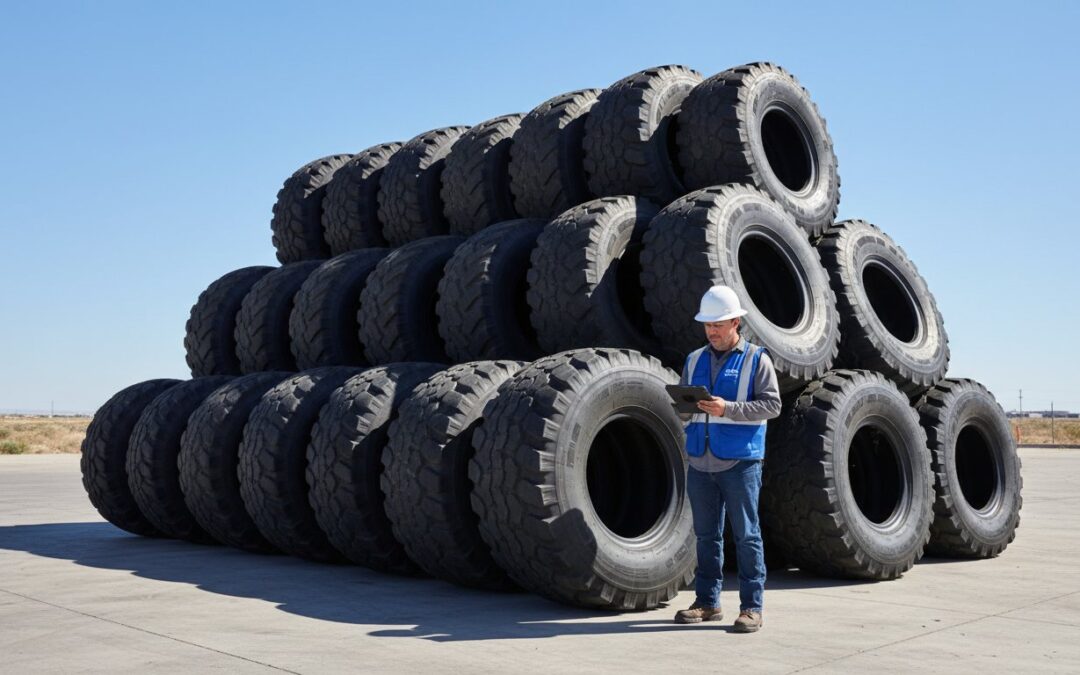
On a Tuesday morning last October, a Midland site manager discovered that 250 stacked OTR tires could trigger a TCEQ enforcement action faster than a West Texas thunderstorm. It’s a common story in the Permian Basin, where rapid industrial growth often outpaces the development of a formal rubber waste management plan Midland operators need for compliance. You likely agree that keeping your yard clear of bulky conveyor belts and heavy equipment tires is vital for daily safety, yet the complex manifest requirements and storage regulations often feel like an unnecessary administrative hurdle.
Building a professional strategy to avoid these headaches is simpler than it looks. This 2026 guide provides the exact steps to create an audit-ready plan that protects your business from heavy fines while streamlining your entire disposal process. We’ll cover everything from the latest TCEQ storage limits to establishing a reliable pickup schedule that ensures your rubber waste never accumulates into a liability. By the end of this article, you’ll have a clear roadmap to maintain a clean, compliant, and efficient industrial site.
Key Takeaways
- Navigate complex TCEQ regulations and the Scrap Tire Manifest system to ensure your industrial operations remain fully compliant and fine-free.
- Develop a structured rubber waste management plan Midland companies can rely on to mitigate fire risks and manage bulk volume efficiently.
- Learn to distinguish between standard tires and heavy-duty OTR equipment to apply the right disposal strategy for every material on your site.
- Master the process of conducting a site-wide waste audit and designing secure storage areas that meet strict local safety and fire standards.
- Explore how professional collection services can simplify your logistics while guaranteeing 100% legal disposal for all rubber-based materials.
Why Your Midland Business Needs a Formal Rubber Waste Management Plan
Managing industrial rubber waste in West Texas requires more than just a designated corner in the yard. A formal rubber waste management plan Midland businesses adopt is a structured document that dictates the collection, storage, and legal disposal of all rubber-based materials. It’s your company’s blueprint for handling everything from conveyor belts to heavy equipment tires safely. Without it, you’re reacting to problems instead of preventing them. Professionalism starts with a clear strategy for every byproduct of your operation.
The Permian Basin presents unique challenges that don’t exist in other regions. Midland’s climate is a major factor. With summer temperatures regularly exceeding 100°F for over 40 days each year, rubber stockpiles become significant fire hazards. Bulk volume is another hurdle. Industrial sites often experience a 15% surge in scrap material during peak production cycles; this can quickly overwhelm site logistics if a plan isn’t in place. Using professional Tire recycling methods ensures these materials are diverted from landfills and repurposed into useful products like rubberized asphalt or playground mulch.
A formal plan also serves as your first line of defense during a Texas Commission on Environmental Quality (TCEQ) inspection. When regulators arrive, showing them a documented process for waste tracking demonstrates compliance and professional oversight. Beyond legal safety, there’s a clear economic benefit. Streamlining your waste logistics can reduce site congestion and lower hauling costs by approximately 12% through better scheduling and volume management. Efficient businesses don’t let waste sit; they move it according to a schedule.
The Legal Risks of Improper Disposal in Texas
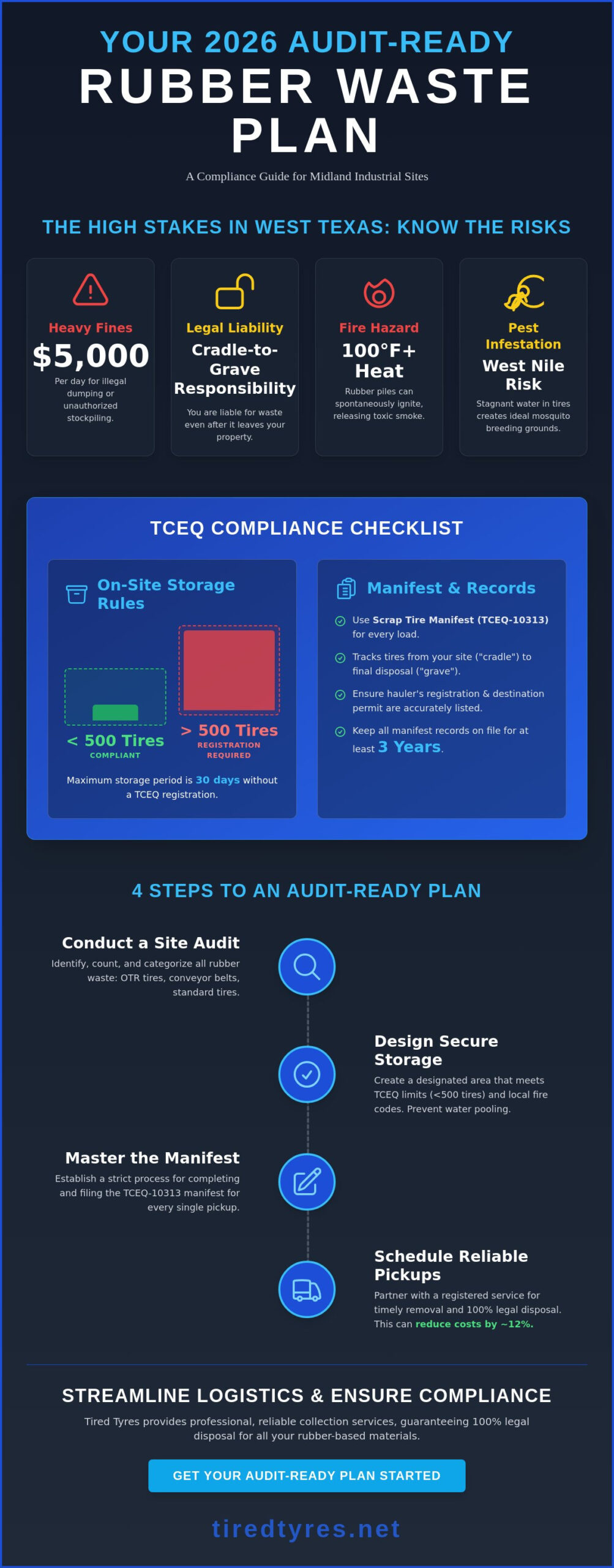
Texas laws regarding scrap tires and industrial rubber are strict. In Midland County, illegal dumping or unauthorized stockpiling can result in administrative penalties reaching $5,000 per day. You can’t simply hand off the waste and forget about it. Texas enforces a “Cradle-to-Grave” responsibility policy. This means you’re liable for the waste even after it leaves your property if the transporter or processor fails to follow the law. Under Texas law, the waste generator remains legally responsible for rubber materials until they reach a final, authorized disposal or processing facility.
Environmental and Safety Hazards of Rubber Piles
Safety is the primary concern for any Midland operation. Scrap tire and rubber belt stockpiles are notorious for trapping heat. In the intense West Texas sun, these piles can ignite spontaneously, creating fires that are nearly impossible to extinguish with water. These incidents release toxic smoke and oil into the atmosphere and soil. Pest control is another localized issue. Stagnant water trapped inside tires creates ideal breeding grounds for mosquitoes. In neighboring Odessa and Lubbock, health departments have linked poorly managed tire piles to increased West Nile virus risks. Over time, rubber degradation also impacts local soil and groundwater quality as chemicals leach into the earth during the 50 to 80 years it takes for the material to break down naturally.
Navigating TCEQ Regulations for Scrap Tires and Industrial Rubber
Compliance in Texas starts with the Texas Health and Safety Code Chapter 361. This law classifies scrap tires as municipal solid waste. If you run a fleet or a shop in the Permian Basin, your rubber waste management plan Midland must align with these state mandates to prevent environmental hazards. According to the 2023 End-of-Life Tire Management Report, the industry has seen a 71% market disposition rate for scrap tires, but improper storage still leads to fire risks and pest infestations. TCEQ regulations strictly limit on-site storage to 500 scrap tires on the ground. Exceeding this count or holding them for more than 30 days without registration triggers a different set of requirements and potential fines.
Manifest Requirements and Record Keeping
The Scrap Tire Manifest (TCEQ-10313) is the backbone of your audit trail. This document tracks every tire from your facility to its final destination. You must ensure every field is accurate, including the hauler’s registration number and the destination site’s permit. Texas law requires you to keep these records on file for at least 3 years. While paper manifests are common, Midland facility managers are moving toward digital records. Scanned copies are easier to organize and provide instantly during a TCEQ inspection. Keeping a clean digital folder for each quarter helps you prove that your disposal chain is unbroken and legally sound.
Permits and Authorized Disposal Sites
Don’t let a “junk man” with a trailer pick up your waste. If those tires end up in a West Texas ravine, the legal liability falls back on you. You must only hire a permitted tire hauler in Texas to move your inventory. These professionals are registered with the state and provide the necessary documentation to satisfy auditors. When choosing a destination, look for authorized scrap tire facilities (STFs) near Midland or Odessa. Exploring options for tire recycling in Midland ensures your waste is repurposed rather than simply stockpiled. This proactive approach keeps your business in good standing with local authorities. If you need help staying compliant, the team at Tired Tyres can guide you through the process.
Categorizing Your Waste: From OTR Tires to Industrial Conveyor Belts
A generic rubber waste management plan Midland businesses might find online often fails because it doesn’t account for the Permian Basin’s specific industrial scale. You can’t treat a stack of passenger tires the same way you treat a 12-foot-tall OTR tire from a mining site. Proper categorization is the first step toward cost-effective disposal. If you misclassify your waste, you’ll likely face rejected loads at the landfill or unexpected surcharges from transporters.
Differentiating between light-duty and heavy-duty rubber is vital. While standard tires are manageable, heavy-duty OTR (Off-the-Road) equipment tires require specialized handling and high-capacity shredding. You also need to track “hidden” rubber waste. This includes items like scrap hydraulic hoses, reinforced skid steer tracks, and solid forklift tires. These materials are often overlooked until they take up valuable yard space and create a fire hazard.
Managing Oilfield and Agricultural Rubber Waste
Agricultural tire collection on West Texas farms presents unique logistical hurdles. Pivot irrigation tires and tractor rubber often sit in remote fields for years, collecting rainwater and breeding mosquitoes. Your plan should schedule quarterly pickups to prevent these environmental risks. For industrial sites, scrap conveyor belts used in sand plants or processing facilities are particularly difficult. These belts are often reinforced with steel cables, making them impossible to cut without industrial-grade shears.
Construction and oilfield sites generate a steady stream of heavy-duty hoses and rubber tracks. These items don’t fit into standard bins. We recommend dedicated containers for these materials to keep your site organized. Storing them separately ensures that when a transport truck arrives, the loading process is fast and efficient.
The Problem with Bulk OTR and Semi-Truck Tires
Most municipal landfills in the Midland-Odessa area refuse large-scale OTR tires. Their size makes them impossible to compact, and they tend to “float” to the surface of landfill cells over time. This creates long-term structural issues for the facility. Transporting these oversized items is another challenge. You can’t just toss a set of 63-inch tires onto a standard flatbed without proper securing and weight distribution equipment. Dealing with commercial tire disposal requires specialized equipment like heavy-duty cranes and reinforced trailers to move the weight safely.
To build an accurate rubber waste management plan Midland operators can rely on, you must estimate your volume correctly. Use these metrics for your quarterly planning:
- Count by Category: Track passenger, semi-truck, and OTR tires separately.
- Weight Estimation: Use an average of 25 lbs for passenger tires and 120 lbs for semi-truck tires.
- Linear Footage: Measure scrap conveyor belts by the foot to determine the trailer size needed for removal.
- Frequency: Note how often your fleet undergoes full rotations to predict “surge” periods of waste generation.
By categorizing your waste accurately, you’ll avoid the common pitfalls of Permian Basin industrial cleanup. It’s about having the right tools for the specific type of rubber you produce.
Step-by-Step: Implementing Your Management Plan in the Permian Basin
Executing a successful rubber waste management plan Midland businesses can rely on requires moving beyond theory into field-level action. Start with a comprehensive waste audit. Walk your Midland or Odessa site to identify every rubber source, from light-duty fleet tires to heavy industrial gaskets. In 2026, local oversight has tightened, meaning you need an exact count of your monthly generation rate to avoid regulatory friction.
Once you’ve identified your volume, establish a pickup frequency that prevents stockpiling. Letting more than 500 tires accumulate triggers additional TCEQ requirements that most industrial sites aren’t equipped to handle. Set a schedule that clears your yard before you hit 80% of your storage capacity. This proactive approach keeps your site clean and your liability low.
Setting Up Your Storage and Collection Zone
Storage isn’t just about finding an empty corner of the yard. You need a designated zone that meets strict fire code requirements. Follow these West Texas best practices:
- Stacking: Use the “lacing” method for tires. This technique maximizes space while preventing water from pooling inside the casings. Stagnant water is a breeding ground for mosquitoes, which can lead to health code violations.
- Fire Safety: Maintain a 50-foot buffer between tire piles and any permanent structures or combustible materials.
- Signage: Install high-visibility, weather-resistant signs. Use bold lettering to mark “Industrial Rubber Waste Only” and include emergency contact numbers.
- Truck Access: Ensure your collection zone has a 20-foot wide clear path. Large haulers need room to maneuver without risking damage to your equipment or fencing.
Selecting a Local Waste Management Partner
Don’t trust your compliance to an out-of-state broker. You need a partner who understands Permian Basin logistics and the specific heat-related challenges of West Texas storage. Finding reliable tire disposal in the region involves vetting for TCEQ permits and local references. A Midland-based hauler can respond faster to on-call bulk removal requests when your project volume spikes unexpectedly.
Train your staff on manifest procedures immediately. Every load that leaves your site must have a signed manifest. Texas law requires you to keep these records for at least 36 months. Without this paper trail, your rubber waste management plan Midland is incomplete and leaves you vulnerable during an audit. Review your plan every January. Local Midland County regulations often update at the start of the fiscal year, and your plan must reflect those changes to remain effective.
Ready to clear your site and stay compliant? Contact Tired Tyres today for professional rubber waste solutions tailored to the Permian Basin.
Reliable Rubber Waste Collection: How Tired Tyres Supports Your Plan
Managing scrap rubber in the Permian Basin requires a partner who understands the legal landscape. We ensure 100% TCEQ compliance for every Midland business we serve, providing the exact documentation needed to satisfy Title 30 of the Texas Administrative Code. Our team handles a wide range of materials. We don’t just pick up passenger tires; we process industrial conveyor belts, gaskets, and heavy equipment tracks used in local oilfield operations. This versatility makes us a central component of any rubber waste management plan Midland companies implement to maintain clean, safe job sites.
Logistics shouldn’t be a headache for your site managers. We simplify the manifest process by generating all required transport documents for our commercial and industrial clients. This creates a transparent paper trail from your yard to the processing facility, which is vital for environmental audits. By choosing our services, you’re directly supporting the regional economy. We divert waste to Texas-based processing facilities that transform old rubber into useful secondary products like tire-derived fuel or rubberized asphalt. This keeps resources within the state and reduces the carbon footprint associated with long-haul waste transport.
Working with a local specialist means you get faster response times than national waste conglomerates can offer. We know the Midland and Odessa backroads, and we understand the specific challenges of the 2026 industrial climate. Our goal is to make rubber disposal so efficient that you don’t have to think about it twice. We handle the heavy lifting, the regulatory paperwork, and the responsible downstream processing so you can focus on your core business operations.
Customized Pickup Schedules for Midland and Odessa
Auto shops, trucking fleets, and industrial yards operate on different timelines. We provide flexible collection options that range from weekly pickups to on-call services. If you’re facing a bulk site remediation or need to clear a legacy tire dump in the Permian Basin, we have the heavy-duty equipment to handle it. Our fleet includes specialized loaders for OTR (Off-the-Road) and large agricultural tires that standard haulers can’t manage. We’ve helped local operations clear thousands of pounds of rubber in a single day, ensuring your land remains productive and compliant with local fire codes.
Get Started with Your Midland Waste Management Plan
Formalizing your disposal strategy is a smart move for 2026. It protects your business from rising disposal fees and stricter environmental enforcement. We offer free consultations for businesses looking to build a professional rubber waste management plan Midland regulators will approve. We’ll assess your current waste volume and provide a tailored quote for scheduled or one-time bulk removal. Contact Tired Tyres today for a professional rubber waste pickup quote in Midland and let our team handle the heavy lifting.
Secure Your Compliance in the Permian Basin for 2026
Managing industrial rubber isn’t just about cleaning up your yard; it’s about meeting strict TCEQ guidelines that govern the Permian Basin. By 2026, regulatory oversight for scrap tires in Texas will demand even more precise record-keeping from local operators. You need a formal rubber waste management plan Midland to avoid heavy fines and ensure every OTR tire or industrial conveyor belt is tracked from your site to the final disposal point. A solid plan protects your business from legal liability while keeping your daily operations lean and focused. It’s the most effective way to turn a potential environmental hazard into a streamlined logistics process.
Since our founding, Tired Tyres has supported businesses across the Permian Basin and South Plains with reliable, professional disposal solutions. We provide TCEQ-compliant manifest documentation with every single pickup, ensuring your records are always audit-ready. Our team utilizes specialized equipment designed specifically for OTR, semi-truck, and heavy industrial rubber waste, so no job is too large for us to handle. You don’t have to navigate these complex state regulations alone when expert help is just a click away.
Secure Your Business with a Professional Rubber Waste Management Plan; Contact Tired Tyres Today
We look forward to helping you build a cleaner and more compliant future for your Midland operations.
Frequently Asked Questions
Is a written rubber waste management plan legally required in Midland, TX?
Yes, a formal rubber waste management plan Midland businesses use is often required by TCEQ regulations under Title 30 TAC Chapter 328. While small shops might have fewer requirements, any entity storing more than 500 scrap tires must follow strict state guidelines. This includes documenting storage methods and disposal routes. We help you document these processes to ensure you stay compliant during unexpected inspections by state or local officials.
What is a TCEQ scrap tire manifest and do I need one for industrial hoses?
A TCEQ scrap tire manifest, specifically Form 10311, tracks the movement of tires from your site to a permitted processor. You don’t need this specific form for industrial hoses since they aren’t classified as scrap tires. Hoses fall under general commercial waste rules unless they’re contaminated with hazardous materials or oils. Always keep your tire manifests for at least three years to satisfy state auditors during record reviews.
Can I take my business’s scrap tires to the City of Midland landfill?
No, you can’t take commercial scrap tires to the City of Midland landfill or the Citizens Relief Center on Smith Road. These facilities prioritize residential waste and typically limit tire drop-offs to four per household per year. Businesses must use a registered scrap tire hauler to transport waste to a TCEQ-authorized processing facility. It’s the law, and it prevents illegal dumping in the Permian Basin and surrounding areas.
How much does it cost to implement a professional rubber waste management plan?
Costs depend on your specific volume and the frequency of pickups required for your Midland facility. Factors like the type of rubber waste and current fuel surcharges in West Texas influence the final price. We provide a clear quote after assessing your site’s needs and waste output. This ensures your rubber waste management plan Midland budget stays predictable and transparent throughout the year without hidden fees or surprises.
What happens to the rubber waste collected from Midland businesses?
Most rubber waste is processed into Tire Derived Fuel or ground into crumb rubber for asphalt and turf. In 2022, TCEQ reported that over 80% of scrap tires in Texas were diverted from landfills for beneficial use. Your old tires might end up as playground mulch, rubberized asphalt, or fuel for cement kilns. We make sure your waste contributes to these sustainable cycles instead of sitting in a local landfill.
Are there specific storage requirements for scrap tires in Odessa and Lubbock?
Yes, Title 30 TAC §328.56 dictates that tires in Odessa, Lubbock, and Midland must be stored to prevent fire hazards and vector breeding. You’ve got to keep them dry, under a roof, or treat them with larvicide to stop mosquitoes. Storing more than 500 tires requires a formal registration with the TCEQ and specific site security measures. We’ll show you how to organize your storage area to meet these exact safety standards.
How do I verify if a tire hauler is properly permitted in the State of Texas?
You can verify a hauler’s status by searching the TCEQ Central Registry database for their active Scrap Tire Hauler Registration number. Every legitimate hauler must display this unique number on both sides of their vehicle. Don’t risk heavy fines or legal liability by hiring an unpermitted hauler. We maintain all necessary Texas permits and insurance, so you can rest easy knowing your liability ends the moment we leave your lot.
Can Tired Tyres handle scrap conveyor belts and skid steer tracks?
Yes, we accept scrap conveyor belts, skid steer tracks, and other heavy equipment rubber. These items require specialized handling because of their weight and steel reinforcement. We’ve got the specialized equipment to haul these bulky materials away safely and efficiently. Just give us a call, and we’ll clear out those tired industrial components so you can keep your workspace clean and productive without any extra hassle.