
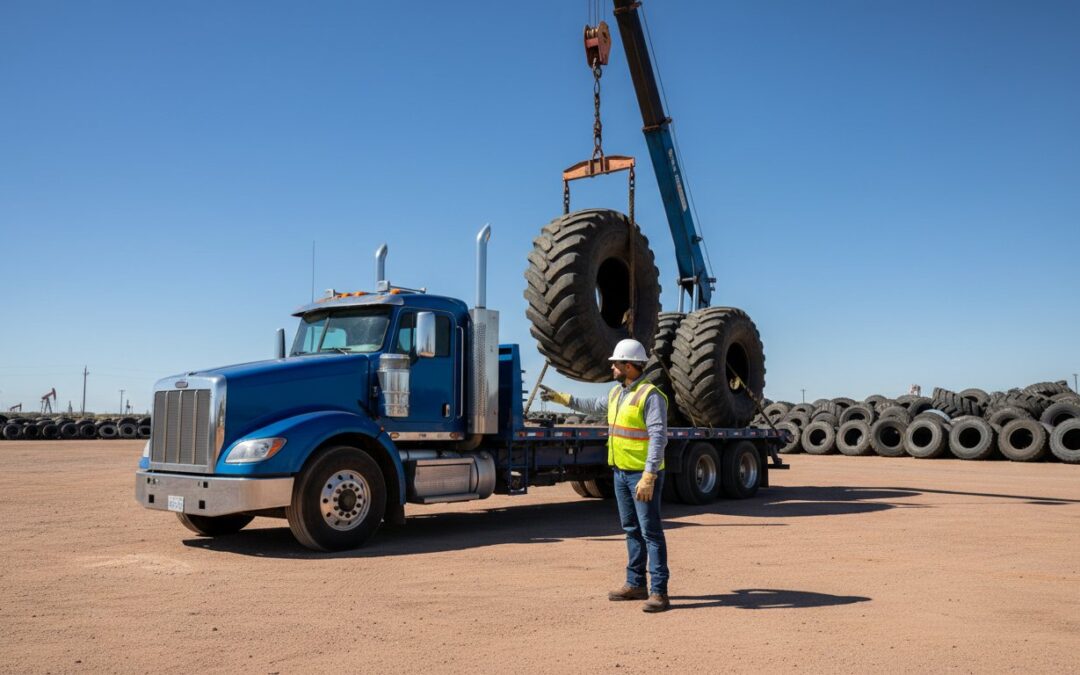
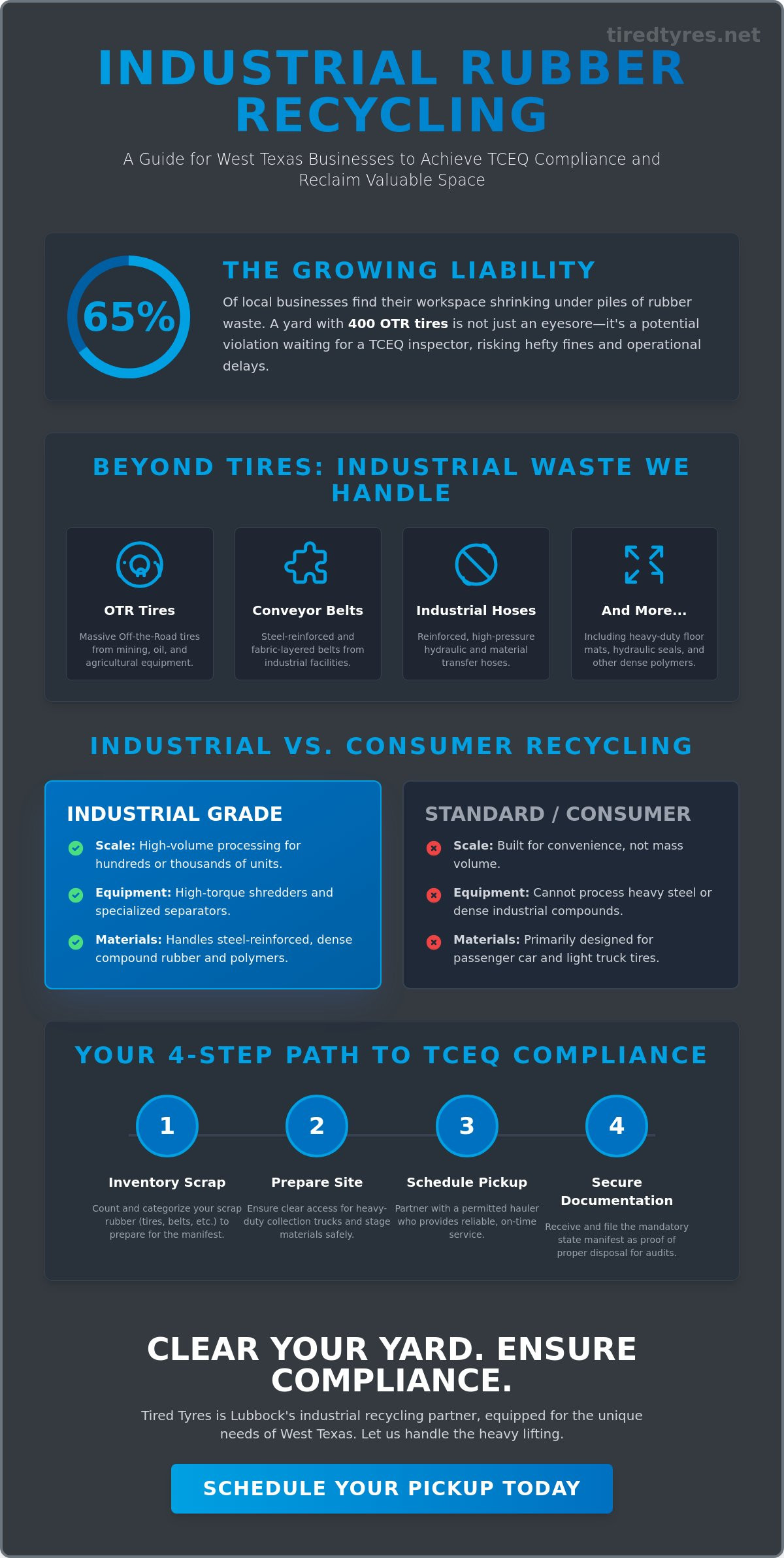
In June 2025, a West Texas fleet operator realized that the 400 OTR tires sitting in their yard were more than just an eyesore; they were a liability waiting for a TCEQ inspector. It is a common story for the 65% of local businesses that find their workspace shrinking as rubber waste piles up. You likely agree that managing these stockpiles is a headache, especially when you’re trying to decipher the latest state manifest requirements. Our 2026 guide helps you find a reliable Lubbock industrial rubber recycling center to handle the heavy lifting while you focus on your core business.
You’ll discover the most efficient ways to dispose of bulk scrap tires and heavy industrial conveyor belts without risking fines. We’ll show you how to secure the exact documentation needed for your next environmental audit and how to schedule pickups that actually show up on time. This article provides a clear path to move from cluttered yards to compliant operations using professional recycling services tailored for the South Plains.
Key Takeaways
- Understand why high-volume, heavy-duty rubber requires a specialized facility rather than a standard landfill.
- Identify which industrial materials—including reinforced hoses and belts—can be processed beyond standard passenger tires.
- Ensure your business stays TCEQ compliant by utilizing a professional Lubbock industrial rubber recycling center and following the mandatory manifest system.
- Learn how to properly inventory your scrap and prepare your facility for heavy-duty collection trucks.
- Discover the benefits of partnering with a local expert equipped to handle the unique disposal needs of West Texas industries.
What is an Industrial Rubber Recycling Center in Lubbock?
A Lubbock industrial rubber recycling center is a specialized facility engineered to manage the high-volume, heavy-duty waste streams that standard municipal programs cannot touch. These centers focus on processing massive rubber components from the oil, gas, and agricultural sectors of West Texas. Unlike a typical tire shop that handles passenger vehicles, an industrial facility is designed for the scale of the South Plains economy. Local businesses need these specialized centers because standard landfills are not equipped to handle the chemical density or physical size of industrial rubber. Diverting this waste is essential for regional sustainability; it prevents millions of pounds of non-biodegradable material from occupying valuable space in local landfills.
The role of these centers extends deep into the West Texas industrial supply chain. By converting scrap into reusable raw materials, they provide a steady source of crumb rubber for local construction and manufacturing projects. This localized loop keeps costs down for regional businesses and reduces the carbon footprint associated with long-distance waste hauling. In 2026, the efficiency of a Lubbock industrial rubber recycling center is a key factor in maintaining the operational flow of heavy industry across the South Plains.
The Difference Between Consumer and Industrial Recycling
Standard tire shops are built for convenience, not for the sheer mass of industrial-grade waste. They lack the high-torque shredders and specialized separation technology required to process OTR (Off-the-Road) and massive agricultural tires. These industrial tires often contain heavy steel reinforcement and dense compounds that would destroy consumer-grade equipment. Industrial rubber recycling is a process of reclaiming high-density polymers for secondary use in 2026. This rigorous rubber recycling process ensures that even the toughest materials are broken down into clean, usable granules rather than being left to deteriorate in a field.
Lubbock’s Local Recycling Infrastructure
The movement of waste from a Lubbock job site to a processing facility relies on a strict logistics network. It begins with specialized collection containers placed at industrial sites, which are then transported by permitted haulers. In West Texas, choosing a hauler with the correct state permits is critical for regulatory compliance and environmental safety. This infrastructure ensures that rubber waste from the Permian Basin and the South Plains reaches a certified Lubbock industrial rubber recycling center without delay. For companies with operations spanning several counties, coordinating tire recycling in Midland, Odessa, and Lubbock is the most effective way to manage large-scale waste. This regional network supports the local economy by turning discarded rubber into a valuable commodity for Texas infrastructure projects.
Beyond Tires: Industrial Rubber Waste We Handle in West Texas
Most people associate rubber recycling with passenger car tires, but West Texas industries generate a much broader spectrum of waste. Our Lubbock industrial rubber recycling center manages the complex materials that keep the local economy moving. This includes everything from hydraulic seals used in oilfield equipment to heavy duty floor mats from manufacturing plants. In 2026, the demand for specialized processing has grown as local businesses seek to meet stricter sustainability goals.
Industrial rubber isn’t just a single material. It’s often a mix of synthetic polymers, carbon black, and chemical stabilizers. If these items end up in the Permian Basin soil, they won’t break down. They sit in the ground for centuries and can potentially leach chemicals into the local ecosystem. Proper disposal ensures these polymers are redirected into new products like rubberized asphalt or playground surfaces. Following TCEQ scrap tire facility regulations is the best way to ensure your facility stays compliant while protecting the Texas landscape.
Scrap Conveyor Belts and Industrial Hoses
Mining operations, agricultural hubs, and manufacturing facilities in Lubbock County produce a high volume of scrap conveyor belts. These items present a unique challenge because they aren’t just rubber. Most are steel-reinforced or contain heavy fabric layers to handle high tension. Our recycling process uses high-torque shredders to strip the rubber away from the metal. This allows for the recovery of both the polymer and the steel. Bulk collection of industrial hoses is also a priority. By removing these bulky items from your site, you eliminate tripping hazards and reduce the risk of long-term soil contamination from residual fluids inside the hoses.
OTR and Agricultural Tire Specialized Collection
Off-the-Road (OTR) tires from Lubbock construction sites and oilfield operations are massive. A single tire can weigh several thousand pounds, making standard transport impossible. These require specialized loaders and flatbed trucks for safe removal. South Plains farmers and ranchers face similar issues with large tractor and harvester tires. We provide dedicated solutions for these oversized items, ensuring they don’t take up valuable space on your property. For a deeper look at managing these large-scale assets, read our full guide on commercial tire disposal in West Texas.
Skid steer tracks and solid forklift tires also require specific handling. Unlike pneumatic tires, these are dense and heavy, requiring more energy to process. We’ve optimized our Lubbock industrial rubber recycling center to handle these high-density materials efficiently. If your business is struggling with a growing pile of industrial waste, Tired Tyres offers the expertise to clear your site quickly and professionally.
TCEQ Compliance: Navigating Texas Rubber Disposal Regulations
Operating a business in Lubbock involves more than just managing inventory. You’ve got to handle your waste correctly. The Texas Commission on Environmental Quality (TCEQ) sets strict rules for scrap tires and industrial rubber. If you’re caught dumping or using unpermitted services, the consequences are severe. A professional Lubbock industrial rubber recycling center doesn’t just take your waste; they take your liability. We handle the paperwork so you can stay focused on your daily operations.
Illegal dumping in West Texas isn’t just a fine; it’s a significant criminal risk. Under Texas Health and Safety Code Chapter 361, penalties for improper disposal can reach $50,000 per day for certain violations. Local Lubbock authorities actively monitor rural areas for illegal piles. These sites create fire hazards and breeding grounds for mosquitoes carrying West Nile virus. Using a legitimate recycling facility ensures your rubber follows a legal path toward beneficial reuse, such as the EPA on ground rubber applications like rubberized asphalt or playground surfaces.
The Importance of the Scrap Tire Manifest
The manifest is your shield. It’s a multi-part form that tracks every tire from your shop to the final processing site. You’re responsible for that rubber until it reaches its destination. Here’s how the process works:
- The hauler signs the manifest upon pickup from your facility.
- You receive a generator copy immediately for your files.
- The processing facility signs off once they receive the load.
- A final completed copy is returned to you for your permanent records.
A valid manifest is your only legal protection against dumping charges. TCEQ rules require you to keep these records for at least three years. During an audit, if you can’t produce these papers, you’re liable for the waste, even if it left your property months ago. We ensure every load is documented with precision.
Permitted Haulers vs. ‘Solar Cowboys’
In West Texas, you’ll often find “solar cowboys”—unlicensed haulers who offer low prices but dump loads in canyons or backroads. Hiring them is a massive risk. If a pile of tires is found with your business’s identifiers, you’re on the hook for the cleanup costs and the fines. Always verify a hauler’s TCEQ registration status before they load a single tire. A reputable Lubbock industrial rubber recycling center only works with registered transporters. For a deeper look at the legal framework, check our guide on Texas tire disposal regulations. We make sure every load is documented so you can stay compliant without the stress.
Preparing Your Lubbock Site for Bulk Rubber Pickup
Streamlining your waste management process requires more than just piling up old tires. When you work with a Lubbock industrial rubber recycling center, preparation directly impacts your bottom line. Proper staging reduces loading time and prevents unexpected surcharges. Follow these five steps to ensure a smooth collection process.
- Step 1: Inventory your scrap. Group materials by type before the truck arrives. Categorize OTR tires, industrial conveyor belts, and standard truck tires into separate piles.
- Step 2: Check site access. Heavy-duty collection trucks require at least a 40-foot clearance and a solid surface. Ensure your Lubbock facility has a clear path free of overhead lines or low-hanging structures.
- Step 3: Eliminate contamination. Separate rubber from metal, wood, or household trash. Industry data shows that contaminated loads can face cost increases of 15% to 25% due to additional sorting labor.
- Step 4: Book a permitted hauler. Verify that your transporter holds a current West Texas hauling permit. This ensures your waste is handled according to regional environmental standards.
- Step 5: Finalize the manifest. Review and sign the TCEQ Form 00709 or equivalent manifest. This document provides the legal proof that your business disposed of the rubber responsibly.
Optimizing Your Storage Area
Proper storage prevents safety hazards and environmental fines. Stack OTR tires flat to stop water from pooling inside the casings. In the West Texas heat, standing water becomes a breeding ground for Aedes aegypti mosquitoes in less than 48 hours. For scrap conveyor belts, coil them tightly and secure the roll with heavy-duty steel banding. This makes loading faster for the driver and safer for your crew. It’s best to keep these items in a dedicated zone away from active heavy machinery traffic.
Scheduling and Logistics in the South Plains
Efficiency in the South Plains depends on smart timing. Whether your facility is in Lubbock, Slaton, or Wolfforth, coordinate your pickup during off-peak hours to avoid local traffic delays. Scheduling through a Lubbock industrial rubber recycling center is most effective when you group regional sites. You can often reduce disposal costs by 10% by scheduling bulk pickups instead of multiple small trips. A typical high-volume industrial collection visit lasts between 60 and 90 minutes. Don’t wait until your storage space is overflowing; plan your 2026 pickups quarterly to maintain a clean site.
Ready to clear out your warehouse? Contact us to schedule your industrial rubber collection today.
Why Tired Tyres is Lubbock’s Industrial Recycling Partner
Choosing a Lubbock industrial rubber recycling center requires more than just a truck and a yard. It demands a serious commitment to the West Texas environment and a deep understanding of state compliance. Tired Tyres operates with a 100% adherence rate to TCEQ standards. This ensures every ton of rubber we process stays out of illegal dumpsites and local landfills. We utilize high-torque shredders capable of processing 2,000 pounds of rubber per hour. This specialized equipment handles everything from conveyor belts to heavy-duty industrial gaskets without the delays common at smaller facilities.
Transparency drives our operations. Every Lubbock client receives a detailed manifest for each load. These documents provide a clear paper trail for your environmental audits and corporate social responsibility reporting. We serve the critical Lubbock, Midland, and Odessa triangle. This ensures the heavy industry powering the Permian Basin has a reliable outlet for its waste. Our team understands the logistical challenges of West Texas. We plan routes that maximize efficiency and minimize the carbon footprint of your disposal process.
The Tired Tyres Difference
We provide personalized service that scales with your business needs. Whether you run a small machine shop or a massive 50,000-square-foot industrial facility, our approach remains the same. Reliability is our hallmark. We maintain a 98.5% on-time pickup rate for scheduled routes. This keeps your yard clear and prevents the fire hazards associated with stockpiled rubber. We play a vital role in the local circular economy. We don’t just move waste; we transform it. Much of the rubber we collect is repurposed into West Texas resources, such as rubberized asphalt or livestock mats, keeping the value within our community.
Get Started with Your Lubbock Pickup
Requesting a quote for bulk industrial rubber or OTR tire removal is straightforward. Our team analyzes your volume and material type to provide a precise logistics plan. As a dedicated Lubbock industrial rubber recycling center, we prioritize fast turnaround times for our neighbors. For businesses with over 10 tons of accumulated waste, we offer expedited site assessments. You can reach our Lubbock-area team for immediate assistance with urgent clearances or recurring service schedules. Don’t let waste rubber impact your operational efficiency or safety ratings.
Contact Tired Tyres for your industrial rubber recycling quote today to secure your 2026 service window and ensure your facility remains compliant.
Streamline Your West Texas Rubber Disposal
Managing industrial waste in West Texas requires more than just a dump site. It’s about staying compliant with the Texas Commission on Environmental Quality (TCEQ) standards to avoid heavy fines. Our Lubbock industrial rubber recycling center handles everything from standard tires to massive OTR and industrial equipment. We operate as a TCEQ Registered Hauler, ensuring your business meets all 2026 disposal protocols across Lubbock, Midland, and Odessa. Proper documentation keeps your operations running smoothly while protecting the local environment. We’ve built our reputation on being a reliable partner for companies that don’t have time for logistics delays or regulatory headaches. Our specialized fleet is ready to clear your site quickly and professionally. You can focus on your core business while we handle the heavy lifting of rubber waste management. We’re here to help you turn a storage problem into a streamlined workflow. Our team understands the specific needs of the Permian Basin and South Plains industries. Whether you have a single stack of tractor tires or a warehouse full of industrial belts, we provide the specialized equipment needed for safe transport. Let’s get your site cleared and compliant before your next inspection cycle begins.
Schedule your Lubbock industrial rubber pickup with Tired Tyres today
We look forward to helping your business grow with a cleaner, safer workspace.
Frequently Asked Questions
Is it illegal to dump industrial rubber in a Lubbock landfill?
It’s illegal to dispose of whole tires in any Texas landfill according to the Texas Health and Safety Code Chapter 361. Lubbock municipal landfills require tires to be split, quartered, or shredded before they’ll accept them for disposal. Most industrial rubber products contain steel reinforcements that make on-site processing difficult for businesses. You’ll need to work with a permitted facility to ensure your company stays compliant with state environmental laws.
How do I dispose of OTR tires from a construction site in Lubbock?
You must transport Off-the-Road (OTR) tires to a TCEQ-authorized processing site or hire a registered scrap tire hauler. These large tires require specialized equipment for loading and transport because their weight often exceeds 500 pounds per unit. Our Lubbock industrial rubber recycling center provides the heavy-duty machinery needed to handle these oversized loads safely. We ensure every OTR tire is tracked from your construction site to the final recycling destination.
What is a scrap tire manifest and why do I need one?
A scrap tire manifest is the TCEQ Form 10311 that tracks the movement of tires from the generator to the final disposal site. You need this document to prove your business complied with state regulations during a TCEQ audit. The law requires you to keep these records for at least three years. If you can’t produce a signed manifest during an inspection, your facility could face significant fines for improper disposal.
Can conveyor belts and industrial hoses be recycled in West Texas?
Yes, we process heavy-duty conveyor belts and reinforced industrial hoses into reusable materials like rubber mulch or tire-derived fuel. These items often contain high-grade polymers that shouldn’t end up in a West Texas landfill. We strip the metal reinforcements and grind the remaining rubber into specific sizes for industrial applications. This process helps your company reach zero-waste goals while keeping durable materials out of the local waste stream.
How much does industrial rubber recycling cost in Lubbock?
Fees for recycling industrial rubber depend on the weight and type of material you’re disposing of. While we don’t set a universal price, the TCEQ’s annual reports indicate that processing fees are typically calculated per ton for bulk industrial loads. Factors like the presence of steel beads or fabric reinforcement affect the final cost. Contact us for a specific quote based on your plant’s current volume and material specifications.
Do you offer scheduled pickups for Lubbock manufacturing plants?
We provide scheduled pickup services for manufacturing plants throughout the Lubbock area to prevent scrap buildup. Most of our industrial clients choose a bi-weekly or monthly collection cycle to stay within TCEQ storage limits. Our team coordinates with your facility manager to ensure the collection doesn’t disrupt your daily production. This consistent service helps you maintain a clean, safe workspace while staying compliant with local fire codes.
What happens if I use an unpermitted hauler for my scrap tires?
You remain legally responsible for the tires even after they leave your property if you hire an unpermitted hauler. If an illegal transporter dumps your scrap tires in a field, the TCEQ can hold your business liable for the entire cleanup cost and additional penalties. State law requires you to verify that any hauler you use has a valid TCEQ registration number. Using a professional Lubbock industrial rubber recycling center eliminates this risk by providing full documentation for every load.
How should I store scrap rubber to avoid TCEQ violations?
You must store scrap rubber in a manner that prevents fire hazards and stops mosquitoes from breeding in stagnant water. TCEQ Title 30, Part 1, Chapter 328 requires piles to be kept at manageable sizes with clear fire lanes between them. We recommend using covered trailers or indoor storage areas to keep the material dry. Proper storage isn’t just about compliance; it protects your employees and reduces the risk of environmental hazards at your facility.