
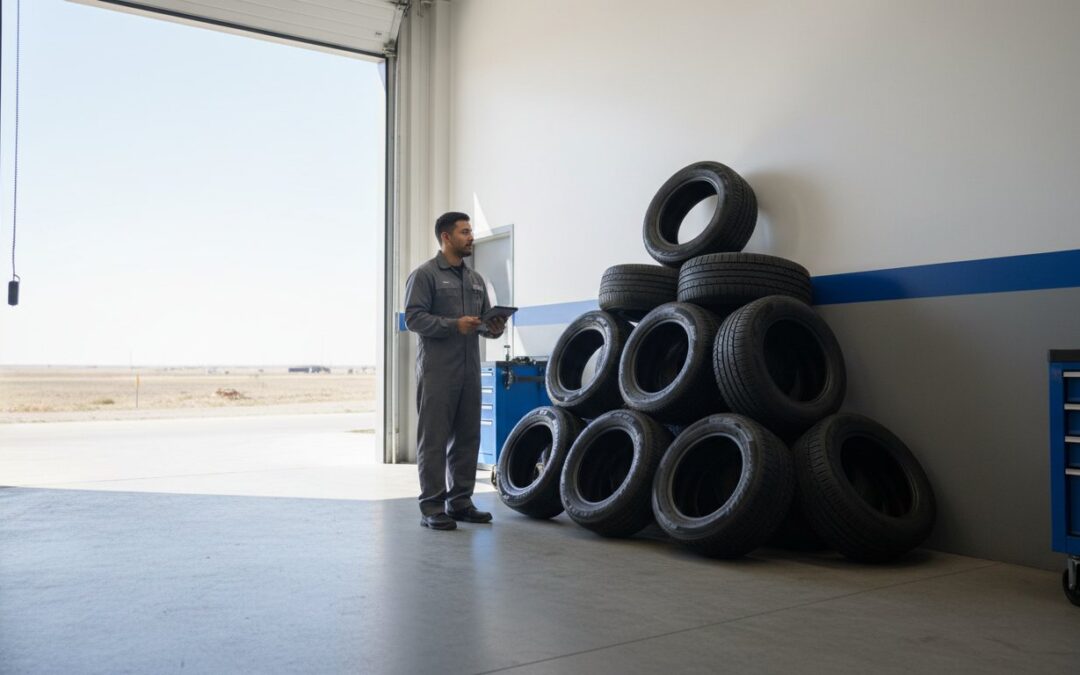
A single misplaced manifest or an overflowing tire pile can trigger TCEQ penalties of up to $25,000 per violation, per day. For most West Texas shop owners, the mounting cost of scrap tire pickup for auto repair shops Lubbock feels like an unavoidable tax on doing business. You want a clear shop floor and a predictable budget, but the complexity of state regulations often gets in the way of daily operations. It’s frustrating to manage rising disposal fees while trying to maintain a safe, professional environment for your crew and customers.
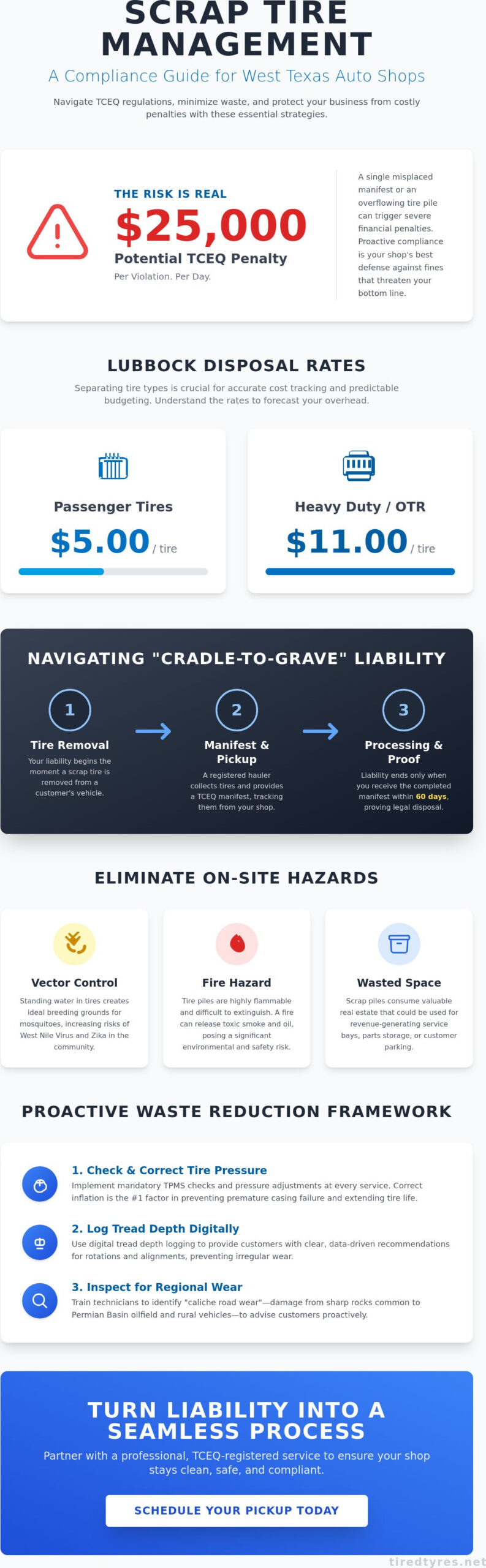
This guide provides the exact strategies you need to minimize rubber waste and ensure your shop remains compliant with the latest 2026 Texas environmental standards. You’ll discover how to navigate the “cradle-to-grave” liability rules and why receiving your completed manifest within 60 days is critical for your protection. We’ll also break down the current Lubbock disposal rates, such as the $5.00 fee for passenger tires and $11.00 for heavy duty units, so you can accurately forecast your overhead. From mastering storage limits to streamlining your pickup schedule, we’ll help you turn a messy liability into a seamless, legal process.
Key Takeaways
- Learn how extending tire life through professional maintenance directly reduces your shop’s disposal overhead and total scrap volume.
- Master the “cradle-to-grave” liability rules to protect your business from TCEQ administrative penalties of up to $25,000 per day.
- Optimize your shop layout to streamline scrap tire pickup for auto repair shops Lubbock, reducing labor costs and keeping your facility clutter-free.
- Understand why separating passenger casings from OTR and agricultural tires is essential for accurate cost tracking and predictable budgeting.
- Implement effective vector control and storage strategies to eliminate fire hazards and mosquito breeding grounds on your property.
The Impact of Tire Waste on West Texas Auto Shops
Tire waste management is the systematic control of scrap rubber from the moment it’s removed from a vehicle until it reaches final processing. For local business owners, securing reliable scrap tire pickup for auto repair shops Lubbock is a core operational necessity rather than a simple janitorial task. When old casings stack up behind your shop, they stop being inventory and start being a liability. These piles consume valuable real estate, create safety hazards, and invite intense regulatory scrutiny from the Texas Commission on Environmental Quality (TCEQ).
The hidden costs of poorly managed waste often go unnoticed until they hit the balance sheet. Every square foot of your shop floor occupied by scrap rubber is space that isn’t generating revenue through service bays or parts storage. Additionally, paying technicians to move, stack, and reorganize these piles multiple times a week wastes expensive labor hours. Efficient waste management directly improves shop profitability in 2026 by reclaiming production space and eliminating the threat of administrative penalties that can reach $25,000 per day.
Environmental Risks in the Permian Basin
The arid climate and intense heat of West Texas accelerate the degradation of abandoned rubber. In Lubbock and Midland, summer temperatures often exceed 100 degrees, causing tires to off-gas and leach chemicals into the soil. These piles also serve as ideal breeding grounds for pests. Even a small amount of rainwater trapped inside a casing can support thousands of mosquito larvae, contributing to local West Nile Virus and Zika risks. You can find more detail on these specific regional challenges in our guide to waste tire problems in Midland, Odessa, and Lubbock.
Economic Consequences of Improper Disposal
Relying on “tire cowboys” or unregistered haulers is a gamble that rarely pays off. If a transporter dumps your tires illegally in the desert, the TCEQ manifest system ensures the trail leads straight back to your shop. Under “cradle-to-grave” liability, you’re responsible for those tires until they are legally processed. Understanding the various Tire recycling processes helps shop owners appreciate why compliant disposal is a multi-step journey, not a quick fix. As landfill tipping fees for commercial businesses in Lubbock County continue to rise, professional scrap tire pickup for auto repair shops Lubbock becomes the most cost-effective way to maintain a clean, safe, and efficient workspace.
Reducing Waste Volume Through Preventive Maintenance
The most effective way to manage tire waste isn’t just finding a better way to throw things away. It’s keeping rubber on the road for as long as possible. When you prioritize professional maintenance, you aren’t just selling a service; you’re actively reducing the volume of scrap your shop generates. This shift in mindset turns preventive care into a powerful waste reduction tool. By extending the lifecycle of every unit, you’ll naturally decrease the frequency and cost of scrap tire pickup for auto repair shops Lubbock.
Maximizing every millimeter of tread depth is a win for the environment and your customer’s wallet. Frequent rotations and alignments ensure even wear, which prevents tires from becoming scrap prematurely. For commercial fleets operating in West Texas, this consistency is even more vital. Regular inspections significantly lower the “casing failure” rate, allowing fleet managers to get the full value out of their high-cost tires. Reducing these failures helps mitigate the broader environmental impact of tire waste, such as microplastic shedding and groundwater contamination from abandoned piles.
A 4-Step Framework for Extending Tire Life
Implementing a standardized process ensures no tire leaves your shop without a health check. Follow these four steps to keep your customers’ rubber in top shape:
- Step 1: Implement mandatory TPMS health checks and pressure adjustments at every service. Correct inflation is the single most important factor in preventing heat-related casing fatigue.
- Step 2: Use digital tread depth logging. This data allows you to show customers exactly when they need rotations or alignments to avoid irregular wear.
- Step 3: Inspect for “caliche road wear.” This is specific damage common in Permian Basin oilfield vehicles where sharp rocks can chip and cut the tread. Identifying this early can prevent a total blowout.
- Step 4: Promote high-precision wheel balancing. Even slight imbalances cause “cupping” or “feathering,” which can ruin a tire’s integrity long before the tread is gone.
Educating Your Customers on Sustainability
Most drivers don’t realize that their driving habits directly contribute to local landfill issues. Use visual aids like “wear bars” or side-by-side comparisons of properly and improperly inflated tires to tell the story. Offering detailed “Tire Health Reports” builds trust and makes it easier to justify the maintenance upsells that keep tires out of the scrap pile. Partnering with a reliable collection service ensures that when tires finally reach the end of their life, they’re handled professionally. Proactive maintenance can reduce a shop’s annual tire waste volume by up to 15%.
Organizing Your Shop for Efficient Scrap Tire Pickup
Managing the physical footprint of waste is just as important as the paperwork. When scrap piles grow without a plan, they consume labor hours and create safety hazards. Organizing your shop for scrap tire pickup for auto repair shops Lubbock requires a logical staging strategy that minimizes the time your crew spends handling old rubber. By creating a dedicated workflow, you ensure that collection day is a quick, professional exchange rather than a chaotic disruption of your service bays.
Separating passenger tires from OTR and semi-truck casings is critical for accurate cost tracking. Because disposal fees vary by tire size and weight, mixing them into a single heap makes it impossible to audit your invoices. A disorganized pile also forces collection drivers to sort through the mess on-site, which can lead to increased service times or additional labor surcharges. For a deeper look at the specific logistics required for larger units, consult our commercial tire disposal guide.
Categorizing Scrap Materials for Recyclers
Modern auto shops handle more than just standard car tires. You need a “Rubber Waste Zone” that accounts for the diverse materials used in West Texas industries. Keep agricultural tires and heavy skid steer tracks in a separate area from light truck casings. These larger items require different loading equipment and processing paths. Don’t forget about non-tire rubber waste; industrial hoses and scrap conveyor belts should be coiled and bundled. Bundling these materials prevents them from becoming a tripping hazard and ensures they are counted correctly during your scheduled scrap tire pickup for auto repair shops Lubbock.
Optimizing the Pickup Workflow
Efficiency starts with how you stack. Implementing a “First-In, First-Out” (FIFO) system prevents older tires at the bottom of the pile from becoming stagnant. Stagnant piles are more likely to trap moisture and debris, making them harder to move and more attractive to pests. You must also consider the physical access for collection trucks. Many shops in Lubbock and Midland operate near narrow alleyways; ensure your staging area is clear of customer vehicles or equipment that could block a large trailer. If you store waste outdoors, check your stacks at least every 14 days to ensure no water has accumulated, keeping your shop in full compliance with local health codes and vector control ordinances.
Compliance: Texas Regulations and TCEQ Manifests
The Texas Commission on Environmental Quality (TCEQ) is the primary authority governing how your business handles rubber waste. In the eyes of the law, an auto shop isn’t just a service center; it’s a “scrap tire generator.” This classification brings a “cradle-to-grave” liability. This means your shop stays legally responsible for every casing until a permitted facility processes it. Relying on an unregistered hauler for scrap tire pickup for auto repair shops Lubbock without proper documentation is a risk that could lead to devastating administrative penalties. For a complete checklist of these requirements, review our Texas tire disposal regulations guide.
Mastering the Scrap Tire Manifest
The manifest is your only legal shield. This document tracks the movement of tires from your shop to the final disposal site. Every manifest must include the hauler’s unique ID number, the specific destination facility, and an accurate count of the tires collected. Once the tires reach the recycler, the transporter must return a completed copy to you within 60 days. Texas law requires you to retain these records for at least three years. If an auditor walks through your doors, these papers are the only proof that you’ve followed the rules. Before any tires leave your property, always verify that your collection service is a “Permitted Tire Hauler” in good standing with the state.
Avoiding Illegal Dumping Liability
“Midnight dumping” is a serious problem in West Texas. When tires are found in remote areas or illegal pits, investigators trace them back to the source using markings or service records. The legal consequences for the original shop owner can include massive fines and even criminal charges, regardless of who actually dumped the rubber. Vetting your collection service is the only way to ensure your tires reach a legitimate recycling center. In Texas, the generator of the waste remains legally liable for its disposal until it reaches a permitted facility. Don’t leave your shop’s reputation to chance. Secure your business today by scheduling a compliant scrap tire pickup that handles all the paperwork for you.
Partnering with Professional Scrap Tire Pickup Services
Managing scrap rubber shouldn’t feel like a constant battle against shop clutter. Transitioning from “managing a problem” to “partnering for sustainability” changes the way your business operates. When you work with local experts, you aren’t just getting rid of junk; you’re building a relationship that ensures your shop stays clean and compliant without constant supervision. Scheduled scrap tire pickup for auto repair shops Lubbock provides a predictable rhythm for your operations. You’ll know exactly when the tires leave and exactly what it costs, allowing for better budget forecasting and a safer, more professional environment for your customers.
Professional collection does more than just clear your floor. It supports the local West Texas recycling infrastructure. By ensuring tires reach legitimate processing facilities, you contribute to the regional economy and the production of tire-derived fuel and crumb rubber. A clean, environmentally conscious shop has a distinct competitive advantage in 2026. Modern customers prefer doing business with shops that take their environmental responsibilities seriously, and a tidy facility reflects the same precision you apply to your mechanical work.
Why Professional Collection Beats DIY Hauling
Many shop owners consider hauling tires themselves to save money, but the math rarely adds up. When you calculate the “true cost,” you must include the hourly wages of the employees diverted from billable work, the fuel for the transport vehicle, and the wear and tear on your shop truck. Hauling a load to the Midland landfill can take a technician away from the bays for hours. There are also safety risks to consider. Manual loading and transport of heavy casings increase the likelihood of back injuries and workers’ comp claims. A professional service uses specialized equipment to handle the heavy lifting. This ensures that 100% of the collected rubber is diverted from landfills toward beneficial reuse or energy recovery.
Choosing the Right Service in Lubbock and the Permian Basin
Not every hauler with a trailer is a legitimate partner. You need to look for a service with active TCEQ permits and a proven track record of reliability. Your partner should be able to handle more than just passenger tires; they need the capability to manage industrial rubber, OTR units, and agricultural tracks. Local knowledge is equally important. Municipal codes in Lubbock and Midland can vary, and a local expert will understand the specific staging and access requirements for our region. Don’t let your shop become a warehouse for waste. Ready to clear your shop? Contact Tired Tyres for a reliable tire disposal quote and experience the benefits of a professional scrap tire pickup for auto repair shops Lubbock partnership.
Streamline Your Shop’s Waste Management Today
Implementing a 15% reduction in tire waste through proactive maintenance is just the first step toward a more profitable service center. By mastering the TCEQ manifest system and organizing your rubber waste zones, you protect your business from the $25,000 daily penalties associated with improper disposal. It’s about more than just clearing floor space; it’s about establishing a professional, compliant operation that West Texas customers can trust. A tidy shop isn’t just safer for your crew; it’s a visual promise of quality to everyone who walks through your doors.
Tired Tyres has been serving the Permian Basin and South Plains since 2026 as a fully TCEQ Permitted Hauler. We specialize in complex removals, including OTR units and industrial rubber, so your crew doesn’t have to handle the heavy lifting or the safety risks of DIY hauling. Schedule your professional scrap tire pickup for auto repair shops in Lubbock today to streamline your workflow and ensure every casing is handled legally. Let’s keep your shop clear and your focus where it belongs: on your customers’ safety and your shop’s growth.
Frequently Asked Questions
How often should an auto shop in Lubbock schedule scrap tire pickups?
Shops should schedule pickups before their inventory reaches the 500-tire storage threshold to avoid mandatory TCEQ registration. While registered generators can store up to 2,000 tires in enclosed trailers, ground storage is strictly capped at 500 units. Most high-volume shops in the South Plains find that monthly or bi-weekly service prevents floor clutter and keeps them well within these legal limits.
Does the TCEQ require manifests for OTR or agricultural tires?
Yes, the Texas manifest system applies to all scrap rubber, including OTR and agricultural tires. Every shipment leaving your property must be documented to maintain the “cradle-to-grave” chain of custody. This paperwork is your only legal protection if a hauler fails to reach an authorized facility. You must receive a completed copy of this manifest back from the transporter within 60 days of the pickup.
What is the most common mistake shops make with tire waste storage?
The most frequent error is neglecting mandatory vector control for tires stored outdoors. Texas law requires shop owners to monitor outdoor piles and apply vector control measures at least every 14 days. Stagnant water inside casings is a primary breeding ground for mosquitoes. Failing to document these bi-weekly checks can lead to health code violations even if your tire counts are within legal limits.
Can I dispose of industrial hoses and conveyor belts with my scrap tires?
You can include industrial hoses, conveyor belts, and skid steer tracks in your scrap tire pickup for auto repair shops Lubbock if your provider is equipped for industrial rubber. Not all haulers accept these materials, so it’s important to use a specialized service. Bundling hoses and belts separately from your tire stacks helps our crew load the truck quickly and ensures your billing remains accurate.
How can I verify if a tire hauler is legally permitted in Texas?
You should always request the hauler’s TCEQ registration number and verify it against the state’s official database of registered transporters. A legitimate hauler will have no issue providing this number or showing their current permit. If a transporter refuses to provide a manifest at the time of collection, they are not authorized to handle your waste and could leave you liable for illegal dumping fines.
Are there specific fines for improper tire waste management in Lubbock County?
The TCEQ has the authority to assess administrative penalties of up to $25,000 per violation, per day. Unauthorized disposal or illegal dumping can result in additional fines of up to $10,000 per day. These penalties apply to the shop that generated the waste, not just the hauler. Maintaining records for at least three years is the only way to pass a state audit and avoid these costs.
What happens to the tires after they are picked up from my shop?
Collected tires are transported to authorized processing facilities where they are diverted from landfills. Most scrap rubber from West Texas is used for energy recovery as tire-derived fuel or processed into crumb rubber for road construction and playground surfaces. This systematic recycling supports the local economy and ensures that 100% of the material is handled according to 2026 environmental standards.
Is it better to shred tires on-site or use a professional collection service?
Professional collection is almost always more efficient than on-site shredding for local auto shops. Shredding equipment requires a significant capital investment and creates noise, dust, and safety hazards that disrupt your service bays. Using a dedicated scrap tire pickup for auto repair shops Lubbock allows your technicians to focus on billable repairs while experts handle the heavy lifting and regulatory paperwork.