
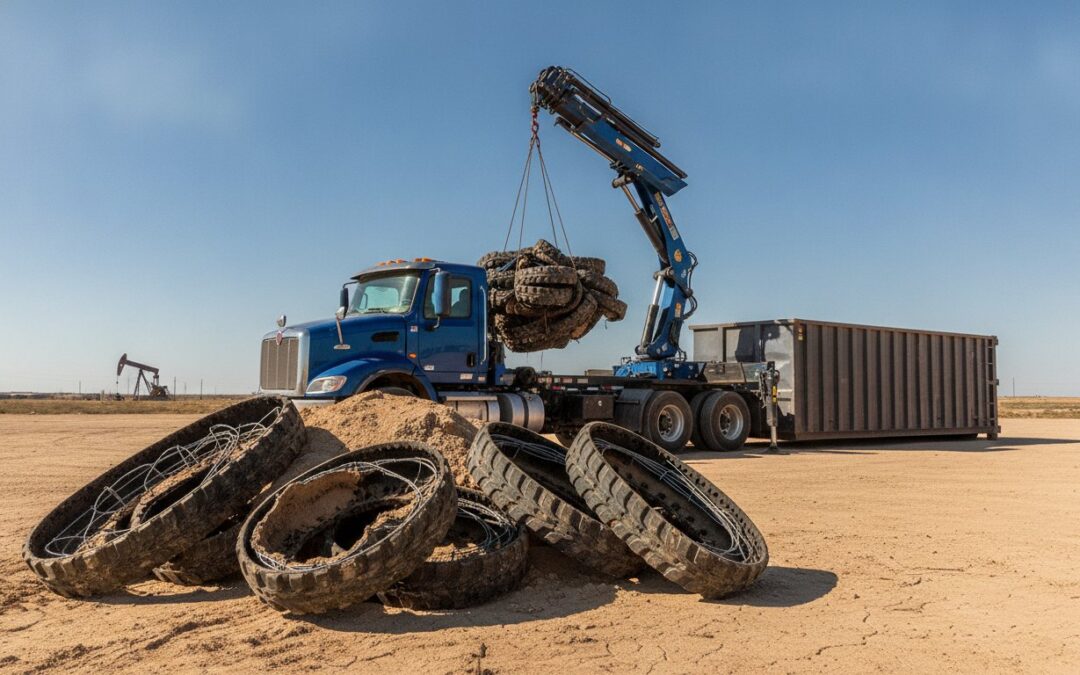
Leaving a pile of worn-out rubber tracks in the corner of your yard isn’t just an eyesore; it’s a growing liability that Texas regulators are watching more closely than ever in 2026. You’ve likely already discovered that standard skid steer track disposal isn’t as simple as a trip to the local dump. Most landfills in Midland and Odessa now reject steel-reinforced tracks because they damage compacting machinery and won’t break down. It leaves you stuck with hundreds of pounds of dead weight that attracts pests and creates a safety hazard for your crew.
We understand the frustration of having your yard turned into a rubber graveyard simply because the usual disposal routes are closed. This guide provides the clear, legal, and cost-effective path to clearing that space while staying compliant with the latest Texas Commission on Environmental Quality rules. You’ll learn exactly why Lubbock facilities are tightening their gates, how to avoid the heavy lifting of transport, and the most efficient ways to ensure your business meets its environmental obligations without the stress of a DIY disaster.
Key Takeaways
- Understand why internal steel reinforcements and high-density rubber cause most West Texas landfills to reject whole tracks.
- Learn about the “spring-back” effect and how buried rubber can resurface, creating long-term liability for your business.
- Discover how professional skid steer track disposal eliminates the logistical burden of transporting 600-pound components.
- See how specialized equipment like knuckle booms and roll-offs allow for efficient, hands-off loading at your job site.
- Identify compliant collection options available throughout Midland, Odessa, and Lubbock to keep your yard clear.
The Challenge of Skid Steer Track Disposal in West Texas
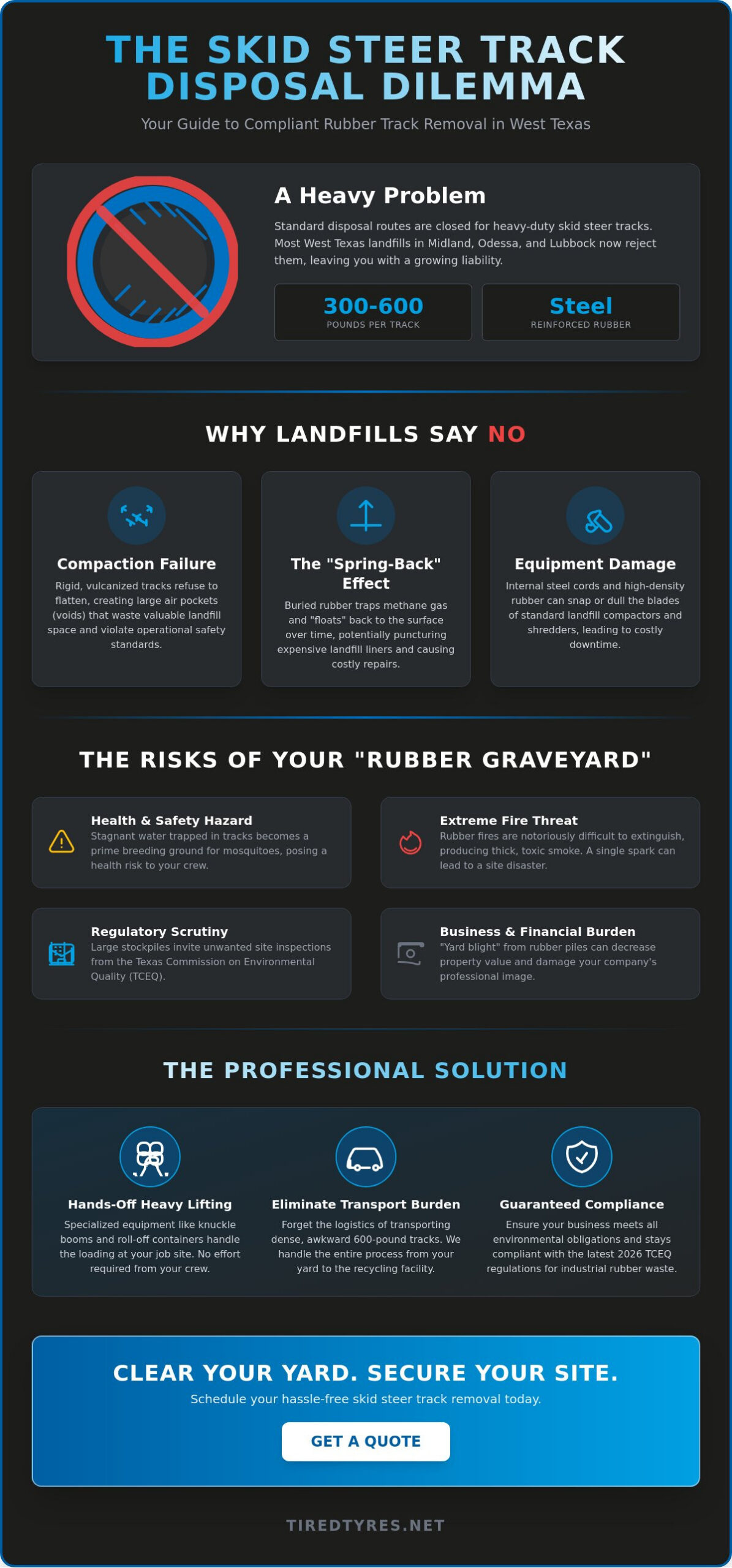
A single skid steer track is a massive piece of industrial engineering. These aren’t just thick tires; they’re high-density vulcanized rubber molded around continuous internal steel cords. This design provides the traction and durability needed for harsh West Texas job sites, but it makes skid steer track disposal a logistical nightmare. A standard track often weighs between 300 and 600 pounds. Most standard waste services won’t touch them. Their trucks simply aren’t equipped to lift or transport such dense, awkward loads. They stay put where they’re dropped.
In the Permian Basin, it’s common to see “yard blight” where old tracks are tossed into a corner and forgotten. These piles grow quickly as fleets are maintained. Because they’re so heavy, they often stay exactly where they landed. This creates a pressing need for specialized rubber waste management. Industrial equipment requires a different approach than passenger tires because the sheer volume of material per unit is significantly higher. The complexity of the Tire recycling process increases when dealing with these reinforced components.
Why Steel-Reinforced Rubber is Different
The bond between the rubber and the internal steel cables is what makes these tracks nearly indestructible. While this is a benefit during operation, it’s a major hurdle for disposal. Standard shredders used for light tires often struggle with the thickness of skid steer tracks. The steel cables can dull or snap blades designed for thinner materials. This extreme durability means these tracks won’t decompose naturally. If left alone, they’ll remain in your yard for decades. They don’t break down; they just take up space.
The Problem with Stockpiling in the Permian Basin
Beyond safety, these piles are a burden for your business. Large stockpiles of industrial rubber can decrease your property value. They also invite unwanted regulatory scrutiny from the Texas Commission on Environmental Quality (TCEQ). Clearing these tracks isn’t just about cleaning up. It’s about protecting your company’s professional image and avoiding legal complications. Proper management keeps your site safe and compliant.
Why Landfills Reject Rubber Tracks (And the Legal Risks)
Landfills operate on a simple principle: maximize space through compaction. Skid steer tracks are the enemy of this process. Because of their rigid, vulcanized structure, they refuse to flatten under the weight of heavy machinery. This creates large air pockets in the landfill cell, which is a major safety and efficiency violation. Most municipal facilities in West Texas aren’t willing to sacrifice their space for these awkward, high-density items. Proper skid steer track disposal requires a different path because these items simply don’t belong in a standard trash pit.
The “spring-back” effect is another reason for rejection. When whole rubber components are buried, they often trap methane gas. Over time, this buoyancy, combined with the natural shifting of the earth, causes the tracks to “float” back to the surface. This can puncture expensive landfill liners and require costly repairs for the facility. Because of these physical risks, most sites in Lubbock and Ector counties have strict “no-track” policies at the gate. If you try to hide them in a larger load, you’ll likely face rejection and a permanent ban from the facility.
Environmental impact is the final factor. Industrial rubber is non-biodegradable. It won’t break down in our lifetime. When these tracks are disposed of improperly, they leach chemicals into the soil and water table over decades. This long-term pollution is why state and local authorities have moved toward much stricter enforcement in 2026. Keeping your site compliant means moving beyond the landfill mindset.
Texas Environmental Regulations (TCEQ) Overview
The Texas Commission on Environmental Quality (TCEQ) oversees all industrial waste management in the state. They’ve recently increased their oversight of scrap rubber to prevent illegal stockpiling. It’s vital for commercial entities to follow the latest Texas tire disposal regulations to avoid site inspections. A key part of this is the manifest system. This creates a “cradle to grave” record. It proves that your waste was handed to a permitted hauler and reached a legitimate processing site, protecting you from future liability.
The High Cost of Illegal Dumping
Illegal dumping isn’t just tossing a track in a ditch. For a business, it includes hiring an unpermitted “guy with a trailer” who might dump your tracks on a backroad. If those tracks are traced back to your company, you’ll face heavy criminal and civil penalties. In Lubbock and Ector counties, fines for improper disposal can reach thousands of dollars per day of violation. Professional skid steer track disposal provides a solid paper trail of compliance. If you want to ensure your records are spotless, you can look into professional scrap rubber collection services to handle the logistics for you.
When a set of tracks reaches the end of its life, many West Texas operators consider repurposing them to save on costs. While the idea of creating “free” cattle mats or erosion control barriers sounds appealing on paper, the reality for a busy construction or oilfield firm is different. Attempting a DIY approach to skid steer track disposal often turns into a time-sink that pulls your best mechanics away from revenue-generating work. You have to weigh the actual value of a makeshift mat against the hours of labor spent trying to manufacture it.
Safety is the most immediate concern. These tracks aren’t just rubber; they contain high-tensile steel cables designed to withstand thousands of pounds of pressure. Cutting through them requires specialized demolition saws and creates significant heat and friction. Standard shop tools often fail or break, leading to potential injuries from flying debris or saw kickback. Beyond the physical risk, the environmental footprint of on-site repurposing is often just delaying the inevitable. A “repurposed” track still won’t biodegrade, and it will eventually become a disposal problem for the next property owner.
The Myth of Easy Repurposing
Online forums often suggest cutting tracks into strips for various uses. What they don’t mention is the specialized carbide-tipped blades you’ll burn through to get the job done. Factor in the hourly labor rate of a skilled technician and the cost of consumables, and you’ll quickly realize that DIY isn’t cheap. Additionally, tracks used in the oilfield are often covered in grease, mud, or chemicals. Cleaning them to a safe standard for repurposing adds another layer of labor and water waste that most businesses simply don’t have time for.
Professional Collection Benefits
Choosing professional collection means your crew can stay focused on the job at hand. It’s a zero-effort solution where the hauler handles all the heavy lifting and loading. For sites with multiple machines, bulk removal is the only way to keep the yard organized and safe. You get the peace of mind that comes with reliable tire disposal, ensuring that every piece of rubber is tracked and processed according to state standards. It’s the most efficient way to manage skid steer track disposal
How Professional Skid Steer Track Collection Works
Professional collection is built to be a hands-off experience for the business owner. Once you decide to clear your yard, the process moves quickly to ensure your site remains productive. Specialized skid steer track disposal services use heavy-duty equipment designed specifically for industrial rubber. This isn’t a standard trash pickup. It’s a coordinated logistical operation that prioritizes safety and regulatory compliance.
Scheduling is a critical factor for West Texas job sites. Whether you’re in the middle of a busy construction project in Lubbock or managing an oilfield service yard in Odessa, you need a hauler who respects your timeline. Reliable services coordinate arrival times to avoid interfering with your daily operations. They bring the right tools to get the job done without requiring your crew to stop their work to help with the loading process.
Step 1: Inventory and Assessment
The process starts with a clear inventory. You’ll need to provide an accurate count of the tracks and their general sizes. This helps the hauler determine which vehicle to send. It’s also helpful to identify if the tracks are “clean.” While some dirt is expected, tracks heavily encrusted with dried concrete or thick oilfield sludge may require different handling. Finally, ensure there’s a clear access point. Heavy collection vehicles need enough room to maneuver near the pile without getting stuck or blocked by other equipment.
Step 2: Loading and Transportation
A professional service handles all the heavy lifting. They typically use specialized machinery like knuckle booms or roll-off trucks to manage the 600-pound loads. Using a knuckle boom allows the operator to lift tracks directly from a stockpile and place them securely onto the trailer. This eliminates the need for your team to use your own skid steers or forklifts for loading. Once the truck is loaded, the rubber waste is transported to a permitted processing facility where the recycling process begins.
Step 3: Manifesting and Compliance
Documentation is the most important part of the final step. You should always receive a disposal receipt or manifest once the tracks are collected. This document is your proof of legal skid steer track disposal. If the TCEQ ever conducts an environmental audit of your facility, these records prove you didn’t engage in illegal dumping. The hauler is responsible for maintaining state-mandated waste records, but keeping your own copy ensures your business is fully protected from liability. For a seamless experience, you can schedule a professional scrap rubber collection to handle your inventory today.
Hassle-Free Rubber Waste Removal in Midland, Odessa, and Lubbock
Tired Tyres serves as the Permian Basin’s dedicated partner for industrial rubber management. We focus exclusively on the logistical and regulatory needs of West Texas businesses. Our team understands that companies in Midland, Odessa, and Lubbock operate on tight schedules where yard space is at a premium. Managing skid steer track disposal shouldn’t be a distraction from your core operations. We bring the right equipment and a deep understanding of TCEQ requirements to every site we visit. Our goal is to ensure your business remains compliant while keeping your yard clear of dangerous stockpiles. We live and work in this region, so we’re committed to keeping our local environment clean and our industrial partners profitable.
A Solution for Every Industrial Need
Our capability extends far beyond just tracks. We provide specialized commercial tire disposal for OTR and agricultural fleets. If your operation generates diverse rubber waste, we offer a single-source solution. Our collection routes regularly handle scrap hoses, industrial conveyor belts, and solid tires from warehouse and oilfield equipment. We don’t believe in a one-size-fits-all approach. We offer flexible scheduling that adapts to your needs. You can request a one-time sweep to clear out a legacy stockpile or arrange for recurring pickups to manage ongoing waste. This flexibility allows you to maintain a clean site without the overhead of managing the disposal yourself. Our trucks are equipped to handle the heavy, awkward loads that standard trash services simply can’t touch.
Ready to Clear Your Site?
Stop letting worn-out tracks and tires take up valuable workspace. A cluttered yard isn’t just an eyesore; it’s a safety hazard and a potential regulatory trigger. Reclaiming your site is a straightforward process when you work with local experts who specialize in skid steer track disposal. We provide fast, direct quotes based on the specific count and size of your inventory. You’ll avoid the gate rejections of local landfills and the liability of using unpermitted haulers. We take pride in helping West Texas businesses stay productive and clean. Our professional loading process means your crew doesn’t have to lift a finger. Contact Tired Tyres for skid steer track collection today and experience a professional, hassle-free removal process.
Secure Your Site and Stay Compliant
Managing your yard shouldn’t involve the constant headache of hidden liabilities. We’ve seen how standard landfills reject these heavy-duty components and how DIY attempts often lead to wasted labor and safety risks. Choosing a professional partner for skid steer track disposal is the only way to ensure your business meets the strict 2026 Texas environmental standards while keeping your workspace clear for active projects.
Tired Tyres provides a seamless, permitted solution across Midland, Odessa, and Lubbock. We use specialized equipment designed for heavy industrial rubber, so your team doesn’t have to handle any of the loading. By providing a clear manifest for every pickup, we protect your company from the legal risks of improper disposal. It’s time to stop letting old tracks take up valuable space and start focusing on your next big job.
Ready to clear your inventory? Get a Quote for Skid Steer Track Pickup today and let us handle the logistics. We’re here to help West Texas businesses stay clean, safe, and fully compliant.
Frequently Asked Questions
Can I throw skid steer tracks in a standard dumpster?
No, you shouldn’t place tracks in a standard dumpster. Most West Texas waste management companies strictly prohibit heavy industrial rubber because it can damage hydraulic compactors and exceeds weight limits. If a driver spots a track in your bin, they’ll likely refuse the pickup and may charge you a contamination fee.
How much do skid steer tracks usually weigh?
Is it legal to bury old rubber tracks on my own property in Texas?
It’s illegal to bury whole rubber tracks on your property under Texas law. The Texas Commission on Environmental Quality (TCEQ) requires rubber waste to be processed or shredded before any form of land disposal. Buried tracks also trap methane and eventually float back to the surface, creating long term hazards for the land.
What tools are needed if I want to cut up a track for DIY use?
You’ll need a heavy duty demolition saw equipped with carbide-tipped blades to cut through the internal steel cables. Standard shop saws or reciprocating saws don’t have the power to handle vulcanized rubber and will burn out quickly. This process is dangerous and creates significant heat, so proper safety gear is mandatory.
Do you pick up tracks from construction sites and farms?
Yes, we provide collection services for a wide range of industrial sites. Our trucks regularly visit construction yards, oilfield service sites, and agricultural properties throughout Midland, Odessa, and Lubbock. We’re equipped to handle skid steer track disposal in rugged environments where standard trucks might struggle.
What happens to the tracks after they are collected?
Collected tracks are transported to a permitted processing facility. Once there, they are typically shredded or integrated into industrial recycling streams. This ensures that both the high-density rubber and the internal steel are managed according to state environmental standards rather than sitting in a landfill.
Do I need to clean the tracks before you pick them up?
You don’t need to pressure wash them, but they should be free of large debris. Removing heavy chunks of dried concrete or excessive oilfield sludge helps ensure a safe and efficient loading process. Normal dirt and wear from daily use are expected and won’t interfere with the collection.
Are there specific fines for improper disposal of industrial rubber in Midland County?
Yes, illegal dumping fines in Midland and Ector counties can reach several thousand dollars per day of violation. Authorities are particularly strict about rubber waste because of the high fire risk and the potential for mosquito breeding. Using a permitted hauler is the only way to avoid these civil and criminal penalties.