
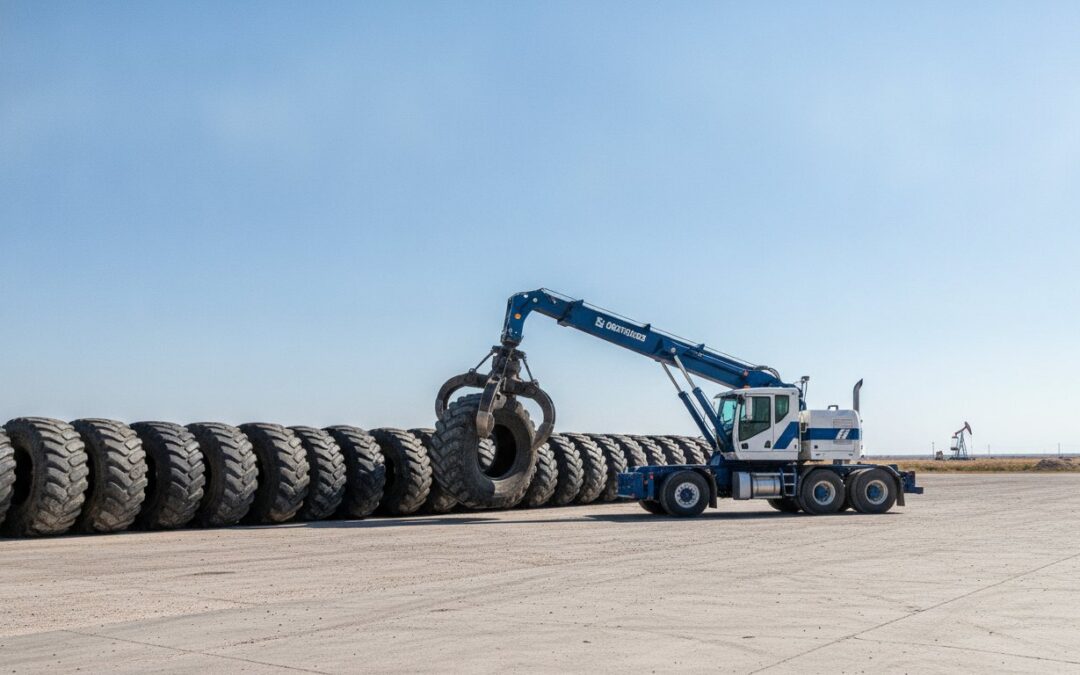
Your business remains legally responsible for every heavy-duty tire on your property until it reaches a state-permitted facility with a signed manifest. In the Permian Basin, managing OTR tire disposal Odessa operations isn’t just a matter of clearing yard space; it’s a high-stakes compliance task. It’s common to feel stuck when tires weighing over 600kg start piling up, especially when standard junk haulers lack the specialized equipment required to move them safely.
You shouldn’t have to risk heavy TCEQ fines or environmental liability just to keep your site organized and functional. This guide explains how to manage industrial rubber logistics using scheduled pickup services designed for the heavy-duty demands of West Texas. We’ll show you how to navigate the 2026 manifest retention laws and implement a “set it and forget it” system that keeps your Odessa operations compliant and your yard clear for actual work.
Key Takeaways
- Learn why TCEQ-permitted haulers and proper manifest documentation are your only defense against illegal dumping liability and state fines.
- Discover how scheduled OTR tire disposal Odessa services eliminate yard congestion and keep your oil field operations running without logistical delays.
- Compare the financial benefits of recurring collection schedules against the high, unpredictable costs often associated with on-call hauling.
- Get a simple two-step checklist for auditing your tire inventory by size and preparing them for efficient, rim-free pickup.
- Understand why a Permian Basin-based partner with specialized heavy-lift equipment is essential for handling industrial tires weighing 600kg or more.
The Logistics of OTR Tire Management in the Petroplex
OTR (Off-the-Road) tire disposal Odessa operations involve the specialized collection and transport of heavy-duty rubber used in mining, construction, and oil field machinery. These aren’t your standard passenger tires. We’re talking about massive units that often exceed 600kg and require heavy-duty machinery just to move. Handling them requires more than a simple trailer; it demands specialized heavy-lift equipment and strict safety protocols to prevent workplace injuries. In the Petroplex, where industrial activity is constant, letting these tires pile up creates a logistical bottleneck that most businesses can’t afford. Professional management isn’t just a convenience. It’s a necessity for maintaining a functional and safe site.
Space Optimization for Industrial Yards
Every square foot of your yard has a specific dollar value tied to production or storage. When scrap OTR tires sit in a corner, they represent “dead space” that could be used for equipment staging or active inventory storage. These stockpiles often interfere with the movement of heavy machinery, forcing drivers to take longer, more dangerous routes and slowing down daily workflows. It’s easy to ignore a few tires, but as the pile grows, the cost of lost productivity grows with it. A clutter-free yard is the foundation of operational efficiency in Odessa because it allows for unobstructed movement and faster turnaround times for your fleet.
Environmental Risks in the Permian Basin
The dry, hot climate of West Texas turns rubber stockpiles into a significant liability. Tires are notorious fire hazards. Once they ignite, they’re incredibly difficult to extinguish. They can burn for days, releasing toxic smoke and pyrolytic oil into the air and ground. Beyond the immediate threat of fire, these casings collect rainwater in their deep treads, creating perfect breeding grounds for disease-carrying pests like mosquitoes. This is a health risk for your crew and a compliance headache for your management. Improperly managed piles can also leach chemicals into the soil over time, potentially impacting local groundwater quality. Understanding the Tire recycling process is the first step in mitigating these risks. Professional management ensures that these materials are processed correctly, protecting both the local environment and your company’s legal standing.
TCEQ Compliance: Navigating Texas Tire Regulations
Texas law treats scrap tires as regulated waste. If your business generates industrial rubber, you’re responsible for it from the moment it leaves the rim until it reaches an authorized processor. This “cradle to grave” liability means you can’t just hand off a 600kg tire to anyone with a trailer. In Odessa, the Texas Commission on Environmental Quality (TCEQ) requires specific documentation to prove your tires didn’t end up in a ditch or an illegal stockpile. For professional OTR tire disposal Odessa operators, this documentation is the cornerstone of the service. Without it, your company remains legally attached to those tires indefinitely.
The Scrap Tire Manifest Process
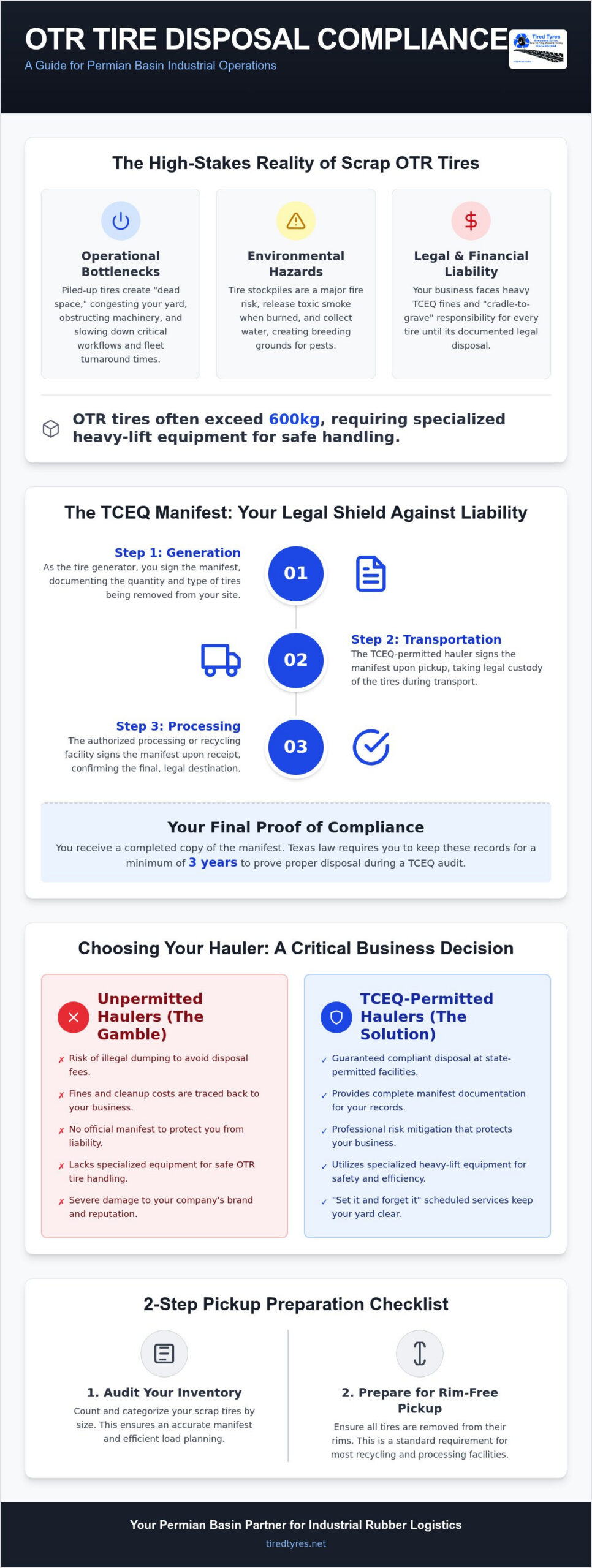
The manifest system is your primary shield against state audits. It’s a multi-part form that tracks the tire’s journey from your yard to its final destination. First, you sign as the generator, documenting the quantity and type of tires being removed. Then, the hauler signs upon pickup, taking temporary custody. Finally, the authorized processing facility signs once the tires are received and processed. You’ll receive a completed copy back, which serves as your legal proof of proper disposal. Under the latest Texas tire disposal regulations, businesses must keep these records for at least three years. If a state inspector visits your Odessa site, these forms are the first things they’ll ask to see. Missing records can trigger an audit of your entire waste management system.
Avoiding the Pitfalls of Unpermitted Haulers
It’s tempting to hire the cheapest hauler available to clear space quickly. However, unpermitted haulers often lack the equipment or legal access to authorized recycling centers. If they dump your tires illegally to avoid disposal fees, the TCEQ will trace the tires back to your business. You could face massive fines and the cost of the cleanup. State-permitted haulers invest in specialized equipment and maintain their registrations to ensure your brand reputation stays intact. Proper end-of-life tire management isn’t just about cleaning up your yard; it’s about professional risk mitigation. Using an unpermitted service is a gamble that rarely pays off when compared to the security of a TCEQ-permitted hauler who handles the paperwork for you. This professional approach to OTR tire disposal Odessa ensures your operations stay compliant without constant oversight.
One-Time Hauls vs. Scheduled OTR Collection
Many Odessa businesses treat scrap rubber as an afterthought. They call for a pickup only when the yard is full. This “on-call” strategy often backfires. You’re at the mercy of a hauler’s current availability and fluctuating fuel surcharges. In a high-demand market like the Permian Basin, waiting until your yard is overflowing can lead to logistical gridlock. OTR tire disposal Odessa services work best when they’re integrated into your operational calendar. A scheduled approach provides budget predictability. It allows fleet managers to lock in rates and avoid the premium fees associated with emergency hauls.
There’s also the matter of legal capacity. TCEQ regulations are strict about how many tires you can store on-site. Storing more than 500 scrap tires on the ground often triggers new registration requirements. Regular, scheduled pickups act as a pressure release valve. They ensure you never cross that threshold. You won’t have to worry about a surprise inspection finding an unpermitted stockpile. Choosing a scheduled service offers several key advantages:
- Locked-in pricing that avoids seasonal market spikes.
- Guaranteed equipment availability for tires over 600kg.
- Automatic manifest generation for continuous compliance.
- Cleaner yard space that improves daily machinery movement.
Reliability in West Texas Industrial Hubs
During peak oil field activity, general junk removers are often overwhelmed. They might prioritize smaller, easier residential jobs over the complex task of moving massive industrial tires. A service contract guarantees your business priority. You don’t have to deal with “no-shows” or the frustration of a hauler who arrives without the right equipment. For a deeper look at managing large-scale rubber waste, check our guide on commercial tire disposal in the region. Our team understands the local pace and ensures your scrap doesn’t become a bottleneck.
Consolidating Specialized Rubber Waste
Most general haulers will take tires but refuse scrap conveyor belts or skid steer tracks. They simply aren’t equipped to process them. This forces you to manage multiple vendors for different types of rubber waste, which complicates your accounting and manifest tracking. Working with a dedicated rubber specialist allows you to consolidate everything. Whether it’s scrap solid tires, industrial hoses, or massive OTR casings, a single partner can manage the entire load. This streamlining reduces administrative work and ensures every piece of rubber leaving your site is documented under the same high standard of compliance. It’s about moving from “junk removal” to a professional logistics partnership that respects your time and your yard space.
How to Prepare Your OTR Tires for Pickup
Efficient OTR tire disposal Odessa services depend on proper site preparation. When our trucks arrive, the goal is a swift and safe loading process that doesn’t disrupt your daily operations. Taking a few minutes to organize your scrap rubber ensures accurate quoting and prevents logistical delays. Follow these five steps to prepare your yard for a professional collection:
- Audit your inventory: Group your tires by size, specifically separating OTR, semi-truck, and passenger tires. This helps us send the right equipment for the load.
- Check the rims: Ensure all tires are removed from their rims. If you require a specialized rim-on service, this must be booked in advance to ensure we have the necessary lifting tools.
- Clear an access path: Heavy collection trucks require a 50-foot clear access path. Remove any parked machinery or smaller debris that might block the approach to the stockpile.
- Consolidate rubber waste: Place your scrap conveyor belts, skid steer tracks, and tires in a central, accessible zone. Keeping all rubber materials together speeds up the loading time.
- Designate a contact: Have a site manager or foreman available to sign the TCEQ manifest. As discussed in previous sections, this document is your legal proof of disposal.
By following this checklist, you minimize the time our crews spend on your site. If you’re ready to clear your yard, you can schedule your OTR collection online to get started.
Managing Debris and Weight
Massive OTR tires can trap hundreds of pounds of water, mud, and rocks within their treads. We recommend clearing out as much debris as possible before the pickup date. Excess weight from mud or water can lead to discrepancies in your final disposal costs and may complicate the loading process. Tires that are relatively “clean” are processed much faster at authorized facilities. If you are disposing of tires with rims still attached, be prepared for additional handling fees, as these require extra labor and specialized processing at the recycling center.
Safety and Stacking Protocols
Safety is our priority during every industrial pickup. When stacking your scrap tires, keep the piles at a manageable height to prevent collapses during the loading process. High, unstable stacks are a hazard for both your crew and our drivers. Additionally, ensure your designated pickup zone is located away from low-hanging power lines or other overhead obstructions that could interfere with hydraulic lifts. Providing clear, unobstructed access to your rubber stockpile is the single most important factor in ensuring a fast and safe collection process.
Why Tired Tyres is Odessa’s Industrial Rubber Partner
Tired Tyres is built on a foundation of Permian Basin expertise. We don’t just haul junk; we manage industrial logistics for businesses that can’t afford delays. Managing OTR tire disposal Odessa operations requires a partner who understands the scale of West Texas industry. Our fleet is specifically equipped for heavy lifting. We handle OTR Tire Collection and Agricultural Tire Collection with the precision required for tires exceeding 600kg. You won’t have to worry about whether our trucks can handle the weight or if our crew understands the safety protocols of an active oil field or industrial site.
Our service extends beyond just tires. We provide comprehensive solutions for all your industrial rubber waste, including:
- Scrap conveyor belt collection: We handle the heavy, reinforced rubber used in local processing and mining.
- Scrap skid steer track collection: Our equipment is designed to move heavy tracks that standard junk haulers often refuse.
- Industrial scrap rubber: From hoses to solid tires, we consolidate your waste management into a single, professional stream.
Transparency is our standard. Our manifest process is 100% clear. You’ll receive full TCEQ-compliant documentation for every load, giving you total legal peace of mind. We take the burden of compliance off your shoulders so you can focus on your core business.
The Tired Tyres Difference
We understand Odessa’s unique industrial and agricultural needs because we live and work here. We know that oil field managers and fleet operators need a “set it and forget it” system. Our reliable tire disposal services are built around your schedule, not ours. We respect your business hours and ensure our pickups never interfere with your peak production times. It’s a professional approach that treats your yard space as a valuable asset.
Get Your Custom OTR Pickup Quote
The onboarding process for new commercial clients in Odessa is straightforward and efficient. We start by assessing your typical scrap volume and the specific types of rubber you need removed. This assessment allows us to provide fair, transparent pricing without hidden surcharges. Whether you need a one-time clearing of a legacy stockpile or a recurring monthly schedule, we’ll design a plan that fits your budget and compliance needs. It’s time to reclaim your yard and eliminate your liability. Contact Tired Tyres for an OTR tire disposal quote in Odessa today and experience a professional standard of industrial rubber logistics.
Streamline Your Industrial Rubber Logistics
Managing massive rubber waste doesn’t have to be a source of stress or legal risk for your operations. By prioritizing TCEQ compliance and implementing a scheduled collection routine, you protect your business from state fines and keep your yard fully operational. You’ve learned how to prepare your inventory by size and why specialized heavy-lift equipment is non-negotiable for tires weighing over 600kg. These steps ensure that your site remains safe, efficient, and ready for daily production.
Choosing a professional partner for OTR tire disposal Odessa operations means choosing security and long-term efficiency. Tired Tyres brings Permian Basin local expertise, specialized OTR equipment, and the status of a TCEQ-permitted hauler to every job site. We take the logistical weight off your shoulders by providing transparent manifest documentation and reliable scheduling that respects your timeline. It’s time to reclaim your yard and eliminate the liability of stockpiled industrial rubber.
Schedule your professional OTR tire pickup in Odessa today to ensure your business stays compliant and your workspace remains clear. We’re ready to help you manage your industrial rubber needs with the precision your business deserves.
Frequently Asked Questions
How much does OTR tire disposal cost in Odessa?
Disposal costs are calculated based on the specific size, weight, and total volume of the rubber waste. We provide custom quotes to ensure you’re only paying for the exact logistics required for your specific load. Factors like whether the tires are on rims or if they contain heavy debris like mud also influence the final rate. Providing an accurate inventory during the quoting process helps us give you a transparent price without hidden surcharges.
What types of industrial rubber waste do you collect besides tires?
We collect a wide range of industrial rubber materials beyond standard casings. This includes scrap skid steer tracks, reinforced conveyor belts, and industrial hoses. Our specialized equipment allows us to manage these heavy, awkward items alongside your tire inventory. This consolidation helps Odessa businesses manage all their rubber waste through a single, compliant partner rather than juggling multiple vendors.
Do you provide the required TCEQ scrap tire manifests for businesses?
Yes, we provide full TCEQ scrap tire manifests for every collection we perform. As a TCEQ-permitted hauler, we ensure your business remains compliant with the 2026 manifest retention laws. This documentation is your primary defense against environmental liability. It proves that your rubber waste reached an authorized processing facility and was handled according to state regulations.
How often can I schedule a recurring pickup for my auto shop or yard?
You can set up recurring pickups on a weekly, bi-weekly, or monthly basis depending on your scrap generation. Most high-volume industrial yards in the Permian Basin prefer a “set it and forget it” monthly schedule. This ensures you never exceed state stockpile limits. Regular OTR tire disposal Odessa services keep your yard clear for active equipment movement and reduce fire hazards.
Can you handle tires that are still on the rims?
We can manage tires that are still on the rims if you book a specialized rim-on service in advance. This requires different lifting equipment and may involve additional handling fees at the processing center. Standard quotes usually assume tires are already demounted for faster loading. If you have a large number of rim-on tires, let us know during the audit so we can prepare the right machinery.
Is there a minimum number of OTR tires required for a pickup?
There is no strict minimum number of tires required, but the total volume impacts the logistics of the haul. For OTR tire disposal Odessa projects, we typically assess the total weight and equipment needs to provide a fair quote. Larger loads often offer better logistical value for industrial clients. We work with businesses of all sizes to find a collection plan that makes sense for their specific inventory.
What happens to the OTR tires after they are collected?
Collected tires are transported directly to state-authorized processing facilities. According to 2023 TCEQ reports, many scrap tires in Texas are converted into crumb rubber for asphalt or used as tire-derived fuel. This process keeps heavy rubber out of local landfills and repurposes the material for new industrial uses. Professional collection ensures your tires contribute to the Texas recycling ecosystem rather than becoming an environmental hazard.
Do you serve industrial sites outside the main Odessa city limits?
Our team serves the entire Permian Basin region, including sites well beyond the Odessa city limits. We frequently visit oil fields, mining sites, and agricultural properties throughout West Texas. Our equipment is built for the rugged terrain often found at these remote industrial locations. We understand the geography of the Petroplex and can reach your site regardless of how far it is from the main highway.