
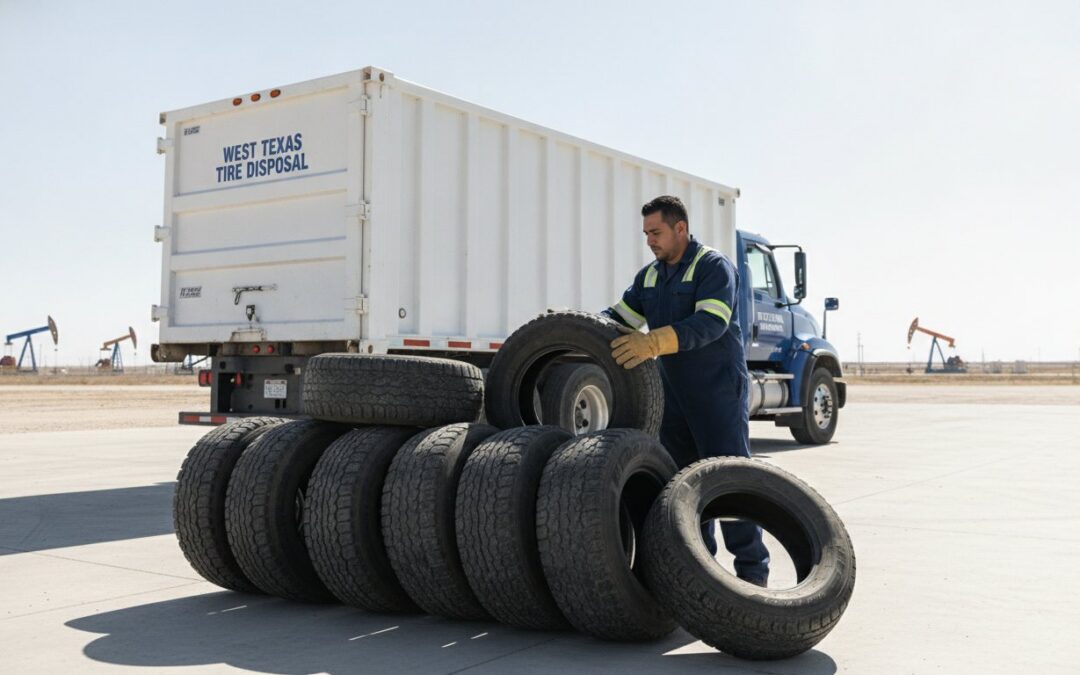
Did you know that a single pile of forgotten tires in the Permian Basin can result in TCEQ fines that far outweigh the cost of professional removal? It’s a common frustration for business owners across Midland, Odessa, and Lubbock. Most local operators agree that managing light truck tire disposal is a mounting headache that takes time away from actual work. Between the threat of West Nile-carrying mosquitoes and the constant risk of a fire, those old casings are more than just an eyesore. They’re a liability that grows every day they sit on your property.
Managing your scrap inventory doesn’t have to be a logistical nightmare or a legal gamble. This 2026 guide is designed to help you navigate the latest Texas regulations with total confidence. We’ll show you exactly how to handle your scrap tires safely while staying on the right side of the law. You’ll learn about the current manifest requirements, the hidden costs of DIY hauling, and the most efficient ways to clear your space. By the end of this article, you’ll have a clear plan to protect your business from fines and keep your operations running smoothly.
Key Takeaways
- Understand why Texas classifies light truck tires differently and how these specific regulations impact your business operations in 2026.
- Learn how to maintain a proper paper trail with TCEQ manifests to protect your company from expensive fines during local inspections.
- Identify the specific fire and health risks that accumulated tire piles pose to your property in the arid West Texas climate.
- Discover the most efficient process for light truck tire disposal that eliminates the need for time-consuming and costly DIY landfill trips.
- Find out how to accurately assess your scrap volume to ensure a seamless and professional collection service in Midland, Odessa, or Lubbock.
What Is Light Truck Tire Disposal and Why Is It Regulated?
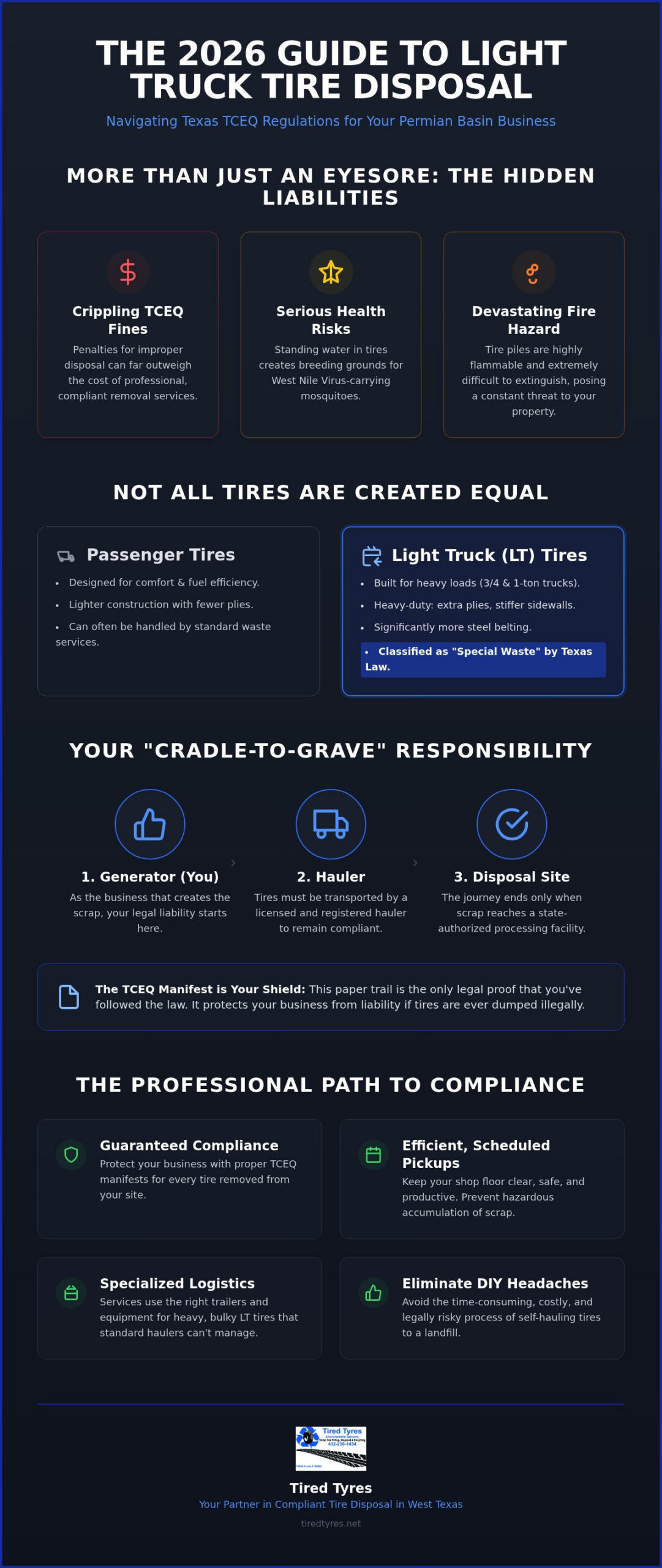
Light truck (LT) tires differ significantly from standard passenger tires. While passenger tires are designed for comfort and fuel efficiency on smaller sedans, LT tires—such as the high-performance off-road models available at Platinum Wheels—are built with extra plies and stiffer sidewalls to handle the weight of 3/4-ton and 1-ton trucks. Because of this heavy-duty construction, light truck tire disposal requires more than just a trip to the local dumpster. Texas law classifies these items as “special waste.” This means they cannot be tossed into standard landfill bins with your everyday office or shop trash.
The Texas Commission on Environmental Quality (TCEQ) oversees the movement of every scrap tire in the state. They enforce these rules because tires don’t break down naturally. If left in a pile, they become a permanent environmental hazard and a magnet for pests. Professional collection services act as the vital link in this chain. They ensure that tires move from your business to a state-authorized facility without creating a public health crisis along the way.
The Difference Between Disposal and Recycling
It’s helpful to distinguish between these two terms. Disposal is the act of legally removing tires from your site and transporting them to a permitted facility. Recycling is what happens next. The rubber is often shredded or ground into crumb rubber for use in asphalt, playground surfaces, or fuel. Tired Tyres focuses on the critical first step. We specialize in the efficient collection and legal removal of scrap tires across West Texas; we bridge the gap between your shop and the final processing plant.
Who Is Responsible for Scrap Tires?
Texas follows a “cradle-to-grave” responsibility model. As a tire generator, your legal liability doesn’t end when the tires leave your parking lot. You are responsible for ensuring your scrap reaches a licensed disposal site. Many business owners mistakenly believe they are safe if they give old tires away to unauthorized haulers. This is a dangerous gamble. If those tires are dumped illegally, the TCEQ can trace them back to your business. Your light truck tire disposal strategy must include tracking every tire using official manifests to prove you’ve followed the law. It’s the only way to protect your business from the high cost of illegal dumping fines.
Why Light Truck Tires Require Specific Disposal Methods
Light truck tires are engineered for punishment. Unlike passenger tires, they feature thicker treads and reinforced internal structures to support heavy loads. This durability is a benefit on the jobsite, but it makes light truck tire disposal a unique logistical challenge. These tires are significantly heavier and denser than standard car tires. When they reach a landfill or a processing center, they don’t compress. They take up massive amounts of cubic space, which often leads to higher fees or outright rejection from standard waste management providers.
In the Permian Basin, oil field and construction fleets cycle through these tires at an incredible rate. A single crew in Midland or Odessa might generate dozens of scrap casings in a month. Because of their size, even a small pile quickly becomes unmanageable. If you’re managing a fleet, you’ve likely seen how fast these tires consume your storage space. Professional light truck tire disposal is the only way to keep your facility clear without the headache of self-hauling.
Material Composition of LT Tires
The internal makeup of an LT tire is the primary reason for specialized handling. They contain a higher rubber-to-fiber ratio and significantly more steel belting than passenger models. These heavy-duty steel belts are designed to prevent punctures on rocky West Texas roads, but they also damage standard shredding equipment. Processing these tires requires high-torque machinery capable of slicing through reinforced 10-ply or 12-ply sidewalls. While the rubber itself is valuable for recycling into crumb rubber, the energy and effort required to extract it are much higher than with smaller tires.
Logistics of Bulk Light Truck Tire Removal
Texas Scrap Tire Regulations and TCEQ Compliance
Compliance isn’t just a suggestion in the Permian Basin. The Texas Commission on Environmental Quality (TCEQ) maintains strict oversight through the texas tire disposal regulations. These rules apply to anyone who generates, transports, or processes scrap rubber. For businesses in Midland, Odessa, and Lubbock, staying compliant means more than just keeping a tidy shop. It means protecting your legal standing. If you manage a fleet or a tire dealership, you’re legally required to ensure your light truck tire disposal follows these specific state protocols to avoid heavy penalties.
Understanding the Scrap Tire Manifest
The manifest is the most critical document in your waste management file. It tracks the movement of tires from the moment they leave your property until they arrive at a permitted facility. Each document must record the date of removal, the exact number of tires, and the signatures of both the generator and the authorized hauler. You must also include the hauler’s TCEQ registration number to verify they’re a legitimate provider. TCEQ requires you to maintain these records on-site for at least three years. The manifest serves as your primary proof of legal compliance. Without this paper trail, you have no way to prove to an inspector that those tires weren’t dumped in a local pasture or canyon.
Avoiding Illegal Dumping Liability
It’s tempting to hire a “cheap” hauler who promises to take your scrap for a fraction of the market rate. However, using unpermitted transporters is a major risk for your business. If an unauthorized hauler dumps your tires on a backroad in Ector or Lubbock County, the TCEQ can trace those tires back to your facility. Under Texas law, the generator remains responsible for the waste until it reaches a licensed destination. This “cradle-to-grave” liability means you could face heavy fines for someone else’s illegal actions.
Landowners also face significant risks. If tires are dumped on your property without your knowledge, you’re often still responsible for the expensive cleanup costs. These expenses can easily reach thousands of dollars, far exceeding the price of professional collection. You can learn more about these specific environmental and legal risks in our waste tire problems guide. Always verify that your hauler is fully permitted by the state. This simple check is the best way to safeguard your business from the legal fallout of improper light truck tire disposal.
The Environmental and Health Risks of Improper Storage
Storing tires on your property might seem like a minor issue, but it creates significant risks in the West Texas environment. The unique climate of the Permian Basin turns simple scrap piles into public health hazards. When you delay professional light truck tire disposal, you aren’t just taking up space. You’re inviting pests and increasing the risk of a catastrophic fire that local departments may struggle to contain. These piles don’t just sit there; they actively degrade the safety and value of your commercial site.
Pest Infestation in Scrap Tires
The hollow, circular shape of a tire makes it a perfect trap for stagnant water. Even a brief thunderstorm in Midland or Lubbock can leave behind enough moisture to start a breeding cycle. Tires provide excellent insulation, keeping water warm and protected from the wind. This creates an ideal nursery for mosquitoes that carry West Nile and Zika viruses. In the South Plains, mosquito season typically ramps up in late spring and lasts well into the fall. A single tire can produce thousands of larvae in just a few weeks. This turns a small shop yard into a neighborhood health crisis very quickly. Because the water is tucked inside the casing, standard pest control sprays often fail to reach the source.
Fire Hazards and Toxic Smoke
West Texas is known for its arid conditions and high heat. These factors make tire piles a massive fire risk. Once a rubber fire starts, it’s incredibly difficult to extinguish. The fire often burns deep inside the pile where water can’t reach the core. These blazes release a thick, black smoke filled with toxic chemicals like cyanide and carbon monoxide. This smoke poses a severe respiratory risk to your employees and the surrounding community. Beyond the immediate danger, burning tires liquefy into an oily residue. This oil can leach heavy metals like lead and zinc into the soil and potentially contaminate local groundwater supplies.
Accumulated scrap also drags down the property values of industrial areas in Odessa and Midland. A yard filled with old casings signals neglect and can lead to code enforcement citations. The most effective way to protect your business and the community is to schedule regular removal before the pile becomes a liability. If you have a growing pile of scrap, contact Tired Tyres today for professional light truck tire disposal that keeps your property safe and compliant.
How to Arrange Professional Tire Collection in West Texas
Professional collection is the gold standard for businesses that value their time and legal standing. Moving away from the health and fire risks discussed earlier requires a systematic approach. Following a professional tire disposal process ensures your scrap moves from your yard to a permitted facility without any regulatory gaps. The process starts with a simple audit of your current inventory to determine the scale of the pickup needed.
To begin, separate your tires by category. As established in previous sections, light truck tire disposal involves different weight and density factors than standard passenger tires. Knowing your approximate count of LT tires versus smaller casings helps us allocate the right equipment for your site. Once you have a rough estimate, you can schedule a pickup in Midland, Odessa, or Lubbock. This proactive step keeps your shop floor clear and prevents the accumulation of hazardous stockpiles.
Requesting a Custom Quote
Several factors influence the total cost of commercial tire disposal. When you contact us, have your tire count and sizes ready. Accessibility is also a major factor; tires stacked in an open, trailer-accessible area allow for faster loading and lower labor costs. Bulk collection is significantly more efficient than DIY hauling. Instead of losing a technician for half a day to make multiple landfill trips, a single professional pickup clears your entire inventory in one visit. This efficiency allows your team to focus on billable work rather than waste management logistics.
The Tired Tyres Pickup Process
Our specialized team handles all the heavy lifting, so your staff doesn’t have to. When we arrive at your location in the Permian Basin or South Plains, we perform a final verification of the tire count. We then provide the required TCEQ manifest for your records. Both parties sign this document on-site, creating the legal paper trail you need for state compliance. This manifest is your primary defense during an inspection, proving that your scrap was handled by a registered hauler.
For high-volume auto shops and industrial fleets, we offer ongoing scheduled pickup options. This prevents scrap from ever reaching a dangerous volume. Whether you need a one-time clearing of a legacy pile or a recurring monthly service, we provide a transparent and predictable workflow. Don’t let scrap rubber become a liability for your business. Get a professional tire pickup quote today and experience a cleaner, safer jobsite.
Secure Your West Texas Business with Professional Tire Management
Managing your scrap inventory shouldn’t be a source of stress or legal risk. Staying compliant with Texas regulations requires a clear paper trail and a commitment to public safety. By prioritizing professional light truck tire disposal, you protect your property from fire hazards and your business from costly TCEQ fines. You also ensure that heavy-duty casings are handled with the specialized equipment they require, rather than straining your own staff and vehicles with time-consuming landfill trips.
Tired Tyres is here to take this burden off your shoulders. We provide TCEQ-compliant manifest documentation for every pickup, serving commercial and industrial clients across Midland, Odessa, and Lubbock. Our team uses specialized equipment designed to handle LT and heavy-duty tires efficiently, keeping your shop clear and your operations moving forward. Request a fast quote for light truck tire collection in West Texas today and let us handle the logistics while you focus on your core business. We’re ready to help you maintain a clean, safe, and fully compliant jobsite.
Frequently Asked Questions
How much does it cost to dispose of a light truck tire in Midland, TX?
Disposal costs vary based on the total volume, tire size, and how easily our trucks can access your inventory. Bulk collection is typically more efficient than disposing of single units at a landfill. We provide custom quotes to ensure you’re getting a fair rate for your specific fleet or shop needs. Contact our team directly to get an accurate estimate for your location.
Can I take my old truck tires to the local landfill?
Most municipal landfills in West Texas accept tires, but they often impose daily limits and high tipping fees. Many facilities also require you to quarter or shred the tires before they’ll take them. This is often impractical for heavy-duty light truck tires. Using a professional collection service saves you the labor and equipment costs associated with self-hauling to a landfill.
Is it illegal to store old tires on my property in Texas?
Texas law allows for minimal storage, but large stockpiles are strictly regulated by the TCEQ. If your tire pile creates a fire hazard or a breeding ground for mosquitoes, you can face heavy fines. Storing more than 500 tires generally requires a specific state registration. It’s best to schedule regular removals to keep your property safe and avoid code enforcement issues.
What is a scrap tire manifest and why do I need one?
A scrap tire manifest is an official document that tracks tires from your business to a permitted facility. It’s your primary proof of legal light truck tire disposal. You must keep these records for at least three years to show state inspectors. Without a manifest, your business stays liable for those tires even after they leave your parking lot.
Does Tired Tyres pick up tires with the rims still on them?
Our primary service focuses on the collection of scrap rubber that has already been demounted. Handling tires with rims requires different processing steps and equipment. If your inventory includes tires still on the wheels, please mention this when you request a quote. We’ll discuss the specific requirements and options available for your particular situation in the Permian Basin.
How many tires can I transport without a hauler permit in Texas?
Texas regulations generally allow an individual to transport up to five scrap tires to a permitted facility without a registered hauler permit. For businesses, any volume beyond this usually requires a TCEQ-registered transporter to ensure the manifest system is used correctly. Hiring a professional hauler is the simplest way to stay compliant with state transportation laws while moving bulk scrap.
What happens to the tires after Tired Tyres collects them?
Once we collect your scrap, we transport it to a state-permitted processing facility. These facilities often shred the rubber for use in civil engineering projects, road construction, or as supplemental fuel. This process ensures the material is handled responsibly and stays out of illegal dump sites. Your scrap contributes to a cleaner environment through these authorized recycling and disposal channels.
Do you provide tire collection services in Lubbock and Odessa?
Yes, we provide professional collection services throughout Midland, Odessa, and Lubbock. Our team is specifically equipped to handle the needs of commercial shops and industrial fleets across the Permian Basin and South Plains. We focus on providing a reliable and legal alternative to DIY hauling. Whether you’re in Ector or Lubbock County, we can help manage your scrap inventory.