
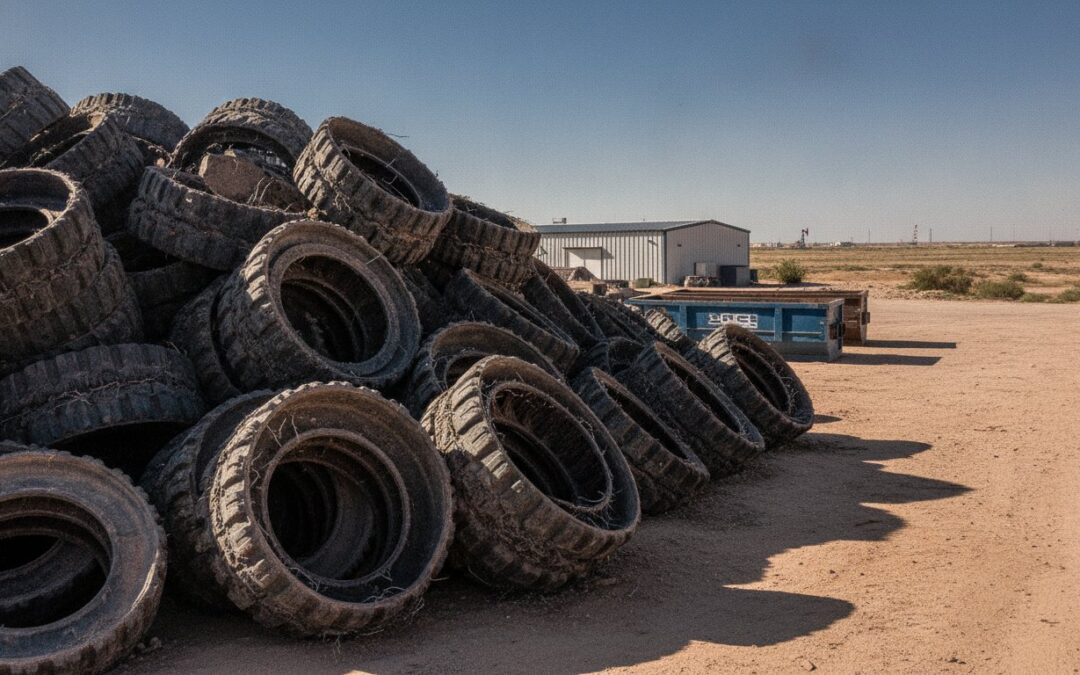
What if the heavy scrap tracks sitting on your Midland job site aren’t just an eyesore, but a legal liability that could cost you up to $25,000 per day in TCEQ fines? It’s a common headache for contractors across the Permian Basin. You’ve likely felt the frustration of hauling a load to the local landfill only to be turned away because of the steel reinforcement hidden inside the rubber. Dealing with these bulky items is a logistical nightmare, and trying to cut them down yourself often results in ruined saws and unnecessary safety risks.
If you’re wondering how to dispose of skid steer tracks without the stress of rejections or regulatory penalties, you’re in the right place. We understand that your priority is keeping your job site moving, not managing industrial waste. This 2026 guide provides the most efficient, legal, and cost-effective methods for removing scrap rubber tracks in Midland, Odessa, and Lubbock. We’ll cover the latest Texas disposal requirements and explain why professional collection is the smartest way to protect your business from rising environmental penalties and keep your yard clear.
Key Takeaways
- Understand why the internal steel cables in skid steer tracks lead to frequent landfill rejections and how to manage their significant weight.
- Discover how to dispose of skid steer tracks legally while avoiding the safety hazards and tool damage caused by manual cutting.
- Stay updated on 2026 TCEQ regulations to ensure your West Texas job site remains compliant and avoids costly environmental penalties.
- Learn how professional recycling equipment efficiently separates rubber from steel to provide a sustainable end-of-life solution for your equipment.
- Explore how to simplify your logistics in Midland, Odessa, and Lubbock by using specialized collection services for mixed industrial rubber loads.
Why Skid Steer Track Disposal is a Challenge in West Texas
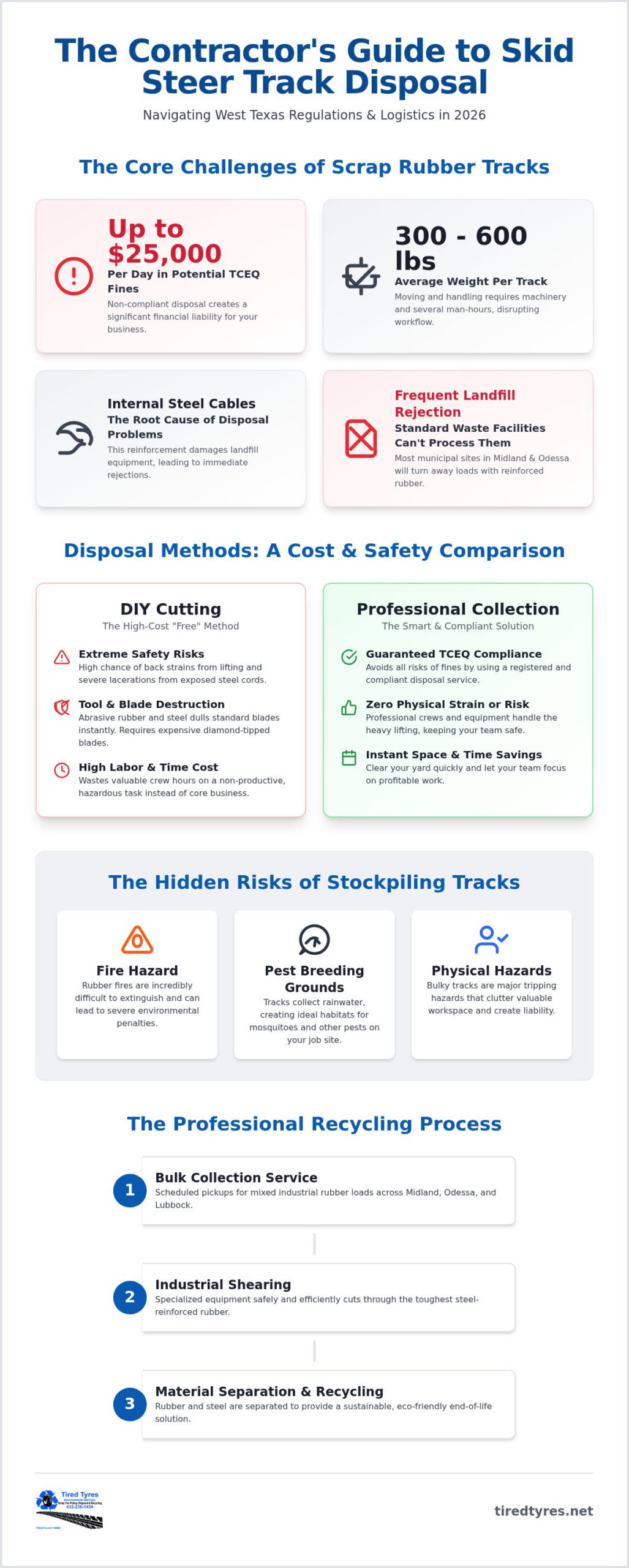
Skid steer tracks are built to survive the harshest conditions in the Permian Basin. They consist of high-density rubber compounds reinforced with thick internal steel cables. While this construction is perfect for navigating rocky job sites, it makes them incredibly difficult to handle once they’re worn out. A single track often weighs between 300 and 600 pounds. For a small crew in Midland or Lubbock, simply moving a pair of tracks from the yard to a trailer is a logistical hurdle that requires dedicated machinery and several man-hours.
Many contractors search for how to dispose of skid steer tracks only to find that municipal landfills in Midland and Odessa often reject them outright. These facilities aren’t being difficult; they’re protecting their equipment. Reinforced rubber is a mechanical nightmare for standard landfill operations, leading to a growing backlog of scrap material on local industrial sites.
The Problem with Steel-Reinforced Rubber
Internal steel cords are the primary reason for landfill rejections. These cables are designed to resist stretching and snapping under extreme tension. Unfortunately, that same strength allows them to wrap around the drums of landfill compactors or damage hydraulic systems. Most municipal sites that do accept rubber waste require the tracks to be cut into small, manageable pieces first. In 2026, the specific difficulty of shearing steel-belted rubber remains a major barrier because modern track reinforcements are tougher than ever, requiring industrial-grade shears that most shops don’t own. The complex Tire recycling process is necessary to properly separate these materials, a task that standard waste management isn’t built to perform.
Space and Liability Risks for Permian Basin Job Sites
Leaving old tracks in a corner of your yard might seem like a low-priority issue, but it creates genuine risks. These massive loops are significant tripping hazards and consume valuable square footage that could be used for active inventory. There’s also a specific biological concern in West Texas. When we get seasonal rains, the deep treads and curves of old tracks trap standing water. These pockets become ideal “mosquito habitats,” breeding pests right where your employees work every day.
To keep your operations running smoothly and safely, you should prioritize reliable tire disposal. Beyond the physical space they take up, stockpiling rubber is a fire hazard. Rubber fires are extremely difficult to extinguish and can result in heavy TCEQ fines if the smoke impacts the surrounding area. Clearing your site isn’t just about cleaning up; it’s about reducing your long-term liability.
Common Disposal Methods: DIY vs. Professional Solutions
When you’re searching for how to dispose of skid steer tracks, you’ll likely encounter a few standard suggestions. The most ideal scenario is a dealer trade-in. If you’re purchasing a new set of tracks in Lubbock or Odessa, some dealers may offer a small credit for your old ones. This only works if the track carcass is still in relatively good condition. Most tracks in the Permian Basin are run until they’re shredded or the internal steel cables are exposed. In those cases, dealers won’t accept them, leaving the disposal problem entirely on your shoulders.
For tracks that aren’t eligible for trade-in, the options narrow down to processing them yourself, finding a secondary use, or hiring a professional collection service. Each method has different implications for your bottom line and crew safety.
The High Cost of DIY Cutting
Some operators try to save money by cutting tracks into smaller pieces to fit into standard waste bins. This is rarely as simple as it looks. You’ll need high-torque reciprocating saws or circular saws equipped with specialized carbide or diamond-tipped blades. Standard blades designed for wood or metal will dull almost instantly against the high-density, abrasive rubber used in modern tracks.
The hidden costs of this “free” method add up fast. You have to account for the labor hours of paying a two-man crew to wrestle with 500-pound tracks while burning through expensive blades. Beyond the financial cost, the safety risks are significant. Handling heavy rubber while using high-powered saws increases the chance of back strains or serious lacerations from the internal steel cords. Most business owners find that the time lost on these tasks is worth far more than the cost of professional removal.
Repurposing: Is it Worth the Effort?
You might see old tracks used as driveway drags for gravel roads or as heavy-duty livestock mats on rural West Texas properties. While these are creative ways to get a bit more life out of the material, they only delay the inevitable need for commercial tire disposal. Eventually, even a repurposed track will degrade or become a buried nuisance in the soil.
For a professional job site or yard, keeping old rubber around often just looks like clutter. It doesn’t solve the core waste management issue and can even impact your site’s professional appearance. The most efficient alternative is a professional collection model. This allows your team to focus on billable work while experts handle the heavy lifting. If you want to clear your site without the headache of DIY processing, scheduling a specialized scrap rubber collection is the most logical step forward.
Texas Regulations and Environmental Compliance for Rubber Waste
In Texas, managing industrial rubber waste isn’t just about yard maintenance; it’s a matter of strict legal compliance. The Texas Commission on Environmental Quality (TCEQ) oversees the storage, transportation, and disposal of all scrap tires and industrial rubber under Title 30 of the Texas Administrative Code. If you are researching how to dispose of skid steer tracks, you must understand that these items often fall under the same regulatory umbrella as scrap tires due to their composition. Following Texas tire disposal regulations is the only way to shield your company from significant financial exposure.
The TCEQ monitors the movement of scrap rubber to prevent environmental hazards and public health risks. Because tracks are bulky and contain steel, they are prone to being stockpiled illegally. In 2025, the TCEQ issued over $2.4 million in penalties for improper waste management. Staying compliant ensures your business isn’t part of next year’s enforcement statistics.
Avoiding Illegal Dumping Fines
Illegal dumping in Midland and Lubbock counties is defined as disposing of waste at any site that isn’t a permitted facility. The temptation to “pay a guy with a trailer” to haul away old tracks for a low cash price is a high-risk gamble. If those tracks are found in a ditch, on unauthorized land, or at a non-permitted site, the TCEQ can trace the material back to the original generator.
The financial consequences are severe. Fines for violations, such as storing unregistered scrap rubber or using an unpermitted hauler, can reach as high as $25,000 per day. For a small business in the Permian Basin, a single mistake in how to dispose of skid steer tracks can lead to a ruinous legal battle. Using a permitted hauler is the only way to ensure the chain of custody remains unbroken and legal.
The Importance of the Scrap Manifest
A scrap manifest is a multi-part document that tracks rubber waste from the moment it leaves your job site until it reaches a permitted processing facility. It acts as your primary defense during an environmental audit. If an inspector asks where your waste went, the manifest provides the proof you need to show you followed the law.
Tired Tyres operates as a permitted tire hauler, ensuring every load is documented and processed according to state guidelines. We handle the paperwork so you don’t have to worry about missing details. Businesses in West Texas must submit their annual operational status reports for the 2025 calendar year through the STEERS portal no later than December 31, 2026. Having accurate manifests on hand makes this reporting process straightforward and stress-free.
The Professional Alternative: Bulk Collection and Recycling
Professional recycling provides the most sustainable answer for contractors wondering how to dispose of skid steer tracks effectively. Unlike municipal landfills that struggle with reinforced rubber; specialized facilities are built specifically for this material. The tire recycling process for industrial tracks involves heavy-duty machinery that can handle the internal steel cables without mechanical failure. This approach removes the burden of processing from your crew and ensures your business remains environmentally responsible.
How Industrial Rubber is Recycled
The journey of a scrap track begins with primary shredding. Industrial-grade shears and shredders reduce the massive loops into smaller chunks. Following this, a secondary granulation process grinds the rubber further. During this stage; powerful magnets extract the internal steel cords, separating the metal from the rubber. This separation is the key to successful recycling. It allows each material to be repurposed rather than buried in the West Texas soil.
Once processed, the clean rubber granules find new life in several applications:
- Rubberized asphalt: Used for durable road surfaces across Texas.
- Playground mulch: Providing a safe, impact-absorbing surface for parks.
- Tire-derived fuel (TDF): A high-energy alternative for industrial kilns and power plants.
This cycle keeps 100% of the material out of landfills. It eliminates the risk of old rubber becoming a permanent fixture on your property or a long-term environmental liability.
Scheduling a Bulk Pickup
Efficiency is the primary benefit of the professional collection model. Instead of making multiple trips to various facilities; you can opt for a “one-and-done” approach. Start by inventorying your scrap. Count your worn-out tracks, OTR tires, and industrial hoses. Most professional services can handle these mixed loads in a single visit, clearing your yard in a fraction of the time it would take to process them manually.
To prepare for a collection truck, ensure the scrap is located on flat ground with clear access for heavy equipment. Removing debris or standing water from the area helps the loaders work quickly and safely. This streamlined logistics plan allows your team to stay focused on active projects while the waste management experts handle the heavy lifting. If your yard is reaching capacity, schedule a scrap skid steer track collection to restore your workspace and maintain compliance.
How Tired Tyres Simplifies Your Skid Steer Track Disposal
Tired Tyres acts as the primary specialist for industrial rubber waste in the Permian Basin. We understand that contractors in West Texas have enough to manage without worrying about landfill rejections or safety risks. We provide a straightforward answer for how to dispose of skid steer tracks by taking the entire logistical burden off your hands. Our “No-Hassle” promise is built on a simple workflow: we load the material, we haul it away, and we provide the legal manifest. You don’t need to waste time cutting tracks or damaging your own trailers.
One of our greatest strengths is our ability to handle mixed industrial loads. Most construction yards don’t just have scrap tracks; they have a variety of rubber waste that accumulates over time. We streamline your site cleanup by collecting several categories of waste in a single visit:
- Scrap skid steer track collection: Any size or brand, regardless of steel reinforcement.
- OTR (Off-the-Road) tire collection: Handling the heavy rubber from loaders and earthmovers.
- Semi-truck tire collection: Clearing out worn-out rubber from your transport fleet.
- Scrap hose and conveyor belt collection: Managing the specialized rubber waste common in oil field operations.
Our Service Area: Midland, Odessa, and Lubbock
Our roots are deep in the Permian Basin and the South Plains. We’ve built our operations to cater to the unique demands of oil field service companies and local farmers who rely on heavy equipment. Because we use local dispatch, we offer faster turnaround times than national waste providers. We know the specific site requirements of West Texas industrial yards and the importance of keeping your workspace clear and compliant. Whether you’re operating a large fleet in Odessa or a family farm near Lubbock, we bring professional equipment directly to your site.
Get Your Scrap Track Pickup Quote Today
Requesting a quote is a direct and efficient process. You can contact us through our website or by phone to discuss your specific volume and location. To ensure the most accurate estimate, have the quantity of tracks and any additional items like OTR or agricultural tires ready for our team.
We pride ourselves on transparent communication and professional service. As a permitted tire hauler in Texas, we ensure every load is documented for your records. This protects your business from the liability of improper disposal and keeps your yard ready for the next project. Contact us today for a custom quote and experience a cleaner, safer way to manage your industrial rubber waste.
Clear Your Site and Secure Your Compliance Today
Managing industrial waste in the Permian Basin doesn’t have to be a source of stress or a risk to your bottom line. You’ve seen why traditional landfills often turn away reinforced rubber; and how DIY cutting only leads to ruined tools and wasted labor. By understanding how to dispose of skid steer tracks through professional recycling; you ensure your business remains compliant with strict 2026 TCEQ regulations. Every scrap manifest we provide serves as your proof of legal disposal during an environmental audit.
Tired Tyres is a TCEQ Permitted Hauler with the specialized industrial rubber equipment needed to clear your site in Midland, Odessa, or Lubbock. We handle the heavy lifting and the mandatory paperwork so you can stay focused on your primary operations. Our team is ready to manage your mixed loads of tracks, OTR tires, and industrial hoses with a single, efficient pickup. Don’t let old rubber become a liability or a safety hazard in your yard.
Get a Professional Track Disposal Quote for Your West Texas Business
Take the first step toward a cleaner, safer; and more professional workspace today. Our experts are standing by to help you restore your yard’s efficiency and maintain your professional reputation.
Frequently Asked Questions
Can I take skid steer tracks to the local landfill in Midland?
Most municipal landfills in Midland and Odessa reject skid steer tracks because of the internal steel cables. These cables wrap around and damage expensive landfill compactors. If you’re looking for how to dispose of skid steer tracks locally; municipal sites usually require you to cut them into small pieces first. This is a labor-intensive process that most businesses prefer to avoid by choosing a professional collection service that handles the tracks in their original state.
How much does it cost to dispose of a rubber track?
Disposal costs are calculated based on the total volume of material and your specific location in West Texas. Since tracks vary significantly in weight and size; we provide custom quotes for every project. This ensures you only pay for the specific logistics required for your site. We recommend having your track count and any additional scrap rubber items ready when you call so we can provide an accurate estimate for your cleanup.
Do I need to cut my tracks into pieces before you pick them up?
No, you don’t need to cut your tracks before our team arrives. We use specialized equipment designed to lift and transport whole tracks directly from your site. Cutting through high-density rubber and steel cables is dangerous and destroys expensive saw blades. By leaving the tracks intact; you save on labor costs and eliminate the risk of workplace injuries. We take care of the entire loading process once we reach your location.
Is it illegal to bury old skid steer tracks on my own property in Texas?
Yes, burying industrial rubber waste on your property is illegal under TCEQ regulations. Texas law classifies this as unauthorized disposal; which can lead to fines as high as $25,000 per day. These materials don’t biodegrade and can contaminate the soil over time. Proper disposal through a permitted hauler is the only way to protect your land and your business from long-term legal and environmental liabilities in the Permian Basin.
What happens to the tracks after Tired Tyres collects them?
Collected tracks are transported to a specialized processing facility for recycling. The material is shredded and run through magnets to separate the internal steel from the rubber. The extracted steel is recycled; while the rubber granules are repurposed for industrial applications like rubberized asphalt or tire-derived fuel. This process ensures that 100% of the material is diverted from West Texas landfills and put back into the circular economy for future use.
Can I recycle tracks that have been contaminated with oil or chemicals?
Tracks contaminated with oil or chemicals can often be processed; but you must inform us of the contamination beforehand. Chemical residues may require special handling or specific processing protocols to stay compliant with Texas environmental laws. We’ll assess the condition of the material during the quoting process. Transparency helps us ensure that the recycling facility is prepared to handle the waste safely without risking environmental damage or facility downtime.
How many tracks do I need for a bulk pickup service?
We focus on bulk collections to keep our logistics efficient and cost-effective for West Texas businesses. While we don’t have a strict single-item limit; we recommend grouping your scrap into larger loads. Many of our clients mix scrap skid steer tracks with semi-truck tires or OTR tires to maximize the value of the pickup. If you have a specific quantity in mind; contact us to discuss how we can best serve your site’s needs.
Do you provide a manifest for commercial disposal compliance?
Yes, we provide a professional scrap manifest for every commercial load we collect. This document is a critical part of your record-keeping for TCEQ compliance. It tracks the waste from your job site to the final processing facility; serving as your legal proof of proper disposal. During an environmental audit; having these manifests on hand is the easiest way to show that your business follows all state-mandated waste management protocols.