
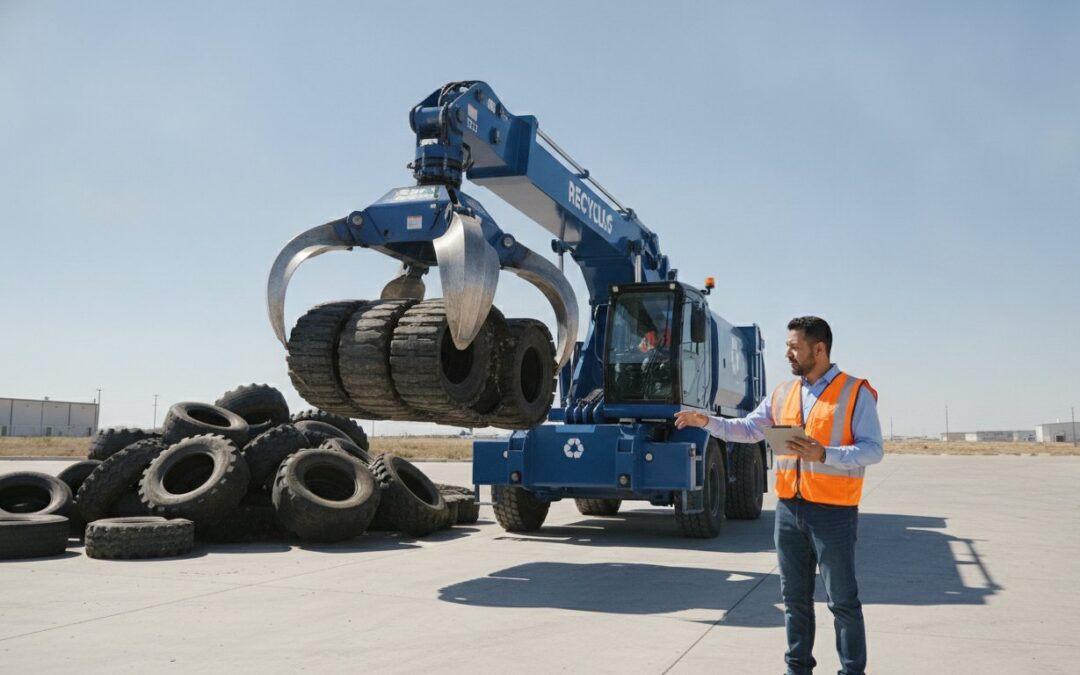
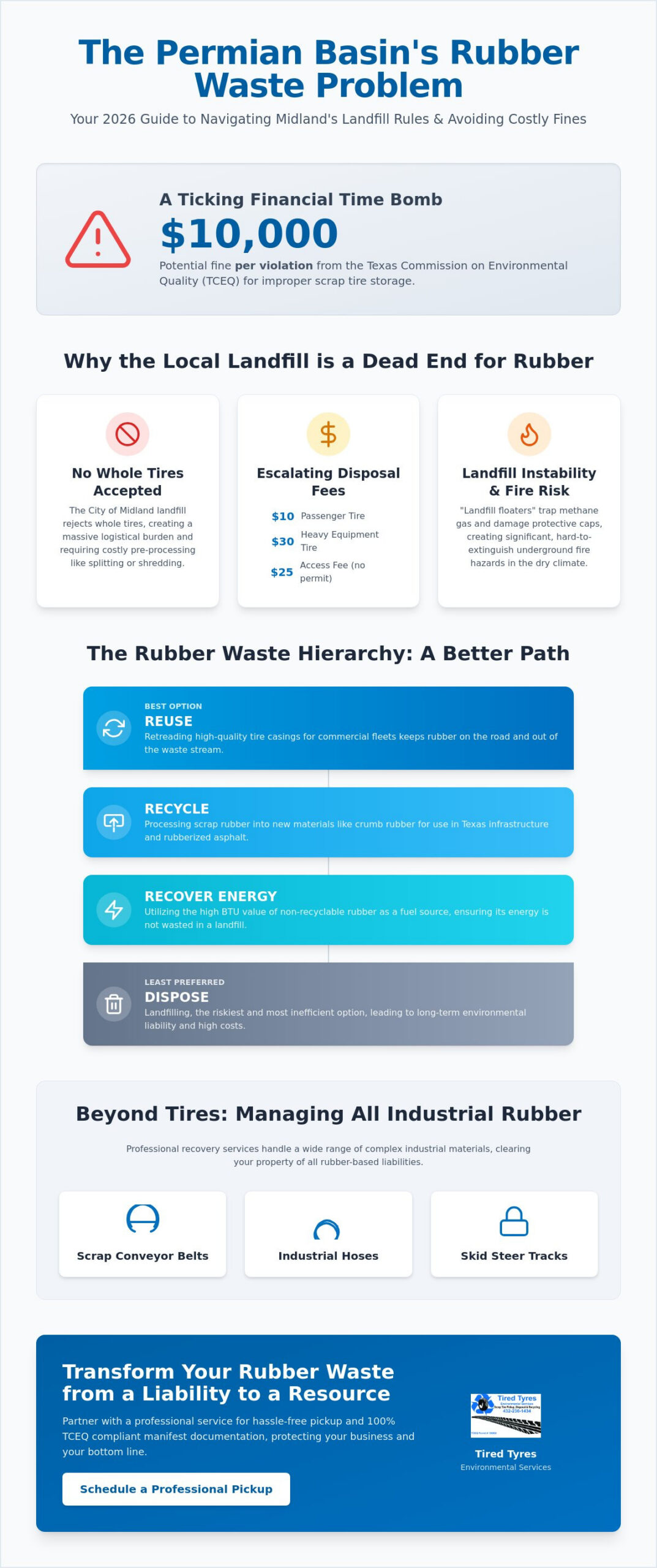
Did you know that the Texas Commission on Environmental Quality can issue fines of up to $10,000 per violation for improper scrap tire storage? For many Permian Basin businesses, the pile of old tires, tracks, and industrial hoses in the yard is a ticking financial time bomb. The City of Midland landfill doesn’t accept whole tires, and the fees for processed rubber continue to climb. Finding reliable alternatives to landfill for rubber waste Midland companies can actually use is now a business necessity. You’re likely tired of the strict limits on tire counts and the logistical headache of splitting or shredding waste just to get it through the gate.
We understand that your priority is clearing space and protecting your bottom line without risking a legal nightmare. This 2026 guide reveals how to bypass the municipal landfill entirely while ensuring 100% compliance with Texas manifest requirements. You’ll discover how to transform bulk rubber from a liability into a sustainable resource through specialized collection services. We’ll preview the latest local recycling infrastructure, including the newest processing facilities in the area, and show you the exact steps to secure a professional pickup service that keeps your property clean and your business TCEQ compliant.
Key Takeaways
- Understand why the City of Midland landfill restricts whole tires and how to avoid the heavy surcharges associated with bulk rubber disposal.
- Learn the critical role of TCEQ manifests in ensuring 100% legal compliance and protecting your business from significant regulatory fines.
- Discover the most efficient alternatives to landfill for rubber waste Midland industries can use to clear property space and improve operational safety.
- Identify specialized recovery paths for complex industrial materials, including scrap conveyor belts, industrial hoses, and skid steer tracks.
- See how professional tire and rubber collection services transform a storage liability into a sustainable, hassle-free resource for your company.
The Reality of Landfill Restrictions for Rubber in Midland-Odessa
The City of Midland landfill has clear rules: they don’t accept whole tires. If you want to dispose of rubber waste there, you have to split, shred, or quarter it first. This requirement creates a massive logistical burden for local businesses. For companies operating in the Permian Basin, finding viable alternatives to landfill for rubber waste Midland can depend on is no longer optional. Between the labor costs of processing waste and the rising tipping fees, the traditional dump is rarely the most efficient path for industrial scrap.
Burying rubber in our arid West Texas climate is a losing game. Rubber doesn’t break down like organic waste; it persists for centuries. In Midland, the heat and dry soil conditions don’t help. Instead, buried rubber creates structural and safety issues for municipal waste sites. Local businesses often find their bulk rubber rejected at the gate because it doesn’t meet the strict size requirements or because the landfill has reached its daily volume limit for commercial tires.
Why Landfills Limit Scrap Tire Acceptance
Tires are known as “landfill floaters.” Because they are resilient and trap air, they eventually work their way back to the surface of a landfill cell. This movement destroys the protective clay or plastic caps designed to keep waste contained. Beyond the structural damage, buried rubber creates large voids. These pockets trap methane gas, which significantly increases the risk of underground fires. These fires are notoriously difficult to extinguish and can burn for months in dry environments. Because of these risks, municipal sites in Midland often set strict volume limits for commercial haulers to prevent a dangerous concentration of rubber waste.
The Hidden Costs of Landfilling in the Permian Basin
The price you see on the gate sign is just the baseline. As of mid-2023, the City of Midland established fees of $10 for a passenger tire and $30 for a heavy equipment tire. For a business hauling a trailer of OTR tires or scrap conveyor belts, these costs stack up fast. You also have to account for the $25 access fee charged to vehicles without a valid Garbage Hauler’s Permit. When you add in the fuel and labor required for self-hauling, the “cheap” option becomes incredibly expensive. To offset these operational expenses, some businesses choose to liquidate other unused assets, such as precious metals, through specialized buyers like Houston Empire Gold Buyers.
There’s also the matter of long-term liability. If your waste ends up in an illegal dump or is handled by an unpermitted hauler, the TCEQ can issue fines of up to $10,000 per violation. Understanding the Tire recycling process helps businesses see why recovery is safer and more predictable than disposal. Professional alternatives to landfill for rubber waste Midland services ensure your company isn’t tied to these escalating costs or legal risks. By choosing recovery over burial, you protect your business from the “floating” liabilities of the local dump.
The Rubber Waste Hierarchy: Better Paths Than the Dump
The waste hierarchy isn’t just a theoretical concept. It’s a regulatory and economic framework designed to maximize the value of every pound of industrial rubber. For Permian Basin operators, following this hierarchy is the most effective way to identify sustainable alternatives to landfill for rubber waste Midland companies can implement today. Instead of viewing scrap as a burden to be buried, the hierarchy treats it as a tiered resource. By prioritizing reuse and recovery over disposal, you reduce long-term liability and often lower your total waste management costs.
The highest tier of the hierarchy is reuse. For commercial fleets and semi-truck operations, retreading is a primary strategy. A high-quality tire casing can often be retreaded multiple times, which keeps the rubber on the road and out of the waste stream. When a tire or industrial component reaches the end of its functional life, it moves to the next tier: material recycling. This involves mechanical processing to create new products. If recycling isn’t feasible, the material moves to energy recovery, ensuring that the high BTU value of the rubber isn’t wasted in a trench.
Material Recycling: Turning Waste into Permian Basin Infrastructure
Recycling is where the majority of West Texas rubber waste finds a second life. Scrap tires and industrial rubber are processed into crumb rubber, which is a vital component in modern Texas infrastructure. This material is frequently used in rubberized asphalt for state highways, providing a more durable and quieter driving surface that stands up to the intense heat of our summers. In the oil field, recycled rubber is transformed into heavy-duty mats and industrial flooring, providing essential site protection and worker safety. This same material durability is also a hallmark of high-quality consumer products, such as the wide range of durable pet products and toys offered by PetToySolutions.
Local recovery efforts are highly effective; for instance, Tired Tyres recycles over 90% of the waste they collect into powder used for asphalt and specialized mats. Rubber circularity in the Permian Basin is the process of diverting spent industrial assets back into the local economy as high-performance road additives or site protection mats. Exploring professional rubber collection and recovery is the most direct way for your business to participate in this cycle while clearing property space.
Tire-Derived Fuel (TDF): A High-Energy Alternative
When rubber cannot be recycled into new materials, it serves as a powerful energy source known as Tire-Derived Fuel (TDF). Rubber has a heating value of approximately 12,000 to 16,000 BTUs per pound. This makes it significantly more efficient than coal, which typically offers 25% to 50% less energy per pound. Because of this high energy density, cement kilns and paper mills across Texas use TDF as a cleaner-burning alternative to traditional fossil fuels.
Using TDF as one of the alternatives to landfill for rubber waste Midland industries rely on has clear environmental benefits. When burned in specialized industrial kilns, TDF produces fewer emissions than coal and ensures that the energy stored in the rubber is fully utilized. With West Texas generating over 250,000 scrap tires annually, diverting this volume toward energy recovery prevents the structural and fire risks associated with landfilling whole or shredded tires. It’s a practical solution that supports the state’s industrial energy needs while solving a massive waste problem.
Beyond Tires: Managing Industrial Rubber Waste
Permian Basin operations generate a massive volume of specialized rubber waste that goes far beyond standard passenger tires. For oil and gas companies and agricultural producers, the yard often fills up with scrap conveyor belts, high-pressure hoses, and skid steer tracks. These items are notoriously difficult to manage because they are frequently steel-reinforced. Most general waste haulers in West Texas refuse to touch these materials because they can’t be processed by standard municipal shredders. Finding specific alternatives to landfill for rubber waste Midland industrial sites produce requires a partner who understands the mechanics of heavy-duty recovery.
Steel-reinforced rubber is a major hurdle for traditional disposal. When a general hauler takes a load to a municipal site, reinforced items like solid tires or drilling hoses can cause expensive damage to the facility’s blades. This is why bulk industrial rubber is often rejected at the gate. To keep your project sites clear and avoid the logistical bottleneck of rejected loads, you need a collection service equipped for the weight and durability of industrial-grade scrap. Choosing a specialist ensures that your reinforced rubber is handled correctly from the moment it leaves your property.
Conveyor Belts and Industrial Hoses
Scrap conveyor belts from mining or industrial processing contain high-grade rubber that is too valuable to bury. Recovery methods focus on stripping these belts for material recycling or repurposing. In many West Texas agricultural settings, these durable belts find a second life as heavy-duty fencing or protective flooring for livestock trailers. Industrial hoses used in fracking and drilling operations present a different challenge due to their size and chemical exposure. Professional recovery services ensure these hoses are collected and diverted to facilities capable of managing their specific material composition without violating environmental standards.
OTR and Agricultural Tire Recovery
The logistics of moving massive earthmover or tractor tires are complex. These Off-the-Road (OTR) units can weigh thousands of pounds and require specialized cranes or flatbeds for transport. Standard municipal sites in Midland aren’t set up to handle the sheer volume or the high-ply density of these tires. Specialized shredding is required to break down OTR rubber before it can enter the recycling stream. If you’re managing a fleet of heavy machinery, you can find more detail in our guide on Commercial Tire Disposal in Midland. Using a dedicated service for these oversized items is one of the most effective alternatives to landfill for rubber waste Midland businesses can use to maintain a clean, safe work environment.
Texas Regulations: Avoiding Fines and Staying Compliant
Texas laws for rubber disposal are strict. The Texas Commission on Environmental Quality (TCEQ) oversees every scrap tire and industrial rubber component moved in the state. If you are looking for alternatives to landfill for rubber waste Midland businesses can rely on, compliance must be your first priority. Managing waste without proper documentation is a massive risk. The TCEQ can issue fines of up to $10,000 per violation for improper disposal or storage of scrap tires. These financial penalties are designed to prevent illegal dumping, but they can easily catch well-meaning businesses that don’t follow the paperwork trail.
Staying compliant starts with verifying your service provider. Any hauler you hire must be registered with the TCEQ. You should always ask for their registration number before they load a single tire or hose. If the waste is later found in an unauthorized site, the generator (your business) remains legally responsible unless you have the proper manifests to prove legal transfer. For guaranteed peace of mind, you can schedule a compliant rubber pickup with a permitted professional.
The Scrap Tire Manifest System Explained
The manifest is your legal shield. It tracks the waste from the point of generation to the final processing facility. You must follow a specific three-step process to stay in the clear:
- Step 1: The generator (your business) fills out the manifest during the pickup, noting the quantity and type of rubber.
- Step 2: The hauler signs the document and provides you with a copy immediately for your business records.
- Step 3: You must retain these manifests for at least three years to pass a potential TCEQ audit.
Transporters and storage sites must also submit an annual activity report by March 1st for the preceding year. Keeping these records organized prevents a paperwork error from turning into a costly legal battle. Remember that storing more than 500 scrap tires on the ground requires registration as a scrap tire storage site, so moving your inventory frequently is essential to avoid extra regulatory hurdles.
Health and Fire Hazards of Improper Storage
Stockpiling rubber on your property in Midland or Odessa is more than a legal liability. It is a health and safety crisis. Tires trap water easily, creating the perfect breeding ground for mosquitoes that carry the West Nile Virus. In our West Texas climate, these piles can quickly become an infestation center for your employees and neighbors. You can read more about these risks in our guide on Waste Tire Problems in West Texas.
Fire is the other major danger. Tire fires are nearly impossible to put out once they start. They burn at extreme temperatures and release toxic oil and smoke into the soil and air. The cost of environmental remediation after a tire fire often exceeds the value of the property itself. By moving waste off-site quickly through professional collection, you eliminate these hazards and keep your business property safe and compliant.
Partnering with Tired Tyres for Local Rubber Recovery
Managing industrial scrap shouldn’t be a secondary job for your operations team. Tired Tyres provides a turn-key solution that replaces the stress of municipal disposal with a professional, streamlined recovery process. We offer one of the most reliable alternatives to landfill for rubber waste Midland businesses can access to maintain a clean and safe property. Our service is built on the reality of West Texas industry; we know that your waste isn’t just passenger tires. It includes heavy OTR units, reinforced conveyor belts, and massive agricultural tires that municipal sites simply aren’t equipped to handle.
Our commitment to 100% legal disposal and manifest transparency protects your business from the TCEQ risks discussed earlier. We serve the entire Permian Basin, including Midland, Odessa, and Lubbock, with a specialized fleet designed for heavy lifting. Whether you are clearing out a decades-old stockpile or need a recurring route for semi-truck tire collection, we provide the documentation necessary to keep your company audit-ready. By choosing recovery over the local dump, you ensure that over 90% of your rubber waste is recycled into powder for asphalt and industrial mats rather than taking up space in a landfill cell.
What to Expect During a Professional Pickup
We’ve designed our pickup process to be as non-disruptive as possible. Once you schedule a service, our team arrives with the equipment needed to manage your specific inventory. We handle all the heavy lifting, including the removal of scrap skid steer tracks, solid tires, and heavy-duty scrap hoses. You don’t need to worry about the logistics of loading or transporting bulk items. During the pickup, we generate the required TCEQ manifests on-site. You’ll receive a signed copy immediately, providing an instant paper trail that proves your rubber was transferred to a permitted hauler. This efficiency allows you to clear property space without diverting your own labor or equipment.
Get a Quote for Rubber Waste Removal
The cost of industrial rubber collection depends on a few practical factors. We look at the total volume of the waste, the specific types of rubber involved, and your location within the Permian Basin. While DIY landfill trips might seem cheaper at first glance, the hidden costs of labor, fuel, and potential rejection at the gate often make them more expensive. Our specialized service is more efficient because we process the material for recovery, bypassing the size restrictions and surcharges of municipal sites. We offer transparent pricing for everything from Passenger & Light Truck Tire Collection to complex OTR and agricultural recovery.
Ready to clear your yard and secure your compliance? Contact Tired Tyres for a pickup quote in Midland. Our team is ready to provide the professional alternatives to landfill for rubber waste Midland industries need to stay productive and environmentally responsible.
Secure Your Permian Basin Site for the Future
The landscape of waste management in West Texas has shifted. Relying on municipal dumps for bulk scrap is now a financial and legal liability. By embracing alternatives to landfill for rubber waste Midland businesses can protect themselves from TCEQ fines while clearing valuable property space. You’ve seen how the waste hierarchy and specialized recovery facilities offer a more sustainable path for everything from semi-truck tires to steel-reinforced conveyor belts. Moving away from the local landfill isn’t just an environmental choice; it’s a strategic business move that eliminates long-term risks.
Protecting your bottom line requires a partner who understands the Permian Basin’s unique industrial needs. We have provided specialized OTR and industrial rubber equipment to the region since 2026, serving Midland, Odessa, and Lubbock with precision. Every pickup includes full TCEQ-compliant manifest documentation to ensure you stay audit-ready and worry-free. It’s time to turn your rubber liability into a managed resource. Request a Professional Rubber Waste Pickup Quote and experience a cleaner, more compliant way to handle your industrial scrap. Your property deserves the professional touch of a recovery expert.
Frequently Asked Questions
Can I take more than 5 tires to the Midland landfill?
Yes, but you cannot dispose of whole tires at the City of Midland landfill. All tires must be split, shredded, or quartered before they are accepted. Additionally, vehicles without a valid Garbage Hauler’s Permit are charged a $25 access fee in addition to the standard disposal costs of $10 for passenger tires and $30 for heavy equipment tires.
What is the fine for illegal tire dumping in Texas?
The Texas Commission on Environmental Quality can issue fines of up to $10,000 per violation for improper disposal. Locally, Midland authorities issue fines starting at $500 for illegal dumping. Because the generator remains legally responsible for the waste, using professional alternatives to landfill for rubber waste Midland services is the only way to eliminate this long-term liability.
Does Tired Tyres pick up industrial rubber other than tires?
Yes, we collect various industrial rubber materials beyond standard vehicle tires. Our specialized equipment allows us to handle scrap skid steer tracks, industrial hoses, and scrap conveyor belts. We also provide collection for solid tires and other scrap rubber items that are frequently rejected by municipal waste sites due to their size or steel reinforcement.
How do I know if my tire hauler is TCEQ-permitted?
You should always ask a hauler for their TCEQ registration number before allowing them to collect any waste. A professional service provider will have this documentation ready to present. You can also verify their status through the TCEQ’s central registry database to ensure they are authorized to transport and manage scrap tires and rubber in the State of Texas.
Is it legal to burn rubber waste on my property in Midland?
No, burning rubber waste or tires is strictly prohibited under Texas environmental laws. Burning rubber releases hazardous pollutants and toxic oils that contaminate the soil and groundwater. The resulting clean-up costs and TCEQ enforcement actions are far more expensive than hiring a permitted hauler to recycle the material properly.
What happens to the rubber after Tired Tyres picks it up?
We divert the majority of the material away from landfills, recycling over 90% of the waste we collect. The rubber is processed into a fine powder or crumb rubber. This material is then used in various sustainable ways, such as creating rubberized asphalt for Texas highways, manufacturing horse stall mats, and producing durable industrial flooring products.
Do I need a manifest if I am only disposing of a few tires?
Yes, a scrap tire manifest is required for the legal transfer of tires regardless of the quantity. This document acts as your receipt and proof of compliance, showing that the waste was handed to a permitted transporter. We provide these manifests during every pickup to ensure your business remains audit-ready and protected from potential fines.
How should I store rubber waste while waiting for a pickup?
Store your rubber waste in a dry, covered area or an enclosed container to prevent water from pooling inside. Standing water in tires is a primary breeding ground for mosquitoes that carry the West Nile Virus. If you plan to store more than 500 tires on the ground, you are required to register with the TCEQ as a storage site.