
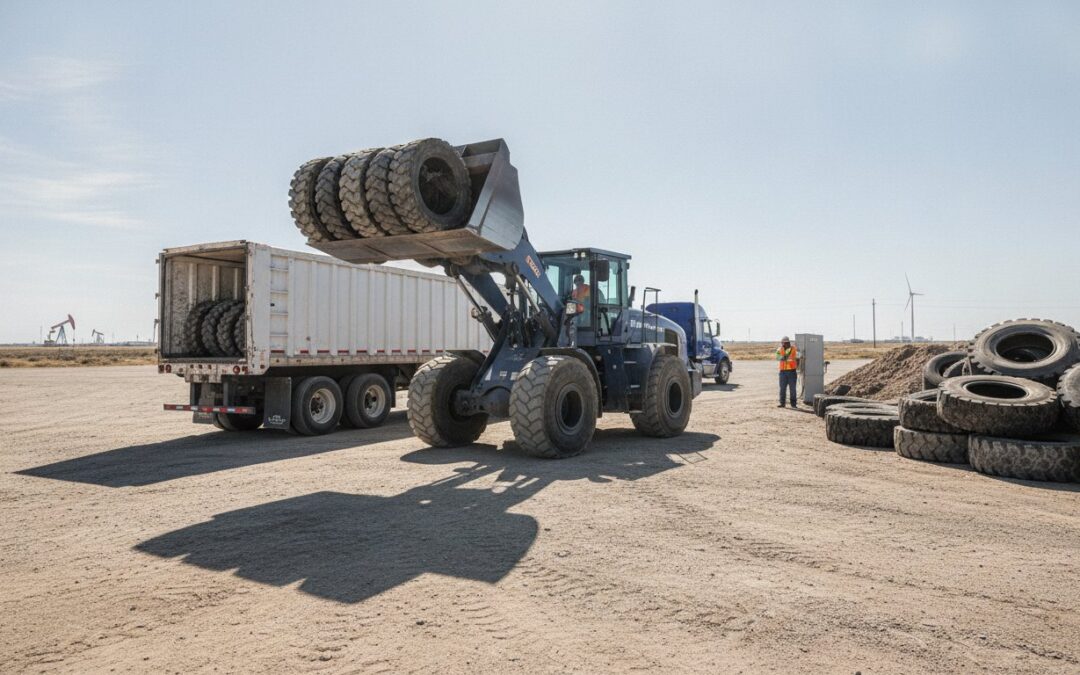
What if the heavy rubber waste accumulating at your Midland or Odessa facility is actually a ticking legal time bomb? Many West Texas industrial operators discover too late that standard recyclers simply won’t accept foam-filled tires or heavy-duty tracks. This rejection often leads to dangerous stockpiles that create fire hazards and invite massive TCEQ penalties. If you’re struggling to find a reliable solid tire disposal service that understands industrial waste, you aren’t alone.
We understand that navigating the complex manifest requirements of 2026 feels like a full-time job. You need a partner who accepts all rubber types and ensures your business stays on the right side of the law. This guide provides a clear path to securing TCEQ-compliant disposal for solid tires, tracks, and industrial rubber waste in Midland, Odessa, and Lubbock. We’ll explore how to avoid the state jail felonies associated with improper disposal and how to finally clear your high-risk stockpiles. You’ll learn exactly what’s required to maintain a clean, compliant site while protecting your operations from the $15 million in administrative penalties TCEQ has already assessed this year.
Key Takeaways
- Learn how partnering with a permitted hauler protects your business by transferring environmental liability during the disposal process.
- Discover why solid and foam-filled tires require specialized handling and how to manage the heavy logistics of industrial rubber waste.
- Secure a reliable solid tire disposal service that also accepts bulk industrial by-products like conveyor belts and scrap hoses.
- Understand the 2026 TCEQ manifest requirements to ensure your site remains compliant and free from high-risk rubber stockpiles.
- Explore how localized service routes in Midland, Odessa, and Lubbock offer a practical solution for clearing difficult industrial waste others reject.
What Defines Reliable Solid Tire Disposal in Texas?
Solid tire disposal is a specialized waste management process focused on non-pneumatic rubber products. Unlike standard tires, these items are solid rubber or foam-filled, making them incredibly dense and difficult to process. They don’t compress under weight, and they require heavy-duty equipment for transport and recycling. A professional solid tire disposal service is defined as one that provides a completed TCEQ manifest for every load, ensuring that the waste is tracked from the moment it leaves your facility.
The most critical role of a permitted hauler is the transfer of environmental liability. In Texas, the business that generates the waste is responsible for it until it reaches a registered processing site. When you partner with a professional, you’re effectively moving that liability from your company’s books to the disposal partner. This protection is vital for industrial operations that handle high volumes of scrap rubber. Understanding the tire recycling process helps explain why specialized handling is necessary to keep these materials out of landfills and canyons.
Reliability in West Texas carries a specific meaning. It isn’t just about showing up; it’s about adhering to scheduled pickups despite the challenges of remote oilfield sites or sprawling farm locations. Whether your operation is centered in the heart of Midland or on the outskirts of Lubbock, you need a partner who understands the logistics of the Permian Basin. A missed pickup doesn’t just create a mess. It creates a fire hazard and a potential regulatory headache that your business can’t afford.
TCEQ Compliance and the Manifest System
Texas law is clear about tracking scrap rubber from ‘cradle to grave.’ This manifest system isn’t just paperwork; it’s your primary defense during environmental inspections. If a TCEQ official visits your Midland or Lubbock site, they’ll look for these records first. A proper manifest proves that your waste reached a legal destination. For a deep dive into rules, see our Texas tire disposal regulations guide. Keeping these documents organized ensures your business stays compliant and avoids costly interruptions.
The Risks of Using Unpermitted ‘Junk’ Haulers
Hiring an unlicensed ‘junk’ hauler might seem like a quick fix, but it’s a dangerous gamble. If those tires are dumped illegally in a West Texas ravine, the TCEQ can trace them back to you. You’ll face secondary liability and significant financial penalties. Fines for improper scrap tire storage and disposal can reach thousands of dollars per day. Before booking any solid tire disposal service, always verify the hauler’s permit status through the state database to protect your company’s reputation and bottom line.
The Specialty of Solid Tire and Industrial Track Collection
Standard recyclers often reject solid or foam-filled tires because they lack the specialized equipment to process them. These items aren’t just heavy; they’re incredibly dense. A single solid forklift tire can weigh as much as several passenger tires combined. This density makes them a logistical nightmare for standard haulers who aren’t equipped for industrial-grade weight. If you’ve been turned away by other providers, you need a solid tire disposal service that specifically accounts for these non-pneumatic challenges.
Managing the weight and density of solid rubber during transport requires more than just a standard trailer. It requires heavy-duty lifting equipment and a deep understanding of weight distribution. When solid rubber isn’t managed correctly, it can damage transport vehicles and create safety risks on your site. We provide a logistical advantage by accepting both pneumatic and non-pneumatic waste in a single pickup. This approach saves your operation time and reduces the number of vendors you have to manage across the Permian Basin.
Tired Tyres positions itself as the solution for ‘un-recyclable’ industrial rubber. While many competitors explicitly refuse foam-filled or solid tires, we specialize in them. We understand that these materials are a byproduct of hard work in the oilfield and construction sectors. By accepting the difficult waste that others reject, we ensure your facility stays clean and compliant with state regulations.
Scrap Skid Steer and Excavator Track Disposal
Construction and demolition contractors in Odessa frequently struggle with scrap skid steer and excavator tracks. These tracks are reinforced with internal steel cables and heavy-duty metal plates. This combination of metal and thick rubber makes them nearly impossible for local landfills to process. Most landfills refuse them because they can’t be easily shredded or compacted. We offer efficient collection strategies for these reinforced tracks. We make sure they don’t sit in your yard and become a liability or a fire hazard.
Solid Rubber Tires for Warehousing and Mining
In high-volume industrial facilities and mining sites, forklift tires wear down quickly. Accumulating these heavy, solid tires leads to site congestion and tripping hazards. We provide customized pickup schedules to keep your workspace clear and safe. Whether you’re managing a warehouse in Lubbock or an oilfield service company in Midland, prompt removal is essential. By clearing these difficult items, we help you maintain a productive environment. If your facility is becoming cluttered with industrial rubber, we offer scrap solid tire collection to solve the problem quickly.
Managing Bulk Industrial Rubber: Belts, Hoses, and OTR Tires
Industrial operations in the Permian Basin produce more than just scrap tires. They generate massive volumes of diverse rubber by-products that require specialized handling. This includes everything from worn-out conveyor belts in mining facilities to high-pressure hoses at oilfield service sites. Managing these varied items requires the same regulatory rigor and logistical expertise as a professional solid tire disposal service. It’s about more than just clearing space. It’s about adhering to a strict waste management protocol that protects your business from liability.
There’s a critical environmental necessity to keep this large-scale rubber waste out of West Texas canyons and ravines. Illegal dumping in these areas is a serious offense in Texas. It leads to state jail felonies and massive administrative penalties. By choosing a permitted hauler, you ensure these materials are processed correctly. This protects the local landscape and your company’s legal standing. We help you transition from a cluttered site to a compliant one by taking the difficult rubber waste others leave behind. Our team understands the specific needs of the industrial and oilfield sectors in Midland and Odessa.
Scrap Conveyor Belt and Hose Removal
Bulk conveyor belts used in West Texas mining and processing present unique disposal challenges. These belts are often reinforced with steel and can weigh thousands of pounds. They’re bulky and resistant to standard cutting tools. We provide tailored disposal solutions for these industrial materials. We also handle heavy-duty industrial hoses from oil and gas operations. These hoses often contain wire reinforcements and chemical residues that require careful management. Consolidating these different rubber waste streams into a single, efficient pickup saves you time. It also ensures all your industrial by-products are accounted for under the broader commercial tire disposal framework.
Agricultural and OTR Tire Challenges
Moving massive tractor and earthmover tires is a logistical feat. These OTR (Off-the-Road) tires are vital for mining and agricultural sectors, but they’re incredibly difficult to transport once they’re scrap. Standard trailers and lifting equipment aren’t enough. Our professional solid tire disposal service utilizes specialized equipment to ensure safe loading and transport of oversized rubber. We prioritize providing reliable service to remote farm and oilfield locations across the South Plains. We know that businesses in Midland and Lubbock can’t afford to wait. We offer a direct, professional solution that clears your yard and eliminates the risks associated with accumulating oversized rubber waste.
The Pickup Process: How We Serve Midland, Odessa, and Lubbock
Reliability in the Permian Basin isn’t a vague promise; it’s built on transparency and direct communication. When you manage an industrial site, you don’t have time for missed windows or vague arrival times. A professional solid tire disposal service manages the vast distances between Midland, Odessa, and Lubbock with logistical precision. We coordinate our routes to ensure that even remote oilfield locations receive the same level of attention as a warehouse in the city center. This efficiency keeps your site clear and your operations moving without interruption.
Covering the South Plains requires the right equipment for the specific load. Accurate volume estimation is the first step in a successful pickup. We need to know if we’re hauling a few forklift tires or a massive pile of scrap skid steer tracks. This information allows us to select the right collection vehicle, preventing multiple trips and unnecessary costs. Before our trucks leave your property, we ensure you have a completed manifest in hand. This document is your physical proof of legal disposal and your primary shield against regulatory scrutiny.
Step-by-Step: From Quote to Collection
Getting your rubber waste cleared starts with a custom quote based on the specific rubber type and volume you have on-site. We don’t provide generic estimates because industrial waste is never generic. Once you approve the quote, we coordinate a pickup window that minimizes disruption to your daily operations. You have a business to run, and our loading process is designed to be quick and unobtrusive.
Our specialized fleet handles the heavy lifting, literally. Professional loading and site clearance are performed by teams who understand the weight and density of solid rubber products. The final step is the most important for your records. We sign the final manifest and transport the material to a permitted facility. This ensures your solid tire disposal service is fully documented from the moment the rubber leaves your yard.
Scheduled Maintenance vs. Bulk Site Remediation
Setting up recurring pickups is the most efficient choice for auto shops, fleet centers, and high-volume industrial facilities. Regular service prevents rubber waste from accumulating to dangerous levels. It keeps your facility organized and ensures you never exceed the 500-tire storage limit set by the TCEQ. We tailor these schedules to match your specific generation rate, whether that’s monthly or quarterly.
Large-scale cleanups are a different challenge, often involving property owners facing significant waste tire problems. These projects often require coordination with local authorities to ensure legal tire dump remediation. Whether it’s a legacy stockpile in a ravine or an abandoned industrial site, we provide the heavy equipment and manifest tracking required for a full legal clearing. If your site needs immediate attention, contact us for a professional rubber disposal quote to get the process started.
Why Tired Tyres is the Choice for West Texas Rubber Disposal
Choosing a disposal partner in West Texas requires more than just finding someone with a truck. You need a team that understands the specific demands of the Permian Basin and South Plains. National corporations often treat our region as an afterthought, with logistics designed for major metropolitan hubs rather than the sprawling oilfield and agricultural landscape. We focus exclusively on the Midland, Odessa, and Lubbock areas. This local commitment means we’re already familiar with your routes, your site challenges, and the specific TCEQ requirements that govern our corner of the state.
Our commitment to accepting difficult rubber waste sets us apart from standard recyclers. As we’ve discussed, many providers explicitly refuse the dense, non-pneumatic materials common in industrial settings. We don’t turn away solid tires, foam-filled rubber, or steel-reinforced tracks. We’ve invested in a specialized fleet and heavy-duty equipment to ensure we can handle the toughest loads. This makes us the “One-Stop Shop” for all your rubber waste needs. You won’t have to manage multiple vendors or worry about a hauler leaving half your pile behind because it’s “too heavy.”
A local presence allows for a level of flexibility that national firms can’t match. If your operations shift or a project timeline changes, we’re positioned to respond quickly. We understand that site congestion is a safety hazard, so we prioritize responsive scheduling to keep your yard clear. Our solid tire disposal service is built on the idea that professional waste management should be invisible. It should happen on time, every time, without pulling your focus away from your core business operations.
Local Expertise in the Permian Basin and South Plains
We have deep roots in the West Texas community. Keeping our local environment clean isn’t just a business goal; it’s a personal commitment. Our specialized fleet is designed to navigate the rugged terrain of oilfield sites and remote farms. We ensure that every piece of rubber, from a small forklift tire to a massive OTR earthmover tire, is handled with precision. This local expertise helps you maintain a professional, compliant site that stands up to any inspection. You can learn more about our local impact and specific regional requirements in our guide to tire disposal in Midland.
Request Your Custom Disposal Quote Today
Getting started is straightforward and transparent. To provide an accurate quote, we just need a few details about the type of rubber waste you have and the estimated volume. Whether it’s a one-time site remediation or a recurring solid tire disposal service, we offer clear pricing without hidden fees. Our customer service team is based right here in West Texas, so you’ll always speak with someone who knows the area. We’re ready to help you clear your high-risk stockpiles and secure full legal compliance. Request a Reliable Tire Pickup Quote for Your Business today and let us take the weight of industrial waste off your shoulders.
Secure Your Facility with Compliant Rubber Disposal
Managing industrial waste doesn’t have to be a source of constant stress for your operation. By choosing a partner who understands the 2026 regulatory landscape, you protect your business from the significant TCEQ penalties associated with improper storage. A dedicated solid tire disposal service provides the heavy-duty equipment needed to handle the tracks, foam-filled tires, and bulk rubber that standard recyclers reject. This ensures your site stays clear, safe, and fully documented through the mandatory manifest system.
We take pride in serving the Midland, Odessa, and Lubbock regions as a TCEQ permitted hauler specializing in solid tires and industrial tracks. Our local expertise means we’re ready to navigate the unique challenges of Permian Basin oilfields and South Plains farms. Our team handles the heavy lifting so you can focus on your core operations. Don’t let high-risk stockpiles create a liability on your property. Take the first step toward a cleaner, more compliant workspace today.
Schedule Your Reliable Solid Tire Disposal Today
Frequently Asked Questions
Do you accept solid or foam-filled tires for disposal?
Yes, we specialize in the collection of solid and foam-filled tires that standard recyclers often reject. These dense materials require heavy-duty transport equipment that can manage extreme weights. We handle everything from small forklift tires to massive industrial equipment rubber. Our team is equipped to clear these difficult items from your facility quickly and safely.
Is tire disposal legal in the Midland or Odessa landfills?
No, the City of Midland landfill does not accept whole tires; they must be split, shredded, or quartered before arrival. Similarly, Odessa regulations prohibit placing tires in residential containers and emphasize that heavy accumulations must be disposed of at the owner’s expense. Using a professional service ensures your whole tires are processed legally without the need for on-site cutting.
What is a TCEQ scrap tire manifest and why do I need one?
A TCEQ scrap tire manifest is a legal document that tracks rubber waste from the point of generation to the final disposal site. You need this document to prove “cradle to grave” compliance during environmental inspections in Texas. It serves as your primary defense, protecting your business from liability if your waste is ever discovered in an illegal dumping spot.
Can you pick up scrap skid steer tracks and conveyor belts?
Yes, we provide collection for scrap skid steer tracks and industrial conveyor belts across the Permian Basin. These items are often steel-reinforced, making them nearly impossible for standard haulers or local landfills to manage. Our specialized fleet is designed to handle the weight and density of these industrial by-products while ensuring full regulatory compliance.
How much does professional tire disposal cost in Lubbock?
Costs for professional disposal vary based on the specific volume, rubber type, and the location of the pickup. While city landfills in Lubbock charge per-ton rates for special waste, our pricing is customized to the logistical needs of industrial clients. Contact our West Texas team for a transparent quote that covers the loading, transport, and manifest documentation for your specific site.
Do you provide service to remote oilfield sites in the Permian Basin?
Yes, our solid tire disposal service covers remote oilfield sites throughout the Permian Basin, including areas well outside Midland and Odessa city limits. We tailor our routes to meet the logistical challenges of the energy sector. This ensures even the most isolated operations can maintain a clean site and remain compliant with state environmental regulations.
How quickly can I schedule a bulk rubber pickup?
We typically coordinate pickup windows within a few business days of quote approval to minimize disruption to your operations. Timing depends on your specific location and the total volume of rubber waste on site. We prioritize rapid response for businesses facing site congestion or safety hazards from accumulating heavy industrial rubber.
What happens to the tires and rubber after they are collected?
Collected tires and rubber are transported to a registered processing facility for shredding or recycling according to state law. This professional solid tire disposal service ensures that all materials are handled according to TCEQ standards. By processing the rubber correctly, we help keep massive industrial waste out of West Texas ravines and protect the local environment.