
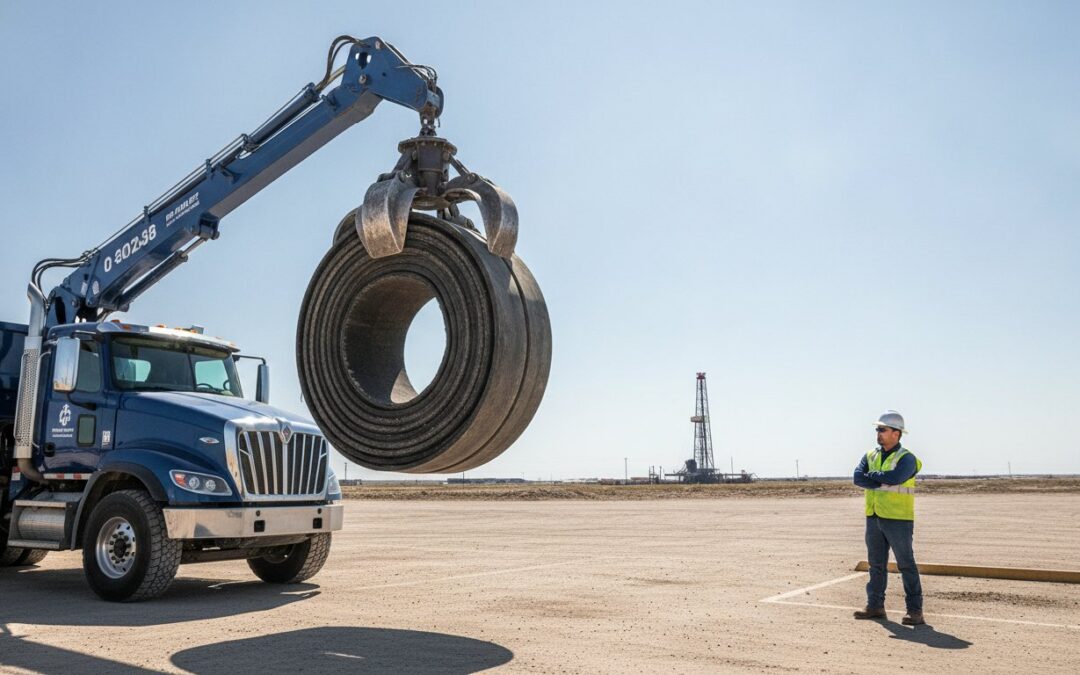
That massive pile of rubber in your yard isn’t just a storage eyesore; it’s a growing legal and environmental liability. For industrial operators in Midland, Odessa, and across the Permian Basin, managing scrap conveyor belt collection has traditionally been a logistical headache. You’ve likely felt the frustration of trying to move multi-ton belts without specialized equipment or worrying if a stockpile might trigger a surprise inspection. It’s a common challenge in our region’s heavy industries, and the risks of fire or pest infestations only grow the longer the material sits.
We understand that you need more than just a haul-off. You need the peace of mind that comes with professional handling and full legal documentation. This 2026 guide outlines the most efficient way to clear your site and ensure your business stays compliant with the latest TCEQ manifest requirements. We’ll explore how local, specialized collection works, the importance of proper annual reporting, and how turning industrial waste into a recycled resource supports your company’s ESG goals. By the end, you’ll have a clear path to a clean, cleared industrial site and a reliable partner for your disposal needs.
Key Takeaways
- Learn how to navigate 2026 TCEQ regulations and the mandatory manifest system to ensure your industrial rubber disposal is fully compliant.
- Discover the most efficient way to manage scrap conveyor belt collection for fabric-reinforced and steel-cable materials found in mining and oilfield operations.
- Understand the mechanical recycling process that converts bulk industrial belting into clean, granulated rubber and separated steel.
- Identify the benefits of partnering with a local Permian Basin expert to clear hazardous stockpiles using specialized bulk removal equipment.
- Recognize why industrial belting is classified as special waste and how professional removal eliminates fire and pest hazards on your site.
Scrap Conveyor Belt Collection: Why is it Necessary?
A Conveyor belt is a workhorse of modern industry, but its utility ends the moment the rubber cracks or the reinforcement snaps. At this point, it transforms into a massive piece of industrial waste. Scrap conveyor belt collection isn’t just a hauling service; it’s the professional removal of these heavy-duty materials for the purpose of legal disposal and recycling. Because these items are built to withstand extreme tension and abrasion, they don’t break down naturally. They require specialized machinery and trained personnel to manage safely. Standard waste providers usually aren’t equipped for the job.
Most industrial belting is classified as special waste in many jurisdictions. This classification exists because of the material’s complex composition. These belts often involve layers of vulcanized rubber bonded to high-tensile steel cables or synthetic fabrics. These reinforcements make the material nearly impossible to cut or transport with standard tools. Attempting to manage this on your own often leads to damaged equipment or worker injuries. The demand for professional scrap conveyor belt collection has grown as companies move toward more sustainable and legally sound waste management practices.
The Scale of Industrial Rubber Waste in West Texas
The Permian Basin generates a massive volume of rubber waste due to the high concentration of mining and oilfield operations. Whether it’s from aggregate plants or oilfield walkways, the sheer tonnage of used rubber is staggering. Standard municipal trash services refuse to handle bulk rubber items. They don’t fit in standard compactors and can’t be processed at most local landfills. Abandoned industrial belting creates a permanent logistical burden that eats up operational space and hinders site efficiency.
Economic and Liability Risks for Businesses
Stockpiling rubber is a fast way to attract attention from the Texas Commission on Environmental Quality (TCEQ). Texas regulations are clear about how scrap rubber must be stored and tracked. Failing to maintain a clean site can result in heavy fines and forced remediation costs. Beyond the legal aspect, legacy waste lowers property values and complicates environmental audits during business acquisitions. Proactive recycling provides a documented paper trail that protects your company’s reputation and bottom line.
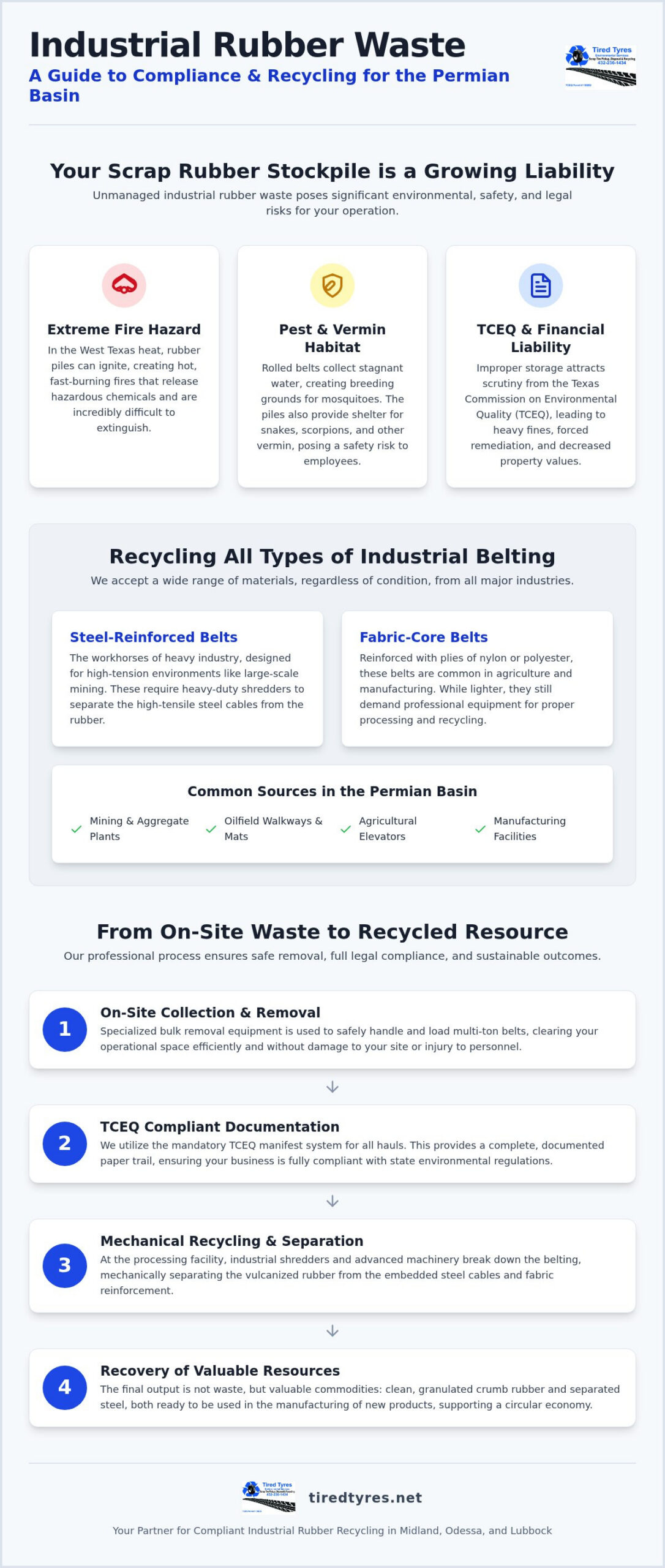
West Texas weather creates unique risks for rubber storage. In the intense heat, these piles become significant fire hazards. A rubber fire is a nightmare to extinguish. It burns hot, fast, and releases hazardous chemicals into the air. When it rains, the hollow centers of rolled belts collect water, creating stagnant pools where mosquitoes thrive. Snakes and scorpions also use these piles for shelter, creating a safety risk for your employees. Clearing these piles isn’t just about cleaning up; it’s about site safety.
Common Types of Industrial Belting Accepted for Recycling
West Texas industries rely on specialized rubber to keep operations moving. When these assets reach the end of their lifecycle, they don’t all look the same. Professional scrap conveyor belt collection covers a wide range of materials, regardless of their specific chemical makeup or physical condition. Even belts that are caked in mud, grease, or mineral deposits are eligible for recycling. The goal is to recover the raw rubber and metal, not to find a belt in “like-new” condition. Most industrial rubber compounds are fully recyclable and can be ground into crumb rubber for new applications.
The sources of these materials are as varied as the Permian Basin itself. Common collection points include:
- Mining and Aggregate Plants: High-abrasion belts used for moving sand, gravel, and ore.
- Oilfield Walkways: Rubber matting and belts used for slip protection and equipment staging.
- Agricultural Elevators: Vertical and horizontal belts used in grain handling and feed lots.
- Manufacturing Facilities: General-purpose belts from assembly and packaging lines.
Steel-Reinforced vs. Fabric-Core Belts
Steel-cable belts are the giants of the industry. They’re designed for high-tension environments like large-scale mining operations. These belts require heavy-duty shredding equipment to “liberate” the steel from the rubber matrix. Fabric-core belts use nylon or polyester plies for reinforcement. They’re lighter and easier to process but still require professional handling to ensure the fibers are properly separated. Both types are essential targets for industrial rubber recycling. If you’re unsure about your current inventory, a quick scrap rubber collection assessment can clarify your disposal options.
Beyond Belting: Other Recyclable Industrial Rubber
Efficient site management often involves more than just belts. Many facilities accumulate other heavy rubber waste that standard trash services won’t touch. This includes scrap skid steer tracks and reinforced industrial hoses. Managing these alongside your belts simplifies logistics and reduces the number of vendors on your site. If your yard also has large equipment tires, you should check our guide on Commercial Tire Disposal in Midland, Odessa & Lubbock for OTR and Ag tire specifics. A single collection point for all industrial rubber waste reduces transport costs and ensures full compliance across your entire operation.
The Industrial Rubber Recycling Process: From Site to Shredder
Professional scrap conveyor belt collection is the critical bridge between an industrial eyesore and a reusable raw material. Once the material leaves your facility, the recycling process begins with mechanical transformation. Unlike many resellers who only look for belts in good condition, a true industrial recycler handles everything. This includes belts that have reached their absolute wear limit or suffered catastrophic failure. The goal isn’t to patch the belt; it’s to break it down into its core components: rubber, steel, and fiber.
The first major hurdle in this process is the “liberation” of internal reinforcements. High-tensile steel cables or synthetic fabric plies are bonded deep within the vulcanized rubber matrix. To separate them, the material passes through a series of specialized primary and secondary shredders. Powerful magnetic separators then pull the liberated steel cables away from the rubber stream. For fabric-reinforced belts, air tables and vacuum systems remove the lighter nylon or polyester fibers. This multi-stage cleaning process ensures the final rubber granulate is free from contaminants.
The final products of this process serve two primary industrial paths:
- Clean Rubber Granulate: High-purity crumb rubber used in asphalt, athletic surfaces, and new rubber manufacturing.
- Tire-Derived Fuel (TDF): Industrial-grade fuel used in cement kilns and paper mills, offering a high BTU value and lower emissions than traditional coal.
Mechanical Shredding and Size Reduction
Massive rolls of belting are too heavy and dense for standard processing. Size reduction involves using hydraulic shears and primary shredders to break rolls into manageable “buffings” or strips. This stage is extremely energy-intensive because of the high-tensile nature of industrial rubber. By 2026, industry standards for civil engineering applications require strict particle size consistency. Modern shredding lines use automated sensors to ensure every piece of recyclate meets these precision benchmarks before it moves to the granulation phase.
Repurposing: The “Second Life” for Industrial Belts
While some belts are too damaged for anything but the shredder, others qualify for a “second life” through repurposing. This involves cleaning and cutting the belts into specific shapes for non-conveyor uses. Common applications in the Permian Basin include heavy-duty livestock mats, erosion control barriers, and oilfield equipment matting. This approach is a key part of the broader tire recycling in Midland, Odessa, and Lubbock ecosystem. However, only belts with intact structural integrity qualify for repurposing. If the core reinforcement is compromised, full mechanical recycling is the only responsible path forward.
TCEQ Compliance: Legal Requirements for West Texas Businesses
Operating in the Permian Basin means staying ahead of strict environmental oversight. When it comes to scrap conveyor belt collection, the Texas Commission on Environmental Quality (TCEQ) maintains rigorous standards to prevent illegal dumping and environmental contamination. Many operators mistakenly believe that because a conveyor belt isn’t a “tire,” it falls outside of these rules. In reality, bulk industrial rubber is often managed under the same regulatory framework. As a generator of industrial waste, your business is legally responsible for that material from the moment it’s removed from service until it reaches an authorized processing facility.
The legal landscape in 2026 is less forgiving than in years past. The TCEQ has increased its focus on “cradle-to-grave” responsibility. This means if your scrap is found in an unpermitted site, your company could face significant fines and remediation costs, regardless of who hauled it away. Proper documentation is your only shield against these liabilities. It’s essential to understand that simply paying for a haul-off doesn’t end your responsibility; only a completed manifest from a registered processor does.
The Importance of the Scrap Tire Manifest
The manifest system is a three-part tracking document that serves as your primary defense during an environmental audit. It records the generator’s information, the transporter’s TCEQ registration number, and the final destination of the rubber. When the material reaches the recycler, they sign the document and return a copy to you. You must retain these records for at least three years. For a deeper dive into these specific requirements, review our Texas Tire Disposal Regulations: A 2026 Guide. As of late 2024, generators must also submit an annual operational status report by December 31st each year.
Verifying Your Collection Partner
Choosing a partner for scrap conveyor belt collection requires more than just comparing prices. You must verify that your hauler holds a valid TCEQ registration number. “Free” or “cash-only” pickups are major red flags. These operators often lack the permits to tip at legitimate processors, leading them to dump the material in remote West Texas pastures or ravines. To protect your business, use this vetting checklist:
- Request a current TCEQ Transporter Registration certificate.
- Confirm they provide a multi-part manifest at the time of pickup.
- Verify the final disposal or recycling facility is an authorized site.
- Ensure they use specialized equipment capable of handling bulk industrial loads safely.
Don’t leave your company’s compliance to chance. You can schedule a legally compliant scrap conveyor belt collection with our team to ensure every pound of rubber is documented and recycled according to state law.
Professional Bulk Rubber Collection in Midland, Odessa & Lubbock
Managing industrial waste in West Texas requires a partner who understands the specific logistics of the Permian Basin. Tired Tyres operates as a dedicated specialist for scrap conveyor belt collection, offering the heavy-duty equipment and regulatory expertise needed for large-scale rubber removal. We aren’t here to sell you new parts or used equipment. Our focus is 100% on providing a clean, efficient, and legally compliant disposal route for your bulk industrial rubber. From massive conveyor belts to OTR tires and scrap skid steer tracks, we handle the materials that standard waste services won’t touch.
Reliability is our foundation. We know that industrial yards and oilfield lease sites have limited space. Abandoned rubber isn’t just a clutter issue; it’s a safety and compliance risk. By providing scheduled pickups, we help local businesses maintain a clean site without the burden of transporting heavy loads themselves. Our team is equipped to handle the unique challenges of West Texas terrain and the massive weight of industrial-grade rubber compounds. We take the difficulty out of rubber disposal so you can focus on your core operations.
Serving the Permian Basin and South Plains
Our service network is built to support the backbone of the Texas energy and agricultural sectors. We provide consistent coverage for Midland, Odessa, and Lubbock, extending our reach to remote lease sites and industrial yards throughout the region. Whether you have a single roll of belt or a multi-ton stockpile, we bring the collection service directly to your location. For more details on our regional capabilities, you can read about our Reliable Tire Disposal in Midland, Odessa & Lubbock. We’re a local, family-owned partner that understands the specific needs of West Texas businesses.
How to Schedule Your Bulk Belt Removal
Clearing your site is a straightforward process. It starts with a simple quote based on the volume and type of rubber you need removed. We maintain full transparency regarding disposal fees, ensuring there are no hidden costs or surprises. Once a pickup is scheduled, our team handles the heavy lifting and provides the mandatory TCEQ manifest on-site. This document is your proof of legal disposal and should be kept for your environmental records. Don’t let scrap rubber become a liability for your operation. Contact us today to schedule your scrap conveyor belt collection and get your industrial site back to peak efficiency.
Securing Your Site’s Compliance and Safety
Effective waste management in 2026 requires more than just moving rubber from one spot to another. It’s about protecting your business from long-term liability through a documented, legal process. Professional scrap conveyor belt collection ensures that massive, reinforced belts are processed correctly rather than becoming a fire hazard or a magnet for pests in the West Texas heat. By choosing a partner that provides TCEQ-compliant manifests with every pickup, you secure your paper trail and demonstrate environmental responsibility during any future audit.
As a local Permian Basin family-owned and operated business, we’ve invested in the specialized equipment needed to handle bulk OTR and industrial rubber removal safely. We don’t sell tires or parts; we focus exclusively on efficient, transparent disposal and recycling. This dedication means your site remains clean and your operations stay compliant without the logistical burden of managing heavy-duty waste yourself. It’s time to turn that legacy rubber into a recycled resource.
Get a Quote for Industrial Rubber Collection and clear your yard with confidence. We’re ready to help you maintain a safer, more productive industrial site.
Frequently Asked Questions
What qualifies as scrap conveyor belt for recycling?
Any industrial belting that’s no longer fit for service, including fabric-reinforced, steel-cable reinforced, and multi-ply rubber compounds, qualifies for recycling. This includes belts from mining, aggregate plants, and agricultural elevators. Even if the material is caked in mud or severely worn, it’s still eligible for recovery. The recycling process focuses on reclaiming the raw rubber and metal components regardless of the belt’s physical condition.
Is it illegal to dump conveyor belts in a Texas landfill?
Most Texas landfills refuse bulk industrial rubber because it doesn’t compact and can damage compaction equipment. While specific local rules vary, finding a landfill that accepts massive belts is difficult and often more expensive than professional recycling. Unauthorized dumping on private or public land is strictly illegal and carries heavy penalties under TCEQ regulations. Recycling is the most reliable way to ensure legal disposal.
Do I need a special permit to have my industrial rubber waste picked up?
You don’t need a specific permit to have the waste removed, but you’re legally responsible for ensuring your hauler is TCEQ-registered. As the waste generator, your obligation is to use an authorized transporter who provides a valid manifest. This document confirms the material is headed to a registered processing facility. Always verify your partner’s registration number before any material leaves your site.
What is a TCEQ scrap tire manifest and why does my business need one?
A TCEQ manifest is a mandatory tracking document that proves your industrial waste was handled by a registered transporter and processor. Your business needs this record to shield itself from environmental liability and potential state fines. During any environmental audit, these manifests serve as your primary evidence that your scrap conveyor belt collection was performed according to Texas law.
Can you recycle steel-reinforced conveyor belts on-site?
Recycling typically happens at a specialized facility because the liberation of steel cables from vulcanized rubber requires massive, stationary shredders and magnetic separators. While we perform the collection on-site using specialized loading equipment, the mechanical processing occurs at a registered plant. This ensures the rubber is ground into clean granulate and the steel is properly recovered for secondary markets.
How much does scrap conveyor belt collection cost in Midland?
Collection costs depend on the total tonnage, the type of reinforcement in the belts, and the specific logistics of your site. We provide transparent quotes based on these variables to ensure you have a clear understanding of the fees before we arrive. Since every scrap conveyor belt collection project in Midland has different requirements, a custom quote is the only way to ensure accurate pricing.
Do you pick up scrap skid steer tracks in Odessa and Lubbock?
Yes, we provide collection services for scrap skid steer tracks, industrial hoses, and OTR tires throughout Odessa and Lubbock. Consolidating all your heavy rubber waste into a single pickup simplifies your logistics and ensures everything is documented on a compliant manifest. This approach is the most efficient way to clear your yard while meeting all state environmental requirements.
What happens if I stockpile industrial rubber on my commercial property?
Stockpiling industrial rubber leads to increased regulatory scrutiny and can result in significant TCEQ fines for non-compliance. In the West Texas heat, these piles become major fire hazards that are extremely difficult to extinguish. They also collect stagnant water, which creates breeding grounds for mosquitoes and provides shelter for dangerous pests like rattlesnakes, compromising the safety of your job site.