
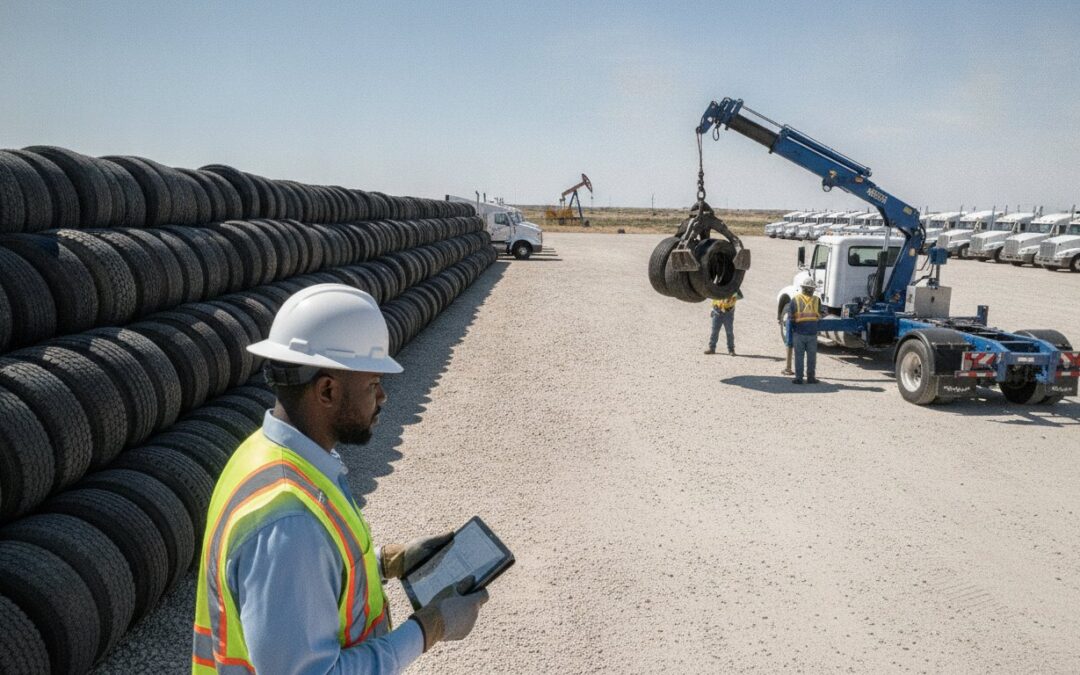
Did you know that a single scrap tire sitting in your yard can breed over 500 mosquitoes in just one week, while a single compliance oversight could result in TCEQ fines as high as $10,000 per violation? For fleet managers in the Permian Basin, managing semi-truck tire disposal Midland TX is no longer just a housekeeping chore. It’s a critical regulatory necessity. As of 2026, municipal landfills have tightened restrictions, often refusing whole commercial tires entirely or requiring specialized processing that stops your operations cold.
You’ve likely felt the frustration of watching scrap piles grow while worrying about the next surprise environmental audit. It’s difficult to maintain a clean, safe yard when local disposal options are fragmented or refuse to accept bulk commercial loads. We understand that your priority is keeping your fleet moving, not chasing down landfill permits or risking illegal dumping penalties that could cripple your budget.
This guide shows you how to legally and efficiently handle bulk tire loads while maintaining perfect TCEQ documentation. We’ll cover the latest 2026 manifest requirements, the hidden pitfalls of self-hauling, and how to implement a reliable pickup schedule. You’ll learn exactly what’s needed to keep your facility compliant, your yard hazard-free, and your business protected from regulatory risk.
Key Takeaways
- Understand the physical and legal risks of stockpiling scrap tires, including fire hazards and significant TCEQ fines.
- Learn how to navigate the 2026 Texas Commission on Environmental Quality (TCEQ) manifest system to ensure your fleet remains fully compliant.
- Discover why municipal landfills often reject bulk loads and how a specialized service for semi-truck tire disposal Midland TX provides a legal, hassle-free alternative.
- Get actionable steps for preparing your yard and segregating tire types to ensure fast, efficient bulk pickups.
- Identify the hidden labor costs of self-hauling and how a professional collection partner can streamline your commercial operations.
The Challenge of Semi-Truck Tire Disposal in Midland, TX
The Permian Basin is the heart of Texas energy and logistics. This massive influx of freight means fleet yards in Midland are processing more tires than ever before. Unfortunately, the infrastructure for semi-truck tire disposal Midland TX hasn’t always kept pace with the region’s growth. When your fleet generates dozens of scrap tires monthly, the standard disposal routes often hit a dead end.
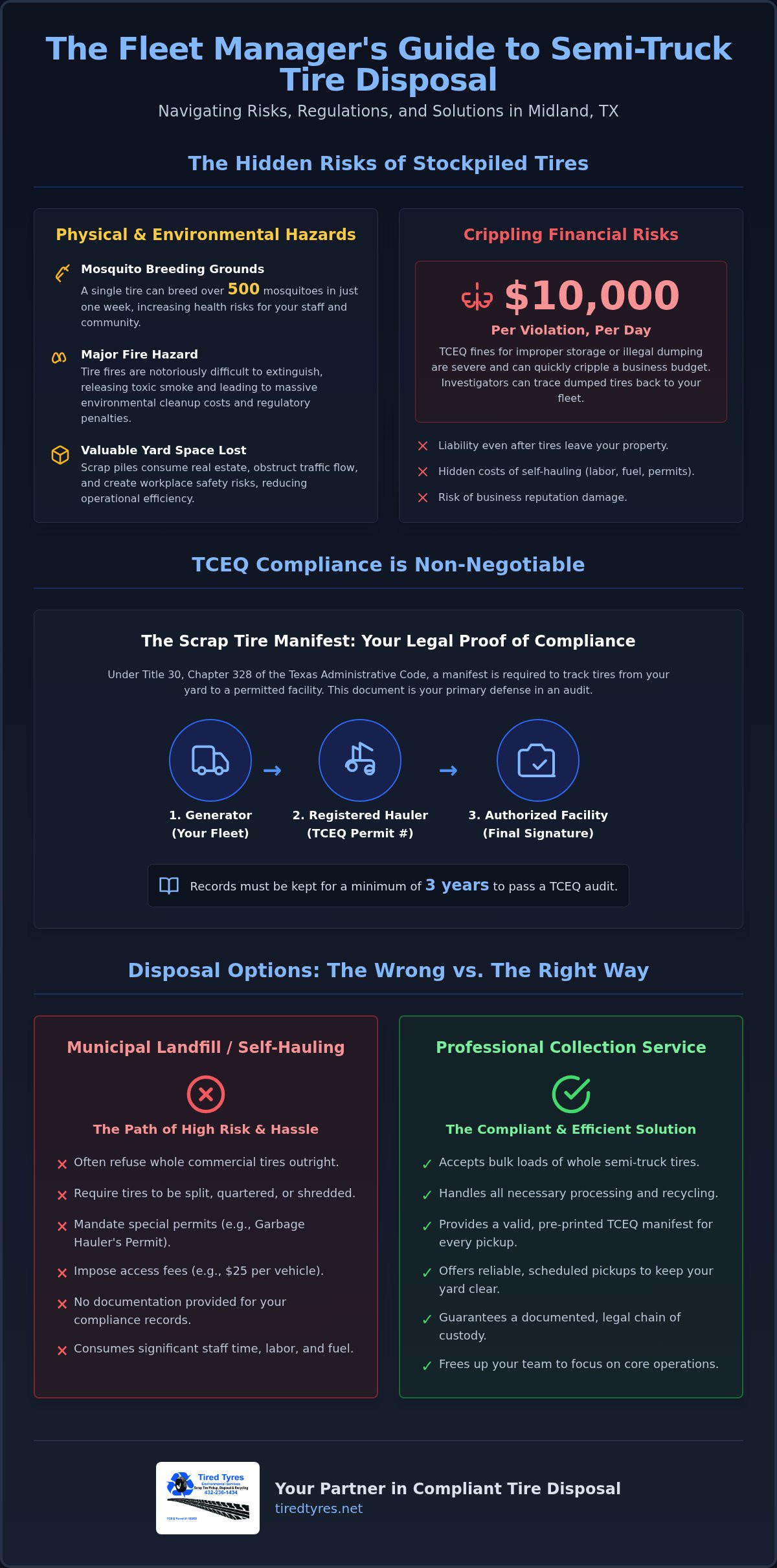
Midland’s municipal facilities, such as the Citizens Collection Station on Smith Road, explicitly list tires as “not accepted.” Even the main city landfill imposes strict barriers. They charge a $25 access fee for vehicles without a Garbage Hauler’s Permit and only accept tires that are already split, quartered, or shredded. Without a reliable tire disposal partner, these heavy casings simply pile up. This creates a logistical bottleneck that threatens your operational flow and safety standards.
Space Management for Midland Fleet Yards
Scrap tires are more than just an eyesore. They’re a significant liability. Large piles of semi-truck rubber consume valuable real estate that could be used for vehicle maintenance or inventory. If you’re waiting for a “free disposal event” or a slow period to haul them yourself, you’re losing money in hidden costs. These include decreased yard safety and a higher risk of workplace accidents. You can tell your tire pile has become a liability when it begins to obstruct traffic flow or starts showing signs of structural instability. Stockpiled rubber is also a major fire hazard. Once a tire fire starts, it’s notoriously difficult to extinguish and can lead to massive TCEQ fines.
Environmental Impact in the Permian Basin
The West Texas heat turns stagnant water trapped in tires into a perfect incubator. Research indicates a single tire can produce over 500 mosquitoes in just seven days. Beyond pests, improper storage leads to long-term soil risks. Over time, the Tire recycling process becomes more difficult as the rubber degrades and leaches chemicals into the ground. These waste tire problems are preventable with a proactive collection schedule. Professional semi-truck tire disposal Midland TX ensures your yard stays clean and prevents your business from becoming an environmental hazard in the community. Quick removal is the most effective way to manage these risks while focusing on your core logistics operations.
Texas Regulations: Staying Compliant with TCEQ Rules
The state of Texas takes rubber waste seriously. For fleet managers, understanding the Texas Commission on Environmental Quality (TCEQ) rules is the only way to avoid crippling financial penalties. Under Title 30 of the Texas Administrative Code, Chapter 328, scrap tires are strictly regulated from the moment they are removed from a rim until they reach a permitted processing facility. If your business generates these tires, you are legally responsible for where they end up, even after they leave your property.
In Midland County, the stakes for non-compliance are high. Illegal dumping or improper storage can result in fines reaching $10,000 per violation, per day. Law enforcement and environmental investigators frequently track dumped tires back to the original fleet yard using serial numbers or branding. This is why professional semi-truck tire disposal Midland TX must always involve a clear, documented chain of custody.
The Scrap Tire Manifest System Explained
The manifest is the most critical document in your compliance folder. This multi-part form tracks the movement of tires from the generator (your fleet) to the hauler and finally to the authorized disposal site. A valid manifest must include the name and TCEQ registration number of the hauler, the total number of tires, and the signature of the receiving facility. You are required to keep these records for at least three years to satisfy any state or local audits.
A scrap tire manifest serves as the primary legal defense for a business during an environmental audit. Without it, you have no proof that your waste was handled legally. If a hauler cannot provide a pre-printed, valid TCEQ manifest, do not let them load your tires. Protecting your business reputation starts with accurate record-keeping and a commitment to Texas tire disposal regulations.
Why You Need a Permitted Hauler
It is tempting to hire “unauthorized” haulers found on social media who offer lower rates. However, these individuals often lack the required TCEQ transportation permit and frequently resort to illegal dumping in rural Midland County roads to avoid landfill fees. If their truck is found with your tires in a ditch, the liability falls back on you. A permitted hauler is a professional entity registered with the state, ensuring your semi-truck tire disposal Midland TX meets every legal standard. You can verify a hauler’s credentials by asking for their TCEQ registration number and checking it against the state’s active database. Working with a verified collection partner ensures your fleet stays on the right side of the law while keeping your yard clean.
Landfill vs. Private Collection: Choosing the Right Path
Choosing a method for semi-truck tire disposal Midland TX requires looking beyond the invoice. While self-hauling to a municipal site might seem like a way to save money, the logistical hurdles often outweigh any perceived savings. Public facilities are designed to handle residential waste, not the high-volume needs of a West Texas logistics hub. For a fleet manager, the choice between a landfill and a private collection service is a choice between manual labor and operational efficiency.
Municipal Limitations in Midland and Odessa
The City of Midland landfill and the Citizens Collection Station at 4100 Smith Road have clear barriers for businesses. The collection station explicitly bans commercial waste of any type. If you attempt to use the main landfill, you’ll encounter a $25 access fee if you don’t have a Garbage Hauler’s Permit. Most importantly, Texas law prohibits landfills from accepting whole tires. This means your staff must split or quarter every casing before arrival.
Wait times at the scale can stretch for hours during peak times. If your driver arrives with a load that doesn’t meet the landfill’s strict “processed” criteria, they’ll be turned away. This results in wasted fuel, lost driver hours, and the continued presence of a hazard in your yard. Many city programs also enforce “Resident Only” rules, requiring a local utility bill that matches the driver’s ID, which is rarely feasible for commercial fleet operations. Don’t expect “Free Tire Days” to help either; these events are almost always limited to a few passenger tires per household.
The Benefits of Scheduled Commercial Collection
Scheduled pickups offer several distinct advantages for Midland businesses:
- Predictable Overhead: You can budget for disposal costs without worrying about fluctuating landfill surcharges or unexpected access fees.
- On-Site Efficiency: Collection equipment comes directly to your yard, removing the risk of tires falling off trailers on public roads.
- Volume Capacity: Unlike municipal programs that limit drop-offs, commercial services are built for bulk loads of 50 or more casings.
By removing the burden of self-hauling, you protect your drivers from the physical strain of loading and unloading heavy semi tires at a distant facility. This approach ensures your facility remains compliant and hazard-free without interrupting your daily operations. It’s the most straightforward path to maintaining a professional yard in the Permian Basin.
How to Prepare Your Bulk Tires for Efficient Pickup
Efficient logistics depend on preparation. When arranging for semi-truck tire disposal Midland TX, a few minutes of organization in your yard can prevent hours of delays during the collection process. Professional disposal teams use specialized equipment that operates best when the site is staged correctly. Following a structured preparation plan ensures your fleet yard returns to full capacity as quickly as possible.
The first step is segregating your inventory by size and type. Group your Passenger & Light Truck tires separately from your Semi-Truck and OTR models. This allows the collection crew to load the vehicle strategically, maximizing space and speed. Next, ensure your collection point is accessible. Heavy trucks need a firm, level surface and sufficient clearance to maneuver. If your tires are buried behind active equipment or in a muddy corner of the yard, the pickup will take significantly longer.
Before the truck arrives, inspect the casings for debris and standing water. West Texas rain can quickly fill a tire, adding unnecessary weight and creating the health hazards mentioned earlier in this guide. Finally, perform an accurate count of your stock. Providing a precise estimate helps your service provider send the right-sized equipment, ensuring all waste is removed in a single trip.
Optimizing Your Loading Zone
Identify a loading zone that allows a large trailer to enter and exit without reversing through high-traffic areas. Safety protocols should be in place to keep your staff clear of the loading equipment while it’s in operation. You must also decide on your “rim-on” vs. “rim-off” strategy. Most commercial disposal services prefer tires to be removed from the rims. If you have a large volume of mounted tires, communicate this early, as it requires different handling procedures and may impact the recycling path.
Beyond Tires: Handling Other Industrial Rubber
Midland fleet operations often generate more than just tire waste. If your facility handles oilfield equipment or heavy machinery, you likely have scrap conveyor belts, skid steer tracks, or industrial hoses. Roll these materials tightly and secure them with wire or heavy-duty banding to make them manageable for mechanical loaders. Proper segregation of rubber types can significantly speed up the collection time. By consolidating solid rubber waste and scrap hoses into a single area, you streamline the entire removal process. For a seamless experience and a clean yard, you can schedule your commercial rubber collection with a partner who understands Permian Basin industrial needs.
Why Tired Tyres is Midland’s Choice for Semi-Truck Disposal
Fleet managers in West Texas don’t have time for vague promises or unreliable schedules. You need a partner who understands the specific demands of the Permian Basin logistics industry. We’ve built our reputation on providing a direct, professional solution for semi-truck tire disposal Midland TX. Our team doesn’t just haul rubber; we ensure your business remains fully compliant with every TCEQ regulation. This local expertise translates into fewer regulatory headaches and a cleaner, safer yard for your drivers and staff.
We specialize in handling the bulk loads that municipal sites refuse. Whether you’re clearing out a small backlog or managing a massive fleet rotation, our equipment is designed for heavy-duty industrial removal. Our specialized approach to semi-truck tire disposal Midland TX ensures that your heavy casings are recycled through authorized channels, protecting you from future liability. We focus on efficiency because we know that every hour your yard is cluttered is an hour of lost productivity. You can trust us to handle the documentation, the loading, and the legal recycling pathways while you focus on your core freight operations.
Our Service Area: Midland, Odessa, and Lubbock
West Texas is a unique environment where distance and volume define your success. We serve the entire Permian Basin and South Plains, providing specialized support for high-volume trucking hubs. Our local knowledge means we understand the traffic patterns, site access challenges, and environmental conditions that affect your yard. We offer flexible scheduling to ensure our pickups never interfere with your peak load times. Every pickup includes the necessary TCEQ documentation to ensure your records are audit-ready from day one. If you are looking for a comprehensive resource on staying legal in the area, our guide to tire disposal Midland TX provides deeper insights into local scrap removal requirements. We are committed to being the most reliable link in your waste management chain, covering everything from the heart of Midland to the outskirts of Lubbock.
Total Rubber Waste Solutions
Our expertise extends far beyond standard tires. We provide a single point of contact for all your industrial rubber waste, which streamlines your vendor management. Our collection services include:
- Passenger & Light Truck Tire Collection for mixed fleets
- Semi-Truck Tire Collection and OTR Tire Collection
- Agricultural Tire Collection for regional farming operations
- Scrap skid steer track collection and scrap conveyor belt collection
- Scrap hose collection and scrap solid tire collection
By handling diverse materials like belts, hoses, and tracks, we help keep the Permian Basin clean and compliant. You won’t need to coordinate with multiple haulers to clear your yard. We provide the manifests and the professional service needed to satisfy environmental audits for all rubber types. Contact us today to get a custom quote for your fleet and experience a no-nonsense approach to commercial waste management.
Secure Your Fleet Operations with Professional Disposal
Managing scrap rubber in the Permian Basin isn’t just about clearing yard space; it’s about protecting your business from regulatory risk. You now understand the critical importance of the TCEQ manifest system and why municipal landfills are no longer a viable path for high-volume commercial needs. By organizing your yard and choosing a permitted partner, you transform a messy liability into a streamlined, documented process.
A proactive approach to semi-truck tire disposal Midland TX keeps your facility safe from fire hazards and pests while ensuring you’re always audit-ready. We bring specialized expertise in OTR and semi-truck bulk removal directly to your site. As a permitted Texas tire hauler serving Midland, Odessa, and Lubbock, we take the logistical burden off your shoulders so you can focus on moving freight.
Don’t let scrap piles dictate your operational efficiency or safety standards. Request a semi-truck tire collection quote for your Midland fleet today. It’s the simplest way to maintain a clean, compliant, and professional commercial yard in West Texas.
Frequently Asked Questions
Does the Midland landfill accept semi-truck tires from businesses?
No, the City of Midland landfill does not accept whole tires from any source, and the Citizens Collection Station explicitly bans all commercial waste. To use the landfill, tires must be shredded, split, or quartered before arrival. Businesses also face a $25 access fee if they lack a specific Garbage Hauler’s Permit. Most fleet managers find that professional semi-truck tire disposal Midland TX is the only practical way to handle bulk loads legally.
What is a scrap tire manifest and do I really need one?
A scrap tire manifest is a multi-part document that tracks tires from your yard to a permitted disposal site. You absolutely need one if you are a business transporting more than five tires at a time in Texas. It serves as your primary legal defense during a TCEQ audit by proving the waste was handled by a registered hauler. We provide these manifests for every pickup to ensure your records are fully compliant.
How much does it typically cost to dispose of a semi-truck tire?
While self-hauling tires to an authorized collection point can involve fees between $3.00 and $7.00 per tire, this doesn’t include your labor, fuel, or the cost of mandatory tire splitting. Our service fees are based on your specific volume and the type of rubber waste being collected. Because we handle the loading and documentation at your facility, you eliminate the hidden operational costs and liability risks of hauling the tires yourself.
Can you pick up tires that are still on the rims?
Yes, we can manage the collection of tires that remain attached to the rims. It’s important to specify the number of “rim-on” casings when you request a quote, as these require different handling procedures and specialized equipment for transport. As Midland waste facilities implement stricter rules regarding rims in 2026, using a professional collection service ensures your fleet yard stays organized and compliant without the need for on-site dismounting.
Do you provide recurring scheduled pickups for trucking companies?
We offer flexible, recurring pickup schedules designed specifically for high-volume trucking hubs in the Permian Basin. Instead of letting scrap piles become a fire hazard or a breeding ground for pests, you can establish a monthly or quarterly rotation. This proactive approach to semi-truck tire disposal Midland TX keeps your facility clean and ensures your business never falls behind on mandatory TCEQ record-keeping or yard safety standards.
What happens to the tires after they are collected from my yard?
Once collected, tires are transported to permitted processing facilities where they enter the recycling stream. They are typically shredded, split, or quartered to meet Texas state law requirements for disposal or repurposed for civil engineering projects and rubber-derived fuel. We ensure every casing follows a legal, documented pathway. This process protects your business from the significant liability and fines associated with illegal dumping or improper long-term storage.
Do you handle large OTR tires from oilfield equipment?
Yes, we specialize in the collection of heavy-duty OTR (Off-the-Road) tires used in Permian Basin oilfield and construction operations. These massive tires are often rejected by municipal sites due to their extreme size and weight. Our equipment is capable of handling bulk OTR loads alongside semi-truck and agricultural models. We also collect other industrial rubber waste commonly found at these sites, such as scrap conveyor belts and skid steer tracks.
Is there a minimum number of tires required for a pickup in Odessa?
We generally focus on bulk commercial loads to provide the most efficient service for businesses in Odessa and the surrounding South Plains. While we don’t have a rigid minimum, our routes are optimized for fleet managers needing to move 50 or more casings at a time. If you have a smaller volume of specialized industrial rubber waste or OTR tires, we can often coordinate your pickup with other local routes to ensure a cost-effective solution.