
In June 2025, a West Texas business owner faced TCEQ fines exceeding $15,000 simply because they lacked a documented plan for professional tire recycling for their 400 scrap casings. You likely already know that stockpiling rubber is a massive headache. Between the updated 2026 fire safety regulations and the relentless mosquito swarms that breed in stagnant water, managing old tires often feels like a losing battle. It’s frustrating to balance your daily shop operations while staying compliant with strict Texas environmental laws that seem to change every season. We understand that your priority is running a business, not managing a graveyard of rubber.
This guide explains exactly how the disposal process works in Midland, Odessa, and Lubbock so you can avoid penalties and keep your site clean. You’ll learn how to manage your scrap rubber responsibly and stay on the right side of the law. We’ll cover the specific TCEQ reporting requirements for 2026, the local landfill bans you must follow, and how to find a reliable hauling partner to handle the heavy lifting for you.
Key Takeaways
- Discover why Midland, Odessa, and Lubbock face unique scrap rubber challenges and how turning end-of-life tires into reusable materials protects the West Texas environment.
- Learn the specialized process of professional tire recycling, from initial site collection to the primary shredding stages that prepare rubber for refinement.
- Understand the legal risks of improper disposal, including Texas laws that prohibit whole tires in landfills to prevent extreme fire hazards in the local heat.
- Get actionable tips on auditing your scrap tire volume and implementing secure storage methods to stay compliant and prevent pest infestations.
- Find out how to simplify your waste management with TCEQ-compliant collection services designed specifically for OTR, agricultural, and industrial rubber.
What is Tire Recycling and Why Does It Matter in West Texas?
Tire recycling is the technical process of converting end-of-life tires into functional, reusable materials. This isn’t just about moving waste from one place to another. It’s a precise system of recovery. In Midland, Odessa, and Lubbock, this process is vital. As of 2026, Texas generates more than 30 million scrap tires every year. A massive portion of this volume originates in West Texas. Without a clear plan, these tires end up in illegal dumps or taking up valuable landfill space.
There’s a major difference between simple disposal and sustainable recycling. Disposal is a dead end. It leaves rubber to sit for centuries. Recycling turns that same rubber into crumb rubber, playground mulch, or tire-derived fuel. In the Permian Basin, industrial growth has pushed tire waste volumes up by 15% since 2023. We don’t see these tires as trash. We see them as raw materials for the next generation of Texas infrastructure. Efficient recycling keeps our local environment clean and supports the regional economy.
The Scale of Tire Waste in the Permian Basin
The oilfield doesn’t stop, and neither does the wear on tires. Heavy-duty operations in the Permian Basin create a unique waste challenge. Standard municipal services in Midland or Odessa aren’t equipped to handle industrial-scale rubber. They often lack the machinery to process high-ply tires used on rigs and service trucks. By 2026, the transition from “waste” to “resource” has become a standard business practice. Local industries now prioritize recycling to meet environmental regulations and reduce their footprint.
Types of Tires Suitable for Recycling
Different tires require different processing paths. We categorize them to ensure the highest recovery rate for the material. Most tire recycling facilities in our region handle three main groups:
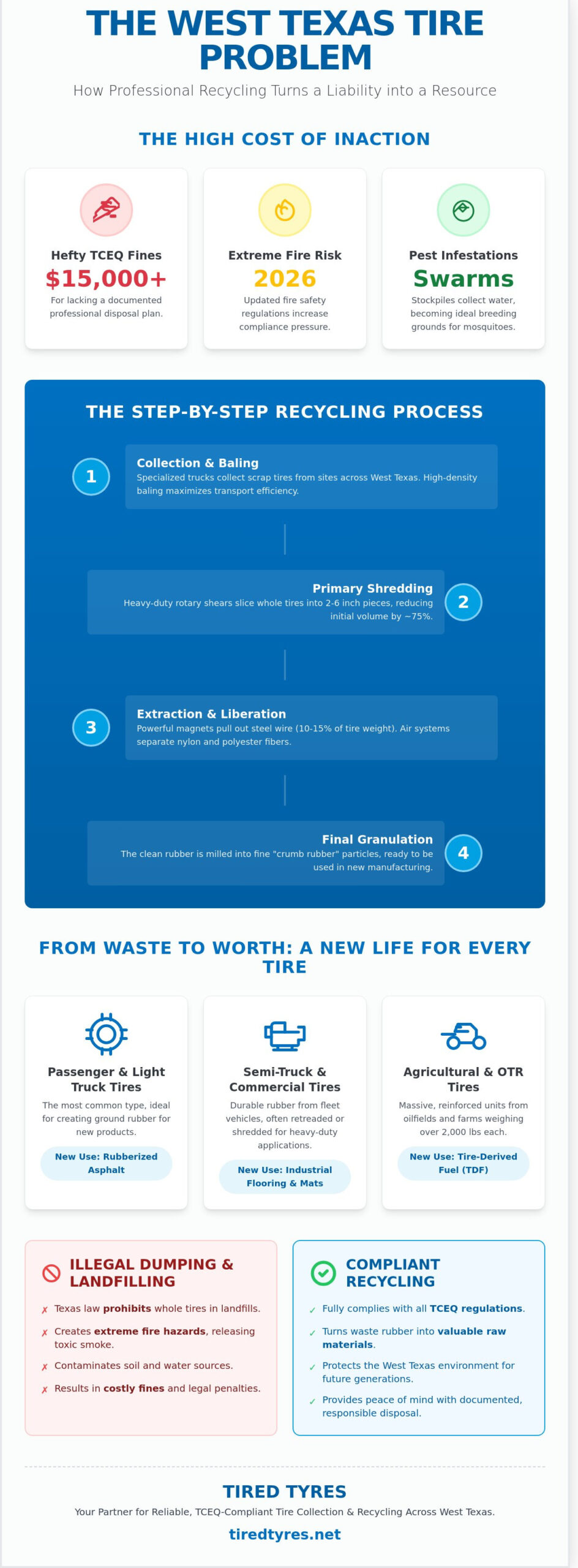
- Passenger and Light Truck Tires: These are the standard tires from your daily driver or pickup. They’re perfect for creating rubberized asphalt used on Lubbock city streets.
- Semi-Truck and Commercial Fleet Tires: Texas logistics depend on these. They’re often retreaded or shredded for heavy-duty industrial flooring and mats.
- Agricultural and OTR (Off-the-Road) Tires: These massive units come from farms and oilfield worksites. Some weigh over 2,000 pounds. They require specialized heavy shredders to break down their reinforced steel belts.
Every tire has a second life if it’s handled correctly. Whether it’s a single flat from a passenger car or a fleet of worn-out semi tires, the goal remains the same. We focus on getting that rubber back into the supply chain quickly and safely.
The Step-by-Step Tire Recycling Process
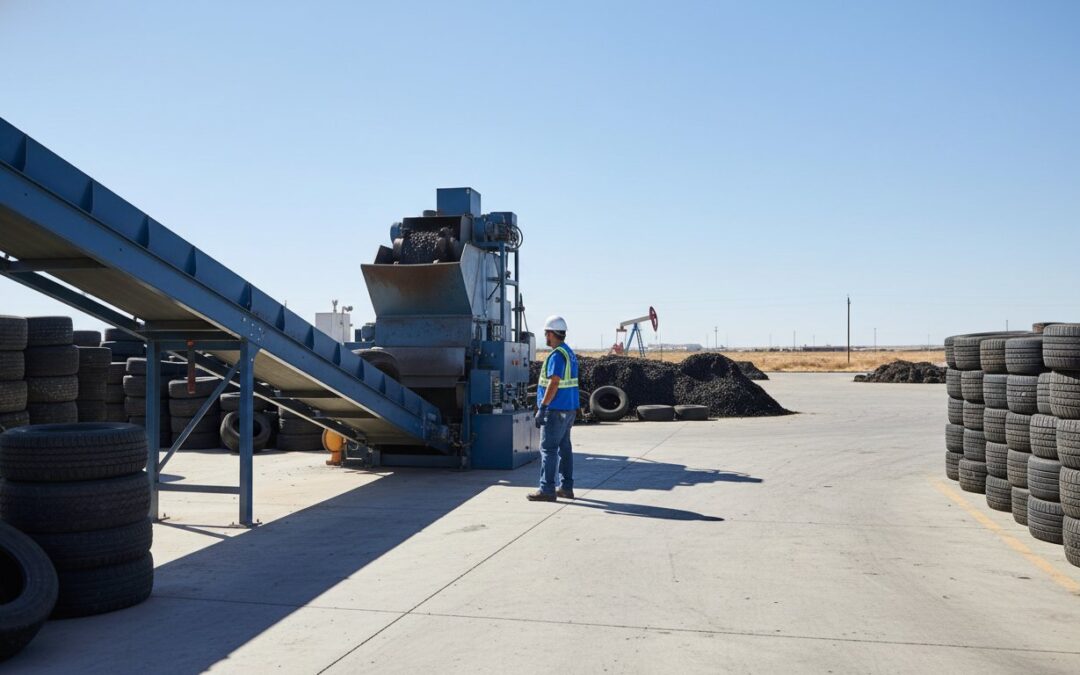
Transforming a discarded tire into a reusable raw material involves a precise industrial sequence. In West Texas, where industrial and passenger vehicle use is high, efficient tire recycling ensures that millions of pounds of waste don’t end up in landfills. The process begins with the logistics of collection. Specialized trucks gather scrap tires from retail shops and industrial sites across Midland and Lubbock, transporting them to centralized processing facilities. High density baling often happens on-site to maximize transport efficiency, as hauling loose tires is historically cost-prohibitive.
Once the tires arrive at the facility, they undergo a multi-stage reduction process:
- Primary Shredding: Heavy-duty rotary shears slice the tires into large, 2-inch to 6-inch pieces. This stage reduces the initial volume by approximately 75 percent.
- Liberation: The shredded pieces pass through a secondary granulator. This machine breaks the rubber down further, allowing for the separation of internal components.
- Steel and Fiber Extraction: Powerful cross-belt magnets pull out the steel wire, which makes up about 10 to 15 percent of a tire’s weight. Simultaneously, air vacuum systems or shaking screens remove the polyester and nylon fibers.
- Final Granulation: The remaining rubber is milled into specific sizes based on its intended use. This results in the “crumb” texture required for modern manufacturing.
If you have a stack of old casings cluttering your shop, you can check our current inventory and disposal services to see how we handle the logistics for you.
Mechanical vs. Cryogenic Processing
Most Texas facilities utilize ambient mechanical shredding. This method uses high-speed grinders at room temperature to tear the rubber. It’s energy-efficient and produces a rougher surface texture that bonds well in asphalt applications. Cryogenic processing is the alternative. It uses liquid nitrogen to freeze the rubber to minus 300 degrees Fahrenheit, making it brittle enough to be shattered. While cryogenic systems produce a finer, higher-purity powder, the energy costs are significantly higher than mechanical methods.
What Happens to the Extracted Materials?
Nothing goes to waste in a modern 2026 recycling facility. The extracted steel wire is cleaned and sent to local smelters to be recycled into new metal products like rebar. The nylon and polyester fibers are often repurposed as insulation or used as a clean-burning supplement in tire-derived fuel (TDF) for cement kilns. The most valuable output is the final transformation of rubber into crumb granules. This material is essential for creating rubberized asphalt, playground surfaces, and new automotive parts, completing the circular economy for West Texas drivers.
Why You Cannot Simply Landfill Tires in Texas
Texas law is clear about scrap tires. Since 1992, the state has prohibited whole tires from being placed in any municipal solid waste landfill. If you try to drop off a full set of old radials at a local dump in Lubbock or Odessa, you’ll be turned away unless those tires have been split, quartered, or shredded first. This regulation exists because whole tires don’t stay buried. They trap methane gas and “float” back to the surface over time, eventually puncturing landfill liners and causing long-term structural damage to the site.
In the intense West Texas heat, where summer temperatures frequently climb above 100°F, stockpiled tires represent a severe fire hazard. A single spark can ignite a pile that burns for weeks. These fires are notoriously difficult to extinguish because the hollow shape of a tire provides a constant oxygen supply to the core of the blaze. When tires burn, they produce a thick, toxic pyrolytic oil. This oil seeps into the porous soil of the South Plains, potentially reaching the Ogallala Aquifer and contaminating local water sources for decades.
Beyond fire, abandoned tires are a public health crisis. The interior of a tire is a perfect incubator for mosquitoes. Even a small amount of stagnant rainwater can breed thousands of larvae in a single season. In regions like Midland and Odessa, these illegal dump sites are primary breeding grounds for mosquitoes carrying the West Nile virus. Proper tire recycling isn’t just about following the law; it’s about protecting your neighbors from preventable diseases.
TCEQ Regulations and Compliance
Business owners must follow specific Texas tire disposal regulations to avoid heavy fines. The TCEQ requires a multi-part manifest system for every tire that leaves a commercial site. This document tracks the tires from the generator to the transporter and finally to the authorized processor. If you hire an unpermitted “midnight hauler” in Midland or Odessa to save a few dollars, you remain legally responsible for those tires. Fines for illegal dumping or improper record-keeping can reach $10,000 per day per violation under the Texas Water Code.
Environmental Impact on the South Plains
Synthetic rubber is non-biodegradable. A tire left in a field today will still be there in the year 2300, slowly leaching heavy metals and stabilizers into the ground. In rural Texas, local fire departments often lack the specialized foam or massive quantities of dirt required to smother a rubber-based fire. To combat this waste, the industry has turned to sustainable alternatives. Tire-derived fuel is a high-energy scrap rubber product used as a cleaner-burning carbon alternative to coal in cement kilns and utility boilers. Choosing professional tire recycling ensures your old rubber contributes to the Texas economy rather than endangering the environment.
How to Properly Manage Your Scrap Tires in Midland and Odessa
Managing scrap tires in the Permian Basin requires more than just finding a corner to stack them. You need a systematic approach to stay compliant with Texas regulations. Start by auditing your monthly waste volume. If your shop generates more than 75 casings every 30 days, a bi-weekly pickup is necessary to prevent clutter and safety hazards. Waiting too long creates a fire risk and attracts pests.
Storage is the next priority. West Texas weather can be unpredictable, and stagnant water inside tires is a breeding ground for mosquitoes carrying West Nile virus. Store all scrap tires in a dry, secure area. A fenced enclosure or a dedicated trailer keeps your inventory organized and prevents illegal dumping by third parties on your property. This simple step protects your business from local health department fines.
Verify the credentials of any “tire recycling center near me” before signing a contract. In Texas, haulers and processors must hold a valid registration from the Texas Commission on Environmental Quality (TCEQ). Ask for their registration number. If they can’t provide it, they aren’t a legitimate tire recycling partner. Using an unpermitted hauler leaves you legally responsible for where those tires eventually end up.
Documentation is your best defense. Maintain a strict paper trail of manifests for every load that leaves your facility. These documents must include the date, the number of tires, and the signatures of both the generator and the hauler. Keep these records on-site for at least three years. This proof of legal disposal is the only way to satisfy state inspectors during a surprise audit.
Best Practices for Auto Shops and Fleet Managers
Efficiency starts with a scheduled tire recycling service. Routine pickups prevent the “tire mountain” effect that slows down your technicians. Train your staff to verify manifest details before the truck leaves the lot. Consistent documentation reduces your liability and ensures you only pay for the exact volume of waste removed from your shop.
Choosing a Local Recycling Partner
Look for a partner with deep Permian Basin experience. Local knowledge matters because Midland and Odessa logistics are unique; you need a hauler who understands the traffic patterns on Loop 250 and Highway 191. Ensure they handle more than just standard passenger tires. A versatile partner manages everything from light truck tires to heavy equipment casings, providing a single point of contact for all your tire recycling needs. Understanding the full scope of waste tire problems in Midland, Odessa, and Lubbock helps you choose a service provider who can address both immediate disposal needs and long-term environmental compliance.
Don’t let scrap tires pile up and create a liability for your business. Schedule a reliable pickup with Tired Tyres today.
Tired Tyres: Reliable Tire Collection Across West Texas
Managing rubber waste in the Permian Basin requires more than just a truck. It demands a partner who understands the rigorous legal landscape of the region. We handle the heavy lifting for commercial and industrial sites across Midland, Odessa, and Lubbock. Every pickup we perform adheres strictly to 2026 TCEQ standards. This ensures you receive full manifest documentation for every single load we haul away. We make sure your liability is covered and your site remains organized. Our team doesn’t offer excuses; we provide scheduled, professional removals that keep your operations moving forward. We’ve helped over 85 local businesses clear their yards of accumulated waste since the start of the year.
Our Industrial Rubber Disposal Capabilities
Most local haulers stop at passenger car tires. We go much further to meet the needs of the energy and textile sectors. Our fleet is equipped to manage OTR (Off-The-Road) tires, massive agricultural rubber, and industrial waste that smaller contractors can’t touch. Since our equipment upgrade in early 2025, we’ve utilized high-capacity loaders built specifically for the toughest West Texas environments. We handle a wide variety of materials including:
- Worn-out conveyor belts from mining and oilfield sites.
- Heavy-duty industrial hoses and high-pressure lines.
- Solid rubber gaskets, buffers, and industrial seals.
- Large-scale agricultural tires from Lubbock area farming operations.
We understand that a one-size-fits-all schedule doesn’t work for a high-volume industrial yard. If your production volume increases, we adjust our arrival times accordingly. Our logistics experts coordinate directly with site managers to ensure pickups happen before waste becomes a fire hazard or a safety obstacle. This proactive approach to tire recycling keeps your facility compliant with both state regulations and local fire codes. We’ve reduced average on-site waste dwell time by 30 percent for our regular industrial partners.
Get a Quote for Your Tire Pickup Today
Hidden fees and surprise surcharges have no place in a professional partnership. We provide transparent, bulk pricing based on the specific volume and material type you need removed from your property. Whether you’re clearing a legacy stockpile of 1,200 tires or need a recurring bi-weekly pickup for a commercial fleet, we offer fixed rates you can actually budget around. You’ll work directly with West Texas experts who know the logistics of the Midland-Odessa corridor perfectly. Efficiency is our priority because we know your time is valuable. Don’t let rubber waste pile up and attract pests or environmental fines. Take the first step toward a cleaner, safer site right now. You can Schedule your tire recycling pickup with Tired Tyres to get a professional crew on-site within 48 hours. We’re ready to clear the way so you can focus on your core business.
Secure Your West Texas Operations for 2026
Managing scrap tires in 2026 requires more than just a hauling service. It demands a partner who understands the strict Texas Commission on Environmental Quality (TCEQ) standards. Improper disposal leads to significant legal penalties and environmental damage across the Permian Basin. By prioritizing professional tire recycling, your business eliminates these risks while contributing to the local West Texas economy. Our team provides specialized OTR and industrial rubber handling for the toughest jobs in the oil field and construction sectors. We ensure every single pickup includes TCEQ Compliant Manifesting to keep your records audit-ready at all times. Being a local Midland-Odessa owned company means we understand the specific logistics of Lubbock and the surrounding counties. We’re on the ground, ready to provide the fast service out-of-state corporations can’t match. Take the stress out of your waste management strategy today. It’s the smartest way to protect your bottom line and our local environment.
Get a professional tire recycling quote for your West Texas business and let our experts handle the heavy lifting. We look forward to keeping your site clean and compliant.
Frequently Asked Questions
Is tire recycling mandatory for businesses in Texas?
Yes, Texas law requires businesses to dispose of scrap tires through registered processors. According to the Texas Commission on Environmental Quality (TCEQ), commercial entities like tire shops or fleet operators can’t simply dump old rubber. You’re legally responsible for ensuring your tires reach a permitted facility. We handle this documentation for you to keep your business 100% compliant with state environmental regulations.
How much does it cost to recycle tires in Midland or Odessa?
Recycling costs typically range from $3.00 to $5.50 per passenger tire in the Permian Basin. Prices for semi-truck tires usually start at $15.00, while large OTR tires require custom quotes based on weight. These fees cover the logistics of transport and the specialized shredding process. We offer competitive bulk rates for Midland and Odessa businesses to keep tire recycling costs manageable and predictable.
Can I take my old tires to the local landfill in Lubbock?
You can’t dispose of whole tires at the City of Lubbock Landfill because they trap methane gas and float to the surface. State law prohibits landfills from accepting whole scrap tires. You must have them split, quartered, or shredded first. Most residents find it’s faster and cheaper to use a dedicated recycling service that handles the processing for them at a specialized facility.
What kind of tires does Tired Tyres collect for recycling?
Tired Tyres collects everything from standard passenger car tires to heavy agricultural and industrial equipment rubber. We specialize in rubber disposal for the oil field sector, including vacuum truck and water hauler tires. Whether you have 10 worn out pickup tires or a stack of 50 semi-truck casings, we have the equipment to haul them away quickly. Our team handles the heavy lifting for you.
What is a scrap tire manifest and why do I need one?
A scrap tire manifest is a legal document that tracks the movement of tires from your location to a processing plant. It’s your proof of proper disposal if a TCEQ inspector visits your site. The manifest includes the date, quantity, and signatures from the generator, transporter, and processor. We provide these digital records instantly so your compliance paperwork is always up to date and accurate.
How many tires can I legally store on my property in Texas?
You can legally store up to 500 scrap tires on your property in Texas without a specific permit. If you exceed this 500-tire limit, the state classifies your site as a scrap tire facility, which requires extensive registration and bonding. Most businesses schedule weekly or monthly pickups to stay well below this threshold. This prevents fire hazards and keeps your property clear of vector control issues.
What products are made from recycled West Texas tires?
Recycled West Texas tires are transformed into Tire Derived Fuel (TDF) or crumb rubber for local projects. About 45% of recycled rubber ends up as fuel for cement kilns, while another 25% goes into rubberized asphalt for Texas highways. You might even see your old tires used in tire recycling programs that create shock-absorbing mulch for Lubbock city parks or base material for new athletic tracks.
Can you recycle tires that are damaged or have rims?
Yes, we recycle tires regardless of their condition, including those with sidewall damage, dry rot, or holes. If your tires are still mounted on rims, we can process those too for a small additional labor fee. We’ll separate the metal from the rubber at our facility. This ensures the steel is recycled at a scrap yard while the rubber goes to the shredder for final processing.