
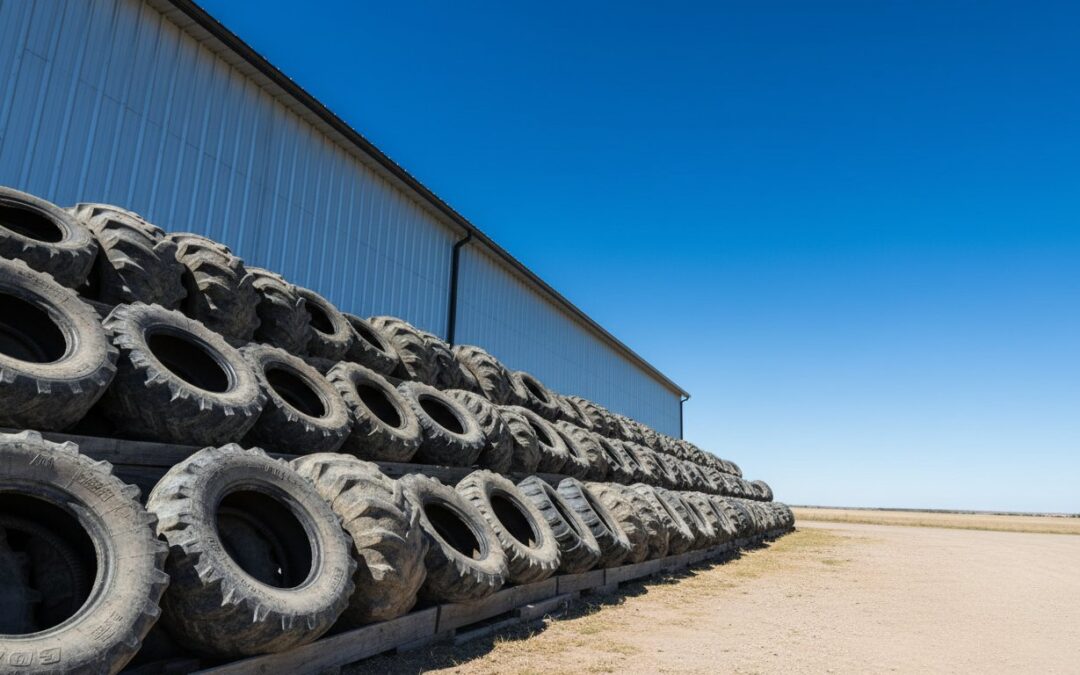
In October 2024, a Lubbock County producer spent four hours winching a single 600 pound rear tractor tire onto a trailer, only to be turned away at the municipal landfill gate. It’s a frustrating reality for West Texas farmers who find that standard waste routes simply aren’t built for the scale of modern machinery. You know that these massive casings don’t just take up space; they’re a liability. Letting a stockpile grow behind the barn isn’t a storage strategy. It’s a risk for TCEQ fines that can escalate quickly. Finding a reliable agricultural tire collection service is the only way to protect your land and your bottom line.
We understand that your time is better spent in the field than managing waste logistics. This 2026 guide provides a clear roadmap for disposing of bulk farm tires across Midland, Odessa, and Lubbock while staying 100 percent compliant with state environmental laws. You’ll learn how to coordinate efficient pickups, what documentation you need for your records, and how to clear out years of accumulated rubber without the physical strain. We’ve simplified the process so you can focus on the next harvest while we handle the heavy work of your scrap tire inventory.
Key Takeaways
- Understand why the massive scale of modern R-1 and R-2 tractor tires requires specialized disposal solutions beyond standard West Texas waste management.
- Learn how to maintain TCEQ compliance and avoid legal risks by properly managing “Scrap Tire Manifests” for every load that leaves your farm.
- Streamline your operation with a professional agricultural tire collection service that handles everything from small implements to massive combine drive tires.
- Discover practical preparation steps, such as debris removal and central consolidation, to avoid extra contamination fees and ensure a smooth pickup.
- Compare the hidden costs of self-hauling against the efficiency of on-site collection to find the most profitable disposal method for your farm.
Why Agricultural Tire Disposal is a Unique Challenge in West Texas
Managing scrap rubber on a South Plains farm isn’t like taking out the trash. Modern high-horsepower tractors use R-1 and R-2 tires that often exceed six feet in height and weigh hundreds of pounds. These tires are built for extreme durability, but their end-of-life management creates a massive logistical bottleneck. Standard municipal waste services in Midland and Odessa simply aren’t equipped to handle these massive OTR units. Most local landfills lack the heavy-duty shredders required for steel-belted radials, leaving farmers with piles of rubber that grow every season. Professional agricultural tire collection is necessary because individual hauling is rarely a viable option.
The rural distance challenge is the biggest hurdle for operations near Lubbock or the Permian Basin. When a field is 50 miles from the nearest urban center, the fuel and labor costs of hauling a single load of oversized tires are often higher than the disposal fees. Farmers are forced to choose between losing a full day of productivity or letting the tires sit. This leads to decades of accumulated waste that complicates land management and reduces the usable acreage of a farm.
The Scale of the Problem in the Permian Basin
The volume of scrap rubber generated by high-horsepower row-crop equipment in West Texas is staggering. There has been a significant shift from older bias-ply tires to heavier radial designs. While radials offer better traction and less soil compaction, they are significantly harder to process. The Tire recycling process for these units requires specialized cutting equipment that most rural counties don’t possess. Without access to dedicated OTR tire collection services, these tires remain a permanent fixture in the landscape.
Health and Safety Risks of Farm Tire Piles
Leaving tire stockpiles in a pasture creates immediate hazards for the community. In the intense heat of a Lubbock summer, stagnant water trapped inside a tire casing becomes a primary breeding site for mosquitoes. This increases the local risk of West Nile virus for your family and workers. Fire is another catastrophic threat; a tire fire in a dry West Texas pasture is nearly impossible to extinguish once it gains momentum. These fires burn at extremely high temperatures and release toxic runoff into the soil. Furthermore, illegal dumping or improper storage can lead to significant liability for landowners under 2026 environmental regulations. Utilizing a professional agricultural tire collection service ensures your operation remains compliant and your land stays safe.
Proper disposal isn’t just about cleaning up the yard; it’s about protecting the long-term value of your property. We provide the specialized equipment and transport needed to handle the largest tractor tires used in West Texas today. Our approach is direct, professional, and designed to move these heavy loads off your property without disrupting your daily work schedule.
Understanding TCEQ Regulations for Texas Farm Tire Scrap
The Texas Commission on Environmental Quality (TCEQ) manages how every tractor, combine, and implement tire is handled across the state. They don’t view scrap tires as simple trash. Instead, they’re classified as a regulated waste stream because of fire risks and mosquito-borne illnesses. For West Texas farmers, agricultural tire collection must follow strict “cradle-to-grave” tracking. This means you’re legally responsible for the tire until it reaches a permitted processing facility.
The core of this oversight is the Scrap Tire Manifest system. This multi-part document tracks the generator, the hauler, and the end site. You must keep copies of these manifests for at least three years. If a state inspector visits your property in Lubbock or Midland, these records are your only proof of legal disposal. Without them, you’re liable for where those tires eventually land, even if you paid someone to take them away.
There’s a thin legal line between “storing” and “dumping” on agricultural land. TCEQ allows farmers to keep tires for beneficial use, such as weighing down silage covers or preventing soil erosion. However, these tires must be kept in a way that doesn’t create a nuisance. Once a pile is abandoned or lacks a clear functional use, it’s considered an illegal dump. Under Texas Water Code Section 7.051, penalties for non-compliance can reach $25,000 per day. In Midland and Lubbock counties, local environmental officers frequently use aerial surveillance to spot unauthorized tire piles on large acreages.
The Importance of Permitted Tire Haulers
Hiring a permitted tire hauler in Texas is the only way to protect your farm from massive fines. Before any truck leaves your property, you must verify their TCEQ registration number. This is typically a five-digit code assigned by the state. Don’t take their word for it; ask to see their registration card. A legitimate hauler will provide a completed manifest before they depart. This paper trail is your insurance policy against “midnight dumpers” who might drop your tires in a nearby ravine.
Local Ordinances in Midland and Odessa
Local rules often add another layer of complexity. The City of Midland landfill has strict restrictions on oversized tires. Most agricultural tires over 48 inches in diameter are rejected unless they’ve been quartered or shredded first. In Lubbock County, 2026 ordinances for commercial agricultural operations now require a specific storage permit if you have more than 500 scrap tires on-site at any time. If you’re nearing these limits, it’s time to schedule a professional pickup to stay within local guidelines. These rules ensure that agricultural tire collection remains safe for the entire community.
Comparing Disposal Options for West Texas Farmers
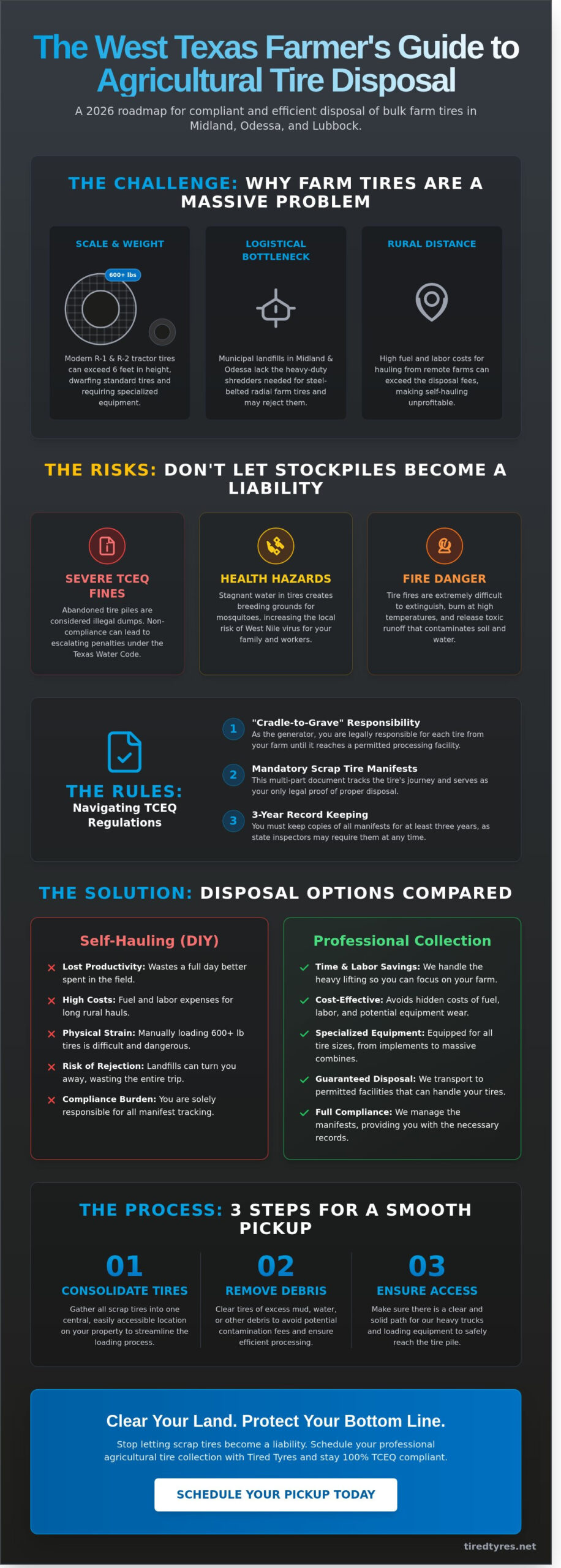
Farmers in the Permian Basin and South Plains face a logistical challenge when equipment tires reach the end of their lifespan. You have two primary paths: managing the transport yourself or hiring a specialized service. Each choice impacts your bottom line and your daily operations differently. Understanding the trade-offs between gate fees, labor, and safety is essential for maintaining a clean, compliant farmstead in 2026.
Self-Hauling to the Landfill: Is it Worth It?
Loading a trailer with heavy rubber seems like a way to save money, but the hidden costs add up quickly. A single rear tractor tire can weigh over 500 pounds. Moving ten of these requires a heavy-duty trailer, a front-end loader, and several hours of labor that could be spent on actual farm work. Fuel costs for a 60-mile round trip to a regional landfill in Midland or Lubbock further erode any perceived savings.
The biggest risk is rejection at the gate. Many municipal landfills have strict limits on tire diameter. Showing up with a 42-inch rim diameter tire often results in being turned away. Furthermore, commercial tire disposal standards often require tires to be quartered or sliced before they are accepted for burial. Most farms don’t own the industrial shears required to process large-scale agricultural rubber, making self-hauling a frustrating and often impossible task.
Professional Collection vs. Municipal Events
City-sponsored “Tire Amnesty” days in Odessa or Lubbock are designed for residential cleanup. These events typically limit intake to passenger car or light truck tires. They aren’t equipped to handle the scale of a farm operation. If you show up with a combine tire, you’ll likely be redirected to a commercial facility. These municipal events also happen once or twice a year, forcing you to store waste for months.
Professional agricultural tire collection offers a year-round solution. Instead of waiting for a county calendar date, you schedule a pickup when your inventory demands it. Tired Tyres handles the heavy lifting and loading, which protects your staff from potential back injuries and keeps your tractors in the field. This service ensures your scrap rubber is moved directly to a processing facility that can handle oversized tractor and implement tires.
The Cost of Doing Nothing
- Pest Risks: Old tires collect stagnant water, creating breeding grounds for mosquitoes that carry West Nile and Zika viruses.
- Fire Hazards: Large tire piles are notoriously difficult to extinguish once ignited, creating toxic smoke that can linger for days.
- Regulatory Fines: State inspectors monitor large stockpiles. Proactive removal is significantly cheaper than paying non-compliance penalties.
Stockpiling rubber at the edge of a field might seem like a zero-cost option today. However, the long-term liability often outweighs the immediate convenience. Choosing a professional agricultural tire collection service turns a recurring headache into a managed, predictable business expense. It keeps your property clean and ensures you stay focused on your crop, not your scrap pile.
How to Prepare Your Farm for a Bulk Tire Collection
An efficient agricultural tire collection starts long before our trucks arrive on your property. Proper staging saves time, reduces labor costs, and ensures the safety of everyone on-site. The goal is to move your “tired” inventory from the fields to a centralized, accessible location where heavy machinery can operate without hindrance.
Start by cleaning your tires. West Texas soil is heavy; a single tractor tire caked in dried mud can weigh 50 to 80 pounds more than a clean one. Remove all dirt, debris, and standing water. Most recycling facilities in 2026 charge extra for contaminated loads or excessive weight caused by trapped water. Draining them also eliminates mosquito breeding grounds, which is a critical biosecurity measure for any active farm.
Logistics matter in the Midland and Lubbock regions. Our collection trucks are heavy, often weighing up to 80,000 pounds when fully loaded. You must provide an all-weather access path. If a truck sinks into soft pasture land or gets stuck in West Texas mud, it delays the entire schedule and may result in recovery fees. Stick to caliche pits, gravel pads, or packed dirt roads that can support high-tonnage vehicles.
Site Access and Truck Clearance
Check your overhead space before the truck arrives. Standard trailers require at least 13 feet 6 inches of vertical clearance. Look for low-hanging power lines or tree branches that could snag loading equipment. You also need a wide turn-around radius. A 53-foot trailer typically requires a 50-foot wide area to maneuver safely. Keep the staging area clear of active tractors or harvesters to prevent accidents during the loading process.
Tire Sorting and Stacking
Organization is the key to an accurate quote and a fast pickup. Group your inventory by size and type: Tractor, Implement, and OTR (Off-The-Road). If you have a fleet of transport vehicles, keep your semi-truck tire disposal units in a separate pile from the larger agricultural rubber. This separation allows our crew to calculate volume quickly.
- Lacing: Stack tires in a “laced” or woven pattern to maximize stability and trailer space.
- Rims: Identify tires that are still mounted on rims. These require specialized de-rimming equipment and are processed differently than standard casings.
- Accessibility: Don’t stack tires against fences or buildings where a loader cannot reach them from at least two sides.
By following these steps, you ensure a professional and hassle-free experience. If your staging area is ready, contact Tired Tyres to schedule your bulk pickup today.
Reliable Agricultural Tire Pickup with Tired Tyres
Tired Tyres stands as the Permian Basin specialist for heavy-duty rubber removal. We understand that agricultural operations generate unique waste challenges. You can’t simply toss a 600-pound drive tire into a standard bin. Our team handles everything from small implement tires to massive combine drive tires with professional equipment. We’ve built our reputation on being the reliable partner for agricultural tire collection across West Texas. Our crew arrives prepared with the right trailers and lifting gear to manage even the most awkward loads.
Legal compliance is a top priority for our 2026 operations. Every pickup includes full TCEQ-compliant documentation. This paperwork protects your farm during environmental audits and ensures you meet state regulations. We don’t just haul tires away; we ensure they enter a legal recycling stream. This process removes the liability from your shoulders. It’s a straightforward, professional service designed for busy producers who value their time and their land’s safety.
Our West Texas Service Area
Our fleet operates daily throughout Midland, Odessa, and Lubbock counties. We’ve optimized our routes to reach remote farmsteads and commercial hubs alike. For businesses with consistent waste streams, we offer a scheduled tire pickup in Odessa to manage recurring commercial needs. This service keeps your property clear of breeding grounds for pests and fire hazards. We support the local agricultural community by maintaining clean, compliant work environments. Our drivers know the backroads of the Permian Basin, ensuring we arrive on time, every time.
Get Your Custom Pickup Quote
Getting a price for your agricultural tire collection shouldn’t be a guessing game. We’ve streamlined our estimation process to save you time. We recommend that farmers take clear photos of their tire piles before calling. Visuals allow our dispatchers to calculate the exact equipment and manpower needed for the job. You can reach us through a quick phone call or our online contact form to start the process.
We pride ourselves on transparency and efficiency. You’ll receive a clear estimate without hidden fees or surprise surcharges. Whether you have ten tires or two hundred, we provide the same level of precision and care. Contact Tired Tyres today for a bulk agricultural tire collection quote and let us handle the heavy lifting. We’ll get your site cleared quickly so you can focus on your harvest and your livestock.
Streamline Your West Texas Farm Operations for 2026
Managing scrap rubber on a large scale operation doesn’t have to be a logistical headache. By following TCEQ regulations and choosing a permitted hauler, you protect your land and stay compliant through the 2026 season. We’ve covered how to organize your inventory and why specialized OTR equipment is necessary for those heavy tractor tires that standard haulers can’t touch. Local farmers in the Permian Basin and South Plains now have a direct path to clearing out years of accumulated waste without the typical stress or environmental risks.
Tired Tyres operates as a TCEQ Permitted Hauler with the specific machinery required for OTR and Ag tires. We serve Midland, Odessa, and Lubbock, ensuring your site is cleared quickly and professionally. Don’t let old rubber pile up and create breeding grounds for pests on your property. Instead, schedule a professional agricultural tire collection to keep your production areas clean and safe for your crew. We handle the heavy lifting and transport so you can focus entirely on your next harvest. It’s the most efficient way to maintain a clean, compliant, and productive farmstead.
Get a Bulk Agricultural Tire Pickup Quote
We look forward to helping you clear the way for a successful and organized year on the farm.
Frequently Asked Questions
Do West Texas landfills accept agricultural tires?
Most West Texas landfills, including the City of Midland and City of Lubbock facilities, don’t accept whole agricultural tires due to TCEQ regulations. These tires don’t compact well and tend to float to the surface of landfill cells over time. You’ll need to find a specialized agricultural tire collection service to handle these oversized items properly and stay within legal limits.
How much does agricultural tire collection cost in Midland?
Pricing for agricultural tire collection in Midland varies based on the tire’s weight and rim diameter. While we don’t list set fees here, industry standards in Texas often involve a per-tire disposal charge plus a transportation fee. Contact us directly for a transparent, no-obligation quote based on your specific inventory and location. We provide clear costs upfront without hidden charges.
Is it legal to bury old tractor tires on my own farm in Texas?
It’s illegal to bury tires on your property under Texas Administrative Code Title 30, Part 1, Chapter 328. TCEQ regulations prohibit the land reclamation of tires because they trap gases and can contaminate groundwater. Violating these rules can lead to fines starting at 1,000 dollars per day. Professional disposal is the only safe and legal option for your farm.
What is a TCEQ tire manifest and do I need one?
A TCEQ tire manifest is a legal document that tracks scrap tires from their point of origin to a registered processing facility. If you’re transporting more than five tires at a time in Texas, you’re required to have this paperwork. Our team handles all the manifest requirements for your agricultural tire collection, ensuring you stay compliant with state environmental laws during every pickup.
Can you pick up tires that are still on the rims?
Yes, we can collect tires that are still mounted on the rims. Keep in mind that rims add significant weight and require different processing at the recycling center. We’ll bring the right equipment to load these heavy assemblies safely. This saves you the labor of dismounting them yourself before we arrive, making the process much faster for your operation.
How many tires count as a “bulk” collection for farm services?
We typically define a bulk collection as any pickup involving 10 or more large tractor tires or a combined weight exceeding 2,000 pounds. For smaller quantities, we can still help, but bulk loads allow us to optimize our route and equipment. This efficiency helps us provide more reliable scheduling for farms across the Lubbock and Odessa areas throughout the year.
Do you provide services for cotton gin or dairy farm tire piles in Lubbock?
We provide specialized removal services for large tire piles found at cotton gins and dairy farms throughout the Lubbock region. Whether you have 50 or 500 tires stacked near your silage pits, we’ll clear the site quickly. Our team understands the logistical needs of active agricultural operations and works around your schedule to minimize disruption during your busiest seasons.