
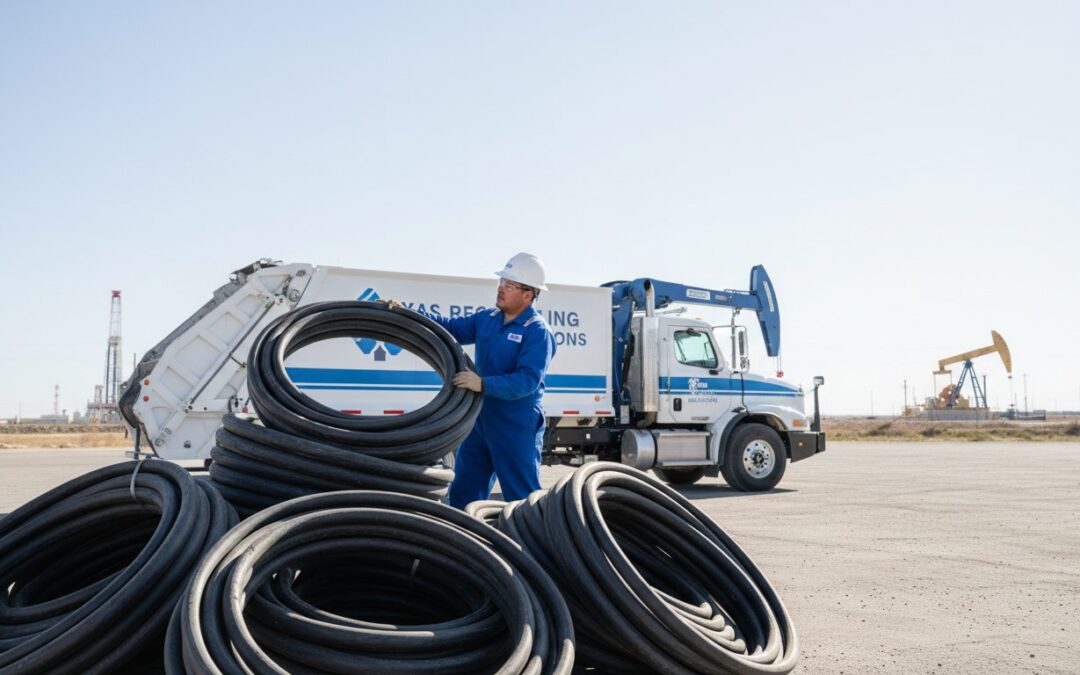
Your local landfill likely stopped accepting industrial rubber years ago, leaving your Midland job site with a growing pile of fire hazards. By January 2026, Texas environmental regulations will require even stricter documentation for non-hazardous industrial waste. Stacking these hoses in a corner doesn’t just waste space; it creates a tripping risk for your crew and invites heavy fines during a surprise inspection. Finding a reliable partner for industrial hose recycling in Midland is no longer a luxury for oilfield operations. It’s a core requirement for staying in business.
We know that managing bulky waste feels like a distraction from your real work. You need a disposal process that’s as efficient as your production line. This guide provides the exact steps to clear your site of rubber waste while staying 100% compliant with TCEQ laws. We’ll walk through the 2026 disposal standards, manifest paperwork, and how to set up a recurring pickup schedule that keeps your facility safe and organized.
Key Takeaways
- Understand why standard city collection centers reject reinforced rubber and how to identify which industrial hoses require specialized processing.
- Ensure total legal compliance with TCEQ regulations by utilizing a permitted professional service for industrial hose recycling Midland.
- Learn how to categorize your scrap materials by composition to optimize your disposal strategy and minimize operational costs.
- Access a streamlined preparation checklist that helps site managers organize bulky waste for faster, more efficient professional pickups.
- Discover the “no-hassle” approach to rubber waste removal across the Permian Basin that keeps your business focused on production.
Why Finding Industrial Hose Recycling in Midland is a Challenge
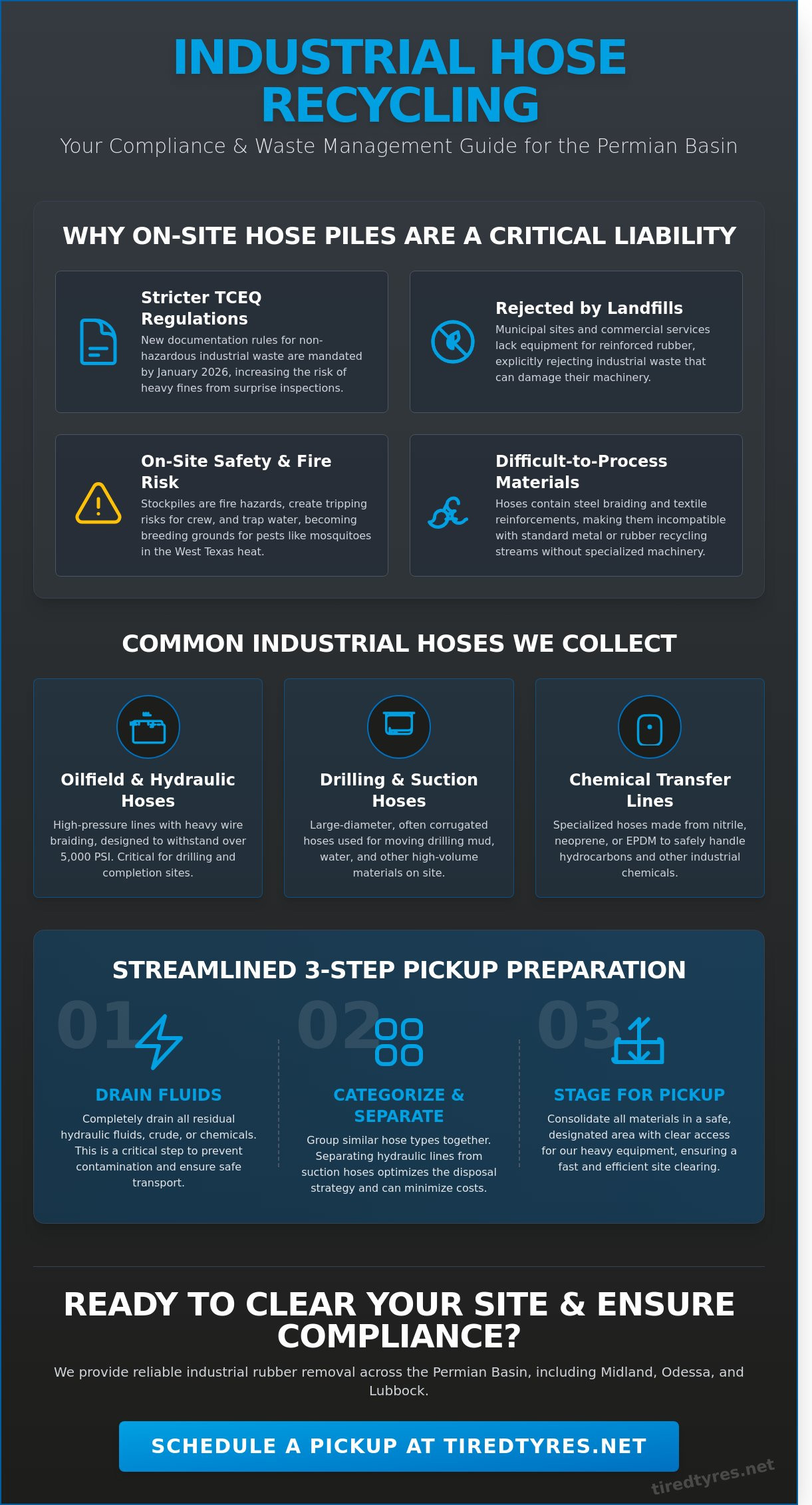
Industrial hose recycling Midland is a specialized process that goes far beyond standard waste management. It involves the systematic collection and mechanical processing of heavy-duty reinforced rubber. These aren’t simple garden hoses. We’re talking about high-pressure hydraulic lines, drilling mud hoses, and chemical transfer lines that often contain internal steel braiding or textile reinforcements. This complexity makes them difficult to handle without specific machinery.
Most operators in the Permian Basin realize that their “tired” hoses can’t simply be tossed into a standard bin. When these materials reach the end of their service life, they become a form of Industrial waste that requires professional oversight. Unlike traditional scrap metal recycling, which is abundant in West Texas, rubber-focused recycling is rare. Metal recyclers often reject industrial hoses because the rubber coating contaminates their melt, while many rubber processors lack the equipment to strip the internal wire.
Leaving these materials in stockpiles on-site creates immediate environmental and safety risks. In the intense West Texas heat, abandoned rubber degrades and can release volatile organic compounds. These piles also become “mosquito magnets” and fire hazards. Proper industrial hose recycling Midland ensures these materials are diverted from the dirt and moved into a productive lifecycle.
The “Not Accepted” Reality at Local Landfills
The City of Midland Citizens Collection Station is designed for residential debris and specific household recyclables. It’s not a solution for industrial operators. Municipal sites lack the heavy-duty grinders needed to process reinforced rubber. Most city facilities explicitly reject “construction and industrial waste” to protect their equipment and manage landfill volume. Standard commercial trash services also have limitations. Bulk rubber is heavy, non-compressible, and can easily damage the hydraulic systems in standard garbage trucks.
The Permian Basin Oilfield Waste Dilemma
The volume of hose waste generated by local hydraulic fracturing and drilling operations is staggering. A single site can generate hundreds of feet of high-pressure hose during a project. When these hoses are left in the sun, they trap rainwater and create breeding grounds for pests. This issue is closely linked to the broader waste tire problems facing Midland and Odessa. Both materials share a similar chemical makeup and present the same disposal hurdles. Without a dedicated recycling partner, these hoses often sit for years, creating a liability for the landowner and a blemish on the West Texas landscape.
Common Types of Industrial Hoses We Collect in West Texas
Industrial hose recycling Midland requires a clear understanding of the diverse materials used across the Permian Basin. Local industries like oil extraction, gas processing, and large-scale farming generate thousands of tons of waste annually. These aren’t standard garden hoses. They are complex, multi-layered components designed for extreme pressures and harsh environments. We manage the collection of these specialized materials to keep West Texas operations running cleanly.
Material composition is the most critical factor in the recycling process. A hose isn’t just rubber. It often contains layers of nitrile, neoprene, or EPDM, reinforced with high-tensile steel wire or textile braids. To be repurposed, these materials must meet specific scrap commodity specifications established by industry leaders. We distinguish between “clean” scrap, such as unused surplus or water lines, and “dirty” scrap that has carried hydrocarbons or chemicals. Tired Tyres handles the heavy lifting by sorting and transporting these materials to specialized facilities.
Oilfield and Hydraulic Hoses
High-pressure hydraulic hoses are the backbone of drilling and completion sites. These hoses usually feature heavy wire braiding to withstand pressures exceeding 5,000 PSI. This steel reinforcement adds significant weight and complexity to the recycling stream. Before our team arrives for a scheduled collection, it’s essential to drain all residual hydraulic fluids or crude. This step prevents environmental contamination during transport and processing. During 2026 decommissioning projects, the sheer volume of hose removal can be staggering. We provide the logistics and heavy equipment needed to clear these sites without delaying your crew.
Agricultural and Suction Hoses
Farming operations in Lubbock and Midland counties utilize large-diameter suction and discharge hoses for irrigation and liquid fertilizer transfer. These items are often bulky and difficult to manage with standard waste equipment. Processing these hoses differs significantly from commercial tire disposal because of the rigid PVC or metal spirals embedded in the hose walls. These internal structures require specialized shredding techniques to separate the plastic or rubber from the reinforcement. We specialize in managing these composite materials, ensuring they don’t end up taking up valuable space in local landfills. If your equipment yard is cluttered with old irrigation lines, you can request a site assessment to determine the most efficient removal plan.
Staying Compliant: Texas Regulations for Industrial Rubber Waste
The Texas Commission on Environmental Quality (TCEQ) maintains strict oversight regarding the management of industrial solid waste. Under Title 30 of the Texas Administrative Code, Chapter 335, every business in the Permian Basin is responsible for classifying its waste streams. Industrial rubber hoses, particularly those used in oilfield operations, are typically categorized as Class 2 industrial waste. This classification means you can’t simply toss them into a standard commercial dumpster. Your liability for these materials remains active from the moment they are removed from service until they reach a final, authorized processing site. Failing to secure a verified partner for industrial hose recycling Midland puts your operation at risk of significant regulatory scrutiny.
Compliance in 2026 requires more than just moving waste off-site. It demands a clear paper trail that proves every pound of rubber reached a legal destination. The TCEQ regularly audits industrial generators in Midland and Ector counties to ensure waste isn’t being stockpiled or mismanaged. Since these hoses often contain residual hydrocarbons or reinforced steel wire, they require specialized handling that standard waste services aren’t equipped to provide. Professional recycling ensures these materials are diverted from landfills and processed into reusable feedstock, keeping your business in line with state environmental goals.
Avoiding Illegal Dumping Fines
Improper disposal of industrial rubber is a serious violation of the Texas Health and Safety Code Chapter 365. For businesses, the penalties are severe. Illegal dumping can result in administrative, civil, or criminal penalties, with fines often reaching $10,000 per violation for each day the waste remains improperly stored. If the discarded material exceeds 200 pounds, the offense can be elevated to a state jail felony. You should be wary of “free” or suspiciously low-cost disposal offers from unverified individuals. If an unauthorized hauler dumps your hoses on a backroad or in a field, the TCEQ will hold you, the generator, legally responsible for the cleanup costs and associated fines. You can find more information on these strict requirements in our guide on Texas tire disposal regulations.
The Role of Permitted Haulers
A licensed waste hauler must hold a valid TCEQ registration and follow specific transport protocols to operate legally in Texas. These haulers are vetted to ensure they only deliver materials to authorized facilities that meet 2026 environmental standards. Tired Tyres acts as your compliance partner, managing the collection and transport of your bulk rubber to ensure it never ends up in an unauthorized site. We understand the local landscape and the specific pressure oilfield service companies face regarding waste audits. The scrap manifest acts as the definitive legal document that proves your industrial waste was transported and processed at a TCEQ-authorized facility. By prioritizing industrial hose recycling Midland through a permitted provider, you protect your company’s reputation and your bottom line.
How to Prepare Your Scrap Hoses for Professional Pickup
Preparing your site for industrial hose recycling Midland ensures a fast turnaround and keeps your yard operations moving. We value efficiency, and a well-staged pile allows our team to load and clear your space without disrupting your daily workflow. Following a few simple steps reduces the time our trucks spend on-site, which helps keep your disposal costs predictable and low.
Step 1: Drain and Clean
Safety is the priority when handling used industrial lines. Hoses used in Permian Basin oilfield applications often contain residual hydraulic fluid, drilling mud, or chemicals. You must drain all liquids before we arrive for pickup. Residual oil can contaminate the recycling stream, making the rubber much harder to process. For high-pressure remnants, verify that all internal pressure has been bled off. “Clean” rubber is safer for our crew to handle and significantly speeds up the processing timeline at the facility.
Step 2: Sorting and Staging
Keep your scrap streams separate to avoid loading delays. Don’t mix hydraulic hoses with other heavy rubber waste like skid steer tracks or large OTR tires. Mixed piles often take 40% longer to load, which can impact your final service quote. Create a dedicated pickup zone at your Midland or Odessa facility. This area should have at least 50 feet of clear approach space for a heavy-duty truck to maneuver safely. To get an accurate quote, estimate your total volume by measuring the height, width, and length of the stacked hoses.
Remove metal couplings and heavy steel fittings whenever possible. While some integrated components are manageable, stripping the steel ends reduces the total weight of your rubber waste. This makes the industrial hose recycling Midland process more cost-effective for your business and ensures the rubber is ready for immediate grinding. Use the following checklist to ensure your site is ready for our arrival:
- Drain fluids: Ensure all hoses are free of oils, chemicals, or stagnant water.
- Remove fittings: Cut off steel couplings and heavy metal ends to reduce weight.
- Stack properly: Coil or stack hoses to a maximum height of 4 feet for stability.
- Clear access: Maintain a clear path for a 26-foot box truck or flatbed to reach the pile.
- Verify volume: Have a rough estimate of the total weight or pile dimensions ready.
A tidy staging area reflects a well-managed site. When everything is organized, we can get in and out of your location in under 30 minutes for most standard loads. If you have a large inventory of decommissioned lines ready for removal, schedule your industrial hose pickup today and clear your yard space.
Reliable Industrial Rubber Removal in Midland, Odessa, and Lubbock
Managing industrial waste in the Permian Basin requires more than just a standard dumpster. Tired Tyres provides a streamlined solution for industrial hose recycling Midland operators can rely on to keep their sites clean. We focus on removing the logistical burden from your team entirely. You don’t have to worry about transport logistics or environmental compliance because we handle every step of the heavy lifting. Our team understands that industrial rubber disposal isn’t a simple task in the oilfield, where materials are often bulky and contaminated. We take those “tired” hoses and ensure they don’t end up as a long-term liability on your yard or job site.
The Tired Tyres advantage is built on reliability and a deep understanding of the West Texas industrial landscape. We offer several key benefits for local businesses:
- Direct Pickup: We come to your location with the right equipment for bulk removal.
- Regulatory Compliance: Our process aligns with the 2026 disposal guidelines to keep your business safe from fines.
- No-Hassle Scheduling: We work around your operational hours to minimize downtime.
- Regional Expertise: We know the specific needs of Permian Basin oil and gas providers.
Serving the Permian Basin and Beyond
Our service area spans the entire South Plains and Permian Basin regions, covering everything from the heart of Midland to the outskirts of Lubbock and Odessa. We’ve spent years working alongside oilfield and industrial clients who face unique disposal challenges every day. Most municipal services refuse bulk rubber loads because these materials damage sorting machinery or take up excessive landfill space. We step in where city services stop. Whether you have 500 pounds or 5,000 pounds of reinforced material, we have the specialized equipment to clear it. This commitment keeps West Texas clean and helps your business avoid the 2026 regulatory scrutiny associated with improper rubber storage. We treat every job with the same level of professional precision, ensuring your site remains safe and organized.
Schedule Your Pickup Today
The “call and collect” workflow is built for speed and efficiency. You contact us, we provide a clear quote, and we schedule a time that doesn’t disrupt your daily operations. There aren’t any hidden disposal fees or surprise surcharges added at the end of the job. We believe in transparent communication so you can budget your site cleanup accurately. Our goal is to make the process invisible to your daily workflow. You point to the pile, and we make it disappear. Our team arrives on time, loads the material, and provides the documentation you need for your compliance records. Ready to clear your yard? You can Contact Tired Tyres for an industrial hose removal quote to get started today.
Streamline Your Permian Basin Waste Management
Managing industrial waste shouldn’t be a bottleneck for your 2026 operations. The TCEQ (Texas Commission on Environmental Quality) maintains strict standards for rubber disposal, and staying ahead of these regulations protects your business from unnecessary fines. Effective industrial hose recycling Midland depends on choosing a partner with the right specialized industrial rubber equipment to handle heavy-duty hydraulic and suction lines. Our team provides TCEQ compliant hauling across Midland, Odessa, and Lubbock, ensuring every foot of scrap hose is documented and processed correctly. You’ve worked hard to build your reputation in West Texas, so don’t let a cluttered yard or compliance oversight slow you down. We take the weight of rubber disposal off your shoulders with reliable, professional service that meets the specific demands of the energy sector. It’s time to clear your workspace and improve your site safety with a single phone call.
Get a Quote for Industrial Hose Removal in Midland
Let’s get your site ready for a productive and compliant year ahead.
Frequently Asked Questions
Can I recycle industrial hoses at the Midland Citizens Collection Station?
You can’t recycle industrial hoses at the Midland Citizens Collection Station. This facility is strictly for residential waste like household trash, cardboard, and small tires. For industrial hose recycling Midland companies must use specialized private services. According to the City of Midland’s 2024 disposal guidelines, industrial grade materials require processing at permitted secondary facilities. We provide the necessary logistics to ensure your site stays compliant with local regulations.
Does Tired Tyres provide a manifest for industrial hose disposal?
Tired Tyres provides a detailed disposal manifest for every industrial hose pickup we complete. This document is your proof that the waste reached a legal, permitted recycling facility. It’s an essential piece of paperwork for your 2026 environmental audits and corporate sustainability reporting. You’ll receive this digital or physical manifest as soon as the load is processed. It ensures your business meets all Texas Commission on Environmental Quality standards.
What is the cost of industrial hose recycling in Midland?
The cost of industrial hose recycling in Midland depends on the total weight of the load and the specific rubber compounds involved. We base our service fees on current market processing rates and the distance from your West Texas job site. While the Midland Landfill charges a standard gate fee for general debris, our recycling fees are structured around material recovery. Contact our office for a direct quote based on your current inventory. We keep our pricing transparent and competitive for Permian Basin operators.
Do I need to remove the metal fittings from my hoses before pickup?
You don’t need to remove metal fittings or couplings from your hoses before we arrive for pickup. Our industrial shredding equipment is designed to handle integrated steel reinforcements and heavy duty brass or steel ends. Leaving these attachments in place saves your crew significant labor hours on the clock. We separate the metal from the rubber at our facility to ensure every component is recycled. This efficient process allows you to clear your yard faster.
Which cities in West Texas do you serve for hose collection?
We serve 12 major hubs across the Permian Basin for all industrial rubber collection needs. Our primary service area covers Midland, Odessa, Andrews, and Big Spring. We also run weekly routes to Stanton, Monahans, Crane, and Garden City. If your site is located within a 150 mile radius of the Midland-Odessa area, we can coordinate a pickup. Our fleet is equipped to handle both remote oilfield locations and urban industrial parks.
Can you pick up contaminated oilfield hoses?
We can pick up oilfield hoses if they’ve been properly drained and capped according to safety protocols. Every hose must be free of flowing liquids to prevent spills during transport on Texas highways. We follow the 2025 EPA guidelines regarding residual hydrocarbons in industrial rubber products. If your hoses transported hazardous chemicals, please have the Safety Data Sheets ready for our team. This helps us determine the correct handling and containment method for your specific load.
How quickly can Tired Tyres schedule a bulk rubber pickup in Odessa?
Tired Tyres can usually schedule a bulk rubber pickup in Odessa within 24 to 48 hours of your initial request. We keep three dedicated trucks in Ector County daily to handle the high demand from local industrial yards. If you call us before 10:00 AM, we often manage same day service for urgent site cleanups. Our dispatchers work quickly to ensure your “tired” materials don’t become a safety hazard or a bottleneck for your operations.
What happens to the industrial hoses after they are collected?
Your industrial hoses are hauled to a regional processing plant where they’re shredded into high quality rubber chips. We use magnetic separators to pull out the steel wire, which goes to local metal recyclers for smelting. Roughly 92% of the rubber we collect is repurposed for road asphalt or industrial fuel. This process keeps tons of durable waste out of the Midland Landfill every year. It transforms your old equipment into raw materials for new West Texas infrastructure.