
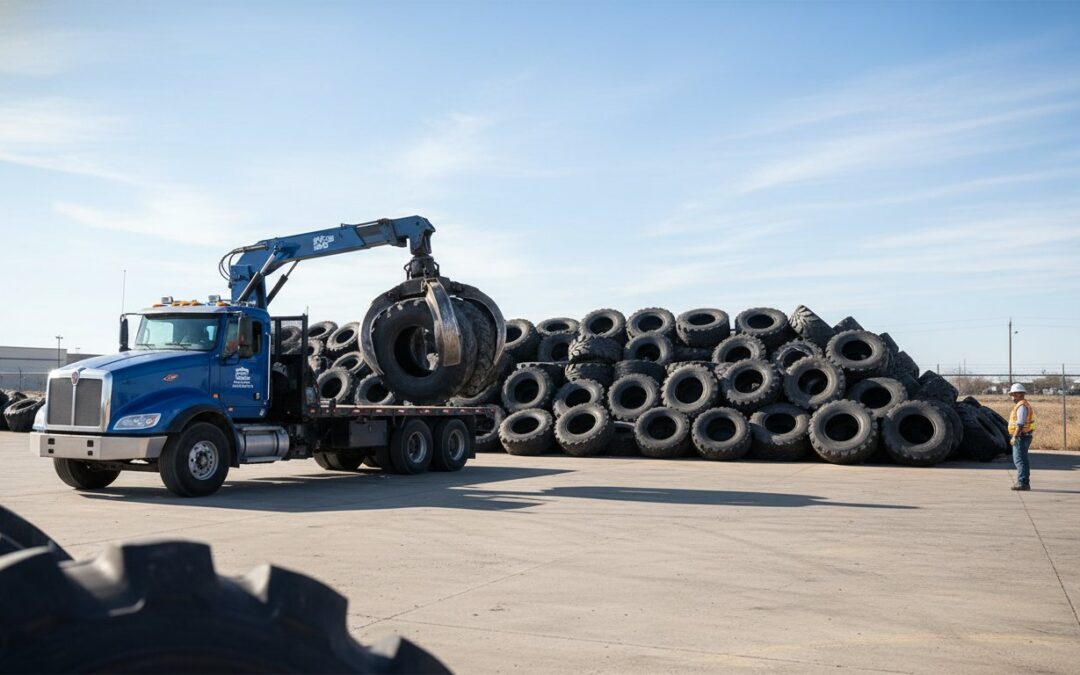
Staring at a mounting pile of heavy OTR tires and wondering if your hauler will actually show up isn’t just a headache. It’s a significant legal liability. In Lubbock, failing to document the movement of scrap tires can lead to steep TCEQ fines that far outweigh the cost of proper disposal. You need a partner who understands that moving bulk rubber requires specialized equipment and a strict paper trail.
We understand the frustration of dealing with unreliable schedules and the physical difficulty of handling massive semi-truck or agricultural tires. Finding a professional logistics company tire waste Lubbock operators can depend on is the only way to ensure your site stays clean and your business remains compliant. You deserve a predictable service that handles the heavy lifting without the regulatory guesswork.
This guide explains how specialized logistics partners manage bulk collection for passenger, commercial, and off-the-road tires. You’ll learn what to look for in a permitted hauler to guarantee that your manifest documents are always in order and your operational efficiency remains high.
Key Takeaways
- Learn how a professional logistics company tire waste Lubbock partner ensures TCEQ compliance through systematic manifest tracking.
- Identify the specific handling requirements for different scrap categories, including semi-truck tires, OTR rubber, and industrial conveyor belts.
- Understand the legal risks of using unpermitted haulers and how proper certification protects your business from illegal dumping liabilities.
- Discover how to stage your bulk rubber waste effectively to reduce loading time and streamline your scheduled commercial pickups.
- Explore specialized collection solutions tailored for commercial sites across the South Plains and the Permian Basin.
The Complexities of Tire Waste Logistics in Lubbock
Managing scrap rubber in West Texas is a specialized operation. It’s not simply about hauling away trash. True tire waste logistics involves the systematic collection, transport, and rigorous manifest tracking of scrap rubber. For commercial operators in the South Plains, the volume can quickly become overwhelming. Whether you’re managing a fleet of semi-trucks or a large-scale farming operation, bulk rubber accumulation requires a strategy that balances operational speed with strict legal compliance.
Lubbock businesses face specific hurdles due to the regional reliance on heavy machinery. Handling the complexities of tire waste means addressing the weight of agricultural and OTR tires that standard equipment simply can’t move. Leaving these items to pile up creates significant environmental hazards. Tire stockpiles are notorious fire risks; once ignited, they’re notoriously difficult to extinguish. Additionally, they serve as ideal breeding grounds for pests like mosquitoes and rodents, which can compromise the safety of your entire facility. A professional logistics company tire waste Lubbock relies on will mitigate these risks before they become unmanageable.
TCEQ Compliance and Legal Liabilities
Texas laws regarding scrap rubber are clear and unforgiving. Business owners must maintain accurate scrap tire manifests for every load that leaves their property. These documents prove that your waste was transported to a state-authorized facility rather than being dumped in a field or alley. In Lubbock County, the penalties for illegal dumping or failing to produce these records can result in thousands of dollars in fines per violation. The Texas Commission on Environmental Quality (TCEQ) regulates the transportation, storage, and processing of scrap tires to protect public health and the environment. Using a permitted hauler is your primary defense against these liabilities.
Why General Junk Haulers Fall Short
It’s tempting to call a standard junk removal service, but they rarely have the tools for industrial loads. Standard box trucks and light trailers aren’t designed for the density of semi-truck tires or the massive dimensions of agricultural rubber. Specialized loading equipment and heavy-duty trailers are essential for moving bulk quantities safely. Without the right gear, pickups take longer, labor costs rise, and you risk damage to your property. Understanding the Texas tire disposal regulations is vital for any local business. A dedicated logistics company tire waste Lubbock partner brings the specific expertise needed to handle everything from scrap skid steer tracks to industrial conveyor belts without the delays common to general haulers.
Specialized Logistics for Every Type of Scrap Rubber
Different industries produce vastly different types of rubber waste. A one-size-fits-all approach doesn’t work for a logistics company tire waste Lubbock businesses rely on for daily operations. Each category of rubber requires specific handling, loading techniques, and transport equipment to ensure safety and efficiency. Whether you’re managing a small tire shop or a massive industrial fleet, the logistics must match the material.
Passenger and light truck tire collection typically follows a volume-based approach. These loads are often high in unit count but lower in individual weight. Efficiency here depends on maximizing trailer space through specialized stacking methods. For transport companies and logistics hubs, semi-truck fleet maintenance generates a steady stream of heavy-duty scrap. These tires require more robust lifting equipment and a scheduled pickup rhythm to prevent yard clutter from interfering with truck movements. If you’re dealing with a growing pile of industrial rubber, reaching out to a professional removal specialist can save you hours of manual labor.
OTR and Agricultural Tire Removal
Moving massive Off-the-Road (OTR) tires from job sites is a significant logistical hurdle. These items can weigh thousands of pounds, making them impossible to move with standard trailers or light-duty winches. Specialized logistics for OTR tires involve heavy-lift machinery and reinforced transport beds. This service is vital for Lubbock area farmers and ranchers who often face the challenge of disposing of oversized tractor and harvester tires. Agricultural tire disposal supports the local economy by keeping fields clear and operations running smoothly. Additionally, we handle the logistics for solid industrial tires, which require specific cutting or loading tools due to their extreme density and lack of air pockets.
Industrial Rubber Waste: Beyond the Tire
Modern industrial sites generate more than just tire waste. Local warehouses and distribution centers often struggle with scrap conveyor belt collection. These belts are heavy, awkward to roll, and take up immense space if left unmanaged. Our logistics process also includes the removal of scrap skid steer tracks and heavy-duty industrial hoses. These components are often made of reinforced rubber that standard waste services won’t accept. Maintaining commercial tire disposal protocols is essential for operational efficiency. A dedicated logistics company tire waste Lubbock partner ensures that all rubber byproducts, from scrap solid tires to industrial hoses, are removed from your site according to a predictable schedule.
Permitted Tire Haulers vs. General Logistics Companies
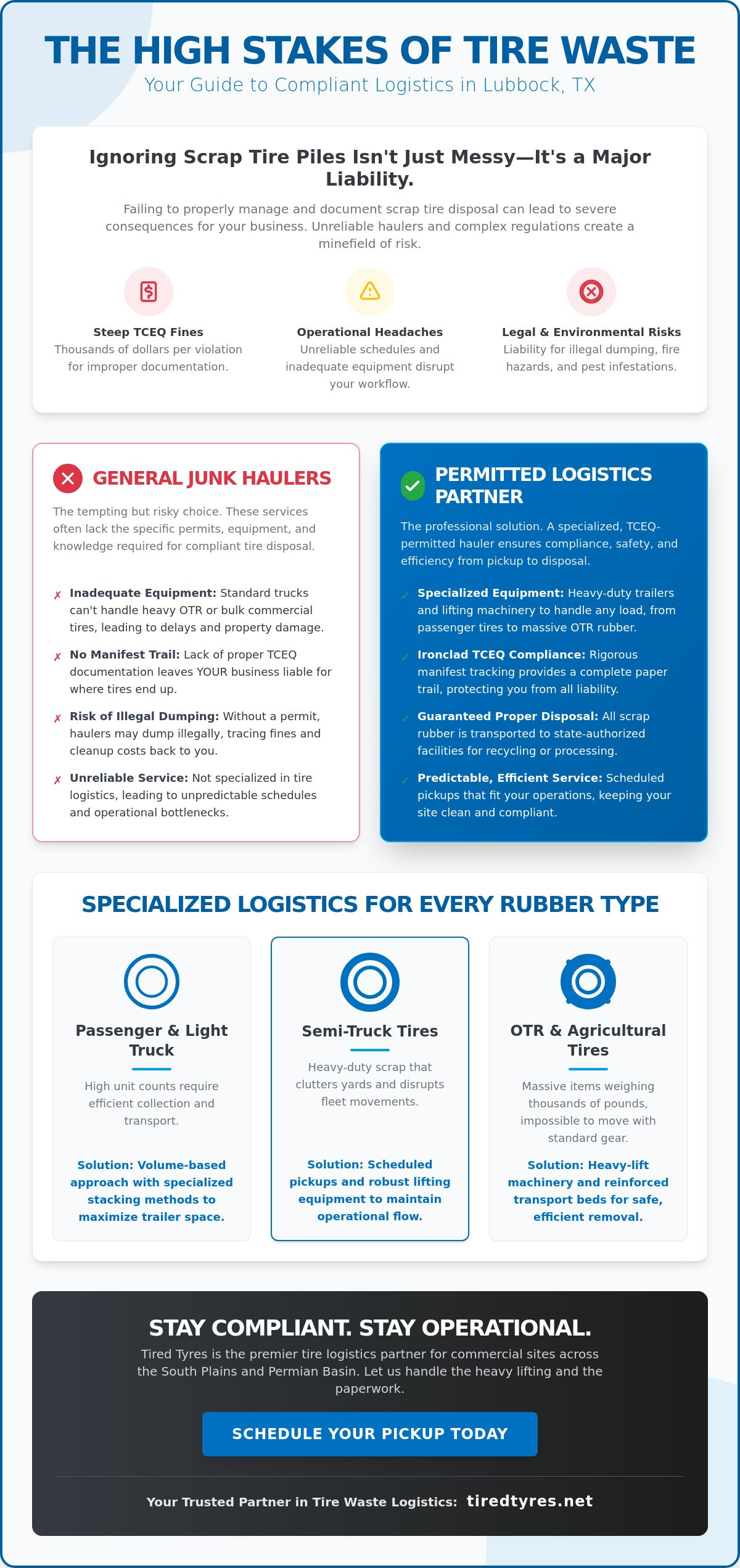
Choosing a general logistics provider for scrap rubber might seem like a simple way to clear space, but it often ignores critical legal protections. Generalists treat scrap rubber like common debris. Specialists treat it as a strictly regulated material. This distinction is vital because tires require specific environmental insurance and state-level registrations that standard junk haulers don’t carry. When you hire a professional logistics company tire waste Lubbock businesses trust, you’re buying more than a truck; you’re buying a verified paper trail.
Many unpermitted haulers offer low-cost or “free” removal. This is a significant red flag. These operators frequently bypass legal disposal sites to avoid tipping fees, which leads to illegal dumping in rural areas. Because Texas law holds the original owner responsible for the waste until it reaches a permitted facility, you remain liable for any resulting fines. Specialists provide long-term cost benefits by ensuring full site remediation and providing the necessary documentation to clear you of liability. They also offer superior processing capabilities, moving waste toward shredding and recycling facilities rather than letting it sit in a difficult-to-manage landfill pile.
The Importance of Being a Permitted Hauler
In Texas, a permitted tire hauler is a business specifically registered with the TCEQ to transport scrap rubber. This registration isn’t just a formality; it’s a commitment to environmental safety. Tired Tyres ensures every load is tracked with a formal manifest from the moment of pickup to its final end-use. This tracking is essential for your records during any regulatory audit. To verify a logistics provider’s credentials, always ask for the following:
- A valid TCEQ Hauler Registration Number.
- Proof of environmental liability insurance.
- A copy of a standard scrap tire manifest.
- The name of the authorized facility where the rubber will be delivered.
Equipment and Capacity for Bulk Pickups
Logistics requirements scale dramatically based on the volume and type of material. Moving fifty passenger tires is a minor task, but moving thousands of semi-truck or agricultural tires requires a fleet of specialized trailers. Our equipment is designed to handle extreme weights without damaging your asphalt or concrete surfaces during the loading process. Using high-capacity trailers reduces the number of trips required, which lowers your total logistics costs and minimizes disruption to your daily operations. Our reliable tire disposal guide explains how we maintain this efficiency for every client. By choosing a logistics company tire waste Lubbock relies on, you ensure that your bulk pickups are handled with the right machinery for the job, regardless of the load size.
Planning Your Bulk Tire Pickup in Lubbock
Efficiency starts with a clear plan. Scheduling a commercial pickup in West Texas usually requires a 48 to 72-hour lead time. This window allows the logistics company tire waste Lubbock uses to allocate the correct trailer size and specialized loading equipment for your specific inventory. Providing an accurate tire count is the most important step in this planning phase. If you underestimate the load, the truck might fill up before your site is clear. If you overestimate, you’re paying for logistics capacity you don’t actually need.
A well-prepared site ensures that the loading process is fast and safe. When the logistics team arrives, they should be able to begin loading immediately without moving obstacles or navigating tight corners. This level of preparation keeps your costs down and minimizes the time heavy vehicles spend on your property. If you’re ready to clear your yard, you can schedule your professional pickup today to get a specialist on the calendar.
Site Preparation and Staging
Organizing your scrap rubber before the truck arrives significantly reduces labor time. Group your tires by class: separate passenger tires from semi-truck units and OTR rubber. This grouping allows our crews to load the trailer systematically, which maximizes every cubic inch of available space. Clear access for heavy logistics vehicles is non-negotiable. Ensure there’s enough room for a 53-foot trailer to maneuver and that no passenger vehicles or equipment block the designated loading zone.
Addressing common waste tire problems like water accumulation is also crucial. Tires filled with water are significantly heavier and can harbor pests like mosquitoes. Stacking tires under a cover or ensuring they are stored upright prevents these issues. This simple step ensures the pickup stays on schedule and avoids any weight-related logistics delays.
The Manifest Process: Step-by-Step
The paperwork is just as important as the physical removal of the rubber. When the driver arrives on site, they’ll present a formal scrap tire manifest. Both the business owner and the driver must sign off on the total count and the specific types of material being hauled. This document acts as the official record of the transfer of responsibility. Once the load is secure, the driver will provide you with a “generator copy” of the manifest.
You should file this copy in your permanent business records immediately. During a TCEQ audit, these manifests are your only legal proof of proper disposal. They demonstrate that you’ve fulfilled your duty of care by hiring a permitted logistics company tire waste Lubbock businesses trust. Without these documents, your business remains liable for the tires even after they’ve left your property.
Tired Tyres: The Premier Tire Logistics Partner in Lubbock
Tired Tyres stands as the most reliable logistics company tire waste Lubbock operators choose for professional remediation. We serve the South Plains and the Permian Basin with a focus on precision and regulatory adherence. Our team doesn’t just show up to move rubber. We provide a complete logistics solution that addresses the physical and legal burdens of waste management. We understand that in West Texas, reliability is the foundation of any business partnership.
Our service range is comprehensive and tailored to industrial needs. We handle passenger and light truck tires, semi-truck units, and massive agricultural tires. We also collect specialized industrial items that most haulers won’t touch. This includes scrap skid steer tracks, heavy-duty hoses, and solid industrial tires. If your facility generates scrap conveyor belts or general scrap rubber, we have the trailers and loading equipment to clear your site. We don’t believe in a one-size-fits-all approach; we match our equipment to your specific inventory.
We maintain a direct and professional communication style. You won’t find unnecessary marketing fluff or vague promises here. Instead, you’ll find a team that understands the urgency of maintaining a clean, compliant job site. We provide clear timelines and documented manifests for every load. This ensures you’re always prepared for a TCEQ audit without having to chase down paperwork. Our goal is to take the problem of scrap rubber off your plate entirely.
Why Lubbock Businesses Trust Tired Tyres
Lubbock businesses face unique environmental challenges. Our fleet is specifically designed to handle the West Texas terrain and the heavy industrial loads common to this region. Standard trucks often fail under the weight of OTR or agricultural tires, but our reinforced equipment handles these loads with ease. We play a vital role in tire recycling efforts across the region. By acting as a solution provider, we assess your specific waste volume and create a pickup schedule that matches your operational flow. This proactive approach prevents the hazardous stockpiling that leads to fines and safety risks.
Get Started with Your Lubbock Tire Logistics
Getting your site cleared is a straightforward process. We invite you to contact us for a professional site assessment or a bulk logistics quote. For businesses with multiple locations, we provide consistent coverage across Lubbock, Midland, and Odessa. This regional reach allows for a single, reliable point of contact for all your rubber waste needs. You’ll receive the same high level of service and documentation at every site. Don’t let scrap rubber compromise your site safety or your legal standing. As a leading logistics company tire waste Lubbock partner, we’re ready to help. Schedule your professional tire waste pickup today and experience a no-nonsense approach to waste management.
Secure Your Compliance and Site Safety
Managing scrap rubber doesn’t have to be a source of stress or legal risk. By prioritizing TCEQ compliance and choosing a partner with specialized industrial equipment, you protect your business from fines and operational delays. Whether you’re moving semi-truck tires in Lubbock or clearing conveyor belts in Midland, the right logistics strategy ensures a clean, professional site. You’ve learned that a valid manifest is your only legal protection and that proper staging can significantly lower your labor costs.
Partnering with a reliable logistics company tire waste Lubbock businesses trust is the most efficient way to handle bulk removal. We’re a TCEQ Permitted Hauler serving Lubbock, Midland, and Odessa with the specialized fleet needed for everything from OTR tires to industrial hoses. We take pride in being a straightforward solution provider for the West Texas business community.
Get a Professional Quote for Your Lubbock Tire Waste Logistics. You can focus on your core operations while we handle the heavy lifting and the paperwork. It’s time to clear your yard and secure your compliance for the year ahead.
Frequently Asked Questions
Is Tired Tyres a permitted scrap tire hauler in Texas?
Yes, we are a state-permitted scrap tire hauler. We maintain all necessary registrations with the Texas Commission on Environmental Quality (TCEQ) to transport and manage scrap rubber. This status is vital for our clients because it allows us to provide the legal documentation required to prove your business is in full regulatory compliance.
How much does tire waste logistics cost in Lubbock?
Logistics costs depend on the volume of rubber, the types of tires being collected, and the specific equipment required for loading. Factors like the distance to the authorized processing facility also influence the final rate. We provide transparent, volume-based quotes that reflect the specialized nature of handling heavy semi-truck or OTR tires versus standard passenger units.
Can you haul away large OTR or agricultural tires from a farm?
Yes, we specialize in the removal of oversized Off-the-Road (OTR) and agricultural tires. Our fleet includes reinforced trailers and heavy-lift equipment designed to handle the extreme weight of tractor and harvester rubber. We regularly support Lubbock area farmers and ranchers by clearing these massive items that standard waste services cannot move.
What happens to the tires after they are picked up from my Lubbock site?
Every tire we collect is transported to a state-authorized facility for processing or recycling. Many of these tires are repurposed into tire-derived fuel (TDF) or crumb rubber for industrial use. This process ensures that your waste is managed according to modern environmental trends rather than simply being abandoned in a landfill or an illegal stockpile.
Do you provide the required TCEQ manifests for every pickup?
Yes, we provide a formal scrap tire manifest for every load we haul. This document is the only legal proof that you’ve transferred your waste to a permitted logistics company tire waste Lubbock partner. You must keep the generator copy of this manifest in your permanent records to protect your business during state environmental audits.
How quickly can you schedule a bulk tire removal in Lubbock County?
We typically schedule bulk removals within 48 to 72 hours of your initial request. This window allows our team to coordinate the correct equipment and trailer size for your specific inventory. For businesses with high-volume needs, we can establish a predictable, recurring pickup schedule to ensure your site stays clean and compliant year-round.
Do you handle other rubber waste like conveyor belts or skid steer tracks?
Yes, our logistics services extend to various industrial rubber products beyond standard tires. We collect scrap skid steer tracks, heavy-duty industrial hoses, and scrap conveyor belts from warehouses and job sites. We also handle the removal of scrap solid tires, which require specialized equipment due to their extreme density and weight compared to pneumatic tires.
What is the difference between a junk removal company and a tire logistics company?
A tire logistics company is specifically permitted and insured to handle regulated scrap rubber. Unlike general junk haulers, a professional logistics company tire waste Lubbock operator provides the mandatory TCEQ manifests and uses industrial equipment designed for heavy tires. This specialization ensures that you aren’t held liable for illegal dumping or improper disposal after the waste leaves your property.