
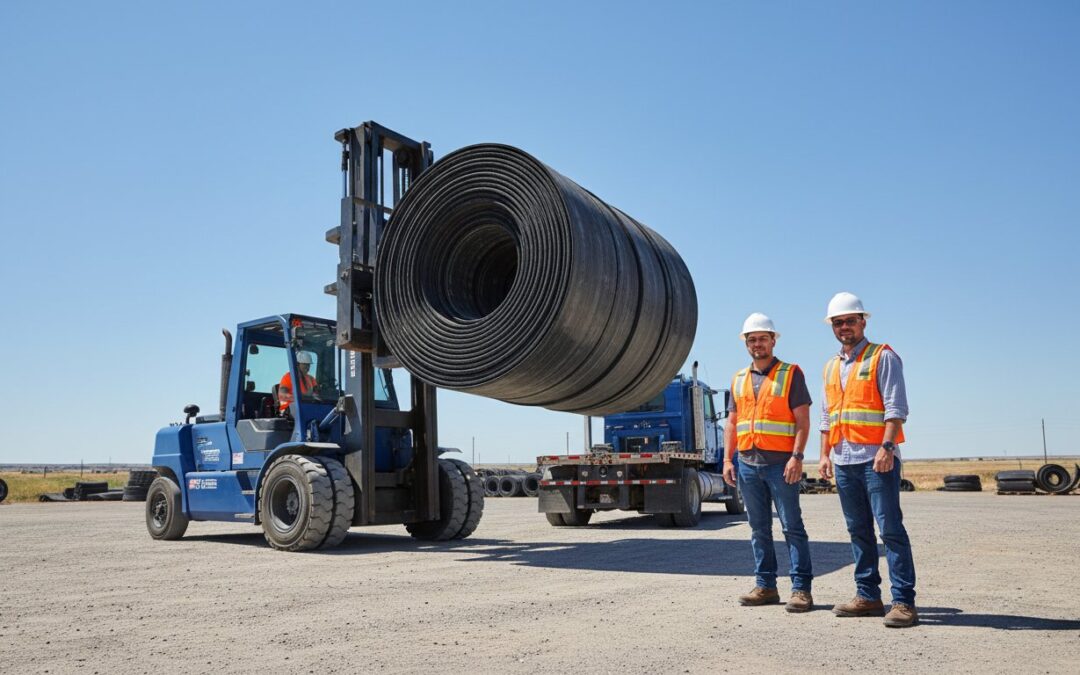
How many hundreds of linear feet of scrap rubber are currently eating up 25% of your operational footprint in the Permian Basin? For site managers in Midland and Odessa, those massive rolls of decommissioned material aren’t just an eyesore; they’re a liability waiting for a TCEQ inspection. Handling mining conveyor belt disposal West Texas projects often means pulling your best crew off production to struggle with 10,000-pound rolls that standard forklifts aren’t designed to handle safely. It’s a logistical drain that increases your site risks every day the pile grows.
We know that your primary goal is keeping operations fluid and profitable. This guide provides the exact steps to clear your yard and maintain full regulatory compliance across the South Plains without diverting your own staff or renting expensive heavy-duty trailers. You’ll learn how to manage bulk industrial rubber waste legally and effectively using 2026 industry standards. We’ll cover specialized transport requirements, regional disposal options for Lubbock, and how to achieve a clean site before your next scheduled audit.
Key Takeaways
- Stay ahead of 2026 TCEQ and MSHA standards to avoid the heavy fines associated with outdated on-site burial practices.
- Discover why professional industrial collection often outperforms traditional landfill disposal in both cost and labor efficiency.
- Master the logistics of site preparation, including how specific rolling techniques can cut your hauling costs in half.
- Find reliable solutions for mining conveyor belt disposal West Texas across the Permian Basin, including Midland, Odessa, and Lubbock.
- Learn the exact steps to inventory and prepare your bulk rubber waste for a fast, compliant removal process.
The Challenge of Mining Conveyor Belt Disposal in West Texas
Mining conveyor belt disposal West Texas involves the systematic removal and recycling of heavy-duty, steel-reinforced rubber belting used in industrial operations. These aren’t your standard grocery store belts. A typical conveyor belt used in Permian Basin sand or aggregate mines is engineered with high-tensile steel cords and thick vulcanized rubber to withstand 24/7 abrasive wear. When these systems fail or wear thin, they leave behind massive rolls of waste that a standard trash service simply can’t touch.
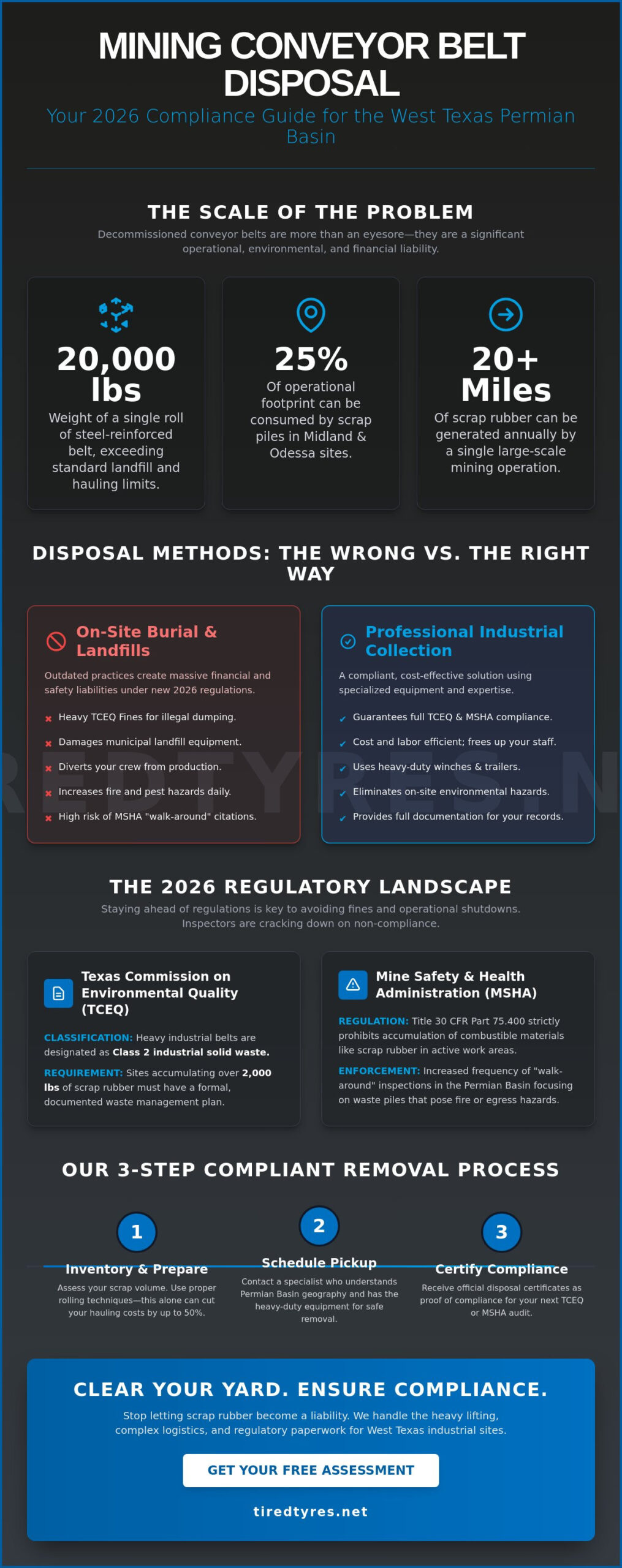
The scale of the problem in the Permian Basin is immense. Large-scale mining operations in the region can accumulate over 20 miles of scrap rubber annually. Leaving these materials to sit isn’t a viable option. Old belt piles become immediate environmental hazards. They collect stagnant water, creating breeding grounds for mosquitoes, and provide deep, insulated shelters for rattlesnakes and other local wildlife. More dangerously, these rubber stacks are massive fire risks. Once a pile of industrial rubber ignites, it can burn for days, releasing toxic black smoke across the flat West Texas plains.
Safety is the primary driver for professional disposal. The Mine Safety and Health Administration (MSHA) maintains strict regulations regarding waste storage. Under Title 30 CFR, inspectors look for flammable materials or obstructive waste that could block emergency exits or fire suppression equipment. Mine operators who allow scrap belts to pile up near active work zones face heavy fines and potential site closures. Effective mining conveyor belt disposal West Texas ensures your site stays compliant and your crew stays safe.
Why Traditional Trash Services Fail
Standard waste management companies aren’t equipped for this weight. A single roll of reinforced mining belt can weigh 20,000 pounds. Most roll-off containers have a maximum capacity of 10 tons, meaning one belt roll could max out a truck’s legal limit instantly. Furthermore, municipal landfills in Midland and Odessa often refuse steel-reinforced rubber because it destroys their compaction blades. This is why specialized commercial tire disposal expertise is required. You need heavy-duty winches, specialized trailers, and a disposal partner who knows how to process steel and rubber separately.
Geography of Waste in the Permian Basin
The logistical triangle between Midland, Odessa, and Lubbock creates unique challenges for hauling. Many mine sites are located 40 to 60 miles from the nearest major highway. Standard hauling costs skyrocket when drivers have to navigate the complex caliche road networks common in regional mines. Local providers are essential here. We understand the dusty, unpaved terrain and the necessity of high-clearance equipment. Managing scrap across these remote locations requires a partner who knows the Permian Basin landscape and the specific demands of West Texas industrial sites.
Regulatory Compliance: TCEQ and MSHA Standards for 2026
Managing mining conveyor belt disposal West Texas operations requires strict adherence to the Texas Commission on Environmental Quality (TCEQ) and federal MSHA standards. As of 2026, TCEQ classifies heavy duty industrial belts as Class 2 industrial solid waste. This classification means you can’t just toss them in a general landfill or leave them in a ravine. The federal landscape is equally rigorous, as EPA regulations for mining waste under the Bevill Amendment continue to influence how states manage high-volume industrial scrap. If your site accumulates more than 2,000 pounds of scrap rubber, you’re required to have a formal waste management plan on file for state inspectors.
MSHA Title 30 CFR Part 75.400 specifically mandates that combustible materials, including scrap rubber, must not accumulate in active areas. While West Texas focuses heavily on aggregate and sand mining, the same housekeeping principles apply to prevent fire hazards. Modern inspectors don’t accept “we’ll get to it later” as a valid management plan. Since 2024, MSHA has increased the frequency of “walk-around” inspections in the Permian Basin, focusing specifically on waste piles that could impede emergency egress or fuel a fire.
Avoiding Illegal Dumping Fines in Texas
The 20th-century habit of burying old belts on-site has become a massive financial liability. Under current Texas tire disposal regulations, which often mirror belt disposal protocols, illegal dumping can result in civil fines exceeding $10,000 per violation per day. A manifest is the primary legal defense against illegal disposal claims. This document tracks the rubber from your gate to the final licensed processing facility. Without it, your business remains legally responsible for that rubber regardless of who hauled it away.
Long-term Liability of Rubber Stockpiles
Stagnant rubber piles are more than an eyesore; they’re a red flag during property transactions in Midland and Odessa. In 2026, 95% of industrial land sales require a Phase I Environmental Site Assessment (ESA). New owners won’t touch sites with “Legacy Waste” issues because of the potential for future groundwater contamination or soil remediation costs. This effectively freezes your assets until the site is cleared.
Insurance implications are equally pressing. Industrial rubber storage significantly increases your site’s fire risk profile. Most Texas insurers now apply a 15% to 20% premium surcharge for sites with unmanaged rubber stockpiles. Clearing these piles isn’t just about cleaning up; it’s about protecting your bottom line and ensuring your property remains marketable.
If you’re looking to clear your site and ensure total compliance, checking out our industrial rubber recycling options can help you avoid these regulatory headaches and keep your operation running smoothly.
Comparing Disposal Methods: Landfill vs. Professional Collection
Deciding how to handle old industrial rubber in the Permian Basin isn’t just a matter of logistics. It’s a financial decision. While local tipping fees might seem low, the true cost of mining conveyor belt disposal West Texas operations involves several hidden layers. You have to account for crew hours, specialized fuel consumption, and the inevitable damage to your own fleet. Standard trailers and loaders aren’t built to withstand the abrasive texture and concentrated weight of 40,000 lbs of rubber. Using your own equipment often leads to hydraulic strain and bed damage that costs more than the disposal itself.
Professional collection shifts the burden of risk. Instead of your team struggling with massive rolls, a specialized service uses heavy-duty winches and high-capacity flatbeds designed for this specific task. This approach minimizes the environmental footprint by reducing the total number of trips required to clear a site. It also ensures the material is diverted toward repurposing rather than simply taking up valuable airspace in a local pit.
The Reality of West Texas Landfills
The City of Midland Landfill and the Odessa regional sites have strict intake protocols for industrial waste. Most facilities won’t accept full-width conveyor rolls. They typically require you to cut the material into 4-foot sections before it ever reaches the scale. This “cutting problem” is a major bottleneck. It requires hours of manual labor and ruins expensive blades. Because rubber doesn’t compress, it’s a low-priority material for landfill managers who want to maximize their cell space. For these reasons, tire recycling and rubber repurposing are often the only practical paths for bulk industrial waste in 2026.
Benefits of Specialized Industrial Collection
Switching to a professional service removes the “site prep” headache from your to-do list. You don’t have to worry about cutting, stacking, or securing loads that might shift during transport on Highway 191 or Loop 289. Specialized teams arrive with the right gear to load massive rolls directly from the ground. This creates a reliable tire disposal routine that keeps your yard clean and your inspectors happy. You get predictable scheduling and a documented trail of where your waste went. This is vital for meeting modern ESG standards and maintaining a professional reputation in the West Texas energy and mining sectors.
- High-capacity hauling: Move 40,000+ lbs in a single trip.
- Zero site prep: No cutting or pre-stacking required by your crew.
- Equipment protection: Keep your loaders and trailers on the job, not in the repair shop.
- Sustainability: Prioritize repurposing over burying valuable materials.
Logistics and Site Prep: Preparing for Conveyor Belt Removal
Efficient removal starts long before the truck arrives. Logistics are the backbone of a successful project, and poor planning leads to site delays and increased costs. Follow these four steps to streamline your mining conveyor belt disposal West Texas operations.
- Step 1: Inventory your scrap. You can’t manage what you haven’t measured. Record the total linear feet and the width of every section. For example, a 1,000-foot run of 48-inch multi-ply belting can weigh over 10,000 pounds. Getting these numbers right ensures the hauler sends the correct trailer type.
- Step 2: Roll and secure. Loose piles are a logistical nightmare. Tightly rolled belts are 50% cheaper to haul than loose piles because they maximize the available space on a flatbed. Use site loaders or specialized winding spools to create uniform, stackable rolls.
- Step 3: Staging for access. Heavy trucks need solid ground. A loaded trailer can sink into soft West Texas sand or mud instantly. Stage your rolls on a reinforced pad or a high-traffic gravel area.
- Step 4: Clearing the manifest. Prepare the necessary Texas state waste paperwork and site-specific manifests in advance. Having these ready when the driver arrives prevents costly idling fees.
Rolling and Securing Heavy Belting
Use site equipment like telehandlers or loaders to create tight, haulable rolls. Safety is the primary concern during this process. High-tension rubber stores an immense amount of energy. If a roll isn’t properly locked, it can snap open with enough force to cause severe injury. We define mechanical securement as the use of steel banding or heavy-duty chains. Don’t rely on ropes or adhesive tapes. Once the roll is bound, it’s safe for transport and much easier for the crew to handle at the processing facility.
Site Access Requirements for Heavy Haulers
Most mining conveyor belt disposal West Texas projects require 53-foot flatbed trailers. These vehicles need a turning radius of at least 55 to 60 feet to navigate mine sites safely. Ground stability is a major factor, particularly in the Lubbock area. During the rainy season, staging on a stabilized pad is critical. If a truck gets stuck, recovery costs are often the responsibility of the site operator. Coordinate with your site security team at least 48 hours before the scheduled pickup. This ensures gates are unlocked and any required safety escorts are ready to guide the driver to the staging area without delay.
Tired Tyres: Your Partner for West Texas Industrial Rubber Removal
Mining operations generate massive amounts of rubber that standard waste services simply can’t handle. Most haulers walk away when they see a three-ton roll of steel-reinforced conveyor belt. We don’t. Tired Tyres specializes in the “too big” and “too heavy” waste that creates bottlenecks for industrial sites. Our team provides direct, boots-on-the-ground support for mining facilities across the Permian Basin, with a primary focus on Midland, Odessa, and Lubbock operations. We handle the logistics so your crew can stay focused on production.
Our deep experience in tire disposal in Midland, TX translates perfectly to the complexities of mining conveyor systems. The same heavy-duty loaders and transport protocols we use for OTR tires are applied to your belt removal. We follow a streamlined, professional process designed for transparency:
- Site Assessment: We evaluate the volume, weight, and accessibility of your scrap rubber.
- Strategic Loading: Our team uses specialized equipment to safely load reinforced belts without damaging your facility.
- Manifest Delivery: We provide full documentation for every load, ensuring your environmental compliance records are ready for any audit.
Managing mining conveyor belt disposal West Texas requires a partner who understands the local regulatory landscape. We make sure your site stays clean and your business stays compliant with all state and local disposal standards.
Customized Collection Schedules
One-time cleanups are helpful, but active mines need a long-term strategy. We move beyond reactive pile management by establishing quarterly or bi-annual removal programs. These scheduled pickups are the most effective way to prevent the common waste tire problems that lead to fire hazards or regulatory fines. Whether you are dealing with a few rolls or require a multi-acre site remediation, our volume options are flexible. We scale our fleet to match your specific waste output, keeping your workspace clear and safe year-round.
Get Your Quote Today
Getting a professional quote is straightforward. When you contact us, please provide the estimated tonnage, belt width, and the location of the material on your site. This allows our team to provide the transparent, flat-rate pricing that West Texas businesses expect. We don’t believe in hidden surcharges or vague estimates. Reach out to Tired Tyres today to discuss your site requirements. Let’s get your industrial rubber waste handled quickly, safely, and legally.
Secure Your Permian Basin Compliance for 2026
Managing heavy industrial rubber in the Permian Basin doesn’t have to stall your operations. By 2026, meeting updated TCEQ and MSHA standards requires more than just moving old equipment. It demands a documented, legal trail. Professional mining conveyor belt disposal West Texas keeps your Midland or Odessa site clear while protecting your environmental record. You’ll avoid the logistics bottlenecks common at local landfills and ensure every foot of rubber is handled by experts who understand regional industrial demands.
Efficiency is key when you’re moving miles of heavy-duty material. Tired Tyres operates as a Permitted Texas Waste Hauler with a specific focus on Permian Basin logistics. We manage the heavy lifting and provide comprehensive TCEQ-compliant manifesting for your records. This ensures your site stays organized and your paperwork is ready for any 2026 inspection. We’re here to take the stress of industrial rubber removal off your plate so your team can stay focused on production goals.
Don’t let old inventory create a liability for your business. Request a Mining Belt Disposal Quote from Tired Tyres to get started. Let’s keep your West Texas operation moving forward safely and efficiently.
Frequently Asked Questions
Can I legally bury old conveyor belts on my mine site in Texas?
You cannot legally bury old conveyor belts on your mine site because they’re classified as industrial solid waste under TCEQ Title 30. Burying these materials without a specific landfill permit can lead to state fines exceeding $10,000 per violation. Professional mining conveyor belt disposal West Texas ensures your operation stays compliant with current environmental regulations and avoids costly legal liabilities.
How much does it cost to dispose of a mining conveyor belt in Midland?
Disposal costs depend on the belt’s total weight, width, and whether it contains internal steel cords. While we don’t offer a single flat rate, your quote is influenced by the transport distance from Midland and current rubber recycling market trends. Contact us with your specific inventory for a precise estimate that reflects 2026 labor and fuel costs.
What is the difference between OTR tires and conveyor belt disposal?
OTR tires are massive individual units, while conveyor belts are continuous strips of reinforced rubber that can reach 1,000 feet in length. Belts often contain high-tensile steel cables that require specialized hydraulic shears for processing. We handle both items, but the loading logistics and shredding requirements for belts are more complex than those for standard heavy equipment tires.
Do I need a special permit to transport scrap conveyor belts in Odessa?
You don’t need a specific local permit for Odessa, but the carrier must be a TCEQ-registered waste hauler. Our team maintains all necessary state certifications to transport industrial rubber safely through Ector County. Using an unregistered hauler puts your company at risk, as the original generator remains liable for the waste until it reaches a licensed facility.
How should I roll my conveyor belts for professional pickup?
Roll your belts tightly into “donuts” and secure them with at least two heavy-duty steel bands. Ensure each roll has a center core opening of 12 to 24 inches so our forklift tines can safely lift the material. Properly secured rolls prevent unspooling during transport and allow us to maximize trailer space, which can lower your total hauling costs.
Does Tired Tyres provide the manifest for TCEQ compliance?
Yes, we provide a complete waste manifest for every load we collect from your site. This document is your official proof of proper mining conveyor belt disposal West Texas and is essential for state environmental audits. You should keep these records in your files for at least three years to demonstrate that the material was handled by a licensed professional.
What happens to the conveyor belts after they are collected from my site?
Most belts go through a primary shredding process to separate the rubber from the internal steel reinforcement. The cleaned rubber is often repurposed into industrial products like cattle mats, blast mats, or used as tire-derived fuel in specialized kilns. We focus on these recycling pathways to help your mine meet its 2026 sustainability targets and reduce landfill waste.
Can you pick up conveyor belts from remote sites in Lubbock County?
We provide pickup services for remote locations throughout Lubbock County and the surrounding High Plains region. Our fleet is equipped to navigate unpaved access roads and remote mine entrances located 50 miles or more from the city center. We coordinate closely with your site manager to ensure our trucks arrive exactly when your loading crew is ready.