
Did you know that in April 2026 alone, the TCEQ approved over $1.4 million in fines against entities for environmental infractions? For businesses operating in Midland, Odessa, and Lubbock, managing tire disposal west texas isn’t just a matter of logistics; it’s a critical compliance shield for your operations. You likely feel the pressure of growing stockpiles that attract pests or create fire hazards, especially when local landfills refuse to accept whole tires or require complex processing. It’s a major logistical headache to transport heavy OTR or agricultural tires, and the fear of a $40,000 per day penalty for manifest errors is a reality every site manager faces.
We understand that you need a solution that takes the weight of rubber waste off your shoulders without risking your professional standing. This guide will show you how to legally and efficiently dispose of scrap tires and industrial rubber while staying fully TCEQ compliant. We’ll walk through the 2026 manifest system, explain how to obtain proper legal documentation, and preview the most reliable methods for scheduled pickups across the Permian Basin and South Plains. You’ll learn how to clear your property quickly and find a partner that handles the heavy lifting for you.
Key Takeaways
- Learn how the scrap tire manifest system serves as your primary legal defense and proof of compliance during state audits.
- Identify the specific steps to inventory and schedule a professional tire disposal west texas pickup for your industrial site.
- Discover specialized collection solutions for heavy-duty OTR tires, agricultural rubber, and industrial waste like conveyor belts.
- Understand why professional removal is essential to eliminate fire hazards and pest breeding grounds in the Permian Basin heat.
- Find out how to stay ahead of 2026 TCEQ regulations by ensuring your waste is handled by a registered transporter.
The Challenge of Tire Disposal in West Texas
Managing large quantities of scrap rubber in the Permian Basin has never been more complicated. As we move through 2026, business owners in Midland, Odessa, and Lubbock face a tightening regulatory environment alongside harsher environmental conditions. The Challenge of Tire Disposal is compounded by the unique West Texas climate. High winds can shift debris, while the intense summer heat increases the risk of spontaneous combustion in poorly managed stockpiles. For many local operations, the default choice was once a quick trip to the municipal landfill. However, current rules in cities like Midland now prohibit whole tires, requiring them to be split or shredded first. This shift makes professional tire disposal west texas a necessity for staying within the law.
Environmental Hazards in the Permian Basin
Even in our semi-arid climate, scrap tires pose a significant health risk. When West Texas rains occur, the inner rim of a tire creates a stagnant pool. These are ideal mosquito breeding sites. These pests are more than a nuisance; they’re vectors for disease across the South Plains. Fire safety is another critical concern. Once a tire pile ignites, the petroleum-based material is nearly impossible to extinguish with standard rural firefighting equipment. The thick, toxic smoke can shut down local roads and attract immediate state scrutiny. You can read more about these specific waste tire problems and how they affect our local ecosystem.
Why ‘Free’ Disposal Often Leads to Fines
It’s tempting to respond to a social media ad offering free or cheap tire hauling. These unpermitted haulers often dump tires in ravines or on empty lots to avoid processing fees. In Texas, the law is clear: the waste generator is held liable for illegal dumps. If a hauler doesn’t have a valid TCEQ registration, you’re essentially paying for a massive liability. Legal tire disposal west texas relies on a manifest system. This system tracks the rubber from your gate to a certified facility. Without this documentation, your business is exposed to TCEQ penalties that can reach $40,000 per day for serious violations. Verifying a hauler’s credentials isn’t just about cleaning up your yard; it’s about protecting your professional reputation and your bottom line.
Comprehensive Collection: From Passenger Tires to Industrial Rubber
Agricultural and OTR Tire Solutions
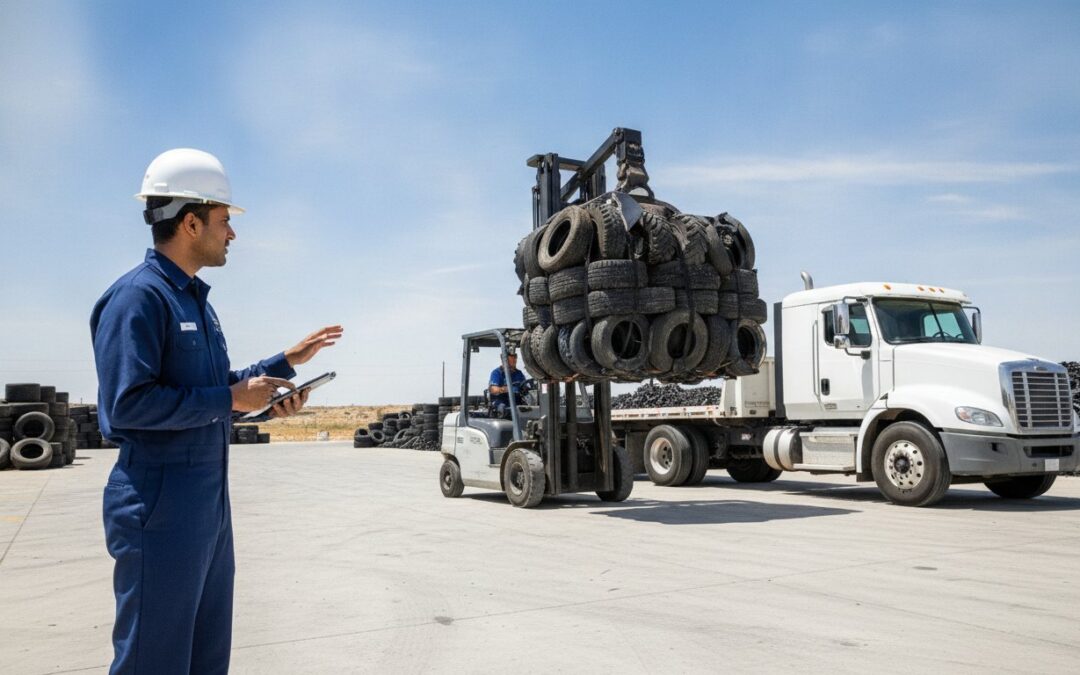
West Texas is defined by its agricultural roots and massive oilfield operations. This means dealing with Agricultural and Off-the-Road (OTR) tires that can weigh hundreds or even thousands of pounds. Moving these isn’t a DIY job. It requires specialized loading equipment, like forklifts or cranes, and heavy-duty trailers to ensure safe transport. If you are managing a fleet or a large farm in the South Plains, understanding the nuances of commercial tire disposal is vital for your 2026 planning. We provide the heavy-duty solutions needed to clear these massive footprints from your land. Our team handles:
- Large-scale tractor and harvester tires that municipal services often won’t touch.
- Massive OTR tires from construction and mining equipment.
- Bulk semi-truck tire stacks from regional logistics centers.
Industrial Rubber Waste Removal
Most hauling services stop at tires. We don’t. The Permian Basin’s industrial sites produce various types of rubber waste that standard landfills often refuse or overcharge for. This includes worn-out conveyor belts from mining sites, scrap skid steer tracks, and industrial hoses. Research on the environmental and health impacts of tires and industrial rubber waste shows that improper storage leads to chemical leaching and soil contamination over time. We collect solid rubber waste and scrap hoses to ensure your site stays clean and compliant.
By choosing a versatile partner, you can consolidate your waste management under one manifest. This is especially important for oilfield service companies that use high-pressure hoses and heavy-duty tracks. Instead of hiring three different companies, you can manage all your rubber waste through a single professional channel. Reliable tire disposal west texas involves more than just wheels; it’s about total site remediation and professional risk management. If you have a diverse pile of rubber debris, you can request a specialized collection quote to simplify your cleanup today.
Understanding Texas Tire Disposal Regulations & TCEQ Compliance
If your business generates scrap tires, you’re part of a strictly regulated system managed by the Texas Commission on Environmental Quality (TCEQ). Most automotive shops, fleet managers, and industrial sites qualify as a “Registered Scrap Tire Generator.” This designation means you’re legally responsible for every piece of rubber that leaves your property until it reaches a permitted processing facility. For professional tire disposal west texas operations, compliance starts with understanding that you cannot simply hand off waste to anyone with a trailer. You must verify that your hauler holds a valid TCEQ registration to avoid “chain of custody” liabilities that could lead to massive administrative penalties.
Documentation is your only shield during a state audit. Under 2026 Texas law, generators are required to maintain records of all tire shipments for at least three years. These records must be readily available for unannounced on-site investigations, which totaled over 50,000 across the state in the 2025 fiscal year. Relying on a permitted hauler ensures that your tire disposal west texas process is backed by the necessary paperwork to prove you’ve followed the law. If you fail to produce these records, the TCEQ can levy fines of up to $40,000 per day, per violation. This makes the administrative side of disposal just as important as the physical removal of the tires.
The Anatomy of a Scrap Tire Manifest
A scrap tire manifest is a multi-part form that tracks the movement of waste tires. It requires specific details, including your Generator ID, the Transporter’s ID, and the unique registration number of the destination facility. Every party must sign the document to confirm the transfer of the load. The scrap tire manifest is the “legal receipt” for rubber waste. Without a fully executed copy returned to you from the final disposal site, you have no proof that the tires didn’t end up in a ditch or an illegal stockpile. We ensure every pickup is documented with precision to keep your business audit-ready.
Avoiding Illegal Dumping Penalties
Enforcement trends in Lubbock and Ector County have become significantly more aggressive in 2026. Local authorities are actively prosecuting cases where businesses attempted to bypass disposal fees by using unverified haulers. A common misconception in rural West Texas is that you can bury tires on private land. This is a violation of the Texas Administrative Code and can lead to criminal charges. Instead of risking your livelihood on a “shortcut,” you should consult the detailed Texas tire disposal regulations to ensure your site meets every state requirement. Proper disposal isn’t just an expense; it’s a necessary investment in your company’s legal security.
Logistics of Tire Pickup in Midland, Odessa, and Lubbock
Efficient logistics are the backbone of professional tire disposal west texas. Moving thousands of pounds of rubber across the Permian Basin requires more than just a truck; it requires a structured process to ensure safety and legal compliance. Whether you’re clearing an old stockpile from a ranch or managing daily waste from a high-volume tire shop, following a clear set of steps minimizes downtime and keeps your site organized. Our process is designed to be direct and transparent, moving your rubber waste from your property to a certified facility with zero hassle.
- Step 1: Inventory your rubber waste. Note the quantity and sizes of the items you need removed. Be specific about whether they’re Passenger & Light Truck (PLT) tires or massive OTR tires. Don’t forget to include industrial rubber like scrap hoses or conveyor belts.
- Step 2: Request a quote. Pricing for tire disposal west texas depends on the total volume and your specific location. A site in rural Ector County has different logistical needs than an auto dealership in downtown Lubbock.
- Step 3: Schedule your service. You can choose a one-time intensive cleanup for large stockpiles or set up a recurring pickup route. Many auto shops prefer bi-weekly or monthly schedules to prevent tires from accumulating and attracting pests.
- Step 4: Supervise the loading. Once our team arrives, ensure the area is clear for our heavy equipment. After the loading is complete, we provide your signed TCEQ manifest. You must keep this document for three years as your proof of legal disposal.
Serving the Midland-Odessa-Lubbock Triangle
Our routes are built to support the specific industries that drive the West Texas economy. We provide specialized route availability for Permian Basin oilfield service companies that generate high volumes of industrial rubber waste. For auto dealerships and tire shops in Lubbock, we offer scheduled services that fit your business hours without disrupting your customers. You can consult our reliable tire disposal guide for more details on local logistics and service areas.
Preparing Your Site for Bulk Collection
To ensure the fastest and safest loading process, stack your tires in a centralized, flat location. Stacks should be stable and easily accessible for heavy collection trucks. Industrial or farm sites must have a clear path for large vehicles to maneuver without getting stuck or damaging property. Handling OTR and agricultural tires requires strict safety protocols, so don’t attempt to move these yourself if they’re unstable. Our team uses professional equipment to manage these heavy loads safely. Ready to clear your property? You can schedule your West Texas tire pickup today to secure your TCEQ manifest and reclaim your space.
Why Tired Tyres is the Right Choice for West Texas
West Texas businesses need more than just a hauling service; they need a partner that understands the high-stakes environment of the Permian Basin. Choosing the right provider for tire disposal west texas means finding a team that respects your time and your regulatory obligations. We have built our reputation on being the local expert for the oilfield and agricultural sectors. Our team doesn’t just pick up tires; we provide a comprehensive solution for the rubber waste that others often leave behind, including industrial hoses and conveyor belts. We prioritize transparency and professional conduct in every interaction.
A Partner for West Texas Businesses
Supporting the local economy means understanding the unique challenges faced by oil, gas, and agricultural operations. Whether it’s a remote drilling site or a large-scale cotton farm near Lubbock, we ensure your site stays clean and compliant. Our commitment to the region is about more than just business; it’s about keeping West Texas safe from environmental hazards like tire fires and pest infestations. For those operating specifically within the city limits of Midland, our Midland tire disposal guide offers localized specifics on municipal rules and professional removal options. We provide the specialized equipment needed for OTR and agricultural tires, ensuring that even the largest pieces of rubber are handled with precision and care.
Get Started with a Professional Quote
Protecting your business from TCEQ fines starts with a single professional decision. Our process for getting your rubber waste removed is simple and designed for speed. We prioritize fast turnaround times because we know that a growing tire pile is a liability you can’t afford to keep. Our service teams in Midland and Lubbock are ready to coordinate your pickup this week. Every load we transport is backed by the professional documentation required for state audits in 2026. You don’t have to worry about the “chain of custody” because we handle the manifest process from start to finish. We take the guesswork out of compliance so you can focus on your daily operations.
Reliable tire disposal west texas is just a click away. You can request a professional quote today to clear your property and secure your legal documentation. Our team is standing by to provide the direct, no-hassle service that West Texas industrial and agricultural leaders expect. Don’t let scrap rubber become a safety or legal risk on your land. Contact us now to schedule your collection and ensure your business stays audit-ready throughout the year.
Secure Your Operations with Professional Rubber Waste Management
Managing rubber waste in 2026 requires a balance of environmental safety and strict legal adherence. By prioritizing professional tire disposal west texas, you protect your business from the heavy administrative penalties associated with improper documentation. You have seen how a signed TCEQ manifest serves as your ultimate defense during an audit and how specialized equipment is essential for the safe removal of massive OTR and agricultural tires. Clearing your site of these hazards isn’t just about aesthetics; it’s about maintaining a safe, compliant, and efficient workspace in the Permian Basin.
We have served the Midland, Odessa, and Lubbock regions since our inception, providing the local expertise needed to navigate the unique logistics of the South Plains. Our team arrives with the specialized equipment required to handle everything from passenger tires to industrial conveyor belts, ensuring every load is backed by professional, TCEQ-compliant documentation. Don’t let scrap rubber accumulate and create unnecessary risks for your property or your professional reputation.
Take the first step toward a cleaner, more secure facility today. Request a Professional Tire Pickup Quote for Your West Texas Business and let our experienced team handle the heavy lifting. We are here to ensure your disposal process is direct, compliant, and completely stress-free.
Frequently Asked Questions
Where can I legally dump tires in Midland or Odessa?
You cannot legally dump tires on public or private land in Midland or Odessa. Illegal dumping of scrap tires can lead to fines of up to $2,000 in Odessa, while Midland’s municipal landfill only accepts tires that have been split or shredded. The most reliable way to stay compliant is to use a TCEQ-registered transporter who delivers the waste to a permitted facility.
Does Tired Tyres pick up large OTR or tractor tires?
Yes, we specialize in the collection of heavy-duty OTR (Off-the-Road) and agricultural tractor tires. These massive items require specialized loading equipment and heavy trailers for safe transport. Our team manages the entire logistics process for moving these oversized tires from industrial sites and farms across the South Plains and Permian Basin.
What is the average cost for commercial tire disposal in West Texas?
The cost for tire disposal west texas depends on several variables, including the total volume, the size of the tires, and your specific location. Industrial rubber or OTR tires typically involve different handling requirements than standard passenger tires. We provide customized quotes based on your specific inventory and site access to ensure accurate and fair pricing for your business.
Do I need a special permit to have tires collected from my business?
You don’t need a special permit to have tires collected, but you are legally recognized as a Scrap Tire Generator by the TCEQ. This status means you are responsible for ensuring that your chosen hauler is fully registered with the state. Your primary legal obligation is to verify the transporter’s credentials and maintain the signed manifests provided after every collection.
What happens to the tires after they are collected?
Once collected, tires are transported to a TCEQ-permitted processing facility for recycling or disposal. Here, they are typically shredded or split to meet strict landfill requirements or repurposed for civil engineering projects and rubber-derived fuel. This process ensures the rubber waste is managed in a way that minimizes environmental risks and follows state law.
Can you dispose of old conveyor belts and skid steer tracks?
Yes, we collect various types of industrial rubber waste, including worn-out conveyor belts, scrap hoses, and skid steer tracks. Many standard hauling services refuse these items because of their weight and material composition. We provide a versatile solution for industrial sites that need to clear both tires and specialized rubber components in a single pickup.
How do I get a copy of the TCEQ manifest for my records?
We provide a signed copy of the TCEQ scrap tire manifest at the time of pickup. This document is your official proof of legal disposal and must be kept in your business records for at least three years. It tracks the waste from your property to the final permitted destination, protecting your business during unannounced state inspections.
Is there a limit to how many tires you can pick up at once?
We don’t have a strict limit on the number of tires we can collect in a single session. Our fleet is equipped to handle everything from small shop cleanouts to massive industrial stockpiles. Whether you have a few dozen passenger tires or a large-scale inventory of agricultural rubber, we can coordinate the appropriate trailers and equipment for an efficient removal.