
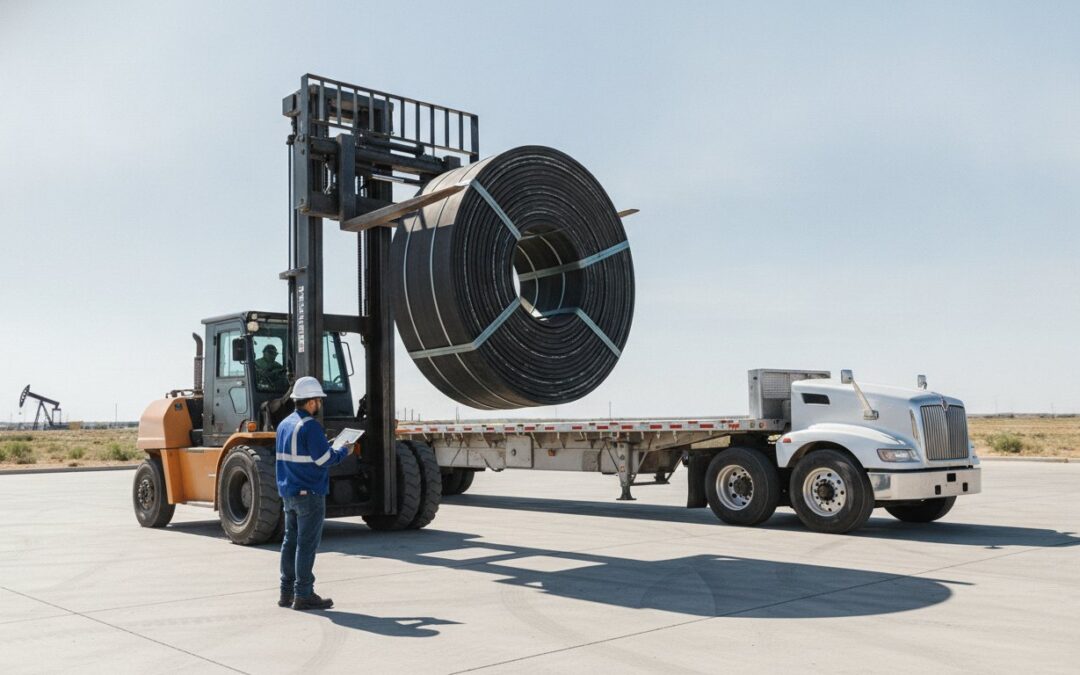
A single missing signature on a TCEQ manifest can result in fines as high as $50,000 per day per violation. For site managers in the Permian Basin, clearing out heavy, steel-reinforced rubber isn’t just a matter of making space; it’s a high-stakes compliance task. We understand that the conveyor belt disposal process often feels like a logistical nightmare. You’re likely dealing with soaring transportation costs for bulky items while trying to meet the strict “cradle-to-grave” liability standards required by Texas law.
It’s difficult to find a reliable hauler who understands the remote terrain of Midland or Odessa and follows every regulation to the letter. This guide provides a clear, step-by-step roadmap for disposing of industrial rubber waste legally and sustainably in 2026. You’ll learn how to navigate the mandatory TCEQ Form 10304 manifest system and see how the recycling lifecycle can turn a bulky liability into a streamlined recovery effort. We’ll also preview what to look for in a professional hauling partner to ensure your scrap reaches an authorized facility without the risk of future audits or legal complications.
Key Takeaways
- Understand that the conveyor belt disposal process is a multi-stage industrial cycle designed to manage heavy, reinforced rubber that standard landfills cannot accommodate.
- Learn the essential on-site preparation steps, including how to properly wind, bind, or cut bulky belts into manageable sections for safe transport.
- Discover the transformation journey of scrap rubber as it moves through mechanical shredding and secondary granulation into reusable crumb and powder.
- Ensure full legal compliance by navigating Texas TCEQ regulations and understanding why using a permitted industrial waste hauler is a mandatory requirement.
- Identify how a single-source professional collection partner can reduce your on-site labor costs while streamlining the removal of all industrial rubber waste.
Understanding the Conveyor Belt Disposal Process
The conveyor belt disposal process isn’t a simple trip to the local dump. It’s a complex, multi-stage industrial waste management cycle that begins the moment a belt is decommissioned. Unlike standard municipal waste, industrial rubber requires a specific sequence of assessment, collection, and transformation. Effective management ensures that these massive components don’t become a permanent liability on your balance sheet or your job site. Real disposal means moving beyond just getting the item off-site; it involves a documented chain of custody that satisfies both environmental and legal requirements.
A standard Conveyor belt is an engineering marvel designed for extreme durability. Most consist of Styrene-Butadiene Rubber (SBR) reinforced with high-tensile steel cords or heavy-duty fabric layers like polyester and nylon. While these materials are perfect for moving thousands of tons of aggregate in the Permian Basin, they make disposal difficult. Standard landfilling is rarely an option because these belts don’t compact. They take up massive amounts of “airspace” in a landfill, leading many facilities to refuse them or charge exorbitant special-handling fees.
Why Industrial Rubber Requires Specialized Handling
Handling scrap rubber presents unique physical challenges. The sheer weight and bulk of a 1,000-foot roll of steel-reinforced belting can overwhelm standard haulage equipment. You can’t simply toss it into a bin; it requires heavy-duty winches and specialized transport vehicles. Beyond the physical size, there’s the issue of chemical stability. Vulcanized rubber is designed to resist the elements. It won’t break down in a traditional waste stream, sitting unchanged for decades. Processing requires separating the rubber from the internal steel reinforcements. This separation is vital. The steel has significant scrap value, while the rubber needs specific mechanical shredding to be repurposed into crumb or powder.
Environmental and Safety Implications
Leaving old belts in a “bone yard” creates serious operational risks. Abandoned rubber stockpiles are notorious fire hazards. Once a rubber fire starts, it’s incredibly difficult to extinguish and releases toxic smoke into the atmosphere. There’s also the problem of vector control. Coiled belts trap rainwater, creating perfect breeding grounds for pests and mosquitoes. In 2026, regulatory bodies like the TCEQ are more active than ever in auditing sites for these specific hazards. Adopting a professional conveyor belt disposal process helps your company meet ESG (Environmental, Social, and Governance) goals. It proves you’re committed to responsible waste management rather than just letting industrial scrap sit in the sun.
A Step-by-Step Guide to Belt Removal and Transport
Moving heavy industrial rubber across the Permian Basin requires more than just a flatbed truck. The conveyor belt disposal process begins with a technical assessment of the material’s condition and weight. Site managers often underestimate the complexity of extracting miles of reinforced rubber from a decommissioned system. Without a structured plan, what should be a routine cleanup can quickly turn into a logistical bottleneck that halts other site operations.
On-Site Auditing and Volume Assessment
An accurate on-site audit is the first critical step. We start by calculating the total tonnage based on the belt’s width, length, and thickness. Identifying the belt’s composition is equally important; steel-reinforced belts require different handling than fabric-core varieties. During this phase, we also look for “A-Grade” sections. These are portions of the belt with minimal wear that might be eligible for repurposing in agricultural or industrial flooring applications. Safety is the priority here. Damaged belts under tension can be dangerous, so our protocols ensure all energy is dissipated before any cutting or winding begins. This careful grading ensures you don’t pay disposal fees for materials that still hold value.
Efficient Logistical Management for West Texas
West Texas sites present unique hurdles, from remote lease locations to narrow caliche roads that aren’t built for standard trailers. Scheduling pickups during off-peak hours helps minimize facility downtime and keeps your crew focused on production. For sites with diverse waste streams, coordinating with reliable tire disposal services allows for mixed rubber loads, saving you the cost of multiple hauling contracts. We plan routes specifically to handle the unpaved site access common in Midland, Odessa, and Lubbock, ensuring our equipment can reach your stockpile without getting stuck or damaging your infrastructure.
Preparation for transport involves winding the belts into tight, manageable rolls or cutting them into specific lengths. These sections are then bound with heavy-duty steel strapping to prevent shifting during transit. Once the material is secured, it begins its journey toward its role in recycling processes at a permitted facility. Properly securing these heavy rubber loads is a matter of highway safety and regulatory compliance. If you’re struggling with a growing stockpile of scrap, hiring a professional scrap conveyor belt collection service ensures the conveyor belt disposal process stays on track and within your budget.
Processing and Transformation: What Happens to the Rubber?
Once the transport truck arrives at a permitted facility, the conveyor belt disposal process shifts from heavy logistics to mechanical engineering. This stage is where the bulky, reinforced rubber is transformed into high-value raw materials. It’s a high-precision operation that requires specialized machinery to handle the unique density and tensile strength of industrial belting. This transformation isn’t just about destruction; it’s about recovering every usable component to minimize environmental impact.
Shredding and Granulation Techniques
The transformation begins with primary shredders. These machines use massive, low-speed, high-torque rotors to tear through the SBR rubber and internal steel cords. The goal here is to reduce the belts into primary chips, typically ranging from two to six inches. It’s a heavy-duty process, as these machines must overcome the structural integrity of a belt designed to withstand years of oilfield abuse. After the initial shred, magnetic separation systems come into play. As the chips move along a vibratory conveyor, powerful cross-belt magnets pull out the steel reinforcements. This recovered steel is a valuable scrap commodity that is sent back to mills for smelting. Simultaneously, vacuum systems or air tables remove any polyester or nylon fiber fluff. Recovering these components is essential for meeting industry quality standards for clean recycled rubber.
Sustainable End-Uses for Recycled Belts
Managing the conveyor belt disposal process responsibly means ensuring these materials find a sustainable home. Recycled rubber has a second life in several high-demand sectors. Much of it is used as Tire Derived Fuel (TDF) in cement kilns. Rubber burns hotter and cleaner than coal, making it an efficient energy source for heavy industry. Another portion is refined into fine crumb rubber for rubberized asphalt. This application is particularly relevant for West Texas infrastructure projects, as it helps pavement withstand the extreme heat of the Permian Basin and reduces road noise.
Beyond infrastructure, processed rubber is often molded into repurposed mats for agricultural stalls or industrial flooring. These products provide excellent shock absorption and durability. Every step of this transformation must be documented to satisfy Texas regulations for industrial waste. Maintaining a clear record of how the rubber was processed protects your business from liability. It proves that the waste was not just dumped, but successfully integrated back into the circular economy. This commitment to quality control ensures that the final rubber powder or crumb is safe for use in everything from playground surfaces to new industrial components.
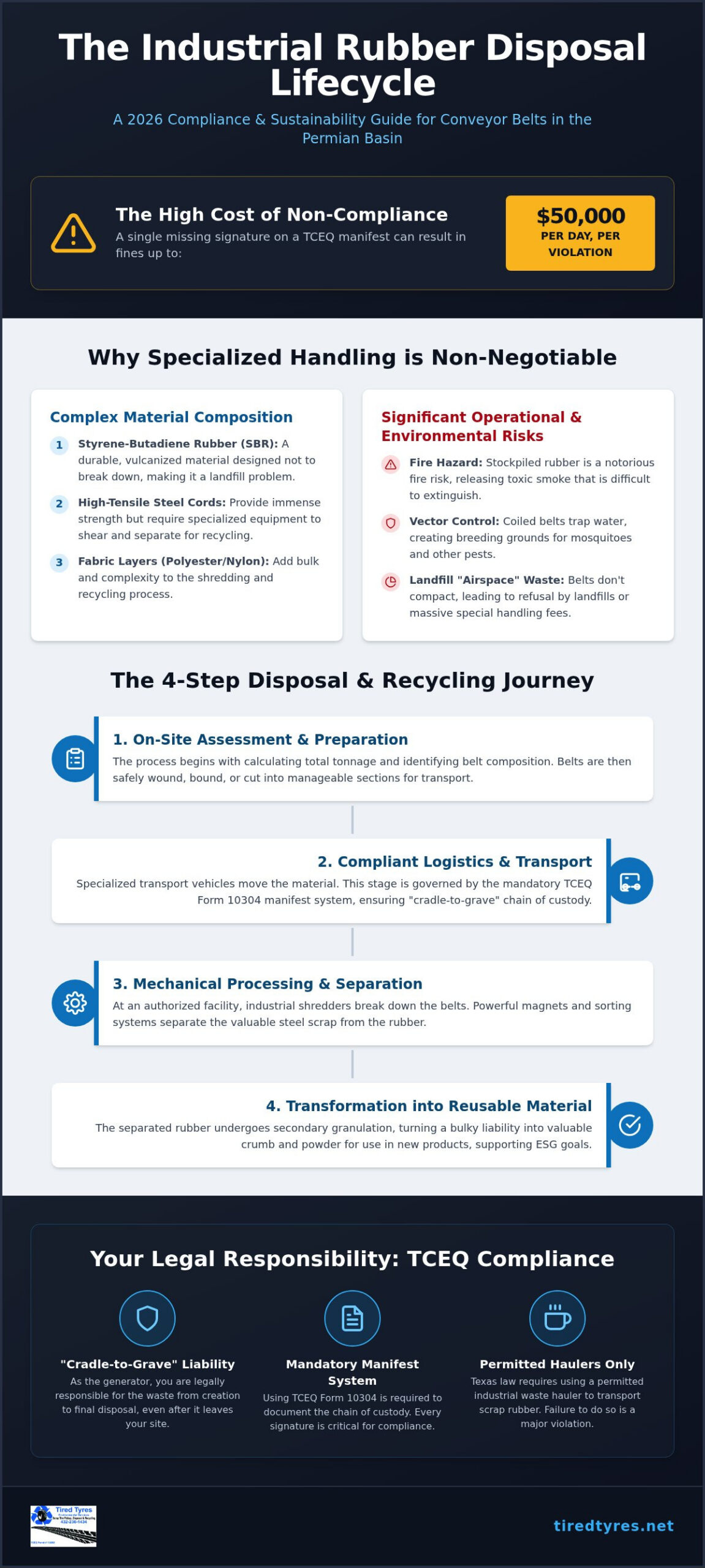
Navigating Texas Regulations for Industrial Rubber Waste
In Texas, the conveyor belt disposal process is governed by strict environmental laws. The Texas Commission on Environmental Quality (TCEQ) classifies these items as industrial scrap rubber. This means they’re subject to the same stringent oversight as scrap tires under Title 30 of the Texas Administrative Code. You can’t just leave decommissioned belts at the back of a lease or in a boneyard. Doing so is considered illegal stockpiling, which carries heavy financial penalties and environmental risks.
TCEQ Compliance and Documentation
Compliance hinges on a “cradle-to-grave” liability model. As the generator of the waste, your business is legally responsible for that rubber until it reaches an authorized disposal or recycling facility. The primary tool for proving compliance is the five-part manifest, specifically TCEQ Form 10304. This document tracks the material from your site to the hauler and finally to the processor. For facilities in Lubbock, Midland, and Odessa, keeping these records is mandatory. You must retain copies of all signed manifests for at least three years to be prepared for a TCEQ audit. Before you sign a contract, always verify the hauler’s permit status through the TCEQ’s central registry. A legitimate partner will have no trouble providing their registration number and proof of insurance.
Avoiding the Risks of Illegal Dumping
The Permian Basin’s vast landscape often attracts fly-by-night haulers who offer “free” or suspiciously cheap disposal. These offers are usually a red flag for illegal dumping. If your belts end up in a ravine or an unauthorized site, the state will trace them back to you. This leads to the same waste tire problems that plague many West Texas communities, including soil contamination and fire risks. Fines for improper disposal can reach $50,000 per day per violation. Protecting your company’s reputation and bottom line requires a transparent disposal chain. Using a registered professional ensures that your conveyor belt disposal process is fully documented and legally sound. If you need to clear a site without the headache of regulatory paperwork, contact us for TCEQ-compliant collection today.
Streamlining Your Disposal with Professional Collection
Managing the conveyor belt disposal process in-house often costs more than site managers realize. Between dedicating crew hours to cutting rubber and utilizing heavy machinery for loading, the internal expenses add up quickly. Professional collection changes this dynamic by turning a logistical burden into a predictable operational step. By using a single-source provider for all your industrial rubber waste, you consolidate your waste streams and reduce the time spent managing multiple vendor contracts. This efficiency keeps your job site clean and ensures you’re always ready for a safety inspection or a regulatory audit.
Professional services offer the flexibility that industrial sites require. Whether you need a one-time cleanup after a major system overhaul or a recurring pickup schedule for ongoing maintenance, the service adapts to your production cycle. This proactive approach prevents the boneyard from becoming a safety hazard. It also ensures that every foot of rubber is accounted for from the moment it leaves your facility. You get a clean site without the need to buy specialized winches or train your own staff on the technicalities of heavy rubber transport.
Why Local Expertise Matters in the Permian Basin
The Permian Basin presents unique challenges that generic waste companies often struggle to meet. Local expertise is vital because the logistics of a remote oilfield site near Midland differ significantly from an agricultural facility in Lubbock. We understand the specific access requirements of these sectors, from navigating narrow lease roads to meeting the high safety standards of active industrial zones. Working with a partner who knows the local terrain ensures that pickups happen on time and without incident. For a truly comprehensive waste management strategy, many businesses combine our belt removal with commercial tire disposal to keep their entire facility compliant and organized.
How Tired Tyres Simplifies the Process
We focus on taking the complexity out of your hands. Our team maintains a deep commitment to all Texas tire disposal regulations, applying those same high standards to every conveyor belt disposal process we manage. Communication is direct and transparent; you’ll always know exactly where your waste is going and have the manifest to prove it. We don’t just haul scrap; we provide the documentation that protects your company from future liability. If you’re ready to clear your site of bulky rubber and ensure full legal compliance, contact us today for a specialized conveyor belt removal quote. We’ll handle the heavy lifting so you can get back to work.
Secure Your Industrial Site and Compliance Today
Managing heavy rubber waste doesn’t have to be a liability for your operation. A structured conveyor belt disposal process ensures your facility remains safe, organized, and fully compliant with Texas regulations. By moving away from on-site stockpiling and embracing professional recycling, you protect your business from the risk of heavy TCEQ fines and environmental hazards. You’ve learned that proper documentation and specialized transport are the keys to a successful removal strategy in the Permian Basin.
We’re here to help you bridge the gap between decommissioned equipment and legal disposal. Our team provides TCEQ compliant hauling and deep expertise in industrial rubber waste for clients across Midland, Odessa, and Lubbock. We take the logistical burden off your crew so you can focus on your core production goals. Contact Tired Tyres for Professional Conveyor Belt Collection and let us handle the heavy lifting for you. It’s time to clear your site and move forward with the confidence that your scrap is in expert hands.
Frequently Asked Questions
Can conveyor belts be recycled along with standard tires?
Yes, conveyor belts are managed under the same scrap rubber category as tires in Texas. While they can be recycled, the conveyor belt disposal process often requires different shredding equipment than standard passenger tires because of their extreme length and density. Both materials are ultimately processed into rubber crumb or used as tire-derived fuel. We handle both waste streams to simplify your site management.
What is the most cost-effective way to transport scrap conveyor belts?
Winding belts into tight, secured rolls is the most efficient method for transport. This reduces the volume taken up on a trailer, allowing for more tonnage per load. Cutting belts into manageable sections also helps if you don’t have heavy-duty winding equipment on-site. Using a local hauler in Midland or Odessa reduces mileage costs. This localized approach ensures you aren’t paying extra for long-distance logistics.
Are there specific TCEQ permits required for belt disposal?
Texas law requires a specific documentation trail rather than a one-time permit for the site owner. You must use TCEQ Form 10304, which is a five-part manifest. This tracks the waste from your site to the final processor. It’s your legal proof that the disposal was handled correctly. Always check that your hauler has a valid TCEQ registration number before they pull any material off your property.
What industries generate the most conveyor belt waste in West Texas?
The oil and gas sector is a major generator, particularly in sand plant operations and midstream facilities. The aggregate and mining industries also produce significant volumes as they move stone and gravel across the Permian Basin. Large-scale agricultural operations in the South Plains contribute as well. These industries rely on heavy-duty belts that eventually wear out and require professional removal to keep sites safe and compliant.
Can steel-reinforced belts be processed for recycling?
Yes, steel-reinforced belts are highly recyclable. The conveyor belt disposal process uses high-torque shredders to break the rubber apart, followed by powerful magnets that extract the internal steel cords. This recovered steel is sent to mills for reuse. The remaining rubber is then granulated into various sizes. This dual-recovery method turns industrial waste into two separate, valuable raw materials for the circular economy.
What happens if I stockpile old belts on my property in Texas?
Stockpiling decommissioned belts is considered illegal dumping under Texas law. The TCEQ can issue fines as high as $50,000 per day for each violation. Beyond the legal risks, old rubber creates a massive fire hazard and provides a breeding ground for pests like mosquitoes. It’s much more cost-effective to schedule a professional pickup before a small pile becomes a major environmental and financial liability.
How is the weight of a conveyor belt roll calculated for disposal fees?
Weight is calculated using the belt’s dimensions and its specific material density. We multiply the width, thickness, and length to determine the total volume, then apply a weight-per-square-foot factor based on the belt’s ply and reinforcement type. If your site has a certified scale, we use those exact figures. Otherwise, our team provides an estimate based on industry-standard formulas to ensure transparent and accurate billing.
Does Tired Tyres provide collection services for remote oilfield sites?
We certainly do. Tired Tyres was established specifically to serve the Permian Basin and South Plains regions. Our equipment is designed to access remote oilfield sites and sand plants that standard waste trucks can’t reach. Whether your facility is in the heart of Midland or a remote lease outside of Lubbock, we provide reliable, TCEQ-compliant collection for all your industrial rubber waste needs.