
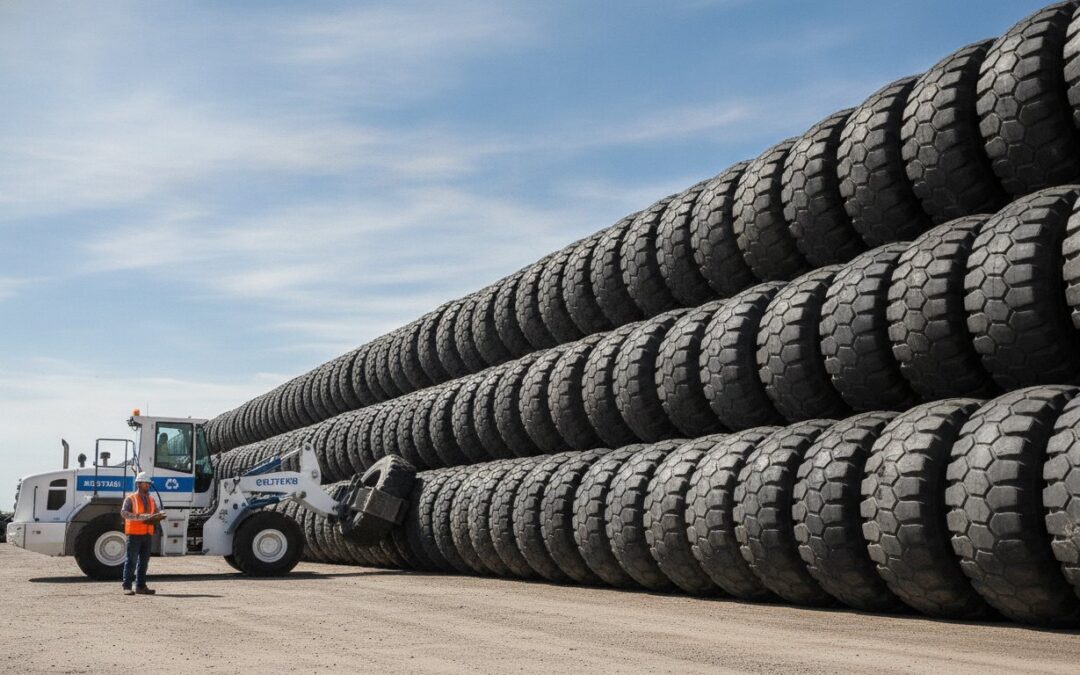
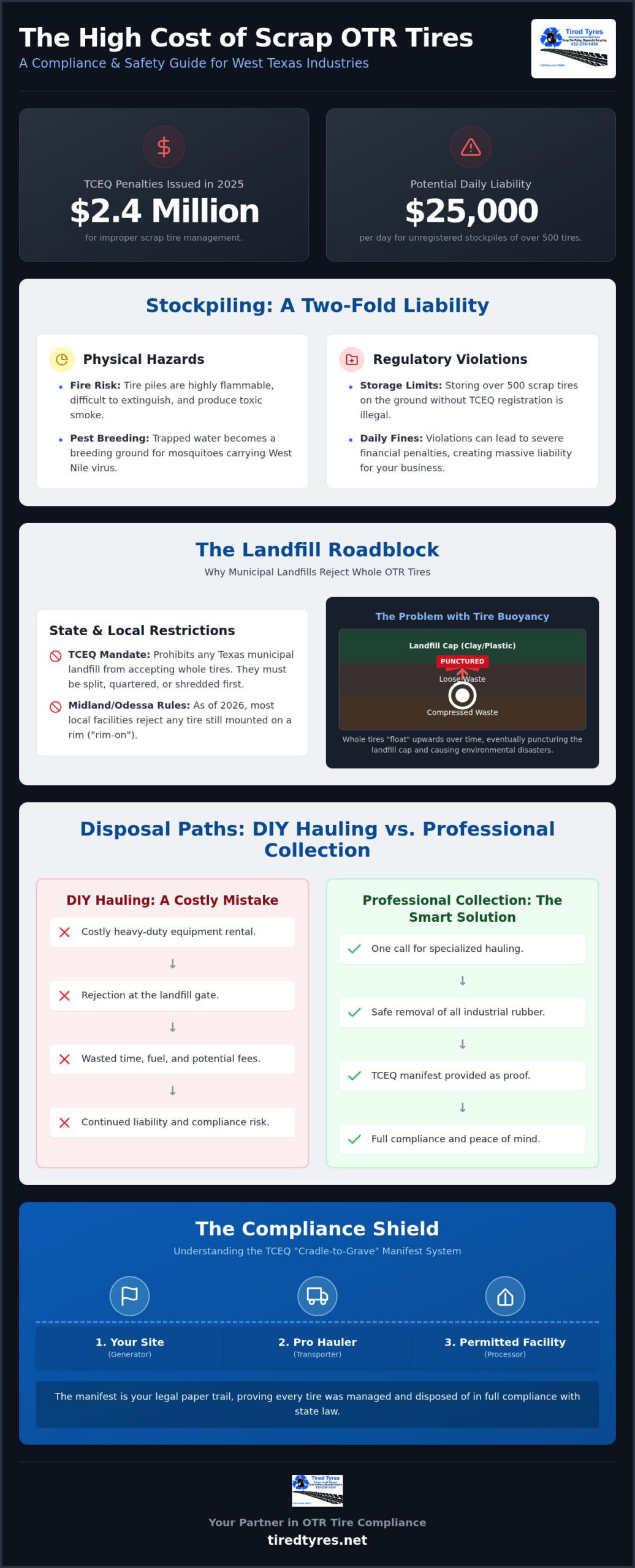
In 2025 alone, the TCEQ issued more than $2.4 million in penalties for improper scrap tire management. For industrial operations in the Permian Basin, a stack of abandoned rubber isn’t just a space-taker; it’s a potential $25,000-per-day liability. Securing professional OTR tire collection West Texas is the only way to move these massive units without risking your bottom line. You already know that local landfills won’t touch whole large-diameter tires, and finding the right heavy-duty equipment to haul them yourself is a logistical nightmare.
This 2026 guide shows you exactly how to clear your site quickly and legally. We’ll explain how to manage the “cradle to grave” manifest system so you’re always ready for a surprise audit. We will cover the latest TCEQ storage limits, the mandatory 2026 reporting requirements, and why specialized hauling is the only way to protect your business from illegal dumping penalties. By the end, you’ll have a clear path to a clean site and a perfect paper trail.
Key Takeaways
- Discover why West Texas landfills reject whole OTR tires and how these restrictions impact your disposal options.
- Learn how professional OTR tire collection West Texas manages the massive logistics of hauling industrial units weighing thousands of pounds.
- Understand the critical role of the TCEQ scrap tire manifest in protecting your business from daily fines and legal liability.
- Identify the specific equipment required to safely move heavy-duty rubber from your site to a permitted processor.
- Find out how to streamline your site cleanup by choosing a specialized service for bulk industrial rubber removal.
The OTR Tire Disposal Challenge in West Texas
The Permian Basin drives the regional economy, but it also leaves behind a massive trail of industrial rubber. Managing OTR tire collection West Texas isn’t just about cleaning up a yard; it’s a critical safety and compliance requirement for oilfield, mining, and construction operators. These tires aren’t your standard passenger rubber. They’re engineered to survive the harshest conditions, which also makes them incredibly difficult to dispose of once they reach the end of their service life. West Texas generates over 250,000 scrap tires annually, and a significant portion of that volume comes from heavy industrial equipment.
Defining OTR and Industrial Rubber Waste
OTR tires are specialized components designed for rugged terrain and heavy loads. In places like Midland and Odessa, you’ll commonly find sizes ranging from 25-inch rims used on loaders to the massive 63-inch tires found on heavy mining equipment. However, the waste stream doesn’t stop at tires. Industrial sites often accumulate scrap conveyor belts, skid steer tracks, and heavy-duty rubber hoses. Each of these items requires a specific approach to handling and transport. Because of their sheer weight, often several thousand pounds per unit, moving them requires specialized equipment like cranes and heavy-duty forklifts. Understanding the Tire recycling process helps businesses see why these materials can’t simply be tossed into a standard bin.
Why Stockpiling is a Liability for Texas Businesses
Letting old rubber sit on your property creates immediate dangers. Stagnant water trapped inside deep tire treads is the perfect breeding ground for mosquitoes, which carry West Nile and other viruses. The intense West Texas heat adds another layer of risk. Rubber piles are significant fire hazards. Once a large stockpile ignites, the fire is notoriously difficult to extinguish and produces toxic smoke that can lead to massive environmental cleanup costs. You can read more about specific waste tire problems to understand the full scope of the danger.
Beyond physical risks, the TCEQ takes stockpiling seriously. In 2025, the agency issued over $2.4 million in penalties for mismanagement. If you store more than 500 scrap tires on the ground without registration, you’re looking at fines as high as $25,000 per day. Professional OTR tire collection West Texas ensures you stay on the right side of these regulations while keeping your site safe. It’s a proactive step that moves your business from a position of liability to one of compliance.
Why Municipal Landfills Reject Large-Scale OTR Tires
Municipal landfills in the Permian Basin are designed to handle household and light commercial waste. They aren’t equipped for the massive scale of industrial rubber. If you try to drop off a load of heavy-duty equipment tires at a standard facility, you’ll likely be turned away at the gate. This happens for two main reasons: technical physics and strict state mandates. Under 2026 TCEQ regulations, municipal solid waste landfills in Texas are prohibited from accepting whole tires of any size. They must be split, quartered, or shredded first to ensure they don’t interfere with the landfill structure.
The Problem with Tire Buoyancy in Landfills
Tires have a natural tendency to “float” over time. Because of their hollow shape and structural integrity, they trap air and resist compression. In a landfill environment, the weight of other trash actually pushes the tires upward. Eventually, they can rise to the surface and puncture the final clay or plastic cap of the landfill cell. This breach allows rainwater to enter and methane gas to escape, creating a massive environmental disaster for the municipality. These challenges in OTR tire recycling and disposal mean that shredding is a non-negotiable prerequisite. For an OTR tire that weighs several thousand pounds, on-site shredding isn’t an option for most West Texas businesses.
Local Landfill Restrictions in Midland and Odessa
Regulations in the Permian Basin are tightening. As of March 19, 2026, Midland waste facilities implemented even stricter rules regarding “rim-on” tires. Most local sites now flatly reject any tire still mounted on a rim. Standard landfill equipment in Odessa and Midland often lacks the lifting capacity to move oversized tires safely. If you’re planning a drop-off, you must check tire disposal Midland TX guidelines to avoid a wasted trip. Attempting a DIY haul is often a costly mistake. You’ll pay for specialized trailer rentals and fuel, only to face a rejection fee or the cost of hauling the load back to your yard.
Professional OTR tire collection West Texas eliminates this risk by taking the material directly to permitted processors who have the right industrial shredding equipment. If you’re tired of managing these logistics alone, you can schedule a specialized pickup to handle the heavy lifting for you. This ensures your site stays clear without the headache of landfill gatekeepers and equipment failures. Using a permitted service also means you’re not responsible for the technical shredding requirements required by the state.
Evaluating OTR Collection vs. DIY Hauling
OTR tires are massive. A single unit can easily weigh over 5,000 pounds. That’s more than a standard half-ton pickup truck can safely tow, let alone carry in a bed. When businesses consider OTR tire collection West Texas, they often weigh the cost of a professional service against doing it themselves. However, the physical scale of these tires usually makes DIY hauling an impossible task for most industrial crews. It’s not just a matter of space; it’s a matter of physics and safety.
Equipment Requirements for Heavy-Duty Rubber
Standard utility trailers aren’t built for this kind of work. You need heavy-duty flatbeds or specialized low-boy trailers to handle the concentrated weight of oversized rubber. Loading these units requires more than just a few strong employees. You’ll need industrial cranes or high-capacity forklifts with specialized tire-handling attachments. Without the right gear, you risk damaging your own equipment or, worse, injuring your team. Securement is another major hurdle. Oversized loads in the Permian Basin are subject to strict DOT tie-down regulations. If a 3,000-pound tire shifts on a highway near Lubbock, the results are catastrophic. Professional haulers use grade-70 transport chains and heavy-duty ratchets specifically rated for these massive loads.
The Real Cost of DIY OTR Disposal
The visible costs of fuel and trailer rentals are just the beginning. You also have to account for the labor hours lost. When you pull three technicians off a job site to spend a day wrestling with old rubber, you’re losing productive revenue. Then there’s the high risk of “gate rejection” at disposal sites. If your load doesn’t meet specific shredding or rim-removal standards, you’ll pay a rejection fee and have to haul the tires back to your yard. Contrast this with the efficiency of a commercial tire disposal service. A professional team arrives with the right equipment, loads the tires quickly, and provides the necessary paperwork immediately.
Liability is the final factor to consider. If an untrained employee gets hurt while loading a massive OTR tire, your workers’ comp claims and insurance premiums will skyrocket. Handling these units is a specialized logistics task, not a general labor chore. Choosing professional OTR tire collection West Texas moves the physical and legal risk away from your company. It lets your team focus on their core operations while experts handle the heavy lifting and documentation.
Staying TCEQ Compliant: The Scrap Tire Manifest
Compliance in the Permian Basin isn’t just about getting rubber off your lot; it’s about the paper trail you leave behind. The TCEQ scrap tire manifest is the legal backbone of OTR tire collection West Texas. This document tracks every oversized tire from the moment it leaves your industrial site until it reaches a state-permitted processing facility. This “cradle to grave” tracking system ensures that large-scale waste doesn’t end up in unauthorized dumps. If you can’t produce a completed manifest during a state inspection, your business is vulnerable to significant legal action.
The Legal Paper Trail for West Texas Businesses
The manifest process is a strict five-part chain of custody. When a hauler arrives, you both sign the document to confirm the count and type of rubber being removed. The hauler then takes the tires to a permitted processor who signs the manifest upon delivery. Crucially, the top copy of this five-part manifest must be returned to you, the generator, within 60 days of the initial collection. A standard invoice or a hand-written receipt is insufficient to satisfy texas tire disposal regulations. You’re required to keep these completed manifests on file for at least three years. The generator remains liable for the tires until the manifest is fully executed and returned.
Avoiding Illegal Dumping Penalties
In the Lubbock and Odessa regions, “cheap” haulers often operate without TCEQ registration. These haulers frequently dump OTR tires in remote canyons or abandoned oilfield sites to avoid processing fees. If the TCEQ finds tires from your site in an illegal dump, the financial consequences are severe. In 2025, the agency issued over $2.4 million in penalties for mismanagement, with daily fines reaching up to $25,000. To protect your business, always verify a hauler’s TCEQ registration status before they load a single unit. A legitimate partner will always provide the correct manifest forms and follow the state-mandated tracking process. To ensure your disposal is 100% legal, you can schedule a compliant OTR tire pickup with a permitted professional.
Specialized OTR Tire Collection in Midland, Odessa, and Lubbock
Tired Tyres understands the industrial scale of the Permian Basin. We specialize in the logistics of OTR tire collection West Texas businesses need to stay operational. While standard trash services avoid large-diameter rubber, we have the heavy-duty equipment to handle it safely. We manage everything from massive mining tires to agricultural units and solid industrial rubber. Our goal is to take the physical and legal burden of waste management off your shoulders.
Our Process for Bulk OTR Removal
Our removal process starts with a clear site assessment to determine the equipment needed for your specific volume. We don’t just pick up tires; we handle a wide variety of industrial rubber waste. This includes scrap skid steer tracks, industrial hoses, and conveyor belts that often accumulate alongside OTR units. Once we’re on-site, our team uses specialized loaders to clear the area quickly. We prioritize reliable tire disposal by ensuring every load is secured according to DOT standards before transport.
The final step is the most critical for your audit trail. We provide a signed TCEQ manifest for every industrial load we haul. This document proves that your waste reached a permitted processor legally. You won’t have to worry about missing paperwork or mysterious dumping. We handle the administrative burden so you can focus on your core operations. This process ensures that your site remains clean and your company stays protected from state-issued penalties.
Serving the Permian Basin and South Plains
We maintain a strong local presence throughout Midland, Odessa, and Lubbock. This allows us to offer flexible scheduling that fits your project timeline. Some clients prefer a scheduled monthly pickup to keep their yards clear, while others need an on-call service for rapid site decommissioning. Our familiarity with local oilfield and construction sites means we know how to navigate your yard without disrupting your crew. We’re part of the local community and understand the unique pressures of the West Texas industrial landscape.
Don’t let abandoned rubber become a liability for your business. Whether you have a single oversized unit or a massive stockpile of industrial hoses and tracks, we have the capacity to move it. Our team is ready to provide a transparent solution that keeps you 100% compliant with state laws. You can Request an OTR collection quote today to get started on your site cleanup. Professional OTR tire collection West Texas is just a phone call away.
Secure Your Compliance and Clear Your Site
Managing heavy-duty rubber waste in the Permian Basin doesn’t have to be a source of stress. We’ve seen how local landfill restrictions and strict TCEQ manifest requirements make DIY disposal a high-risk gamble. By choosing professional OTR tire collection West Texas, you protect your business from massive daily fines and ensure a perfect audit trail. You can finally clear your yard of oversized tires, industrial hoses, and conveyor belts without pulling your own crew away from their core tasks.
Tired Tyres provides the specialized equipment and local expertise needed for large-scale removals in Midland, Odessa, and Lubbock. We deliver a TCEQ-compliant manifest with every pickup, giving you the peace of mind that your waste is handled legally from start to finish. Our team understands the unique logistical demands of industrial sites and is ready to help you maintain a safe, organized workspace. Don’t let old rubber pile up into a liability. Get a Professional OTR Collection Quote for Your Site today and let the experts handle the heavy lifting. Your site cleanup is just one call away from being a success.
Frequently Asked Questions
What is considered an OTR tire for disposal purposes?
OTR (Off-the-Road) tires include any large-diameter rubber used for mining, construction, or earthmoving equipment. These typically feature deep treads and heavy-duty ply ratings designed for non-pavement environments. Common examples include tires for loaders, graders, and haul trucks found on Permian Basin job sites. Because of their immense size, they require specialized handling that standard passenger tires don’t need.
Can I take OTR tires to the Midland or Odessa city landfill?
No, municipal landfills in Midland and Odessa generally reject whole OTR tires due to their size and lack of compaction. Texas state law requires all scrap tires to be split or shredded before landfilling to prevent them from rising to the surface. Most local facilities lack the heavy machinery required to process these massive units on-site. You’ll likely be turned away at the gate if you attempt a DIY drop-off.
Do I need a special manifest for OTR tire collection in Texas?
Yes, you must use a TCEQ-approved five-part scrap tire manifest for every OTR tire collection West Texas project. This document tracks the rubber from your site to the final processor and serves as your legal proof that the tires weren’t dumped illegally. You’re required to keep the completed top copy for three years to remain compliant with state regulations. It’s the only way to protect your business during a state audit.
How much does OTR tire collection cost in West Texas?
Pricing depends on the specific volume, tire dimensions, and the distance of your site from the processing facility. Since OTR units vary wildly in weight, from a few hundred to several thousand pounds, costs are usually calculated per unit or by total weight. You should request a custom quote to get an accurate estimate for your specific industrial load. This ensures you only pay for the capacity you actually use.
Does Tired Tyres pick up scrap skid steer tracks or conveyor belts?
Yes, we collect a wide range of industrial rubber waste including skid steer tracks and conveyor belts. Many West Texas industrial sites accumulate these materials alongside their scrap tires. We provide the same manifest documentation for these items to ensure your entire waste stream is managed legally and professionally. Clearing these items together helps you maintain a safer and more organized yard.
How do I verify if a tire hauler is TCEQ permitted?
You can verify a hauler’s status by asking for their TCEQ registration number or checking the agency’s online database. Every legitimate transporter must display a current decal on their vehicle. Using an unpermitted hauler leaves your business liable for any illegal dumping that occurs after the tires leave your property. It’s a risk that isn’t worth the potential daily fines from the state.
What happens to OTR tires after they are collected?
Collected tires are transported to a permitted facility for industrial processing or recycling. They are often shredded for use in tire-derived fuel (TDF) or ground into rubber mulch for civil engineering projects. This professional OTR tire collection West Texas process keeps massive amounts of rubber out of local landscapes. It provides a sustainable end-of-life solution while keeping your site 100% compliant with environmental standards.
Can I dispose of large agricultural tires with my OTR collection?
Yes, large agricultural tires can be included in the same pickup as your OTR units. Tractor and harvester tires share many of the same disposal challenges as mining equipment due to their massive size and weight. Combining these items into one bulk removal helps streamline your site cleanup and simplifies your manifest documentation. Our equipment is designed to handle the weight of these oversized agricultural units safely.