
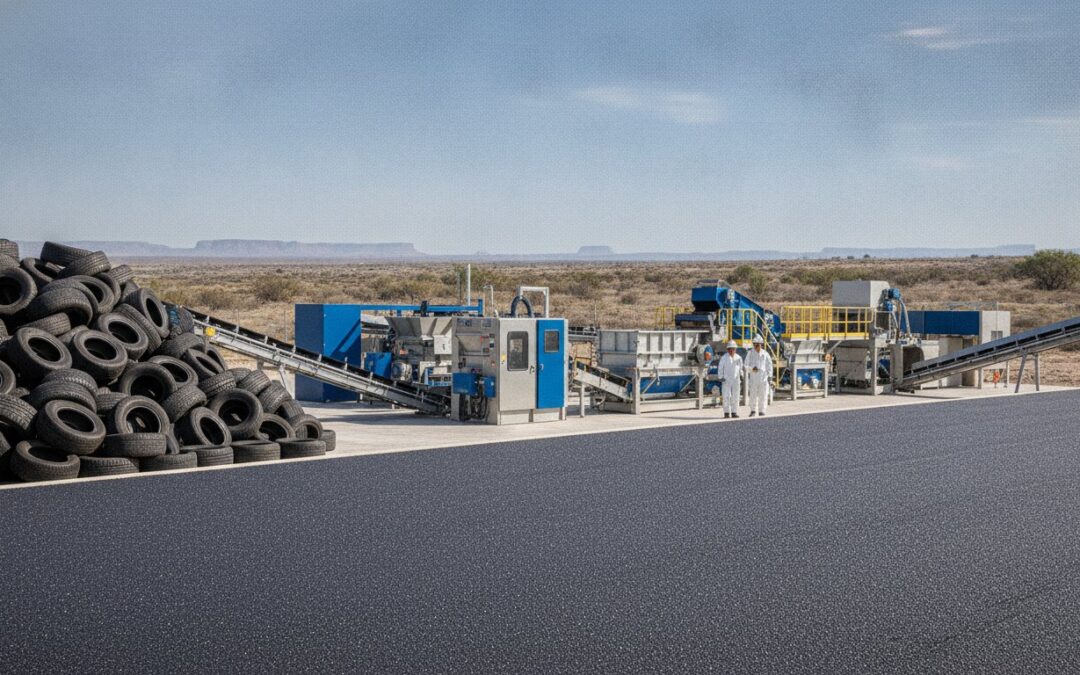
Did you know that Texans generate approximately 28 million scrap tires every single year? In West Texas, that’s a massive volume of rubber that often becomes a liability for landowners or an eyesore in the Permian Basin. It’s easy to feel guilty about the environmental impact, especially when the recycling process seems like a mystery. You likely agree that finding a reliable way to handle these materials shouldn’t be a headache.
Understanding the benefits of professional tire disposal service is the first step toward solving this. It isn’t just about clearing space; it’s about feeding a sophisticated supply chain that turns waste into wealth. When you choose a registered hauler, you ensure your old tires don’t end up in an illegal dump but instead move toward a useful second life. This professional approach protects you from liability while supporting local industry.
This article shows how West Texas scrap tires are transformed into high-value products through the circular economy. We’ll preview ten innovative products hitting the market in 2026, from advanced rubberized asphalt to recycled carbon black. You’ll see exactly how recycled rubber is building a stronger, more sustainable future and why your disposal choices matter more than ever.
Key Takeaways
- Learn how the circular economy converts West Texas scrap rubber into high-performance raw materials rather than letting it sit in landfills.
- Discover how recycled tires are improving Texas infrastructure through durable rubberized asphalt and creating safer consumer environments with architectural flooring.
- Explore the industrial shift toward tire-derived fuel and pyrolysis, technologies that recover valuable oil and carbon black from heavy-duty industrial tires.
- Understand the benefits of professional tire disposal service in ensuring your waste follows a legal, TCEQ-compliant path to manufacturing.
- Identify the critical role of permitted haulers in protecting landowners from illegal dumping penalties and environmental hazards in the Permian Basin.
The Lifecycle of a Tire: Why Recycling Matters in West Texas
The circular economy isn’t just a buzzword; it’s a practical blueprint for West Texas. Instead of treating rubber as trash, we treat it as a feedstock for new industries. When a tire reaches the end of its road life, its journey is just beginning. Without an intervention, these materials take up valuable landfill space or create fire hazards that are notoriously difficult to extinguish. One of the main benefits of professional tire disposal service is the immediate removal of these risks from your property.
Professional collection serves as the essential first mile in this journey. Manufacturers can’t use tires that are contaminated with dirt or left to rot in a field. They need a steady stream of clean, sorted material. By choosing a compliant collection partner, you ensure that scrap rubber is diverted from the waste stream and funneled into a high-performance supply chain. It’s the difference between creating a permanent environmental burden and fueling a modern industrial solution.
From Scrap to Raw Material
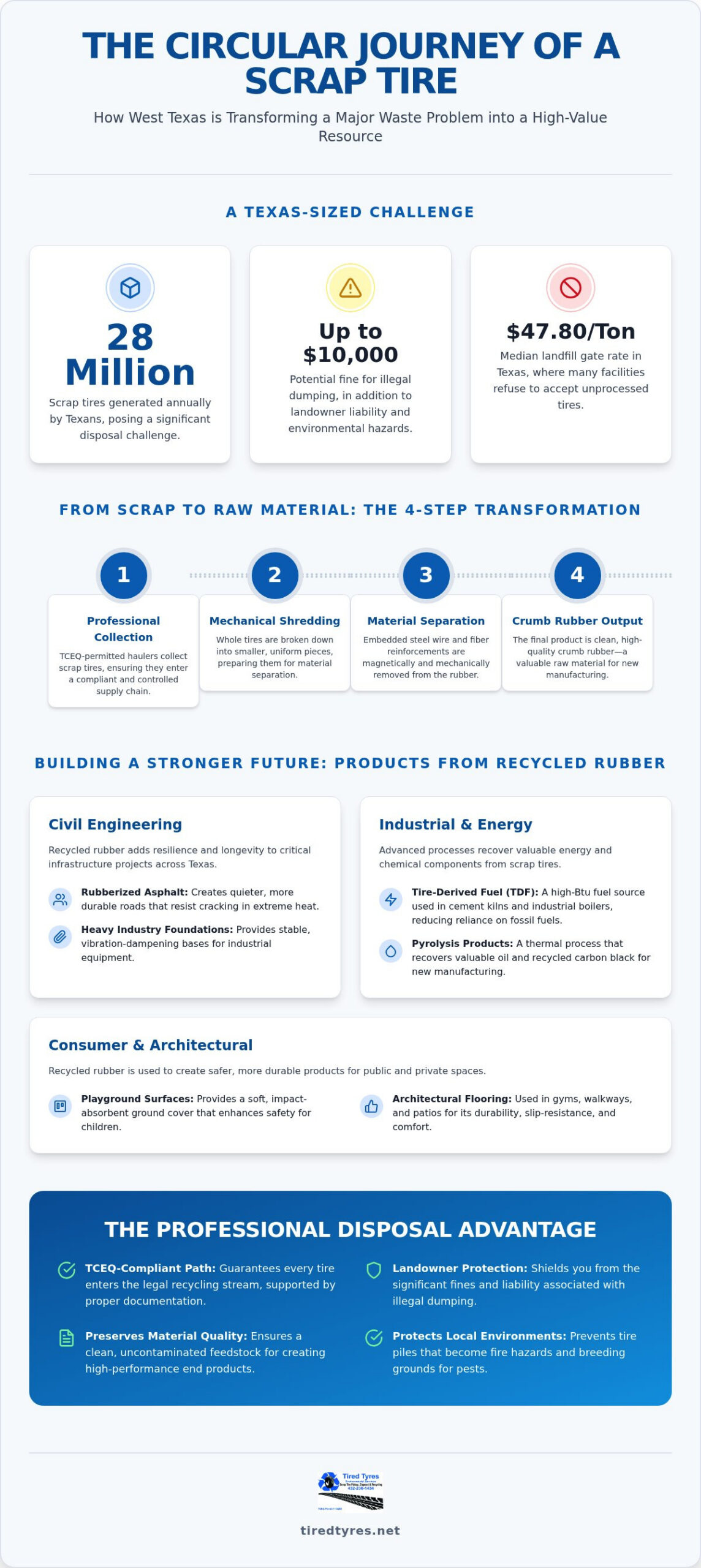
The transformation starts with mechanical shredding. A discarded passenger tire or a heavy-duty agricultural tire is broken down into smaller pieces. Steel and fiber are removed, leaving behind clean rubber granules. Crumb rubber is the foundation of the industry, serving as the essential building block for dozens of new products. Specialized industrial waste, such as scrap conveyor belts, often adds high-strength fibers to the mix. This increases the durability of the final material. By understanding the process of recycling waste tires, it’s clear that quality starts at the collection point.
The Local Impact in Midland and Odessa
In the Permian Basin and South Plains, managing space is a priority. Landfills in Texas face a median gate rate of $47.80 per ton, but many won’t accept tires unless they’re already processed. This often leads to waste tire problems like illegal dumping in rural areas. Professional collection provides a direct alternative. It keeps Midland and Odessa cleaner by diverting rubber toward the Texas green economy.
Local businesses that choose compliant disposal help prevent mosquito breeding grounds and toxic runoff. They also gain the peace of mind that comes with TCEQ-compliant documentation. A secondary but vital benefits of professional tire disposal service is the legal protection it offers landowners. Choosing a permitted hauler ensures that your scrap tires don’t end up in a ditch, which could otherwise lead to fines of up to $10,000 and significant liability.
Building the Future: Recycled Rubber in Civil Engineering
Engineering projects in 2026 require materials that can withstand the unique challenges of the West Texas climate. Heavy-duty OTR tires from the oil fields of the Permian Basin are no longer just waste. They’re valuable resources for high-mass engineering. By processing these massive tires, engineers create materials that dampen vibrations in rail systems and provide stability for heavy industry foundations. This transition from scrap to strength depends on a clean supply chain. One of the primary benefits of professional tire disposal service is that it preserves the integrity of the rubber, making it suitable for these demanding applications.
The quality of the final engineering product is tied to the collection process. If tires are left in the sun or contaminated with oil and dirt, they lose the physical properties needed for industrial use. Professional haulers ensure that the rubber stays in a controlled pipeline. This allows manufacturers to extract the maximum value from every pound of material collected from Lubbock to Midland.
Rubberized Asphalt and Road Longevity
The Texas Department of Transportation has become a global leader in using rubberized asphalt to combat extreme heat. In Midland and Odessa, summer temperatures often cause standard pavement to crack and bleed. Adding recycled crumb rubber to the mix creates a more elastic binder. This flexibility allows the road to expand and contract without failing. Beyond durability, these roads are significantly quieter. Data suggests that rubberized surfaces can reduce road noise by several decibels. They also provide better skid resistance during the rare but intense West Texas rainstorms.
TDA for Drainage and Retaining Walls
Tire-Derived Aggregate (TDA) is a lightweight alternative to traditional stone and gravel. For large-scale construction, using shredded tires as backfill reduces the pressure on retaining walls and foundations. According to the EPA overview of scrap tire markets, civil engineering applications like this represent a massive growth sector for recycled rubber. TDA offers superior drainage properties, making it ideal for landfill liners and septic systems where water flow is critical.
If you manage a fleet or a construction site, ensuring your old rubber enters this pipeline is vital. You can schedule a commercial collection to support these local infrastructure projects. Using a registered service ensures your tires are processed for high-value engineering rather than sitting in a stockpile. This is another of the benefits of professional tire disposal service; it connects your waste directly to the materials building Texas roads and bridges.
From Playgrounds to Patios: Consumer and Architectural Products
The shift from heavy-duty civil engineering to consumer products highlights the versatility of recycled rubber. High-quality crumb rubber is the primary ingredient for these refined applications. It requires a clean, steel-free feedstock that only comes from specialized processing. One of the key benefits of professional tire disposal service is the ability to separate different tire types at the source. This ensures that passenger tires, which are easier to process into fine granules, are directed toward architectural and consumer markets rather than being lost in a general waste stream.
By using a registered collection partner, you ensure that the material remains uncontaminated. This is vital for products that people interact with daily. Manufacturers need the assurance that the rubber is free from debris and harmful additives before it enters the production line for home and commercial goods.
Safety First in Playgrounds and Athletics
Recycled rubber mulch has become the gold standard for playground safety. Unlike wood chips, rubber doesn’t rot, absorb moisture, or attract pests. It provides superior shock absorption, which is critical for preventing injuries from falls. For athletes, rubberized sports tracks offer a consistent, high-traction surface that reduces strain on joints. These surfaces are virtually maintenance-free and can last for decades, even in the intense sun of Lubbock and Odessa. They don’t wash away in heavy rain, making them a cost-effective choice for schools and city parks.
Sustainable Architectural Materials
Architects are increasingly turning to rubber for high-traffic commercial environments. In hospitals and professional kitchens, rubber flooring provides a slip-resistant, antimicrobial surface that’s easy on the feet. It also offers excellent soundproofing properties, dampening the noise of footsteps and equipment in busy corridors. This density makes it perfect for gym floors where heavy weights are dropped regularly.
In West Texas, rubber roofing shingles are gaining popularity due to their incredible impact resistance. Our region’s notorious hail can shred traditional asphalt shingles, but rubber shingles can withstand significant impacts without cracking. This durability extends to landscaping as well. Rubber pavers and garden borders offer an “eternal” alternative to stone or wood. They don’t crack during freeze-thaw cycles and stay in place during heavy winds. While a large portion of scrap rubber is still utilized for Tire-Derived Fuel (TDF) in industrial settings, the growth of these architectural products shows the true potential of the circular economy. This is another of the benefits of professional tire disposal service; it supports a diverse market where your old tires can become anything from a safe playground floor to a hail-proof roof.
The Industrial Transformation: Turning Scrap into Fuel and Feedstock
Industrial applications represent the highest volume use for scrap rubber in 2026. While consumer goods like mats and playground mulch are visible, the heavy lifting of the circular economy happens in kilns and chemical reactors. This massive transformation requires a consistent supply of material that meets strict industrial specifications. One of the primary benefits of professional tire disposal service is the ability to aggregate diverse rubber waste, including agricultural tires and industrial hoses, into a stream that manufacturers can actually use. Without this professional sorting, high-value rubber often ends up buried, wasting its potential as a resource.
Resource security is becoming a priority for Texas manufacturers. By focusing on tire recycling, businesses reduce their reliance on virgin materials. This creates a more resilient local economy in the Permian Basin. When you choose a compliant disposal route, you’re directly contributing to the raw materials needed for everything from new tire manufacturing to steel production.
Tire-Derived Fuel (TDF) Explained
Tire-Derived Fuel is a high-energy alternative to traditional fossil fuels. Scrap tires have a higher BTU value than coal, making them an efficient energy source for cement kilns, paper mills, and utility boilers. This process is particularly useful for tires that are too damaged or contaminated for crumb rubber production. Industrial rubber waste, such as scrap conveyor belts and hoses, can also be processed into TDF. This ensures that even the most worn-out materials are diverted from landfills. Modern combustion facilities follow rigorous environmental standards, ensuring that the energy is extracted with minimal impact on air quality.
Advanced Chemical Recycling (Pyrolysis)
Pyrolysis is the future of zero-waste tire processing. This advanced chemical recycling method uses heat in the absence of oxygen to break rubber down into its original components. The process recovers high-grade steel, which is funneled back into the construction industry. It also produces pyrolysis oil and recovered carbon black. Carbon black is a critical feedstock for the plastics and ink industries. In 2026, we’re seeing a move toward “tire-to-tire” recycling, where these recovered materials are used to manufacture brand-new tires. This closes the loop entirely, turning a waste product back into a high-performance tool.
The success of these industrial processes depends on the quality of the “first mile” collection. If you have a stockpile of OTR tires or industrial rubber, you can contact a local specialist for collection to ensure your waste reaches these advanced facilities. This is a significant benefits of professional tire disposal service; it guarantees that your scrap rubber supports industrial innovation rather than becoming a local environmental hazard.
Ensuring Your Waste Tires Become New Products in West Texas
The journey from a discarded casing to a high-performance road or a safe playground surface doesn’t happen by accident. It requires a structured, legal, and efficient starting point. In West Texas, that starting point is a permitted tire hauler. Without professional intervention, tires often end up in illegal dump sites or taking up space in landfills that aren’t equipped to process them. This is why understanding the benefits of professional tire disposal service is crucial for any business owner in the Permian Basin. It’s the only way to guarantee your waste actually enters the circular economy.
There’s a stark difference between simply “getting rid” of tires and engaging in professional collection. Illegal dumping creates massive liability for landowners and significant environmental risks for the community. Professional collection, however, feeds the manufacturing pipeline. It ensures that rubber is handled according to TCEQ standards and delivered to facilities capable of the industrial transformations discussed earlier. By choosing a compliant path, you turn a potential fine into a sustainable resource.
The Role of Tired Tyres in the Permian Basin
Tired Tyres serves as the vital link between waste generators and the recycling industry in Midland, Odessa, and Lubbock. We specialize in collecting a wide range of materials that are often difficult to manage. This includes everything from standard passenger tires to massive OTR casings and agricultural tires. We also collect specialized industrial waste like scrap skid steer tracks, hoses, and conveyor belts. By focusing on this “first mile,” we provide the clean, sorted feedstock that manufacturers need to create high-quality recycled products. Our process ensures 100% legal compliance with Texas environmental regulations. This protects your business from the legal risks and heavy fines associated with improper disposal.
How to Get Involved
If your operations generate scrap rubber, choosing a reliable tire disposal partner is the most effective way to support the local green economy. We offer tailored solutions for commercial tire disposal across West Texas. Whether you manage a fleet, a farm, or an industrial site, scheduling a professional pickup is simple and efficient. This proactive approach takes the burden of waste management off your shoulders and puts it into the hands of experts. One of the long-term benefits of professional tire disposal service is the peace of mind that comes from knowing your waste is being used to build a stronger Texas. Choosing professional removal ensures your business leaves a positive environmental legacy rather than a trail of waste.
Transforming West Texas Waste into Future Strength
The shift toward a circular economy in 2026 is turning what was once a significant liability into a vital industrial resource. From the rubberized asphalt on our highways to the shock-absorbent mulch in our local parks, recycled tires are actively building a more resilient infrastructure. Realizing these benefits of professional tire disposal service starts with ensuring every casing follows a legal, TCEQ-compliant path. When scrap rubber is handled correctly, it moves from being an environmental hazard to a high-value raw material.
Tired Tyres is proud to be your local partner in this mission. As a TCEQ permitted hauler serving Midland, Odessa, and Lubbock, we specialize in handling the toughest materials, including OTR and industrial rubber waste. We don’t just move tires; we ensure they reach the advanced facilities where they can become something new and valuable. Don’t let your scrap rubber become a burden on your land when it could be a solution for Texas industry.
Ready to clear your site and support the Texas green economy? Get a Quote for Professional Tire Collection today. It’s a simple step that protects your business and our community.
Frequently Asked Questions
What are the most common products made from recycled tires?
Recycled tires are transformed into a wide variety of industrial and consumer goods. The most common applications include rubberized asphalt for quieter Texas roads, crumb rubber for playground mulch, and tire-derived fuel for cement kilns. Other innovative products include architectural flooring for gyms and hospitals, rubber roofing shingles that resist hail, and garden borders. These high-value materials rely on a steady supply of clean feedstock from local collection efforts.
Is recycled rubber safe for use in home gardens and playgrounds?
Yes, recycled rubber is considered safe for these environments when properly processed. Rubber mulch is a popular choice for playgrounds because it provides superior shock absorption compared to wood chips or gravel. It doesn’t rot, attract pests, or absorb moisture, making it a low-maintenance solution. For home gardens, rubber pavers and borders are durable and don’t leach harmful chemicals into the soil, provided they’re sourced from high-quality, processed scrap.
Can OTR and agricultural tires be recycled into new products?
Absolutely, though these heavy-duty tires require specialized handling due to their size and mass. Agricultural and OTR tires from the oil fields and farms around Midland are often processed into high-mass engineering materials or tire-derived fuel. They’re also ideal candidates for pyrolysis, which extracts valuable steel and carbon black. Managing these large-scale items is one of the key benefits of professional tire disposal service for industrial businesses.
How does tire-derived fuel (TDF) help the environment?
Tire-derived fuel helps the environment by providing a high-energy alternative to traditional fossil fuels like coal. Tires have a higher heat value, meaning they burn more efficiently in industrial kilns and boilers. This process diverts millions of tires from Texas landfills every year, especially those that’re too damaged for other recycling methods. Modern combustion technology ensures that this energy is recovered while meeting strict air quality and environmental standards.
What is crumb rubber and how is it used in construction?
Crumb rubber is the material produced by reducing scrap tires into small, uniform granules after removing steel and fiber. In construction, it’s primarily used as a performance-enhancing additive for rubberized asphalt. This creates roads that’re more resistant to cracking in the West Texas heat. It’s also used as a lightweight aggregate for drainage projects and as a dampening material to reduce vibrations in rail and heavy machinery foundations.
Are recycled tire products durable enough for West Texas weather?
Recycled rubber products are exceptionally durable in the Permian Basin climate. Rubber roofing shingles and pavers are designed to withstand intense West Texas sun without cracking or fading. They’re also highly resistant to the impact of large hail, which often destroys traditional asphalt shingles. Because rubber is naturally flexible, these products handle extreme temperature swings and freeze-thaw cycles better than concrete or wood, making them a long-lasting investment for local properties.
How can my business ensure our scrap tires are actually being recycled?
The best way to ensure proper recycling is to partner with a TCEQ-permitted hauler. These professionals provide manifest documentation that tracks your tires from the point of collection to a registered processing facility. Using a verified partner is one of the major benefits of professional tire disposal service, as it protects your business from liability. It guarantees your scrap rubber enters a legitimate circular economy pipeline rather than ending up in an unauthorized dump site.
What happens to the steel found inside recycled tires?
Steel is a valuable byproduct of the tire recycling process. During the shredding phase, powerful magnets are used to separate the steel wire and belts from the rubber. This recovered metal is then sent to steel mills and foundries to be melted down and repurposed into new products, such as rebar for construction or parts for new machinery. This process ensures that every component of the tire is recovered and reused, leaving zero waste.