
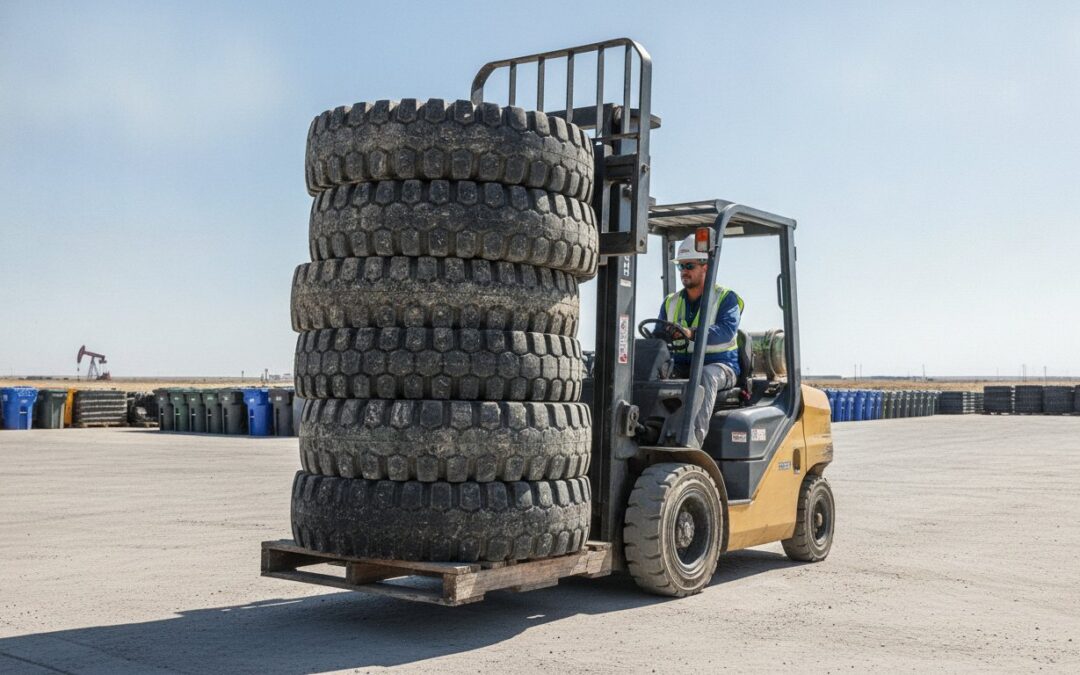
What if that pile of worn-out rubber in your yard isn’t just an eyesore, but a liability waiting for a TCEQ inspection? If you’ve tried hauling old tracks to a local landfill in Midland or Odessa lately, you’ve likely been turned away. Most municipal sites now reject these items because the internal steel reinforcement damages their compaction equipment. This leaves many Permian Basin businesses stuck with growing piles of waste that take up valuable space and risk heavy fines. Finding a reliable solution for skid steer track disposal has become a major headache for shop managers across West Texas in 2026.
We understand that you need your yard clear and your operations compliant without jumping through endless regulatory hoops. It’s frustrating to deal with special waste designations and unexpected rejection at the scale. This guide is here to simplify the process. You’ll discover the most efficient, legal, and environmentally responsible ways to handle your scrap rubber today. We will walk through current Texas regulations, explain why traditional disposal fails, and show you how to find a partner who handles the heavy lifting so you can focus on your actual work.
Key Takeaways
- Understand why municipal landfills in Midland and Odessa often refuse steel-reinforced tracks and how they classify this waste.
- Navigate current TCEQ regulations to ensure your skid steer track disposal process remains fully compliant with Texas environmental laws.
- Evaluate the safety risks and legal consequences of “old school” disposal methods like burying, burning, or manual cutting.
- Learn the simple preparation steps that help you avoid surcharges and speed up the removal of heavy industrial rubber from your site.
- Find out how a specialized collection partner can take the heavy lifting off your hands while maintaining a clean, professional shop yard.
Why Skid Steer Track Disposal is a Major Headache for Operators
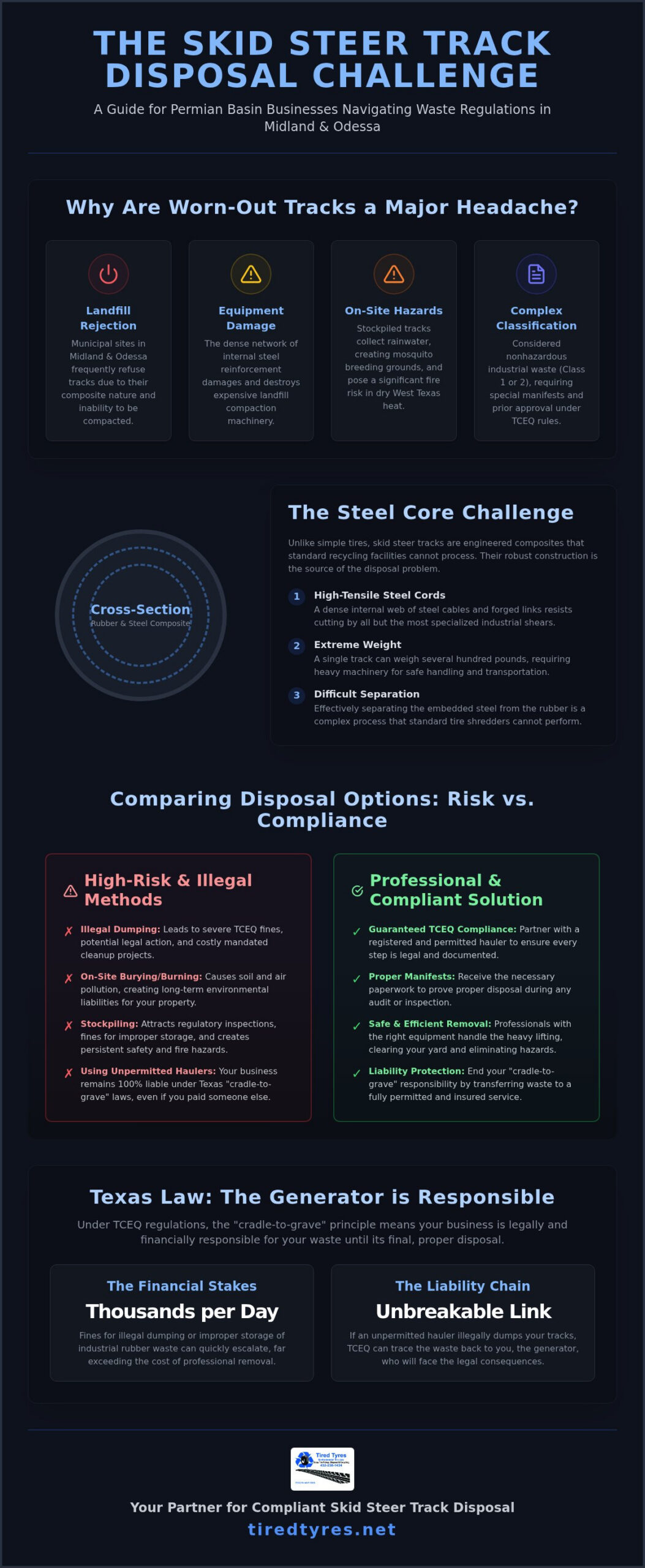
Operators of the skid-steer loader often view tracks as just another consumable part. However, once the tread wears down, these items transition from essential equipment to “composite rubber waste.” This classification is accurate because a track isn’t purely rubber. It contains a dense network of high-tensile steel cables. While this construction provides the durability needed for Permian Basin oil fields, it makes skid steer track disposal a logistical nightmare for most shops.
Leaving old tracks in your yard isn’t a sustainable solution. They are bulky and impossible to stack efficiently, creating significant safety hazards for your team. Beyond the physical footprint, these piles often collect rainwater, turning into breeding grounds for mosquitoes. In the dry heat of West Texas, they also represent a severe fire hazard that is notoriously difficult to extinguish. Traditional tire shredders, built for passenger vehicles, often suffer catastrophic damage when attempting to process the thick steel reinforcement found in industrial tracks.
The Steel Core Challenge
The internal structure of a heavy-duty track is designed for extreme tension. Unlike a standard truck tire, a track utilizes continuous steel cords and forged steel links embedded deep within the rubber. This reinforcement means you can’t simply cut them into manageable pieces with standard shop tools. The sheer weight of a single track, often exceeding several hundred pounds, complicates transportation. Moving them requires specialized machinery, and most standard recycling facilities lack the heavy-duty equipment needed to separate the metal from the rubber effectively.
Landfill Rejections in West Texas
In cities like Midland and Lubbock, landfill managers are increasingly strict about what they accept. Many municipal sites in Ector and Midland counties refuse whole tracks because they don’t compact. Under Texas law (30 TAC Chapter 335), these tracks are often classified as nonhazardous industrial waste. Depending on the specific site, they might be treated as Class 2 or even Class 1 waste, requiring complex manifests and prior written approval from the facility.
The City of Lubbock, for instance, requires specific authorization for special waste, and the fees for industrial disposal can be unpredictable for a busy shop owner. When a landfill rejects your load, you’re left with wasted fuel and a problem that won’t go away. Stockpiling these items on your property isn’t just a mess; it’s a liability that can trigger TCEQ inspections and significant fines. Professional skid steer track disposal services are often the only way to ensure your yard remains clean and your business stays compliant with state regulations.
Legal and Environmental Risks of Improper Disposal in Texas
In Texas, the law follows a “cradle-to-grave” philosophy regarding industrial waste. This means your business is legally responsible for every old track from the moment it’s removed from the machine until it reaches a permitted disposal site. If a contractor takes your money and dumps the material in a ravine or an unauthorized lot, the TCEQ can trace that waste back to you. You’re the one who will face the legal fallout. Proper skid steer track disposal isn’t just about cleaning your yard; it’s about protecting your company from massive environmental liabilities.
The financial reality of non-compliance is steep. Local authorities in Ector and Midland counties have increased their oversight of commercial yards in 2026. Fines for illegal dumping or improper storage of industrial rubber can reach thousands of dollars per day. These costs far outweigh the expense of professional removal. Beyond the fines, the “generator” of the waste remains liable for any cleanup costs if the tracks are found to be causing environmental damage or public health issues.
TCEQ Compliance for West Texas Businesses
TCEQ regulations require strict documentation for industrial rubber waste. You must maintain manifests that prove where your waste went and who hauled it. Working with a permitted tire hauler in Texas ensures that your paperwork is in order for any future audits. This protects you from “midnight dumpers” who offer low-cost, off-the-books removal. These illegal operators often lack the necessary state registrations, leaving you holding the bill when the state finds your tracks in the wrong place.
The Dangers of On-Site Stockpiling
Piling up tracks behind the shop creates more than just an eyesore. In the arid West Texas climate, rubber stockpiles are a major fire risk. Once an industrial rubber pile ignites, it produces toxic smoke and can burn for days, often requiring specialized foam to extinguish. Additionally, even a small amount of trapped rainwater inside the track’s structure can create a crisis. You can learn more about how scrap tires and tracks become mosquito habitats, which poses a public health risk to your employees and the surrounding community.
Stockpiling also impacts your commercial property value. A yard cluttered with industrial waste looks unprofessional to clients and can complicate property appraisals or lease renewals. Professional skid steer track disposal keeps your site clean and ready for business. Choosing a compliant collection partner is the most efficient way to mitigate these risks and maintain a professional work environment.
Comparing Your Disposal Options: DIY vs. Professional Collection
When industrial equipment fails, shop managers face a critical choice: handle the waste in-house or outsource the task. While the DIY approach might seem like a way to save money, the reality of 2026 regulations and the physical demands of the job often tell a different story. Choosing the right method for skid steer track disposal determines how much time your team wastes on non-productive labor.
The most common DIY tactic involves trying to cut tracks into smaller, manageable segments using reciprocating saws or angle grinders. This is punishing work. The high-tensile steel cables embedded in the rubber quickly dull even the most expensive carbide blades. Dismantling a single track can take hours of grueling effort, and the risk of a blade snapping or a grinder kicking back is a constant safety concern for your crew.
Some operators still consider “old school” methods like burying or burning tracks on remote lease sites. In West Texas, these practices are strictly illegal and carry heavy penalties. Burning rubber releases toxic black smoke that attracts immediate attention from authorities, while burying tracks creates long-term soil contamination issues. If the TCEQ discovers an unauthorized burial site, the resulting fines and remediation costs will dwarf any perceived savings from avoiding a collection fee.
The Hidden Costs of DIY Disposal
DIY disposal isn’t as “free” as it looks on a balance sheet. You must account for several factors:
- Equipment Wear: You’ll burn through dozens of specialized blades and put excessive strain on shop tools not designed for continuous metal-in-rubber cutting.
- Labor Diversion: Paying two skilled technicians for half a day to struggle with scrap rubber is a poor use of their time. That labor is better spent on billable repairs.
- Injury Risk: Wrestling with heavy, jagged tracks is a leading cause of back strains and lacerations. A single worker compensation claim costs far more than a professional pickup.
Why Professional Collection is the Standard for 2026
Modern Permian Basin businesses are moving toward professional collection because it’s the only way to ensure 100% efficiency. A specialized team can clear an entire yard of accumulated waste in a single afternoon. They bring the heavy-duty loaders and transport trailers needed to handle the weight, so your employees don’t have to lift a finger.
Professional removal provides a legal paper trail that protects your business during environmental audits. It also ensures you are contributing to local tire recycling initiatives in Midland and Odessa. Instead of tracks taking up space in a landfill or a ditch, the material is processed for beneficial reuse in road construction or industrial fuels, keeping West Texas clean and compliant.
How to Prepare Scrap Tracks for Efficient Removal
Efficient skid steer track disposal starts with a clear plan. While a professional team handles the heavy lifting, your preparation determines how quickly they can clear your yard. Following these steps helps you avoid unexpected weight surcharges and ensures a hassle-free pickup. Preparation isn’t just about being helpful; it’s about controlling your costs and keeping your shop running without interruption.
First, consolidate all tracks into a central, accessible location. Scattered tracks force the collection crew to move their heavy equipment multiple times, which slows down the process. Second, remove as much excess dirt, mud, and debris as possible. Industrial rubber tracks have deep treads that trap significant amounts of West Texas caliche and mud. Since many disposal routes are calculated by weight, cleaning your tracks ensures you aren’t paying to transport a pile of dirt. A quick pass with a pressure washer or a scraper can save you money.
Third, separate your tracks from other waste types. Keep metal rims, plastic liners, and general shop trash in their own designated areas. Finally, count and document every track you intend to dispose of. Having an accurate inventory allows for a precise quote and helps you maintain the “cradle-to-grave” records required for Texas environmental compliance. Knowing exactly what you have on hand makes the hand-off much faster.
Optimizing Your Pickup Site
Think about the size of the equipment coming to your yard. A professional collection truck with a trailer needs significant clearance to maneuver. Ensure there is a clear path at least 15 feet wide leading to the tracks. Avoid placing the pile on soft or uncompacted ground. A heavy collection truck can easily get stuck in mud or loose sand, which turns a routine pickup into a recovery operation. If you have a large quantity of tracks, mention this when scheduling so the hauler can bring the appropriate high-capacity trailer.
Documentation and Inventory
Keeping a log of your disposed tracks is a smart business move. Record the date of removal, the number of tracks, and the machinery they came from, such as mini-excavators or large compact track loaders. This data is invaluable for tracking the lifespan of your consumables and proves to inspectors that you’re managing your industrial waste responsibly. When you’re ready to clear your yard, scheduling your reliable tire disposal service in advance ensures you get on the route during a time that doesn’t disrupt your shop’s peak hours. For the fastest service, contact us today to arrange your next scrap skid steer track collection and get your yard back in order.
Reliable Skid Steer Track Collection in Midland, Odessa, and Lubbock
Tired Tyres understands the unique demands of the West Texas industrial sector. We’ve built our service to solve the specific problem of skid steer track disposal for oilfield and construction crews. Our team uses specialized loaders and high-capacity trailers designed to manage the extreme weight of steel-reinforced rubber. We don’t just haul waste; we provide a professional logistics solution that keeps your shop yard clean and functional. You can rely on our expertise to handle the materials that municipal landfills won’t touch.
Our specialized process starts with a site assessment to ensure our trucks have the right clearance. We use industrial-grade equipment to move tracks that have been sitting for months, even if they’ve become partially buried or stuck in the mud. You won’t need to pull your own technicians off a billable job to help us load. We handle the heavy lifting from start to finish, allowing your crew to stay focused on their primary tasks. This efficiency is why we are the preferred partner for shops across the Permian Basin.
While tracks are a major headache, we also offer comprehensive commercial tire disposal services. This includes handling everything from passenger fleets to massive OTR and agricultural tires. Getting a quote is simple and direct. You provide the count of tracks and tires, and we handle the scheduling and transport. We offer transparent communication so you always know when to expect our team at your facility.
Serving the Permian Basin and South Plains
Our roots are in West Texas. We maintain a constant presence in Midland, Odessa, and Lubbock, allowing us to offer fast response times for urgent site cleanups and shop clear-outs. We know the local roads and the specific waste management challenges faced by crews working in the South Plains. Whether you have two tracks or twenty, we have the equipment to clear them out in a single visit. Our local knowledge ensures we get in and out of your yard without disrupting your daily operations.
Commitment to Legal and Ethical Disposal
Compliance is our priority. Every track we collect is processed according to Texas state law, ensuring you never have to worry about a TCEQ audit or environmental liability. By choosing a professional partner, you’re directly reducing the environmental footprint of the local construction industry. We ensure that scrap rubber is diverted from illegal dump sites and moved toward beneficial reuse or proper industrial processing. Contact Tired Tyres for a skid steer track pickup quote today!
Take Control of Your Shop Yard Today
Managing industrial rubber waste in West Texas doesn’t have to be a source of constant stress for your operations. You now understand that standard landfills often turn away steel-reinforced tracks and that DIY cutting methods are both dangerous and inefficient. By choosing professional skid steer track disposal, you ensure your business stays compliant with 2026 TCEQ regulations while reclaiming valuable shop space for productive work.
Tired Tyres is a permitted Texas waste hauler dedicated to serving the industrial hubs of Midland, Odessa, and Lubbock. We bring specialized equipment to every job to handle the heavy lifting, so your team stays focused on billable tasks. Don’t let scrap rubber become a legal liability or a health hazard on your property. We handle the logistics, the transport, and the legal paperwork required to keep your yard in top shape.
Get a Free Quote for Skid Steer Track Collection today and experience a truly hassle-free cleanup. We’re ready to help you maintain a clean, professional, and fully compliant operation across the Permian Basin. Let’s get that scrap rubber out of your way so you can get back to business.
Frequently Asked Questions
Can I throw rubber skid steer tracks in a standard dumpster?
No, you shouldn’t place tracks in a standard dumpster. Most waste management companies in West Texas prohibit heavy industrial rubber because of the weight and the internal steel cables. These items can damage compaction equipment and easily exceed weight limits. Attempting to hide them in a dumpster often leads to expensive surcharges or the entire load being rejected at the scale.
Why do landfills in Lubbock and Midland reject rubber tracks?
Landfills in the Permian Basin and South Plains typically reject whole tracks because they don’t compact effectively. The high-tensile steel core makes them a “special waste” that requires specific handling or processing. Facilities in Midland and Lubbock are increasingly strict about industrial rubber to preserve landfill space and protect their machinery from the damage caused by internal metal reinforcement.
Do I need to cut my tracks into pieces before you pick them up?
No, you don’t need to cut your tracks when using our professional service. Tired Tyres uses specialized industrial rubber equipment designed to handle full-sized, heavy-duty tracks. We take care of the entire removal process. Your team doesn’t have to waste hours struggling with carbide blades or risking injury with power tools just to make the material manageable for transport.
What is the environmental impact of leaving old tracks on my property?
Leaving scrap tracks on your property creates significant environmental and health risks. In our West Texas climate, these piles become breeding grounds for mosquitoes and other pests. They also represent a high-intensity fire risk that is notoriously difficult to extinguish. Over time, the rubber can degrade and leach chemicals into the soil, potentially leading to TCEQ fines for improper industrial waste storage.
Does Tired Tyres also pick up other industrial rubber waste like hoses?
Yes, we provide comprehensive collection for various industrial rubber products. In addition to skid steer track disposal, we collect scrap hoses, conveyor belts, and solid tires. We serve the oilfield and construction sectors across the Permian Basin. This ensures that all your rubber waste is removed legally and efficiently in a single scheduled visit rather than dealing with multiple haulers.
How much does skid steer track disposal cost in West Texas?
The cost of disposal depends on several factors, including the number of tracks, their size, and your location within the Midland-Odessa or Lubbock areas. We provide custom quotes based on your specific inventory to ensure you receive a fair rate for the logistics involved. Contacting us directly with your track count is the fastest way to get an accurate estimate for your shop clear-out.
Is it legal to bury old rubber tracks on my ranch or job site?
No, burying industrial rubber tracks is strictly illegal in Texas. The TCEQ classifies these as industrial waste, and unauthorized burial can result in heavy fines and mandatory remediation costs. These items don’t decompose and can cause long-term soil contamination. Legal disposal through a permitted hauler is the only way to protect your business and property from significant environmental liability.
How quickly can you schedule a pickup for a large pile of tracks?
We prioritize fast response times for our commercial clients in West Texas. Depending on our current routes through Midland and Lubbock, we can typically schedule a pickup within a few business days. For large-scale site cleanups, we recommend calling in advance. This helps us ensure the appropriate high-capacity trailers and loading equipment are available for your specific quantity of scrap rubber.